BACK PAIN and the PAIN CYCLE
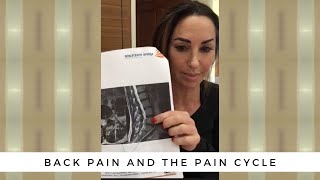
Natalie Jill describes her decade of back pain from degenerative disc disease and an L5-S1 disc rupture that caused foot drop. She had laser endoscopic surgery, recovered 95% function, then developed nerve pain on the left side. Her approach: keep moving, cut grains and dairy, take fish oil and turmeric, and use minimally invasive procedures when needed.
Questions this video answers
L5–S1.
Foot drop (right leg weakness/slapping foot).
Laser endoscopic spine surgery (minimally invasive disc fragment removal).
PRP (platelet-rich plasma) injection to the spine; she reported it did not help and caused intense pain for four weeks.
Tyberbex; she states the prescribed regimen was two 40 mg per day but she takes one 20 mg per day (low dose).
Chapters
Hey, what's up Instagram and Facebook, I'm live on both of your both platforms today. I am excited to share with you this topic because if I could think of the one question I get every single day for the last two and a half years from somebody, whether it's a comment or through my customer support or a direct message, it's something about pain, especially back panicked and especially because many of you know that I had an injury a few years ago and had a pretty serious injury and needed surgery. And I still deal with this and every day I get some type of question about that. So I put together some notes and some pictures and I want to share my whole journey with you today on this topic. That way I have this live to answer questions and I'll also have this to be to share in the future when people are asking me these questions. So thanks for joining me. For those of you new to my page, I'm Natalie Jill and I help women especially, especially age in reverse. Although I can help men too. My focus is typically women that are, you know, they're feeling like maybe their time has passed. And I love to share that we're not too old and it's not too late. So my focus is that and I'm also a fat killer. Now when I say fat killer, you automatically are probably assuming that's the fat on your body. And although I totally can help with that, what I define fat is, is typically false assumed truths. And those are beliefs that hold us back from achieving amazing things. So that's what I'm going to talk about today and tonight. So but I'm going to give you all a few seconds just to jump on. And if you have friends, family, colleagues that you think would be interested in this topic about pain, especially back pain, then please share because I'm going to share a lot of good information and I'm going to be addressing a lot of the questions that I've been getting and that, and if you have questions, I'll be answering those as well. And also let me know please, if you are joining me, let me know. If you are watching the replay, let me know. Replay and, and if you're on live, let me know your name, where you're from and how old you are. Your age. I love to hear your age because I'm 48 and I love knowing that I'm reaching, especially when I'm reaching people close to my age. So let me know that as well. And I'll try my best with the eye contact here. I've Got my little jerry rigged setup here with an iPad and a phone so I can be on Instagram and Facebook. So that's about as technical as I get and that's what I'm doing. So thanks. Let's see who's on. Hi, Lori. Oh, 55, from Sedona. I love Sedona. You actually live there. That's pretty cool. Hi, Laura, 53. You're feeling suddenly old. Laura, I'm glad you're here. We're going to start to shift that. Anna from Portugal. Got a lot of you on. Awesome. Hi, Numa. Hi, Melody. Let's see. I love how I always think it's amusing that on Facebook I can see full names, but on Instagram I see like little, you know, screen code names and I wonder where people come up with their code names. So. Hi, boss. Thank you. Boss says you're inspirational women and you're 26. Thank you. Happy birthday, Colleen. That's amazing. And Raleigh from Australia. Very cool. All right, I'm going to jump into it. We're going to talk about back pain and I'm going to give you my background story. And if you know my backstory about my back. Isn't that funny using the word back, then bear with me. I'm going to. It might be a repeat for you here, but I want to share from the beginning. So about 10 years ago, I had an MRI, my first MRI on my back because I had some pain. I and what it showed is something that is very, very common in most MRIs, especially as we age. So if I were to do an MRI on everybody watching whether you have pain or not, many of you, especially if you're in your 40s, 50s and beyond, you would show some signs of degenerative disc disease. Now, what's interesting about degenerative disc disease is some people feel pain from it and some do not. It just depends. There's a total variable there whether you feel pain or you do not. And there's a lot of mixed thoughts on why that is, depending on who you ask. Whether you ask a chiropractor or a surgeon or a physical therapist or somebody that's heavy in the mind space with emotional intelligence. Whoever you ask is going to give you a different opinion on why some have pain and why some do not. And that's not necessarily what I'm going to get into. I'm going to share my journey first. So mine showed degenerative disc disease and I would have flare ups regularly. So like once a month I'd get a pretty bad Flare up and it hurts. And what I did is many of you followed my journey back then is I got very into corrective exercises and core exercises. And that's a big reason why many of you say that I have abs, that you like my ab videos or you like my core. A big reason is because I got very deep into the belief at that time that it was my core strength that was the issue. Now, when you think of core, it's not just abs. It's really everything. Your whole midsection, you can even argue it goes down to towards your hips. So core is what I really studied. And at that time, this is years ago, I really dove into the issue of anterior pelvic tilt. Now, especially if you're a female watching me, and especially if you're a younger female. And anterior pelvic tilt. Can you see my waist here? Many of you wear heels, and I wore heels for years. It puts us in a position where we have this arched back, our butt sticking out, sort of this C curve, right? That's an anterior pelvic tilt. And I knew from what I learned then that if I could correct that here, that that would take away some pain. So my whole focus, and many of you that have my workout DVDs and have been following me for years, know my whole focus was how do I get my core strength up and how do I work on fixing this? By squeezing my glutes, keeping my shoulders back, really keeping my ribs down, and really strengthening that area. And that worked for a long time. In fact, so many of you that use my DVDs and workouts, you said, this is amazing. It took away my back pain. And I believe that's why I believe that a lot of people have anterior pelvic tilt. And that was the issue. However, remember I said that I also had degenerative disc, and some people have pain with that, some do not. Well, what happened was about two and a half years ago, I was on a job for somebody else's workout project, and it was something I wanted to do. And I was on set doing workout moves that I don't normally do. And when I say that is I'm very aware of corrective exercises. And the ones that I teach are very functional, fitness, corrective. But what I was doing that day was not stuff that I normally do. These were a lot of jumps, a lot of twists, a lot of moves that with the proper warmup and with taking my time, I could have done well, but my ego got in the way and I was going way too hard. And I was doing nine hours of this. And I remember that day very clearly because the pain was really intense that day. And it kept getting more and more intense. And I remember calling my husband and saying, my back is having the craziest flare up I've ever had. I'm on set here. I don't know what to do. And I remember him even saying to me, you know, mindset, just. There's nothing. Just focus on mindset. Get through it. And I remember I was in so much pain, and if any of you have given birth to me, it felt like labor pains. And I don't say that about many things. This was so painful. And I literally was doing these workouts in incredible amounts of pain. And I remember I went to my bag and I had Myodol cramp medicine, and it was the only thing I had to stop the pain. And I kept taking them. And I remember taking like eight that day. You should not do that. And so now I had, like a caffeine buzz on top of the Myodol and it was not making a dent. And I was in so much pain, and I could not get past how bad my back was hurting. And I kept going, but I was kind of like in the back of the room, like, not.
I wasn't in front of the camera doing, like the crazy intense stuff. And I was trying my hardest to get through this. Well, I didn't know what had happened at that time. And I remember going back to the hotel room that night and I remember taking something to go to sleep because I was in so much pain. And when I woke up that next morning, it was crazy, but my back had stopped hurting. My back had totally stopped hurting. And I remember laying there in bed going, why is my back not hurting anymore? All it did yesterday was hurt so badly. And I went to get out of bed and my right leg was not working. And when I say it was not working, imagine when you have a limb that falls asleep and you're like shaking it to wake it up. And that's what it felt like. And it was super wobbly. And I went to go stand on it and it gave out. So I was like, okay, that's really weird. And I had this new pain down my piriformis behind my right leg, down the sciatic path. So I remember getting on Google and looking, and I thought, okay, maybe I have piriformis syndrome. Maybe that's what the problem is. And maybe I just felt it in my back. I was just looking for our brains. Do that. We want to know, like, what's the cause? What did this? How do I fix it? That's what our brain goes to. So I flew back to California and the whole time on the flight, I remember trying to straighten out my right leg. Like it felt like it was twisted. And I kept trying to straighten it and I kept thinking, this is so weird. It feels like my leg is asleep. What is wrong here? Anyways, fast forward. I get back to California, I go see my chiropractor friend, and he's trying to help me, and it's like something's really wrong. So my husband texts a good friend of ours who happens to be an orthopedic surgeon and said what was going on? And he says, you need to get an MRI right now. Again, this is two and a half years ago. It was a Friday. I went in and got the mri. He called me into his office that afternoon and he said, we have a problem and I'm gonna show you. And this might not mean much to you if you don't understand back, but let me show you what you're looking at here. So where this is L5S1, right here in this spot, this big circle, this dark circle right here. Can you see that? That was my disc. That's supposed to be inside here, but it had squirted out there. The whole thing totally squirted out. And as you can see, it was completely impinging on my nerve. This is a big rupture. This is not a bulge disc. This is a rupture. That pain I had was a full on rupture and it was severely impinging on my, my spinal cord. You can see what was happening here. And what would it. What it had done is it had cut off the nerve down my right leg and it was getting worse. And what it created was something called foot drop. And if you Google foot drop later, you'll see my foot was like slapping on the floor at us as I would try to walk. And it was scary.
And I was in pain on that side. My back was not hurting now, but that was painful. So my friend, that was a surgeon, said, you need back surgery and you need it fast. And I went right to, I'm not having back surgery. Because I had heard horror stories about fusions and disc replacement and microdiscectomies and all the things. And I thought, I'm not having surgery, I don't know what to do. But he insisted I go and see someone who's become a friend of mine who I love now, Dr. Cho Kim in California Dr. Chul Kim in California. He's a spinal surgeon. I went to see him. I wobbled in there with my leg. And he said, here's the deal. You don't need to. You don't need to be aggressive and have a fusion or a disc replacement right now, unless you want that. I don't recommend that, but we've got to get that stuff that squirted out off of your nerve, because if you don't, you might have permanent nerve damage on that leg. You could permanently lose use of that leg, and you could end up losing control of your bowels and bladder. Now, I don't know about you, but there was not a chance I was gonna take that risk. Like, not a chance. Like, I was like, I'm. No way. Sign me up for surgery status. So what. What I had done within two days of that meeting was something called a laser endoscopic spine surgery. Less now. Not every doctor does that. Insurance does not pay for it. I don't get me started on insurance. That's a whole nother story.
And yeah, insurance is crazy. They did not. We're not going to pay for it. And all I knew is I was dealing with, I'm going to have foot drop and you lose use of my right leg forever. And that was not an option. So at that time, it was, pull the credit card out, let's do it. I'm having the surgery. And I remember being super triggered. I shared on social media. I was doing this. People messaging me, like, all these natural remedies. I'm like, dude, you tell me that your doctor tells you you're about to lose use of your bowels and bladder and your right leg, and you're going to go wait for some, like, natural not happening. Now, you guys that have been following me, you know I'm all about natural methods. But that was my choice at that time, and I was super happy with my choice. So I had the procedure. It's called laser endoscopic spine surgery. Love Dr. Chulkham. He's amazing. Had that done. He removed that piece, and within two days, no joke, I had no pain and my leg started coming back. In fact, I have videos and you can scroll back through my Instagram and Facebook and find them. Like, I was literally working out a few days later. It was the best, easiest, smoothest surgery I could have imagined. It was incredible. And I was totally out of pain. Now, fast forward two and a half years later to now. Today, my right leg has about 95% function back. There's about 5% that's not there yet. Now, how does that stop me? Well, it stops me because my foot has a delay, which means my brain will tell it to move. Like I'm running the picture. Running or walking? My brain thinks it's doing one thing, but there's a slight delay. And that's how nerve damage can work. So. So where. So if I go run right now, I could trip because my foot has a slight delay, and that's what could happen. Okay, so that's what's happening now. I, on my own, have been really working hard on regaining that leg strength. If you watch some of my workout videos, you'll see that my right leg wobbles. I do a lot of balance stuff because of that brain delay, but that's the least of my problems with that. That was my choice. So fast forward. About six, seven months ago, I started having back pain again. I had not had back pain in a long time. And where it started having the pain was on the left side. And I didn't understand what was going on because I thought the rupture came out on the right side. That's gone. Why am I having pain on the left side? And what I learned was your disc. If you have nothing there, which I pretty much have nothing there, the disc ruptured out, can start to fuse together on its own. And when it does that, because your body will heal and start to fill gaps. You've got nerve and tissue and all kinds of things that could be growing and getting stuck there. So the pain I been getting, it's like if I sneeze or bend over or even sit without being really aware, it's like a zap, like a nerve zap pain. And it radiates. And it's not fun. It's like an electrical shock feeling. Any of you have nerve damage? You know what I'm talking about. You can comment here, let me know. But that zapped is not working for me. Like, it's. And aside from the zap, what happens is you're. Now, this is not a scientific thing. This is. Natalie, Jill. This happened to me. And me figuring it out with the anatomy that I know. What I believe is happening is because I have no disc between L5 and S1, pretty much it's almost gone. What's happening is my hips want to take over for that. So that means if I sit down, like just a normal situation, my. The whole backside, my hips are feeling the force and the pain. And if I sit up to take that part out of the equation, where I'M like almost arching my back. My hip flexors take over. So daily what I find is either I have hip flexor pain or hip pain. Now the pain that I have in my hip flexors or that hip, I would say that's a low grade pain that I deal with daily. The zap pain from where it's pinching the nerve is totally different. That's a zap and it's not constant. It happens from events. So it's two different things. So I've been digging, like, how do I fix this? What are my options? Because when it flares up, it is bad. And many of you have messaged me that you have injuries and pain and it's really been something I wanted to dive into. And that's what I want to share with you with what I've discovered and what I want to share tonight. So I've got like four main points I'm going to touch on with you of how and I believe that these things that I'm going to share will help you no matter where you have your injury in your back. Okay? So. And I do want to say the disclaimer that I am not a doctor, so you can take my information, but you always want to check with your doctor. Don't take mine as medical advice for you because I'm not a doctor and I don't know your particular case. So I'm sharing my experience and what I've learned and, and I believe it could help you. But you know, check with your doctor before you go off of just what I'm, what I'm telling you. Okay? So number one, what I want to talk about is what I call the pain cycle. And I don't know if you can see my little funky diagram here. It's probably looking backwards here. But the pain cycle is what I believe happens when we have an injury or a pain. And this happens to most people. You have something that happens, it hurts and you develop a fear around this hurts. So take my back or your knee or whatever you've got going on. And what happens is you with that pain, your body starts to adjust and move a little bit differently to avoid the pain. And you start to avoid movement. This is what I did. You start to avoid certain movements because you're like this will aggravate the pain. And when you avoid movement, a few things happen. One, the very act of being sedentary increases your pain problem. I'll say that again, the very act of being sedentary is going to increase your pain problem. So what Happens is we're in pain. Our knee, our back or something hurts. So now we avoid. And now we're being sedentary, which increases the problem. So it starts a vicious cycle. What also happens with being sedentary, and I lived this too, is we don't necessarily want to eat as well. So we stop our clean eating cycle because we're thinking, I'm in pain, I'm sedentary, and junk field feels good. Or we just start slipping a little, like, maybe I'll have that pizza or I'll have this. So you're in pain. You enter this cycle of I'm not going to move, it's going to hurt. You start not eating as well, and you're sedentary. This creates and wreaks havoc on your body for inflammation. So now you increase your inflammation and it keeps you stuck in that pain and that fear. Okay, now what happens when you get inflammation and it makes it all worse? And now you lock in a belief, which, because mindset's really big, you lock in a belief that I have an injury, I have pain, therefore I can't move, I can't eat well. This is why I'm overweight. This is why I'm getting older. This is whatever. Can anyone relate to what I'm saying here? Because I lived this. Let me know if you can relate there. So it's a pain cycle. So I got really, you know, I got really curious about this. I'm like, okay, if this is a pain cycle, and I know that physiologically that I know that if I move my body and I can work through it, that's going to get me out of that pain cycle and help me thrive. Can I do that? I know it's going to hurt, but can I do it? Will it create worse issues? And now when I dug in on my own case and you want to dig in on yours, what I learned was I was not going to make my problem worse by moving. So basically, I might hurt more when I move, but it's not going to make the problem worse. So if you think about it, go back to my MRI where I showed you I'm bone on bone pretty much, right? So there's no disc there. So, yeah, it's going to not feel good. But that very act of moving my body, going through those motions makes me feel better because it knocks down that inflammation and it gets me out of the pain cycle. So this was critical. So with doctor's permission to move it, that helped me tremendously. So sometimes people will comment on my Videos and say, did you work out? How are you working out with that pain? And I'm saying, I still have the pain. I'm working through it for this reason. Now I want to be really cautious. Somebody just wrote epidural shot. I'm going to be cautious. I want to give you a warning there. I'm not a fan of that. I'm a fan of it for diagnostic purposes. And I'll go back to where I use that. There's. But I'm not a fan of it as an ongoing treatment because what that does is it just numbs the pain and you're still not correcting the problem and you're going to create injuries in other places and it actually can weaken the area over time. So I'm not a fan of cortisone and epidural shots unless you're using it for diagnostic purposes. This is me personally. Again, I'm not a doctor. I'm sharing what I've been through and how, what I've addressed with this. Also, when you inject cortisone in your body, be aware of that. That is like injecting the cortisol stress hormone in your body. Okay. Which. That is not good for you. It increases belly fat, it makes you hungry, it messes up your cycle. It's a hormone. So not a fan. Not a fan at all. So I would rather get to the root. So if you know that you're. By being sedentary and not moving, you're going to increase your pain cycle because you're going to not address that inflammation and you can't get through the moves. You. You're keeping yourself stuck. So step one would be assuming your, your doctor is okaying it, work through the pain. On the other side of it is amazing. I can get my pain from like a level 10 to a level 6. Call it that. Which is pretty dramatic. Just by moving through it. Just by moving through it. So that's step one. So it's not that I feel amazing all of a sudden and I'm doing it. I'm acting as if I'm working through it. I'm being aware with doctor's permission. And it helps that, okay, the second part of this inflammation keeps us stuck. And there are certain foods that will aggravate the pain. Now, you might not believe me when I tell you these things and all I'm going to ask you to do is just try it for 10 days. Try eating the way that I'm going to share for 10 days and then you tell me you can always go back. But this was life changing for me. So for many of you might know, my very first book was called unprocessed, you'd diet, still available in stores. And I still believe this for fat loss and general nutrition. This is where I help people unprocess their diet. This is step one. However, I wrote this before my rupture. This book I wrote after my rupture. What I learned, what I learned is by taking out very specific foods that create inflammation and adding in specific foods that reduce inflammation, change my pain level. Change enormous, enormous, like night and day. Now, I'm not perfect with this. I'm not perfect with eliminating these foods and adding the others. And I will tell you when I am not perfect with it. The pain flares up. When I manage it through the diet. It is life changing. It brings the pain level down. So if you are watching this and you're in pain, I'm going to encourage you, please try this. Pick up my book, Pick up Aging Universe. You can literally get it on Amazon. You can get it on in Barnes and Noble. You can get any bookstore. It's got to be like $16. Now, it's not a pricey book. And I go through a whole 10 day plan that will knock down that inflammation. What are the foods that we add and eliminate? I'll give you kind of a general thing. The three things that are the absolute worst to have when you've got injuries and inflammation. These will crush you. They're horrible for you. For this. Ready Sugar. That's not a surprise. Refined sugar. I don't mean fruit sugar. Refined sugar, dairy. Dairy increases inflammation. Don't be messaging me to give you the proof. I have so much research in this book. You can find all that there. If you do not have pain and inflammation, by all means you keep eating dairy. But I'm telling you it is not helping your case with pain. So I eliminated dairy. The third one is grains. All grains. Now, side note, I'm a celiac. I have been for years, since before people even knew what gluten was. So I am fortunate because I can't eat gluten anyway. But there are grains that do not have gluten in it. And when I give up grains, dairy and refined sugar, my pain level changes big time. Now why do we want our pain level to change? Because we want to get out of the pain cycle and move our body. So I'm telling you, by giving up those three things, it's life changing. Now, in my first book, Unprocess, yous diet seven day jumpstart. And I still hold, this still holds true. I talked about if that freaks you out, I get it. But focus on all the things that you can add to also counter the inflammation and that will make less room for the bad. And then you won't want the grains, dairy and sugars. So things that you should be adding are a ton of water because you want to stay hydrated. That's another big thing. If we're not hydrated, we're going to feel more pain. We also want to add loads of fruits and vegetables because those are where you're going to get those healthy nutrients that help repair things. So I eat tons of fruits and vegetables and it makes a big difference. Antioxidants are loaded in that, that counters oxidative stress. It's going to counter inflammation. It's huge. So before you're jumping on the I give up, I'm in pain, I'm going to lay around and take medication. Please try these things. Move through it, assuming you've got doctor permission and add these foods and take out those harmful foods that are crazy. Adding in that inflammation, that's a big problem. So I would say those first. Okay, so it's what's going in your body. So it's not just the moving through it, it's what are you taking in. So it's looking at is my nutrition on point? Am I eating an anti inflammatory, good for me diet that's going to keep me healthy and knock down that inflammation so I can move more. Okay, then there's a few supplements and I'm not going to. If you want brands of supplements, I'll put a link in here later for I have a supplement guide on what I personally use but just going to give you kind of general terms. These are the must adds for inflammation. Fish oil and turmeric. MUST adds, fish oil and turmeric, they counter inflammation. I take lots of both of those things also. What also really helps with the pain and knocking it out is CBD oil. Huge fan of CBD oil. I'll also share a link here all about CBD oil. But those are the three things that I go to now. I am not anti pharmaceutical. Like I, I think people lean on pharmaceuticals too much big time actually. But I'll tell you when I get desperate and have a huge flare up, I do take an NSAID now nsaids. Nsaid and the one I happen to take is called Tiberbex and I take 20 milligrams of it. That is a very low dose the dosing for somebody my age, not my age, sorry, my weight, my height with my issue would be. The way it was prescribed to me was two 40 milligrams a day. I take one 20 milligram a day. So very low dose. But I'll tell you, for me, I'm very aware of the side effects of NSAIDs. It can wreak havoc on your gut health. I am very aware of that. But I think it's more dangerous to stay stuck in the pain cycle. So for me, if it's a matter of I can't move or I take the NSAID and I can get my workout in and get through the day, then I choose that. That's my choice. That's what I personally choose. And you have to make those choices for you. So I do. When it flares up, take that. For those of you who said, what do you take? Tyberbex is the one that I happen to like. I don't know anything about the company or whatever. That's just the one that happens to work for me better than other NSAIDs. And I do that. My doctor prescribes that. So that is what I do. Now I will also share. I have tried. I've tried PRP and it made me worse for four weeks. Horribly worse.
I consulted about having stem cell. I can't do that because there's no disc there. Stem cell is amazing. If you can grow your disc back from that, that would be amazing. I think PRP is amazing for people. It did not work for me for that. My husband had it on his ankle. He swears by it. It was incredible for me. It was $3,500 I spent that did nothing for me. So that's just my experience with it. I also want to share that there is a huge movement with back pain that I think has a lot of relevance.
And I think it applies for a lot of people. I do not think it applies for my personal injury here. I think it applies for parts. And that's the whole connection with.
It's like if you guys have heard of Dr. Sarno's stuff, I read his book. I actually had a consult with somebody that does his stuff. I've been super open minded to it and it has not helped me personally, but I do know it has helped a lot of people with being able to go back and heal trauma in your life, emotional things that have happened, trauma and how your body manifests pain. So I know that that does work for people. I am committed to working on that even more. But as of now, that has not changed my. The zap pain that I have when I sneeze or move. So that's what I am. So just to sort of recap and then I'm going to tell you what I'm doing from here. For those of you that are just joining us, welcome. And make sure you watch from the beginning because I shared my entire journey of like, what happened with my personal injury, what I learned for it and what has happened for it. And again, I'm not your doctor, I'm not. I don't know your personal situation. So you want to go off of your own things and thanks. Ms. Laura Sales said a lot of back pain is from sitting in tight poses. Absolutely. There's a lot of reasons for it. There's not a one size fits all. I do want to share that. I also want to share if we were to take an MRI of everybody, like just randomly poll everybody on an mri, you would see people that have crazy things going on in their back and have no pain, believe it or not, and you would see people that have minimal things going on in their back and have a lot of pain. So it's really, it does, it's a, it's a coin toss whether someone feels it or they don't feel it. So everybody is different there. But what I'm specifically talking about today is my journey. So. And the pain cycle, and I think this is what's critical for so many of you to understand, is that the pain cycle is important to understand. When you're in pain and you develop a fear, you tend to not move. And by not moving, you're going to create even more pain. This is important to know. By not moving, you will create more pain. And when you are sedentary, you also tend to eat worse, which increases inflammation and it keeps you in that pain cycle. Really important. The other important part of that is what I talked about earlier, those false assumed truths. If you believe that your pain is the reason you can't be fit, can't be healthy, can't do whatever, you will stay stuck in that belief. And that's why I think it is critical to work through that somehow to get to the other side. Because going From a level 10 pain to a level 2 to 4 is a big difference. And you can get there by changing your diet, addressing the inflammation, and by getting through and moving as long as you've got Dr. Clarence on that. And I promise you that. So my books, if you're interested, and this is not particularly about back pain, but I share My whole story in there. Aging universe. This book, absolutely. You can get on Amazon, Barnes and Noble, anywhere books are sold. I address.
What foods I think you should be eating for inflammation reduction and what. What you should be omitting and what I omit in here. And I don't usually lead with this when I'm talking to y' all because I know that's like, I don't wanna eliminate those. I just want you to try it for 10 days. Because when you take out dairy, grains and refined sugar, your pain changes. It changes so dramatically. It's so big time. Okay, so where am I on my back now? Cause I know. And I'm gonna take some of a bunch of your question. A bunch of your questions. Where am I on my journey right now? So. So two and a half years ago, I had the laser endoscopic surgery, removed the piece that ruptured. I have not had any pain on my right side since that. My right leg is healing from that. This new pain on my left side is very clearly. We can see it on the MRI from where it's fusing together. And I've got nerve and tissue stuck in there. And that's what's hurting me and getting me. The zap. The soreness I have on my hips and hip flexors, that's from not having a disc there and sitting. So when I spoke recently, after doing the prp, having the stem cell, doing physical therapy, doing chiro, doing med X, doing the hypnosis, doing the whole my y', all, I've done everything, literally done everything, added the supplements, changed my diet, have gotten my pain from a level two to call it a three on most days. Okay. But when I have the flare ups, it's bad. So I went back to my surgeon. I love my surgeon. He's super conservative. He. We discussed the idea of a fusion. And the thing about a fusion is in 80% of people that have a fusion with a good surgeon, you can have amazing success. And those people say it was life changing. That's 80%, 15% of people that have a fusion. There's no change. There's no change. And a fusion is a major recovery and a major surgery. We're talking six months of recovery with that.
2 to 5%. It's career ending, life altering in a not good way. Fusion gone wrong is very detrimental and it's too scary of a risk for me. So I've chosen not to do a fusion. What's funny? And I don't even get me started on insurance, but insurance will pay for a fusion and it will not pay for alternative stuff, which is drives me crazy. I opted not to do a fusion. What I'm doing instead is I'm going to go on the 19th. Please do not send me messages by the way of your other like ideas for me because I really am clear on my path and what I'm doing and I'm not going to be swayed out of this at this point. But on the 19th, I am having a surgery again and I'm having another laser endoscopic, the same thing I had that removed my rupture to remove that one piece. I'm choosing to do that because it's the least invasive. It's a one day, one day downtime with it. There's really virtually no risk to that. I mean, there's always a risk with surgery, but there's really no risk to that. And that will take away the zap. The zap is the part that is killing me right now. The hip and the hip flexor pain, I'm still on a journey with. I think there is a mind body connection there. I think there's ways I can correct that through exercise. And that's what I. That's the journey I've chosen to go on. So this is what I wanted to share with all of you because I've gotten so many questions like, why are you still working out? How are you still working out? Or I get messages like, oh, if I didn't have this injury, I'd be fit. And what I wanted to share with you all is you all. That's pretty baloney. That's baloney. This is all a choice. You can work through pain, you can do things to reduce inflammation. There's always choice. You can find a way, y'. All. I can't do things I used to do. I get that. I can't run, I can't sprint, I can't do weight, put weights on my shoulders and do squats. That way that will aggravate my pain. But there's a lot I can do and I focus on what can I do. And that is what keeps me going day to day and helps me thrive. So there's a lot we can do. So the reason I made this video tonight, the reason I wanted to go live, is to share all this with you because I get so many questions and I just wanted to answer it in one live video so you all know exactly what's going on. So. And I'm going to go ahead and take some questions now. But thanks for listening to me. Tonight. Let's see. What about myofacial release, Michelle? I think it's great. I've tried it also. I think all those things help you guys. When you look at a pain or an injury, you want to look at a few things. One, is there an actual injury? Were you in a car accident? Was there an injury? Mine was an actual injury. I'm not talking about just my MRI with degenerative disc disease. I had an actual injury. When you have an actual injury, I don't know that we should totally rule out traditional medicine. An actual injury is a whole different thing. Now if you just have strain pain, muscle soreness, like I used to get a pain here. I think there's a lot of that. That is stress related. That is, there's a lot of mindset relation there. So they're treated differently. So I think things like myofascial release, it doesn't hurt as foam rolling, doesn't hurt as cryotherapy, doesn't hurt. All of that helps me. I love all of that. But if you've got a structural problem from an actual accident, I am not in alignment with it. Like, you don't need any medical help. Like, I don't, I don't. I think there's some really. Yes, there's bad doctors. There's also some very good doctors. I'll tell you, my spine surgeon is freaking amazing. He's conservative, he's amazing. He's all for the natural stuff. He's the one who suggested doing PRP and stem cell and all of that first. Like, he was not against that. I don't believe that all surgeons are just looking for surgery or I don't believe that at all. So, you know, it's a case by case there. Let's see. Nicole, you had a fusion and you're more pain now. Nicole. See, that's what scares me. That's what I've heard. And I'm sorry that you went through that. I know that's a huge recovery, that fusion. And that's why I chose to opt out of the fusion for me. That's why I chose out all that. Let's see. Thank you. Veronica and Crystal. Let's see. A few more questions. I have reduced my RA meds by eating. I love that. Yes. You guys eating an anti inflammatory diet where you remove the grains, the dairy, the refined sugar and you add in more of the good. That doesn't just help pain. That helps so many things. Autoimmune disorders, thyroid, there's a whole list of things that that would help. So I believe that that's really, really a huge thing. Let's see a few more questions. Let's see. Prp. What, Stacey, are you asking what's PRP or did I try it? If you're asking what it is, it's platelet rich plasma where they draw your blood, they spin it down, they get the platelets from it and they inject it back in the site that's injured. And what it does is it creates this massive blood flow and healing to an area. My husband had that, for instance, on his ankle. He had a lot of pain in his ankle for years. He had prp. It cured him with that. With me, I had PRP on my spine. I will tell you, it was the most painful thing I have ever done on my back to try to fix it. For four weeks I was in critical pain. And what's interesting is when you have prp, you cannot do anything that is anti inflammatory because you want to create the inflammation so the blood flow goes there. Right? So I couldn't take any medication. I could not do my fish oil, I couldn't do turmeric. So. So a lot of that wasn't working for me. I was a pain in the butt to my doctor that did that every day. I think I called him every day with how much pain I was in. For me, it did not work for that area at all. To me, I wasted money on that. However, peace of mind, I did want to try everything before I went the surgical route again. But I have heard miracle stories about PRP for other people. For me, I would not do it again. I don't want to go back through that. Let's see, subset one. So Stacy, I have a whole supplement guide and I'm actually going to share the link when we're off this and you're welcome to get that, but I do fish oil and turmeric are the two that I add for inflammation. And then I shared one prescription that I take when I just absolutely can't stand it. I take a low dose of it. And then for pain and sleep, I'll do CBD oil, which I love. I'll do CBD oil. Let's see. Thanks, Veronica. Let's see if there's any more questions. I'm going to scroll both of these here. Was this helpful you all?
Yes, Anna, Cumin. Yes. Turmeric is amazing for that. Does pineapple help? Fresh pineapple? So I'm a fan, Karen, all fresh fruits and vegetables have antioxidant properties, anti inflammatory properties too. So I'm a fan of all of them. So, yes. And I eat loads of it. When I talk about reducing sugar, I'm not talking about the fructose from fruit. I'm talking about refined sugar. But I eat a ton of fruit, and I don't limit that. So I. And I do. In my book Asian Universe, I. Fruit is fine, and so all vegetables are fine. I think they're amazing. Let's see. Hubby having severe groin pain. Angela, let him watch this whole video from the start. I think it might help say, oh, I love. Thank you, Chrissy. Let's see. What did you write there? Just takes your breath away. Yeah. The zap is crazy. Chrissy. I don't know if you're like. When I'm about. When I feel sneeze coming on, it's like, brace yourself. Here it comes. And I remember feeling like that when I was in labor with my daughter. It was like, it's coming. Oh, my God. The contraction. I'd like, hold on. The zap is like that to me. It's like. I know it's coming, and it's crazy. It's like an electrical pain. It's crazy. And that's why I'm having that procedure on the 19th. To address that. I just. To me, I've just got to get rid of that. I'll manage the hip and the hip flexor pain, but that zap is something that, like, I don't know about you guys, but I think I have a pretty high pain tolerance. That one is not working for me.
I bet you got an amazing husband. Arba. I do have an amazing husband. Have you ever tried putting Icy Hot? Not Icy Hot specific, but I will tell you, I live on a heating pad on my lower back. Like, live on it. When I'm in my car, I turn the seat warmer on before I go to sleep at night. I have a heat pack. If I'm sitting during the day, there's a heat pack. So I'm all about all that. And I've done. I do a ton of cryotherapy. I do all of it. I've done you guys. There's not one natural thing you can list that I have not tried. I've done it all, done it all. And as I said, I am not against conventional medicine. I don't love it always as the first go to, like, let's take drugs and have surgery. I don't think that's necessary, but I'm a fan of it. If you've done all of your research and you know what you're getting into. So I don't have a problem with that. And you know, I quite frankly, I think, I'm sure if many of you can relate. I get triggered when somebody tries to tell me that I shouldn't have that or should I think everybody's an individual can case. I think that there's not a one size fits all. And I think it's worth exploring your own what works for you. What I'm taking a stand for is just doing the research for what's going on with you and getting yourself out of the pain cycle, whatever that looks like. So for me, that's working through the pain, doing the workouts anyway. It's eating an anti inflammatory diet, it's doing all the things, adding in more of the good and doing the research and making the best decision for you. But, but getting yourself out of that pain cycle is critical because settling for I'm in pain, therefore I can't move and I'm going to eat bad, that doesn't work either. That does not work. That keeps you stuck. It keeps you in that cycle. So it's make a decision that you're going to conquer it and find a way is what I'm going to say. Don't fall into it every time someone writes on one of my workouts. Oh, well, I would do that if it's like, y', all, I'm dealing with the pain. I've got it too. And I'm telling you, there's something on the other side of it when you can work through it. Just make sure your doctor is okay with it. I'll tell you, my doctor has told me over and over again, I'm not gonna make it worse. It's like you're not gonna make it worse. So for me, why would I not work out? And I wish more doctors would talk like him because I think it's terrible if a doctor says lay on your back and wear a brace and don't do anything. Like, what's that about keeps you in that pain cycle? Let's see.
Answer a few more. Awesome. I love it. I'm so glad you guys found this help. Have you tried heat followed by cold? Veronica? Yes, I've tried all at all, you guys. I do not just the heat pack. I do cryotherapy and maybe you've seen me post it on my Instagram stories where I go in like, it's like, I don't know, it feels like it's a million degrees below 0 for 3 minutes and what I Love about that is it's a total distraction. It takes you fully out of pain. Your blood starts moving again. It's everything's amazing there. So it does relieve pain for a period of time. That's just not a perfect permanent solution. So let's see. Thank you all. I'm so glad you found this helpful. Let's see how to put fusion. I know that different though even though the movement not the same now I can run again. Yeah, I think a fusion for some people is amazing. I like I said 80% of people that have a fusion, it is life changing. It's amazing. If I knew that that was going to be the situation I'd be all in, sign me up. But I'm that the percent of it. Ruining your life does not work for me. Like, I can't, I can't knowingly go into a surgery knowing that there's a 5% chance it could make you worse. I also knowingly don't want to go into a surgery knowing that, you know, 15% have no, no change there. So I'm opting not to do that right now. I'm not saying I would never do it, but right now I've chosen to do the laser endoscopic instead of that. I'm furious that of course insurance does not pay for that. However, I do not let insurance dictate my treatment. And I don't think you should e because insurance is a business and they are about making money. That's it. And I don't get them. I don't understand it. And so please don't let your insurance dictate your treatment. I understand financially a lot of us are stuck there and I get that everyone's an individual situation, but it kills me that insurance does not pay for things that are cutting edge, like laser endoscopic. I'm livid with my insurance company. They didn't pay for my first surgery, they will not pay for the second one because I don't know. But they'll pay for a fusion which cost a lot more and is a six month recovery, which is craziness. So that's my opinion on that. Again, just my opinion. Let's see. All right, I think I'm glad this was helpful you all. Thank you so much. I'll go back and answer more questions later and if I miss anything, please let me know and I'll keep you all posted. I'll keep you posted as I'm going through the process. I'll let you know about surgery day. I might even convince my friend Dr. Cholkam to let me interview him so we can talk. All these things and that's what I got. Thanks, you all. Bye.
More from Natalie









How Natalie Jill Fitness Was Born - The Journey From Corporate To Fitness To Midlife Conversations

