Doctor Reveals Truth About What GLP-1s Do (NOT Just Weight Loss) with @drtyna
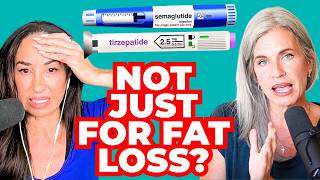
YouTube interview (Natalie Jill with Dr. Tyna Moore) exploring GLP-1 agonists beyond weight loss—covering mechanisms, personalized (micro) dosing, safety concerns, and applications for midlife metabolic health, inflammation, pain, and hormonal balance. Dr. Moore, a licensed naturopathic physician and chiropractor with regenerative medicine experience, emphasizes individualized low-dose strategies, gut and hormonal optimization, and clinician-guided care vs. telemedicine/medspa one-size-fits-all approaches.
Chapters
GLP1s in wellness a hot topic. Seems like everyone is talking about them, doing them, some people even shaming them. You hear it from celebrities, influencers, even probably your neighbor. Med spas seem to be popping up, offering them wellness clinics, talking about wellness shots and even your telehealth company bringing them up as options. But clinicians seem to be prescribing massive doses and sometimes the wrong dose. And how do we know if they're right for us? And are they only for weight loss? And what type of protocol should people be following that are interested? And standard starting doses? Why do they make some people so sick and others seem to love them and thrive for them? And is there a proper way to use them and lose weight or use them for other things, other inflammation markers that we have going on in our bodies, especially in midlife? Today I'm bringing back Dr. Tina Moore. She's not only a personal friend, but she is my go to too expert when it comes to this topic. I had never even heard of the term GLP1 before her. She's the one who created the buzz about how to do it right, the right types of doses, the questions to ask and how these can be used and should be used kind of outside of the box, not just for weight loss. Thank you so much, Dr. Tina Moore, for being back here.
Yeah, thanks for having me. I'm excited to be here again.
When we did a part one quite some time ago, I knew nothing about this. You really schooled and educated me. I seem to know a lot more lately because of following you and from people that follow what you teach. I've gotten a lot of questions and I always go to you as my go to expert. Can you just give a little background of you and your credentials? Because people are going to ask that like where did you come from and how did this even become a topic that was of interest to you?
Sure, sure. So I am a licensed naturopathic physician and a chiropractor. And in many states in this country we are primary care physicians. We're trained in a four year medical program and hold medical licenses. I can prescribe, I can do minor surgery, I can, you know, do all the things here. And my background was in regenerative medicine. And so I predominantly did regenerative injection therapies for orthopedic conditions. That was my wheelhouse. And early on in my career I realized that hormones were an absolutely necessary piece of the puzzle because as we now know, you know, with Dr. Vonda Wright publishing Menopausal pain syndrome paper that she did last year. The musculoskeletal syndrome of menopause, if you will. Some of us have been practicing that way for 20 some years. And so I never stopped prescribing hormones back in the day when the Women's Health Initiative scared everybody away. And I know that in midlife we have a whole certain set of issues that are not the same as a younger woman and not even the same as an older woman. This perimenopausal menopausal phase is a really particular time. Fast forward, we get peptides on board. You know, in the 2000 and teens, we start seeing peptides come on the scene. It fits really seamlessly into regenerative medicine practice. We have exosomes, we have stem cells. I had all the things GLP1s I only learned about a few years ago. And what I had known them for were for diabetes. They were not in the conversation for weight loss. They were as a treatment for type 2 diabetes. That was the only way I understood them. And then a few years ago, the weight loss FDA approval happened and the Internet seemed to go crazy. So I was like, why is everybody freaking out about this? We've been using these. They're peptides, actually. They're not just pharmaceutical drugs. They're actually peptides. We've been using these peptides for decades in clinical practice for type 2 diabetes safely and effectively. So what's going on? And I think some of it was pushback from, you know, the last few years and what happened there and people distrusting big pharma more and more. So I got interested because I started seeing the functional medicine space, the online health influencer space and mainstream media all combine into the same message, which really raised eyebrow for me. And I think we talked about this last time. I was like, this sounds very propagandized. What is. Why is everybody pitching a fit about this? Started looking into GLP1 agonist. That's what they are called. We make GLP1 in our body. These just help it stay in circulation longer. So these are semaclutide, which, you know, is oic or wovi, bioidentical to what we make in our own body. It's just been tweaked so that it stays in the body longer. I started looking at what else it did in the body. And as I was researching, I was realizing very quickly that the clickbaity headlines we were hearing all over the Internet a few years ago and all over the television were Very propagandized. And that, you know, I'm just an insubordinate little libertarian at heart. So I was like, why is, first of all, why is my community and the mainstream community aligning on this message to vilify it? And second of all, why are they not telling any of the other things that I'm finding in, like, mountains of data, right? And so the first thing I do is I go top down. And I immediately, you know, looked up the data on GLP1s and neurocognitive function and neuroinflammation and how it is, and found out very quickly that it quells neuroinflammation. It's neuroregenerative. And there were studies happening in the pipeline for Alzheimer's and Parkinson's. And I was like, well, holy smokes. And then I just went top down, right? The second thing I look up is pain, because that's my wheelhouse. You know, pain is very neurocognitive. So, like, what's happening in the central nervous system, what's happening with pain? And in that case found some really compelling data and in fact found out that it is protective against muscle and it is protective against bone, and it is protective to our joints. And I was like, well, this is not at all what we're being told, right? And that was right about the pinnacle, when I won't name names, but there were certain health influencer doctors out there really doubling down on this. You're going to lose all your muscle and die kind of conversation. The muscle loss. It's not just muscle loss. That term, 40% you keep hearing thrown around. That's for lean mass loss. That's total lean mass. Lean mass is all the soft tissues in your body that aren't bone, essentially. And muscle is part of that. And so that could be the fat in your liver, that could be the fatty infiltrate in your muscle that you're losing. So this 40% is really overblown if you understand that muscle's only a small portion of that. And the amount of lean mass loss that was happening is right on par with any low calorie diet or any severe caloric deficit, whether it's through restricted calories or through bariatric surgery. So I was like, why are people freaking out about this? Just don't dose your patients into starvation mode, right? And then I got really interested because I like to give the lowest necessary dose to an individual. I do very individualized medicine. There's no algorithm. It's, you know, what does the person in Front of me need. And I started thinking, well, what about girlies like us? Like middle aged ladies like us who are, you know, smack in the throes of perimenopause, menopause. We're trying to sort out our hormones, which is incredibly difficult because our hormones are doing.
All over the place.
It's much easier when the ovaries go offline completely because then everything you get is exhausting. Right now we're like, some months we're good, some months we're not. So the months that we're good and our ovaries are working, we're overdosing on our estrogen cream, you know, so I was just in the middle of all of that hell and experiencing extreme tip to toe pain, extreme brain fog myself. You know, I've seen it a million times with patients. So many women would come into my clinic, women like you, who were so lean, beautiful six pack abs their whole lives. And then all of a sud a sudden show up in my clinic and they're like, what the heck is this? Like, what is this?
What's going on?
Yeah, like this £15 that just came on and I have not changed anything. And these women are dedicated, you know, just, it's not just willpower, it's, it's just absolute, you know, commitment to tracking every macro. And I mean hardcore, way more hardcore than I am. And they're gaining the weight and that is the beginning of insulin resistance. And that's all part of the menopausal syndrome, if you will. It's part of our estrogen leaving our body. It's part of our hormones going side. It's not just aging, it's not just metabolism slowing down. It is very intimately tied into what's happening with our hormonal milieu. As your estrogen wanes, you become more insulin resistant. That's just what happens. And so in seeing this in so many clients and then it happening to myself, I'm like, oh God, it's happening to me. And I call it the thickening. It's where you just sort of.
Yeah, I, I probably stole that term from you without knowing it. You know, when you're around a friend that says something a million times and I now I say midlife thickening, I, I give you credit for that.
You just thicken up. And part of it's swelling, part of it's your immune system going rogue because your hormones are going rogue. It's all very intricate and interrelated and no matter how hard I would try with a patient, no matter how Hard. I was trying with myself. I could not pull the lever to correct it. And it wasn't about weight. I'm really frustrated that this microdosing has taken off as a vanity weight loss tool. That is not ever what I intended. Yes. In a metabolically optimized woman who's on hrt, who's doing all the things, who's really got her shit dialed in and who's metabolically sound, you apply a tiny little bit of GLP1 and you will often see weight loss happen. But in every other woman, which is by far the large majority of middle aged women, that is not the case. And so the fact that there's all these telemedicine companies cropping up, saying that they're microdosing, saying it's for weight loss, I think it's really unethical and I'll tell you why as we go through this conversation. But anyway, to me, it was more about the brain. I was like, something in my central nervous system in my brain needs the lever pulled. And I likened it to my husband, who's an electrician. I told him, I said, I feel like I need you to go into my brain and like reset the breaker, you know, when the breaker blows. And I feel like GLP1s will do this based on the mechanism of action and based on what I've studied on them. And he was like, huh, interesting. So I called all my girlfriends up, I called all my doctor friends up, and I said, are you guys using these in tiny little doses? Because I think someone like you or myself, I mean, I could probably tolerate a little bit more because I have more body fat. But in gals like us, I was thinking like the tiniest little bit. And they all said, we are using low doses, but we're using the standard low dose. And we're using, in every single case, they were using it for weight loss or appetite suppression. So maybe they were using it for vanity weight loss, but they were still using the standard low dose. And I thought, you know, that standard low dose would kill me. I think I'm like, I think that would land me in the hospital. And so I decided that I was going to take a fraction of that. And I also applied it to any patient who was willing to work with me on it and who was open to it. And so I had a sprinkling of folks that we tried it out on first wave just to kind of see. And I grabbed folks who had a whole myriad of different types of conditions. And so while I say publicly that I don't practice anymore. It's because I don't accept the general public. I still have a healthy practice, I still consult with clients. And I'm in a very interesting position because I have hundreds of thousands of followers and I hear from a lot of them. And so I've gotten thousands of messages over the past few years since I've been talking about this. So I feel like I'm in a very interesting particular position to understand how this strategy works out because a lot of people took to the streets and started, started trying it. Basically they got their doctors to sign up, a lot of doctors started doing it. And the results have been amazing. Right? Just absolutely amazing. And most notably on inflammation, pain, immune system regulation, I mean that's really the big hitters cardiovascular protection. But back to the so called microdosing. I've had several of those same colleagues that I talked to originally come back to me now and say, I don't know why you're saying you pioneered something. We've been doing this for years. And I'm like, no, you've been using the standard low dose and you've been using it for weight loss or for appetite suppression. I am having an entirely different conversation over here. And I'm talking a fraction of the starting dose and I'm talking about utilizing it for a myriad of other potential positive outcomes. We're not talking treatment, prevention or cure. We're talking helping to stabilize homeostasis in the body. Right. It's a different way of looking at things. I'm not applying a medication to a condition. I'm trying to. And I'm using a lot of other peptides. I'm using hormones. I'm trying to get an individual's homeostasis back to baseline so that their body works optimally. That's the difference. And so that usually just requires a small amount. So that's where we're at.
So today I have so many questions for you about, for the metabolically optimization. Like I want to talk about that, but before I do that, I want to bring up a couple of the questions that I know people are thinking just for that general audience first. First then we'll get, we'll kind of dial to that. So I want to talk about the weight loss people first. The people that this is actually like really helping in fat loss and weight loss. And I'm talking the more like clinically obese or the people that have the a lot of weight to lose that standard methods, nothing was working for them. I want to ask you, how do you feel about that for those people. And why is there so much shame around it in the wellness community? What is that about?
That's a big question. I think it's absolutely, hands down the most miraculous, innovative intervention I've seen ever in medicine. And I think it could save the world if done right. Yes. I think that folks who are dealing with the disease of obesity, something I didn't appreciate early on, that I really appreciate now, that there is in fact a disease of obesity. We do not all have the same engine. I don't know how to get that point across to people. We do not all have the same engine. It's like asking your 1975 Ford to run like your, you know, 2025 E class Mercedes. We do not all have the same engine. And that's the way I can explain it. We do not all have the same brain signaling to the, you know, signaling peptide hormones. It's not just GLP1. There's a whole orchestra of signaling peptide hormones, leptin, ghrelin. There's a whole suite of them, and they work together, and they don't work optimally if we don't have enough GLP1 in the system. We also have proof in studies showing that those who have type 2 diabetes, those who struggle with fatty liver, they have a reduced level of GLP1 in their bodies. We also have studies showing that when you take lean individuals and obese individuals and you feed them both fat, they both have the same GLP one response. It's made in our L cells in our gut and it's made in our brain. It must be doing something very particular in our brain if it's also being manufactured there. If you feed both of these types of people carbohydrates, the obese group does not have the same amount of GLP1 secreted from their bodies as the lean individuals. They are functionally GLP1 deficient, if you will. We also know that, but. Well, I know because in clinical practice, I tested everyone's gut and 99% of my patients had compromise in their gut. Most people are dealing with some level. I know you know the gut well, leaky gut, inflammatory gut, all kinds of issues in the gut. If the L cells are trashed from chronic inflammation over decades, do you think they're making any substantial amount of GLP1? Right. Correct. And so we've got these now. We've got probiotics out there, we've got different supplements out there that help stimulate the L cells. We're trying to get the L cells to kick Back on. Right. And that got me thinking, what if my decades long inflammatory bowel disease trashed my L cells and I'm functionally deficient? Right. I'm not even sure because we don't have the data yet. But I'm really intrigued about like SNPs, like genomics, you know, single nucleotide polymorphisms that code for GLP1. I wonder if those are different in individuals. I'm betting they are. Right. And I'm wondering how epigenetics plays into this. So there's lots of reasons to understand that those who are. It's on a spectrum. Right. And so you can have folks who are obese who do not have the disease of obesity, and you can have folks who have the disease of obesity and are not obese. But I do think that there's something there and I think that folks who are struggling. It's a risk tolerance ratio we can go into. I could do a whole episode on how a lot of these big scaries have been severely propagandized and how the data is just. Even since we last talked, the data is just not playing out. It is not leading people into pancreatitis. It is not leading people into thyroid cancer. We have the data on that. Again, this is not medical advice. Talk to your practitioner if you're at risk and you're concerned. But that, all that to say the risk of obesity long term is substantial to your overall health and the risk of cancer and the risk of all kinds of downstream impacts from that. And so it's like risk tolerance ratio. Right.
I think, just like you about it, I think it's so cutting edge, it's so breakthrough. I think it could change our entire. This can change everything when it comes to obesity. People that are in my fat loss programs, if they're doing them, I think more power to them, it's great. It's. It helps them get better results. So I have no issues with it. But I do have a lot of colleagues that are really judgy about it and they really. It surprises me actually. They. It's almost like this shame around it. And what is it? What is that you said? Fat phobic.
I think they're fatophobic. I think they have obesity bias. I can't figure it out any other way. It is so egregiously ignorant at this point with the actual data that we have. And so many of these people I know as well personally, and I listen to them squawk on their Instagram and on their big platforms and I'm like, are you intentionally ignorant?
It surprised me at first. I thought it was maybe they're worried about like competition or something, like it's going to take from them. I don't know. It's so bizarre. But I think more wellness people that I know that are true experts, they are for them, they understand them. But there are still, there's a pocket of them that are very vocal about how they're dangerous and bad. And I don't understand that the research doesn't support that.
They have something to sell. I'm guessing it's interesting too, because those same individuals with these huge platforms that vilify GLP1s will simultaneously sell you BPC 157 because it comes in an oral capsule that they can sell you as a nutraceutical. And I'm like, oh, that peptides okay in their body. That's. That one's okay, but this one's not okay. I gotcha.
Okay, so, so for obesity and I'm gonna move over to the other side of who I really want to dive into in a minute, but on the obesity topic, when people are obese and need this and we, they are an ideal person working with a practitioner and they're saying they got super sick at first or is that a case of too high of a dose as well?
I think that we, I think we really need to consider personalized dosing and understand that not everybody can start at the standard dose that it's offered at. And I think if, you know, if the manufacturers were to be savvy, they would be a lot more inclusive and open up the opportunity for a lot more people to utilize these comfortably if they were to onboard them potentially at a lower dose. And we now have both manufacturers are offering the vial form instead of just the pen. And so I think there's some opportunity there, but I think any prudent physician will tell you that we want to make our patients as comfortable as possible. And so starting an individual at a dose that they can tolerate. And it's exciting because the journal Diabetes just, actually just published an article about microdosing GLP1s. And I was like, what? It was an opinion piece. It wasn't a study. It was an opinion piece by a very well respected endocrinologist. But they were talking about using it as an onboarding strategy. So not at all what I was trying to discuss. But they are talking about it in. For the use of diabetes and obesity in terms of, hey, let's consider that we might want to onboard People at a dose that's tolerable and doesn't make them violently ill for weeks on end until they adapt. Eventually they will adapt, but like why put them through hell?
And honestly I think with any pharmaceutical you that could be the case. I mean I'll share with my own thyroid stuff like, you know, having a low thyroid, I don't want the standard dose. I actually get compounded a tiny microdose because sometimes a micro dose of things are all that's needed. I was even talking to my cardiologist who I absolutely love. He in very rare cases when he will suggest a statin for certain genetic markers, he microdoses the statin. He doesn't have people take it every day. He has. So it's like this could be applied to all types of medication. We don't have have to because how can you say a 300 pound person needs the same prescription as 120? It just doesn't make sense that it doesn't make sense.
And I have found that those who are struggling with obesity definitely usually need a more standard dose. That's why I think it's so unethical that these telemedic companies are trying to sell microdosing for weight loss. I think it's so incredibly unethical because.
They need a higher standard, a higher dose.
Every patient I've dealt with when we last talked, I had only had one patient that had obesity that we'd used it for. And since then I've worked with several and consulted with several. And again I hear from everybody, like all of you guys are texting me all the time, right? A lot of people in the community who are on these or their families are on them. And so I'm like the go to and they 99.9% of the time need a more standardized dose. All that to say though the other part of my strategy is to go really slow and low. So starting out as low as necessary and holding, I think time under tension really matters. The standard way of dosing these in for obesity or type 2 diabetes is to ramp them up pretty quickly. And there's some understanding and I get why they're doing it. There's some understanding that people will acclimate to them quickly. So you got to keep ramping the dose up. But I haven't found that to be true. I found that you can hold for a while. And so I'll give you an example. In most of the individuals that I've worked with who do have obesity and have a significant amount of weight to lose. We get them somewhere in like the middle at the highest end, we get them somewhere in the middle of the dosing tiers and we just hold them there and then all of a sudden the weight starts falling off. Especially if they're doing all the things right, especially if they're really being compliant with the lifestyle pieces that I think are absolutely non negotiable. And so, you know, all that to say is we're learning. And I think the medical community is learning. And the studies were done a certain way and so that's what doctors have to follow is the standard of care is to follow what study did. And so the studies ramp people up pretty high. But what we're seeing now, I think that's concerning. Whether we see it in the data is irrelevant because I'm hearing it from people I know several people in the obesity community glp. There's like a whole obesity GLP one community out there. My friend Dave Knapp, he kind of heads it up. He's like an investigative journalist. And a lot of these folks are stuck at the highest dose and they're regaining their fat and it's not working anymore because receptor get desensitized just like anything. Sure, you can get insulin resistance, you can get leptin resistance, you can get any, you can get hormonal resistance to any of the hormones we're taking, you know, our sex steroid hormones like testosterone, estrogen, progesterone. So I think that there's a real concern there too.
So what do they do if that happens? If that, if you get resistant to it?
Well, this is why I made my course and you know, really encourage folks to check it out and encourage doctors to buy it and learn how to deal with. It's a comprehensive strategy. It's literally the way that I've been practicing for 20 years in clinic. I just, just wrapped it up in a GLP1 bow. It's really about treating metabolic health. And I think these folks are not necessarily hitting the gym. They might be doing a lot of cardio, but as you know, like that's not the only solution. So you know what, the foods we're choosing to eat the way we're choosing to move our body or not, are we optimizing our sleep and respecting it?
You know, see, I want other people in the wellness space to really hear what you just said because just because somebody's so GLPs are not a competition. This is like, it's a work together. Like, like to me I'm like, well, people that are on GLPs for weight loss, they really need to understand how to train, how to eat right, how to do their protein, all of this stuff. It becomes even more important because just trying to cr. If you think it's just going to crush your appetite and that's it and you're just going to lose weight, there's a whole host of other things that can come up. Can I talk about the big scaries for a minute? Because I want. You said that there was a lot. There's nothing really supporting these big scaries. And the three that we keep hearing is basically your pancreas is going to explode. Like what's. Tell us the truth around that. And we also hear that you're going to rapidly lose muscle and that you're going to have gastric empathy problems. So those are the three big scaries. Can you speak into those?
And that your eyeballs are going to rot out. Real going around that your eyeballs are going to rot out. Yeah, let's talk about it. So I do think biliary issues are a real concern because this does slow down gastric motility. So it's going to slow everything down. And your gallbladder and your pancreas and your gut are like BFFs, right? They all work together. So if we slow down gastric emptying, what happens? What I'm seeing is folks who traditionally eat the, I call it the whatever diet. When you ask em what they eat, they say I eat whatever. It's like the Standard American diet, right? The SAD diet. That's the acronym. Standard American Diet. They're crushing a lot of fatty foods, fried foods, maybe not the most nutrient dense foods potentially. And then they go on a GLP1. They're not given any counseling. I really do think a lot of these issues are a dosing and management problem. And the onus of that needs to go on. The doctors who are doing the dosing, that's why I created this course for the doctors. They're putting them on a dose, they're crushing their appetite completely. Appetite control is one thing, appetite crushing is entirely a different one. And so now these folks are eating hardly nothing. And what they are eating, they're still kind of eating their crappy food, if you will. And maybe they're still crushing Chick Fil A on the side. When that gastric motility has slowed down and the caloric intake has dropped significantly, everything slows. You actually need the food in the mouth to get peristalsis going. And so everything slows down. The gallbladder Gets sludgy, then they go eat a high fat meal that taxes the gallbladder and they throw a stone. The people that probably need GLP1s the most that are are in that obesity crew. Those folks have a much higher risk for gall stones and biliary issues. They have a much higher risk of pancreatitis already because they have fatty pancreas. They have a much higher risk for gastroparesis already because their vagus nerve is being destroyed by the hyperglycemia that happens with type 2 diabetes. And so the people most at risk for these conditions are already at high risk and they're the ones most likely utilizing these peptides. So we have to consider that first and foremost, when we slow down all that gastric motility, they're not eating anything. Their gall bile gets sludged up, they throw a stone into the pancreas. That is the number one reason for pancreatitis is a stone being thrown. It's not like the pancreas just melts. It's because it got a stone thrown at it.
So if you're still like eating fiber and going to the bathroom regularly, then this would not necessarily be a thing. Is that if I'm hearing you correctly?
Well, if you have a history of biliary issues, work closely with your clinician. And I think this is why we don't go to med spas. This is why we don't do telemed. This is why we go to a doctor who knows what they're doing. Because I think the clinicians, you know, or, or find a good reputable telemedic company. But the companies, the doctors that are respectable are going to hand hold their patients. Right. They're going to just do this very carefully. And I consult with several people by referral only. And she gets all of her medications from her specific clinicians. Right. I'm not prescribing anything. And her GI doc has literally has her come in the office and administers the shot. She comes in once a week just to check in. That's how close he's holding her hand. I think that's the way to do it. Because she has some issues and concern over pancreatitis. Right. In the past. So these are things that we have to consider. And the gastroparesis, like I said, the vagus nerve. Nerve is the nerve from your brain to your gut and it gets destroyed by high glucose levels. So when people are rocking high blood sugars for extended period of time, as in the case of type 2 diabetes, especially if they didn't know that they had type 2 diabetes. Rocking. You don't just land on type 2, you. It takes you 10, 15 years to get there. So all that damage is happening in that time. And then they throw something that significantly halts or stalls their gastric motility if they take too high a dose and boom, they get gastroparesis. It's transient, it goes away. We have studies on that. It takes a while for the peptide to get out of your system. And then gastric motility returns. There's no permanent freezing of the stomach. And then I think we have to talk about the thyroid thing really quick. That is a black box warning. I know people are very concerned. The black box warning was on rodents. And these rodents develop this type of medullary thyroid cancer very readily. Humans do not. It's very rare in humans. It's very common in rodents. When you look at mice studies or rat studies, they're giving those animals most times like 10 to 12 times the dose they would give a human being. So they're giving them these super physiologically high doses and then their developing medullary thyroid cancer. What they didn't tell you is the control group of the rodents also developed medullary thyroid cancer. So how they made that a causative link, I don't understand. But it is now a black box warning and everyone thinks it's going to happen. The data is actually showing that it might be therapeutic for the thyroid. That said, if you have a history of thyroid cancer, family history, personal history, obviously risk tolerance, again, talk to your clinician, make sure this is right for you. I'm not giving medical advice. I'm not telling you. Don't worry about it at all. But the things that I do worry about would be the gallstones. So I'm really hyper. I'm a naturopath. I start with the gut first. I'm really hyper aware that people are having good, healthy gastric motility, good healthy digestive support. We get the enzymes on board, we get the ox bile on board, we.
I'd imagine ted things like that.
Yes. We make sure everything's going before we start the GLP1 or concurrently. I'm hyper fixated on that. And I really want them pooping every day. I want things moving. And so I think that's the big one. I think the muscle loss piece, like I said, I think we already hit that. You know, it's right on par with any heavily calorically restricted diet or bariatric pediatric surgery. Just don't starve your Patients. Yeah.
I think when people are talking about like hair loss and muscle, like they're literally not eating, like they're malnourished at this point, that's too.
I think that's part of it. I will say, even at tiny doses I've seen GLP1s, they tend to unmask hormonal issues. So if you have an underlying hypothyroid issue, which I would say most, I will die on this hill. I think every woman over 40 should be on some dose of thyroid medication, period. It's a longevity and protective tool. Like being subclinically hypothyroid increases your risk for car.
Yeah, I'm on a compounded T3. Like it's. And it's very, very low. It's like a very low dose. Like the lowest you can get. But it makes a difference.
You get what you need. Right. Like it's a little sprinkle. I mean, there's. There's a study that goes way back to when I was in medical school showed that women in particular who were subclinically Hypothyroid had a 250% increased risk of dying of a heart attack.
Wow.
Thyroid had a 250% increased risk of dying of a heart attack attack because of it. So I mean, we don't want to leave the thyroid slugging along. We want to give it a little love. But I think that you throw some GLP1 on it and the hair will start falling out. Right. Or if your progesterone's off or you're.
That makes sense. You're aggravating something that's already there.
Yeah. And a lot of these women are like low key, long term PCOS gals and they don't know it. And that's a cardinal symptom of PCOS is hair loss. So then you throw a GLP1 on it. The GLP1 gets things moving, it gets metabolism going. And if you don't have the CO factors because you've been malnourished for a long time and you have a lot of hormonal dysfunction unmasked, this makes sense.
I know somebody personally who had had underlying alopecia. So then. And she was thinking maybe that is the cause of that. But it makes sense what you're saying. If that was underlying that everything could get aggravated.
I think it does. I think that's why I'm such a proponent. That's why in my course I double down on hormone replacement therapy and making sure that all these things are Addressed. And I lay it out in a hierarchy of, like, what's first, what's second, what's third? We always support the adrenals, we always support the thyroid, and then we go up the hormone hill. Because just one of those being off. Not only that, but it'll make the GLP1 not work as well. There's a whole group of people who have messaged me, a lot of people. There's a whole subset of people where these don't work at all. It doesn't matter what dose they take. They get no benefit whatsoever. They lose no weight or they have. The needle doesn't move for them. And nine times out of 10, I say, Are you strength training? Are you on HRT? And they say, no.
And I'm like, well, it all has to be. It all goes in important.
Hey there.
If you're finding value in this episode of Midlife Conversations, I would really appreciate it if you would hit that, like, button and. And subscribe. And when that little bell pops up, you want to hit that. That way you are notified of all new episodes so you don't miss a beat. Also, you subscribing and liking helps others find this content. And this allows me to keep growing, keep getting amazing new guests for you and to keep sharing. I want to talk about toxic load for a minute and inflammation, and then I'm going to. I want to move sort of into that metabolically optimized eyes woman. And I think you and I kind of bonded over pain and inflammation and autoimmune and all the things. Like, I feel like I. I've got this long list of crap that I've dealt with in my life, so I've chased that. And to me, toxic load is like, there's a lot of things in the world that are toxic, but as we get older, things start compounding. So your hair color, your. Your products, your. It's just everywhere. Like, it just starts compounding. And for me, my ruptured breast implant kind of tipped everything over to I firsthand experience what toxic load can do to my body. I don't believe it was just the implant. I believe there's a whole bunch of toxic load and then that rupture kind of tipped things over. So I believe inflammation is super. Can you speak into just toxic load and inflammation and what you see happening with midlife women in general when it comes to inflammation?
Yeah. Well, one of the things that I have pushed back when. When influencers or health folks have said people don't need GLP ones, Tina, just live A clean life. I always say what I tell my patients, which is how you got to me. How, how people got into my office. Like what is that back history? It's lengthy, you know, I mean myself personally in second grade, I grew up in California. I was living in Northern California while they were spraying malathion over all of our houses to kill off the fruit flies because we had a fruit fly infestation and like all the dogs were dying, all the bugs died, we all got the shit sprayed out of us. How do people come to you in the first place? Right. If you're a clinician, there's a history there and there's a bucket, a toxic burden bucket. And a lot of people get that bucket starts overflowing and it's not for me to judge. And there's no amount of carnivore diet or clean eating or anything that's going to get them out of it. There's no amount of sauna. Yeah, we can dial it down. We can really help to start pulling some of those layers of the onion off. But I'm not here to judge if their immune system's freaking out. And then you hit middle age. I mean that's the reason why everything goes sideways when you hit middle aged. Yeah. The minute you start to lose estrogen. Estrogen is super protective and anti inflammatory progesterone is super protective and anti inflammatory progesterone starts to wane. Gosh, I have women in my clinic in their 20s and 30s that I put on progesterone like, you know, tiny amounts as needed. We go back up to physiologic dosing. This isn't super physiologic, this isn't pharmacologic dosing, this is just physiologic dosing. And so women hit middle age, the wheels start really falling off the car and the shit hits the fan and it's miserable. And they hear this weird dogmatic, polarized, you know, narrative on social media which is like, well just, you know, it's, it's always something, go vegan, go carnivore. It's something hardcore and that's going to solve everything. And people are so short cicar and the shit hits the fan and it's miserable. And they hear this weird, dogmatic, polarized, you know, narrative on social media which is like, well just, you know, it's, it's always something, go vegan, go carnivore. It's something hardcore and that's going to solve everything. And people are so short sighted. I get messages all the time as I know you do too. I know you just recently went through this with your back image cited. I get messages all the time as I know you do too. I know you just recently went through this with your back imaging that you shared just because they had a personal experience that is therefore the solution for everyone. Well, I you know, it's like the all the women who come into my comments and they're like I don't need to use hormones, I'm 58 and I just do carnivore and I keto and it's amazing.
And I'm in 10 years.
Yeah, like have fun raw dogging your menopause. But we're not all built the same and we don't all have the same engine and we don't all have the same brain that you shared just because they had a personal experience that is therefore the solution for everyone. Well, I.
More from Natalie









How Natalie Jill Fitness Was Born - The Journey From Corporate To Fitness To Midlife Conversations

