
Dr. Rajasekhar Malur, Head of Power at Tata Consulting Engineers, breaks down India's renewable energy push. The country aims for 450 GW of renewable capacity by 2030, up from 95 GW in early 2021, but faces obstacles: Chinese solar imports dominate, grid bottlenecks slow projects, and DISCOM debt drains resources. Policy fixes include domestic manufacturing incentives, hybrid power bids, and floating solar programs.
Chapters
Welcome back, everyone. I would like to introduce our next speaker. Prior to this role, Mr. Madhu has also performed various roles in the company. He was the Head of Thermal Power from 2013 to 2016 and Global Delivery Head for the Energy Business from 2016 to 2018. From 2008 to 2013, he was the Vertical Head of overseas projects for power business. Now please join me in welcoming Mr. Rajasekhar Malur.
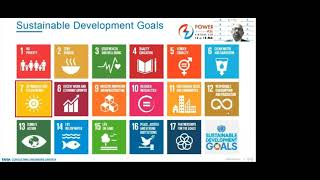
Good evening, ladies and gentlemen. My name is Dr. Malur and I'm here to talk about renewable energy in India, a reality check, challenges, and way forward. I'll begin by Thanking the organizers of Power Week Asia for providing me this opportunity. And let me just start this presentation by sharing a couple of slides on where I come from and what we do. We belong to the Tata Group, which is a globally renowned brand with presence in over 100 countries, 700,000 employees, $113+ billion of revenue. And 65% of this revenue is from international business. Tata Consulting Engineers, which I represent, is a wholly owned subsidiary of the Tata Group. TC is present in 3 key verticals— infrastructure, resources, and power. We'll talk a little bit in detail on power a little while later. In infrastructure, we are present mainly in water and wastewater, transportation, metro, high-speed rail, ports and harbors. Buildings and architecture, we are doing about, you know, several university campuses, healthcare facilities, hotels. We're also into 15 smart cities in India today. And we also have a subsidiary called EcoFirst, which works in sustainable solutions. Under resources vertical, we have two key business units. One is hydrocarbons and chemicals, which works in oil and gas refineries, petrochemicals, food, pharma, fertilizer, cement. And so on. And mining and metallurgy, which takes care of mine development, mine benefication, material handling, metal making, steel, copper, aluminum, zinc, and so on. We have a project management business that works as a horizontal across these verticals. We have about close to 1,000 engineers in 130 different sites globally taking care of projects, managing the projects on behalf of the customers. With the advent of Industry 4.0, we have our Digital and Advanced Technologies business unit, which implements these digital solutions across these key verticals. At any point in time, TCE is involved in $35 billion of physical infrastructure creation. And we are ranked 116 as per Engineering News-Record's top 250 global design companies. I head the power business for Tata Consulting Engineers, and we have close to 6 decades of experience in all forms of power generation: thermal, steam plants, critic— supercritical, subcritical, ultra-supercritical, gas-fired simple cycle, combined cycle plants, aeroderivatives, and heavy-duty gas turbines, captive units, cogeneration plants. Close to about 85% of the nuclear power plants in India is something that Tata Consulting Engineers has designed. We are also present in the International Thermonuclear Experimental Reactor in France. That is the first fusion reactor that is under development. In hydro, we are into micro, mini, small, medium, and major projects in India and Africa. With the advent of VREs, there's a lot of focus on pump storage projects currently. We are also in renovation and modernization, dam rehabilitation, et cetera. In renewables, we are in solar, ground-mounted solar PV, rooftop solar, floating solar, concentrated solar power. In wind, both onshore and offshore wind farms, and also in biomass and waste-to-energy. And other than these three, these forms of generation, we are also in transmission and distribution infrastructure creation. 765 kV transmission lines. HVDC, smart grids, AIS and GIS, distribution systems. And we have a specialist group that takes care of electrical system studies. And in all these sectors, we are also in the OPEX, or we provide OPEX services to take care of asset lifecycle management, performance improvements, and and digital solutions in the OPEX sector, in operating plants or operating infrastructure. With this brief introduction, let us move on to today's subject, which is on SDG number 7, on affordable and clean energy. We'll take a look at what is happening around us, the energy— in fact, the current pandemic is estimated to have brought it forward by 5 years. In 2020, the overall emissions went down by about 8%. And it is estimated that such a reduction must happen every year till 2050 if we have to meet our 1.5-degree carbon budget, which seems highly improbable today. If you look at the global scenario in the last decade, 2009 to 2019, 75% of the capacity additions that happened was in the renewable space. And the electricity generated, close to about 30%, was from variable renewable power. Of this, about 55% is from hydro, about 22% from wind, about 10% from solar, and about 8% from biomass, geothermal, et cetera. A record 200 gigawatts of renewable power capacity addition happened in 2019. And the major countries that added solar capacity was China, India, US, Japan, and Germany. The countries where major wind capacity additions happened was again China, US, India, Spain, UK, and Germany. Hydropower was added in Brazil, China, and Laos. Geothermal capacity was added in Indonesia, Kenya, and Turkey. From an electricity generation perspective, Denmark continues to lead with about 60% of variable renewable power as of 2019. And that is followed by 4 countries— Uruguay, Ireland, Germany, and Portugal— which are at 30% renewable power generated as on 2019. And from an investment perspective, out of close to about $300 billion of investment that happened, 33% was in China and India. 46% from other developed countries, and remaining 21% from other developing countries and emerging economies. So with this kind of development that is happening, it is expected that by 2050, solar and wind installation— wind power generated will be about 62% of the total power generated. Add 14% of hydropower to this, so 78% of electricity generated in 2050 is expected to be from renewables. So what does this mean? This means a lot of focus needs to be given for flexibility requirements, for energy storage requirements, and for grid infrastructure requirements. And investments in grid infrastructure have already begun. And you will see many upgrades in the years to come. And it is projected that about close to $20 trillion of worth of investment will happen in the electricity grids. So in this story, where is India? India aspires to be a $5 trillion economy in 2025 and a $10 trillion economy by 2030. And there has been a huge spend in infrastructure that is currently on. And it will continue going forward. The Government of India released this National Infrastructure Pipeline with a vision to provide infrastructure services that are of world class, which will result in ease of living and quality of life which are to global standards. And one of the key objectives of this vision is on affordable and clean energy. That is to provide 24/7 power availability for all citizens with a reliable transmission and distribution infrastructure. So in 2020, India announced this National Infrastructure Pipeline to spend about $1.4 trillion on infrastructure by 2025. And about 20% of this is on renewable energy and conventional power. The government intends to spend about $120 billion on renewable power and close to about $170 billion in conventional power. An important point to note here is that 100% of the renewable power capacity addition will be by private sector. If you look at the current energy mix, India has about 66% thermal, about 22% renewable, about 14% hydro, and about 2% nuclear. And the plan is to change this mix by 2025 to 50% thermal, 39% renewable, and 9% hydro, and 2% nuclear. The current share of the electricity generated from renewable power is about 9%, and this is expected to move to 19% by 2025. India has challenges resorting to unscheduled load shedding because the distribution companies are under huge debt. They are not able to pay to the generators. Roughly about 5% of the consumers have smart metering installed. The electricity services are not on digital platform. The vision of the government is to ensure that 100% of the consumers will have smart metering and the electricity services will be on a digital platform. So the distribution companies are getting privatized so that there is open access to electricity and further Tariff revisions can happen regularly. So we spoke about this 100% investment of renewable power in private sector. And similarly, if you look at the conventional power, 55% of this spend is on electricity grids. Rest of the spend is actually on hydro. And maybe about 20% of that in thermal. On environmental upgrades, basically. And it is worthwhile to note that close to about 40% of this also is with the private sector. The entire project pipeline is available on a digital platform. If you go to IndiaInvestmentGrid.gov.in, you will get an update on the progress of all the projects in various sectors. And also the new projects are listed there. Along with the contact details. Let's now look at how are we doing. Our immediate target is 175 gigawatts by 2022. And we are at 92 gigawatts in 2021 March as we are speaking today. In solar, about 61 gigawatts of capacity addition has to happen. Of which 40 is expected to be from ground-mounted solar and remaining from roof-mounted, rooftop solar. Of this 40 ground-mounted solar, there is not expected to be any challenge because already more than half of it is under installation and the remaining is in that bidding and it will get awarded. If it is not commissioned, uh, definitely this 100 gigawatts is possible. From a ground-mounted solar perspective. Rooftop solar is going to be a challenge because today we are at 6 to 7 gigawatts and achieving 21, which is to add about 14 gigawatts in about 18, 20 months, is going to be a challenge. On wind also, we have to fill a gap of 21 gigawatts. Half of that will be from some of the hybrid plants that have already been awarded. The other half is going to be a challenge because in wind projects of late we are not seeing the kind of progress that is required. Offshore wind is actually picking up, I think our first offshore wind project is likely to be awarded in this financial year for sure, in this 2021 for sure. So even though there can be some challenges in achieving each of these targets, on an overall, there is a certain level of optimism that we'll be able to achieve 175 gigawatt for sure by 2022. In fact, the Prime Minister has gone on record, the Minister for New and Renewable Energy, as well as the NITI Aayog Chairman, have all spoken out in global and local fora that we will definitely be able to achieve 175 gigawatts by 2022. In fact, the confidence is also there on achieving 450 gigawatts by 2030. What are the challenges? If you look at the performance over the last 4 years, it is on a decreasing trend. In fact, the target that was set for 19-20, the previous financial year before the pandemic, itself was 25% less than 18-19, the previous year, and still we were not able to reach our targets. Add to this the current pandemic situation. In 2020 till this, you know, January 2021, in the, in the current financial year ending March 2021, As of January, 31% of targeted wind additions have happened and 28% of targeted solar additions have happened. The investment decisions have been delayed across the sector. There is uncertainty, we have to accept it. But amidst all the negative sentiments, the positive thing is that the electricity consumption levels have reached the pre-pandemic levels already. And going forward, things should only get better. If you look at the manufacturing scenario, bulk of the cells and the modules that we are getting is all from China. But if you look at the first quarter of 2020, we were able to import only 150 $1 billion worth of modules as against $650 million worth in the previous financial year— in the previous year quarter 1. And this, this drastic reduction was basically due to closure of the manufacturing facilities in China. Today India has only 3 gigawatts of solar cell manufacturing facilities. And about maybe 10 gigawatts of module manufacturing. So this is a major challenge. Some steps are being taken, we'll discuss that, but this is also one of the key challenges in achieving our targets. And add to this, with that huge investment coming— I mean, import coming from China, there is a lot of challenge in the geopolitical situation. There has been border issues in the last 6 months Things seem to have settled down now, but any small skirmishes that happen is not going to help the development. Hopefully, the economic realities will bring in some stability and peace in our neighbourhood. Other than these external factors, we have— with the rapid growth of renewables, uh, wherever these plants are coming up, there is no evacuation facilities. The infrastructure is not available. So that is an area of concern. Both land acquisition and power evacuation should be taken care by the government, and it has to happen at a speed comparable with which the capacity additions are happening. Another key issue that we are handling is on cancellation of PPAs due to either, you know, changes in the government. In some of the recent auctions, actually, the auctions awarded were cancelled. Because the succeeding auction went at a much lower price. Fortunately, the, the ministry has stepped in now and, and things will get sorted out, but that is not good news for the private developers. Further, there are power supply agreements that are not in place for awarded projects, especially for those that have been bundled with the manufacturing facility. It comes at a much higher price than the award that happens for just the renewable plant installations, the solar plant installation. So as per Markham report, there is actually about 14 gigawatts of solar plant that are yet to sign power supply agreements. So these issues need to be sorted out quickly. And we have this problem of distribution companies which are state-owned They are under huge debt burden. The government is releasing funds, but then that release is not happening at the speed with which it should happen. In fact, there's about $17 billion that the DISCOMs, or the distribution companies, owe to the generators. And this is for the electricity already consumed. And about 10% of that is for these renewable generators. So until and unless quick actions happen on this, it is going to hurt the investment sentiments. So what is the way forward? With the Aatmanirbhar Bharat policy, or the self-reliant India policy, policy. The focus now is on the manufacturing facilities. In fact, a few projects have already been awarded. There are a few, couple of developers who have started work on the manufacturing facility development. Further, the government has also announced 40% raise, 40% of basic customs duty to be paid. For any import of modules, 25% customs duty on import of cells. This is expected to aid domestic manufacturing capabilities. But this is effective only from 1st of April 2022, so that our immediate target of 175 gigawatt by 2022 will not face any challenge. There are some of these sectors which have failed neglect so far in our journey, and one of that is floating solar. India has supposedly about 18,000 square kilometers of reservoir. Solar plant, floating solar plant was commissioned. We are currently working on a 70-megawatt solar plant in the southern state of Kerala. Another area that had been neglected was rooftop solar that had a lot of policy issues, very complex. You do not get the benefit even if you install. The policies keep changing. They are different in different states and they change almost on an annual basis. Out of 43 gigawatt potential, we are at about 6, 7 gigawatts right now. And so this is getting the focus, but a policy uniformity and also stability of policy is what is needed for this to pick up and achieve its potential. Offshore wind has started. I would guess that the first offshore wind project will get awarded in this current— in this 2021 itself. There's an estimated 70 gigawatts potential in the two states of Gujarat on the west and Tamil Nadu in the south. With the variable renewable electricity getting generated, there is a lot of focus on development of pumped storage projects. the flexibility that the PSPs offer. We are currently working on 4 such projects and they are large projects, 1,600 gigawatts— sorry, 1,600 megawatts. The focus on system integration and hybridization is also there. In fact, India today is at about 9% variable renewable power. And by 2030, this will possibly move up to 35%. Till it reaches about 20-25%, there are not going to be any challenges in the grid. And so the importance of flexible power has been acknowledged, and the recent bids by Solar Energy Corporation of India have been to provide round-the-clock power. That is a hybrid of solar plus any other form of power. So there's a minimum of 51% solar capacity addition that has to happen that can get combined with any other source of generation. So this helps in utilization of unutilized or underutilized thermal assets that are there in the country. The government has also released the Green Term Ahead Market Policy, which will aid buyers and sellers of renewable power to sell and buy without resorting to long-term PPAs. The real-time market policy has also been announced, open access, distributed generation, and there is also policy to encourage solarization of the agricultural feeders. So some of these schemes are expected to provide impetus across all areas. And last but not the least, hydrogen is picking up. Green hydrogen comes from renewable power. And especially there are several large projects announced in the Middle East. We are working on one of the projects. It's about the manufacture of green hydrogen, ammonia, nitrogen. From renewable electricity. The progress or the future of hydrogen economy depends on number one, technology maturity, number two, the cost competitiveness. It will take a while for this to happen, but the developments have started already. So To conclude, the progress made by India in meeting our renewable energy targets has been commendable. The current pandemic has certainly impacted the growth negatively. That is in the near term, but in the long term, India's transition to clean energy is certain, and it will only accelerate going forward. And with this positive note, I would like to conclude my presentation. Thank you all for listening, and now I am open to take any questions. Thank you very much.
Thank you so much for sharing, Dr. Malo. We can see that there's a lot of questions coming in from our attendees. So we will start with the first questions from Miss Goh Tanaga, National Berhad, the Malaysian utility, national utilities. What is the current and projected capacity of renewable energy in India?
Yeah, thank you, Miss Goh. I think my presentation already had this data, and the data that I had shown in the presentation was as of January, and now as of February we are at about close to 95 gigawatts of renewable power, of which about 40 gigawatts each is from solar and wind, and the rest is from biomass and small hydro. In India, hydro plants up to 25 Gigawatts are considered as renewable as it stands today and will get the benefits that other renewable projects will get. So the immediate target, as I said in the speech that I just gave, 175 gigawatts by 2022, of which 100 is from solar and about 60 is from wind, and the rest 15 is from small hydro and biomass. The long-term target as of 2030 is 450 gigawatts of renewable power.
Okay, thank you, Dr. Maru. The other question is also from Miss Go. What is the mitigation that has been put in place to ensure the stability and to manage the uncertainty of the irradiation that could impact the system?
Yeah, you see, now, 10 years back, we, we had all, you know, kind of doubts and uncertainties. But I think now in 2020, 2021, the systems are there very much, you know, stabilized. And I would say that the confidence on the data, even the best possible data, there will be about close to about 8% of uncertainty. See, for the irradiation data, you consider P50, P75, P90. And even P50, which is, you know, at 50%, there can be about close to 8% of uncertainty. So that is one part. But today, tools are available for long-term forecasting, which have always been there. But the current tools, once the plant is commissioned, we have enough tools to which will compare the long-term forecast that we have made during the design with the live data that is coming out, particular to the site where the power is being generated. And so the consistency of the data, the dependability of the data, because you are collecting the data from your own site, will enhance and thereby reduce this uncertainty. So there are plenty of tools that are available and that the developers are already using. This will help in making good assumptions when the markets are opening up, like the real-time markets. You have to tell what you will give within a 15-minute interval. So, so the technology has developed, and so yes, uncertainty is there, but with the tools that are available, it is much, much reduced than where we were, let's say, 10 years back.
Thank you, Dr. Manu. The next question is from Pak Ansar Amir from PLN, Indonesia National Utilities. What is the biggest misconception about renewable energy in India and how India deal with that?
Yeah, this is a very, very good question to answer. I think when the journey started, the biggest misconception was renewable power or solar power is the answer for everything. And I think the variability was not very well understood in the beginning. Now there is a much better understanding and what needs to be done at the grid level. And so the thrust on the solar installations was very much there without the understanding. And there was no need also because, you know, 40 gigawatts, 50 gigawatts, 9%, 10% variable power is not going to impact the grid. Now there is much more focus. The focus is on hybrids. The focus is on round-the-clock power. So you are bundling renewable power with any other sources of power. So that way, because you need the baseload, right, the, the ability to provide the stability to the grid. So RTC power, the policies are being announced now. In fact, the round-the-clock power bids in which you bundle the renewable with thermal or hydro is being awarded now. So I think that misconception is getting answered. But the one that we'll need to answer going forward would be that cheapest power is not necessarily the best power in terms of the quality. Quality of power. And, you know, we have seen within a 10-year timeframe the solar panels degrading because the quality is not there, and you have all got cheap panels available. And so the focus needs to be on the quality. And so this will— what does it result in? This will result in indigenization that is happening in terms of manufacturing capabilities right now. And number 2, the importance of having the right people to advise, the importance of having consultants who will ensure that your quality is being met. So I would say that, you know, these are some of the misconceptions, and they are getting answered as we, you know, make progress in our journey.
Thank you, Dr. Malhotra. The next question is from P.L. Anantha. How does India government achieve renewable energy targets?
This is a philosophical question. I'm not from the government, but I will give you my view. And one of the first things the government did was to establish a Ministry of New and Renewable Power. So we have MNRE, which is established quite some time back. And India has also established the Solar Energy Corporation of India, which is in charge of the entire bidding. And 100% of this renewable power is by private developers, as you saw in that National Infrastructure Pipeline. So there is a clear intention in the Government of India that we have to make our progress towards this clean energy.
And India is—
it's not only about the domestic. India is led the International Solar Alliance as well. And some of the marquee projects like One World, One Sun, One Grid, you know, linking all between the Tropic of Capricorn and the Tropic of Cancer, all the countries through a common grid so that sun is always there at some part of the world. These are all the things that, uh, in, you know, India has, uh, has come up with. Now the SECI, what it is doing, the Solar Energy Corporation of India, It has taken pains to identify where the land is available. Okay, so large-scale solar parks are getting created, and further they are focusing on the evacuation facilities to be given to these private developers.
Otherwise the projects will suffer, right?
So the states— the SECI will work with individual states in the government and create, uh, these policy frameworks. There is interstate transmission system, so even states that do not have this land can invest in other states and get the same benefit, uh, that, uh, the state, uh, that has land will get. So these kind of policies are being made. Further, pooling substations, access roads, cable corridors, the transmission, the grid-level integration of the renewable power— all of this is taken care by the government. So what does the private developer has to do is to just come and install the plant. And so the policies have been supportive and there is a clear, clear intention in the government and that is very, very much required. In fact, the government recently announced in the state of Gujarat 25 gigawatts of hybrid park in the Kutch area. And now in the north, the Ladakh area has become a Union Territory and it's a plateau up there in the Himalayas. And that has the best irradiation potential. And so I would expect that there will be some major solar developments happening there as well. So it's all about the willingness and the policy framework and then giving the right kind of facilities and incentives to these private developers to ensure that your dream actually happens in reality.
Thank you, Dr. Maruo. Due to time constraint, we have come to the last question of the session. It's come from Cairo from T&B. Since India is considering to achieve net-zero emission by 2050, what do you think of this target? Do you think this is a viable challenge?
I missed you.
Can you repeat the question, please, Miss Lee?
Since India is considering to achieve net zero emission by 2050, what do you think of this target? Do you think this is a viable challenge?
Yeah, again, a great question. And in fact, if you refer to Bloomberg today, the same question is getting answered. You see, if you look at various sectors, okay, now from power generation, there is absolutely no issues with respect to the emissions because we have made tremendous amount of progress and there is land available. Even if you look at, you know, 2050 that you are telling, you may need about close to about 6 terawatt hours. And even if you take 2.5 times of that, that much of generation can be done by just 1% of the landmass of India. So that is not— power generation is not an issue. Transportation, already we are seeing EVs in India.
Okay.
So, and very shortly, you know, the first hydrogen bus, the fuel cell vehicle, is starting its journey from Delhi to Jaipur. That is announced by the government. And in the long run, the hydrogen economy is also picking up. There is already a National Hydrogen Mission that is set up. Transportation is making some little bit of progress. The challenge is on the other resource clusters. You look at mining, you look at metals, steel, aluminum, copper, zinc. Some of these industries are guzzlers of power and they are also adding to a lot of carbon emissions. The thought process is now on attacking those industries and they're all All the steel industries are looking at, let's say, the traditional blast furnace. Why don't you look at electric arc furnace, right? So that is happening. Then the resources, the hydrocarbons and chemical industries. So that is another area where baby steps are being taken now. Further, you know, there are a lot of small-scale industries. You know, India wants to develop its manufacturing capability, lot of small-scale industries. So how do you create these communities which are self-sustainable in terms of their energy requirement? How do you create this energy-neutral, uh, by 2047, uh, it will be 100 years since independence. And the government wants to be net zero to celebrate its 100 years of independence. That is the thought process. So there is a lot of optimism and positivity, subject to other risks that are always there— the pandemics, and then the changes in the government will slow down the development. And so depending on all these risks, there is a certain amount of optimism currently. And We do hope that we will be able to achieve, but it is a very difficult task.
Thank you, Dr. Malu. Before we actually end the session here, we will attend a quick question from Fauzan. Regarding the use of renewable energy in India, what is the strategy of electric company in selling RE certificates?
Yeah, you know, this is something that has not picked up as of now. No, you know, because the progress, the policy impetus in these areas is something that will happen in future when we become totally, you know, energy positive. And this certificate selling is an idea right now. But going forward, it may see some action, but currently not much development has happened in terms of RE certificates as such on a mass scale.
Okay, thank you, Dr. Marlon. So if you have any questions you would like to direct to Dr. Marlon, please feel free to join him in networking lounge, or you may direct message him. Otherwise, you can always drop an email to marketing@power-rig.com. We will definitely direct the questions to Dr. Marlowe, and it will be replied to after the event. Thank you so much, Dr. Marlowe, for being here with us today. Thank you, everyone.
Thank you, Miss Lee, and thank you everybody in the audience, and let's be in touch.
Thanks a lot.
More from Nathan



Can AI Read Your Heart? Unboxing DeepVessel with Nathan Qin from Keya Medical | #52







