
Economic Times CXO #Infrastructure #Sustainable Round Table 10th Dec 2020 #TataConsultingEngineers
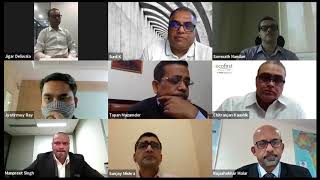
The Economic Times CXO Sustainable Infrastructure Roundtable (10 Dec 2020) convened senior leaders from Autodesk, Wipro, Tata Consulting Engineers, Tata Projects, GS Engineering, L&T Construction, EcoFirst, and former Adani Ports to discuss how India can achieve a green recovery after COVID‑19. The moderator, Manpreet Singh (KPMG), framed the conversation around three pillars: the opportunity of green infrastructure, the role of capital markets and financing, and the technology enablers that make sustainable projects viable. Panelists highlighted the need to shift from 2‑D, fragmented design to data‑driven, 3‑D BIM workflows; to adopt modular/skid‑based construction to cut waste; to embed sensors, IoT and AI for real‑time monitoring of water, power and emissions; and to integrate renewable generation (solar, floating solar, offshore wind, pumped storage) with smart grids and metering to reduce the 40 % AT&C losses in many states. Financing mechanisms such as green bonds, climate‑fund allocations (US$4.8 bn in Asia, with India receiving the largest share) and de‑risking strategies for stranded‑asset exposure were discussed. The panel repeatedly stressed that sustainability must be treated as a business imperative—covering economic, social and environmental dimensions—supported by robust policy frameworks (EIA/EMP, green‑building certifications) and institutional actions. The session concluded with a consensus that future discussions should be more focused, longer, and translate insights into concrete project‑level actions.
Chapters
2, 1, good to go.
Well, hello ladies and gentlemen, a very good evening to all of you and welcome to the Economic Times CXO Sustainable Infrastructure Roundtable powered by Audidex. 2020 has been a year of trying and testing the best business models. The COVID-19 crisis has highlighted the the need to strengthen our resilience to future threats to humanity and climate change. The Government of India has been engaging industries to create packages that will enable a green recovery. India is making great strides towards affordable, secure, and reliable sustainable infrastructure. The world as we know is changing. 2020 is a witness for that. There was more demand for a well-ventilated space than fresh air, than centrally air-conditioned rooms. Confinement in closed spaces made us realize the need for more open spaces in our communities. Large floodings in the land, that coastal cities made us realize yet again the crumbling infrastructure we all live in. And yet the only space we ask the question, "Who designed this bridge?" Unless we are stuck in water, pool under it, much of the negative impact we see in the world around us, from traffic to the air pollution you see here, is an unintended consequence of past designs, decisions, and the things we've made. And it's about time. To pivot to a sustainable approach now than ever. This roundtable will help us understand what CXOs think of best models and set a roadmap in unity with technology to bring out the best in the sustainable infrastructure space. This roundtable is a deep dive session on the below talk points: the green infrastructure opportunity, attracting capital markets, and the right investments. Creating the right opportune moment through technology and why building sustainable infrastructure is good for business. I hope all of you find today's proceedings to be rewarding. I would also like to introduce our distinguished guests today, our esteemed speakers and our panel chair. We have with us Mr. M.K. Sunil, Sales Head, Autodesk, Mr. Chitrangin Kaushik, Chief Operating Officer, EcoFirst Services Limited. Dr. Rajasekhar Mallur, Vice President and Head, Power Business, Tata Consulting Engineers. Mr. Jyotirmay Ray, Head Initiatives, Industrial Automation Group of Wipro. Somnath Nandan, VP and Head, Civil Engineering and Design, Tata Projects. Tapan Mazumdar, Engineering Director and Vice President, GS Engineering and Construction. Sanjay Mishra, Chief Information Officer, L&T Construction. Mr. Jigar Delevala, Business Sustainability Officer, ex-Adani Ports. And this session would be chaired by Mr. Manpreet Singh, Partner, KPMG India. I would now like to invite Mr. Manpreet Singh to take the discussion forward. Over to you, Manpreet.
Thanks, Shirley. Good evening, everyone, and welcome to this discussion today. I think as Shirley rightly pointed out, we have a very esteemed, you know, set of panel for you today. The context setting, you know, is almost perfect because as we do realize and as we are trying to come out of, you know, the perils of what the pandemic has showed us something that was unprecedented, something that we did not anticipate. The way the business models have changed, the way we are all looking at recovering from this difficult time. I think there are voices around the world which are pointing towards making sure that while the world recovers from this pandemic, the recovery should ideally be green. And as you all know that perhaps the definition of green itself is not so clear as yet. And many standards or various different kinds of frameworks still fail to really define what could qualify as green because there are several environmental benefits which come alongside the social benefits which are usually taken into account when we try to define what could be called as green. Having said that, today's panel, as you can see, is very, very experienced. They bring in different perspectives of what an ideal green recovery should look like. And I think without wasting a lot of time with my speech, perhaps I will want to go to my panelists and we can probably learn from them how a green growth opportunity can perhaps lead to creation of more sustainable infrastructure. Infrastructure that is really resilient to the future damages that can come from not just the pandemic like we see today, but perhaps due to the environmental threats like climate change, for which perhaps there could not even be an antidote or a vaccine that could be made. So I think I'll just very quickly go first of all to Mr. MK Sunil from Autodesk to probably talk about what you've been seeing evolving in terms of how sustainability priorities or the way people are recovering from this pandemic are defining sustainability priorities to be. Similarly, how various stakeholders be it the government, be it your customers, are bringing in different perspectives of how an ideal green growth or green infrastructure strategy should look like leveraging the digitization and technology solutions. So over to you, Mr. Suneel.
Thanks, Armit. Thanks for being here. I think just my good afternoon to everybody. And the panelists as well as people who are logged in here. Actually, what was published in Forbes, sustainability is a now opportunity, right? And I think as a software company, we have been providing software for people to design and look at various aspects of sustainability for quite some time. The fact still remains that the industry very much today is driven by a 2D methodology or approach where you draw lines, arc and circle, and there's not much of data that is there. We know the customer's challenges, you know, they really are looking at understanding the carbon operational and embodied issues, we're looking at circularity, infrastructure resilience, you talked about that. However, all this is possible if you actually drive a data-driven approach, and that's what is missing in our industry. It's all about optimization when we talk about sustainability. So in, in that sense, what happens, or what should happen, is actually design and analysis going hand in hand. As you design, you are able to analyze that data to optimize it at every step of the way. And you know, the current process, the way we do design infrastructure, as I said, it's 2D driven. There's no data. So there is a fragmented approach, somebody actually sitting with a pen and pencil and calculator putting things in Excel spreadsheet to drive that whole analysis. So there is a disconnect. And I think with what has happened In last one year, I think we have seen more people actually going digital. At least people are working from home. They have actually adopted some technologies that people can connect with each other, like very much today where we are actually having a Zoom meeting, right? So this was not something normal before. So people are actually driving it. Last year when I was actually talking to a lot of my customers, they would say, hey, we have a digital transformation journey, but we haven't actually figured out how to start, when to start, and what's the timeline like. But I'm sure today if I have a follow-up conversation, it would be very much different, right? So in a way, we could actually do a lot of things, but we also figured out what is the best thing, uh, what are the 3 things that would, uh, we would like to do. We are working on energy and material, health and resilience, as well as work and prosperity. These are the 3 areas where we are working to see how software can help our customers develop the sustainable principles in whatever they do. As, as a company, we also practice what we preach, right? Our, uh, we are actually I think among the 100 world most sustainable corporations. I think last 1 or 2 weeks back, USGBC announced leadership awards, and Autodesk actually got an award for outstanding, as an outstanding company in sustainable, the way we do our offices. 70% of our offices worldwide actually is assessed as the LEED-certified. Building. So we definitely, actually, we are doing what we are preaching our customers. So in a way, it is actually, we are actually helping customers win with sustainability. We have, of course, we see a lot of potential. The aspect that you just talked about, resiliency, Amna, is really something that's core of this at least I feel very much for that. It is important that 90% of the city is actually, you know, is on the banks of the river. And you can see in India itself, every now and then when there is a rain, the city is completely disrupted. And we are working through an environment, almost all the projects are brownfield projects, metros being built, road being developed, putting 5G cables, drainage. I'm like, you think about it. And we, inconvenience everybody, right? We sit on the road for many, many hours, and this could be done better if we had— if we have a data-driven approach, we are able to see things in perspective and plan it much better. And definitely it can be done, and we have many examples of how it has been— it can be done. And that's where we see that if cities where individual buildings are being designed as green buildings. But when you put this 10 buildings onto a network of services like road, drainage, water systems, and all of that, how do they perform together? So it's time to actually think about neighborhood and beyond that as a city and see how they are actually developed as a resilient city and how fast they can jump back from a calamity. How fast can you jump back from a flooding situation? And all of that, right? So that is actually so close to my heart, because I'm myself an architect. So it just really— I really feel for it. So I think we have a great opportunity in India. And we have so many— I think infrastructure, I don't have to say anything about it. We have a great opportunity to build, develop, better our existing infrastructure, Well, and I think we have, unlike Western world, we don't have that kind of money. So it's important that we optimize everything. We build more with what we have, and we actually optimize every project so that we can build more. So I was just looking at some calculation recently. Prime Minister announced $1.5 trillion that can be, that will be spent on infrastructure as a revival package, economic revival package, right? I was just doing a basic calculation. If people adopt a data-driven approach, that can give you a ROI or productivity increase of at least 10 to 20%. Any technology, even if you use the mobile phone, which is, you know, something like iPhone or whatever, the smartphones, it makes you more productive. So if you were looking at at least even imagine 10%, That 10% saving of $1.5 trillion is $150 million that can be brought to the table if people adopt technology and deliver this project using a data-driven approach. So with that, I should actually stop and give back to Manpreet. That was—
Sure. Thanks. Thanks very much, Neel. I was just about to tell you to maybe conclude, having been cognizant of time. And I know that, Sanjay, probably you have to— leave sooner. Let me come to you then first and take your perspectives on what's been happening at L&T Construction and how are you looking at the trends going forward. Sure.
Manpreet, can you hear me?
Yes, if you can be a little bit louder, but you are audible though.
Any better?
Yes, it's better. Please go ahead.
First of all, thank you very much and good evening, everyone. I just wanted to give a couple of perspectives here, Manpreet. One is that when we talk about sustainability, it is just not environment. We have to look holistically. Sustainability has key parameters. If I say one is social, another is economic, and third is with respect to environment. We have to make sure that we are looking any sustainability in all these three perspectives. Anything missed out will make the project unsustainable. If we are missing out the cultural aspect, social aspect, or economic aspect, or environment aspect, it will not be sustainable. So that is point number one. I think many times we forget and we put emphasis too much, and that is what creates a problem. That is point number one. And in India, we have a great way to learn from others. This has been tried and tested and done all over the world. Fortunately, unfortunately, probably in, uh, in the infrastructure front, we are not ahead of the curve. We have been— so we have something to learn from those countries which following these three models have done a wonderful job, like Japan. And I was doing this research with respect to high-speed rail, what we are doing right now. Probably what we are trying to do right now has been done 50, 60 years back in countries like Japan. So we have a great opportunity for us to learn and to make sure that we are taking care of all these three parameters. My second point is, since I'm coming from IT background, I wanted to bring a perspective for IT, how IT can play a role and how IT can help it out. See, IT has the biggest role as an integrator. IT is where all the information from all the places come together, integrate, and I can have a holistic look. That is what IT should do and could do, and that is the main role. Apart from— see, IT can do something probably what is not humanly possible. It provides the systems and solutions which is error-free, much faster. But the biggest role is integration, to make sure that if I get the data from all perspective and make it available to take the right decision, will help. We are talking about in the construction, be it geospatial, be it BIM modeling, be it all IoT devices that help me to make sure that I do something which is not humanly possible. Get the data faster, error-free, and design the solutions which are sustainable. That is what we have to do. My only word of caution, what I have seen, sometimes we make IT so difficult, so costly, that becomes inaccessible for the common use. We have to be very careful that we don't make IT inaccessible, or else IT's whole purpose will get defeated. That is what probably I see happening. We have to make sure the IT solutions what we create or what we make available, they are not cost prohibitive. Else, we are going back to those paper and pen and creating those arcs and lines. Because if the cost of doing IT is costlier than me able to make it to work, I will not adopt IT. I think the other two big points I wanted to make. Apart from that, I'm happy that just like many other big organizations, L&T is also doing the same. We have our own green and sustainable roadmap which we follow along with our financial roadmap. Our main offices are carbon neutral. Our data centers are LEED 4 certified. So we are very well aware with respect to environment, with respect to CSR activities. We have our own roadmap we follow. So from IT perspective, if we make sure that the loose ends are the disparate ends are brought together, have a holistic picture, taking into all these three accounts, that would be the biggest help IT can provide for the sustainable infrastructure. Over to you, Manpreet.
Thanks.
Thank you very much, sir. I think you very correctly said that, you know, IT has a very big role to play, especially when we are looking at optimization and bringing in efficiencies in whatever we do. So what we've seen is that automation and technology use has led us to not just reduce at times energy consumption or increase productivity, but automate a lot of processes that bring in efficiency. I think since we are at IT and technology, let me bring in Mr. Jyotirmay Ray from Wipro, who's currently heading the new initiatives there. So Mr. Ray, if you would like to come in here and probably talk about what's been happening at Wipro, especially with respect to how you see the technology and the consumer landscape changing with respect to what new technologies are being sought by your clients. Over to you, sir.
Great. Thank you, Malpreet, and good evening, everyone. So I think— yeah, so I might just be repeating what I think the previous two panelists have been saying, but since I come from that automation background, I might try to put it from that perspective. So it's quite right to say that typically automation and digitization is now becoming quite popular and a lot of our stakeholders, whether they're customers or our own, the people who are getting that automation done. So they focus on very specific parameters like productivity and efficiency growth at production facilities or infrastructure facilities and they try to automate optimize them and not necessarily at all times would the sustainability or the resilience be the factor that they're trying to optimize, right? But the good thing that we are seeing right now is that with the technologies that are coming in and especially the advent of, you know, a lot of ubiquitous sensors and compute and communication technologies that we are seeing out in the market right now, it's becoming more and more easier to deploy solutions which not only improve your productivity productivity and efficiency for the stakeholder, but also try to reduce your carbon footprint. So for example, a simple sensor that would monitor your water consumption or your power usage at a customer site. And if it were to be networked into a SCADA system and then give you real-time information about how that particular infrastructure is operating, how well it is, efficiently it is operating. I think these are very small steps that end up into building into a large network and lead to gains over time. And so the other area that we're also seeing a lot of improvement in, at least within the automation space, is that the advent of energy harvesting technologies, right? So as I think someone mentioned previously, that India, we have an advantage that we have the benefit of looking at other countries and seeing what they're developing. So this is one such technology that we are seeing growing rapidly, at least in the Western world, wherein the intent to monitor the environment and then close that feedback loop very tightly by getting real-time information and getting real-time data into their algorithms or databases. That has been enabled by something that's— so basically this energy harvesting technology wherein you are able to harvest energy from the environment, reduce the requirement for power sources and wiring and different other infrastructure upgrades. Essentially, that enables us to upgrade or retrofit existing infrastructure, which basically means that when we talk about sustainable infrastructure design, it does not always have to mean new infrastructure. It could also mean upgrading legacy machines, upgrading existing old infrastructure and retrofit them, reuse them, and then make them sustainable as well. So that's, I think, some of the key directions in which we are seeing technology progress.
Sure.
Yeah, thanks, thanks, Jyotirmay, for bringing that forward. I think let me now bring in Dr. Rajasekhar Marur. You've been leading the power business at Tata Consultancy Engineers, and I think power sector is, I think, to my knowledge, is seeing the largest possible transition from what we traditionally used to see to what is evolving today. And, you know, your thoughts, Dr. Malur, because I believe that, you know, you did share with me a lot of pointers on, you know, the things that are evolving. I don't know what you would want to focus on, but happy to hear your thoughts. I think you're on mute, so please.
Yeah, thank you, Manpreet, and good evening to all of you. Yeah, you're right. You know, green power is what is governing the growth of the power industry as a whole today. And that green power is not just for the power industry, but for the complete electrification of the processes across all industries, I will say. So India is on the right path. And first, from a generation perspective, we are doing quite well. The drawback here with respect to our own self-reliance is on the availability of manufacturing facilities. So even if we have to look at 450 gigawatts of green power, solar, green power, solar and wind, and hydro now added. So you would actually look at about adding a manufacturing capacity of close to about 30 gigawatts a year, looking at the solar targets we have, I'm talking. But our current ability is to manufacture about 3 gigawatts. So that is something that the government is also working. And every large bid now is coming up up with a, with an attached manufacturing facility as such, and several investors are coming up as well. So solar is doing great, but there are plenty of opportunities. The focus now is on the rooftop solar, and that is something that has a potential of 40 gigawatts, and where we stand today is again about 5-6 gigawatts. And so How about making our campuses, each and every facilities energy neutral? And if not energy neutral, at least take a few steps towards energy neutrality. That has been the focus, whether it's a university campus, whether it's a health city, whether it's an industrial campus, we need to— or a small community. We need to look at how we can make this thing happen. The next is on the floating solar. Plenty of opportunities are there. It is getting some focus now. We are seeing a lot of customers approaching us. But that again is a huge opportunity for solar. Offshore wind is also something that the government is focusing on. We do not have right now, but there are opportunities in the coast of Tamil Nadu and Gujarat. Gujarat to get that. Another aspect where we lack, you know, some of the points that the earlier speakers have talked about also is how do we convert this waste into energy. There has been some little focus, but there are plenty of opportunities. We see this as a big problem in all the cities, and that itself is another opportunity. It is a little bit expensive, but then when you make the communities self-sustaining, I think these things are something that we must do from an energy perspective. And going beyond hydro, if you look at what happened on the April 9th, 9 PM, 9-minute blackout, it is the hydro that came to the rescue of the grid. So there are a lot of pumped storage projects which are coming up, and that itself is another aspect of renewable power. And the proponents of nuclear power say that nuclear is renewable as well. So that is from a generation perspective. But if you look at the transmission and distribution perspective, there is a lot of focus there as well and opportunities. Because India today, the AT&C, aggregate technical and commercial losses, are close to 40% in several of the states. And how do we reduce that? So distribution, smart grids and smart metering, that is also again receiving a lot of focus, and all of this on a digital platform. Okay, so it is said that if you have a display of how much power you are actually consuming, you will consume less power. And all of that is going to happen, and the focus is there on this aspect as well. And going beyond the power industry, you know, Getting into— I fully agree with the gentleman Sunil from Autodesk. You know, 3D stuff is something that— or let's say data availability is something that is bothering. In fact, for even approvals, regulatory approvals, you know, countries like Finland, Singapore, and UK have mandated, you know, submission of a 3D model, so that it is not about creating a digital asset of infrastructure, it is about creating digital asset of the entire community, entire city as a whole. That will help you plan the city better, do away with some of the issues that are challenging the population that lives in the city. And I fully agree with him that there is a lot of need and requirement that is there in terms of using the available digital technologies in whatever we do. And over above all this, smart grids, smart metering, I talked about smart cities. We're doing about 18 smart cities in the country. We are doing Ganga rejuvenation in about 5 states. And further going beyond this into the industrial aspects, whether resources, whether you talk about green chemicals, you talk about green metals, right, hydrogen is also something that is coming up. Green mobility is something that we are already seeing. So there is a lot of focus and it is said that due to this COVID, among all the countries that released this financial support, Korea had 80% of their budgeting focused around sustainable technologies. And in India, we had about 16%, and that too more related to afforestation and rural areas and getting them the salary to the rural employment under the NREGA scheme and so on. So it definitely has impacted. But the good thing is that greenhouse gas emissions have reduced by 8% in this year. But this is required for us to meet our Paris commitments. Such a reduction is required in every year going after, and even after COVID. And so that brings to focus sustainable technologies, green power, energy efficiency, water conservation, waste-to-energy, and over and all, using the digital technologies to sweat the asset that Jyotirmay talked about, and also to ensure that we use the asset to the best abilities that it can give us. And so that is my view. Thank you, Manpreet.
Sure, certainly. I think you have touched on a number of areas. I think I'll probably try and come back to you if there'll be time. But certainly, let me move to Mr. Sounath Nandan, and I think Let me bring him here on aspects, because you've raised aspects around smart cities. And I think, sir, you've spent a lot of time on urban infrastructure development. So what are your thoughts about how engineering and design plays a big role in terms of creating a more sustainable infrastructure and how probably the addition of new technologies can bring in more efficiency in construction and make it more sustainable, reduce carbon, and have long-term sustainable growth pathways. Over to you, sir.
Yeah, thank you, Manpreet, and good evening to all the distinguished panelists and who are listening or watching this session. You see, the principle of sustainability, what other speakers have already mentioned, these are actually three pillars. Economic, environmental, and social. And we sometimes focus only on few things, but we need to see as a holistic. So I'm repeating because this is the principle of sustainability. Now you see that we need to see the principle actually, which is like consume less and getting out of any asset's life, you know, increase the life of any asset, whatever it is. So if you see the, you know, Recycle, reuse, and reduce. So when you talk in terms of the reducing the energy, so I will touch upon the energy first. So you have the smart buildings, you have the green buildings, also you have the renewables, you know. So renewables, we have solar, wave energy, wind, geothermal, very various things are happening. But what we can see, use of technologies. Suppose we are constructing certain amount of metro rails you know. So what we see, the technology, how it is doing actually, the, the vertical track, it is going up and down, and it is designed such a way that you can use the software and tools so that you are using the braking and acceleration in such a way that it reduces the energy consumption. So these are things coming in. Then another good point is that whenever the train goes into the depot, so it gets scanned, you know, will brake. So many items are there, you know, and it gives certain kind of, you know, indication that which needs a repair. So it's called the preventive, you know, repair or maintenance tool. So before you get completely broken up, you take that rake or take the engine out and you repair it. So these are the things. Another thing, you see the— if you see the infrastructure planning of Government of India I think the majority of the spending, that is about 30%, is on the road, road construction. You see the last infrastructure plan. Now in road construction, actually we are consuming huge amount of material. At the same time, from every city, every town, we are actually throwing out huge amount of waste. So waste in terms of plastic, waste in terms of tires, you know, various things. So there are alternate material schemes available, like use of rubbers, you know, from the tires, use of plastics in the road construction. So actually, if you see, there is a huge benefit. You are actually reusing, recycling, you have less garbage dumping space required, and it is very sustainable, and, you know, it is helping everyone actually. But unfortunately, there are not much advocacy or the provision in the standards where people can use this easily. So I think this is one point I would like to mention here. And other than that, new technologies like what Mr. Sunil has said, you know, there are the softwares are currently, you know, in a very advanced stage where people need to use it to see things in advance. You know, like urban planning, it is very important actually because we are planning for a very short term. You know, ideally the planning should have a 5 to 10 years planning, and then, you know, every 2-3 years you revisit the plan and you update that whole city model so that you have the most efficient transit system, you have the most efficient sewage treatment system, most efficient cables or the ducts or shaft or spaces where everything is going in one place. So you are not digging out every time.
So we should—
I was reading somewhere that we should have a government for the footpaths, a department where people should be having encroachment-free, nice footpaths, where people are encouraged to walk rather than taking the other modes of transport. And when you look at this way, you know, more car-free zone. So all urban transport planning can do this. And when you did this, you are actually encouraging the people to use the transport system. You are encouraging people to walk, so you have a healthier body. You are using less carbon, less fuel. You are actually reducing the, you know, government's import of the fuel. So it is easing our, you know, pressure on the forex. So all are actually connected. So you have an economic impact, you have a social impact, and you have environmental benefit. So I think that, you know, these kind of chains are there, but more and more work is required to connect all these things. I'll give you an example. So sometimes people are constructing very large bridge, you know. I think Charlotte started with a bridge, actual example. So when a bridge is constructed With around 20% extra money, you can add a track of the rail, you can add a track of a tram, rather than another department comes and create another railway bridge or road bridge next to it. So I think this kind of coordinated effort is required to have a more efficient transport system.
System.
Also, you need to have a kind of very smooth transition. So if you go to Delhi, you know, I think Manpreet is in Delhi region, I am in Mumbai. So you go to a metro station, then the last mile connectivity— people are not taking the metro because last mile connectivity is not there. So when you come on a metro, it's a very nice, you know, world-class system. You get down to the footpath, you have a lot of other things which are discouraging you to take a walk back to your home or take a cycle to the road. I think this kind of thinking has to be integrated in our urban planning, in our thought, in our policymakers' decision to give you a holistic solution. I think that's my view.
Sure, sure.
Over to you.
Rightly pointed out. I think these are important elements. And let me at that thought bring in Mr. Tapan Mazumdar. From GS Engineering. So what do you think? I mean, we've heard a lot of things right now. I think it's becoming hard for me to really jot down as well on what all I should write down, but certainly happy to hear your thoughts on this.
Okay, thank you, Manpreet, and thank you to all panelists, and good evening to all of you. Actually, I am not from IT sector. I am basically from the petroleum and refinery sector wherein we design the refinery and petrochemicals all over the world, you know. And you know, this is such a sector where you can understand, you know, so far as pollution is concerned, so far as, you know, human safety is concerned, there are a lot of things are involved. So I would like to touch primarily on 2-3 things. You know, we are now focusing more and more on the skid and modular concept. You know, when we talk about skid and modular concept, this means that the fabrication and construction is really not at site, you know, wherein the— there will be a lot of waste generated which, which will not be disposed of, which will not be recycled, which will be going to the land, you know, landfill, and choking our drains and rivers and all. So in the traditional technology, the construction is basically at site. But then what we are looking today is the modular concept. This means that the whole construction, part by part, will be fabricated in the workshop, you know, and the skids will be constructed, and skid by skid it will be transported to the site and joined, you know. So this is a unique concept which many countries are already doing. In our country it just started. And L&T is one company who has basically started this modular concept. So, you know, this kind of concept is very encouraging for the environment. Generating waste, whichever is generated, that can be disposed of easily, that will not go to the landfill, and management is very easy. The construction quality is also very good, you know. So this we are encouraging of late in our technology and design. The second one is the, you know, in a refinery or a petrochemical or in a township, a lot of buildings are involved, you know, control building, you know, a lot of buildings are involved. So we are trying to develop more and more green concept into the building. You know, the green building is basically a building wherein you are just utilizing your resources and material in the most efficient way. You know, the living of the standard of living of the people will be good, the air quality will be good, you know, the health of the people will be good, the greenery will be good. So the green concept is coming more and more into international projects as well as in India. So this also we are encouraging in our design. And since we are doing most of the refinery design outside India, so it has become mandatory nowadays for them to design the green building. So we are trying to bring that concept in India also. It is already existing but not so prominent. So we want to make it prominent in India also. So this is the second one. And the third and most important thing is that when we design a refinery or petrochemical, the most important thing is the EIA and EMP. One is the environment impact analysis and the environment management plan. You know, when we start a project, this is very mandatory. But what happens in many countries, including India, that when you design EIA and EMP, the report, whatever it comes, it just followed in the beginning and later on people just forgets. So we are now trying to give more and more awareness to the designers, to the operators, to the clients that this is very, very important. You have to analyze it, you have to measure it, to the extent of its intent. And then the awareness session, we generally do it now.
Yeah, no, I think so. We have more speakers. I'm so sorry to—
yeah, so no problem.
So these are 2-3 concepts I thought that I should bring about here.
Certainly, I think, and these are very useful, uh, so I think you've brought in a very important aspect of policy in India where EI and EMPs are not taken into account that seriously once the project construction and operation starts.
And so far as digitization is concerned, as Mr. Sunil said last time, we are now into 3D design, we are not in 2D.
Sure, sure. I would like to tell you, sir, I think at this point I'd like to bring in Mr. Chitrangan Kaushik from EcoFirst. So I think a lot has been said already, and I'm sure you'll be finding it difficult to probably see what you would like to focus on. But I will want that probably in one of your mails, you also talked about drivers in financing to enable sustainable infrastructure delivery. I think nothing much has been talked about financing and investment side. So probably I would request if you have any thoughts on that side. Also, your other thoughts are most welcome. Over to you, sir. Mr. Kaushik, you are on mute.
Okay, yeah, thanks, Manpreet. So yeah, a lot has been said and lots of good ideas. In fact, the fundamental of green and sustainable things have come. So as we discussed earlier, it's a pretty widespread things when we call about the infrastructure, sustainable infrastructure. Typically, if I say the sustainable infrastructure are those infrastructure projects that are planned, designed, constructed, operated, and decommissioned. Even look, decommission I'm including, let's—
it's—
I'm, I'm taking a life cycle approach. So decommission in a manner to ensure all the triple bottom line, which is economic, social, and financial, all three together. So that's where this gives the sustainability things, and now the new things of the climate resilience is also added to this. And of course, the institutional sustainability over the entire life cycle of the projects, as I said. So it is not easy to define. They are pretty complex things with infrastructure when we say, because meeting the demand of future infrastructure, and it has a huge impact on our growth, like Infrastructure is the backbone of the growth. This all the services, whether you talk about the drinking water, electricity, disposal, treatment of water, mobility, mobility of goods, people, provision of information, communication technology, all these technology, everything. This is the backbone of our economic development and competitiveness and inclusive growth together. And this infrastructure, if I say, that's when you plan it, this has to be planned for the future-proof point of view. And this 60% of carbon emissions so far are coming from this infrastructure, and that is where the sustainable infrastructure thought process has come. It has a profound impact, it's a profound impact on the growth of any country. And the 60% have been our impact on this carbon emissions, and now what we are doing it now for the future perspective, so this will be between 35 to 60%. 35% is the minimum percentage that's what we are expecting will have the impact on this carbon because of this. So, and this infrastructure projects do have an inherent inertia for this. Then we see the problems of stranded assets. Stranded assets may be because of many reasons, maybe because of the climate impacts, flood issues, something like change government regulations, technologies, relative cost, as well as litigation. So this all is the risk associated with this, which affects the valuation of the infrastructure assets over their life period. And this valuation is not only for the private partners, these are the concerns for the government and investors all together because of the climate risk and stranded assets. And this is the potential risk of systematic risk which comes there within the financial sector. And that is where we are facing the problem of financing most of the infrastructure projects. You will see this even on share market, infrastructure firms are not performing well. So infrastructure is not only about making the designs and what are these things, this has to be environmentally friendly, this low carbon footprints, environment footprints. We have to take care of the ecosystems and biodiversity. There has to be nature-based systems and above all, it's not the brick and mortar only, that's construction in one way or another way. It encompasses good policy, sound planning, efficient procurements, smart regulations, transparent governance, affordable finance, and functional market. These all things give the social development and environmental sustainability which gives— because more and more we look into this, more and more risk associated with the bad infrastructure is happening, the loss of natural resources, ecosystem services, pollution. This all leads to the creation, reduced local access to resources, to the social conflicts. When the social conflicts, conflicts come, they are coupled with that deficient planning, inadequate consultations, and these things. And they lead to a stress, or maybe the reputational risk as well, uh, for the infrastructure projects, the delay, cost overruns, uh, and all these things. So basically, we need certain kind of the institutional actions which need to be there, like We are doing it like green building certification as an example. It's not mandatory, it's a kind of voluntary things. We are doing this, we are doing this, nobody is mandating us. So there has to be some institutional actions which required to ensure the sustainable infrastructure delivery, which ensure that you look into this EIA, EMP when the example came, that you look into this right from the beginning and look into right from right perspective. The government should establish the framework of the of this, the standard and strategies for durability, flexibility, and recovery of the infrastructure structures. This framework should decide that's how the infrastructure projects will be dealt and will be, will be dealt with. And that's where the comfort in the financial sector will come. I'll give you example. This, um, last year, uh, in fact 2018-19, around that's we had seen the $4.8 billion of investment in Asian countries, in purely in sustainable projects. It's 530 approximately projects were there through 18 multilateral climate funds. This all money is coming from the climate funds. And that's, I'm talking about the Asia, and where is the biggest contribution has come to India actually. If we, if we say that's country-wise, Indonesia, China, everybody is there, but the biggest contribution for sustainable infrastructure projects to come to India. That's a good thing. Uh, at the same time, where this biggest fund is coming to the mitigation, mitigation measures, not for the designs and all these things, for the mitigation measures, because probably because of the stress fund. There are other reasons as well, I know. That's why, uh, these things have happened. But mitigation has seen the maximum number of funds coming. So important point for us is how to make it comfortable for the business and make it business-friendly, making— de-risking the industry. That's where the important things will come and we have to take calls accordingly.
So definitely I think there is a lot of impetus there is today on the kind of funds that are coming in for creating sustainable infrastructure, be it utilization of capital markets such as Many companies today in India have also utilized the green bonds to raise capital for especially creation of green infrastructure and assets. I think Indian Railways also issued a bond. There are many banks which issued green bonds recently. So there is definitely a momentum globally on that side. And you rightly said, not just the climate funds, but I think there are today specific ESG funds being set up to really focus on investing in creation of green infrastructure. With this, let me bring in Mr. Jigar Daliwala, you know, who was earlier at Adani Ports but now is a Business Sustainability Officer at Shiona Group. Sir, your thoughts when it comes to, you know, the area about sustainable and green infrastructure.
Yeah, good evening all of you, and thank you for giving me the opportunity. Opportunity to share my views on the sustainability because I am hardcore man of the sustainability implementation. I am not, uh, involved in the designing or implementing the projects, but I am hardcore implementer sustainability within the organization. So that's why I just share my views on the infrastructure because during my journey of this sustainability, uh, in my past organization, uh, in Adani, uh, as Manpreet has rightly mentioned about the ESG So we were part of the ESG-related activities and we work for the green bonds also. We got the success in that also and we are investing in that green projects within the, within the, uh, our operations. Uh, few of the, uh, our case studies which I would like to mention because it's a very separate sector, food sector, which is be majorly involved in the cargo handling activity, but it is fall under the transportation because it's a sea route transportation, uh, basically involved. So in this, uh, we have implemented lots of infrastructure-related projects, and that is also with the climate change impact, uh, studies and resilient infrastructure. We already, already planned. So whenever we talk about the the infrastructure development, definitely technology plays a vital role because the technology uses a know-how about how that infrastructure will be short-term, long-term, or medium-term resilient and give you the correct way of inputs for, for your operations requirement. Because that is why like we have the 2NDEM facilities and every, every time we are we are introducing such technology, you know, like, because technologies are continuously evolving because, you know, innovations and R&D is happening not even in our country but outside our country also, and we are adopting that. One such initiative I just would like to share with you, like, we have the cranes which operate for the cargo handling activity, which was earlier operated on diesel operations. So we have invested uh, capex in that and converted the entire cranes into the electrical operations. So this is the first in kind of, uh, entire Asia region that, uh, the, the biggest investment happened in that project and we have successfully achieved that and reduced the loss of carbon emissions. The another initiative which we, uh, call is providing the shore power to the visiting vessels. So that is the, uh, still it is under R&D, but, uh, instead that we have introduced it with our tugs, like whatever the tugs is used for the vessels pulling from the anchorage to our berthing place. So we provide the, the shore power when the tug is idle. So by that way also we use this technology, you know, like because we have lots of data and all these things, and we run the simulation models and we understand the requirement of energy efficiency enhancement. Apart from that, whatever the rooftops available, because we have large godowns and the buildings available at our sites, so we have converted all the roofs under the solar rooftop, and we have successfully implemented more than 12 megawatt of solar roof projects within our own premises. But still, there is a, there is a government policies which are restricting to go beyond the content demand. So still policy advocacy is required. Yeah, one such technology I just would like to mention over here, on which I am right now working, is also BVPI. And India, I think, now strictly thinking on the implementation of the BIPV— sorry, BIPV technology, which is Building Integrated Photovoltaic photovoltaics system because rooftop is anyway India is having a good number of installation. But apart from that solar rooftop, the vertical or whatever the development is happening and when till 2030 there are lot many other infrastructure projects also planned. So in the futuristic scenario if that VIPV can be considered by this development activities and companies who are doing these infrastructure projects could be a good solution for the country. So my—
I think certainly, sir, I mean, I would not like to dwell into specific technologies. I think there are many that we could, and these are really interesting insights from the ground. I think we don't have much time left, but only thing that I can probably do now is ask every panelist to maybe speak about one thing that you would like to tell the organizers. You know the topic, you know what, what all we've discussed already. If you were to give in, say, 10 to 15 seconds, one message to the organizers and our listeners, I think I'll, I'll start with Dr. Malur. I think you need to leave us, so probably I'll start with you. What would be that one message that you would want to leave, uh, you know, with the organizers in this? You're on mute, sir.
I'm sorry. Yeah, what I would request them is to have maybe 4 or 5 speakers and give at least 5 to 6 minutes to start with, and then have a second round of questions, and that will help us do a focused discussion.
Definitely. I think that, that's Certainly a good message. I mean, that's probably a more operational message. But if you still want to leave a message on the topic itself, I think I'll be really grateful to you.
I think the topic per se is excellent, and we should focus sustainability in a particular space. That will be better. And in a particular area, if you want to talk about finance, let us talk about it. If you want to talk about technologies, let us talk about about it. But this was a very broad-based discussion is what I felt.
Right, great.
This is a good thought and definitely I think organizers are taking a note of this to probably make it a little more specific. Let me go to Mr. Sunil. So your message to, you know, conclude this session, please. Mr. Sudil, we can't hear you, sir. Sorry, you're on mute.
Sorry, sorry. So in interest of time, I want to thank everyone of the panelists here. We have been working with, I think, each one of you. So would love to make sure we continue the engagement, and we would love to help in any way that we can in your projects, in your sustainability initiative that you have in your company, whatever it is. So let's keep in touch, and thank you again.
Thank you, Mr. Somnath. Would you want to come in now?
Yeah, thank you everyone for giving so much different perspective of sustainability, and I think it is good to have maybe another session to, you know, discuss more, uh, you know way or a more detailed way. Thank you.
Sure. Mr. Jyothirmoy Ray.
Hey, so I would also like to thank the organizers and, you know, for especially selecting this wide range of panelists. I probably, you know, I'm taking up much more learnings from what I had when I came into this panel. So thanks for that. Thank you.
Mr. Mazumdar, your final words, please.
Yeah, well, thank you, Manpreet, and organizers and all the panelists. The most important thing is I also could learn many things from here which I was not knowing. And as Mr. Rajsekar said, I think we can think of reducing the number of topics, make it maximum 2 or 3, and then discuss more on that would be more beneficial for us. Thank you so much.
Sure, I think that's, that's a message that everyone has got. But, um, Mr. Kaushik, your, your final words, sir.
Yeah, thanks. I would suggest that everybody here and those who are listening this and considering, please think that sustainability is a business need. It's needed for the business success. It's not something of the passion or need and government regulations, this thing. It's a market-driven thing. Definitely now the time has come where sustainability will only lead lead you to a successful business. So please consider this, that's in whatever way is possible to adopt, let's adopt it, whether through technology, designs, implementation, passion, but it is, it has to be there. So this message definitely I want to give to everybody.
Thank you, Mr. Dheliwala.
Yeah, this topic is, I am fully means agree with these topics because this is the need of the the current scenario, and we all have to think on the planning stage sustainability. And as rightly mentioned about the other speakers, that we have to implement sustainability whatever the way we can. So that is the good message we can spread out. And thanks, organizer, to give me the opportunity, and thanks other panelists for their views also.
Thank you, thank you very much, everyone. And I think the I think the messaging is pretty clear that this is definitely an important area that we need to focus on. Of course, messages surely to you probably would also be clear that perhaps we need to have maybe a little more longer session and also maybe a little more specific session so that concrete inputs could be gathered. But apologies to everyone for keeping it a quickfire round. But I hope you enjoyed the sessions as much as I did. Over to you, Shirley.
Thank you, Manpreet. Thank you, Manpreet, for this excellent moderation. I would like to thank each of the panelists for taking out their time and participating at the Economic Times CX Sustainable Infrastructure Roundtable, which is powered by Autodesk. I wish each one of you and your organization the very best. Very best, and we ensure and promise to have a lot more of these discussions focused on the various areas that were discussed today. I understand it's a broader topic, but we ensure that we would pick and choose individual concepts and ensure to have you all back with us again to discuss on these particular areas. As Mr. Dhanivala rightly said, sustainability is the need of the hour, and I completely agree with each one of you and all the panelists for, you know, bringing in your thoughts and views and addressing these issues. With this, I would really like to thank all of you all, and Aishwarya Leechatiyar would like to sign off and wish all of you all a good evening. Thank you so much.
Thank you. Thanks a lot.
Thank you.
Thank you very much.
Thank you. Bye.
More from Nathan



Can AI Read Your Heart? Unboxing DeepVessel with Nathan Qin from Keya Medical | #52







