Tata Consulting Engineers presents an AI tool that monitors power-cycle chemistry in thermal plants. It tracks water quality parameters like pH and dissolved oxygen in real time, alerts operators to problems before they cause corrosion or equipment failure, and cuts the need for manual checks and expert consultants.
Chapters
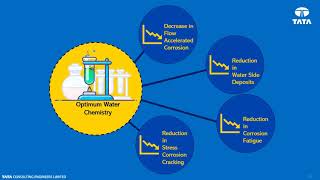
Tata Consulting engineers with decades of domain expertise in plant engineering has leveraged artificial intelligence, machine learning, and data analytics to develop a digital point solution for power cycle chemistry monitoring and diagnosis. This revolutionary new tool can help power plants improve their profitability. Let's have a look at what a chemistry and its implications in a power plant The conventional management of water chemistry in a power plant. The possible bottlenecks in this approach. And finally, we'll look at our revolutionary new tool. Water is known as the lifeblood of a power plant. It is the water that generates steam, which in turn rotates the turbine that produces the electricity. It is essential that this water is free from impurities so that its properties are maintained at optimum levels. Power Cycle Chemistry helps us achieve these optimum levels. We will have a look at what an optimum water chemistry does in a power plant. An optimum water chemistry can ensure a decrease in flow-accelerated corrosion. It can lead to a reduction in water-side deposits. It also reduces corrosion fatigue, and finally, it can reduce stress corrosion cracking. Now let's have a look at the benefits of maintaining an optimum water chemistry in a power plant. Maintaining an optimum water chemistry provides the operator of a power plant with a lot of benefits. The benefits include safer operation of a power plant, reduction in downtime Reduction in maintenance costs. And reduction in blowdown. All these factors together improve the profitability of a power plant. Before we look into how our revolutionary tool improves the process of maintaining an optimum water chemistry, we will try to understand the conventional management of water chemistry in a power plant. In the conventional approach, The operator looks for deviations in parameters such as conductivity, pH, sodium, dissolved oxygen, phosphate, and silica. As soon as the operator notices any deviation, the operator communicates with the chemist and asks him for a remedial measure to correct the deviation. The chemist, based on his experience, suggests the corrective actions to the operator. This approach has a few bottlenecks. Possible bottlenecks in this approach. These include lack of operational expertise, need for extensive training, and need for a greater manpower. TCE with Its decades of experience has captured its expertise and imparted the tool the capability to analyze the power cycle chemistry of a plant. This data-driven tool is capable of centralized real-time monitoring of power cycle chemistry. The tool can aid the operator to make the best decisions under complex operating conditions. The tool can also help the operator maintain optimum water chemistry during cyclic and flexible load operations. The tool can also provide details of system analysis and root cause analysis for deviation. It can also provide early warning alerts for KPIs deviation. The feature sets of the tool along with the actions of the operator based on the inputs from the tool can increase the reliability and availability of cycle equipment in a power plant. Can reduce maintenance costs that happen due to unplanned shutdown. Can reduce boiler tube and pressure part failures that happen due to cycle chemistry. Can reduce unit startup time, ultimately improving the profitability of a power plant. Tata Consulting Engineers Limited, a trusted partner for digital solutions.