Nitin Gupta of Tata Consulting Engineers presents a 1.7 km riverfront redevelopment on a Northeast river, funded by a CITES grant. The master plan includes ten zones from ghats to organic farms, addresses flooding and sewage with bio-toilets and bamboo construction, and aims to serve 30,000 residents with 18 acres of green space and attract 5,000 peak visitors.
Chapters
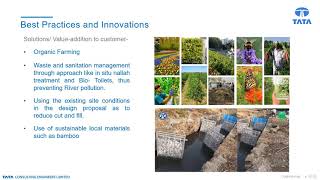
Hello everyone, I am Nitin Gupta and on behalf of Tata Consulting Engineers, I am here to present on riverfront development which is being done under CITES grant. The river selected is one of the major rivers of Northeast and the project stretch is approximately 1.7 kilometers long. It has been conceptualized as an urban project to significantly improve the habitat, biodiversity structure and conditions of the river and its adjoining areas. The proposal will have continuous pedestrian promenade on each bank and shall also have public hearts for direct access to the water. The Riverfront Development has 3 main objectives. Number 1, restore city's relationship with the river. Second, revitalizing the heart of the city and triggering city's future. And third, community involvement, social activities, and promotion of local culture. The proposed master plan consists of 10 zones and an area of around 17 acres. Zone 1 is the Visajan Ghat. Zone 2 is children's play area. Zone 3 is the beautification of existing crematorium. Zone 4 is the health park. Zone 5 is fun and food village. Zone 6 is nature trail with zipline adventure. Zone 7 is organic farming and children's play areas. Zone 8 is the pilot project, which is horticulture project. Zone 9A is the commercial market. Zone 9B is horticulture, and Zone 10A and 10B are neighborhood parks. Here are some of the 3D images from the project. The main issues and challenges in the project are river accessibility, river edge protection, seasonal flooding, solid waste thrown directly into the river, untreated sewage waste entering the river, and unutilized open spaces. Some of the value additions done in the project are organic farming, waste and sanitation management through approaches like in-situ Nala treatment and bio toilets, using the existing site conditions in the design proposal as to reduce cut and fill, use of sustainable local materials such as bamboo. The project presents a unique opportunity for the client and the city to adopt sustainable practices involving and promoting usage of local materials, thus reducing the usage of concrete. It would enhance regional significance, boost economy and local employment. It would also reduce carbon footprint. The project will generate annual and seasonal employment for the citizens through the induction in the horticulture activities, arts, museums, nature parks, commercial zones, and other public areas. A comprehensive project outcome evaluation shows that the project attribute involves inclusion of 700-meter NMT and 2,000-meter pedestrian walkway thus making the development accessible and pedestrian-friendly. Generation of 18 acres of green open space serving 30,000 people in 500-meter radius of the riverfront development and around 5,000 visitors visiting at peak active times. Comprehensive response to seasonal flooding and strategic landscape planning has been used as a tool for horticulture program on the riverfront, which is a unique concept presented to the client in regional context of the setting and the project. It is perceived to act as a catalyst for self-sufficiency, reducing imports of vegetables and flowers in the city. It would also promote socioeconomic growth and bring about environmental benefits. Tata Consulting Engineers experience: TCE has been involved in many smart city projects span India. It is also involved in many prestigious riverfront development projects across India. TC has been involved in riverfront development project under the CITES grant. TC scope in the riverfront development project is to do the design development of the project, collecting all the basic details like climatic data, soil data, etc., and make the baseline report, design and financial feasibility, detailed project report, social impact assessment, environment Impact assessment, and finally the project execution as per the design proposal and approved budget.