Safety Integrity Level studies manage risks like fire and explosion in process industries using three stages: identification, verification, and validation. The IEC defines four SIL levels with specific risk reduction factors, and companies use methods like the calibrated risk graph and Layers of Protection Analysis to determine which SIL each critical process loop requires.
Chapters
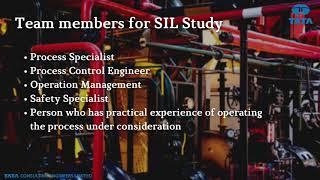
Today we are going to talk about SIL study. It is one of the most important safety study for any process industry. It is defined as Safety Integrity Level, which is relative level of risk reduction provided by a safety function or a target level of risk reduction. Now, in any process industry, it is exposed to risk, fire, explosion, injuries, and accident which causes fatalities environmental losses, financial losses, and safety integrity level study is one of the way to take care of such risk. It is one of the most important layer of protection against accidents and hazards. SIL study generally are carried out in 3 steps. One is SIL identification study, another is SIL verification study, and then SIL validation study. Why there is a need for SIL study? Now, this is one of the example, IOCL Jaipur depot, which, which has got fired in 2009, where 12 people died and 11 tanks, 2 tankers containing 8 million liter of oil got burned. And SIL study is one of the way to take care of such incidents. Why there is a need of SIL study? Because of the risk involved. What are the risks? Loss of life, environmental impact, loss of production, loss of capital. Another need for SIL study, the driving forces, which are increased regulatory consideration, more and more awareness of the environment, maintaining the company image, and more and more emergence of safety standards. There are various layers of protection provided in any process industry. So if you see the lowermost first layer, which is basic process control system layer, which is nothing but our DCS and PLC system. Another is the process shutdown, which is again taken care by our DCS and PLC system. The third layer called as emergency shutdown layer. Here the field study is carried out. Now the safety lifecycle, which consists of 5 steps. Step 1 is safety assessment, safety system functional requirement, design and verification, installation and validation, maintenance and improvement. Now SIL study, which consists of 3 stages. Stage 1, SIL identification study, and Stage 2, which is still weather verification study, and comes under step 3, which is safety system design and verification. And SIL validation comes under step 4, which is safety system installation and validation. The team which is involved in carrying out this SIL study are process specialist, process control engineer or instrumentation engineer, operation management, safety specialist, person who has practical experience of operating the process under consideration. So inputs from all these people are expected while carrying out SIL identification study. Now when we say SIL study, it involves various critical process loops, and each process loop consists of a sensor, logic solver, and final element. And SIL rating is provided for a each critical loop. Now, as per IEC, there are 4 level of SIL, which is from 1 to 4, and 1 is the lowest, 4 is the highest. And when we provide SIL 1 rating to any critical loop, the target level of reduction is 10 to 100 times. When we provide SIL 2, it is 100 to 1000 times we are reducing the risk, and so on. Now, as per this IEC standards there are 6 methods for carrying out SIL identification study. And out of these 6 methods, the serial number 4, which is calibrated risk graph method, and layers of protection analysis, which is the 6th number— these 2 methods are quantitative methods and very popular for carrying out SIL identification study in any industry. Now, in TC We have in-house developed a program using calibrated risk graph method as per IEC 61508 and 61511. In this calibrated risk graph method, we determine 3 types of SIL, which is safety SIL, financial SIL, and environmental SIL. Now, for determining safety SIL, this is the matrix which is used, in which there are 4 parameters we can see. One is C, which is consequence risk parameter, F, which is frequency and exposure time risk parameter, P, which is probability of failing to avoid hazard risk parameter, and W, probability of the unwanted occurrence. And in the right-hand side columns, we can see Sintzeel levels indicated. So depending upon the inputs provided for each loop, we decide what are the consequences, what is the frequency, what is the possibility, and what is the probability. And based using this matrix, we determine what is the SIL level for each loop. Similarly, we determine financial SIL for that loop. It consists of LA, LB, LC, and LD, which are level of financial losses. Next is environmental SIL. So using this matrix, we determine the environmental SIL for the each loop. So for each loop, we determine safety seal, financial seal, and environmental seal, and the seal rating which is highest among the three for that loop is considered for that loop. These are the various safety codes and standards applicable for seal studies. IEC 61508 is an umbrella standard applicable for OEMs and users and manufacturers in the industry. And there are various standards which are applicable for each type of industry, which is shown below. Thank you very much.