Ep 05 Stillness, Service, and the Human SEO A Conversation with Steve Ramona
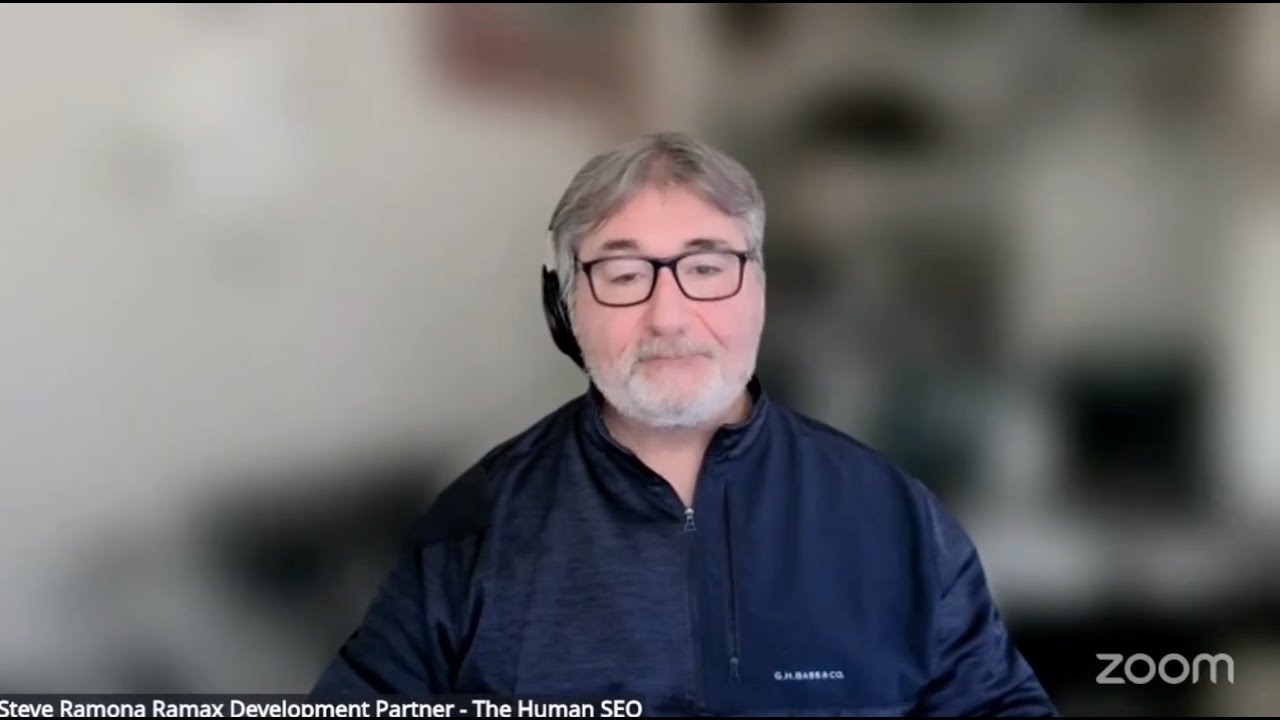
In this episode of "Remembering the Forgotten," host Markus Neukom interviews Steve Ramona, a self‑described "human SEO" and servant‑leadership advocate. The dialogue explores how cultivating "stillness"—a mental space untouched by pressure, noise, and performance—enables purpose, creativity, and effective decision‑making. Steve shares his personal morning routine (waking at 5 am for two quiet hours of work), the transformative power of the "dark hour" when no one is watching, and how indecision can be a hidden form of decision‑making that stalls growth. They discuss the pitfalls of over‑giving without reciprocity, the importance of a transformational rather than transactional networking mindset, and the role of authenticity, humility, and serving others in sustaining fulfillment. The conversation also touches on deeper philosophical ideas about remembering one's original design before societal conditioning, the impact of wealth on purpose, and practical advice for navigating noise, stress, and the need to reset. Throughout, the tone remains conversational, reflective, and supportive, offering actionable insights for entrepreneurs, leaders, and anyone seeking a clearer, more purposeful life.
Chapters
Welcome to Remembering the Forgotten, a space where leaders think out loud without polish or performance. No scripts, no personas, just the quiet clarity that emerges when the noise drops and the mind is free to speak for itself. Today, I'm joined by Steve Ramona, a human SEO and master connector. who turns introductions into impact. He's a servant leadership advocate, a host whose platforms reach millions, and someone who proves that service isn't soft. It's a strategy that changes lives. With that, Steve, welcome to my show.
Markus, so thank you so much for having me on.
Such a pleasure. Wonderful. So before we begin, Steve, when I say stillness, I don't mean peace or quiet. So it's not about when I have my morning coffee or when I sit in a room by myself. What I mean is the place in you untouched by pressure, Noise or performance. The place that knows before the mind thinks, because, you know, this is our biggest issue— mind. That's the layer I'm inviting you to speak from today with me.
Subconscious, baby. I love it.
I knew you will. Wonderful. So, Steve, let me kick it off with a conscious question. Where in your life do you meet the you untouched by expectations?
First thing in the morning.
Tell me more about that, please.
The quiet. The noise is not there. I can sit in a room, I can pray, I can do my manifestation. I can be and do work with no cheerleaders around. One of my guests, Anthony Trucks, calls it the dark work or the dark hour, when you don't get the fanfare, you don't— people are celebrating for it. You're just doing the work to impact others. That's such a powerful place that I get 2 hours a day to do that. And I like it a little dark. So I get up, as I told you before the show, I get up at 5. Mm-hmm. And it's ahead of everybody else. And a lot of people talk about this, but I've been living it for 2 years. It's completely changed how I think, my life, and just the doors that are open, opportunities. It's fabulous.
Oh, I absolutely second that. Um, it seems interesting you said that it has to do something with a positive sense of solitude. It's not in the limelight. It's not the lens of other people on you. It is literally you. And you know, when people hear it is literally you, quite a few ask, doesn't that make lonely? Doesn't that make you feel alone? Like, what do you do when you get up at 5 AM in the morning?
But it's not making me— absolutely not. It actually is quite the opposite because it allows me to impact others. That's why they make an impact, small, medium, or large. That doesn't matter. But when you get somebody that smiles and says thank you, or somebody sends you an email that, that last 45 minutes that I had with you yesterday was amazing. I just got one this morning. So knowing I'm making an impact by the communication I'm getting back and previously gotten back, that's why that dark hour is so powerful. You can make that impact and know it's there without the fanfare, because the fanfare is the impact that you're making, whatever that looks like, and you're uplifting humans. And that is the most joyful thing I've ever found.
I totally second that. So here's a follow-up question to that. What would happen if you would not find that time anymore? How would your life change?
I believe you can change and things happen. You would— I would just have to work hard to find that place. Maybe it's midnight, maybe things flip around, I do it 11 to 1 o'clock in the morning and I get up at 9 or 8 instead of 5. Pivoting. COVID taught us this from a mindset standpoint, from a business standpoint. From a personal standpoint, we need to pivot and we need to learn to pivot, make changes. The other thing is decision. Indecision is cruel. It's destroying. I'm using big words because it can be. I've talked to many people that did indecision and lost companies, lost relationships, lost big things. Because even if you make the wrong decision, you can pivot back to the pivot in your mind. To go another way and find an answer. We just sit in that space of indecision. I'll work on it tomorrow, I'll work on it tomorrow. And I'll use podcasting as a perfect example. I'm on a podcast with you. I talked to you and you've launched a podcast. I've talked to many people, Markus, many, 10, 20 people that never launched their podcast. It's been months. No judgment here.
No, it takes, it takes courage.
It does.
It literally takes courage, you know.
So their decision, they're— they— but a lot of it was indecision. Well, I'm not ready yet. I'm not ready to record. The equipment's not right. So they didn't make the decision because they want everything to be perfect. And that's the, uh, what's the word I want to use? That's the negativity of, of that. is trying to make that decision perfect, whether just watch the podcast and see what happens. Hey, if you go 10 podcasts, which most people don't quit, it's 90% of the people right now. That's okay. You made the decision. It didn't fit you.
It is shocking if you think about that, right?
Oh, it is.
But let me add something really ironic to that. People always talk about the consequence of indecision. What if indecision is actually taking a decision?
It's exactly so well said, you know. So well, there's this—
there's the thing I think we talked about, um, in your show already about it. When people say, you know, it's about the things I do which I should be worried the most about, or the things someone does and hurt someone else the most. I'm quite the contrarian as you got to know me. And I personally believe it's the things we do not do that actually have way the bigger impact than the stuff we're doing. But you seem to disagree with that.
1 million percent.
Yeah.
We're, and COVID taught us that negative side of it. Oh, I don't know if I do this. Should I start my workshop? Should I date the, you know, whatever? I'll wait, I'll wait, I'll wait. And there's a time to wait, but it just doesn't have to be perfect. I tell business coaches all the time, launch your workshop and build it as you bring customers in. Like, well, I'm not ready yet, but they will help you build your workshop, build your business by giving you feedback. That's why people do beta programs. It's for the feedback. So exactly, I know people have lost millions of dollars because of indecision. Audience, would you like to lose millions of dollars? I don't think so. I wouldn't.
That's exactly it,
right?
Yeah. You see what's interesting? Um, when I figured out a while ago that basically what I bring to the table is stillness, and I just want to explain stillness in my own sense, Steve. It is the place where people meet me and suddenly their guards get lowered. The mind, which is cheddar, cheddar, cheddar, cheddar, cheddar, right? Judging and, you know, negative, negative, negative, negative. Suddenly like, quiet. So I believe when someone actually invests the time Into stillness first. That's when they get the confidence to say, you know what? I don't have to be perfect. So what if it's actually not so much that they don't that they don't believe that they have what it takes professionally, technically, but it is actually themselves.
It's beautiful.
Because you know. Let's look at it. And this is an interesting conversation to have. It's just a brief detour. Remember, like when we discussed online business and offline business and I said, how the heck can someone expect to be successful online if they never learn to be successful offline? And for the audience, this is a very big one. We have 5 senses. If you and I meet in person, Suddenly online, we have 3 left. So now what you did not manage with 5 senses, you have to accomplish with 3. Good luck. It's not possible. Now you don't start from stillness, meaning you can literally calm yourself down. And so yeah, let's dive into stillness for a moment. We are living in society, and I'm curious, what do you think about that, Steve? We're living in a society which honors and worships the mind over everything. You second that?
Oh yeah, no doubt. That's a no-doubter for me.
And you see what's interesting for the audience, and as well as for us, the mind is probably the most beautiful instrument If it works properly. But for most people, it does not. Nope. It is built by the BS from society, right?
Yeah, it's like the internet. The internet could be a lovely place for us to learn, to grow, to search, to get information. But it also could be the dark web where people are selling arms, doing illegal things, doing bad things, doing All that stuff I don't need to mention. The same thing with the mind. It can do wonderful things for us and for other people, and it can do really bad things.
That's exactly it. And you see, when we worship the mind— and this is so beautiful having these conversations, and I told you I'll have up to 20+ until the 20th of December, so I really feel deeply, deeply blessed to be able to do my work. I get to see and to meet so many people from all walks of life talking about stillness. And you'd be surprised, Steve, how many big and deep thinkers, the first thing they do is they recite all the stuff they learned about the mind from society. Until I say, is this really the governing tool? They say, yeah, the mind is all there is. I said, what about intuition? What about instinct? That's when they begin to soften. Then I say, look, let's talk about stillness for a moment. Stillness is not I need to travel to India and I go into an ashram, which might be beautiful. You know, I'm an avid meditator as well as you are, so I can speak to that. But stillness is the opposite of absence of action. Stillness is extremely active. That's probably when you sit in the morning with your coffee. At 5:15 AM when you suddenly realize, gosh, where did that surge of energy come from? And other people would say, yeah, but Markus, no, no, that's not stillness. Stillness is I go into quiet. So no, no, that's silence. Or that might be called stillness. But if you think about it, stillness in the end is a human operating system. Which we totally have forgotten about. And I know that's quite a statement, so I would love to talk a little bit about that statement.
Creativity, it's important in business, important in life, but more important in business. I'm so creative in the morning. By 1 o'clock in the afternoon, I've had a lot of noise, a lot of things happen. My mind's processing everything that happened during the day. So the first thing you do when you get up, when I do get up, I've been taught, that's why I do it. All the successful people I've interviewed, they're up early. They're up when it's dark. And their creativity, their decision-making, their ability to work on their business and work on themselves is much greater. If I had the ability, I would love to work out in the morning because I think the morning, 5, 6 AM, is great. I do it in the afternoon. It's actually works for me. And by the way, the audience, this is different for everybody. You don't need to do 5 AM. You just got to find that stillness. But when I get on the treadmill and do my weight workout, it takes me away from everything that happened. So now I get a break and stillness again, where I can just— because that's what I think stillness is too, is to allow your body to reset, your mind to reset.
Absolutely.
And that's work. That's action.
Yeah. To remember—
I love what you do.
I coined stillness to be the process of remembering who you were before the world told you who you had to become. So now imagine if I have one of those top thinkers, and I emphasize thinkers, because it's all in the head, it's all in the mind. They have like 100,000 sources they can recite to me. And I just say, hmm, but what about if that thing drops? Possibly you really being born this way. And that's when the introspection begins because that thing's, That's the invitation for people to think, no, when I was a child, I was a child. I couldn't have cared less about what people thought.
No.
Or I might have listened to it. At least I did that. I couldn't have cared less about what people thought about me. But you know, when people say, when you're born, and I think that's a philosophical question, when you're born, you have lost all memory about who you really are. And to be honest, Steve, I personally believe this is the most dangerous philosophy you can believe in. Because I believe everyone is born knowing exactly who they are. But forgetting it pretty fast when the society, parents, church, whatever it is, starts taking over and filling you up with mindset stuff. You know, they call it the heart, right? Because, you know, they teach love, but in the end, it's all programming a child's mind. But the beauty is, and I'm curious what you think about that, the beauty for me is a human journey is actually remembering what we forgot back then so we can start living from our original design. And just to clarify, and then you got to know me, Steve, I'm probably the most anti- spiritual guru, woo-woo, rah-rah person you'll ever meet. When I speak of original design, it is who you were planned when you came here before all the garbage took over. What is your take on that?
Our, our time we grew up molds us. Good, bad, indifferent, and they come back to haunt us. And that's why there's counseling. It's, and you have to understand it. But you're right, when you're a child up to 10 years old, you're just trying to grow and eat and do day-to-day stuff. You're really simple. Things are simple. And as we become an adult, things aren't as simple anymore. All that noise with social media, the work, family life. This happened, my car just broke down. Oh my God, I've got to replace the plumbing. I got a $10,000 bill. We got all this noise. I love that word noise, because that's what it is.
It's noise.
Right? Goes right in your subconscious. What am I gonna do? I got a $10,000 bill, I can't pay for it. Now, a lot of people will go into debt and figure all that out. And some people will go, let me figure this out. Maybe I go in debt for a couple months, I do this, maybe I work, whatever. And I think that's 2 different areas of people, either figure it out or just give up. And part of that goes back to your upbringing. How were you brought up? How were you changed? How were you taught?
I'm not sure about you, Steve. But if somebody would say that I had a simple upbringing, that will be an understatement. Because let's say until the age of 9 and a half, There was nothing I could not have imagined doing, nothing I could not have imagined to be able to achieve. And I sometimes really feel like the first 9 and a half years, they were some of the most creative years of my life, where I actually have laid the foundation. Hmm. of what's coming into fruition now at the age of 53. I know this might sound crazy for many people because they remember themselves as pretty simple. But, you know, I invite the audience to think about that. Were they really that simple? Or has all the noise— and by the way, I believe noise is pretty much the antidote to stillness. It's the opposite. Stillness or noise, right? There's not much between that. But when we start thinking about, goodness me, how was it before I was taught who I had to become by society? Who was that? So here's an interesting experiment I recommend everyone to do. Find someone who knew you back then and ask them to share with you how they have you in mind. I did that with my own mom, and I could tell you I was blown away.
Yeah, no, crazy. Well, we forget too, you know. I'm 64, you're 57. We forget those. And that's a pretty cool experiment to go back and say, hey, what was I like? What did I do? What, you know, and go, I don't remember. Oh, I remember. Because once somebody's reminded in the subconscious, it starts coming back. Oh yeah, I used to play sports all the time. Oh, I love sports. Oh, I remember that. I wish I could do it now, but I can't. But, and it starts emerging in your brain and your thoughts and your mindset. And hopefully it's the good stuff. Bad stuff comes up too. And that's just— Life is life.
Just deal with it. Yeah, exactly.
You deal with— that's a great response to that. You have to try to learn whatever that looks like. We're not going to decide how you deal with it, but you got to deal with
it.
Again, goes back to decision. Does something happen, it's affecting you now, how are you going to deal with it? Go out and figure that out. Make decisions how to figure it out. Make a decision to talk to 5 people, or whatever it may be that you do. So really kind of full circle back.
Yeah. You know, Steve, there's a big reason for why I have absolutely decided not to go into psychology, psychotherapy, psychiatry. I could have gone that route, but I decided to work with people who get to the point where they say, is this it? You know, those are the people who hit that glass ceiling and can't break through. Who know I'm successful already, but this can't be it. There must be more, right? And then there are the people who literally have achieved all levels of success in human terms. And they ask, is there more? I think there's this fine difference between is this it? Where you don't even believe there is more, but this just can't be it. And then you have the people who have it all and they say, it's more, it must be, because I have arrived at the it in human terms. So there must be more. Yeah. And, you know, that's, that's such an interesting point to arrive because I'd like to give you an example, Steve. There's this person who has sold the company and that person's share alone have a billion, with a B, dollars on his bank account. Hmm. A billion dollars on his bank account. I'm not sure how many of our audience has that on their bank account. Or can even imagine that amount of money, $500 million. So my friend called me and he said to me, Markus, look, this guy called me up. He's a friend of his and a client. And he called me up and he said, Markus, I just sold, you know, let's call him Pete. I just sold my company and now I have this money. And he asked me, what do you think, Markus? What was his state of mind? When he called me and he shared? I said, if I was a layperson, I would say he was elated, he was happy, he was relieved. However, I believe it was the opposite. Indeed. And Pete looked at me and he said, Markus, he was sobbing. He was crying. I said, I could tell you why. He has no purpose anymore. He has fulfilled everything the world taught him to become. You see how deep that is? Yes. When you get to the point where you actually are on the mountain of the world, literally on the peak of the world, and there is nowhere else to go. Like, think about half a billion US dollars. I don't think it's all his money. That's just this one company he sold. That's generational wealth for 4 or 5 generations. And now I get a little bit sobering. What people do not understand and know is the suicide rate of these people when they get to the point and they say, there is so much emptiness in me. This can't be it. However, I don't see there is more. And the most dangerous thing is my family is secured so I can leave this world and my family's probably better off. You might have heard these stories from people, maybe even in your friend circle. I have.
I have too. Yes. Yeah.
And this is one of the reasons why I do my work, by the way.
And that's why senior aging is, is so tough because people lose their purpose. They're not active, they're not doing things. You know, Eric Colette's a good friend of mine helping reverse dementia. But the big thing he talks about is to become inactive. You know, I'm 80 years old, what am I going to do? I've got this, this, and this, and they just let their body fade away. Yeah. And it's sad, but purpose is so powerful tied to stillness. I totally agree with you. Because that's why I have stillness. I have a purpose. Yeah, I get up at 5 o'clock in the morning. I have a purpose to do this and this to lead to this future goal. It just makes it easier. People go, how do you do that? Just because it's my purpose. I need to do that. I need to be up at 5 o'clock in the morning. Things I do need to be done at that time. Again, going back, I want a disclaimer. You don't need to do 5 o'clock. It might be 6 in the afternoon. You work— I've worked with people that work 8 to 4.
On
their job and then 6 to 8, 6 to 9, they do their entrepreneurship, how it works for them.
It pretty much comes down to the inner clock, right?
Yes.
Like most people are not early birds. They're people who are night owls and they do their best work, I don't know, after 4 PM, right? Like, I know people, they would not get on calls before 2 PM. It would be just horrendous if they would do it. So it's just interesting. So let me switch gears for a moment. Can you remember a moment in your life, Steve, when you realized you were living from someone else's script? That's the first part. And the second one is what cracked it open?
Explain a little bit more what you mean I'm living somebody else's script.
Okay, it's an important question. So remember when I said that we are not living from stillness anymore because we forgot who we actually are? However, we started taking over scripts from other people, from organizations, from society. Because there must have been the moment where you said, is it really Steve Ramona? Or are they actually all constructions? Almost like a— what is it called? If you have all different pieces, like a mosaic or something like that, and you suddenly realize, no, this is not Steve Ramona. It looks like Steve Ramona. But here I hear my mom's voice. Here I hear my neighbor's voice. Here I hear society's voice. Do you remember the moment where you said, is this really Steve? Or am I living other people's script in my life?
I now, I completely understand. And it's, I can remember 3 years ago, I've done, you know, millions of dollars in partnerships, serving people left and right for 10 years. enjoyed it, thought that was my legacy, but it was only half of it. Because the problem I was doing, which I didn't do with you because we met this year, is people would come to me and I would help them and serve them like crazy— introductions, resources, whatever that looks like, treat them right— and they go, Steve, how can I help you? And for 10 years, I put my hand up sometimes and go, No, I'm good. Enjoy those resources and introductions. And Tony taught me— he was doing $250 million a year in revenue. He's a servant's heart. He serves his competitors, everybody, staff, board, everything. He said, Steve, take those gifts. Because when you don't take those gifts— and this is powerful— it's a lesson that's going to make me millions of dollars. So it's going to make me successful. And money's not the key, but we do need money. When I say no to them, they don't walk away, Markus, and go, God, what an a-hole! What an idiot! Because they're happy, they've got the gift I gave them, resource, whatever. I served them, I impacted them. But the subconscious, the stillness part of people go, watch out for that guy, he's a taker! Because I didn't receive back. So it has to be the law of reciprocity. It's so important. When you're bringing value and uplifting people. And once I learned that and go, it's great to go, Markus, hey, here's a couple of your docs. And you go, how can I help? I said, yeah, you know, I've got this program would be great for you. Let's take a look at it. Or here's, I just told you before the show, I'm going to help you with your YouTube channel freely without charging, without anything. That script change, thinking I had to be this way because everybody was doing it. I was missing a big part of that. And everybody, if you're out there serving, helping, and ask— I'm a faith guy, but if it's universe or whatever, they don't dislike you going, here's a bunch of gifts, Markus. By the way, I'm looking for this. But the key here with stillness is how you respond to that. They go, I don't know anybody, I can't really help you right now. That's fantastic. Fantastic, Markus. If you do run into somebody, that'd be great. Now you've closed that infinity loop where the reciprocity keeps going back and forth. The stillness is passed back and forth. That was a big script I had to learn. It's changed my life and changing others because I'm sharing it with others.
So if you have some more minutes, I would love to actually dive a little bit into what you just said because it is so pivotal. Steve, I meet many people who tell me, I give and give and give and give, and I never receive anything back. This is a huge problem, especially for entrepreneurs, for servant hearts. And that's when I say it is Not so much that life gives you reciprocity automatically. It's not so much that you have to learn to receive. It is actually to learn to get into this giving heart. Because let's be honest, you're familiar here in the US with give and take. Europe, that is absolute masterclass, give and take. And you know what, I've been teaching for 20 years, and many of my classes I said to them, look, the thing is, if you have give and take in your mind, the only reason why you give— and I said to my class, think twice before you answer, please. Don't fight me on that. Let it sink in. So stillness came over them. If you believe that you give so you can take, that's what you will never receive. And that's when I saw 15 people, 2 or 3, wow, it's me. Who stops the other person from giving back because they sense that BS in me. So what it comes down to, Steve, is most people— and I really say most people because I haven't really met that many opposites yet— most people believe they do not deserve to receive, so they overgive. And you mentioned it. That's actually why I go into it. You mentioned the mind. What happens is actually your mind does not want you to be successful. It wants you to fail because, you know, that's the setup. You don't deserve to be successful, so it will help you to fail. So when you fail, meaning you don't receive, you said it, the other guy is a taker. So suddenly everyone becomes a taker. When I speak with people like, you know, how do you work the net? What do you mean work the net? I don't even do networking. So why don't you? No one is interested in giving me anything. I said, no, you're absolutely right. They're not. They're not. And, you know, whoever listens or watches, this has nothing to do with woo-woo or rah-rah. This has to do with science. It's all frequency. And you know, when people tell me like, like, how can you say what kind of a frequency I have? I said, honestly, I just look at your results. I look at how people speak about you when I meet them. And you know, you might have been surprised. I have not sent out one message to my connections saying, would you be interested in getting to know Steve Ramona? Out of the blue, they receive that introduction straight on. And have you had one conversation where you felt awkwardness? Like, why the heck did Markus connect us? He should have asked me. No, no. This is a network of people who know that the giving automatically leads to receiving. But when we actually sign up for the give and take, we're screwed.
Not transformational or transactional. That's the mindset.
Yes.
You talk about transformational and other people transactional. And here's the crazy thing, audience. Every time I ask, and I just did it yesterday, met a gentleman named Mo out of London. So excited to hear, saw my background, and, you know, it's a little bit to live up to. It's not a problem for me. And we got done, he was like, we were running— I actually was late to my next meeting because he said, I've got to help you. How can I help you? You've done so much for me. It— and when you get to that point that you're so good at this, really uplifting people. Yeah. It just comes naturally. And I hear all the time podcast hosts go, half my guests don't promote my shows. They probably didn't uplift them. They didn't bring them whatever that is because their mindset is, well, you know, it was a good show, but it wasn't a great show. 90% of my people, I know, because like, I can't— after the show's done, they go, Steve, you know, I'll go, hey, I'll have this out in a couple days. I did it with you, Markus. They're like— Just did a show yesterday and Chelsea's like, I'm definitely going to share that. I don't even have to ask them. I don't even put it in my messaging to share it. I know they will. And if they don't, that's then curiosity, not judgmental. So it leads to doors. I call them opportunity doors opening that you could pick and choose what door you go into. The more opportunities you have, we all know this, this is basic math, the more chance of you growing personally and professionally.
Yeah.
And by the way, real quick, Markus, nobody— when I've asked, nobody's gone told somebody else or wrote me an email or told me in person, why are you doing that? That's crazy. You're asking me something? Not one. I've done 1,800 referrals last year. I'll do over 2,000 this year. I meet a lot of people, so I've got a lot of numbers. Because they know I'm not gonna go, hey, I need help with this for my sponsor for my podcast. And they go, well, I don't know anybody. I'm not gonna go, you got a big network, what do you mean you don't know anybody, Markus? Now it becomes transactional again. Transformational is, thank you, but if you run into somebody, I'd love an introduction. It's giving kindness and stillness. I think kindness and stillness go together. Yeah. People will remember you.
So you see what's really interesting, and I believe it's important for the audience to understand that when we are driven by the mind, the mind— and you know, it's so interesting, I had a conversation recently with someone who said, and he's a very intelligent person, he said, Markus, we are all about fight or flight or freeze. And I just looked at him and I said, You do not really believe that, right? He said, yeah, but then it came with sources. Then I just said, okay, let's just move on a bit. Then I suddenly said, you know what? Your life reflects something entirely different. Your life does not reflect fight or flight nor freeze. It reflects coherence.
Yeah.
He starts. That's what it comes down to. So you cannot be in a fight or flight or freeze mode to believe that you will receive reciprocity. So let's talk one more sentence about networking or working the net. By the way, when I speak about working the net, it means I'm tapping into other people's existing resources into networks. Because, you know, I learned at a young age doing networking is pretty much futile. You need to find 5 people, be great enough, and they let you into their networks, which is already like made. So what it comes down to is in terms of networking, When you go out there with the mindset, this is a mindset which I learned so often from people. I helped Steve. So guess what? Steve will help me. You absolutely shorten yourself. Because think about that when When people look at my last 12 months here in the US, Steve, I helped one, received from 10. Did I receive anything from that one person I helped? No. No. And that's where people say, but Markus, this is insane. This is insane. Why don't you ask something back from those people? Or why don't they come up to the idea to actually help you? Because that's not how life works. That is transactional. And now I'm a little bit mean with a little coat called transformational on top of it. It is transactional in the end.
The bottom line is it's transactional. Networking is— here's a tip that I learned that I've taught a lot of people in the last 6 weeks. Friend of mine, Shelley Goldstein, shout out to her, great guest. That's why I love, you know, podcasting, because I learn myself. I'm growing, 64, faster than I was in my 30s. And when you're out there networking and connecting, whether it's a networking group or one-on-one, and people ask what you do, tell them your features. Don't even tell them the name of your company. I mean, eventually you will, but you tell a story and here's a perfect example. Here's what I do. Imagine, Markus, an audience, you wake up tomorrow and there's no power. Your house is down and you look, your internet's down, everything is down and it's happened across the world or across the United States and it's happened in Spain and Portugal this year where the whole country has been blacked out, no power. What would you do? How would it affect you? What I do is I'm bringing renewable energy in with my partners in land and finding landowners to solve that problem so that never happens to you and be able to keep using AI. Well, that 30 seconds, does people know what I do? Yes. Some will care and some won't, and that's fine. But to me, go, hey, I've got Ramex Development. I'm a funding guy.
I'm a lawyer.
No. Here's what I do. I've done billions of dollars. Yeah, da da da da da. Because it doesn't affect them. They don't care about me. They care about what I can do. So if you could tell a story every time you meet somebody, and I'm doing a—I don't do networking groups anymore, but I'm in a big two-hour one at ten in another hour, and that's what I'm going to do when they ask me what I do. That's what I do. I'm a you know podcast host, and and I could say, hey, imagine having a podcast. You're able to connect with billionaires and millionaires. Would that change your life? Would that grow your business?
Yeah!
Yeah! Well, that's what I do. I do a podcast and I teach people how to do that. I'd have email after email after email. How do I do it? How do I connect with you? How do I— but here's the powerful thing, and we'll go back to this. When you serve like that, the universe will reward you. And I'm woken up in the morning one day, $500 in my PayPal account. I had no idea where it came from. I realized as I researched it, It was 6 months ago, I had introduced somebody to a coaching program, he paid me a commission.
That's exactly what it comes down to. But you see, this is to believe that there is more than just myself. And now imagine everyone has a field. And you know, you can sense someone's field when you meet that person. Either it's expensive, or it's the opposite. Like it sucks you in or it sucks all the energy out of you, or you get nourished. Because, you know, for a while I believed not everyone has a field, there's only a positive field. But no, no, no, everyone has a field. And that field very much determines the quality of your connections. So my belief, it does come down to stillness. And still this literary audience, think about this one question is so deep. Remember who you were before the world told you who you had to become. It's pretty much my entire teaching in one sentence. And this is what I do when I work with people. I accompany them on that journey because in the end, it's a journey back to yourself. When they ask for, is there more? They don't mean more of what they have already because they know that can't be it. It's the journey to themselves. Now, before I go to the absolute last question, Steve, one short answer, please. What most pulls you out of yourself and what lets you return? Because you must have those.
Serving people.
And what is it that literally takes you out of stillness? Just so people understand you're human as well.
Noise. Too much noise. Tons of emails that are negative. Text messages. Why'd you do this? WhatsApp. I'm not on WhatsApp. Another. So you're getting all this noise and my mind goes crazy. It's like, what did I do wrong here? I know I did! And then you go into that noise chaos. It's a word I just came up with— noise chaos. Now your mind, your conscious, subconscious, you're going crazy. Yeah, you did something wrong. Then you're dealing with anxiety, stress, no creativity. You can't be effective that way. Now, I had a guest on and this is a great tip, audience. When things happen to you, I mean, I lost a billion-dollar contract this year. Gone! Yeah, that's it! And I made millions of dollars. It's gone! But I was human for 5 minutes.
Mm-hmm!
Oh, woe is me! Weeping! Didn't weep but I was upset and mad. So for 5 minutes, I get upset. Whether it's whatever you do, sit still, whatever and I've done that a couple of times and then I moved on and it— It went away. Because then I move forward with energy somewhere else. Because you don't want to keep that negative energy around you. So spend 5 minutes in your negativity, and then move on.
And I know so many people can't hear that sentence. But there is a deeper reason for everything that happens.
Amen.
For us, or to us? That's the question.
Yes. Yes.
Steve, this brings me to my last question. If someone listens and feels lost in that noise you just mentioned, what is one thing you'd want them to remember is still true?
That you're human, you have a soul, you have the ability to serve, you have the ability to give. Everybody has that. But the people that don't just aren't pulling it out. We are fallible. Again, I'll go back to the 5-minute being human. I've made mistakes. I've made a mistake 2 weeks ago. Admit it. Be humble. Be 5 minutes human. I made a mistake. Woe is me. Be humble and transparent. I made a mistake because I was not good at that for 30 years. Always thought I had to be perfect. Never tell somebody I make mistakes. Now I say it all the time. Gladfully and joyfully. Be open, be authentic, be genuine.
Wow, what a beautiful word at the end. So thank you so much, Steve. It was a fantastic conversation, and it's such a pleasure to have you as my guest.
Thank you for having me on. It was awesome.
You're welcome. So this was Remembering the Forgotten, a conversation held in clarity, not performance. If something in this exchange helps you see differently, carry that forward.
More from Markus







Ep 66 Breath, Trauma, and the Fear of Being Fully Seen A Conversation with Matt Ritchey

Ep 65 Truth, Trust, and the Courage to Be Seen A Conversation with Troy Gregory

