Ep 07 From Script to Self A Conversation with Nakhli Khoury
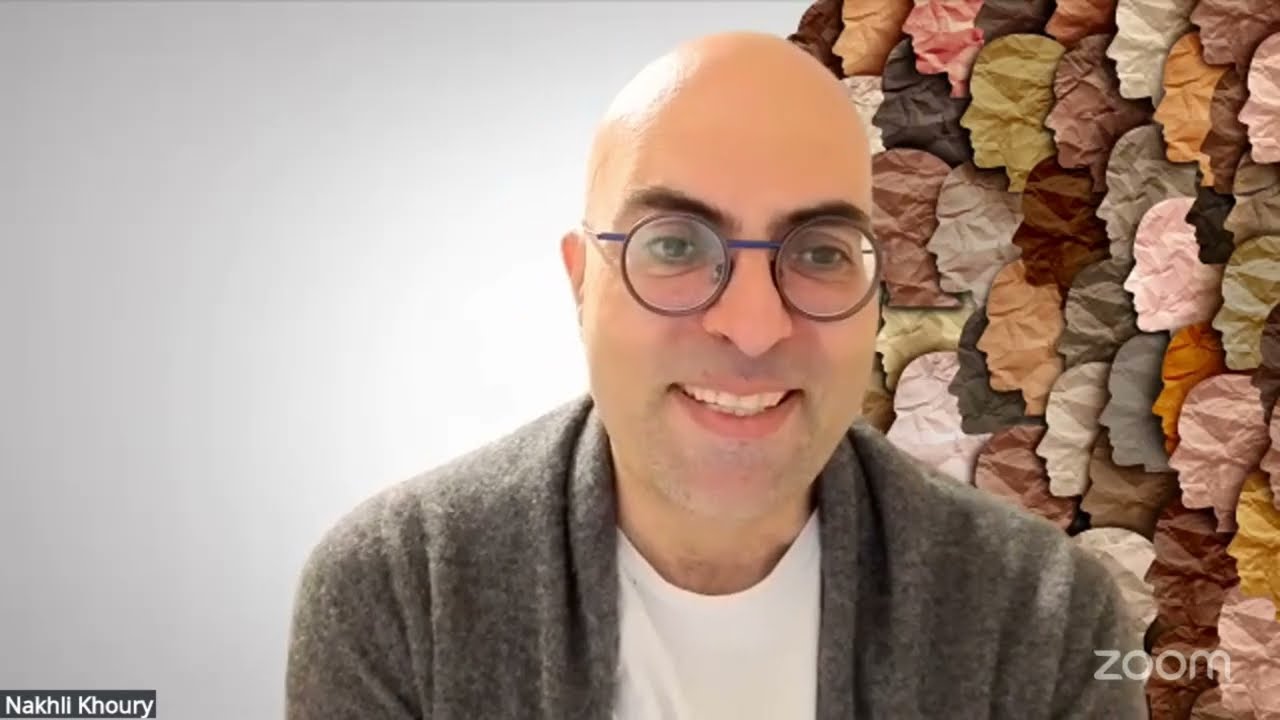
In this episode of Remembering the Forgotten, host Markus Neukom interviews awakening coach and ethics officer Nakhli (Natalie) Khoury. The dialogue explores the concept of stillness as a space untouched by external pressure, contrasting it with noise and performance. Khoury shares how authentic connections with people, rather than solitary practices, reveal moments of untouched expectation. She distinguishes spirituality from religion, describing spirituality as the experience of having been to "hell" and religion as a fear‑based construct. The conversation delves into the human experience, emphasizing that we are spiritual beings living a human life, and that personal hardships often trigger a shift toward inner awareness. Khoury discusses the transition from a corporate career to a purpose‑driven calling, noting how titles and external validation can mask an inner emptiness. She highlights the importance of listening to the inner voice, confronting fear (summarized by the acronym "FALSE – False Evidence Appearing Real"), and consciously choosing empowering narratives. The interview also touches on the idea that we are born remembering our true nature, but societal programming leads us to forget, requiring a process of unlearning. Throughout, both speakers maintain a conversational, reflective tone, offering practical insights for listeners seeking to navigate noise, rediscover authenticity, and align with their inner clarity.
Chapters
Welcome to Remembering the Forgotten, a space where leaders think out loud without polish or performance. No scripts, no personas, just the quiet clarity that emerges when the noise drops and the mind is free to speak for itself. Today, I'm joined by Nahli, an awakening coach and ethics officer, helping people return to who they were before pressure shaped them. He is also a co-author of Corporate to Calling and someone who shows that integrity isn't bureaucracy, it's a path back to inner clarity. Natalie bridges deep inner work with grounded ethical leadership, guiding professionals toward purpose, resilience, and a life that finally fits the truth. inside them. So with that, Nathalie, thank you so much for joining me on the show and welcome to you.
Thank you, Markus. It's great to be here.
Wonderful. So before we begin, Nathalie, when I say stillness, I don't mean peace or quiet. I mean the place in you Untouched by pressure, noise, or performance. You know, the place that knows before the mind thinks. That's the layer I'm inviting you to speak from today.
It's a lovely place to be in. Yeah.
Isn't it? So where in your life do you meet the untouched by expectation?
The untouched by expectations. These are rare moments, right? We don't encounter them a lot.
They absolutely are.
I think moments that come to my mind are genuine moments with people that you feel safe around and that you can lower your guard because you can simply be and you know that you are accepted as you are. And these are the people that I try to be around in a way, and I try to attract because you feel once you meet those people, there's also less need to introduce yourself. Like, somehow you are picking up a conversation and you both accept each other without judgment or without expectation and just allowing each other to be. What I can also say, in the last 2 years I've met more and more people like that, and I think it's a result of an internal transformation that I went through.
We'll definitely talk about that a little bit more if you want to. You know what's interesting, Natalie? You are the first person who I asked this question that does not reply by, when I am by myself, like meditation, going for a walk, you know, petting my, my dog or my cat, or looking at a beautiful sunrise or sunset. So you are literally saying where you feel the most untouched by expectations is meeting with people. What would you say is the common ground you two have when you meet? What makes it possible?
What I noticed that both of us are a result of overcoming our lives. I think sometimes going through certain things in life, you become humble, you become aware. And I think one of my favorite quotes is about the difference between religion and spirituality. Maybe you heard it also.
No, I have not. Please share.
So they say religion is for people that are afraid from hell. And spirituality is for people who have been there.
So
once you go through certain experiences, your perspective changes and the way you see others changes. I see. And these are what I meant, that when you meet someone who went through a similar path or similar experiences, you know that they have a certain perspective about others, the way they see them, the way they interact with them. And in those moments, I feel that it's not from a judgmental place, but not from expectation. It's more about acceptance, empowerment, and just connection.
It's really interesting. So if I take what you just said, Nafri, and run with it for a little bit, So that means the opposite of those people. How would you describe them in one word?
Humans.
Humans. Okay.
I think we all have the same aspects of us. I mean, it's part of our lessons that we go through. It's a human behavior also to be judgmental, also to have expectations.
So it's like the flip side of the coin then?
Yeah, because maybe if I explain further, some people identify themselves as spiritual beings going through a human experience. So they see it from a different perspective. Not to judge also the human experience as it is. It's also needed because without it, we were not able to go through what we went through as well.
Let me ask you a question which might be a little bit provocative for some. What if you actually just described what being a human is really all about?
Well, my understanding of the human experience was shaped a lot by Eastern tradition. Makes sense.
I see that.
It's a way for us to learn and to develop. And the best example that for me made it easy to understand, it's like choosing a university. If you want to study engineering, if you want to study, if you philosophy or arts, there's different schools, right, or universities that are known for that. And the same goes with the human experience. So if I want to experience being a minority, I would probably be born in the Middle East. If I want to experience self-love, maybe I'll probably be born in Europe. And we need to go through these lessons because in these places we have most potential to go through these experiences, human experiences. At some point, these experiences shape us, awaken us, change us. And in some cases, you have this perspective afterward that what really matters is just love and compassion, because everything else is just a decoration in the process.
Mm-hmm. It's interesting. You know, when I hear people speak about spirituality, I'm not sure what your take is on that. It's just like a thesis of mine. I have rarely met someone who is a spiritual person who had a spiritual awakening and woke up and did not go through a human experience. You see what I mean? So what is your thought on that? Because, you know, there's so many spiritual people out there. And yeah, they're an interesting bunch of people.
I mean, we still live in, in a material world, right? We still have—
Why is it so hard to admit that? And to say, goodness me, this is just like normal human being.
Yeah.
Why do I always have to crave to be something else or something more?
It's, um, I think it's only a question of awareness and perspective. You still live in the same world and the same limitation, but the way you see it is different. Um, And it's not always an easy process because in many cases you also feel disconnected or you feel less competitive because you start to value different things. So how can you find the balance, right? And I noticed this a lot, especially now in the corporate world, that many people who feel that they were betrayed by corporate, you know, as a result of mass layoffs as a result of reorganization, many people losing their job. And they turn to spirituality thinking that spirituality will give them comfort or the answers. But it's not, it's not as easy. It's not, meaning that you need to still to find your place and balance between the physical world and also your awareness of who you are becoming.
And
this is what I try to do. This is what I— to help people to have this transition in a smooth way, but not in a sudden way or interruptive way.
It's interesting. So let me, let me jump into what you just said. Um, I'm not sure whether you know that or aware of that, but my former career was hard human resources manager. So I had laid off quite a few people. You know what I found? There's a huge misconception in employees. They literally believe that a company is here for them and they don't understand that they're there for the company.
Yeah.
So if someone begins to understand that reality, and I believe We are lacking a little bit in terms of reality in our society. This is a little bit of wishful thinking and a little bit of dreaming. And, you know, if somebody gets laid off, whatever the reasons are, you know, when I did my courses and I always ask my students, how many people are still in your job? Or in the company? I assume everyone got fired.
Hmm.
They said, no, no, no, only 5 or 10. Can imagine what my question was, why you? And then when they started to really think what could have been reasons on behalf of the company, that's when the interesting answers came.
Yeah.
Though I believe instead of going into too much spirituality, I believe we should stay very much in the human side as well.
I understand that. And many people are getting this. They understand it, but they feel that for so long they felt That, as you said, the company owes them something. But it's also much deeper than that. Their identity was also the title that they had.
That's exactly it.
And after losing the title, they in a way need to rediscover themselves. You probably know this better than me. When you ask someone, who are you? Most cases, they start telling you what they do for a living.
Yeah, men usually come up with their title quite fast. Yes.
Yeah. And I've seen also your— how can I say— like the way that you described yourself recently or in the last few months. And this comes after a process of looking inside and self-reflection and analyzing who you are truly.
Absolutely. And
it's a beautiful process to go through because It requires you to face many of the shadows that we might have, but also to be grateful for things that we had, but in a way to connect the dots in our life. And once you reach this awareness or this understanding, your next chapter becomes more visible or more clear.
Okay.
And there is some freedom in it because you see yourself as a whole, as independent and not relying on a company or whatever to define define who you are because you can find this definition on your own.
I love that perspective. So let us switch into another gear. What I would love to hear from you is, you mentioned there is a lot of noise. It's like the opposite of stillness is noise. Can you tell me about a specific moment, Natalie, where you can remember where the noise literally fell away and something in you knew exactly this is true.
The first thing that comes to my mind is another quote that—
I love your quotes.
Yeah, I think I'm paraphrasing, but it goes something like, we usually have 1,000 problems until we have a health issue, and then it becomes one problem.
Right.
Right. So we are so good in making ourselves busy and influenced and involved in so many things around us. But sometimes there are cases that puts you in perspective. It could be a health issue, it could be a family matter, it could be something with kids or family, and then your focus already knows what's really important, what's really true in that moment, and where you should be 100% present. Some of us understand that and we try to keep it this way, try to always be present where it matters. And it's also a very difficult thing to do because in a way, it's— I mean, humans are curious and we are social, right? Yeah. We want to be busy and eat different flavors and have different experiences. And it's very easy to get lost doing that. But for me, in my case, it was mainly tragedies that happened, even in my previous country.
Interesting.
It was full of conflict. But I had many moments that reminded me what really matters or what truly is valuable and precious in life.
So for you, it wasn't the beautiful sunrise and you felt warmed?
No.
It was literally the opposite.
But it's like having different teachers that tell you the same lesson. I mean, I feel that I got the message regardless of the experience.
It's interesting. Yeah. Thank you for sharing. So another thing which I experience quite often is people feel like they're living by someone else's script.
Mm-hmm.
Can you recall the moments, Natalie, when you realized in your life, wow, this is not my script? And what cracked that open?
I mean, most of my life I was living someone else's script. It starts with what I started to study, the topic. It wasn't really my passion. It was something to make a decent living. I think what made me realize that I'm climbing the wrong ladder or not walking my path is that it never led anywhere. Like, it never reached anything of the mountain.
So despite of your curriculum vitae, which, you know, reads like a success, right? So we had the pleasure of quite a few times talking with each other. So even if somebody looks at your curriculum vitae, you say, you know what, it's not as gloomy and as bloom as it looks from the outside if you speak with me personally. Is that what I—
Yeah, definitely.
That's interesting.
And even this process itself, like, why does our CV Is our story.
I know
it just shows the expectation.
That's exactly it. Because you know what's interesting? If somebody looks at you from outside, that's more or less the first thing someone does. They look at your LinkedIn profile, they look at your headline, then they look at your experience and about section. And then they say, goodness me, how can this guy not be overjoyous, absolutely grateful for what he has experience, how can there be kind of emptiness, right? Because I remember when we first talked, you know, remember who introduced us? It was literally that point where you more or less, you know, paraphrasing, said, I'm aware I have like what someone could wish for, including education, you know, the schools you went and everything. However, Is this as good as it gets or is there more?
Yes. And I consider myself lucky because I was able to reach the point to ask myself, is that it? Right? Because we could have spent our entire life chasing what we think we should do and not reach this point to see, is that it?
And too many people do because they believe they have no choice.
And this is something also that now is becoming more and more frequent. Like, you see people reaching, you know, the dream job or the dream title only to find out that, you know, they are still empty, but even becoming more empty, or they feel that there's internal noise that they cannot avoid anymore. And some people go through burnout or depression. Because we are never taught how to listen to our inner voice. We are always taught how to go to this university, study this diploma or whatever, how to comply, how to be a good employee, a good executive and whatnot, to serve a bigger purpose. Right. But now I feel more and more people are asking, wait, I mean, what about me? Like, what about—
Why do you think that is and where does that question come from?
I think it comes from a few experiences that made people aware that legacy systems that we depend on so much doesn't have our best interest.
Interesting. You said something before interestingly, you said that The hardship basically made you ask questions, right?
Sure.
So, so think about it. I'm just putting a theory out there right now, right? So people speak of soul. People speak of intuition, intuition, right? People speak of the inner voice. What if that is actually our original design we were born with? What if all that hardship leads us to the point that we suddenly start to hear that voice again? Think about it for a moment.
I am. And it's amazing how time passes in our life, right? And to reach this point, And I totally agree. I think, well, actually, I know we are born to remember who we are. We don't always remember, but these experiences and hardships and different stories that we tell ourselves, that we endorse, supposed to lead us to a certain point. And every lifetime was supposed to get you closer and closer to this point of awakening. Not everyone feels that, not everyone needs that, and that's fine. It's just a different Path, different curriculum for each one.
So let me ask you an additional question, and this one is even more challenging than all the ones I asked already. What if the scholars and the philosophers and the spiritualists were wrong in one point, that we actually were born Remembering. But throughout our first 10 years, got so much pressure from outside, from society, from parents, from, you know, whatever, that we actually started forgetting then. So we actually have the remembering. But it kind of got hidden away. And now it's our job not to find something we have no bloody clue about, which so many people tell me, like, when you are born, you forget. I said, no, not in my case. Like, I grew up, I remember like 5, 6, 7, 8 years, which I am now remembering and basically getting back to that strength. Yeah. Because I know many people who listen and watch our conversation, they are still believing that when they were born, they forgot immediately, you know, when the, the, the, the thin cord was— umbilical cord was cut. That's all the remembering got lost. That's terrible thinking if you believe, if you look at it like, right?
But I do agree with you that growing up, you know, some people call it the programming stage. We are told in immediate feedback when we are kids and babies what is expected from us. How do we eat? How do we behave? How do we speak? You know, and so on. And we come to this world with a lot of knowledge, with a lot of connection to our inner self, to our intuition.
I'm happy to hear that, Henry, because many people say, no, no, we would forget absolutely when we were born. That would be bad.
That's why we call it remembering, because it's not something new that we are learning. We are actually unlearning what we are told to do in this life.
Yes, I love that. I'm not sure whether you have heard my description of stillness, it's literally remembering what the world told you to forget.
Yeah. And at the beginning, I didn't understand that. But imagine if we had a full memory from the beginning. It doesn't allow us to really learn and experience things, right? If we come with all the knowledge already, it's like you read the book and you know how the story goes. So there's nothing surprises you, you know, going through. And that's why we need to forget in a way, or to come with a fresh mind or with a clear paper. And to go through our stories and help writing it with our emotions, with our feeling, with our thoughts, with our actions. It just makes the human experience much more human and not robotic.
That's an interesting aspect. My wife said something interestingly recently. She spoke about the executive functions. And I believe what we actually do forget are our executive functions. We forget our fully built-out skills in terms of the seed. Right?
Yeah.
I don't believe, let's say, anymore that we come here with a life plan and basically I need to fulfill all that stuff. I believe I am in 100% charge in which direction my life goes. I believe what it comes down to is to coherence. And coherence is when people say, you know, or is there more? Many people from outside believe they're actually talking about more in the outer world, but they're not.
Mm-hmm.
Like, imagine I have a friend who told me about one of his clients. This guy sold his company, $500 million on his bank account.
Yeah.
Half a billion dollars. Guess what? He's one of the unhappiest, unfulfilled, no-purpose guy in the world.
Yeah.
So you see, when you get to the point that you literally have amassed everything you could on the outside, that's when the inner voice tells you, Natalie and Markus, is this it?
Yeah.
Isn't there more? to my life. And you know me, this is one of the main reasons why I'm actually doing what I'm doing with this show.
Yeah.
Because imagine if I have 50 people or 52 people in the entire year, that altogether, that builds probably quite a macro of what stillness is all about.
Yes. And these are so like wonderful moments to reach this point that you feel, okay, the true mission for me is to find what else is there. And it's also a never-ending process. It's a process of self-discovery, of reflection, of understanding. And, but you also have this inner Clarity that you are on the right path and suddenly things are meaningful for you.
Because, you know, there's this beautiful, you know, I'm a man of stories as well as, you know, there's this story where the gods tried to hide the most precious thing and they put it up on the highest mountain. No chance. Lowest sea. No chance. Furthest away in the Amazonas. No chance. And they got frustrated. And I don't stop telling this story because it's so deep and it's so true. So the chief god in the end said, you know what, guys, there's only one place where the human will not find it before he's ready. And that's inside.
Hmm.
So I believe we humans need to get to that point where we say, you know what, everything I tried doesn't work. It doesn't give me fulfillment. You're the best example. Like, once again, if somebody really wants to see what I'm talking about, they should check out your LinkedIn profile. And people will say, how can this guy not be fulfilled? That's simply impossible. That's because your soul said, this can't be it. We didn't come to this world. I don't know about your father, but my father, he went to work. So he got money, right? Nowadays, do you go to work to have purpose? That's nuts. That's nuts. Like, literally, I would say at least 50% of your talents will never be utilized in a job and you're trying to find purpose in what you're doing. And it's the comfort. So let me ask you another question. I know you are deep in stillness with your work as well, Natalie. However, what is something that can pull you out of stillness? And what is it that helps you to return to it again?
Pulling me out from my stillness, I think my main challenges are now is to think, behave, and act not from a place of fear.
Interesting. So fear is something that can pull you out of stillness.
Yeah. And I notice myself when I am being influenced by the energy of fear or not. Like, you know, you have this inner voice that voice of doubt or talking down to you or trying to shift you from what you think is your purpose.
Interesting.
But a few years ago, I wasn't even aware of it. I just thought it's part of— that's the thing. Now I'm trying to notice it. And for me, that was—
It was your natural programming, more or less, right?
Exactly.
Yeah. So if you think about fear, there's this beautiful acronym, False evidence appearing real. And I'd say 98% of the evidence which we take as truth and as proof is BS.
Yes. And the way I see it is it's a story that I choose to think at a certain moment. Once I notice it, I actively switch it with another story. that is acting from a place of confident love and compassion. So I actively choose the story that I want to base my decision on.
Yeah.
It sounds easier than it's actually done, but like everything else, it starts with you recognizing these patterns in the way you think.
Yeah.
And say, okay, I see where this is going. I choose another story that will lead me where I should go and not the other one.
Yeah, that's so interesting. And you know what I always think about people who do not choose? They make a choice.
Yeah.
It is a choice not to choose.
It is. And I think it's what I also learned is that we cannot rush things. in our path. If something is meant to happen, it will happen, not necessarily when we want it.
Yeah, exactly that much.
So if something didn't happen when I need it, I just say, you know what, maybe it's not time
yet.
Yeah,
it's interesting because, you know, I believe when we actually rush it, we believe that we are kind of forward the timetable. But I think we actually make it much worse. And the lessons are waiting around the corner again. So that's the beauty of life.
Yeah, one way I see it is the difference between chasing and attracting. When I'm chasing something, they are always running away from me. When I'm attracting, I mean, it's, I don't need to spend so much energy, things just happen. But this is also a switch in mindset and in behavior. How do we Trust that things will happen and we don't need to chase them. We just need to be open and create the relevant environment to allow them to happen.
Yeah. That's beautiful. So we're coming close to the end and there is this one final question I'll ask you. If someone listening feels lost in the noise, What is the one thing you want that person to remember is still true despite of the noise?
I think the best thing to remember is really to know that the inside voice that you have is is coming from a true place. Listen to it, empower it, and allow it to lead you to who you truly are. Many times we try to ignore internal feeling. We are never taught to listen to it or to nurture it. So whenever you have these beginning of thoughts or voices or hopes or messages, Try to be open to it, allow it to grow, listen to it, um, and see where it takes you.
That's beautiful. Natalie, thank you so much for being my guest today. It's been a great pleasure having you.
Likewise, my friend. It was always a pleasure speaking with you.
Beautiful. So this was Remembering the Forgotten, a conversation held in clarity, not performance. And if something in this exchange helped you see differently, carry that forward.
More from Markus







Ep 66 Breath, Trauma, and the Fear of Being Fully Seen A Conversation with Matt Ritchey

Ep 65 Truth, Trust, and the Courage to Be Seen A Conversation with Troy Gregory

