Ep 09 When the Title Falls Away A Conversation with Mark Consigli
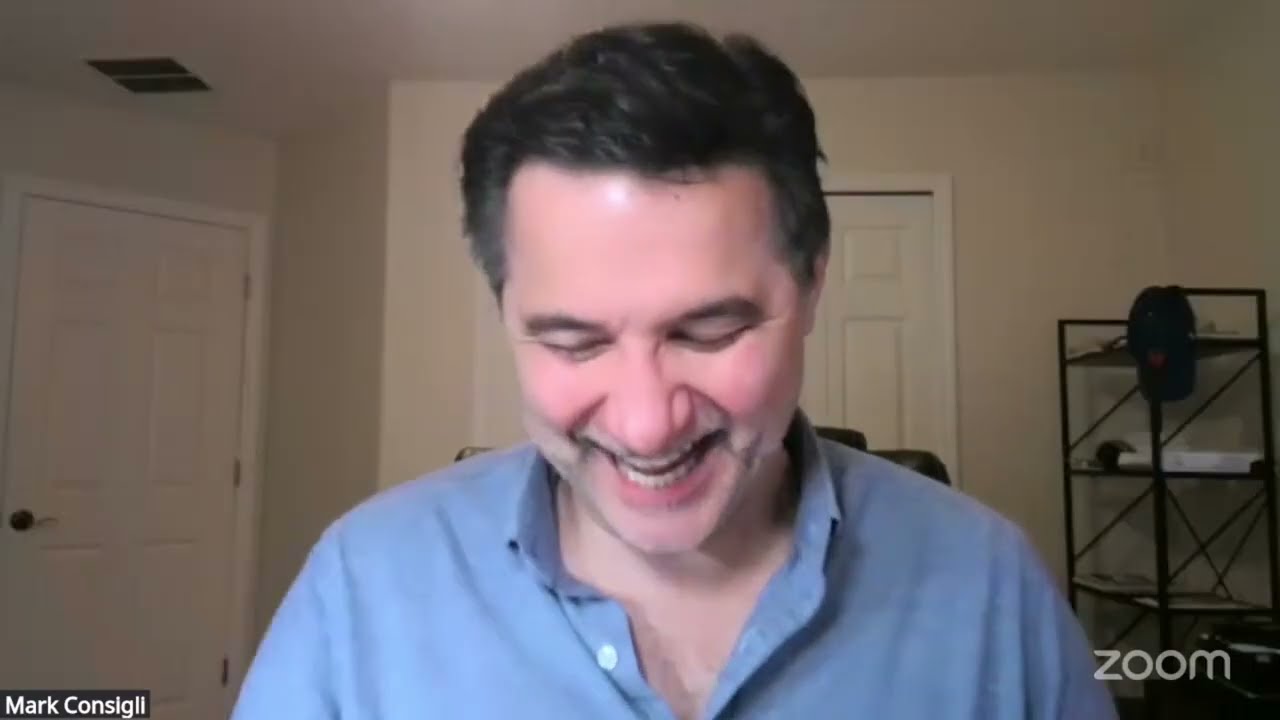
In this episode of Remembering the Forgotten, host Markus Neukom interviews global business lawyer and former general counsel Mark Consigli. The dialogue explores how the guest discovers "stillness"—a mental space untouched by pressure—through family relationships, long commutes in a quiet train car, and strenuous physical exercise. Consigli reflects on the moment he realized his self‑worth was tied to corporate titles and how the loss of a senior role forced a painful deconditioning from that script. The conversation shifts to the importance of building genuine human networks, the metaphor of the corporate "hamster wheel" that conditions identity, and practical advice for professionals feeling lost after leaving or being let go from corporate roles. Consigli emphasizes reconnecting with human interaction, grounding rituals such as walks with his dog Winston, and cultivating routines that restore inner clarity and a sense of net worth beyond titles.
Chapters
So welcome to Remembering the Forgotten, a space where leaders think out loud without polish or performance. No scripts, no personas, just the quiet clarity that emerges when the noise drops and the mind is free to speak for itself. Today I'm joined by my dear friend Marc Concili, a global business lawyer, and a general counsel who brings steadiness into complex environments and just recently added realtor as a trifecta to his curriculum. He's someone who understands that legal strategy is business strategy, a partner who protects momentum rather than slowing it, and a guide who helps companies move through commercial and regulatory complexity without losing clarity or pace. Markus listens until the real issue appears, removes friction where others add weight, and creates the conditions for leaders and businesses to navigate pressure without being consumed by it. So with that, Markus, Welcome to the show. So before we begin, when I say stillness, I don't mean peace or quiet. I mean the place in you untouched by pressure, noise, or performance. The place that knows before the mind thinks. So, Mark, that's the layer I'm inviting you to speak from today. So you ready?
Yes. Thank you, Markus.
I'm very excited to have you with me today. So here's my first question to you, Mark. Where in your life do you meet the you untouched by expectations?
That's a good question. I think that I found that with my family. They both my for some well, to some extent with my parents, because no matter any of the achievements that I've had over my life. Or any of the advice. I'm still their son, which can be good and bad, right? Um, and then there's no
out, right?
There— yeah, it, it doesn't matter, you know, you're just the guy, the kid, right, that, that we knew. So, so, but there is some, there is some calmness in that. And I also found that with, um, my wife's family too, when I Met her. She's the youngest of five girls, five girls. And so, and I've always been the oldest in my family. And not that they put pressure on me, but there was always a lot of pressure on me. I felt with them I could just be myself. And in fact, I got more positive feedback about the things I was doing from her side of the family, probably because I was new, than I did on mine. So. For me, that was always calm. I always felt like when I showed up at her, any of her family functions, even to this day, I can just relax and, and be myself. So there is calmness in that.
That's beautiful. So would you say that is where you can just be yourself without expectations?
Yes. And they also know me better than anyone else too. It's like, so I couldn't even fake it. And that's the prize.
Yeah. That's the prize.
Yeah. So, so I think Yeah, that's, that's definitely it. And so that's, yeah, those are, I guess, 2 examples, different sides of the coin, right? But for the same example.
That's so interesting. You and I, we know each other for quite some time, and I don't think we could count the hours we have been on calls together. But there is one parallel which I wasn't aware of. And I don't think I've ever shared that with you. When I joined Holley's family, it was on Christmas. And I just knew based on the caliber of that family, I can only win only one way, just be myself. One of them was a Profiler. Criminal profiler. Yes.
Oh, wow.
Yeah. Yes. That was a great thing to know. So he would read my BS immediately. So it was so freeing just to enter that house knowing I don't have to pretend. And as you say, you know, Holly's family, like, parents died quite recently. But they knew me much better than my own parents who have been around me for so many years. Yeah, which is such a blessing,
right? Yeah, it's interesting. When I came into my wife's family, I wasn't the first male. Remember, she's the youngest of 5 girls. I wasn't even the first one with this surname, similar surname.
Really?
As some of the others. And I wasn't even the first lawyer in the family. In fact, I was still— yeah, there was already one. So those, those paths had been blazed and, and cleared. Um, yeah, I could just relax. And in fact, the first time I met— I had met her parents previously, but the first time I met, um, 2 of her sisters with their husbands, right? was at a Christmas meal out at a restaurant at, you know, near where, you know, her fam— 2 of her sisters lived. So yeah, it was right around the time. So yeah, and I felt— I always felt comfortable there that I didn't have to do anything. And I think because they don't know you, maybe they listen better than your own family. They're more curious.
Or maybe they were just different people.
Yeah, they definitely were. They definitely
were just different people, literally. And so that is interesting. So we even learned something new about each other now.
One last point. In fact, I enjoyed the attention so much, particularly from my mother-in-law, that my wife teased me all the time. She goes, well, I guess I can't bring you home anymore because I used to be her favorite as the youngest, now you are.
That's another parallel we have.
That's so funny. Yeah, so I sensed some jealousy there, but it was all, you know, it was all in good fun. Obviously that was preferred to the opposite, you know.
Oh, absolutely. Imagine that.
Yeah. So,
wow.
Yeah, it was always very easy, and they were supportive. They were actually more supportive, uh, of me than some of the things they were of my wife growing up too. So the, the dynamics were completely— it was, it was completely different, um, you know. And yeah, it was just, it was, it was very relaxing. It was always very natural and relaxing to fit in In, in her family's environment.
That's beautiful to have. Not too many actually experience that ever, right?
I agree.
So when we talk about stillness, Mark, can you remember a moment where all the noise fell away? And something in you knew exactly what was true?
Yes. For me, it's always been more, not, I wouldn't say it's a slow evolution, but for certain decisions, I usually like to, I know you call it meditate, but mine's a little bit different. I, well, I'll tell you, I, I've had, we've talked about this, I've had long commutes in my life, work commutes. And that's a lot of times where I would actually think not only about the day, but about certain decisions. And on my rail line into, into New York, they introduced the quiet car and I used to love it because I would either sleep or read or, or just think. And but the thinking wasn't empty, it was, it was active. So while there was a stillness, it was more— I knew that I was meditating, um, in, in, in, in my own way. And, and so I think that's one example of— I will go into that, uh, that mode. And then another way is actually with, um, through physical exercise. And we've talked about this too, where I will be distracted by something I'm thinking about to the point where— and I love it when this happens, just not frequent enough— where any type of discomfort, not pain, right, discomfort of that strenuous activity falls away that I forget about the clock, I forget about the cadence, the pace. Um, that's, that's, that's very comforting for me as well. Um, and then so, so yeah, those are, those would be 2 examples, but I'm not sure it's exactly a moment. For me, it's always an evolution because I probably overanalyze a lot of things. But what I've learned to do is filter and kind of redirect that energy into a more focused approach rather than kind of spinning the wheels of worry. That's, that's where it's changed the most for me is I try to make it productive activity. So, and It sounds like there's a lot of work going on, but it isn't. It's just mostly the distractions, the noise. They fall away. And I don't know if this adds to it too, but when I go to a physical activity, I shut down everything else that I'm doing. Mm-hmm. I can't multitask. I will have music. But that's it. And so that allows, that allows me to, my mind to, to drift a bit into that area that is more relaxing. And then on the outside, there's, it looks like I'm in a lot of pain and discomfort, but I'm not.
Do you see, do you see what you're actually describing, Mark? You're describing absolute stillness. Because you know what's interesting? Stillness for me is quite opposite of what many people believe themselves it is. They call meditation stillness. And, you know, you know me, I can be a little bit sarcastic from time to time, a little bit of an actor, because they become very solemn. Almost wholly when they talk of stillness, right?
Right.
And you know me for quite some time. For me, stillness is absolute absence of no action. Stillness is, for me, absolute focused coherence. So you actually do stillness without probably even understanding that you're doing it because When you go into, into your train ride, what you're doing is you're basically lowering all the noise from outside and you're going into an active process. And now I actually interpret— interpretate something which you can, you know, say no to if you think it's not. But I believe those things did not come anymore from your mind, but what I would call from your executive functions. So basically, a process in you got freed, which inside almost made you go into a different sphere.
Yeah.
Is that, is that kind of fair to say?
Yep. And, and one of the side effects—
Just go ahead.
When I had shorter commutes that didn't involve a train that were maybe 15, 20 minutes away, that was a shock to the system.
Yeah, that makes sense.
I couldn't— I had a— and, and, and it, and it— I adjusted over time because the human body and the mind are amazing, right? But I didn't— and, and it became different. I didn't have that That, I would call it reflection, thought process.
Yeah.
Um, quieting of the mind. Um, yeah. And I, and I would pull back then a lot of, uh, memories too, right? That, that brought into,
you
know, whatever I was focusing on at the time. So yeah, it's, it was definitely—
If you think about it, if you think about it, it totally makes sense, Mark.
Yeah.
Because, you know, you needed a certain amount of time to go into stillness. So when you had that 20-minute commute, what this basically meant was the noise from the day could not quiet enough. And that's why I know when you go on the treadmill or when you go on the bike, you literally power yourself out. And I assume when you go into strenuous activity, you actually get faster into that zone than when you had to take a train ride, right?
The endorphins. Yeah.
Yes.
Yeah.
It's almost like, let's say you're on a bike, you're almost like pedaling yourself into coherence. Right? It's like, it's almost like it's kind of a fast train through the BS of your mind until you land on a level which otherwise without these strenuous activities, you know, other people do endurance running.
Oh.
It's the exact same thing, right? Suddenly the runner's high kicks in and If somebody looks from you from outside, it's almost like gone, right? Like not here anymore. So it's highly interesting what you just shared.
Yeah.
So what was a moment in your life, Marc, when you realized, and this is a totally different topic, but a very interesting and important one, that you were actually living someone else's script? That's the first one.
Oh, okay.
And the second part is, and what cracked it open? So when did you realize you were living from someone else's script? And what cracked it open?
We've talked about this before, and it just, it came right to me right away. That's why I had to write it down. I associated my title and job with my worth. And what cracked? I did when I didn't have it anymore. Yeah, it was, uh, it— yeah, that, that was— and I wasn't even— and, and I think I know you understand, I was never really chasing that. I I told myself I was never chasing that. Um, maybe that wasn't the case. Um, but I always felt that my effort, my dedication to my craft, my profession deserved— deserved, that's the right word— more, more return. Mm-hmm. So it was just being on the bike or the treadmill and, and doing that faster. Without stepping back. And one of those examples was before this call, we talked a little bit about recent events and you had asked me, Mark, how many of these, you know, these half a dozen to a dozen jobs, careers you've had over your life, how many of those were through a network connection? Well, that's not 3, that's 0, right? 0.
And
that's when it hit me. I was like, wow, I had my head down to the literal grindstone, you know, from prehistoric times and didn't, didn't build any business relationships outside of these transactional relationships. Um,
you know what's interesting? You were wondering whether you chased something or not. Knowing you as well as I do, I don't think you did. I think you actually followed a conditioning.
I followed the conditioning?
A conditioning, yes.
Yep. Yes, I came up through that system. That educational system, right?
Exactly.
Yeah, exactly. That's the philosophy. Yeah, yeah, yeah,
yeah.
And I was—
so when you—
yeah.
Oh yeah, absolutely. So when you realize that you're living someone else's script—
Thank you.
You're welcome.
You're
welcome. Was that when you got kind of forced You know, basically being let go? Or was that when you decided to leave the job? And I know you well, you have a talent to force someone else's hand to actually take the step when you're done.
Yeah. So over a period of about a year, I chose, I chose to leave a situation where I thought was not healthy, um, for either my career or my mindset.
Okay.
I wasn't happy, and we talked about that. And I thought I was going— I thought I was taking control of this systemic process. And it was worse. I mean, so I questioned all my judgment, questioned my decisions, particularly that one, did all the what-if scenarios. It was hard. It was difficult and lost all, you know, confidence.
Remember when we met? Do you remember when I told you that if you are a corporate, and many of our viewers and listeners, Mark, are corporate.
Mm-hmm.
If you are a corporate, you are there because of a condition. When you believe that you can just leave the environment, good luck. Doesn't work. So I do a little bit of a sidestep right now. So everyone who believes that they're done with corporate and are so fed up that they want to do what Mark just described, do the work on yourself while you are in corporate because you need to get rid of that conditioning.
Yeah.
Because otherwise you fall through all the cracks. And I remember when I met you, like, if somebody had asked me, what would you say is Mark's background? It wouldn't have been what it was. I know that much.
Yeah. And
so that is a sign because you lost and left your identity behind.
Yeah, it's, uh, I, yeah, you have to establish those network relationships. I mean, there's nothing more important when you're in corporate. That's like a, that's like your, uh, continuing education in the early part of your career, um, both, uh, formal, right, if you're gonna pursue advanced degrees, and also on-the-job training. The, the, the network connection, the connections with real people, real people has to be one of the skill sets that you learn. Um, and, and we, you know, we talked a lot about the universe, and that is the universe, because if you don't create that, it's not going to be there. Um, and that you may not see any benefits ever from it. You're not going to see benefits from the people that you help the most. You may, may not see benefits from the people that you help the most, but then people you've barely spoken to may help you. It's, you know, if we, if we knew that formula, we would harness it and we'd all live happier lives, which I think you're, you know, that's part of it. That's what you're moving towards. But it is. It's, uh, it's hard to explain, um, but that's the most important thing that I missed. Um, in fact, when someone that I worked for that helped me— well, I thought helped me in my career, at least when I was at that company, not so much afterwards— when he retired recently, he said, um, And I saw it and I didn't respond. And I know, you know who it is, and I certainly know who it is. He said in his post, now I am simply a lawyer. Like his identity was this, you know, general counsel, senior guy. And I'm thinking—
And it's still a lawyer as his identity after he lost or left that job, right?
Right. But he was right now, it's just a lawyer. Like, yeah, where he was, was this, you know, senior executive. And I'm thinking, I'm going, no, you should have, you should have solved that issue before you left. So—
Most don't. Most don't. So actually, I wanna, I wanna give you a little bit of an insight I just had when we met. Remember when I, when I introduced you to networking and then especially to work in the net? In the beginning, it didn't work at all. Like, you almost fought it as a friend. I think what we've done is we did a deconditioning, and the deconditioning let for you to understand who you really were. And basically no one is interested in you being a general counsel or whatever you were before, right? But you had to learn something which is not allowed, not wanted in corporate. You had to become Marc Concili. And I believe that is the biggest step someone has to make. Why they are in corporate to develop that muscle. And it's a totally different muscle, right?
Yes.
So, you know me, when I came to the US a year ago and I suddenly realized, gosh, I have a couple of weeks, I went on a couple of calls, 5 pieces, and within 8 weeks I was on 100+ calls. And those led in the end to a Rolodex of about 500 high quality people. But Marc, when I went on those calls, and you know some of those people because I introduced you to them, I wonder what the heck do I have to bring to the table? Even at my then level, Marc, I wondered, you know what my answer was?
Me. Mm-hmm.
Me. Because, you know, I found that work for 20 years, the one I always propagate for other people to do. I did it, but I wasn't aware that now the payout comes from all those hours invested in getting to know myself. And when I remembered one of my mentor's words, Markus, Always appear that they never forget you and always believe that you will be an enrichment for anyone who meets you. That's how I went on those calls. That's high order, believe me. High order. And I literally realized during those calls, it's true. They end in a This is who I am. So you see, it has all to do with stillness. I believe your endurance sport, your walks with Winston.
Yes.
All that stuff helps you.
My sidekick.
Oh, yeah, your sidekick, right. Helps you to go into stillness.
Yes, yes.
And I believe that's where you— that's where the deconditioning took place, right?
Thanks for reminding me about those walks, because there are many occasions he almost pulls off my arm because I'm deep in thought about something, not stressed, a very peaceful thought, and he takes off. And I am actually surprised. He goes after a squirrel or something. And, you know, I have him on the—
He's a dog.
And, and I was like, oh, I was so One thing I wanted to bring up though, when you reminded me, when I first was working with you as a client, former client, current client, right? I was not sleeping well. And shortly after, talk about stillness with, with sleeping and thought, because my mind had been racing.
Okay.
With a lot of, you know, thoughts and worries and things like that. So that was That, you know, completely went away for any of your, uh, future clients because that was complete stillness. I needed stillness, stillness in my mind at night to recharge, have those deep thoughts recharge for the next day. And, um, I wasn't having that because it was, again, the distractions.
And that's exactly what I'm saying is We human beings are so conditioned in living in noise that you remember me talking about the hamster wheel.
Yeah.
You cannot imagine my surprise and my shock when one of my acquaintances suddenly said to me, she's a female high-level executive, said to me, Markus, You're actually missing one aspect. In corporate America, people not only get accustomed to a hamster wheel, you know what comes next? They actually start believing they are hamsters.
Oh, sure.
And you see the conditioning now, right? So every time when I get on a call with somebody, The stillness leads them to take a little hamster foot and put it outside of the hamster wheel and teach their humans. Most of the times, as you know yourself, they go back into the hamster wheel and become hamsters again.
Mm-hmm.
But if that happens enough times, suddenly a muscle memory says, You know what? Not only does it actually feel great, I feel like that's when the question comes, is this as good as it gets? Or is there more to my life? Right?
Yeah.
And that's what stillness does. It lowers your guards. It basically puts almost like, yeah, I sometimes describe it like this. When When I meet someone, it's almost like a protection, whatever you want to call it. It's like a little wall around us where all the noise, almost like a Faraday cage, right? Where all the noise, everything stays outside. And then suddenly the other person is sometimes for the first time able to hear. their own inner voice, which is incredible. I believe this explains what you said, that when you started working with me, you had sleepless nights, you had stresses, and then you actually suddenly learned how to lower that to 7. Remember when I told you, for me, there is only one reason why I do what I do, because there is never a chance of an addiction. Never. Like, agency is the absolute first and foremost thing for me when I work with somebody, which is very important to understand because, you know, many coaches, they want their clients for lifetime, which is interesting. It's interesting.
Yeah.
So which brings me to my second last question, Mark, and it is, What most pulls you out of yourself? And what lets you return to it again?
What most moves me outside of myself? Yeah.
Basically, if you're in stillness, if you're in coherence, what can happen that pulls you out of it? And how can you return to it again?
Uh, I think specifically, obviously, the outside influences like the, um, cell phone, laptop, um, media, those are all noise, right? Um, that's the quick answer. The other thing is, is that There are some short, medium, and long-term obligations that go with any life society. You know, the mortgage, the payments of utilities, things like that. That's, you know, that's the worrying part that comes in because, you know, the raising of kids, tuition. Taxes, things like that. So, you know, healthcare, all of those will get you out of it. But those are— those items are, if with a decent amount of time, can be planned out. They have longer, in most cases, You have time to, you know, put a plan together for that. The, the quick ones— and, and Winston is barking now. He can get me out of it too, pulling on my arm again because of the squirrel. But in this case, it's somebody at the door. Um, the, the, the, the electronic noise right now, I think, is the— is like the most immediate one in it in our day-to-day, um, world.
Like social media.
Oh gosh, yeah, everything. That— and that's what I meant. Yeah. Yeah. And when I walk with him, it's funny. I will listen to music for my workouts, whether it's strength or cardio. When I walk with him, I don't. I want to hear the birds. I want to hear the squirrels, you know, kind of chittering at him because he's in the area. They don't like him. Probably don't like me either. I want to hear like a screech of a hawk, you know, and, and, and we can see down here we get gators every now and then. I want to have experienced that. So I take that in. That helps me to get the stillness, believe it or not, because that's all natural. Um, so I don't even listen to music on those walks. That is— you reminded me of that. That is, uh, that is definitely, uh, one of my daily routines of getting ready. And yeah, and twice a day, you know, in the morning, half hour in the morning, half at night, about a mile each time. So yeah, I think the distractions are social media. All because there it's all comparisons and vanity. Much of it is. There are some people that are trying to do good, but they're just drowned out by the other noise.
And, you know, sadly, you know my opinion about highly spiritual people. Because in the end, I believe our path leads to become humans. And I understand that, that Winston is literally the little guy who takes you out of your environment, which is noisy, right?
Yeah.
And he's the one who actually helps you ground.
He does. He does. He takes— he also takes a lot of attention because I have to make sure he's, he's focused as well. Um, for the most part he is, but every now and then he surprises me as I drift off into my own, you know, he reminds me, he's like, hey, it's still my walk. I'm like, okay, okay. So, but, but that's all, you know, it's— I look forward to it every day. A lot of people, maybe that former executive is wondering what his— that's the thing when you're not in that structure. And I realized I craved it too, you know, on a commute. My commute would start at 4 in the morning and then I wouldn't get home till like 7 or 8 at night. So, you know, that was my day. And then there's a few hours that I'm home, hopefully go to bed by 10. So that's like 2 or 3 hours I have with the family.
It's pretty much, pretty much over. Yeah.
When that was gone, I was completely lost.
Yeah, makes sense.
What am I gonna fill my time with?
Um, I remember those times.
Yeah,
absolutely.
All the worrying kicks in. So You know, I thought that kept me grounded, but it wasn't. You're right. It was the hamster wheel. I was a hamster and just trying to go faster, I guess.
Yeah. And if you think about like, if you leave or lose your job, the conditioning of that corporate world is absolutely still here. There is no place where you can fit anything into it. And at the same time, you have a huge void because nothing is here to occupy that fullness.
Right.
So I remember like that deconditioning was, was quite tough. So as we get to the last question, so picture this, Mark. There will be many people who listen, and there will be people who feel lost in that noise. What is one thing you would want them to remember is still true, even in that noise?
That deep down, even though it's been suppressed or hidden, Or locked away in a in a dungeon, there is still net worth there. It was sacrificed for the structure, for the process, or for the corporation. And people have asked me this too, and I've thought about it: Is the best thing to do is to talk to? You have to talk to another human at that point. You know, don't necessarily talk to a computer-generated algorithm, right? That is not going to give you the— that will give you the answer that you seek, I think. And we talked about this too. It's a mirror, right, of your own personality.
Yeah, if you distort it, it just distorts you more. Yeah,
right.
Absolutely.
And if you want positive feedback, it's gonna give you that, but I don't think it's gonna give you the critical feedback that's required. So talk to another human. And since we're on the call, I would, you know, anybody that is thinking about this, certainly you're at the top of the list for me. And yeah, absolutely. I think that's what it is. It's that human interaction to remind them that they are human again, to remind them that they're— they as an individual do have a worth that is outside of a title, outside of a salary, outside of all the material things. You know, there's a fam— we talked— we started the discussion with family. There's a family there. There could be kids, there could be adults. Parents that you're that I'm basically caring for now. I'm more their Uber driver, and I get constant. You'll like this one. I get constant comments about my driving, which I've said I am more than happy to use this to to coordinate your rides through Uber or Lyft, your preference. To which they say, oh, it's okay. Um, so yeah, but but.
Not that bad.
That's— it's a veiled threat, but in, in the best way possible. I can tell them, um, but I'm still their child, right? So that's, that's where it's going to come from. Um, but, but I think that's what it is, is to reconnect with that human interaction and then try to find that stillness. I— because all the thoughts are going to be going at 1,000 miles an hour. Your routine is thrown off. You don't have the structure that you cling to. The hamster wheel is gone. The hamster wheel is gone, and you're in an empty cage. And maybe you're outside of the cage looking in thinking it's so safe in there. And yeah, it's—
Yeah, it's your identity.
That's where it was. So you really need to I think, I think that's it. You have to really find out what it means to be a human and your net worth. Um, because I remember that was the other thing that, you know, the, um, the unlearning and the relearning of, you know, your net worth, your value, um, and how you can help others. And I've gone from zero networking to like you know, the networking on steroids now. And, and then even there, it's, it's one extreme to the next to find the balance in between, right? The right connections, not just the entire universe that's out there. So that's what I would— that's my recommendation. Beautiful. Reconnect with a human who, who sees and sees your value And help you find it again.
That's beautiful. Thank you so much, Mark, for being my guest today.
Thank you.
My pleasure. Wonderful. So this was Remembering the Forgotten, a conversation held in clarity, not performance. And if something in this exchange helps you see differently, carry that forward.
More from Markus







Ep 66 Breath, Trauma, and the Fear of Being Fully Seen A Conversation with Matt Ritchey

Ep 65 Truth, Trust, and the Courage to Be Seen A Conversation with Troy Gregory

