Ep 10 From Manuscript to Mirror A Conversation with G Mick “The Doctor of Digital” Smith
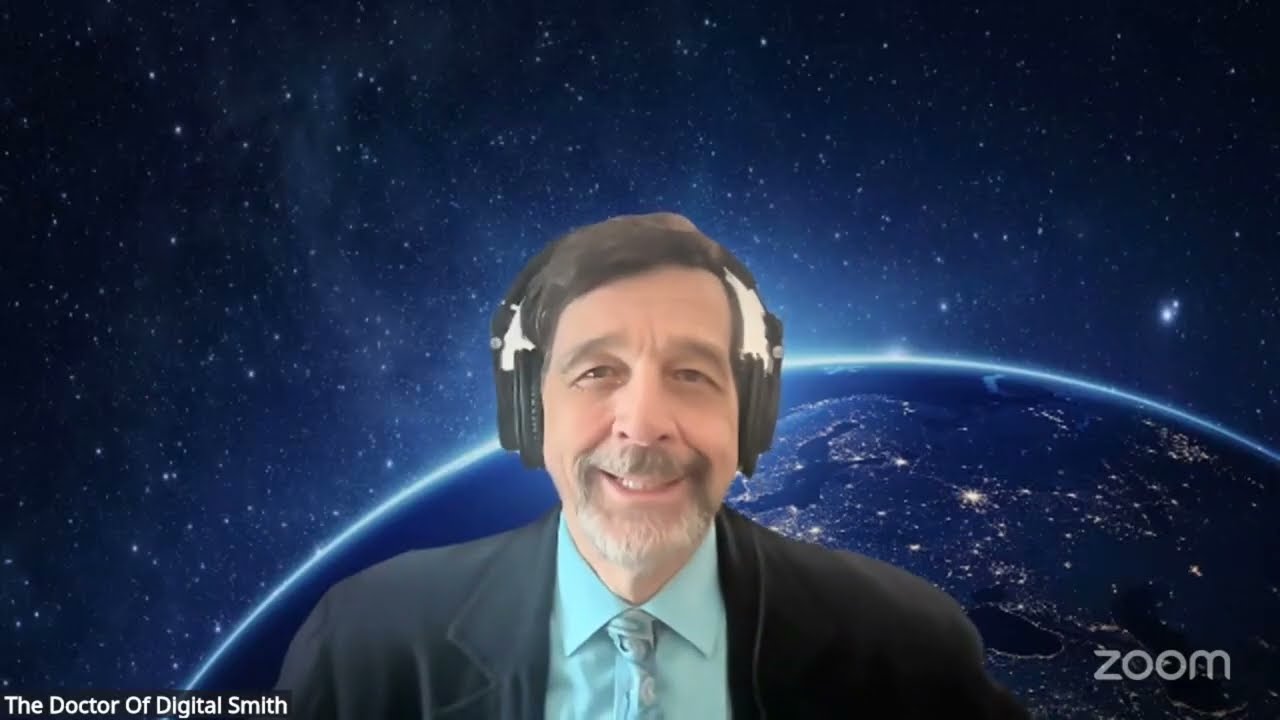
In this episode of "Remembering the Forgotten," host Markus Neukom interviews G. Mick “The Doctor of Digital” Smith, a book advisor and former academic who helps C‑suite leaders translate scattered ideas into coherent, impactful books. The conversation explores the nature of "stillness"—a mental space free from external pressure where intuition and insight surface—and how it underpins creative breakthroughs, executive function, and leadership development. Smith contrasts philosophical views of innate knowledge (Plato) with the blank‑slate model (Locke), proposing a third view that humans are born with latent cognitive seeds that can be nurtured. They discuss how writing can act as a therapeutic, cathartic process, how a coach can create a "dome" of non‑judgment that allows clients to access their inner voice, and how leaders often need external guidance to reconnect with these dormant capacities. The dialogue also touches on the limits of science in answering existential questions, the role of faith and leap‑of‑faith thinking, and the importance of viewing challenges as growth opportunities. The episode concludes with practical advice: ask "what for?" instead of "why me?" and remember the timeless mantra "this too shall pass," encouraging listeners to seek stillness as a pathway to clarity and purpose.
Chapters
So welcome to Remembering the Forgotten, a space where leaders think out loud without polish or performance. No scripts, no personas, just the quiet clarity that emerges when the noise drops and the mind is free to speak for itself. Today, I'm joined by Mick Smith, a trusted book advisor to C-suite leaders and the literary mind behind some of today's most enduring expert books. Nick has a rare ability to diagnose what a draft is really trying to say, revive ideas that have stalled, and guide experts from scattered notes into a message that carries weight. He listens for the signal beneath the noise, sharpens the voice until the real author emerges, and turns clarity into something That can be leveraged in business, in influence, and in legacy. Mick doesn't just help people write, he helps them articulate the part of themselves that endures and build from there. And with that, Mick, thank you so much for accepting my invitation and welcome to my show.
Well, I'm honored to be here. Thank you so much, Markus. It's great to see you again, my friend.
Very much likewise. So before we begin, Pete, when I say stillness, I don't mean peace or quiet. You know, some people say it's when I have my morning coffee or when I meditate. This is not what I mean. I mean the place in you unattached by pressure, by noise, or performance. You could say it's the place that knows before the mind thinks. And that's the layer I'm inviting you to speak from today. Any questions?
Well, not so much a question, but of course, it gets me to reflect because I believe I understand what you're saying. And it is those moments where clarity emerges. So I think it's very difficult in our day and age with all the electronics, and it's gotten worse over the years because I'm a pre-digital person. I remember the good old days where we didn't have those things.
Yeah.
However, the stillness is really that moment of clarity when you have the distractions gone and away and things just really resonate with you or ideas come to your head. So I'm always thinking about A dissertation would be a great example. You know, you spend a lot of time thinking about things and learning languages and taking classes, and literally it was a lightning flash because I wanted to know what I should write, and in a still moment, you know, just came to me out of the blue. So I think that stillness is that kind of thing where we understand, but it's so difficult today with all the noise that we have with the internet and television, radio, and all of those things that completely keep us away from being who we truly are, and they distract us from being human and being who we truly are.
I absolutely love it. Like, you could almost say I am giddy, and probably not many understand why, because you just pointed to so many amazing aspects of what we're going to talk about. Let's start with the one out of the blue. Is it really so much out of the blue?
It's out of the blue, you mean? Just—
Yeah. You said like that stillness just comes out of the blue or the inspirations just come out of the blue. Are they really just out of the blue? Let's talk about that for a sec.
Yeah, because I think, you know, we as people, if I had to understand how the brain works, We do a lot of things that should be rational and we think is rational and straightforward, but those moments of inspiration that I feel that are in still moments are those flashes, but we have to sort of get out of the way in a sense in that there's the old saying of the left brain, right brain. So, we all have both aspects to a greater or lesser degree. But there's also a flash that comes when you get rid of all those other things that you think. I mean, I can think this has to do with how we worry about things and the stress that we feel and we're really in our own way. So, if you let your brain operate and get out of the way, that's where the flash comes from. So, it's a combination somehow which I don't understand. I just know it happens. That's a phenomenon I've observed.
It's fascinating. And, you know, for everyone who doesn't know you, you are definitely hardcore academia, right? So you have been raised in academia and you know very much what you talk about, that you feel your brain and you're basically guided by all the methods and programming and everything. So I think it's important to understand where you're coming from and It actually makes it even more remarkable what you just
said. Yes. And I think this is where I would say, I tell everybody I'm a recovering academic, right? So I can't get away from that.
That's beautifully put.
Decades in education and the degrees and all those kinds of things. So that may define me, but it really doesn't. I'm just saying that it has a lot of things to do with my background and who and what I am as a human being, but it doesn't define me. So, you know, I'm saying I'm a kind of an ordinary guy in some ways. You know, I was a blue-collar, working-class family is how I was raised. So that is really important to me as well. But those flashes of insight in some ways just comes around all the academic kind of things. And so when ideas come to me, sure, they come out of the blue. They're It's a combination of some sort of flash of insight, but it's also based on a lot of work and preparation and training and academic work. But all of a sudden, it'll just pop into your head. And I realized that. So when I have ideas, this is my argument for the liberal arts and the humanities and why they're so critical, because— excuse me— they come from somewhere else. Mm-hmm. And it's not straightforward. It's not, you know, 1, 2, 3, and we're gonna come to a deductive conclusion. Doesn't always happen that way, but it does come through that, that stillness that you were speaking of initially. There's no question about that, because it will come to you in times when you don't expect it or don't know. That's where people talk about is in the shower, an idea comes to you. Yeah, exactly. It'll just somehow come as a flash of insight.
You know what really fascinates me, Mick, with you is It just reminded me of those scientists who went into neuropsychology, for example, and they studied neuroplasticity. And suddenly, especially when I look at your background, your beautiful universe, that's when one came up and said, there is a God. And I am pretty much neutral in terms of beliefs. But one can actually have to go into the path you went in order to really get to the other side, which fascinates me.
Yes. And I'm probably on that side because that's what's unusual too, because I think having studied so much, I see it's not a criticism of science, but it's definitely— it's the limitations of science because we don't know from science as much as we'd like to. Why are we here? Where are we going? What's the meaning? purpose of life and all those kinds of things. So I'm reminded of the theologian philosopher Kierkegaard, who ultimately says it's a leap of faith. Exactly. Because if you are looking for absolute complete truth, the probably the only way you're actually going to find it is to take that leap of faith. And I do think even scientists do this because at some point they're going to say, There's a hunch. This is what I understand, or even sneak into saying, I believe this is true. But after all, all of the things that we have studied and all of the data that we have, we still don't quite know. So, I mean, I think this happens on the largest scale and the smallest scale. So the encompassiveness of the universe, where is it? Where is there an end to the universe? How did it get here? So, on the largest scale, we don't really have answers from science. And then on the subatomic level, it's the same thing. So, what we understand, most things are kind of in the world that we exist in and we live in on a day-to-day basis. But there are the stretches, the boundaries. And well, that's the whole mystery. That's why we want to keep looking. And I think there's where what C.P. Snow talked about, that the problem of the separation of the humanities and science. Now, there's somewhere they have to come together.
Highly fascinating. I knew we will have a fantastic conversation, and I can pretty much tell where it's going. So let me open a portal. There are some people who say when you're born, you forget everything, who you are, And all the knowledge, all the wisdom you came from. And then there are some people, I believe it's a smaller amount, who say you actually do not forget when you're born. But socialization, society, all the rules and school make it impossible to Keep the executive functions, I call them right now, coherence, stillness, whatever you want to call it, intuition, in the seat where it was meant to. And it kind of gets catapulted out to the level that most people don't even have a connection anymore. And then they need to say that, and it's not you, get me right, that they need to say out of the blue, I got that hunch. But if I say, what if this is actually something that is in you, that is you, and now starts connecting with you again from time to time, and the goal is actually to make this connection, uh, not temporary but permanent? What would you think about that idea?
Well, I'm gonna kind of put it in philosophical category. So the first option you mentioned, that's Platonic. So Plato argued that we are remembering and education is a matter of remembering. So we had it all and we came through the birth canal and we lost it all. The second option seems closer to a Lockean view that we are the empty slate and the imprints on our mind and the experiences that we have are how we learn. So I think it's something like— I couldn't give you an answer because I don't know any better than Plato and Locke because they're much smarter than I am. But I do think I would tend towards the second option in that it's more satisfying, it's more elegant, in that I think I would view the world as more what I would call incarnational, in that we are learning. As we grow, and hopefully we do grow and we want to grow. And I think that comes back to a little bit more of the leap of faith kind of thought, because as the incarnation of Christ learned over his life, I think that's how people learn as well too, that the impressions we have, the positive and negative— because again, I'm going to throw Rousseau in here, because everywhere I look, I— man is born free, but everywhere I look, I see he's in chains. So there's 2 options there. That is, society restricting you, is society pushing down your humanity? And that's possible. That's certainly one option. So that's the Rousseauian option. And then there's the Durkheimian option, which is saying, okay, but society is teaching you things, and it's also showing you how to live and exist peaceably and civilly in a society. So there's more of a positive slant on it, but all of it to me sounds Like Locke, that yes, that we are an empty slate and we are also growing and learning throughout our lives. So I see it as sort of incarnational, that you should be living your life and to become who you truly are meant to be, which at birth we clearly have no idea. We don't know because we're waiting for impressions to be put upon us, and it has to do with the family environment and cultural, all those other things that have an impact on us as individuals and society.
So this leads me to one additional question here. I love your take, and thank you for elaborating on it. Would you say there is a possibility, a third possibility to those 2 different philosophers, that we are actually born with a set of cognitive functions and executive functions like intuition, but it gets developed. It's almost like we are born with seeds. And if the seeds are nurtured, like me, for example, intuition is something I had since birth, literally. And fortunately, my environment didn't care so much about me. Then I was able to nurture it. So they called me a dreamer. They called me a fantastic hobby, an illusionist, which was nothing else than basically breaking their frame of reality. That's what it was. So what if we actually think everyone is born with their own set of seeds? And if you're fortunate enough, it gets nurtured. And if you're not so fortunate enough, it doesn't get nurtured. Because this is what I am contemplating recently about. Because I believe that when— let's take it, you work a lot with the CEOs, C-suite people, Nick, and you experience those people in a lot of noise. And I assume you're working with them has quite the cathartic effect and impact on those, so that your work basically leads them into stillness, leads them into coherence, which means so within, so without, right? And this is not something they are developing now as grown-ups, but I feel they're actually tapping into that original design. And you're nodding. So I'm curious to see what thoughts came up.
Yes, because that rings so true because a person who is a leader, and this could apply to almost any type of leader, obviously experienced business, but I can think and project into a military leader or a leader in any other context, a political leader. I think what the expression, it makes a whole lot of sense. It's lonely at the top. There's no question because if you are a leader, Then you're having difficulty talking to anyone. You're having difficulty relating to people. And especially, let's say, a solo business owner or a person who is isolated in their position, to get them to a period of stillness in order to tap into what they truly have within them. But that's where the magic happens. That's where the gift comes from. And when you gave your personal example that, yes, you know, there's a dreamer and somebody who's Just contemplating their navel. But yes, every great advance has come that way. You know, it's Newton, when the apple falls on him, he's the one who says, oh, gravity. Well, gravity's been along, around a long time before Newton. However, if he hadn't met it, you know, it may be an apocryphal story, but he's the one who said and was still enough to realize that this is a law of the universe. And therefore, I think it's similar to other people, whether in yourself as a dreamer or a leader who has to get to that point, like, okay, let's quiet everything down, quiet the noise down, quiet down. Is it quarter 4 or quarter 1 and we've got to hit our goals and what's going on? If you can step away from that, I think that's what brings out what they truly have. And I'd go back to saying a point that you said. earlier, it's what makes us truly human, and it grows into that throughout our lives. So it comes to us over time, possibly. And I would make a distinction here, as the classic example, that humans, Homo sapiens, are an animal. Yes, we are. But I always wondered just the opposite. Yes, but we're something more, aren't we? Because if we look at DNA, and I always forget which one is the chimpanzee or gorilla or one of them, but One of the species that are close. Apparently they share something like 98% of our DNA.
I think it's the chimpanzee. Yeah,
that's okay, chimpanzee. But they're not building cities, they're not building civilization. So I have to think, well, what is that? And I think that leads to the answers that we don't have from science either, because we're studying it. If we understood DNA, which is purely scientific and purely objective, we should be exactly the same. And yet the gulf between chimpanzees and Homo sapiens are so vast that surely there's something different. So call it what you want. Some people might say a soul, some people might say it's your brain, some people might say it's your human existence, that entity of whatever that is. But we need to grow in it. That's where I would say not everybody does. But I think you're fortunate enough to have the intuition and to be a dreamer at a very young age and also have it nurtured or have it develop over time. I think that possibility is extended to each and every one of us. So I'll give you an example. When I was a younger person, I volunteered at Los Angeles Juvenile Hall, right? So I was working with juvenile delinquents, and something is stilted there. And you could see their humanity, you know, on one level, good kids that are 14, 15, 16 years old. However, they're also leading sometimes horrible lives of crime. So something is wrong in their environment. They have to pay a penalty, but it's not completely their fault, and they may or may not be able to have that growth that really is a part of humanity. However, we have the potential, put it that way, and that's the key difference between us and any of the closest animal species to us. Another point I would make is, I always think about this, I used to teach Things along these lines. What's the difference between the animals and humanity when it comes down to communication? I would argue that animals can communicate, but they can't use language. And that's the difference, because Homo sapiens has the ability to have symbols and understand what symbols are. And insofar as we know, animals do not. So they can definitely communicate, but they can't put a word in, let's say, boat. Right. And then the other animal will know, well, I know what a boat is, we can talk about a boat. Right.
And then to understand what kind of a boat it is, right?
Yeah, what kind of boat?
It's not just a boat. So
is it a boat? Is it a ship? Is it a skiff? Is it a pirogue? I mean, there's— they would not be able to do that. So I'd say yes, that whatever that difference is, science doesn't give us any answers. So we have to kind of speculate at that point.
It's beautiful. So what you just said totally resonates with me because, as you know, most people, when they begin to work with me, they are basically bothered by one question: is this as good as it gets, or is there more to my life? And it's no surprise that they are leaders. Because you see what's so interesting when people say— yesterday I was on a conversation with a friend and he said it was hardship that brought him into stillness. So there is a kind of a pressure system needed for us to get out of the, I would say, non-comfort zone, because it can't be comfortable to be in that noise all the time, but it becomes a comfort zone. So they need to go almost into a pressure cooker where you said they have like no resonance anymore. They have no feedback. Like my clients, they don't go to their, even to their C-suite peers.
Yeah.
Because they say, sorry, but nonsense. If I would want to hear how great I am, yeah, then I go to my C-suite peers. But if I want real resonance, real feedback, I need something from the outside, and that's where my work comes into. So it makes sense that you can call people fortunate when they ever get to that question, is this it, or is there more to my life? Because let's be honest, most people probably are so bothered and piled up by day-to-day pressure. Day-to-day challenges. Yeah, one can say it's not so fair, but I believe especially leaders, when they don't make that leap, which I believe faith belongs very much into it, our society will be much worse than it is already. And I believe this almost— it is actually what I want to go make. I almost believe there is a revolution required in the economical system as well in the academical system that people actually start raising above what they believe was possible. And I believe it's the development of these executive functions. So how do you see that? Probably a little bit much, but—
Yeah, it reminded me of leadership. I hadn't made a connection before, but it popped into my brain there, sort of a flash of insight. So what did Voltaire argue? It was a complete satirical view. This is the best of all possible worlds. And of course he writes Candide and it's this horrible world that he's in. However, I could see that being an incentive for a leader because a leader is a person who says that obviously this is not the best of all possible worlds. So how do I develop my company, my people, my culture, and all the things around me to make it better. And I do believe that that's really at the heart of leadership. That is, they're the people who look at the world and say— it reminds me again of a quote from Bobby Kennedy— that some people see the world as it is and ask why. I look at the world and ask why not. So I think that kind of leadership, which is both in business or politics or in any other area of leadership. Yes, you're the person who says, yeah, let's make it better and let's do something. And it also ties into why those individuals are the people that they are, that they have been able to develop skills that they had and maybe were somewhere hidden and innate but were brought to fruition. For example, you said the person who's in the hardship, I would tie it back into the juvenile delinquents. I said some of those kids had very hard lives, but then some of them said, I don't want to live like this anymore and I'm going to get out. And some did. But I believe there is a type of leadership there as well that's personal, and we went on to bigger and better things. And that is something that was in them and somehow came out When they realized that the life they were leading was not the one that was ideal, and certainly they were paying some penalty. So I think there's a connection there between those individuals who go through some type of hardship and some type of difficulty, but also see their way out of it or through it. Because the person who doesn't develop is that individual who's saying things like, well, it was fate, it was my name. was my family, and therefore they're wallowing in self-pity. They will never grow. And that's—
The other one was lucky, right?
Yeah.
And fortunate. Yeah. You see what's interesting? I want to share something with you which I've never shared with you. When I came to the US a year ago, I asked 2 questions. Why am I here? And the second one was, why am I here? The second one was easier to answer. Why am I alive? But the first one, why have I landed in the US and basically stranded, right? Why is that? That's when I understood. As you know, I'm a reformed, as you say, reformed academic. I'm a reformed executive coach and reformed business consultant. And I wondered, why wasn't it satisfying enough for me? It makes sense because unless you go into stillness, unless all the noise gets kept out and this threshold lowered, so your executive functions like intuition, all these kind coherence, everything can arise. You're literally useless. Like, my clients called me up and said, Markus, we have a real problem in this team. I think we have to look into recruiting. You know how business consulting works. I don't say, no, no, no, no, we have to do the team development. No, no, Markus, we have a recruiting problem. So when I talked to a friend of mine who is an MD, medical doctor, And I explained to him, picture this. A potential patient comes to your practice and he says, Doc, my elbow hurts and I know exactly why. I played a tournament of golf over the weekend. And he looks at me and says, okay, so what? I said, now imagine you are to fix his elbow. He said, I would never do that. I would look at his shoulder and say he would be out. Why are you— this guy is no expert. He's not medically trained. You see where I'm going, right?
Sure.
So I suddenly realized, gosh, I'm actually doing my clients a huge disservice. And then I did something. I went into stillness myself. And as you know me, it's not absence of action. It's coherent action. So my brain starts firing, my mind starts firing like nothing else. And I wondered, so why was it that I was able to do it almost 20 years? Because the dual benefit I left my clients with was guiding them into stillness. And I had a chat with some of my former clients. And current ones and friends. And they said, Markus, when we meet you, it is almost like a dome is coming over both of us and the noise stays outside. And this is something I felt with you from the first conversation. This is something we have in common. And I believe you bring this kind of a stillness to your clients as well. Because otherwise, I don't think you would be able to get it out so fast out of them. And I believe not you are getting it out of them, but they themselves. So what we're doing in stillness, we're literally lowering the stress level, bring these people into coherence. And then, at least in my case, I can just be quiet. And then it works in them. And suddenly someone said— I was a guest on a podcast a while ago, and suddenly someone said, Markus, I'm the podcast host. I said, yeah, you are. And you're my guest. I said, yeah. I've never shared what I'm going to share with anyone Publicly. And that wasn't surprising. It was his executive function starting to speak to him based on something we tapped on a little while ago in the conversation. Isn't that crazy if you think about it?
Hmm.
So it's the lowering of that noise level, which is required For, let's say, this, this wee voice called intuition to be audible, to be made audible, because otherwise it's just noisy. I'm curious what you think about that.
Yeah, that's so odd that you say those things because I think I would perceive myself as a fairly peaceful individual. Don't get ruffled. Don't get angry. I have a lot of patience. People mostly are, you have a lot of patience. Yeah, I suppose I do. But when talking with a person who is developing an idea or developing a book, I'm also revealing things about that individual that they don't know themselves and they don't recognize themselves. So the way you express it makes sense in that there is something like a dome over them Protecting them from all of the things that are troubling them or that they don't understand. And I'm saying, because I see things they don't see. So perfect examples, person I'm working with, I'm saying, you're a thought leader. That individual doesn't even know what a thought leader is, but I'm helping that individual understand that you in fact— Uh-huh. So, I've taken a concept that is unfamiliar to them, created that dome as you've described it, I hope, and saying, okay, let's get you into that point of stillness and quietude so that you can grasp the gifts, the skills, and the ability that you actually have and may not be understanding that you actually possess. Another individual who is going through some very difficult times personally in terms of business, and yet in the course of writing, that individual is saying things to me, I'm actually feeling healed. I mean, healed, right? That's pretty powerful.
It is, and that's surprising.
I'm writing a book But I'm healing. Wow. So
just writing about where that source comes from, from that writing.
Yeah,
it's not from what school put into the brain. It literally is coming from the executive function where you can— you see, that's the beauty. And maybe it surprises you, like, but I don't actually believe you have to create stillness when you meet someone. I believe you are stillness, and coming into your presence has this automatic effect. You wouldn't even have to say anything. This person— think about it. I am sure you're bringing concepts where somebody else, you met them at a restaurant. And you had a chance encounter, this person would fight you toes and nails what you just said about him or her, because they could not believe that this could even be possible. So their concepts would totally defend themselves, fight you, whereas when you meet them, they're guards. are literally nonexistent. Do you ever experience that when you look in hindsight, that it's almost mystical that when you speak with those people, there is no defense system? Isn't that incredible?
The history of religions has this notion of epoche, which is the suspension of judgment. And again, that is my academic training because There's a famous quote that if you're talking with the tribe in Brazil, and unless you actually understand what they mean, that God is actually a green serpent, you'll never understand them. Because the point is, if you practice epoche and the suspension of belief, the suspension of judgment, and you deal with people like that, they're understanding very quickly that I am not having any preconceived notions. I am not trying to categorize you. I'm not trying to put you in a box. I'm not doing any of those things. I'm just listening and understanding who and what you are. And having done that, that's the dome that you speak of. That person feels, okay, I'm not being judged. I'm not being preconceived in any sort of way. I can really just relax and talk. Yeah, exactly. That's the point.
Think about that gift. which you're able to give someone. You know, I met a few book coaches, as you know, but I met one person, I introduced her to you, the one, the one woman who's an author, a book author as well. Other than that, there is no one like that. Literally no one. So you're almost combining therapeutic elements without actually wanting to do it with your crafts. So it was when I was a business consultant and an executive coach, which, by the way, I still love doing. However, under the umbrella and on the foundation of stillness, of coherence. This is really fascinating. So let me ask you, One or two questions, because I feel our conversations is not about me guiding you with questions. It was about letting stillness work. And I believe this serves the viewer and listener so much more than having the slide script. But there is something which I wonder, was there a moment, Mick, your life when you realized you were living from someone else's script? And what cracked that open? Because I know many, many viewers and listeners feel like, I'm not living my life. I'm living someone else's script. You had that moment where you felt like almost like a eureka moment?
Yeah, I think it's somewhat in that point of maturity, probably young adult period, where I identified so closely. I was very fortunate, great parents, great mother, great father. But I also realized, well, yes, but there's also me too. And I think there's a moment in which I begin to define myself. And I'd say, yeah, that's why I probably brought up the example of the juvenile hall, because I was— around kids that, well, they had a very different upbringing than myself, but I realized I've also got my own path too. So I think it's a moment of saying, I've got to define myself, who and what I am. And probably those skills started coming out, and those abilities that I saw that were probably latent became more— not to fruition, however, they were developing. That's the incarnational idea. So it started examples of Let me try this and let me go here and let me start dealing with people in my own way. So probably, um, young adulthood and probably early 20s. And there's also people that I met, people that I had known. I think that they felt more along the lines of, yes, this is who you are. You're defining yourself as a separate human being as opposed to birth family. As much as they are valued, it's not necessarily the same life. And I've got to go my own way and probably my own path. So I'm not going to say I probably was the dreamer that you were presenting yourself as, but yes, I think people probably did start to point out things. Yeah, you're a little bit different. Like, so I kind of joke about it. I'm an alien.
Fascinating what you're saying. Yeah, yeah, I can relate to that, what you just said. So there is something really fascinating about you and what you just shared. Too many people need to go into hardship or need to get through the schools of hard knocks in life where they suddenly realize the life I'm living, that's not how I intended it. And it can be very successful, as you know, right? Like I was in a conversation yesterday, he went to elite university, Is having a job in a leading university, like you would say from the outside, like, what are you talking about? Like, is this it? Everyone else would wish. And he said, no, Markus, it wasn't because I felt deep inside there must be more, you know, there must be more. And I thought, okay, that's interesting. So you had the very fortune, and I call it a fortune. I don't think it was much of your own merits to have this kind of executive function at a young age to realize there is more before you actually adapted someone else's script. So you didn't have to kind of work yourself out of a script, which could have been from your parents or, you know, society, whatever. You actually looked at this almost clean slate. And said, okay, so now I have these talents. What can I do with it? Does that resonate somehow?
Yeah. And it's interesting, I think, that you're saying that. I'm one of those individuals that I can't understand a midlife crisis, and I didn't have one. And I'm way past midlife now. So I know I passed that barrier. But what you were describing is so many people that are successful, And gone to the elite university, maybe successful in business, had all the things that they wanted, all the material possessions, and they get to midlife, you know, what was that all for? I never had that issue because I think I defined myself fairly young, probably early 20s, so that by the time I did get to midlife— and I was going through some crisis actually, by the way, but not a midlife crisis, didn't bother me in the slightest— I said, well, I always had My view. I've always stayed true to what I understood my role to be and who and what I am, and therefore was reassured by that. If I had not experienced those things as a young adult and saw my path differently— and I'll joke about it, I'll say I'm an alien. Okay, I'm an alien, don't relate to everybody else around me. But I also didn't have some of those typical things that do happen to a lot of people. I knew I had my path, I kept my path, stayed true to it. And now way past midlife, I'm still doing the kinds of things that I think I have as a more developed human being that I hope to become when I was younger. I'm still doing those same kinds of things. I kept the path and I saw that, which is not necessarily what other people do. And that's why they have the difficulties that they do. And that's the possible and the problem of the Stillness where you do find leaders who haven't experienced that because they don't know. They have to get somebody from the outside, someone like myself, who brings that to them or reveals that to them. And they had it, they just haven't been able to realize it. And they won't be able to go to their peers, like you said at a point earlier. They can't because the peers are not going to be able to reveal that to them or allow them to grow into the talents and the gifts and the skills that they truly have because they don't see it and they're not going to see it.
So how far does your work go? Let's say you start to work with a leader and that person goes into that catharsis process and suddenly starts realizing stuff. I know you're not a licensed therapist, so you do not Do therapy. But if somebody starts realizing, let's say, their executive functions, that there is more possible, do you guide them and do you lead them into the vocational side to find what could be the more? Or do you stay in your lane and say, we're writing the book and whatever comes from writing the book is beautiful? But it's about the book in the end.
Yeah, I think that's another interesting way to say it because I wouldn't claim to have any therapeutic knowledge. I'm totally unqualified, no certifications, nothing. However, that is the process and that does take place. And that's what I tried to show at, say, the beginning, talking with someone. Here's the book as we see it now, but in the process of it, And I think this is what writers realize. I certainly have written like over 100 academic publications, and I know that's what is revealed for myself. So it's not surprising. And also gift somebody else with it. They just are not aware of it. But that, that process of writing does become catharsis and does become therapy.
Mm-hmm.
I wouldn't say that's what I'm doing. However, That is what happens and that's a great thing because it strengthens what they're doing.
Mm-hmm.
That is an initial chapter outline that I will provide to someone at the very beginning is something which changes and evolves and I would argue becomes much better and stronger as a result of that person being able to reflect, be still, And see and recognize the therapeutic value of what they're actually doing. So there's no, there's no value you can put on that. I mean, it's priceless. Oh,
you're absolutely right. And they could not ever pay for it, so they paid for the book.
Yes.
And the other thing basically comes as a byproduct almost, right?
Yeah. And it's, it's a byproduct that I know is coming Because I've experienced it myself.
Yeah.
Having been a writer and I know that it comes down to here's what I thought I was doing and here's what actually happened because insights come to you and I guess that's the flash, that a flash will come into an idea and something you're struggling with and I think that happens for other people as well. This is what we thought and It's an interesting word you use, it's vocation. Yeah, this really is your vocation, you know, to a person. They may grow into it because they're growing as they are writing and they're plumbing the depths of their brain, and it brings together all the aspects of what brains are for— left brain, right brain— and it brings it all to fruition and it becomes much better and much greater. And that's why I would say— Once they're involved in the process, they want more of it because they see they've actually grown and they become more successful. They're happier, better relationships. And again, that's priceless. There's no value you could place. Well, yeah, it's kind of—
And you could never put that on your website under services. Right. Yes. Unexpected outcomes. Right. Book is that much. Yes, it's that much. That's amazing.
Better
adjusted, happier. Exactly. So here's a question, Mike, which I'm sure that many viewers and listeners are concerned with. So you have been very fortunate, and let's not kid anyone, you have done the work as much as I did. Like, we were not just fortunate and gifted and it came to us overnight. It's work, literal work. However, I hear some people who listen to us ask the following question. Mick, do you ever have moments where you are pulled out of stillness And if, what brings you back into stillness again?
Yeah, I think I probably developed that. That's where the patience and the ability to stay calm has always restored me. So when I said somewhere that was in my midlife period, but not a midlife crisis, sure, probably the most traumatic thing that ever happened to me. Happened then, you know, and I just went back into, tapped into what I know is there. And that stillness, that patience, that ability to stay calm, it's one of the best probably gifts I've ever had. Because, you know, I'm always reminded, it's a great Rudyard Kipling poem, if all about you are losing their heads, but you're the one that's saying, I can stay calm within the midst of that, you'll be a man, my son. And I'm paraphrasing, but that poem has always meant a lot to me because, yes, they're losing their head, blaming it on you. You know, yeah, exactly. They're looking at you as you're the problem. And I think, well, no, actually I'm not, and I'm all good. So in those moments, I think I just tap into what I realized kind of, uh, I know some people could say that's your superpower, but yes, to be the ability to make— Mm-hmm. In those times where I should be losing it and I should be disturbed, I just tap into, you know, the thing that I have, and hopefully I can have an influence on the people around me because definitely people, you know, are running around like chicken with its head cut off.
Oh, absolutely. Nowadays, absolutely. So would you say it is fair to phrase what you just said in ways that, yes, I am human, And I'm an alien at the same time, but I'm human. And there are these kind of flare-ups of disturbance. However, they are never long enough and never strong enough to take that stillness out of its seat. Is that fair enough to say that you basically built that stillness so strongly that it has become your— Your baseline.
Fair enough. That which does not kill me helps me grow, as Nietzsche said. So if you think of the universe, the cosmic view of things, all right, I see myself as a part of the cosmos. There are aberrations, right? There are things that are happening with the planets, the stars, the moons, where things are going awry. They don't seem to fit. Well, likewise, I mean, I have No more in control of my life than anybody else does. However, I also realize that this is a part of the cosmos and the cosmos doesn't fall apart and I think to myself, neither should I. Mm-hmm. So, there are interruptions, there are bumps on the road, you might say. However, over the period of years, they are not quite so severe. Whereas for other people, I find, I mean, they stub their toenail and go, my gosh, you know, it's like the end of the world. No, it's really not. You know, you survive because that which does not kill me helps me grow. Everything that happens to me, there's a point to it, and I'm looking for that point. What am I to learn here? You know, in other words, there are people who will say it's the terrible things that happen to them, which we all experience, and they'll ask, you know, why me? And often, why me, God? And I say to myself, yeah, I know why it happened to me, because I am here to learn something, or I'm here to help somebody else through something, and there's a lesson to be learned. Mm-hmm. And that's the growth mentality. That's the idea that everything that happens to you is for a reason. Figure out that reason, stay calm, understand it, and learn from that experience. So some of the people that I've known that have experienced real tragedy, they often don't ask those questions because I look at them and I go, I know why it happened to them, because they're a person who not only will gain strength as a result of that traumatic experience, but they'll also be able to help other people because of it. That's why it happened to them specifically. So I think of those people that I admire and the people who have experienced things that I have not, and I understand why they're in that situation. And I will look at them and say, I admire them. They're stronger than me. And I hope it didn't happen to me because I may not be able to handle it. They can. And that's good. So it comes down on a personal level, a business level, you know, the setbacks you have, the people who are dealing with all kinds of difficulties.
It's a beautiful word. So what I sometimes say to my friends and to my clients Don't ask why me. And if you ask a question, ask what for, because that kind of triggers the answer to come forward. So same if somebody says, or is there more to my life? Make the assumption there is and ask, what is it? And as you know, the answers start silently rising up. But for that, stillness is needed. Beautiful. Vic, we are coming to the last question, and this will be a great gift to anyone who listens or views our show. If someone listening feels lost in the noise we just talked about, what is one thing you want them to remember Is still true.
It's a biblical phrase: "This too shall pass." No matter what happens, yeah, this will pass.
You'll survive.
This too shall pass.
See, and it is true, right?
Yes. Yes. Anybody who feels bad about themselves, read the Book of Job. Oh, yes.
They're going to say, this guy lost everything. He lost everything.
And his friends, oh, curse God. Oh, you know, who do you think you are? You know, and I go, if you can be inspired by that, which is pretty inspiring because he lost everything. I mean, I've lost things, but Not like that. And I go, yeah, this will pass, you know, you'll survive. And when this thing passes, the great thing about it is that by the next bad thing that will happen to you, you'll understand, yeah, that'll pass too, just like the last one. Yeah. And as you grow in strength and ability and stillness, it makes it that much easier. That's why when you ask the question like, well, what has happened over the years? Yeah, I have bumps on the road, but I am not going to be deviating from the path that I'm following because—
Or derailed by them, right?
Derailed, yeah. That's the true path that works for me, has worked for me. I'll survive. This will pass.
So beautiful, Mick. It's been such a blessing having you as my guest today, isn't it? Terrific conversation, Reid. Thank you.
Well, I, I'm honored when you ask in the first place, and it's great to see you again, my friend. So I'm, I'm honored to be here and that you would think enough that we could have just a conversation like this. I appreciate it very deeply and much obliged.
You're welcome, and it won't be the last one, I promise you that much. So this was Remembering the Forgotten. A conversation held in clarity, not performance. If something in this exchange helps you see differently, carry that forward.
More from Markus







Ep 66 Breath, Trauma, and the Fear of Being Fully Seen A Conversation with Matt Ritchey

Ep 65 Truth, Trust, and the Courage to Be Seen A Conversation with Troy Gregory

