Ep 16 The Quiet Place Where Truth Returns A Conversation with Scott Maderer
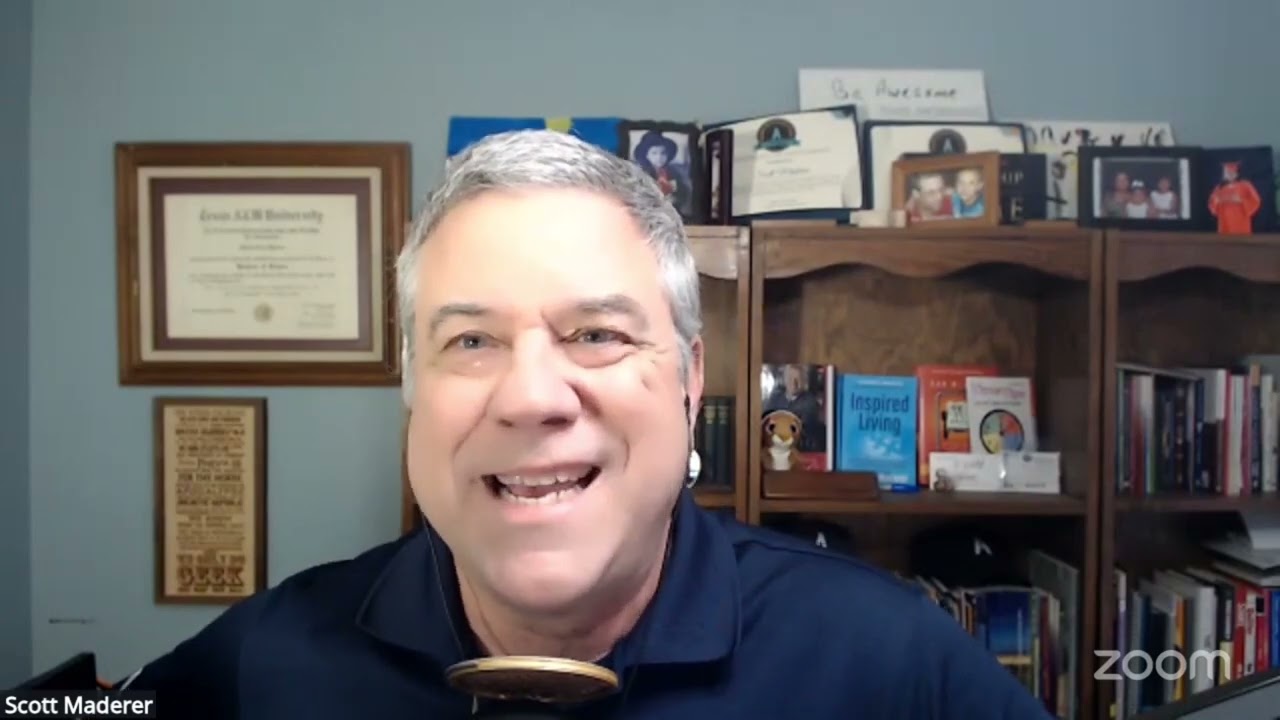
In this unscripted interview, host Markus Neukom explores the concept of stillness and its role in authentic coaching with guest Scott Maderer, a stewardship coach and founder of Inspired Stewardship. The dialogue weaves personal stories of deep vulnerability—including Scott’s past financial collapse, suicidal thoughts, and a childhood with an alcoholic father—with reflections on daily practices such as morning breath‑prayer, meditation, and intentional listening. Together they examine how coaches can create safe, co‑owned spaces that foster trust, allowing clients (and spouses) to access an inner stillness where insight arises. They discuss the tension between performance‑driven leadership and a “being‑first” mindset, the importance of vulnerability and authenticity, the challenges of distraction, and practical ways to recognize and return to stillness. The conversation culminates in a metaphor that life is a film strip, not a photograph, urging listeners to stay present without attaching value judgments. Throughout, the tone remains reflective, conversational, and supportive, emphasizing personal transformation through inner coherence.
Chapters
Welcome to Remembering the Forgotten, a space where leaders think out loud without polish or performance. No scripts, no personas, just the quiet clarity that emerges when the noise drops and the mind is free to speak for itself. Today I'm joined by Scott, a stewardship coach who has spent more than a decade helping people master their time, their talent, and their treasures so they can live out the call that's already in them. Pat's path moved from biochemistry to leading large-scale educational assessment teams and eventually into the work that shows him guiding individuals and leaders into clarity, disciplined action, and a life aligned with purpose. He brings the rigor of a scientist, the steadiness of a coach, and the integrity of someone who has walked his own transformations. As the founder of Inspired Stewardship, Scott helps people simplify what feels overwhelming, build habits that hold under pressure, and reconnect to the deeper why behind money, leadership and calling. He is someone who turns complexity into direction and direction into a life that actually works. With that, Scott, welcome to my show. I'm so happy to have you.
Thanks so much for having me, Markus. I really look forward to chatting with you today.
So do I. So before we begin, when I say stillness, I don't mean peace or quiet. I mean the place in you untouched by pressure, noise, or performance. It's a place that knows before the mind thinks, and that's the layer I'm inviting you to speak from today?
Okay, I can do that.
You did.
Now, if you'd asked me that 20 years ago, I wouldn't have been able to go there.
So this will be beautiful because you'll be able to look back in the past and you'll be able to talk about now, which is a beautiful, you know, contrast. So, Scott, Where in your life do you meet the you untouched by expectations?
You know, it's— I'm pretty deliberate about every morning I have some, some quiet time, some time with just my coffee and no computer, no phone, no space that is buzzing and beeping and interrupting. And that tends to be the the white space time where I can take a few minutes for meditation, for prayer, for silence, and listen kind of to those inner voices and calm them's not the right word, but dance with them in a way so that they I hear what they're saying. But you know sometimes it's listening to it. And sometimes it's just letting go of it. And then kind of reset to start the day.
Do you have a special meditation you are using?
I have kind of what I call a breath prayer. And I use it not just in that time, but throughout the day. And it's your will, not mine. I'm a person of faith. And so for me, it's important that I try to listen to the Holy Spirit, listen to the voice of, you know, I call God. I don't really care what name people put on it, but the bigger power that's outside of me to try to kind of get in touch with not just what I want in the moment, but what's really the more important or the deeper thing that I'm being called to do. And so that's— I repeat that millions of times a day.
It's interesting. So this actually triggers, um, quite an interesting question in me. When you hear God speak, do you hear God speak out there, or do you hear God speak inside?
Usually inside is where I hear it. However, if I don't listen to it inside, then I start to hear it outside. And what I mean by that is things start showing up to remind me of what I've been pushing down or ignoring or trying to not listen to, if that makes sense. This is again back to that 20 years ago timeframe. Yeah. 20 years ago, I would spend a lot more time fighting with that internal voice and kind of, oh, shut up. You don't know what you're talking about. You know, pushing it down. And I've gotten better, nowhere close to perfect, you know, but better at hearing it when it first comes instead of waiting and pushing it down. And then, you know, typically what happens then is coincidences start showing up that aren't really coincidences, you know, speak, people talk about it, I'll see an article about it, I'll, I'll hear messages about it, my wife will say something about it. They'll come from outside, if that makes sense.
Absolutely. So if I have your curriculum vitae in front of me, in my eyes, that was when you were quite hardcore in business, right?
Yeah.
20 years ago.
Yeah, it was when I was working in corporate and leading teams. That's when I was a schoolteacher for 16 years and then I went into corporate for 11 years. I've done other I've done a million other things, but those are the 2 kind of big buckets.
Yeah.
And when I began to shift, I've always had a coaching approach, whether I was a teacher, whether I was a leader, I've always had a collaborative approach of leadership, not a directive approach of leadership. But as I began to really work hard to study that and learn more about motivation, about leadership, about communication, about how I'm wired and how other people are wired. And as I began to develop less judgment and more awareness, that I began to kind of let go of a lot of the fighting. I'm still a very driven person. I'm still a very, you know, I want to get things done kind of person. But I The mood behind it is different, if that makes sense. It's less the action that's different and more the attitude where it's no longer about being the best person in the room. It's just about being the best that I can be in that moment.
It's funny, actually makes me smirk because I just remembered what your mantra is.
Yeah.
Not mine.
Yep, exactly.
Scott is running and running and running. Oh, by the way, Lord, it's not my will, it's thy will. Yeah.
Yep. And that is a part of the reason that became my breath prayer is, you know, there's a joke. It's attributed to Mark Twain. I don't believe Mark Twain said this because it just doesn't sound like Mark Twain. But, you know, the best day in my life was when I realized there was a God. And the second best day is when I realized it wasn't me. And there's a lot of truth to that because for so long, I would hold on to, you know, it's all on me, it's all on my shoulders, it's up to me, it's up to me, it's up to me, it's up to me. And, you know, it's not that that's wrong or false, but if that's where it stops, it sets you up for not real good relationships, not real good success, not real The stillness that you're talking about, you can never find that in that kind of attitude. But when your attitude shifts and you start realizing, well, yeah, I'm supposed to do stuff. Yes, I'm supposed to take action. This isn't about always just sitting back and being passive. Sometimes it is. Sometimes that's the action you're supposed to take. But, you know, that's still active in terms of you're making a decision that, hey, in this moment, I'm not supposed to act, or hey, in this moment, I am supposed to act. When, but when that, that action or that drive to do it is no longer about competition or, you know, being the best person, it's no longer about what other people are. It's about, yeah, but what am I in this moment?
Because it is interesting, someone who strives to wanting to be the best all the time, It's actually not about them. It's always about others.
It's usually about others. Yeah,
right. Which is crazy.
Yeah,
because people would call that person egocentric. No, egocentric is literally, I don't feel I'm enough compared to anyone else, which is a paradox in itself. Totally self-centered, But the actual focus is outside.
Right.
So once someone gets that, it's actually you need more focus on your own, more focus on yourself. And that actually takes the focus from outside inside. So you mentioned something 20 years ago, right? In your own coaching, how much do you share about the time 20 years back?
It depends on the situation. Um, there are clients that I've shared lots of details, um, and then there are clients that that's not relevant or important. Uh, you know, again, even within coaching, it's kind of a, you know, it's not really about me, it's about them, you know. And so I think of everything, including my personal story, as tools in a toolbox, not, you know, my goal isn't to just get to tell my story to my clients. But at the same time, there are times where that's relevant and appropriate and needed. And then I have no hesitation to share it. And again, that's a change too. You know, 20 years ago, I would have a hard time saying things like, I grew up in the home of an alcoholic father, you know.
Yeah.
Now, I just say, I I grew up in the home with an alcoholic father. You know, it's that's a fact.
It's not.
It's not a judgment. Yeah.
Right.
And it doesn't mean I don't love my father, and it doesn't mean I you know it it that I'm okay with. There were things about him that I admired and loved, and I learned from. And then there are things about him that it's like, yeah, I don't want to take that piece. I can leave that behind. But that that's not something that comes. easy. You were talking earlier, it's, it's the difference between self-development or self-focus and selfishness. You know, I think a lot of times is it because when we're selfishly focused, it's really about manipulating other things, it's manipulating the situation. I want to create things so that I always am on top. And when you're selfless but still developing yourself, you know, it's no longer just about, can I win? It's the focus is first on, are others winning? And often out of that, things come along that make, you know, I win too. But it's my focus is first on the other. And, you know, so it's not always win-win and it's not always win-lose and it's not all, you know, it's How am I doing this best for everyone else? And often that comes back on you just naturally, but that's not your goal. That's not the purpose behind it. And again, I want to keep saying this and something I struggle with every day. It is not— this is not a posture that you just naturally adopt forever and it never— you never stumble or fall or struggle with it. I think it's something where And it's not that you can't get better at it. It's not that you can't learn it. It's not that, you know, coaches like you, it's not that other people can't help you with it, but it isn't— you're never done. You know, there's always another button that you realize, oh, oh, look, there's a new one. I didn't realize that when this happened or this situation or this particular string of words, you know, nouns and adjectives and verbs that somebody puts together. Turns out that's a trigger for me. I didn't even know it. You know, I wasn't aware because that's never come to my, my awareness before. Now, what am I going to do with that information? You know, what am I going to— how am I going to take action? Or how am I going to work through this and work past it? Or at least work to the point of calmness and acceptance with it? You know that, because again, even past is sometimes a That makes it sound done. It's, you know, it's the journey, not the destination. You know, which is something—
This is something which I sometimes misunderstand. There is always this question of how can I build trust? And as you can imagine, I've been in business for almost 30 years. And I spoke with countless coaches. And the majority has to admit sooner or later that they do not know how to build trust.
Sure.
Why do you think that is?
Because I think trust is— trust requires a degree of vulnerability in yourself that I don't think most of us are comfortable going to. It's about, honestly, it's kind of like what I was just talking about. You know, if my goal was to always share my story, that doesn't build trust. And yet at the same time, being comfortable being able to share my story, you know, can build trust. So it's It's not— if I wasn't comfortable, that would also not build trust. Yeah. So it's that vulnerability and openness to let things go where they're going to go in a natural way. And I think a lot of times as coaches, we get so caught up in the process That we forget the people. And the people are actually the important part. You know, the process is just a tool. It's not— that's not the drive. That's not the purpose. That's not— it's just a tool. And we get locked in, especially, and honestly, I think there's a lot of coach training that teaches it that way, you know, that teaches it as here's the 7 steps or here's the 3, you know, frameworks or processes. And to be clear, it's not that having a framework or a process is bad. That's not what I'm saying either. It's just when that's the only focus and you lose sight of the people part of it, it doesn't build relationship. It doesn't build trust. It builds— Callousness, for lack of a better word. It comes across and as well, you're still holding something back. And I don't think a coach can really hold something back from the relationship. They've got to really be willing and able to put it all on the table. And again, that doesn't mean you always will, but you've got to be willing and able to do it if it's needed. That's my two cents. I don't.
I love that. Because, you know, basically, when, when we look at the coaching world, you know, especially our conversation now in terms of coaches, I sometimes wonder whether vulnerability actually goes along with authenticity. Mm-hmm. And we spoke about that, you know, on personal calls before. Authenticity is not bearing my life on my sleeve, but having integrated my own life story in a way that it actually speaks. You know, you mentioned that you're a person of faith.
Mm-hmm.
I grew up in an evangelical home, and I could never understand why people would evangelize, bother other people who didn't want to hear zip of it. Because I thought, what if I actually do not speak about Christ, but I live so people ask me, Markus, what's different with you? And I believe it's very similar with coaching.
Mm-hmm.
So many people go into coaching and they go into coaching and they basically put on a mask. So they become a coach and then they put on a coat, which is coaching. However, the person underneath is just the holder of that frame. And you never get to that coach at all as a person. Because that coach needs you as a coach.
Mm-hmm.
This actually leads me to my next question for you. If you look back in your life, Scott, where was a moment where you realized, wow, this is not my script I'm living. This is someone else's script. And what cracked it open?
So one of the big— there's been more than one answer to that question throughout my life. But probably the single biggest moment is my wife and I went through a period where we were struggling financially. This was back when I was still a schoolteacher before I took the corporate job. In fact, in the middle of the recovery from this is when I changed to the corporate job and where I was, we basically had more debt than I made in a year. I was kind of taking on all of the burden of that because I was being a good husband and I was going to protect my wife from all of this. My wife's a smart lady. She knew what was going on. But You know, I was going to protect her. Well, she wanted to protect me, so she's not talking to me. I'm not talking to her. You know, we're growing apart. We were pretty close to probably divorcing over finances. I was actually suicidal because of finances. Of course, I wasn't sharing any of that with anyone either. I was keeping all of that bottled up, which makes it worse, not better. So. As we were going through all of that, I began again, this is one of those hearing the voice inside myself, but ignoring it and fighting against it and pushing it out. They changed the lineup on the radio. So here's the irony, I would drive home late at night. And I was planning my suicide by pretending to fall asleep and drive off the road and have a car accident.
Okay.
But I would listen to talk radio, because it was the only thing that would keep me awake.
Gotcha.
Right? You know, you think about that sentence logically, and you kind of go, really? Why were you trying to, you know, why were you trying to stay awake? But anyway, this is— anyone who's been in these dark night of the soul moments, you know, it's not, it's not logic. There's no logic operating in those moments. And they changed the lineup on the radio. And all of a sudden, they started playing— it happened to be The Dave Ramsey Show, where there were people talking about finances and talking about debt and talking about getting free from it and this, that, and the other thing. And I got mad. I got furious. I got angry with the radio. I began to argue with the radio. And after about a week of that, I realized all of a sudden that for the first time in a long time, instead of thinking about committing suicide, I was actually mad at this person, this total stranger, you know, and group of strangers because it wasn't even just Dave. It was other people. You know, I heard someone come on and talk about getting free from debt, and their situation wasn't identical to mine, but there were a lot of similarities. And he talked about, you know, I had to come clean. I had to open up to my wife. We had to work together. And I realized all of a sudden that I was angry Instead of suicidal in that moment. And it was one of those moments of, again, that voice that had been telling me to come clean and talk to my wife had been telling me, hey, look, if you want to get through this, y'all are going to have to work at it together. It's going to require radical change. You're going to have to live your life completely different. You're going to have to leave everything about the old you behind and become a new person. Are you willing to do it? That made me hear that again in a clear way. So literally that Saturday, I took my wife out for a peanut butter and jelly sandwich. And we went to drive down to the lake and came clean and said, you know, hey, this is what's going on. And like I said, she knew all of this already. But she was, you know, she was protecting me, I was protecting her, neither one of us was protecting the other, we were actually making it worse. And by Monday, we had started making radical changes in what we were doing, how we were living, what we were thinking. The corporate job, and, you know, in part was because of some of those things, and it was something that I chose to do very deliberately, in part because of finances, but also in part because of other opportunities and other reasons. So all of that change kind of happening together was One of those moments of you know flipping a switch, but from from a Friday to a Monday, it's like okay, I'm leaving a lot of that behind and and moving on. Now again, like I said earlier, it's a journey, not a destination. It's not like that was a perfect switch and everything was magically better. That's not what I mean. There was a lot of hard work that came after that, but it was what opened the door to saying. We're going to do this.
That's beautiful. So thank you very much for sharing this. And I can tell you, this will help countless of people who watch our show. Because, you know, that's exactly the vulnerability and authenticity I personally believe actually makes you the damn good coach you are, Scott. And if you can share even more, because you become More courageous. And why courageous is because if your story is not shared, somebody else will never hear it in time. This is literally why I do what I do.
Mm-hmm.
I'm not sure whether you know that, but my goal is to have 104 guests within 1 year. And I will publish 2 shows a week for a whole year. I'll have a library where no one who gets to hear about that channel will have issues not finding help. Because imagine people like you times 104. There's nothing that will be untouched in the end.
Mm-hmm.
So I highly encourage you to really have even more courage to think, you know what, I am first and foremost Scott. Coaching is a methodology I use, but people do not need that methodology. People need Scott who has internalized that methodology, and the methodology speaks through you to those people.
Mm-hmm.
I'm not sure whether you know that, but 95% of coaches cannot even make their ends meet. Financially. Yeah. And why do you think that is? People do not trust them. It's not that I'm a salesman and I suddenly look for clients who want to buy my tires. It's a whole different story what we're talking about.
Mm-hmm.
A whole different story. So thank you so much for sharing this. So When you look back, can you tell me about the moment when all the noise fell away? And I assume it could be very much what you shared before. When all the noise fell away and something in you knew exactly what was true. When you felt that stillness. Can you remember such a moment?
Again, lots. The one I shared is definitely an example. But I'm gonna, I'm gonna share a different one. And again, a personal story. So I mentioned earlier that I grew up in the, in the home of an alcoholic, my father was an alcoholic. And my mother and him had divorced over the years for reasons that I won't go into because it's not my story to share. It's hers. But at that point, my father ended up in the hospital suffering from what seemed to be like a total mental breakdown, total dementia. I can remember him sitting in the hospital bed, He was a smoker. And I can remember him, you know, putting his fingers up to his lips with the cigarette. Of course, there's no cigarette, he's in a hospital bed, and holding an ashtray in his left hand and flicking the ashes, you know, off, and then reaching over and taking a swig of beer. Of course, there's no beer. And, you know, and then, and then putting the cigarette back in his mouth, because that muscle memory was so ingrained in him that that was still his identity and who he was.
Mm-hmm.
And sitting in the hospital room, watching this with my mother sitting there and, and trying to help my dad do a crossword puzzle because he was always big into crossword puzzles. And of course, his mind is completely gone. So, you know, he really can't do it. And that moment of seeing him So vulnerable and so weak, for lack of a better word. And of course, your dad is always somebody that, you know, I'm an adult, but he's still my dad. And he's still a strong, you know, person in my eyes. And coming to peace with that in that moment and realizing that for all of his failings, and for all of his faults, and for all of his, you know, all of the things that I was angry with him about, and all of those, you know, all of those things and that history, that it didn't really matter in a way, kind of coming to peace with it in that moment. And I know peace is not the word you mean, coming to stillness with it in that moment. And being able to kind of open, open that up inside myself and say, you know, this is just who he is. He's, he's a man. And, you know, he has tremendous failings, and he has tremendous gifts. And that's who he is, I think helped me a lot, because he passed shortly thereafter. And, you know, I was able to lay down a lot of, a lot of bitterness, a lot of anger. You know, I truly forgave him in that moment for things that that he had done, and, you know, things that I believed he had done, and things that he had actually done, you know, all of those things, and was able to kind of come to stillness with it and let it lay it down and leave it, leave it behind. In a way, you know, it's still part of who I am and part of my journey. But it's also, it takes, in a way, the proper amount of placement in my history as opposed to before that moment. It was much, much, much larger than it really needed to be, if that makes sense.
If not dealt with, it literally takes over your personality.
Yeah.
Where it's basically just this little bit, but not dealt with.
Huge. Yeah, it was much bigger than it needed to be until that moment. You know, it's why that, that experience of seeing him do that, it's kind of seared into my head in a way. Because that was the moment where I was able to kind of go, go to that quiet place and say, okay, this is, this is just who he is. You know, this is just who he was. This is just who he would always be. But that's not my fault. You know, it's not on me to have fixed him. It's not— I was able to take the appropriate level of ownership and responsibility for it.
Yeah. And literally to realize my dad is not sitting in his hospital bed right now because of me or anything I've done. It was his own decisions.
Yep. Yeah, absolutely.
I can very much relate to that. I tell you that much.
Yeah. Yeah, I think—
And by the way, when I speak of stillness, peace is an outcome of it. So stillness is basically the, the room where your mind and your heart go into coherence. And as a natural result, peace comes from it. Intuition comes from it. Basically, all these executive functions come from it. So don't try to replace it with stillness, because it literally is an outcome of stillness, which is absolutely beautiful. Yeah. Because, you know, some people call it soul. And that's stillness. Some people call it intuition. That's stillness. Because it's literally, you probably can tell as well, like when we talk, it's just us. There is no noise in the room at all. It's almost like we are in, in a dome. And that's what stillness is. It keeps all the noise outside. And yeah, this is, this is why I love what happens. Because, you know, when stillness really starts taking over, that's when your soul starts speaking. Probably see it in your own coaching as well, that suddenly people go quiet. And then you see they're going somewhere and then they start talking. And that's when this coherence took over because the mind is in constant chatter.
Right.
And as we know, 97% is unconscious or subconscious and basically all of it is negative.
Right.
So going into that stillness basically means going into a place Which is whole. And that's why I asked you in the very beginning deliberately, Scott, whether you hear that voice outside, or whether you hear that voice called God inside. It's actually inside.
Yeah, now that's where I hear it.
Then when we don't listen, this inside starts literally managing anything outside. to wake us up.
Right.
Which is really fascinating.
Yeah, our, our— and I love that you use the word, you know, integral, or, you know, altogether, the integer, you know, you hear these words, and we forget that all of those words mean wholeness, you know, that an integer, you know, whole, we call whole numbers, right, you know, integrity, Um, you know, you used authenticity earlier. Um, these words are about wholeness. They're, they're about being able to knit things together into a unified whole. And for me, that's, you know, again, journey, not a destination. That, that's a constant ongoing process. It's not something that I claim to have mastered. But you're right, as a coach, when we can ask that question, that you see it in the client's eyes, it's like click, and then the words come. And of course, as a coach, the most important thing there is to remember to shut up. Mute the mic. Mute the mic. Don't say anything. Let it happen. Let it happen. Because all too often I see coaches step on that with another question, you know, and it's like, no, no, let the silence happen. Um, we get com— we get more comfortable ourselves with those silences and those, those gaps whenever we become more whole ourselves. Um, and I think as coaches, you're right. I think when a coach stops just putting on coaching as a coat and it just starts becoming Part of who they are. I will, however, say that I also have listened very clearly to my wife, and there are times that she will tell me, stop being a coach and be my husband. You know, that's important too. And luckily, luckily, I have a wife that has learned to say that out loud because, you know, you're right. You know, you're right.
Absolutely annoying as a partner.
Yeah, yeah, you're right. I'm being a coach right now and I need to be your husband. I get it. I apologize. Let me, let me go back to husband mode. You know, and, and not that I can't ever coach with my wife, but there's a time and a place for it. And then there's a time and a place where it's like, no, no, you know, show up as, show up as the husband in that moment.
Do you know what I especially realized about my wife? What she really wants from me is to listen. And that's it.
Yeah, that's another one of those phrases that my wife has learned. She literally will come to me now and she'll say, okay, I've got a situation at work and I want to lay it out for you and I would like your input or I would like your advice or I would like some suggestions. It's like, okay. And then there are other times she comes in and she goes, I've got a situation at work. I'm going to share it. You just need to listen. Okay, you know, with clear direction like that, I can manage to do it. You know, it's like I can follow directions. But we did, we had to talk about that of, you know, hey, my inclination is to want to help solve and problem solve and work through this. And if that's not what you need, or that's not what you want, just tell me. And I'm happily not give you advice. You know, that, that's not at all necessary to our relationship. But sometimes if I'm not clear, that's where I'm gonna go. And you need to let me know if that's not what you need or that's not what you want. And sometimes she's not aware. And so she'll share and then it's— I start giving, you know, talking through and giving it. She's like, you know what, I really don't need advice right now. I just need you to listen. It's like, okay. I can stop.
Many husbands listen to us and many wives listen to us now. So what if the same thing is true with our coachees or clients as it is with our spouses? If we actually just listened and they would then say, What do you think? Because it's not that a woman or a man needs the guidance from the other side to start to speak. It's not that they forget that they want advice. So this is actually just something I learned right now, that I'd rather wait until my wife says to me, you know, Markus, What are your thoughts? And if she doesn't ask, I won't say anything. Because let's be honest, why is it that coaches say the answer all lies in the client itself? This is only half true. If you as a coach do not have that resonance vessel in you, Which allows the coachee or your client to actually go into stillness. So the soul, or whatever you want to call it, God or Buddha, whatever, starts talking to them. No, they do not have the answers. But I believe, especially in our case, to simply listen And be quiet until the other person says, Markus, what are your thoughts? From now on, I literally just listen. And even if I haven't said a word, I'll walk away. Because it's not about what I have as an input.
Hmm.
That person does have the answers. But it takes that listening, and that listening is stillness. To believe, you know what, honey, I provide this safe room for you. And I just listen. And this gives you the peace, this gives you the safety to actually start letting the thoughts in you rise. Because the answers are down there, not up here.
Mm-hmm.
They're down here. Isn't that amazing if you think about
it?
Wow.
Well, it's also about, um, the attitude of ownership. And what I mean by that is, who owns the coaching process? Who owns the coaching relationship? Is it the client? Yes. Is it the coach? I would also say yes. You know, is it co-owned and co-created? That's probably the more authentic place to recognize it from. And, you know, so it's because, again, as the coach, do you have any responsibility to the process and to the experience and to the trust and to the vulnerability? Absolutely. But so does the client. And I think sometimes some coaches think it's wholly client-owned and some coaches think it's wholly coach-owned. And I try to create a coaching relationship that is more co-owned. And again, I don't think that's as easy as, as I'll own it or they'll own it, you know. But, but it's more authentic.
At all? What if it's not owned at all?
Yeah, own is, it's the word. And again, I, I hesitate with that word.
I know the methodologies behind it. I'm pretty much aware of those coaching teachings.
Yeah, own is the word that I'm using, but I don't think it's the right word. Either, if that. I
don't think you actually do that.
Yeah, probably not. But yeah, I just I'm struggling. Well, and this is we've talked about this already a little bit, and and in other conversations too. Part of the problem is I don't think we have the right language for relationships and trust. And you know we use those words, but you know the word that you when you say trust. what you mean and the images that are in your head and in your heart are probably not the same as they are in mine because we're 2 different people with 2 different sets of experiences. You know, it's, it's not because you're wrong and I'm right, or I'm right and you're wrong. It's just we're different, you know?
Yes.
And acknowledging that and owning that is part of it too, because, yeah, I struggle with the, the language that we would use for it. Sometimes too, because it's, you're right, it's not ownership, not in the sense of—
Because it puts the pressure on you.
Yeah, it
literally puts the pressure on you. Because, you know, it was interesting when, when I went through this last 12 months, I literally went as deep as a human being just can go, I tell you that much. And For me, it literally dawned that what I really provide my clients on any level, the higher up they go, the more I do that, is really provide that safe space.
Safe space. Yeah.
Where all the noise can drop, where all the stressors that were there 5 minutes ago, it's just gone outside and their inner being can maybe for the first time in their life start talking to them. Because to be honest, I really feel that coaching has it quite wrong. Well, it's not about what coaching talks about it is. I believe it is about facilitating a safe space where all the noise can drop. And where the other people can— a person can say, you know what, never looked at it this way. And you know, you haven't said a word. But you provided that safe space. But let me go into one another question, and then I go to the last question soon. So what most pulls you out of yourself? Meaning, when do you lose stillness and what lets you return,
Scott? The most— the answer is distractions. And but that's a bit of a cop-out in an answer. And so I want to go deeper than that. What I mean by distractions Distractions here isn't just, you know, the notification going off on my phone or an email popping up or whatever. It's when I allow the space— a lot of times it's environment or space, literal physical space— to take on a prominence that interrupts the, the sacredness of the, the moment when other things begin to dominate. And again, I talked earlier about trying to be very careful to create time in the morning for quiet. Mm-hmm. When I don't do that, you know, when I don't, when I don't hold to the rhythm and the sacredness of the moment. And whether that's— that moment is the moment you and I are having this conversation right now, whether that moment is that quietness in the morning, whether the moment is listening to my wife, you know, and putting away the distractions, it's when I don't hold to the sacredness of that quiet or that moment or that space, it's— that's when I'm allowing distraction in. Because, and I want to be clear, distraction, there could be, yes, my phone would just went off and, you know, takes my attention. But it doesn't have to be something like that. It can even just be that the distraction of, you know, I'm talking to you, but I'm thinking about the 72 other things that I need to get done this afternoon, and I'm not going to have time to get them done. And blah, blah, blah. You know, all of that, that stuff that we allow ourselves to go into and on with internally or externally that pulls us away from the, the, the sacredness of that, that quiet or that, that stillness inside ourselves.
Beautiful and impressive. So what do you do to get back into that stillness?
Recognize that I'm not there. Interesting. So that's the first step. Yeah, the first step is to acknowledge that I'm not there. And to recognize that and recognize even more than acknowledge. Because I think sometimes I'm blind to it. I've gotten out of the moment. But I don't even realize that I've gotten out of the moment. So the first step is to recognize it. Once I recognize it, for me, again, I go back to the breath prayer that I was talking about, you know, I go back to something that has become almost instinctual as an acknowledgement of Oh, you're not there. You got to get back there. You've— I've, you know, again, it's become reflexive in a way. It's like blinking, you know, it's literally become, oh, I'm not there. I need to get back there. Your will, not mine. Your will, not mine. And usually that's enough to get me going back To that email's not important. Those other 72 things aren't important. What's important is that I spend this moment with Marcus, and and I'm I'm here. I'm present. I'm listening. I'm engaging, and I'm I'm reflecting, holding the space. That's some verbiage for me that reminds me of, like you said, it is about. we're creating that sacred space for a moment of one person talking, connecting to another. And that once I recognize it and then repeat that, probably a good 80 to 90% of the time, that's enough now to pull me back into that space. The other 10%, it requires a little bit stronger intervention. And, you know, maybe my wife has to say something to me or I have to literally physically walk away or go for a walk or, or, you know, it's been enough of a disruption that I need to disengage and reengage more, more actively. But, but typically, I would say probably 80 to 90% of the time, that's enough now to kind of get me to start going back to that, that place of quiet.
And I know for sure this didn't come overnight.
Oh no.
So everyone who starts on that journey, just be warned, it is not coming overnight. Doesn't matter what anyone tells you.
Well, and it doesn't happen 100% of the time either. I don't think we ever get to a point where we stay in those moments, and I don't know that we're even supposed to stay in those moments of stillness 100% of the time.
Because it's me. We are human.
Yeah.
And we should be proud of being human. You know, we have become human doings, we have become human achievings, we have become human gatherings, we have become human wantings, the furthest away from a being.
And the being is the, the, the part that we forget.
Right. And if we actually put the being aside and simply become human, I believe That's where we're really in nirvana or in paradise on earth.
Yeah.
Simply to say, gosh, I am who I am and how I am. And it's okay. And I strive every single day to be a little bit more.
A little bit more, a little bit better.
Different. Yes. That's pretty much it.
Yeah.
So this already leads me to my last question, Scott. And the last question is deep. Picture this. If someone is listening, feels lost in the noise, what is one thing you'd want them to remember is still true?
It, it's really kind of what we were just talking about. So the way I say it is Remembering that life is a film strip, not a photograph. What I mean by that is that no matter what, the moment you're in right now will be different later. That when you're in a moment in the dark place of the soul, that can be inspiring. But it's equally important to remember that even when you're on the top of the mountain, You know, when you're having those moments of, oh, everything is going my way. Yeah. Remember, it's not a photograph, it's a filmstrip. Tomorrow will be different. Doesn't mean it'll be worse. Doesn't mean it'll be better. Just means different, you know? And it lets us start moving from measuring life as a scorecard to living life for the moment that we're in, whatever it is. You know, what can I take away from this moment? what, what is this moment supposed to be teaching me? What lesson am I learning? What, what being am I experiencing? What, what is this moment? As opposed to, is this moment good? Is this moment bad? Am I, you know, how can I make this better? Again, those are distractions from, from the present. And when the more we can live and experience the present moment for whatever it is and not try to put value to it, I think the more authentically we begin to live the life that we have, whatever it is.
It's beautiful. Or as a friend of mine would say, this too shall pass.
Exactly. Yeah. Right. And everything has a season, you know.
Absolutely does.
Yeah.
So with that, Scott, thank you so much for having been my guest. It was a great honor to have you on my show today.
Thank you for having me. It was, it was an honor to, to continue our conversation and, and deepen it.
And this won't have been the last one, my friend. For sure. So this was Remembering the Forgotten, a conversation held in clarity, not performance. If something in this exchange helped you see differently, carry that forward.
More from Markus







Ep 66 Breath, Trauma, and the Fear of Being Fully Seen A Conversation with Matt Ritchey

Ep 65 Truth, Trust, and the Courage to Be Seen A Conversation with Troy Gregory

