Ep 17 Listening Beneath the Noise A Conversation with Natasha Todorovic Cowan
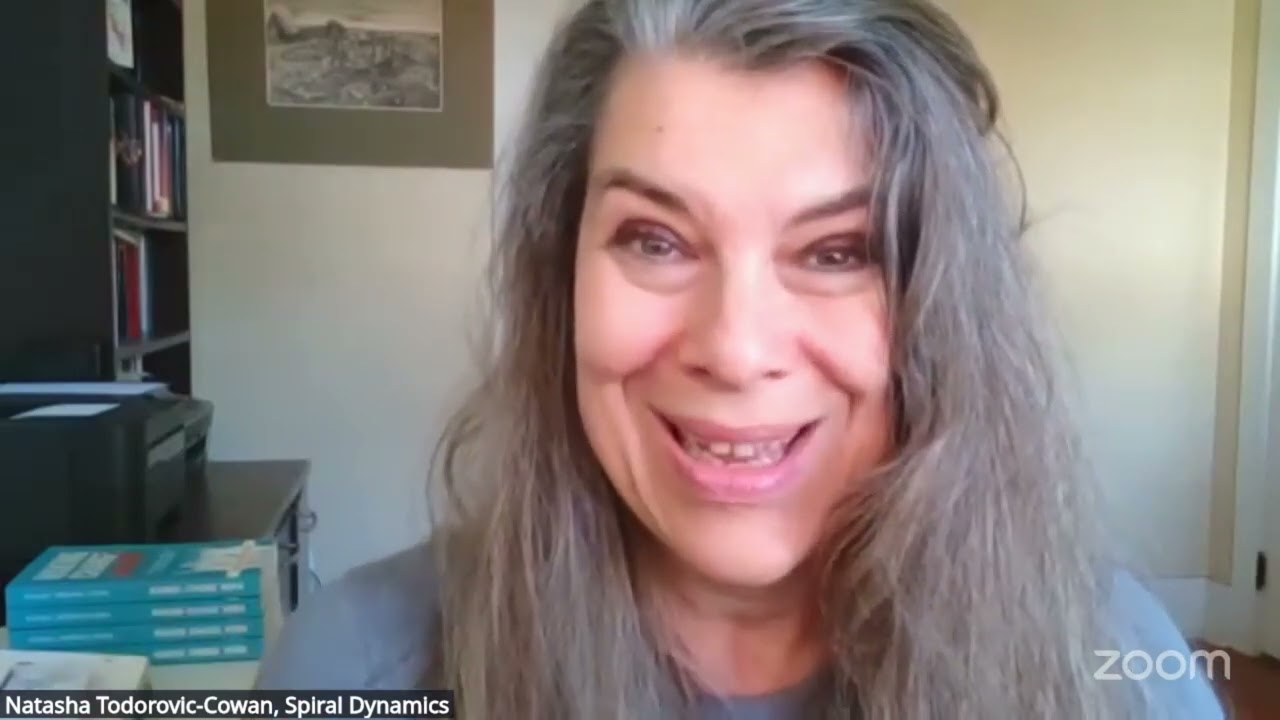
In this episode of Remembering the Forgotten, host Markus Neukom interviews Dr. Natasha Todorovic Cowan, a veteran of change work and steward of Spiral Dynamics. The dialogue explores the concept of "stillness" as a state of inner coherence between mind and heart, distinct from meditation or silence, and its role in effective listening and facilitation. Natasha shares personal practices—yoga, self‑coaching dialogues, and noticing internal cues—to access this stillness, and recounts a poignant story about her father's stroke that illustrates neuroplasticity and the power of belief. The conversation critiques the coaching industry, noting that 75 % of practitioners fail to reflect back content and emotion, a core skill for building trust. They discuss how authentic presence, rather than technique, creates safe spaces where clients can access their own answers. The hosts argue that many leaders operate in "noise"—chaos, expectations, and urgency—preventing genuine connection. They propose that cultivating self‑relationship, self‑regulation, and the ability to discern "is this me or them" can transform personal and organizational change. The episode ends with practical advice: grounding oneself physically, breathing, and recognizing the abundant resources available, encouraging listeners to reconnect with their inner truth amid external turbulence.
Chapters
Welcome to Remembering the Forgotten, a space where leaders think out loud without polish or performance. No scripts, no personas, just the quiet clarity that emerges when the noise drops and the mind is free to speak for itself. And today I'm joined by Dr. Natasha Todorovic, someone who has spent more than 3 decades working at the human core of change, And is a dear friend of mine. When organizations stall, when agreements look like buy-in but isn't, and when change quietly loses momentum, Natasha helps leaders see what's actually happening beneath the surface. Her work is rooted in authentic spiral dynamics and focused on the things most change efforts miss. unspoken resistance, value clashes, and trust gaps that no strategy deck can fix. She's the author of Making Change Work and a longstanding steward of the original work behind Spiral Dynamics. More than that, she brings clarity to the human side of transformation without drama, without shortcuts and without pretending people are the problem. With that, Natasha, thank you so much for joining my show and welcome to you.
Markus, that was absolutely beautifully done. Thank you so much. It is such a joy and such an honor and treat to be with you.
You're welcome. It is you. I didn't make up the thing. It is you, right?
You did it so beautifully. I need to borrow that.
I can share it with you. So before we begin, when I say stillness, I don't mean peace or quiet. I mean the place in you Untouched by pressure, noise, or performance. The place that knows before the mind thinks. And that's the layer I'm inviting you to speak from today.
You're asking me to quiet the internal dialogue.
Is it really quieting your internal dialogue? That is an interesting question.
Yeah, you know,
actually, Markus,
Markus, it really is asking for kind of a different state, right? Because brains practice, right? And they practice talking, they practice interpretation. And even in meditation, it's challenging to get that stillness of the mind. Yeah. And then there's a whole other layer of— I think that's what you're asking for— of listening to What is a truth within oneself?
Picking up fast. Because, you know, it's really interesting. Many people say, uh, stillness, you mean when I meditate? I said, okay, go on. And then everything goes blank. I said, no, that's not it. Because if you know me, I am not someone who would declare stillness as being silent.
Mm-hmm.
You know me, Natasha. When I go into stillness mode, that's when I become very coherent. That's when I become very precise. Because basically what it comes down to in terms of my understanding of stillness is a coherence between your mind and your heart. Because let's face it, in today's time, put it this way, the opposite of stillness, how would you call that? Of that stillness?
Chaos. Right.
It's an interesting way to put it.
Yeah. Because, I mean, I'm thinking about how you're defining it, and I think it's really a challenging thing for most people to do. Because if you, you know, I mean, if you're having internal, let's call it abreactions, you know, not responses, but abreactions, and you've got people around you and you've got noise, maybe you've got like a conflict happening in front of you or a debate, or people are challenging one another as a expert facilitator, you know, whatever, right? I think what I do to, to really discern what's happening with people is go into that place of stillness, right? Because without that, you've got all your noise and reactions to their noise and reactions to, right, that chaos. And it's just that moment of present with self, with the situation, with the people, to tap into a truth, to tap into the dynamics maybe that aren't even being said with all the— you know, I'm thinking about boardrooms, right? Like, I mean, all these images are, you know, they call it a trance-derivational search, right? Mm-hmm.
Where,
you know, what are all the times and places where this stillness Mm-hmm. And what you do as a facilitator or a leader or a person in the midst of this, in that stillness, is not only do you notice what's going on beneath the surface, maybe that people didn't say, but you become sometimes, if you're positioned in that way, an anchor for everyone else.
And it's interesting, you used one word 3 times within 2 sentences.
Yes.
Noise. In my opinion, noise is the antithesis of stillness, which leads me to my first question, Natasha. Where in your life do you meet the you Untouched by expectations.
Where do I need it, or where do I encounter it?
Where do you meet?
Where I meet it.
Untouched by expectations.
I actually— when I give myself that permission—
It's an interesting one. Tell me more.
So, I mean, we're a social creature, right? We— our brains are built for connection and interaction and being social, right? Whether you're introvert or extrovert, you're, you're a human that's a social creature. And so it— we instinctively sense, who are these people? Right? Who am I amongst these people? Where do I fit? Do I fit? Right? And those are those questions in your head that create noise. Right. And sometimes, you know, other people are going, well, we don't want you here. Or, you know, we do want you here. Or this is your role, or, you know, whatever it is, right? And you're like, You're flexing to contribute in that kind of social capacity. And sometimes what we do is we judge ourselves, right? And you think, I should be blank, or maybe I do that, right? Nobody else does that. I'll own it, right? I should be— I should, um, help. I should, you know, like, here are my— Mm-hmm. ways to be part of this group or this community or this social atom, right? And that might change from group to group, right? But that presence to go, oh, wait, hold on. Maybe you got this wrong. Maybe you don't know yet. Just check out for a sec of all of your thoughts and stories. Mm-hmm. And lean into what is truly here. Right. So that's that, I think, your term, which is stillness, um, but presence not with what's going on internally, not with the surface content clashing, just whatever. But, you know, as you're saying, that kind of mind to heart and heart to heart and heart to other minds connected. And then—
And where in your life do you find that you meet you without expectations? Untouched by expectations?
I remind myself.
Interesting. Can you do that anywhere, or do you have specific places or specific situations where you can literally do that, where you say, it's just me, there are no expectations outside bothering me or influencing me?
That's a really great question, and I'll tell you why it's such a great question. Because so many of us are programmed for contextual cues. Right?
I agree.
I go to my yoga studio, and that's where I get to be present. And I think the difference for me that makes it different for me is I've, I've literally worked in, I don't know, 15 or more different countries. I've traveled to a lot more than that. And worked with people from, you know, different kinds of blind languages and cultures, socioeconomic strata and beliefs and values. And for me, it's just a reminder, right? It's my brain going, oh wait, be you. Oh wait, stop checking into everything else. You know, what is my truth right here, right now?
So that's a beautiful way to put it. So that means you can be in the midst of people.
Mm-hmm.
And it suddenly clicks with you. Doesn't matter what someone thinks. The expectations are basically put outside this little dome I sometimes talk about. And you suddenly feel it is me. It's about me.
Yeah, it's like,
you know how rare this is, Natasha?
Yeah, it's like, I'll go, why am I stressing? Right? Or why am I feeling scrambled? Or, you know, and it's like, wait, stop. Okay, just pause. Right? So it really is a quick reminder.
It basically takes awareness, and then it takes a conscious decision. However, I assume this didn't come overnight for you either, right?
I don't think so. I actually really didn't think about it. Um, I didn't think about it until we had this conversation.
Because, you know, so many people, they live 24/7 accompanied by expectations of others in their own minds, 24/7, comparing themselves, justifying their own, you know, existence even.
Mm-hmm.
Which I believe it's amazing for other people to hear that it is actually possible Not to have to go into meditation, not even have to go into solitude. But it is really possible in midst of the noise to say to yourself, you know what, Natasha, it's not me. I'm okay just as I am.
Yeah. And, you know, and I think, you know, one of the things I've done, you know, like, I mean, I will stop and I'll go, is this me? Right? Or I'll go, is this me or is this somebody else?
Mm-hmm.
Right? Because I think, you know, part of— part of what I found myself doing, it took a long time to understand it, is when I'd be in a room with other people and they're having their feelings, right? I'd feel feelings. And I didn't know if my feelings were my feelings or my feelings were their feelings. Right. And then over time, it just became a heightened sensory tool to, you know, provide information about what might be happening in a room with a team or with, you know, whoever happened to be there within a culture, within an organization, right? I mean, you know, you've done this, you walk into an organization, you're like, Oh wow, I can feel it, right? Like, I just— Oh,
I very much understand what you're talking about,
right?
And you know what's interesting? It just dawned on me that in our business, in our profession, we have almost had to develop these kinds of sensory, and we could not allow ourselves to be too long in an expectation mode because we were the facilitators. And I believe we naturally have become great at reading atmosphere, situations, rooms, which probably most people, Natasha, who listen or watch our show never have been exposed to.
No, no, because most people are consumed by— not consumed, I won't say it that way. Because that's not quite right. They're not in touch with their own internal experience.
Okay.
And by not being in touch with that internal experience, one reacts to things that are internal and external without awareness as to where that reaction is coming from. Is it me? Is it that, right? Is it me? Is it them? Right. But they don't even have that awareness of, is this me or is this them? Right? There's just the reaction to what's happening. And until you can parse out a much more nuanced view of an experience and understand, is it 50/50 me and them? Is it 60/40? Am I being overwhelmed by their reactions, right? Because that happens particularly for more empathetic people. Mm-hmm. And then it's still not your reactions. It's the absorption of others, right? And then that's where I think some people just have to run away from it because they're so overwhelmed by it. And then there are those who are so They're so— they've put up boundaries and walls around it, so they don't even know that they're not reacting to their own internal, um, space.
You know what's shocking for me is when people believe from a certain age they can't change, when they literally fight neuroplasticity, for example. And if you adhere to that kind of belief, you're pretty much cooked.
I got a story for you.
Please go ahead.
So my father was one of the most stubborn, the most certain, the most— when he believed it, By God, it was true. And he had a pretty serious stroke and went to the rehab center. I'd gotten back from a trip, went to the rehab center, and he was lying in bed, and I was on, you know, the left side of him. And, you know, the door was kind of that way. And he just said, I, you know, I've had a stroke, I'm partly paralyzed. I get it, Dad, I get it. That's why I'm here. And then it was like he was trying to convince himself that this was the state of his body. And he lit, you know, he took his hand, and he lifted up his left arm, and then dropped it, and it just dropped.
Mm-hmm.
And he— what he was trying to tell me and himself was, I'm stuck. This is it. And I stood by his bedside, and I said, um, I know that it looks like this is what you have to live with. And if you listen to these people, there's this thing called neuroplasticity, right? I mean, he was— I think he was 80, right? You can rewire your brain, and this might adjust. We don't know how far, but it might adjust. And then he just looked at me and he says, you and your bullshit.
And sadly, he's right for himself, right?
But, but, and I knew, I knew the rehab staff was in for a very hard time. So they realized, you know, here's this guy, he's a math professor, he's scientific.
Mm-hmm.
And what they did, you know, just kudos to them, they were absolutely brilliant in doing this. They went and got the research and started showing him the statistics and the research and Proving the point. And when he realized that he had some power in this and that he had some say, he threw himself into all of it, and he forced his body to do things that it wasn't capable of doing. Mm-hmm.
Massive price.
And 3 weeks later, and my brothers, my brothers and I were like, oh my God, we can't stop him. You know, the, the, the staff said it's too early, it's too soon. And I was working, so my brother went to be with him. And I'm like, how's he doing? He's like, he's home. He's like Bambi on the ice, right? But he was determined to be home because my mom was in the hospital. Oh, and essentially in hospice. He went home. Because he knew he needed to take care of her and there wasn't anybody gonna get in the way. And he pushed his body to do things that probably others weren't ready for, but his stubbornness kicked in to making his body walk. Making his body do things, and the recovery from where he was was they'd never seen that. Wow!
Thank you for sharing.
So it's it's a choice that we can make.
This is so deep. 80 years old. It's a choice.
He chose.
It's a choice. And when I understood you correctly, he didn't do it for himself. He did it because he understood he has a response ability to what's coming next.
Relationship. We live and die for those people we love because we are in relationship, which means we're connected.
And now think about if that first love would become yourself. How the world will be different today. And as you know me, Natasha, this is one of the reasons why I do my shows.
Mm-hmm.
Because I want to reconnect every single person to themselves first. Because what you say is absolutely true in the relationship.
Mm-hmm.
But if someone has not learned to have that relationship with themselves first, It will always be for somebody else.
And sometimes it's enough.
Oh, absolutely. Absolutely.
But those of
us,
those of us who are committed to evolving ourselves and becoming the fullest expression of ourselves and our potential, Have different challenges.
Yeah. You know what's interesting, Natasha? Most people who ever will come to this channel are people who ask one question: is this as good as it gets, or is there more to my life? And now imagine if Someone in a situation gets on this episode and hears us talk about neuroplasticity.
Mm-hmm.
It takes a choice. And I absolutely agree with something you have not even said yet, but I know you do. It might begin with doing it for somebody else first. And that will actually lay the seed for, wow, it really feels good. What if that is actually the more? To find that for myself.
To find that not in a split second or moment or short period, But as a more enduring way of being.
Yeah. So I want to take us on a little bit of a different trajectory now. Because, you know, when people talk about intuition, when people talk about soul, quite often, and I was like that not so long ago, that I had delegated that outside of myself. Until I realized, hmm, do I really hear intuition out there? Or is it in here? Right. And that's when I suddenly understood stillness. I'm not sure whether I ever explained it to you this way. But stillness is for me to remember Who you were before the world taught you who you had to become.
That's beautiful, Markus.
Isn't it?
Mm-hmm.
And I believe that is stillness.
Mm-hmm.
The result of remembering who you were before the world taught you who you had to become.
Before you practiced being the person the world wanted you to be.
Yes. Yes.
And forgotten to practice being the person that you are deep inside.
Yes. You see, what's interesting, there are people watching and listening to us who sadly believe in the belief that when you're born, you forget entire everything you ever knew. What if we actually are born All-knowing with a little seed of our executive functions already present. And all it takes, it's getting them nurtured.
Well, Markus, when a baby— I mean, babies, when they watch other babies, immediately have a sense of fairness. Right. I mean, they, they—
executive function.
Yeah, yeah, yeah. Right. So, I mean, you know, the whole idea of blank slate is people not knowing what's inside there, wherever there is, and then declaring it a blank slate because they don't know what's in there.
So if you think about when, when we look at child development, let's say maybe between 6 and 10, It's usually when society decides, Markus, you are now beginning to get, right, cognitive functions. And now we start filling your brain with the stuff we believe.
Oh, that happened way before 6. Way before 6.
I was very positive. I know it happens way sooner. So that's why most people don't even remember the time before that happened.
You know, I was watching, I was at a friend's house, um, and they had, um, they had a couple there, they had a little bit like a 2-year-old, 2-year-old little boy, right? And the little boy's learning to walk, and little boy falls hard, starts to cry. And what do they do? They walk over and go, No, no, no, no, honey, boys don't cry. Boys don't cry. You're a 2-year-old.
It's an old song.
And being told that your emotion has no relevance and you're wrong for feeling what you feel. And we wonder—
Feeling is wrong. That's what it comes down to, right? Feeling is wrong.
You are wrong with what you are doing. You are feeling, and that is wrong. Because I, as your mother, and I, as your father, have been told for my entire life that feeling is wrong. And if feeling is so wrong, why do we have feelings? Because we don't know what to do with them. And without those feelings, we do not have intuition.
Well, that's exactly what it is. Yeah. You know what I love the most, Natasha? When I'm a podcast guest somewhere, when the podcast host suddenly says out of the blue, Markus, I've never ever looked at it this way. And I could tell I didn't say a word.
Mm-hmm.
So I can tell it is stillness working in that moment. Where I bring presence into the room, where the guards lower, the mind chatter goes quiet, and the soul can finally speak. Because, you know, this afternoon, I was having a guest that we talked about coaching.
Mm-hmm.
And he talked about ownership, whether it's the coachee or it's the coach. And I suddenly said to him, what if it's not about ownership at all?
What if it's co-creation?
Exactly. And I actually go even a step further, especially with you, Natasha. I'm curious what you think about my new thesis. What if the coaching world saying that all the answers are already in the client available, is actually right. However, the coaching industry has it quite backwards. I believe, and this is the thesis I put out there for a moment, just give it a thought.
Okay.
If you meet a client and that client comes to you with an issue, and if that client basically tells you what the issue is, And you believe in that kind of stillness, what I'm talking about, meaning you provide that safe space for the other person, that all you would have to do is basically hold that safe space.
Mhm.
And for most people, this sounds like woo woo rah rah, or, oh, if it's that easy, why did I go and spend $25,000 for my coaching certification? No, it's not that easy. It's actually hard work to get to that place, as we know, right?
Well, okay, so A, I'm not a coach, so I'm not entirely sure.
That's why I wanted to hear your, your opinion.
So I'm not entirely sure what— well, I have trained and certified coaches, right? And I'm, you know, I'm a little skeptical.
And
I'll tell you why. Because what you just said, I would say probably— and I mean, I'd get crucified for saying this, but it comes not from Natasha's guessing or speculating. It comes from the work that we did and the research we did around the world.
Yeah.
Tons of coaches and business leaders and consultants and so on, people in government. 75% can't listen.
Uh-huh.
And if you can't listen, you can't create that space. And there's something in our neurology where we know that somebody is either dismissing or judging us, or they're actually open to who we are. And when you say that safe space, that's what you're saying is not your skill, but your come from. Because I don't think it's a skill.
It's not, right?
It is a thing.
It basically is. It's exactly— and I believe what it comes down to, Natasha, and I'm curious because, you know, you studied that material. I believe it is a coherence that comes from authenticity, and people feel it when you are coherent. And coherent for me is so within, so without. Yeah. And I believe if somebody asks me, you know, how can I learn it? I say, good luck. It's a thing that comes when you do the work.
Well, you're, you know, Markus, you're really unique in this way because you are absolutely fine with yourself and being yourself, and you have just a remarkable curiosity About other people. And you, you know, you're one of the few who knows how to listen, right? Most can't, you know, and I put my hand up for that, right? Like, I've gotta, I've gotta rein myself in and go, wait, Natasha, pay attention to what's going on here, right? Mm-hmm. You know, you've got this just natural, I mean, probably worked for a long time, but now it's part of your being. Where you are fully present for the other person, which makes you a brilliant coach. Um, to your, you know, questions, you know, I hate this thing about coaching, which is, we're gonna ask questions and then the magic will happen.
Mm-hmm.
Well, no, you can ask all the questions you want, and I can't tell you how many coaches I have watched do the whole question thing, and their clients end up tired. They're frustrated. They're burned out. They don't want to do it anymore because they're tired of answering someone else's questions.
Uh-huh.
And then the coach turns around and says, I did the most brilliant questions, but they're too resistant.
Right? And
it's like—
You just nailed it.
I'm sorry, but I've seen it so often.
And it's reality.
The question—
This is a show where we speak the reality, because anything else is BS, Natasha, literally.
Well, and then, you know, the coach is patting themselves on the head. I did so good. I asked all the right questions. And then the client didn't come back. I could probably bet why. Because you didn't listen. Yes, I know how to listen. Um,
and you're not surprised that about 95% of coaches are broke?
Well, so
they can't even make their ends meet.
Okay. That's why I have a different view on that. Right. Um, so the piece of the questioning Is where do the questions come from?
I heard that in your voice before.
Yeah. If I ask you, and I mean, I've gotten so many transcripts of coaches working with our tools with their clients to watch blow by blow what they're doing. And it's not until they see those comments to their transcripts and they get challenged that it sinks in. Right. They don't know it. Right? The question comes— if I ask you a question, it comes from me. And if you believe in my inner wisdom about knowing, maybe I do, maybe I don't, then what you're, in a sense, modeling and advocating, Markus, is in that presence and stillness, is a beingness that enables a co-creation where, as a client, I feel safe enough to tap into what my own internal stuff is saying. And that works if it's about me.
Mm-hmm.
Right? And if I'm working on some growth edges, or if I'm working to get to know what's
Mm-hmm.
But if I'm a client who's saying, I need a solution, and I don't know, and I really don't know, no amount of coaching is going to help me. Because I might lack the skills, I might lack the data, I might lack the insights, I might lack the connections, I might lack skilled people to do the things. Coaching is not going to help for that. And coaching, in my view, for most people shouldn't be a profession. Mm-hmm. And the reason for that is, what are you trying to do?
Uh-huh.
You're trying to communicate with a person. Coaching skills are support.
Uh-huh.
And good supportive Um, nurturing, empathetic individuals don't need to get a coaching degree to do that, and very often don't even call themselves coaches.
Mm-hmm.
So what is being done in the world of coaching is teaching people some basic From what I've seen, some basic skills to interact with the— I mean, particularly with the shortcut coaching things.
Mm-hmm.
I'm not talking about the people who have dedicated themselves to the profession and upskilled themselves so that it's— I won't call it therapeutic, right? Because it's not therapy. Um, but they're so skilled that there's a transformation in the way they interface with people. Right? That's, that's a coach at a different level.
I believe this, what you just said, will be so helpful for many.
Uh, because, you
know,
I believe it'll get me crucified.
Oh, I risk that on a daily basis, Natasha, and I welcome it, to be honest. No, because you see, the coaching world has become such a noisy place.
Yeah.
Such a noisy place. And just for everyone who listens or watches this show, Natasha and I have not talked for a second what we're going to talk about. And I believe you and I have never touched this hot iron in any of our many conversations, right? It's the first
time.
Because I can tell you, you literally, from your scientific background, how many of these coachings have you done, Natasha?
I'm not a coach.
Or facilitation sessions through your Spiral Dynamics with coaches? What would you say?
Facilitating an understanding of what Spiral Dynamics tools reveal. With various groups. I mean, Markus, I've, like I said, I've been in 15 different countries around the world.
That's numerous people, right?
Programs for 7 days. I mean, I calculated it once years ago, and you know where they say you have to have 10,000 hours of experience? I think I calculated it out at like 50,000 hours of experience of doing this stuff.
So literally anyone who listens here and says, yeah, yeah, Dr. Natasha wrote the book and now she's an expert. No, Dr. Natasha wrote the book and she is an expert. And that's why I love talking with you because I can talk with you about the feelings, but you always guide it back to data. And what we just talked about is just a simple fact. It is a simple fact. And I really believe that the coaching industry has that piece wrong.
I absolutely agree. And you know what? Look, I'll, I'll, you know, the approach is very easy, um, for our clients. To understand how to deliver an interpretation and feedback to an individual or group or team or culture, whatever, they have to be able to get into the experience of their clients, right? Mm-hmm. So we have a— we've got a very simple, maybe 2-hour exercise, maybe 20, 30 minutes of instruction on listening.
Mm-hmm.
Right? And I mean, we've done this around the world, right? This is done in South Africa. This was done in Germany. This was done in Italy. This was done in Russia. This was done in Latin America. This was done in the US. This was done in Canada. This was done in, like, around the world. When I say around the world, around the world, right? And it doesn't matter what culture you're in. Then what we do is we train them to do the thing, and it involves 2 very simple things. I'll tell you and you'll be like, how, how hard could that be, right? And what you do is you reflect back the content of what somebody said and the emotion of what they said.
Those are the 2 hardest things.
And We did the training. So that's bad science where you train people to do the thing and then get them to do it, right? That should be bad science.
Uh-huh. Uh-huh.
But here's the thing, then we have them do it in front of the room or with one another, and 75% of people can't do it. And particularly those who you would think they've been trained in these skills, right? The trainers, the facilitators, the coaches, right? You don't think they'd be any different from— you'd think they would be different from the leaders who haven't had benefit of all this work. I'm not saying it's useless, but the numbers are the same. 75% can't do that very simple thing of reflecting back. What is the content of this experience? What is the affective component of the experience? What is that other person experiencing? And if you can't do that, you can't coach. And if you can't do that, leadership, management, anything that means influencing others, it's going to be tough.
Mm-hmm.
Unless they think and feel like you.
I'm not sure whether I shared that with you, but many people believe I'm a former business coach and a former executive coach or business consultant and executive coach. I'm not a former, I'm a reformed one.
You're reformed? That's a great line, Markus.
Because I can tell you, when I came to the US a year ago,
What made you reform? Is that your, like, just discontent with the results of what other people were doing, of the noise? What was it that you're like, no, this is not how I'm gonna show up?
I'll give you a quick thing. I just realized, and I suddenly had this metaphor in front of me, Natasha, of the bucket with the big holes. People didn't care whether the holes were there. They wanted me to patch up a few of them so not 75 leak, it's only 69 because it's already 5 saved, right? So we're great. And we just poured in more and more and more. And yeah, it was dissatisfaction. Like literally thinking I'm doing the job and I'm doing a great job. And a little bit later, poof, done. And that's when I realized, gosh, if someone doesn't go into that level where they build the foundation, where they go to that stillness, where they start asking themselves the real questions. And, you know, when I sat down, to be honest, I looked at a 30-year coaching and consulting career, Natasha, and I asked myself, what was it that my clients really received from me? It wasn't consulting, it wasn't coaching. It was that safe space. People always ask me, like, how is it possible you get on a call with someone once, And you have that trust. That's the stillness. That's the stillness.
You know, I think you are dismissing yourself.
Maybe.
Because you can get into stillness, but not everyone Cares about their clients. Not everyone has an ethical North Star. Not everyone wants the best for their clients. Mhm. And not everyone has the skill and expertise to speak to the things that your clients need to, need to have conversations about.
I totally agree.
So, you know, this is a you thing, Markus, not a still thing. It's a you thing.
No, I do get that. I do get that. But at the same time, when I realized, gosh, when I actually allow that space first, where I provide nothing else than that safe space, Mm-hmm. And you can sense it now. There is all the noise is outside. It is just us present in a coherent moment. So imagine if I present that to a busy CEO first, and then we start looking at the actual issues. That's when the openness comes. Whereas otherwise that person would fight me.
Yeah, because what they're focused on is they're going, you know, whatever, the bridges are burning, right? We need to stop the bridges from burning. The warehouses burn, you know, metaphorically, the thing is burning, right? Get like— what our society has done is it's made everything an emergency. Everything is high alert. Everything is instant response. Everything is fast, push the button, get it done next.
And resilience went out of the window. That combination, it's like—
Well, yeah, and the ability to just Step back, pause, sense into self, others, situation, future, market, whatever it is that our sensing mechanism was designed to sense into. It's being overridden by, you know, like you said, all the noise.
And that's why I can say, after so many calls with you, I highly recommend everyone to check out your Spiral Dynamics. And I will definitely put your LinkedIn address into the show notes for the YouTube recording. So I really hope there will be many, many people who check that out because, yeah, it's one of a kind. And you know me, I'm not so much of a flatterer and I've checked out so many tools and methodologies in my career. But when I saw that and I had the chance to be with your coaching group, remember? Yeah. With your coachees, like incredible. So here's the question, which I believe will help tremendous the viewers. What most pulls you out of yourself? And what lets you return?
Oh my gosh, I am so easily distracted.
That's a good one.
Very easily distracted. I'm like, you know, just, I mean, texts, this, that. Like, I've got to focus on, you know, being present. And what easily puts me in is my self-coaching. I catch myself and then go, hey, Natasha, focus. Right? Hey, Natasha, are you being yourself? Hey,
so it's self-regulation, huh?
It really is self-coaching. I talk to myself a lot.
Interesting. And that's a gift. That's a gift. I mean, if you have a relationship with yourself, because otherwise you wouldn't talk with yourself, right?
Yeah. It's like, hey, Natasha, why are you feeling this feeling? All right, let's— feeling, what are you trying to
say?
Interesting thought. Where'd that thought come from? Right? Is that the brain just trying to rewire, or is it an important thought? Let's have a dialogue.
It's so important. You know, as you can imagine, there will be so many different people watching and listening to this show. There will be brainies who need to hear exactly what you just said. They don't have time to first look for a nice patch of grass to ground themselves, right? Or book a retreat in Thailand or in Bali or in India.
I want to go to Bali or Thailand or something. I never did that.
Both is beautiful. Oh, I highly recommend you do that, Natasha. But what it comes down to is really what you just said, that self-coaching— can you just repeat a few of these questions which you are asking yourself when you feel, oops, Now I'm distracted and out of that center.
Well, and that is why, you know, like, I mean, you know, we didn't bash coaching, but, you know, we're truthful about it. That is why coaching is so important with a great coach, because a great coach can get you in touch with your internal experience, can help you name And label the things that are going on internally. They can give you skills to be able to tap into that and usefully work with those internal signals in a way that makes sense. Yeah. Because most, most of us, most humans, we are really dysfunctional in working with ourselves, which makes us dysfunctional and working with others, because we can't catch those thoughts and those feelings and those reactions. When we train ourselves with a guide, like a coach, or, you know, other ways, then we can be both present with ourselves and our reactions and our truth, and someone else's as well. And all of that does take awareness and training and experience and skill.
And what are those questions you ask yourself in that moment? You started sharing some, but I believe it is so vital for people who listen to actually get a little bit of your vocabulary in terms of questions you ask yourself to get back into that alignment.
Yeah, I think it doesn't start with the question. Right? It starts with the noticing. And when most people notice, it's already gone on for a fairly long time. And what I've trained myself and my clients to do is notice at the start. Mm-hmm. Right? I mean, this isn't like the core of my work at all. I found that I needed to get my clients through this, to get useful at working with the Spiral Dynamics Diagnostics. Otherwise, they wouldn't get to where they needed to get.
Right.
Right? So it's noticing that thought, not the thought driving you. It's noticing the internal feeling. Is the feeling the first feeling, or is the feeling about the feeling? Or are you having a feeling about somebody else's feeling? Right? If you can't track that, you cannot ask the questions about it. Mm-hmm. Right? So it's using your sense-making system differently to notice what's happening as early as possible in the process. And then once you get those signals, Right, whether it's the thought or the felt, you know, it could be, you know, just visceral felt in the body, or feeling as an emotion, you tap, you, you know, tap into that. It's like, oh, right. Originally, you know, way back a long time ago, I'd be like, is this me? Or is it them? Right. And it took, I mean, it took, it took time, it took a long time to get like, is this me? Is this them? Right? But then getting to know yourself, you can go, okay, what is that emotion? And sometimes it's multiple. So, you know, I mean, the stillness for me can last, you know, a minute, doesn't have to be hours and meditation and retreats, right? It's like, oh, what was that? Oh, feeling. Anger. Why am I angry? What got you angry? Ah, that happened. Yes. And then acknowledgement, right? Yes, I feel angry because they said something that, um, was offensive to me. Okay, where did they come from, right? So it's parsing all of those pieces out. With, you know, various questions, right? In dialogue with your feelings. What was that? Oh, happy. All right. Now remember, Natasha, relish the happy.
Right?
And you're happy about— okay, that's what made you happy. I thought it was okay. Right? So it's being in dialogue with self.
I believe that's the key to allowing yourself to get into dialogue with yourself, right? And I believe it's a permission thing because it's so noisy everywhere. And to say, no, the dialogue with myself literally contains all the answers I need. And especially believing that there is this place in us Which actually contains all the answers. I believe that's how it begins.
I— well, there's a place in us that contains the answers about us. And I remind my clients, you are not your thoughts. You are not your feelings. That absolutely is information.
Yeah.
And that tells you about you.
Yeah. And that's where that coherence comes into play, when the thought and the heart goes into coherence. And that actually opens that place to where the real treasure trove of answers actually lie.
For those who have the courage to look.
Oh, yes.
And look.
Oh, yeah. It takes courage.
Eyes wide open.
It takes courage. So Natasha, this brings me to my last question, and that's a deep one. Yes. If someone listening feels lost in the noise, what is one thing you'd want them to remember is still true?
Put your feet on the ground. Feel the air. Take a big inhale. Feel that go in and out. You're still alive. You have choice, and there are resources— more resources now in this world at the tip of your fingers than there have ever been in the history of our planet. And call Marcus.
Oh, thank you so much, Natasha. It is a beautiful way to end this show, and I just feel inclined to say one thing. We have absolutely zero intention to bash the coaching industry, and I believe it is the one industry That yes, it's regulated more and more, but it's way overregulated, and not by the things that it really should regulate— making sure that people are prepared to coach before they start the coaching industry business. Because let's be honest, it's not much different than someone becomes a parent who would have been done better by going first into a parent test to see whether they're fitting. It's the same with coaching. You can become a coach. And I don't know how many times I told people when they came to me and said, look, what shall I do? I said, go back into corporate. And they went back into corporate because I said, where you really can make a difference is in corporate.
Well, they wanted— yeah, they wanted to help people. Right. And that's the impulse.
Yeah.
That they wanted— for, for some, they wanted to help other people, and for others, if they were honest, they really wanted to help themselves.
Yeah.
And the coaching is a skill. For most people, it's not a profession, it's a skill. And if everyone had it, at a really great level of development, we'd be living in a very different world.
We would be living in paradise. Yeah. Because I just want to make sure we are not, we are not bashing anything. But I believe the time has come, Natasha, where the coaching industry should wake up and realize there is a missing piece. Even no one talks about it, but there is this missing piece. Because apparently it is almost impossible to build trust today. And one should ask themselves why.
Wow.
Not for you. I know, not for you, because you go in with authenticity, you have done the work. But this is exactly what I get to hear on a day and day basis. Markus, trust is one of the rarest, goods available. And I think we should start thinking why.
That is a sad statement about the state of our world today.
Yeah, I believe this is one you and I will talk soon on a private conversation.
I think we're gonna have to have a conversation about this, Markus.
So with that, Natasha, thank you so much for having been my guest. It's been a huge pleasure.
It's been an honor. It's been a treat, and it has been just a joy to be with you today, Markus.
Beautiful. Thank you. So this was Remembering the Forgotten, a conversation held in clarity, not performance. If something in this exchange helped you see differently, carry that forward.
More from Markus







Ep 66 Breath, Trauma, and the Fear of Being Fully Seen A Conversation with Matt Ritchey

Ep 65 Truth, Trust, and the Courage to Be Seen A Conversation with Troy Gregory

