Ep 20 The Third Needle A Conversation with Dr Stefan Frädrich
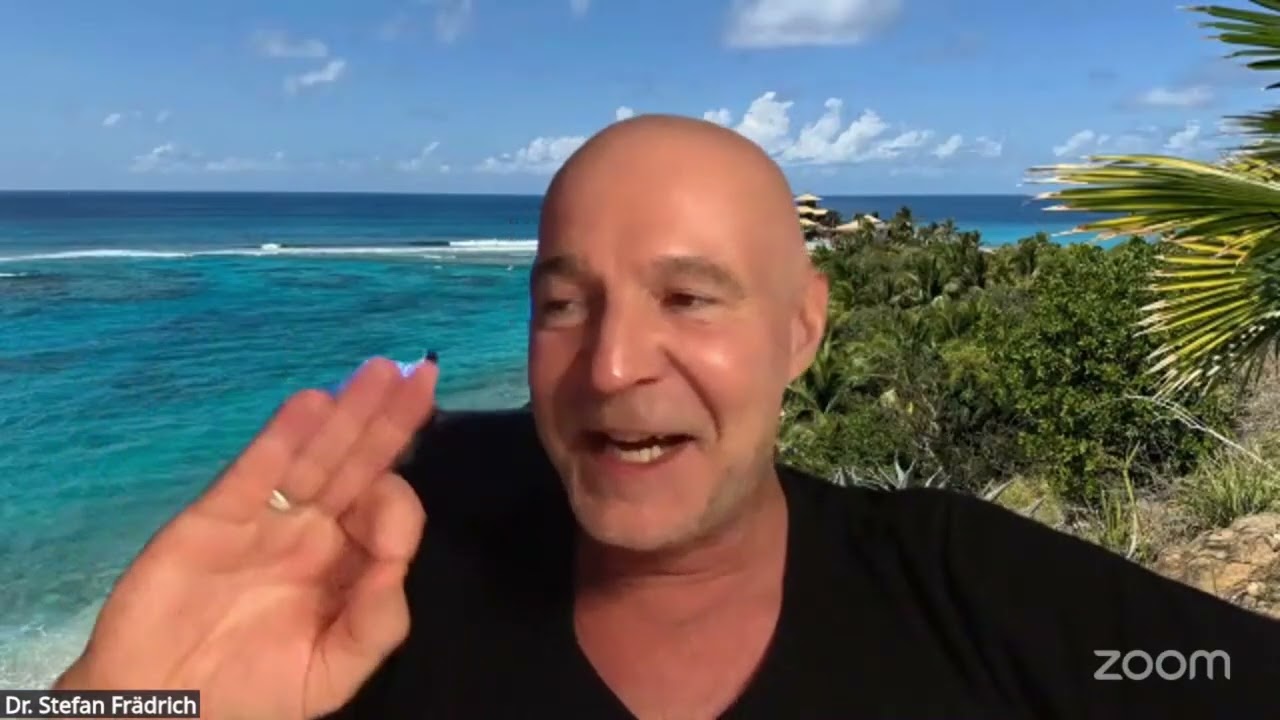
In this episode of Remembering the Forgotten, host Markus Neukom interviews Dr. Stefan Frädrich, a former physician turned coach, speaker, and psychedelic‑retreat facilitator. The dialogue explores what "stillness" really means – an active, inner state of coherence where body, mind, heart and actions align – and how most people miss it because they are caught in external programming and performance. Frädrich shares two practical frameworks he uses in his coaching: (1) the Three‑Needle model (Goal, Way, Meaning) that aligns a person’s outer objectives, habitual methods and deeper purpose; and (2) the Four‑Level model (World, Personality, Essence, Universe) that maps behavior from concrete actions up to the soul’s role in the larger cosmos. He argues that modern leadership and coaching focus only on the first two levels, leading to burnout, and that true, lasting change requires accessing the deeper levels through practices such as deliberate solitude, slow morning routines, and psychedelic integration. The conversation also touches on the neurochemical distinction between dopamine‑driven reward and serotonin‑based contentment, the importance of the "in‑between" space between work and life, and the need for ongoing integration after breakthrough experiences. Throughout, the tone remains conversational, reflective, and gently persuasive, with a supportive sentiment toward authentic self‑realization.
Chapters
Welcome to Remembering the Forgotten, a space where leaders think out loud without polish or performance. No scripts, no personas, just the quiet clarity that emerges when the noise drops and the mind is free to speak for itself. Today I'm joined by Dr. Stefan Friedrich, a dear friend, speaker, author, and longtime guide for people navigating personal and professional change. Stefan began his career in medicine and later stepped into entrepreneurship, education, and public speaking, working with individuals and organizations who are ready to confront habits, patterns, and inner resistance that quietly shape their lives and leadership. What distinguishes Stefan is his ability to speak directly to the human tendency to avoid what matters most, without pressure, theatrics, or force. His work invites responsibility without shame and change without self-violence. Rather than pushing people to become more, he helps them remove what no longer fits, so forward movement becomes natural instead of exhausting. With that, Stefan, welcome to the show. Thank you. Thanks a lot. That was, that was brilliant. Thank you. It is you. It's so interesting. Almost everyone is astonished when they hear the intro, because the intro is literally you. It's you in a nutshell, which I really love. So, Stefan, before we begin, when I use the word coherence, I mean a state where nothing inside me is pulling in a different direction. Body, thoughts, emotions, and actions are are aligned, and I'm not being driven by fear or urgency. And when I speak of stillness, I don't mean peace or quiet. I mean the place in you untouched by pressure, noise, or performance. The place that knows before the mind thinks. And that's the layer. I'm inviting us to meet from today. So with that, Stefan, where in your life do you meet the you untouched by expectation?
So, um, in fact, I'm trying, I'm trying to meet it as often as possible. And to be honest, it's almost every time when I'm alone. And I love being alone, and I love doing very regular things like driving a car, going for a walk, going to the sauna, chill on a sofa, and so on. So I'm— from the outside, you would consider me a lazy guy. So, but but when I when I'm in that state, I'm very much in the inside very happy, and from outside you don't see what is going in there. It's always ah blablabla. It's very colorful, and it's it's very much me, which is difficult to explain because most people define their lives from from outside actions. And so for me, the place of internal stillness, which does not necessarily need to be to do something quiet. Or for example, if I'm doing sports, riding a bicycle, or my latest hobby is boxing.
Oh really?
It really is. I love it. I love it. I'm in a training group with some much younger guys. I'm 53 and they are 20, 30-something. I love doing that. So, um, these are things that are totally untouched by things like success or all that stuff.
Oh, it's interesting. You mentioned something that people focus a lot on outside, and then you said stillness, and then stillness is not quiet. Stillness is not silence. Stillness can be very active. Tell me a little bit more about that, please.
It's fascinating. So 1 hour ago, I had a coaching call with an entrepreneur who told me, Stefan, I don't know, I have many, many millions, but I still feel the pressure to work in order to earn money because of this, this, this, this, this. And I know he's almost 60. 60 years old. And I, I know this is just an illusion. I'm just running after, after an illusion. And this is something I probably found out very early in my life when I was working as a doctor or when I studied medicine. I, I always had this, uh, this, uh, this picture of, of dying people at the end of their lives and rushing, rushing through life, never being still and never feeling who they truly are. And I told this, this coachee just 1 hour ago, so we, we, we developed some, some ideas, so how he could— where he could find stillness. And he's, he's kind of driven, he always needs to do something. And, uh, but I think if you do nothing, or from the outside nothing, this is the place where the real work begins because If you silence the outside and you listen to your inner voice, don't listen to the chatter in your mind. The chatter is going on for some minutes and then, okay, you have to do this, you have to do that, you have to do that, I should, I would, I could, I will. And then from a certain point on, something fascinating happens. Then these outside noises, they are also all outside which came inside and you need to do, you have to do. And then there is an inner voice, and I love it when this inner voice starts speaking because this is the true you. And I think it's a question of training, of getting into that state or of getting into that inner state, and it's a question of discipline. And the more you train it, the easier it gets, and the more you see what you should do and what you should not do, the more You see where you're just reacting, where you work like a— you function like a robot in your life. And I don't like this robotic state. So for me, um, it's— I think the biggest ideas in my life I had, uh, in, in this state, the state of being alone in the me space, so to say.
It's beautiful. And at the same time Most people only get little glimpses of that stillness, as we know. And we are working in very similar fields, so we experience that on a daily basis.
Yeah, but
people are mostly up here.
I think it's also, it's also the management, uh, system which, which forces us to do that. We have to—
Oh, absolutely.
We have our appointments, we have our projects, we have to do, make our decisions, and so on. The problem, the systematic problem with this is, um, the faster we decide important things, the easier it gets to decide it wrong. And then we to clean the rest and we have to remove some problems which we produced ourselves and so on. And so please don't get me wrong, I like being fast, I'm very forward-driven and I like to do decisions, but I like to make them from an inner certainty and in my experience if this inner certainty is somewhat spoiled by something hectic, the decisions are not good.
You know what's interesting, Stefan? I'm slowing us a little bit down because in the answer before you said so much which is so deep. So let's unpack a little bit. You said that the inner peace, the inner silence, the inner stillness is basically the original you, correct? Okay. So what if our life actually consists of a journey to return to this original design, how I call it? So here's, here's something I'm curious about. How does your morning routine look like, Stefan?
So in the moment, it's— so I wake up at 7 o'clock with my alarm clock, and then I wake up and my son is living with me. As right now, I'm in my apartment in Cologne. I'm living in Cologne and in Mallorca, Spain, and my son is with me getting up, having a little breakfast. He's going to school, and then I start my day very, very slowly, very slowly, with a slow breakfast. And just listen to some music. Right now I'm listening to very old music which I used to listen in my youth, so I'm dancing in the kitchen sometimes. And so then I slowly go to work. So it's— I'm a slow starter.
And you know what, I believe this actually correlates very much to what you said before about management. Management, I believe, doesn't have to be fast, fast, fast, fast, fast all the time. I believe if a manager actually understands that starting the day slow puts them into the right mind, and you know me, I am extremely fast. However, based on the present moment. And I think that's the difference. Like when many people wake up, they are either in the past, or they are already in the future. And they literally miss the moment where they could be present. Because, you know, if we look at stillness, how I personally understand it, Stefan, Stillness is not absence of action. Stillness is coherent action. And you beautifully put it before. So most people, especially in the Western Hemisphere, are living in their mind. That's how we train. That's the school system, basically, and prepares us for the workforce. So everything takes place up here. So programming, programming, programming, programming. And stillness basically is the coherence between head and heart. And most people then stop here and say, okay, if I have this coherence, I have what it takes. I don't think so.
Mm-hmm.
I believe that's when it actually happens, what you just said. Then the channel opens to our original design.
Absolutely. And I would like to— maybe I have time to give you 2 models which I'm working with.
Please.
But before that, I would point out that my understanding of what is life— life is not working and functioning. For me, working is the space in between. And I'm trying to make that interesting in between as large as possible because I know I have my dates, I have my appointments, I have my stuff to do, but the better you feel in that space in between, the more productive you are because there's more creativity, more clarity, more coherence, as you said, and more authenticity. But the problem is in our society we are trained to feel dopamine rushes. So, hey, we have to do this, we're getting strong, yeah, yeah, this is all fun. But I think the true hormone or the true neural substance for happiness is serotonin.
Mm-hmm.
And serotonin is something when you are relaxed, then you don't anything to be happy. And if you come from that place, if you act from that place, everything falls into the right, uh, right place. But let me give you 2 models I'm working with in my coaching. Please. Um, so we all know reaching out for goals. So most people imagine having a goal is like a compass. You have the compass needle and you follow your goal. And the problem is many people feel stressed out by their goals. They feel nervous. They don't really like doing what they do. So they try to just work and fight and fight and fight. And if the goal is reached, they don't feel happy. They never felt happy about the process. And I found out that there's a second needle, so to say, which is the way we are used to do. Mm-hmm. So way is the sum of all our programming of what we like to do, what we are used to. And if you're— if the goal and the, and the way we, we are used to, if they are apart, things feel, things feel difficult. Okay. And then there's a third needle, and just give you an example. Third needle is the meaning, is the true you, is why do you do it. And so many people suffer from, from a kind of chaos. They want to maybe lose weight, uh, go on eating the same way they always did, and just want to lose weight because, uh, They don't feel happy with their body, so it makes no sense. Or they want to do a business career, uh, but they hate their jobs and they just want to do a career in order to earn money in order to work less, which is never fitting. So I try to give people the other way around. So the first question is, who are you in the inside? Which is your true meaning of life? Why are you here? Why are you Markus? Why am I Stefan? And then aligned in that direction should be the way you are going, and then you will reach your goals automatically, and they will follow from a certain flow which does not feel pushy, or it doesn't feel like work. And so this is something I see in almost everybody who's happy, who is chill, who's having their own lives.
You
have to align these 3 compass needles. And then there's a second model I would like to give you. Um, we are working with that second model in our psychedelic retreats. I'm also hosting psychedelic retreats, and people are often going into very deep spaces inside of them, which they never imagined that they could be that deep. And so for me, there are 4 levels of reality. The first level is the world. So we try to influence the world through our actions. So we earn money, we drive a car, we have to eat, and so on. And we can always improve on that actions, on these actions. But there are some points where we don't get to the next level. Then we have to go deeper. Level number 2 is your personality or your I, your me, who's, who's defining you. And this is something you can develop with personal development, with coaching, with training, with all that how-to stuff. But then still you, you get some, some, some, some points where you don't get farther, further. And so for me, there's a 3rd level, and this is your essence. Your essence is corresponding to your soul. Who is the soul of Markus? Who's the soul of Stefan? Who's the soul of everybody? And this is something very, very deep, very unique, and it has nothing to do with the outer world or with our programming. It's a very unique imprint of our— of who we truly are. And this 3rd level is linked to the 4th level, which to me is the universe. Because there should be a reason why there's a Stefan, why there's a Markus, why there's anybody. So, and in this model, everything is working together perfectly. So everybody should do something which is fitting to themselves. should feel their essence, should translate the essence into programming, and should influence the world in a very unique way. And so this is something I see often in, in people when, when they are in our coaching processes. They, they feel confused at the beginning and they feel pressure, and as soon as they align these 4 levels of world, me, essence, and universe. Yeah, what am I here for? What's the overall game? So what is my role in the game? So how can I play the game as good as I— it is— as it is possible for me? And how do I influence the world? Then everything is aligned. And this is the moment where people feel this stillness and on the same side the productivity.
It is interesting, Stefan, because if we look at the classical coaching and consulting world, it basically all goes about level 1 and 2. And that's why people burn out. That's why there's not much progress in coaching. That's why coaches say my coachee just doesn't get it. How could they? Right? How could they? It's impossible.
I think it's the, it's the history of NLP. It's the modeling of excellence we all learned and inhaled and try to always teach people. But, uh, if you, if you look at true leaders or true originals, they don't model excellence. They have— they live their own excellence. But for living their own excellence, they have to know and feel who they are. And then they go to some motivational seminars and see, okay, I try to do this and that.
Yeah.
and they push themselves, which is working for a certain period of time, right? It almost—
It's a very short-lived, extremely short-lived.
Frustrated. And, and when you, when you start to go into the corporate world and they are all brainwashed with that stuff, yeah, we're all brainwashed. We work, we have to function, and these are social memes we, we tell ourselves. And, uh, so this is why many people are frustrated in their, in their, in their job life. And what is really What's really a pity is that there are so many very talented, very bright souls out there, and they don't feel themselves, they don't see themselves, they don't see what they're here for. And in my coaching, sometimes I often see— or if in, in our psychedelic retreats or so— if they discover their true self, they say, oh, what did I do the last 20 years? So I'm— I, I just went the wrong way. And then Yeah, I should change everything. But as soon as you feel your true essence, and as soon as you are just living it, everything falls into place and is easy.
I want to put out a question, which is maybe a little bit provocative, Stefan. You mentioned before, life is the in-between. Why are we that crazy to call life the in-between instead of declaring life as life and having work as part of that life? And until we get there, to call that the in-between.
So for me personally, I see no difference between life and work because it's—
I love that. That is an important statement.
For decades, I— so when I had my jobs as a doctor, or I was, I was, uh, um, yeah, doing, doing business and so on, uh, every time I tried to fit into a system, I psychologically failed.
Makes sense. Yeah.
And after a certain period of time, I woke up in the morning, I couldn't recognize myself in the mirror anymore. I asked myself, who are you? You're doing something which is not you. So, but the moment I understood that I just had to be me and myself, and it doesn't— I'm not defined by a certain outcome, I'm defined by a certain game I have to play and that only I can play, there's nobody else out there, uh, you free yourself from the out— from, from, from the out become. And you free yourself from the construction of work or not work. Everything is like playing, like kids.
Because, you know, you mentioned something really important. Why level 3? I just don't go into level 4 yet, just level 3, the essence. If you look at the foundation of a house, That is essence. And everything you build on top, your career, your private life, whatever you want to put it, is basically buildings on top of that foundation.
Yeah.
So once somebody actually goes into the essence, goes into stillness, which is the coherence where the original, basically the original Stefan and the original Markus start talking to us. This might sound woo woo rah rah for some people, but it's not. It's literally who we were when we were born. I believe everyone remembers age 3, 4, 5, maybe, maybe even a bit longer, when the natural you still was here. Right? So once we understand that we can actually get back to that original essence, where trust and everything is there. That's when we can say, you know what, however we feel our days, this is just life. This is just, I am being me. And I believe as long as people divide between what I'm doing and what I am, I think it doesn't really work. And you mentioned NLP. NLP basically understands that We are kind of screwed up. And now we need to find a way to deal with that screwed upness the best. But you and I, as I understand, Stefan, we say, no, it's actually possible to go beyond that screwed upness, go into kind of a healed state. And it takes healing. I know you quite well in terms of that. You went through your— fair share of healing and still are. So am I. So people have to understand, it is not doing what you're doing now differently. It literally takes a radical change. And then I believe it is really possible to do whatever you do, then you can drive a taxi. And be as fulfilled as if you have half a million dollars per year Ajak as a CEO.
Absolutely right. I know so many very, very happy taxi drivers.
And so do I. And that is always very telling.
A few weeks ago, I was in Maui, Hawaii, and we had the most funny taxi ride— no, 2 or 3 most funny taxi rides. And they're all just happy people, and I love chatting to them and sharing life insights. And it's It's really fascinating, but this is important. It's a different mindset. As soon as you start regarding people as not just a taxi driver or just a waiter or just whoever, if you start recognizing people as souls, you get a different perception of them. So you see happy people in the most simple jobs. And you see unhappy people in the most fancy blah blah super jobs, and so you get a different feeling how you how you perceive people and and and how you perceive personal happiness. And there is no such thing as a success career or a successful life which is defined by the outside. It's always defined by. How you feel. There are so many from the outside successful people which feel terribly lost inside. Yeah,
let's take your, your client, your coachee this morning. He basically has everything, right?
He has everything.
I know of a parallel story, Stefan. This guy just sold his company and he has half a billion with a B $500 million just on top of everything he had already on his bank account. And he's empty. And that is his soul, his essence saying, whatever his name, this is not it. There is more. And the thing is, our society has totally unlearned and totally forgotten That the more is not the more, you know, amassing more shit.
Yeah.
Sorry, pardon my French at the moment, but I really feel it. But it is not the more in the outside. It is in this singular journey, very unique journey back to yourself. And those people will never find happiness. They'll never find Peace until they go that journey.
Absolutely.
I deeply believe that.
And that journey can be painful because it confronts you sometimes.
Yes.
You think you don't want to see it.
It's me.
And even, even, I mean, especially successful people which are money-focused, they often just try to fill a void. They just, they run away often. They often run away from a trauma. Uh, so, uh, there was no father who, who saw them. They, they didn't feel loved. They had to prove their love. They had to work. They had to function. They— so there's so many explanations. And so people run for decades through their lives filling a void they, uh, had since their childhood. And, uh, it can be a very, a very painful process to, to confront yourself or to come to that kind of soul because there's— you know, maybe the, the picture of there's a little child inside of you, which, which is just, just love that child. Yeah, hug it and say it's all right, it's okay.
And then—
Yeah. This is very impressive. This is something we often see in our coaching processes, or when we do these, these psychedelic coaches, uh, coaching especially, um, because it, it takes away the, your capacity to think in a logical way and, uh, there are so many brain areas which are connected in a different way, and you feel, you perceive yourself in a different way, and you get a very straightforward picture of who you truly are because then you can feel your pain, you can feel emotions, you can feel joy, happiness, and you get a very emotional imprint of yourself or your soul. This is something often that changes people's lives because they, they see that the direction they, they headed to was wrong, and they just do what you say, the turnaround, and then suddenly life can be instantly better. So, so if you, if you have these trans— these transformations, they can happen very fast. So,
and it makes sense because, you know, basically, basically psychedelics can do the same thing as stillness does. It lowers all the noise and puts all the noise out. So the soul basically lays bare. And then the soul starts talking to you, right? So when people feel the psychedelic journey, it's basically because they have no clue how the soul speaks. And the soul probably speaks in pictures, in movies, whatever. So this is an interesting thing.
Which brings me to another question. Let me tell you a story. Last weekend we had a psychedelic retreat and there was this, this engineer and he was very much in his head, very much in his— he was like, okay, I need to get out of my mind, I need to get out of my— I'm just thinking the whole day, I'm thinking, thinking, thinking, I'm a slave of my thoughts. And he had some, uh, problems with his body, some, some, some pains and so on. He was, I think, think, think, think, think, think, think. And, and so what do you want? I want to feel. So how does it feel to feel? I have no idea how it feels to feel. And then the And then he went into that psychedelic process and he started crying like a little boy. And he said, I love my wife, I love my kids, I miss them. And so, and that was the true essence. And then it was like he, he went through a very deep process of emotional healing. And then he woke up again and said, okay, now I can feel who I am. I can feel emotion. I can feel what is important. to me. I can feel what is not important to me. I'm not a slave anymore to, to my, to my, to my programs in my mind. And so this is the— this is one story of, of thousands I could tell, but this is a very typical story how feeling your essence can change your life. And I'm absolutely sure he will have a brilliant marriage now. He will work less. He will be more productive, even more productive, and he will be a better daddy.
So here's the question I always ask myself when I speak with you. How long-lasting is the process? Is it for everyone long-lasting? Or is something required in terms of you have to make life changes? Or is this programming literally just poof, gone?
So regularly, when you I think we all have these glimpses or these moments of, ah, now I understand. You have to integrate it into your life, and not just by thinking about it, also by actions. Because if you—
I love to hear that. Tell me more about that, please.
If you don't change the way you speak, the way you behave, the way you— so you— sometimes people, they have real, like, revelations. Okay, now I see, I understand everything. And then they go back into their normal lives and they switch back to normal. And we have all these neural networks in our brain which very easily pull us back into being Markus again and being Stefan again.
Of course, because it's some programming. Yeah,
and, uh, then it's not very helpful. So if you, if you go through a deep process like that, you need to do some integration. You need to let it sink in, think through it. take actions, feel it. So it's like a— so this kind of substances, they enhance also neuroplasticity. Oh yeah. So if you, especially in the weeks after a psychedelic experience, you have enhanced neuroplasticity, and so you can reprogram, rewire your brain. You can start making new experiences, and this is some kind of a self-programming. And we all know what we are used to do feels comfortable, and so what we don't know often feels not comfortable. So, but we are afraid of doing that because it doesn't feel comfortable and we— what could happen. So if we start— so if we have the process of seeing and feeling who we truly are, integrating into our lives, and reprogramming ourselves through actions, I think I'm really convinced that almost everything in life is possible. So everything, everything possible for you, for everybody in a authentic way. Yeah. So being your true you, this is what I mean.
So it takes the conscious decision and basically a maintaining process. It's not just that I can come to you I go through this week and I'm basically my original design and everything just goes hunky-dory.
This is not the case, right? This is, of course, sometimes if people are prepared to make changes or if they feel a lot of pain in their daily lives and they feel the pressure of changing, then these processes, they are easy. Or if the new visions are just brilliant and they like to pursue their dreams and they are used to, to, to doing that. Um,
and
it can be faster and it can be easier. For, by the way, uh, the background is Necker Island, which is the private island of, uh, Richard Branson, where we are doing, uh, hosting also retreats. And Richard is, is not just an epitome of an icon in, in our— I think everybody knows him. He's also a very authentic person, a very authentic, productive person. And if you meet him, he's very down to earth, he's very people-oriented, he's just so unbelievably nice.
Yeah.
If you see him in this island, in his home area, he just built a huge paradise for people. And everything he's doing is driven by this, what can I do best for people or for humanity or for other people? He's very, very service-driven and this is not something you can— if it doesn't fit to you, you cannot try to model him. Of course you can take him as a role model, but... I ask myself if people like him, if they would have been programmed in the wrong way, if they had had the wrong parents or the wrong background or the wrong colleagues and the wrong schools and whatnot. So how many people would be crippled by, or how many people are crippled by the outside world? And for me, he's a brilliant example for what is possible if somebody feels and lives the true me, or feels the true essence, and, and is, is able to, to, to influence millions of lives in a, in a positive way. And so this is, for me, this is something we all should think about and should try to find out who we truly are.
Absolutely. So with that, Stéphane, we're coming to an end, and I have one more question for you, and this is a deep one. If someone listening feels lost in the noise opposite stillness, what is one thing you would want them to remember is still true?
It's all just a moment. Life is consisting of moments, and I think everybody knows that also the darkest moments pass. They just go away. And if people are lost, if people are desperate, if people are having tough times, which we all have from time to time, we all know difficult times, there is still you after that moment. And that is a soul which will always be untouched by the moment. So this true essence, your true soul, is not suffering. It's the level 2 which is suffering. It's the ego which is suffering. It's the I want things to be different. But things will be different one day or the next day or whenever. And then you will see that your soul was untouched by that moment. It was just an experience.
Beautifully put. Thank you so much for being on my show, Stefan. Great pleasure.
Thank you, Markus.
This was Remembering the Forgotten, a conversation held in clarity, not performance. If something in this exchange helped you see differently, let it stay with you. You'll find a few quiet pointers in the description below.
More from Markus







Ep 66 Breath, Trauma, and the Fear of Being Fully Seen A Conversation with Matt Ritchey

Ep 65 Truth, Trust, and the Courage to Be Seen A Conversation with Troy Gregory

