Ep 21 Rebuilding the Bridges We Thought Were Gone A Conversation with Greg Stephens
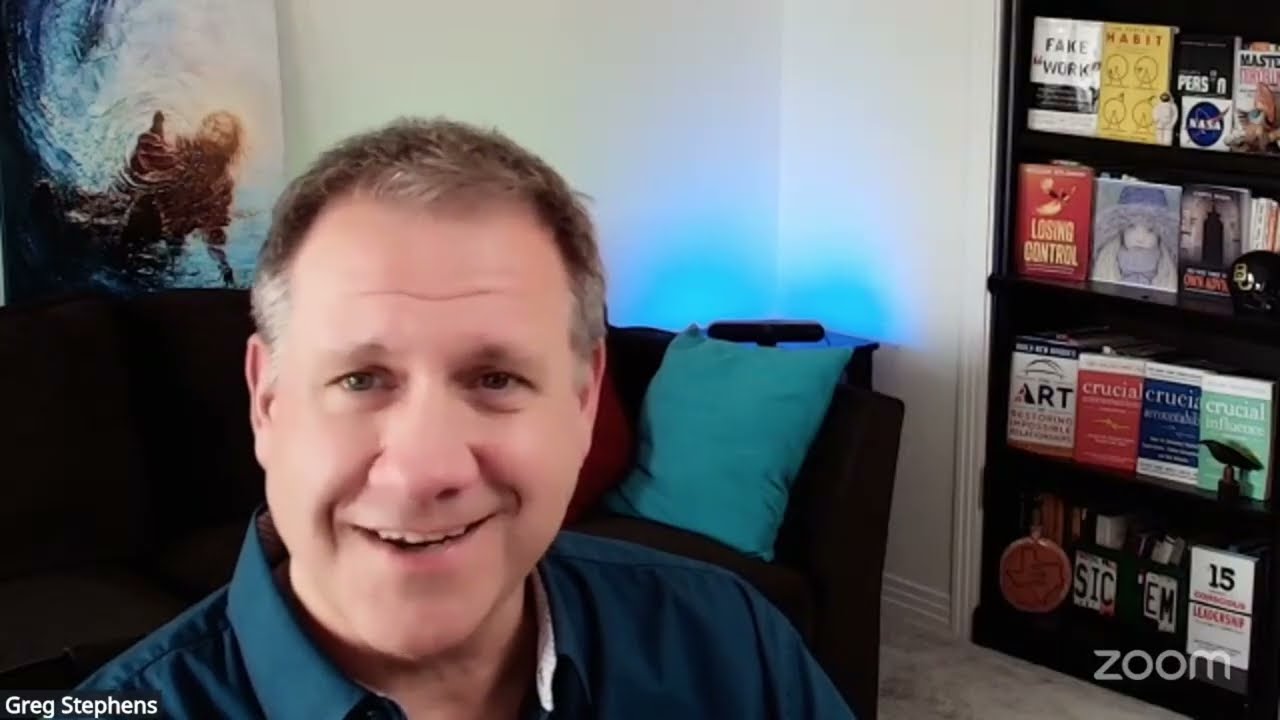
In this unscripted episode of "Remembering the Forgotten," host Markus Neukom interviews executive coach and mediator Greg Stephens. The dialogue explores how leaders can rebuild broken relationships by moving from conflict management to honest presence. Key concepts include stillness (a state beyond peace, untouched by performance), coherence (alignment of body, mind, and emotion), surrender, trust in a higher power, and the practice of silence in coaching sessions. Greg shares personal stories—his spiritual relationship with God, a pivotal college decision, and his early‑morning routine that combines physical exercise, spiritual reading, and meditation—to illustrate how presence fuels clarity. They discuss the paradox of fear versus faith, the illusion of control, and the importance of accepting the present moment rather than living in past regret or future anxiety. Practical takeaways include using two‑minute silences before client meetings, embracing gratitude for all experiences, and recognizing that the voice of inner guidance may be divine. The conversation concludes with an invitation to "play"—to engage life with curiosity and openness—while reminding listeners that they are loved and inherently connected.
Chapters
Welcome to Remembering the Forgotten, a space where leaders think out loud without polish or performance. No scripts, no personas, just the quiet clarity that emerges when the noise drops and the mind is free to speak for itself. Today, I'm joined by Greg Stevens, executive coach, professional mediator, author, and longtime guide for leaders navigating conflict, difficult relationships, and high-stakes conversations. Gregg has spent more than 2 decades working with individuals and organizations where communication has broken down, trust feels strained, or important conversations have been postponed for too long. What distinguishes Gregg is his ability to create safety without softening the truth. He doesn't help manage conflict better. He helps them meet it honestly. His work invites clarity without escalation, responsibility without blame, and forward movement without forcing outcomes. Rather than teaching strategies to win conversations, Greg helps people rebuild bridges they believed were no longer possible by restoring contact first with themselves and then with others. And with that, a heartfelt welcome to you, Greg.
Markus, it's great to be in your home today.
Great to have you as my guest. I was looking forward to that.
I love that. It's, it's good to see you. It's holiday season and I love looking at, uh, your background there. It's, uh, it's good to be with you. It's been a long time, it seems like.
I would say it's almost a year since we last talked.
Wow.
Time flies. Time flies. Yeah.
Really.
But it was such a deep conversation we had, especially when I was a guest on your show.
Yeah.
I believe it literally laid a foundation for Lifetime.
Yeah, absolutely.
Pretty much.
Now, it's interesting, you connect with some people quickly, and I have an ability to connect with a lot of people, but the level of depth that you can connect on is very different than most people. It's, uh, we got, we got really deep really quick. And, you know, Space, remember when you did my podcast, uh, It was a mind-blower. I had to sit and think. I had to ask you a couple of times, am I understanding this right? And it's like, yes, you are. I was like, wow, it really took some time to get there for me, but I followed it and it was fun. I like something that challenges me personally and makes me think.
I appreciate that. So let's see where we're going today, right?
Yeah.
And before we begin, when I use the word coherence, I mean a state where nothing inside me is pulling in a different direction. Body, thoughts, emotions, and actions are aligned, and I'm not being driven by fear or urgency. And when I speak of stillness, I don't mean peace or quiet. I mean the place in you untouched by pressure, noise, or performance. The place that knows before the mind thinks. And that's the layer I'm inviting us to meet from today.
Thank you.
It is my pleasure, Greg. So where in your life do you meet the you untouched by expectation?
For me, it's in spaces of really examining my relationship to me with God, universe, whatever that may be for someone. It's interesting when you say God, there's so many plugins for so many people. Mm-hmm. You know, I do call it God. And for me, it's a place of letting go of that fear, knowing I'm taken care of. Just a couple of weeks ago, I had some— a lot of things hit me in the last couple of months. And I sat down with one of my coaches and friends. And he said, the universe seems to keep giving you the same lesson. He goes, what are you not learning? And I stopped and I really thought about it for about 2 full minutes without saying anything. And I went— and it hit me. It's like you say you're grateful, but you're not saying one thing and being something is very different. If I were truly grateful, I'd be grateful for all the problems. I'd be grateful for all the lessons that are coming my way. I'd be grateful that I have this amazing life with everything attached to it— what we consider the good, the bad, the ugly— but knowing that it's handled, it's taken care of. There's really nothing for me to, quote, do But just be. And I realized that I was speaking being grateful, but I wasn't grateful. And I've really, the last 3 weeks, been looking at that and taking on being grateful when I, when I don't, when I'm a little entitled, I think, ah, this shouldn't be happening to me right now. Or, you know, I've worked hard, I should be past this. Or, uh, why is this happening to me? And I've worked a long time on stop being a victim. And I also believe that every lesson in your life has different depths to it. And I felt like this was a depth of trust that I needed to get to that I haven't been at. It was interesting because I thought what would be— it'd be a slap in the face to me if I said You know, someone says, "I trust you," and then they turn around and say, "I don't really. I don't really. I want to hold on to this." I think that's what you know the message has been to me. I trust you. I want to keep on. No, no, these this is the understanding I have, and that all comes with our desire for security. But I can truly say that. Life is not lived in being secure. Life is lived on the edge, stepping out into the unknown, having faith that there's going to be ground underneath that, that space when I step out blindly, but knowing the direction I need to go. That's the difference. If, if you know your direction and you know that pull in your heart, I ask myself, why do I doubt it? Why do I doubt it? I don't believe I'm being brought out to, to be a failure or something. I'm being brought out to shine. I'm being brought out to see what life can do.
This brings me to a follow-up question, Greg. What if it's not so much about knowing the direction, but knowing that where you are right now is exactly where you ought to be.
Absolutely. Oh, I agree with that completely. And I love that. I do believe there is a compass of values because we can truly get off a path if we don't really look at that. But I see exactly what you're saying. I need to— not need to— I accept where I am now. A couple weeks ago, I didn't. I felt it should, it should be different.
And it's human. You see what's interesting? So, so let's dive in a little bit because I love where our conversation is going already. Um, because this is something I hear a lot from people of faith. They say, I love God dearly, as deep as I can. I trust him entirely for as long as I can be in control.
Exactly.
As long as I have a say in which direction it should go.
Right.
And please, yeah, business class is okay, but definitely not coach, right? And then suddenly God sends you into coach to meet certain people to actually teach you a lesson. And you said, you know, actually I'm entitled to a first, but I agreed to business.
Oh yeah.
So if you think about it, isn't it a little bit like this, that if we dictate the direction, we are almost set to disappointment, meaning our appointment gets disappointed 50/50?
Yeah.
And the only reason why that is, I believe, is because we're living in the future.
Right.
So we are here and then we are catapulting ourselves into the future and set the direction. And, you know, this is a life lesson, Greg, I am learning in these current days myself. Instead of saying, you know what, my only job is to become present And the direction will reveal itself. But it's not that Markus is in charge of the direction anymore. And I believe that is faith.
Right. I think it's the difference between being pulled or pushed. Yes, I think, yes. When you open up to what's there, you're pulled to it. It just naturally shows up. But when we push our way, that has to do with our ego and our attachment. And our attachment, it's interesting. I started looking at what is my attachment about? Maybe it's, for me, it's not title or money, but maybe it's, uh, ego says my value. My value's not tied up in which direction I go.
Right.
That's the illusionary space that we Want us— it's so funny how we're designed when you really think about it. We're this battle of control and surrender. Peace comes from surrender and letting it show up, and that's your real power.
That's nice. I love it.
Are
we designed like this? I doubt it. Are we designed like this? I doubt it. Let's go back to when we were children. Was that the case?
No, no, you're right.
You see? So what if— so I'm putting out one of my hypotheses now again. It might be mind-blowing once again, Greg. I warned you. What if we are born with all our executive functions available. That's intuition, that's creativity, that's dreaming, that's trust, that's everything. And sooner rather than later, society manages to push that, whatever it is, out of its own seat. And suddenly it's not anymore being pulled And carried, that actually becomes lip service. And we're surprised that when life actually does send stuff that challenges us, we are not equipped because trust has become lip service. Surrender has become lip service. I'm not sure whether I shared that with you, but when I grew up in these evangelical churches, I always smirked. And when people prayed publicly and said that they surrender all, me as a little guy, I just thought to myself, I want to see where you are when life really tests you. Yeah. And most of the times, I was not that wrong. Because no surrender when everything goes well. That's one thing, but surrender when things start going haywire, that's a different beast. Well, I believe—
Go ahead.
No, please.
Well, when you were just describing that a moment ago, I thought, that is a child. A child is open, playful. Where's our play gone? Where's our play gone? Because from programmed, it becomes work.
Absolutely.
So we put our play aside rather than play a bigger game. Instead, exactly, we play this game over here rather than a bigger, a full game of life, because we've got to work on this.
Exactly. And you see what's so interesting? You know, you work with a lot of people, so do I. And quite often, the ultimate question we hear is, is this as good as it gets? Or is there more to life? So if we consider the source of that question, it's actually the part we pushed out of its rightful seat, And it almost is inside of us, observing us, thinking, Markus, this is not what the original design is all about. You were not meant to push up the boulder, and then when it comes down, run down again and push it up again. Basically, you would never make it. So there must be more, right? And what is so interesting for me is now to realize, Greg, that it is actually that part which we had as children. Some had it a very short time, and then they experienced abuse or whatever in life, and that pushed that natural trust out of its rightful seat. But I believe We have still all of these executive functions in us. You said you're getting up very early in the morning. Oh, now everybody just froze. So now we're back. This was a moment of stillness.
Yes. Yeah, it says my internet is— connection is unstable. So let me go to my iPhone real quick. Sorry about that.
All right,
this will kind of cut us off for—
wonderful.
Back me now.
Yeah.
Okay. Yeah. Make sure it's recording still. So just wanted to make sure.
Yeah. And I'm actually leaving it exactly as is. I'm not going to doctor at all.
Okay.
So what I was saying is that you mentioned that you're getting up very early in the morning or something, right?
Yeah.
How does your morning routine look like when you get up that early? Probably for most people on this, on this recording, they think like, What is this guy doing at 4 something?
Yeah, I'm up at 4 or 4:15. What I do is I get up, I shower first, then I make some coffee and I come down with the dog. And then I have my reading of the Bible, spiritual thing that I do, a thing called Jesus Calling by Sarah Young. Pray, meditate for a little while. Then I go to the gym. And my gym doesn't open at the club until 5. So I'm— Okay. I'm the first one in every day. And I get on, I do my stretching for my back. I've had 2 back surgeries. And I play what I call inspirational spiritual music. And I get into a really heavy workout. I mean, I sweat. I, uh, most people— I do a lot of cardio on elliptical machine. I'll lift some weights here and there, but I try to really get my, um, my body temperature and my, and my blood going. It just clears out my head. And I listen to that spiritual music and I go through And I just have deeper conversations with myself and my Creator. And I look at what's ahead for the day, how I can hopefully make a difference. I try not to trade— let my mind go where it needs to, but it also gives a real good compass on where I actually am that morning. I can see when I stay in that gratefulness, happiness, my heart is open. If I find out that I'm certain looking at the troubles of the day, I feel my heart being closed. And that's where I try to get my center back. And then, I come back home and I answer emails for a little while. Then, I take a shower again. And then, I get on a call at 7:30 every morning with some of my sales team. And from then on, my wife's like, why do you get up so early? It's like, because that's fine. I think so clearly in the mornings. And one of the things I learned a long time ago, I used to be the type that I wouldn't normally go to bed until 4 o'clock in the morning. Now, I get up at 4. And so, but I go to bed when I'm tired. I fall right asleep. Uh-huh. I rest really heavily. I wake up refreshed. And sometimes, I only wake up after 5 hours. My wife wants me to get 9, but I'm on my CPAP machine. I sleep great and I'm a clear head throughout the day. But I also find my energy wanes around 3 o'clock. So, I don't fight it. If I start to relax at that time, I try to get into reading other things. I try to relax if I can. Sometimes, I have meetings till 5. But that's kind of how a typical day goes. And then, I unwind with my wife around 6 o'clock. We'll have dinner. And then, sometimes, I'm in bed at— last night, I think about it, I went to bed at 7:30.
And
sometimes, I don't go to bed till 10. It just depends on what my rhythms are. I listen to when I'm tired, I go to bed. When I wake up, I wake up. So, that's kind of—
That's how it should be, right?
Yeah. And so it's—
I'm actually—
so
I'm actually even more glad that we settled for 4 PM because that means now you're literally out of the rat race of the day and now you're going into stillness, which I believe is the best foundation for our conversation. Yeah. So I'm curious, Greg, can you tell me about a moment when all the noise fell away and something in you knew exactly what was true?
Well, it's interesting. I have those moments a lot. Uh, it typically comes when I'm present with someone like I'm talking with you, and then certain things will just flow. And that's why I ask my clients— typically my clients will say— I'll ask them at first, do you want me to record this? And they go, well, not really. I go, well, you might want me to, because when I get into a flow of things, I typically don't remember what I say. And I just, I'm present with you. It's coming out and they, they don't understand it until all of a sudden they're writing as fast as they can and they'll say, can you stop and start recording this? Because it just comes out. But what I love about that is it's the connection. I'm connected. I believe there's the source of all life is with us. And that's, I'm here for relationships. I truly believe that. And I'm here to connect with people and help them start to look at first themselves and then look at others. And I've done this by practice and taking courses and doing all that work, but it really comes down to, Markus, what I found the most clarity I have is when I get silent and I'm just there. And that's when those things start to show up. Sometimes it'll be in a meditation. Sometimes it'll be in a sermon I go to or a talk I listen to on, uh, maybe there's a TED Talk. There's so many ways to me. There's so many avenues to God when you're open. I believe, I believe our universe, spirit, whatever you want to call it, is constantly in relationship with us. If we pay attention, and you're exactly right. When I get on that push or the rat race or whatever, I'm not present with that, and it doesn't have real power. It's kind of it's kind of like a house of cards when you think about it. Anything when you get there, there's a substance that comes with a relationship when it's when it's founded in. connection with each other and understanding.
I had an interesting conversation today, Greg, and that person said to me, you know, life is that part between when I work, when I'm just by myself, when I do whatever I do, right? And I just thought, hmm, I know him too well. for that to be true. And I believe he tries to make himself believe that. So I said to him, you know, what if it's actually been vice versa, that life is life and it might be interrupted by work, which will be like the first step. However, what if you actually get to the point where life is life and whatever you do is life? Right. Because you see, what I find so interesting is you just mentioned when you go into, into stillness. I'm curious, when you meet your clients, do you have moments where you are just quiet? And you realize on the other side, something is happening? In spite or just because you're quiet?
Often, often. I, I would say, um, one of the things I do— I just realized there's one client I haven't done this with, and most clients I do this with, but I haven't done it with him in weeks— is before we begin, I do 2 minutes of Silence, where we just get clear, clear our heads, get present with what's going on in the moment. And I'm glad we're having this conversation because I realized that's one of the things that's missing from the conversation I had with this client earlier today. And I typically haven't taken the time because I know he's so busy, but I know I get so much more done in that 2 minutes of silence. Because we reset, and I use the moments just like that that I just used that silence. What's going on?
That's exactly it.
What would it be like? I use those to lay there, and for instance, I do that. I've got a group of. Coaches that I work with and their friends, but when we get together, when they pose a question to me, sometimes there's been one time I think the longest I stayed still and silent before I answered anything was about 25 minutes. They didn't say anything either. That was so good because the question sat, and I sat, and I thought, and I thought. And I looked at it in every way I could, and I didn't speak until I was ready. I did— my friend, my coach friend, left the space for that as well, because there's a space you have to hold to have that kind of a silence between 2 people when you're having a conversation. And I think we experienced that when you did— we did my podcast and we did some things.
I recall it very well.
Yeah, and there's a, there's a place in there that there's real rich lessons if you can just wait on them. They're wanting to come out.
You know what's really interesting for me, and this has been probably one of my biggest aha moments, is silence is one thing. Me just saying nothing. But that is basically just a, a coach filler. But when you go into stillness, that is when you basically provide the other person a space of safety where the noise suddenly stays outside. And maybe for the first time, that person's soul actually can speak to that person. and that person hears it. That's the difference. It's not that the soul speaks for the first time. The soul tries constantly. But it's the first time that a person hears it. And the other thing which I realized is actually as deep as when we realize that the lesser we do, The more actually happens. I remember a moment when I was guest on your call, Greg, when I was quiet and you were quiet and you suddenly said something which was very evident that a process was taking place in you, totally detached of me being there. Yeah. But it was the presence that made it possible for you to go very deep. And I remember were words like, this is my show and you are my guest. And I've never shared this publicly. And I knew this is nothing which I had triggered, but it's that safe space we're talking of. So I believe if anyone who listens or watches this show understands that the less we do, the more actually can happen. It's very much like we started our conversation, Greg. The less we actually try to control and are in the present moment, the more happens for us. So it's almost like you know, if you want to call it the Holy Spirit, if the Holy Spirit wants to move you and you basically say, you know, just let me keep one hand on the controls, please, right? Like, so the Holy Spirit takes way more effort to actually work around you than it would otherwise. So then we're surprised that It probably takes a little bit of a detour sometimes where we do not want to end up. And we end up is literally because the working around causes that detour, which otherwise might be a little bit straight, more or less, right?
Well, when you said that, I got this picture of a parent trying to help a child and the child keeps moving it and it's being so much quicker. Be patient, I'm getting it. No, no, I've got to have it now. And we're just delaying our own answers.
Yeah. And, you know, the whole shiny object syndrome, right? That just comes with it. So let me move to a point where I believe your answer will help a lot of people, Greg. What was a moment in your life When you realized you were living from someone else's script, and what cracked it open?
Oh, there were a couple. I had a lot to break through. Uh, there was one with my mom and one with my dad. And my mom, I'll never forget, we were trying to figure out where I was going to go to college. And I was going to have to pay for all my college. My parents just didn't have the money.
Uh-huh.
And I saw Baylor University and I had this pull. I have to go here. But I didn't have the money. There's no way. And then my mom lived— they lived in East Texas and they had just moved there, back there. And, uh, I could live with my parents in the trailer and they had a room for me. And I could have gone to East Texas Baptist College. And it meant I would have commuted about 15 miles. I would have gotten a degree from this really small school. And they gave a discount for ministers' kids, which I was. So that was the logical choice. And I'll never forget my mom. We were outside of East Texas Baptist. She said, you know, son, Baylor is a dream. East Texas Baptist is a reality, and she was helping me make a decision. But it didn't go the way she thought it would, because in my heart of hearts, in my soul, I can't tell you what it was. It just pulled me. It's like, this is your life. And I was picked to be a top basketball star. I ended up in a wheelchair my senior year. Whole thing around that. And so, all of my basketball scholarships were pulled. And so, that's why I had to pay for it myself. But I knew, and I looked at my mom. I said, thank you. I just made my decision. What's life if you can't live out some dreams? I said, my dreams have been taken from me, and I'm going to Baylor. I don't know how I'm going to do it. But I'm going to Baylor. But here's what I also found out. Facts. I found out that day, once you make a decision pulling you, I'm going to follow that. None of the other stuff mattered. It was just details. What was I going to do? How long was it going to take? I didn't know if it would take me 4 years or 8 years. I had no idea with the money. I had no idea what was going to happen. But I was totally on my own. And in that moment, I made a decision and it broke down all the things that I thought I knew. And it helped me stand out and say, wow. And I really found that the universe honors when you step out into that unknown. Don't know how you're going to do it. Those are just the details. I think it shows. It's like you were saying, you just show up day to day and the right thing came. And I mean, literally. Yeah. Situation after situation, job after job, things that would pay me to be able to go there just came into play. Now, was it easy? Was I scared along the way? Absolutely. All those things.
It belongs to it, right?
But life is played on the edge there. Yeah,
absolutely. Anything else will be boring.
Yeah. And then the reconciliation with my father. It was learning before that moment. That was the final moment of really being able to begin speaking my truth rather than sugarcoating my message, pulling a punch, doing any of that. I— when I had that conversation with my father that cleaned everything up, but it didn't seem that way at the time, I knew I was standing to be my best no matter what showed up. And that was the other thing, because I've been conditioned to say, you can't do this, or you can do this, that this will never happen. That's why I called my book, you know, Build New Bridges: The Art of Restoring Impossible Relationships, because so often we think something's impossible. And that is a lie. That is a lie. And I should have said this to a client today because he's got a real tough situation and it seems impossible. I told him, I don't think anything's impossible, but I really needed to use a little stronger language and I will next time I talk to him because that's a lie. Now, can I change anyone else? Absolutely not. Can I influence others? Yes, I can.
Absolutely.
People will make their choices based on what they want. I can never control another person. But if I show up as my best and I speak my truth respectfully and I do the best I can, I think there's something— that's when you can accept. I think that's when we accept that, okay, what's next, rather than trying to push. But I think our biggest problem is When we walk away from some of these things, we know we didn't show up as our best. And there's that longing to say, God, I wish I could have done that. I wish I would have done that a little different. I think that's the biggest thing in relationships when people are trying to restore them or deal with whatever they come to know, that truth they think they know, that belief that they have. But behind it is, I've never shown up as my best in that moment. What would that be like? What would that be like? I find when people do, they kind of let go of where they think that should go and they let it be.
I love what you just said. And I would say there is one aspect that most of the people in my environment cannot stand about me. And that is when they hear from me, you have done your best based on the condition and on the circumstances you were in. And I believe that is literally liberating to know, goodness me, yes, if I go back— that's BS. You cannot go back. Or if I could go into— no, stop that BS as well. Just be here. If you had known what you know today, which you do not and did not, yeah, you might have changed the course of the direction, but you did not and you could not. So I believe acceptance, and I remember like when we talked about on your show, acceptance, I believe is key number one to go into stillness. Because as long as I believe things should have been different, Things should have gone different. I could have done something different. I could have said something different. I believe stillness is impossible because we're always living in the past or in the future. I'm not sure whether I shared that with you, but at the very beginning of my coaching or counseling experience, I came across a saying that was something like, everyone has 24 hours. And most people are awake, like, yeah, basically everyone has 24 hours. And within that time, let's say 12 or 18 hours, someone is awake. The ratio is a little bit different from people to people, but basically part of it is lived in the past, regretting what happened. And the other part is lived in the future. Fearing and being weary about what could happen. And guess what? And suddenly it's 7:30 PM and you need to go to bed. And what you have not done is be present in the moment. And I believe that stillness that so many people are looking for, that more You know, is this it? Or is there more? It's not outside. It is inside. But you might have heard of that story, which goes something like, only when that person is ready to actually go on that journey inside, that person will find the way to it.
Yeah.
Which is extremely deep. So I'm not you, but I was just wondering, what if it wasn't meant for you to use those words on that call? Maybe consider sending him an email or a message. Maybe reading it is exactly what we learned and prepared the path for your next call when you meet him again. It's just something I'll just put out. Yeah. That's just headed strongly. Yeah, I just had it strongly.
I love that. And I'm gonna do that when we get off the call here. I'm gonna, I'm gonna make sure I, uh, reach out because I think it's something, uh, I, I, I just think it will give him something to look at, accept. And what you were talking earlier, acceptance, it goes back to what I was talking about when I first started. talking today, gratefulness. When you truly accept where you are, I don't think you can be anything but grateful. Because especially consider—
And, you know, I usually do not interrupt, sorry. But especially understanding, or even giving it a chance, that where I am right now could not be Better. And yes, that means putting all my dreams, all my visions, all my desires aside. Understanding, goodness me, if you believe in God, that would mean God knows what's best for me. And God does not need me to come here and say, hey, by the way, it's my little desire book. You can choose.
But you know, when you get it,
yeah. And I already put the little order here.
Here's my order.
In which I would like to have it fulfilled. But if you start looking at life like this and say, you know what, what if it's just the present moment? What if everything is as ideal as it could be for the present moment? This just makes us so much calmer. So much calmer. Which leads me to my second last question, because I want to be mindful of your time.
Good.
What most pulls you out of yourself? And what lets you return, Greg?
What pulls me out of myself? I think now let me just—I'm not gonna think. I'm gonna know. So, um. Trust. When I trust my Creator, it pulls me out of me. It puts me in a relationship where I don't fear. I don't have any of that. It's the trust. And what brings me back into me It's interesting because when I just realize when I'm with my Creator, I'm out here.
Uh-huh.
When I go here, there can be fear based in there, and the focus is not enough, me, whatever. But when I'm out here Like you said, let's— letting go of all of that. There's this oneness, this creation. There's, there's a confidence, there's living, uh, you know. And I know that you go in to go out, but I think also when I— the way you— the way I was thinking of that, when I'm out here, I'm in relationship. When I'm in here, I'm closed off. Yeah,
which is almost a little bit of a paradox, isn't it?
Yeah, because the other thing is, is I have to go. So there is both. And because I truly believe when I get out of myself, when I get— when I stop worrying about all the little things that I've got here and I'm out there, there's just freedom in here. There's— there can be a lot of great things as well. I think that's the hard thing to kind of look at is what it— and what I would suggest is the place to be, it would be the flow between the two, going back and forth, kind of a—
Fascinating.
Because I think that's the human experience. Because you said something earlier, you go You're human. That's what my friend Anita was telling me the other day. He said, Greg, that's just human. You're right. And that's the human experience. There's fear in it, and you can let go of it. There is selfishness, and there's generosity. There's all of the experience. But I think it's a flow. And when we see that, that's the connection we have with others is that They're having that same experience in possibly the same or a different way. But that is—
It's interesting. You did something which never happened, and you probably did it unconsciously. Since God is here for you and not in here, and fear is not outside of you but in here, you basically reversed the answer of the question. So that means if you're in stillness, what takes you out of stillness is fear. And what restores it again is the communion with God. Did I get that correct?
Mm-hmm.
That's interesting. Pretty crazy to think about that, because basically God conquered all fear.
And I do feel God is within us too. It's just, but that's where the flow, because I think that's the only thing that made sense was, that's the human experience. That's the back and forth. That's the beauty. Yeah.
You see, what's so interesting is we humans tend to, tend to separate. We separate fear from God and God from fear. So I would say, A very sad statement is, if I fear, God is absent. And if God was here, I would be fearless. And I believe that's the yes.
Yeah. Well, I believe that you have all the things you want. It's the state of mind you choose to be in, in that moment. You have I truly believe that those powers, that, that, that consistency, that flow never goes away. I'm the one who goes away from it.
There's this beautiful acronym about fear. I use it a lot on my show. It's— this is probably worth writing down. It's false for F, evidence for E, Appearing real. Appearing real. False evidence appearing real. And we're in the past, and if we're in the future, there's no way we can distinguish what is real evidence and what is false evidence. And that's why we're driven by fear. Instead of trust.
I was listening to something the other day. When you look at the past, you become sad. If you look to the future, you have anxiety. The only place where there's peace is, is now, is in the present.
Yes, that's exactly it.
Because we don't know what's coming. We're sad about the past, but the peace lives right here.
Absolutely. Because, you know, the past cannot be changed and the future might never come. So basically it's all an illusion. Control is an illusion. And all we have is the present moment.
Right now. Right now. Right now.
So this leads me to the last one and very deep question, which I believe will have a lot of input on the people who listen to our show. If someone listening feels lost in the noise, which is the opposite of stillness, what is one thing you'd want them to remember is still true?
You are loved, and you are connected. I don't think anything beyond that. I think there you are. You are taking care of your loved. You're connected to find it sometimes. We have to get really still. We look at what we don't have rather than what we do. We look at the way we wish it could be rather than the way it is. We look at— we compare ourselves, which is the end of any happiness, because we all have something unique and valuable within us. I truly believe that. It's hard for me to get there a long time ago, and I still battle with it at times. What do I think? The negative self-talk that we've been programmed into looking at in our world keeps us playing Small. We can play so much bigger. But notice I say play, not work.
Exactly. So what if, Greg, that voice that we sometimes hear, to use your lingo, is actually God speaking?
Absolutely. In silence. I think that that's where it's in the wind. It's not in a bullhorn on the top of a mountain. It's the looking at, wow, what was that? What was that?
Because now, what if it's God actually asking in your language? Ask, is this as good as it gets? Is there more? This is not how I had designed you. And it actually calls us back on a journey back to our original design. So with that, Greg, I thank you very much for having been my guest. Thank you. Today, amazing session.
And I want to invite you and all your people listening, and I'm going to do this as well, come out and play. I want to play.
Challenge accepted. I look forward to our play session.
Good, good.
This was Remembering the Forgotten. A conversation held in clarity, not performance. If something in this exchange helped you see differently, let it stay with you. You'll find a few quiet pointers in the description below.
More from Markus







Ep 66 Breath, Trauma, and the Fear of Being Fully Seen A Conversation with Matt Ritchey

Ep 65 Truth, Trust, and the Courage to Be Seen A Conversation with Troy Gregory

