Ep 22 Enough Before the Noise Began A Conversation with Nicole Jansen
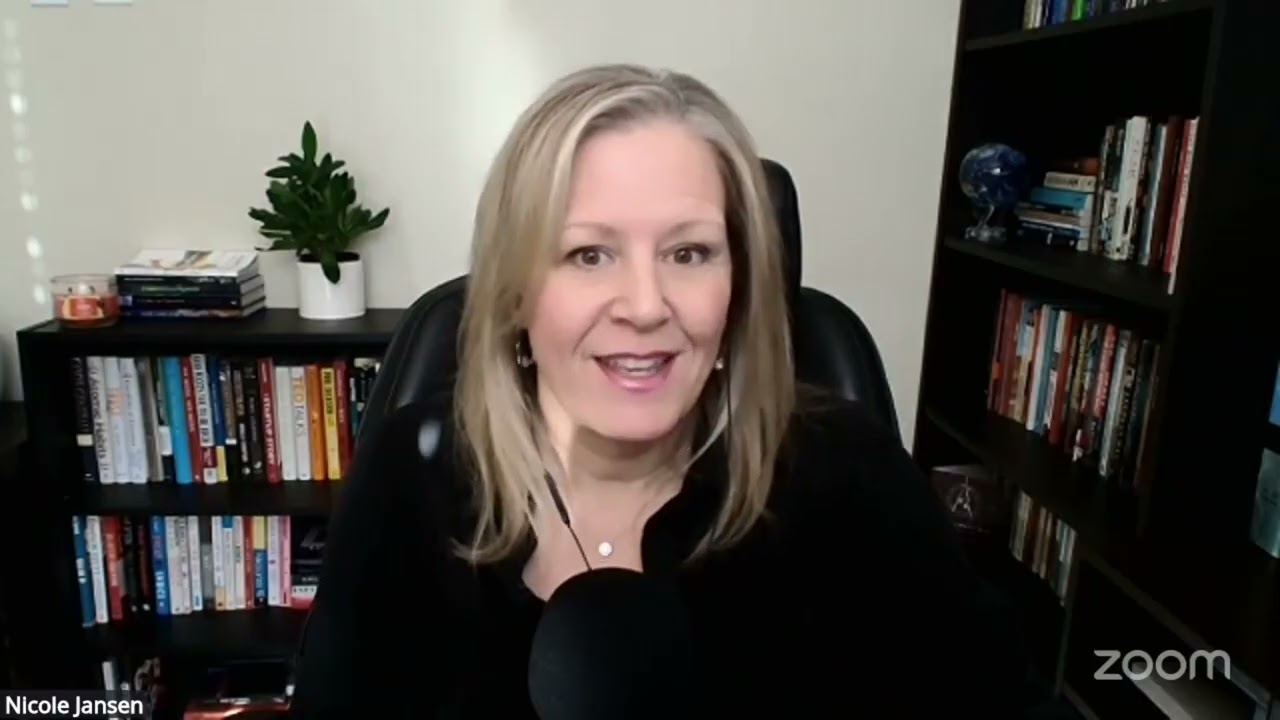
This content was created by Markus Neukom. This content was uploaded by Markus Neukom. This is a YouTube episode (Ep 22: “Enough Before the Noise Began — A Conversation with Nicole Jansen”) published December 17, 2025. It’s a recorded interview-style conversation between host Markus Neukom and guest Nicole Jansen (business advisor, executive coach, speaker and podcast host). The discussion focuses on stillness and coherence, leadership and legacy, identity and “original design,” trusting oneself, how external programming obscures core self, and practical implications for leaders (doing less, aligning motivations, calendaring and priorities).
Chapters
Welcome to Remembering the Forgotten, a space where leaders think out loud without polish or performance. No scripts, no personas, just the quiet clarity that emerges when the noise drops and the mind is free to speak for itself. And today I'm joined by Nicole Jansen, business advisor, executive coach, speaker, and host of the Leaders of Transformation podcast. Nicole has spent more than 3 decades working alongside high-achieving entrepreneurs and visionary leaders who have outgrown the version of success that once drove them. Her work lives at the intersection of scale, integrity, and purpose, helping leaders expand their businesses without abandoning what actually matters. What distinguishes Nicole is her refusal to separate performance from character. She doesn't coach growth in isolation. She invites leaders to examine how they lead, why they lead, and what their success is ultimately in service of. In a landscape where power is often mistaken for leadership, Nicole consistently brings the conversation back to responsibility. Legacy and the Human Cost of Misalignment. With this, welcome Nicole to the show.
Thank you, Markus. Wow, now that is an introduction. So thank you so much for that. What a blessing. And I just— as you were articulating that, I was like, yeah, that's it, that's it. And so thank you.
Isn't it amazing to get yourself mirrored in a totally different way than it usually happens? Because I believe it literally summarizes you up in terms of how I got to know you, what you represent. It's beautiful.
Yeah, thank you. Yeah, I, I did not write that, so that is all you.
No, you did not.
And it was just— it is, it is beautiful. And I think that That does speak. It's encouraging. You know, it's encouraging to know that that's how, uh, you perceived me from our conversations and what you saw and so forth. And I was like, wow. Yeah. Anyway, you blessed me already. We haven't even gotten started. Thank you. So,
Nicole, before we begin, when I use the word coherence, I mean a state where nothing inside me is pulling in a different direction. Body, thoughts, emotions, and actions are aligned, and I'm not being driven by fear or urgency. And when I speak of stillness, I don't mean peace or quiet. I mean the place in you untouched by pressure, noise, or performance. The place that knows before the mind thinks. That's the layer I'm inviting us to meet from today. Beautiful. With that, Nicole, where in your life do you meet the you untouched by expectation?
Hmm, so yesterday I had no meetings, And I spent the day actually going through my journal. So I have a, I have a journal that is like a consolidated version of all of the promises. I call it like a promise journal. It's all the promises. It's a— I'm a faith-based person. And, and so for, for years, I've Mm-hmm. I hear, you know, when you hear like you feel like God is speaking to you and he's speaking right into your heart, right into the situation. And so I have taken all my journals and have compiled them into one book so that I can review, like, you know, because in the journal, you know, you, you write different things, ideas, business stuff as well. And so I, I extracted it all. And so yesterday I was writing in the journal, the— this journal, what I, um, what I had written this year. So like from June to today. And so in answer to your question, that's where in the reflection time, in that contemplation of not being in the busy and the, you know, the activities of the day, when I can just get quiet and still. In terms of like what you said, it's not silence, but it's, it's like a, um, it's a, it's a, yeah, going inward and being introspective. And really, for me, it's communing with God. You know, that's the time when I really feel like I am who I am meant to be, you know. Yeah. And then from there, from that point of, of connection, of true connection and intimacy with a higher power, with all of creation, then from there, that's where I create and step into the other parts of my world, right? Going and coaching today and doing all the other things that I do, but it's from that place. And I think a lot of leaders, you know, they struggle with what to do next and what to do more of. And I've had clients that have come to me, new clients, and they'll say like, what do I need to do more of? I need somebody to just help me to kind of decide what I need to do and when to do it and how to get it all accomplished. And, and even in that question, it, it's interesting because I'll be like, well, the fact that you're asking me what you need to do more of probably means what you need to be asking yourself is, what do I need to be doing less of? I was talking to a client recently and a new, a new client that I just started working with. And I started talking to her about this idea of less is more. You can actually work less and accomplish far more. And when you try to— you mentioned the word striving— we're not striving, right? It's like when you're striving, you're, you're experiencing that law of diminishing return. And so, and I, and I know this well because I did it for years. Mm-hmm. My My parents were hard workers. They worked 7 days a week. We didn't take vacations, all that. But at some point, I realized that that wasn't getting me to where I wanted to be. I realized my body was shutting down. I was disconnected. I wasn't really enjoying life. The operative word in there is joy. I wasn't enjoying life. I wasn't enjoying the process. It was work. It was a task. And at one point, I remember getting up one morning and thinking, oh, I've got all these meetings. I got to do this. I got to do that. And all of a sudden, it occurred to me that I scheduled my day. I chose to do those things. And if I don't like it, I can change it. Or I can look at my day and say, I get to do that. I get to meet with Markus today. I get to meet with my clients. I get to do the things. That, you know, that I've got ahead of me. So I don't know, that's a long answer to a short question, but that's kind of how I see myself.
It's a deep question.
Yeah, yeah,
yeah, absolutely. You see, it's so interesting, um, you mentioned that for you stillness is not void of action, because for many people they kind of have a misconception of stillness. For them, it's like meditating, going into nothing. And I believe stillness is the exact opposite, because what you just described basically beautifully symbolizes what I could certainly see as stillness, is when you tap into your original design. It's so interesting. Sometimes people tell me, look, Stillness is for me life that happens next to everything else. And I said, hmm, what if it will be actually the opposite in the first place?
Yeah.
So work will be everything that happens during stillness. And what if actually life became everything because it is based in stillness? You know,
this is that movie that— you know that movie The Peaceful Warrior? Have you ever seen that movie?
I read the book.
Okay, so Nick Nolte is in the movie, and what is it, Dan Millman I think was his name, right?
Yes.
And
yeah,
and he's in this park, he's in this park with him, and he says, look around, what do you see? And he's like, I don't see anything, right? He's a kid, he's looking around, he's like, I don't know, it's just a bunch of people. And he— I think it's like he touches his forehead or something, and he's— and all of a sudden he can see everything slows down. And he says, there's never nothing going on. And such a profound moment where all of a sudden, like, the drop of the, the water droplet off the leaf and the couple kissing and all of the— like, everything slowed down. And that's presence with all of creation. And so to your— when you said about stillness of being like that emptiness of, you know, for some people— sorry, there's like a, there's a, uh, sunbeam that's coming through the window here. I'm like trying to dodge it. Um, but it's like there's never nothing going on. It's just, it's being present to it. And it's like being the calm. If you will, in the midst of the storm. There could be a lot of crazy things going on, or, you know, and busyness and activity and all the things out there. The key is, can we be still in here? Can we be present in here? And then the next right action flows out of that. And it's like, you know, you just know what to do. You know how to respond. You said it so eloquently, I won't try to repeat it. But the idea of that knowing, of like just knowing before your mind kicks in, that your heart knows. And I don't think we trust ourselves. And well, you know, and that's something that I've been working on, like, it's just not working on, but like, really seeking and studying, like, what does it mean to trust? To truly trust, trust God, but to trust yourself. Most of us don't trust our decisions. Maybe we've made—
Why do you think that is, Nicole?
Um, why do I think that is? I think because we've made decisions that didn't go the way that we— the, the outcome wasn't what we wanted it to be. And so therefore, we think we made the wrong decision, maybe poor decisions. We did things that there was consequences we didn't like, rather than realizing that it was all part of life. How many people have regrets? And, you know, they have regrets of life. Oh, I shouldn't have done this. If I had done this, it would have— my life would have gone a different way. If I would have married that person, if I wouldn't have taken that job, but I would have taken— I would have gone and done this. And so we start to question ourselves.
You know, it's interesting. Before you mentioned the things we do, we do not trust what we're doing. You actually said almost we don't trust ourselves. And I believe the deeper question for me is, why do we not trust ourselves? And the answer is pretty simple. Would you trust someone you don't know?
Good point. Yeah, that's true.
Right.
And most people, we don't know each— we don't know ourselves. That's actually the journey of life, is to figure out— it's not to become something else or somebody else.
You know, if you think about that,
yeah,
if you think about— we, we are both no spring chickens anymore, right? We are not 20. And we can literally say, gosh, at our age, how can you say, Markus, that I do not know myself? So what is it then I believe it is me? This programming from society. And that, I believe, is the deepest recognition someone has to make before it gets better. Because when we look at where does our self-concept come from, it's not from ourselves. It's from outside. Right. And unless we start questioning that, unless we start questioning our values, our desires, I believe we will never get close to who we really are. And you see why I coined the term stillness in a way I did, Nicole, is because I realized that through the 20 years of what I was doing, I wasn't really giving counsel. I wasn't really coaching. I wasn't really consulting either. But what I've been doing is I gave my clients a sacred, safe space where they were able to meet themselves. And I know you resonate very much with that. Because, you know, when I first realized that, I realized, gosh, they come to the conversation in their heads. with their minds, and everything is programming up here. Basically, the thing that should be an assistant has become the driver. And that's not so good.
Yeah.
That is not so good. For everyone who hears me saying it, it's not so good if this one here that should be the assistant and maybe the advisor becomes the driver of the journey. And that's why you feel how you feel. So what happens then is with stillness is a coherence between your brain and your heart takes place. And that's where most emotional intelligence people or spiritual people leave it. I don't believe it's actually it, because that coherence opens a path to what some people call soul, some people call God, some people call it, it's my inner self. And I believe if we don't go that extra step, we've never experienced stillness in the actual form. Because think about it, we talked about trust, right? And for trust, you need to know yourself. Yeah. Do you remember a time where you almost unequivocally trusted yourself, you probably have to go quite far back. It's childhood.
Yeah.
It's childhood before all the programming and everything started from outside. And interesting enough, was probably then when the surrounding realized Nicole can think. Nicole can speak, and now we have to kind of prepare her mind for what the world is going to expect from her. You might have heard me say that stillness for me is remembering what the world taught you you had to forget.
Right.
This is deep.
That's actually the— it's interesting you're describing it that way. That's the journey that I have been on over the last 10 to 12 years, specifically going back to remember who I was and literally going back to when— who was I before all the opinions, before all the expectations, before all of that? Who was I? And I was— and I went back further and further to that point where it's like when everything was easy, it was effortless. I just did it because it was just like— because that's what I did. I didn't overthink it. Okay. I just did it. I liked to run, so I started running even before I got to grade school. I was running every afternoon before dinner. And then in school, I was just interested in sports. I was interested in music. School was easy. Everything was easy. It was an ease and grace to it. And at some point, it was gradual, but then there was like defining moments where it changed. And I can go back to those times where I, uh, there was wounding, there was expectation, like I said, there was, you can't do this, or whatever the case is. And so this journey over the last 10, 12 years, um, that I had with this, like, a, a huge— like, that was a significant time of self-discovery, reflection through a difficult season in my life, brought all that up. And it was like time to face this. And it's interesting because now I actually trust myself, and I trust the word. I trust what I hear. I trust it. And I didn't always do that. In fact, I had a mentor back in— was it 2008? And he said to me, Nicole, you don't trust yourself. You got to trust yourself more. And I went, what are you talking about? Like, I trust myself. Don't you know what I've accomplished, right? Is what I wanted to say. You know, I was like, don't you know? Like, look at how driven and focused I am and on You know, but he was right. He was right. I didn't trust myself, and he saw it.
You actually can even go a step further, and that is, that is becoming challenging for certain people to hear. Getting to know yourself, you know, basically it's the saying, know thyself, right? But the know thyself is not Study your curriculum vitae, study your biography. It is literally going to what I call the original design. Because some people say, okay, so now I'm at that 5-year-old child again. Yeah. Now you take whatever was there, combine it with everything that was your journey until, in my case, 53. And that combination is what it's all about in life.
But you're not your vocation. You're not what you do and what you've accomplished. I'm 53 as well. We're the same age.
Yeah.
And, and so all of that, like, we talk about identity, talk a lot. I use a model, like, it's a results model. And I learned it initially from a mentor and then kind of built on top of it as I was unpacking it. Really, does this— is this true? Is this true? Is this, is this infallible, if you, if you will? And does it, is it, does it make sense? Principally, does it work? And its results come from behaviors and actions. Behaviors and actions are influenced by our mindset.
Uh-huh.
Our mindset is made up of various things, right? And one of which is, uh, our beliefs, our beliefs about ourselves, the world, other people, all that. And then, like you said, the self-concept, which is the— and even like the, the container, right? So I use this example of a plant, and you want to grow a, a big beautiful plant. My plant back there has been the same size As it was last year because it's in a container that allows it to only grow so big. If I want it to grow bigger, I've got to put it in a bigger pot or go plant it outside. And so at the core, you know, a lot of, a lot of us— I know that I can speak from my own journey, right? Behaviors and actions. What do I need to do more of so I can get better results in life. And then you go to mindset up here and you think through, okay, positive mental attitude. I gotta think the right things. I gotta do the affirmations. I gotta do all these things. Yeah. And people come and they got all these things that they need to do to be able to basically outrun the negativity or the critic or the doubter or all of the— they're trying to outrun that. But underneath that is identity. It's who are you at the core? There's nature and there's nurture, right? There's— but what you're talking about is like, when I went back to my childhood and I looked at who was I, what was I curious about, but like, what was my being? So this is like be, do, have, right? It's like, what was I? Who was I being in that? That the fruitfulness was ease and grace, joy, playfulness, curiosity.
Okay.
And, and so our identity, we, we learn to get our identity from our accomplishments, from the things that we have, our, our material things, the accolades. I came up with these like 7 A's, you know, like the accomplishments, the accolades, the associations. part of this association. That association is, for some people, it's their attractiveness, it's their visible— visible how they look, you know, they're, they're, um, you know, different things. And one of the things actually we also get our identity from is adversity. For a while, I, I, I, I was going through a lot of difficult things, and I've gone through difficult things in my life, and I realized in this reflection time of going and just really connecting with who I am And being present is that I realized my identity was coming from the adversity that I had been through. If you knew that what I was going through, if you knew what I've— how many times have we heard somebody say that? You don't understand. You don't know my story. If you knew my story, you'd understand. Well, I might understand, yes, because we are product of our environment. We are a product of our story, if you will. But that doesn't mean we have to stay there. We can heal and we can release. What do we need to release? What are we invited in to release so that we can actually receive something? And even going, like we said, going back to in the beginning. So even biblically, you know, it says in the beginning.
Mm-hmm.
before the quote-unquote fall, even if you think it's a parable or story or whatever. The idea is that like in the beginning, this couple is walking in the cool of the day. They're walking and they have no shame. They're naked and unashamed.
Okay.
And then they try to be God. Then they try to be independent. They want to know. They want to know more. Somebody's keeping a secret from me. I want to know. Yeah.
And
now they feel— they— now that all of a sudden their eyes are open, they feel shame, they feel guilt, they feel all the things. It's interesting when you think about it. It's like, so going back before that, before the— as one of my friends would call the Uninterrupted self.
So there's something which I would like to look at with you about that. People say, or some people say, that when you're born, you forget absolutely who you are. And I personally believe it's not the case. I believe we know absolutely who we are.
Yeah.
And we come with little seeds of all the executive functions available already, and all it takes is the right nurturing. Yesterday I described it to a friend like this: as soon as the world realizes you are waking up, that's dangerous, that has to be stopped, because now Nicole starts fantasizing, now she starts thinking bigger of herself than the It will be good for her, right? All that BS. And now the world comes with huge trucks, you know, like the one in the US with the huge loaders, and they just pour all the dirt on you and basically bury these little seeds. If you're fortunate enough, those seeds still sprout and start growing. But if so much dirt has come on it, so basically our journey is about— what is it called? Like if you have this big pile of dirt and you dig yourself through it on something, unearthing basically. So what's interesting is even the identity part. is only part of that dirt. Because if you look at Adam and Eve, basically what they suffered, if we take the story, what they suffered from was the price they paid for awareness. And I believe it was a pseudo-awareness.
Yeah.
Because they did not really see who they were. They saw what the environment was.
Because they already had everything.
That's exactly it. That's exactly it. So now if you think about if stillness is literally the path to unearth whatever had been put under earth, whatever you want to call it, under dirt. So you actually find out what your true essence is. which I call the return to original design. I believe that's where real peace is. And interestingly enough, I can just speak from my own experience. You do not have to ask anymore, what am I? Who am I? What am I to do? When stillness really becomes the foundation, the rest almost becomes superfluous.
Hmm.
But because we have buried our foundation, we started building old stuff and call it life and call it identity, call it ourselves. And, you know, this is one of the reasons why I started this show, because now imagine in the end, I plan to have 2 episodes a week. So that's 104 episodes a year. So now picture this, Nicole, 104 different views coming together. We probably get a pretty clear picture of what stainless really is all about and how to get there. Mm-hmm. So understanding where you're coming from is how far down do you go in your own work in terms of showing people, look, Identity, it is still something that's not really you. It's still something you have assigned. So I'm curious, how far, how more deeper did you go from there?
Yeah, I mean, when I think about identity, I think about it being the core of who you are. So that's when I say about identity, it's everything is is it's like even structurally, right, when you think about something has an identity at the core, it's what they were designed for, you know, um, designed for to be, right? To as designed as maybe so for can, can apply for people thinking, oh, it's to do something. Not necessarily. It's, it's like this journal, right? It, it, it— Okay. I can make it into something else. I can make it into a paperweight. It makes a great paperweight. That wasn't its original design, right? So it's coming— it's— so what I do is, is it's funny because people will come to me and they'll be like, I want to grow my business, I want to, you know, improve our team performance, I want to improve workflow, and, you know, all of these things. And It's kind of like I'll give them what they, what they're, what they want, but also what they need. So we go, okay, so we'll do that. Yeah. First question, like right now, and now we start to get to the core of who they are. Who are you and why are you even in this business? Why, why did you choose this business? A few weeks ago I was on a on a call. Somebody had asked me to participate in this call, and it was like a mindset call. And I asked somebody who actually was on the call as well, an old friend— I've known him for a long time— and he happened to share that when he was a kid, he wanted to be an astronaut.
Okay.
And I said to him, I said, so most people think like, okay, you know, astronaut, and they try to like What happened, right? Where— why are you not an astronaut today? Kind of
thing.
I just asked him, I said, why did you want to become an astronaut?
Mm-hmm.
And it was interesting, the conversation we had. But there was somebody else on the call that was listening, and she was in her 60s. Um, I think she had just turned 60. And she says, I'm 60 years old, and, you know, I've never asked myself that question. Why did I choose that at— when I was young and I was curious about this and I wanted to do this? Why, right? And was that even the false awareness, or was that the true awareness? And so in answer to your question, it's going to the core. I mean, we're spiritual beings having a human experience.
Mm-hmm.
And so it's like going to that core as far as someone is willing to go. Not everybody is. Not everybody's ready.
Absolutely. Absolutely.
Yeah. To go to as far, you know, as to the core as they're able to. And it's like, I see it like onions, layers of the onion, you know, where they're peeling it back and they go, oh, wow. And then it's like, see how much further, right? To go further into. And that's where, like I say, for myself, It's been a process of removing those layers. Why do I— why do I see myself that— is that me? Is that really who I am? Or is that because of the family I grew
up in?
Is that because of something that's learned? And you start to ask yourself those questions. And you go deeper and dig deeper and deeper until you get to literally the essence of who you are. And it's, it's like, I find that it's the things. So for me, like, even helping people to find their giftings, their strength, right, of like, just how they think, their uniqueness. Right. So for me, for example, um, I was, I was, I was just, uh, I was always in my mind and just curious about them. What I told you about, like, sports and Music and everything was— there was just a flow to it. But I was also— I'd organize, I'd reorganize my room all the time. Like, I was 6, 7 years old, and I'm— here I am reorganizing furniture in my room to optimize it. Nobody had to teach me how to do that.
Yeah.
My mother was German, so everything was clean and neat and so forth, but she wasn't reorganizing furniture. You know, and so it's like I started asking myself the question, where did that come from?
Right.
What prompted me to do that? And then I see that the lens through which I, I look, it's like I'm— I've always done that maximizer, maximizing space, maximizing time, maximize, you know. And so I sort of realize how I then play that out in the rest. So When I, um, so I don't want to leave people there. And I think you were talking about that earlier. It's like, it's not just getting there, but it's, it's like, okay, what, what do we do with that?
I think that—
Now that you can, now that you know yourself, like, okay, and you've gotten to know yourself, maybe it's going to be layers. I think we're always rediscovering, you know, and going deeper into that. It's a journey. Um, and a lifelong journey. But then it's like, okay, so this is who you are, then how does that look? How does your business align with that? How do your relationships— how does the way that you're being and showing up align with this? So that they can live it out. So it's like the flourishing, the fruitfulness you talked about being, you know, something being uncovered and growing. Yeah. underneath the ground, right? It's like, okay, so how do you, how do you create a new environment where those seeds can flourish and that you can, as, uh, Dan Sullivan talks, calls the unique ability, but it's, it's like where that uniqueness, I believe it's the value that you bring to the world. We all bring like a, a, we all have our own seed. We all have our uniqueness that we bring to the world. The value that we bring to the world, the, the impact, the, the things that we can, you know, we can do because of who we are. And we are not like anybody else. There's not two— there's no two people that are exactly alike. Because like you said, now you add the experiences and the skills and all the things, and
Mm-hmm.
now you can lay it back on, on there. Some, maybe not all. Right. But you can, you can now go, okay, right.
That's exactly it. You know, when I went on this journey, the last passage I had, I literally asked, has all the executive coaching and business consulting experience been for naught? Because it was suddenly very clear I am not a business consultant and I'm not an executive coach anymore because it's all about people who ask, is this it? Or is there more to life? And then the universe gave me a beautiful answer, Nicole. It said, no, no, no, this is absolutely— but first you needed to unearth everything to get to the real core, which is the you, which is stillness, which is coherence. And on that, you can start building and utilizing whatever you want again. Because I believe it is really interesting. And I like your answer. You're basically going from executive coaching, give them what they want, and then you give them what they need in regards to their readiness. Because they didn't come to you with the question, the existential question, Is this it or is there more to life? They come to you and say, look, I want more efficiency, more effectiveness. I want smoother operations. And you know what's interesting? And this is something I realized on the first call when we were on together. We are very similar. We have this almost like technician approach. And I believe it is actually a core executive function of yours. having order. I don't think it's anything that came from outside. That was something which was just for you.
Hmm.
Like, I have it, for example, when I'm working a lot on my dad, I suddenly shift the pillow. I sometimes have 3 pillows. I sometimes shift the second pillow just slightly, and I'm absolutely comfortable. So where does that come from? It's not OCD. It is literally our inner driver for order.
Mm-hmm.
Which is, which is hugely fascinating. So here's another question for you I have. When you are in stillness, when you are in that peace, when you are connected with God, with the source, what most pulls you out of yourself? And what lets you return?
What pulls me out, what most pulls me out is, um, what most pulls me out is distractions. It's the, it's the activities and the responsibilities Things that, that are good things, but that can actually, um, be— it's like anything can be used as a tool or a weapon. It's kind of like that idea is it can be a blessing. It can also, you know, it can, it can draw you closer. It can help you to be the— what all that you're created to be, but it can also pull you away. Is that, uh, responsibility? It's, it's, uh, so like— I'm in that space, and then somebody calls and is like going through a tragedy,
and
I'm there present with them. It's— but now I'm serving, right? I mean, I'm serving, I'm supporting them. I'm doing it from that place, but it's, but it's shifted. Something's taken, you know, it's shifted now, right? Mm-hmm. So, um, sometimes that, but it's, it's, yeah, it's the outward activity. And so that's where I'm, I've learned and I'm still learning to, um, for that coherence, like you talked about, the congruence, one of my favorite words. It's like this idea of being like alignment and being congruent so that I'm, that I take. And I think you said it earlier. I operate from that place. Like I said, the calm in the midst of the storm. It's like, so I maintain that even when I'm out, you know, out and about doing the things. For me, because I'm such an action taker, because I'm a doer by nature, like I just move and even like the running, right? Like I just, you know, started running and jogging. And I think part of that was just To get quiet because my dad talked a lot, my brother talked a lot, and it was just the quiet, you know, just the peace and quiet. I could go and and then be like, I would do that before dinner. And I think think back why did I do it before dinner? Because at dinner it was just like do do do like this. So I would do that.
You calibrated yourself.
I calibrated myself innately. My parents didn't; they weren't athletic. You know, my brother later on played football, but I wasn't— it wasn't like I learned it from them or followed in their footsteps. So it's action. When I get into action, I, I'm— I have this inclination to disconnect and going into doing. So that's where, for me, it's, it's been about learning how to, to integrate those. Where I can be in action and still be me, right? And still stay in that stillness, still stay in that space where I'm not going into performance.
That's what it should be, right?
Yeah.
That basically doing something good, as you said, like serving someone who is in distress, should not pull us out of ourselves. I think for everyone who listens and views, the question itself should trigger quite some more questions. So it's interesting. So I have one more question.
There is a lot to that in terms of like, why? And I've asked myself that question, why do I serve? We talk about servant leadership a lot. in the executive coaching world. And, you know, it's a— do you serve because of how it makes you feel and look, appear to others? Does it make you feel better about yourself if you can help somebody else? Or do you serve because you want to serve out of love? And I have a question on my on my board, and I just challenging the, the quality of our questions determines the quality of our life, you know. And so one of the questions is challenging myself is, am I doing this out of fear or love? Am I doing this from a place of striving? Or am I doing this from a place of love? Am I doing this from a place of joy, of pleasure, of doing it because I— am I being generous because I want, like, my heart, I just want to give? Or am I doing it out of obligation? You know, I do a lot of things to help in different areas. And so I've challenged myself and saying, again, another question, right, of going deeper and saying like, Am I doing that for the right reasons, basically?
Which actually brings us to an interesting conclusion. Doing the right thing from a wrong motivation does take us out of ourselves. Yes. Which brings me to an even deeper one. There are many things we're doing we should not be doing.
Yeah.
This is really interesting if you think about it, because I really believe in your case, you feel and you sense what's coming from that core. And then serving someone in a very distressful situation does not take you out of yourself. But in other situations it does, which is, it's quite deep. It's quite deep if you think about it.
And this is where I think you and I were talking about this, of really looking at, we go into a new year and people set New Year's resolutions and things, or some people go, I don't set New Year's resolutions, I set goals and objectives. Okay, whatever it is, right? We have this, uh, we have some goals, we have things that we, we're working towards. And a lot of times it is, again, going back to those behaviors and actions, it is focused on what do I need to do more of. And I have actually been prompted to, over the last few years and especially over this past even several months, Is to, is to question why I'm doing that thing or that thing. Is that necessary in my calendar? I do this on like a routine basis where I'll go through my calendar and go, why are these meetings— like, what's the purpose of this, right? And it's a really interesting question. But even like my podcast, 550 episodes. Wow. It's like, what am I doing? And I, I regularly— I, I call it like the Ecclesiastes moment. I don't know if you know anything about the Bible. There's the— and he's talking about like everything is meaningless, you know, like what the heck is this all about? I've tried everything. I've tried wealth, I've tried power, I've tried pleasure, and, and I came to the point of like everything is vanity, essentially, without God, without a relationship with God.
Yeah.
What we're talking about here is that essence of just being who you really are truly meant to be. And so, uh, you know, it's, it's asking myself, like, are we, are we moving the needle? Are we— what, what am I doing this podcast for? And my next question is, is it moving the needle? Like, is it making the impact that I intended to make with it?
Mm-hmm.
And if not, what needs to change? In me, because that's where it starts, right? And so it's going through everything in our schedule, everything in our to-do lists. How many times I've had people coming to me and they've got lists and lists of things to do, and it's like, okay, cut, cut it in half.
Mm-hmm.
Cut it in half. Now cut it in half again. And it— and they go. And that in itself isn't— can be very eye-opening. Doesn't necessarily guarantee they're going to get to the core of themselves. That's a different— but it's like the idea of really just what is most important.
Yeah.
But what we're talking about here is foundation. If you don't have the right foundation, and if I'm seeing the world through this lens in this lens is, or from this truth, and that's not really the truth. Uh, we were talking about this idea. I had this vision of like people, you know, so many of us have been flying an airplane and we're flying upside down and we don't know it. Like airplanes, you know, like they have these dashboards because the gauges, because the pilot needs the gauges to show them where they are at in the midst of this big blue sky. And if they don't have it, they can easily be flying upside down. And that's why, you know, it's like so many of us have been flying upside down and we don't know it.
Mm-hmm.
Because we don't— we've lost sight of the gauges.
It's a great metaphor. And you mentioned something before, fear. I believe most people are operated and motivated and driven by fear. And I believe that's what leads us into doing stuff we should not be doing.
Yes.
Because, you know, disappointment, that's, that's another word. I think we, we could talk like 3 or 4 hours on this episode, but basically what it comes down to is fear makes us want to do stuff which is not ultimately ideal for us. And when these things don't happen, we become this appointed. So we suddenly realize, gosh, the value I appointed to that thing got literally dissolved. So when I was teaching, I always said to my students, look, in the end, it's the moment you realize it wasn't the right thing that hurts, that sucks. It's not the thing you didn't get. It's the moment where you realize, gosh, I have appointed a meaning to something that wasn't ideal. And I believe if someone gets to that point that we are literally fear-driven, fear holds us back, fear prevents us from moving into a direction, fear prevents us from pursuing a direction which we knew would be right. And in the end, it all comes down to, oh, it's as good as it gets, right?
Well, and it's the enough conversation, is asking the question like, am I enough? Proving that we're enough. Even very highly successful people.
Oh, absolutely.
Who are driven by the need to prove themselves. They're actually outrunning— I call it the primary lie that we learn as a child— that we're not enough. I'm not smart enough. I'm not lovable enough. I'm not good enough to be loved. I'm not worthy. I'm not fast enough, tall enough, whatever.
Think about it.
What's that?
It's totally nuts if you think about it.
It's crazy. But you think we all have that. I've coached, as you have, I'm sure, thousands of people. And when you look at it, it's always comes back to a primary lie of not enoughness. You use whatever language.
I don't deserve it.
Unimportant, whatever. And so out of that lie, that false identity that I'm not enough— well, if I believe I'm not enough, well, then I'm not going to allow myself to be everything that I'm created to be because that's not enough. I've got to add something. It's kind of like I said, the Adam and Eve. It's like it's not enough that I have— like, look around, I already have, right? But it's not enough. It's that lie. Out of that false identity, then I live my life from a false premise. I'm never going to be satisfied because it's never going to be enough.
Yeah.
And so it's like, how much money is enough? How many— how much accolades is enough? How much love is enough? In fact, if I don't believe that I'm enough, I can't actually receive and experience love.
Right.
And acknowledgement from others. And so it comes down to that, helping people to realize that they're enough. A baby doesn't come into this world and need to earn love and earn their value.
Earn—
they just are. They just are. It's like they're a baby and we're like, oh my gosh, they're so cute. And they don't do anything.
Right.
In fact, all they do is, you know, if anything, they scream and they need, you know, whatever, right? But it's like, but they're enough.
Until they're told they're not anymore.
Until they— until they're told that by people or by the inner critic, right? See that? You're not enough, you know. And you could grow up in a very functional, healthy family and—
Oh yeah, absolutely.
And still get that because it's the meaning that you give it.
Yeah. And, you know, this is what I always said to my friends and my clients. It didn't take long until you have developed your inner critic and the critical voices were not even necessary anymore. It's the automation of the programming, which is so— Yeah.
TV and everything, you get it. It's like, yeah, you You pick it up and then you take it on and you think it's you, really. Even that critic, it's like you think it's you. I'm really hard on myself. I've got— it's like, actually, to differentiate between the two.
Yeah. If you think about it, and this is where I go into my last questions, but think about that. When the core is love and that core is— how do you call that? You know, probably in German, zuschütten. When you take dirt and put it on something, like throw it on something. How would you call it in English? Like you have a hole and then you fill it.
Yeah.
But it's not the filling process. It's basically, let's say, paint it on, right? So if you have love as the core and you pile on all that BS, what results? Fear. Fear. And fear itself becomes a concept which we call self.
Yeah.
Think about that.
That's the false self.
It is the false self. Which brings me to my last question for you. And it's a deep one. If someone listening feels lost in the noise, what is one thing you'd want them to remember is still true?
I think that what we were just talking about, Is that they are enough. They are enough. They have always been enough, and they don't need anyone or anything to validate that. They're enough because they're enough. And that's that's that's easy to say and harder to really grasp. But essentially, that's what I, I would, I would want. Worthy, you know. And even worthiness is a, is, um, has some— we can unpack that, you know, worthy, unworthy, all of that. But enough love. You said that at the core, underneath it all, is love. Because you're love at the core of who you are. The essence of who you are is love. Love is the most powerful force in the universe. It's the creative power, is love. And when you realize that you're love, that you're enough, that's enough.
Beautiful way to end our show. Thank you so much, Nicole, for having been my guest.
Thank you, Markus.
It's been a great pleasure.
I really enjoyed it. I really enjoyed it. This— I could geek out on this stuff.
Oh, could I? Yeah, we will have a next episode.
Yeah, yeah, I look forward to it. Thank you.
So this was Remembering the Forgotten. A conversation held in clarity, not performance. If something in this exchange helped you see differently, let it stay with you. You'll find a few quiet pointers in the description below.
More from Markus







Ep 66 Breath, Trauma, and the Fear of Being Fully Seen A Conversation with Matt Ritchey

Ep 65 Truth, Trust, and the Courage to Be Seen A Conversation with Troy Gregory

