Ep 24 The Long Way Home A Conversation with Ken Sobaski
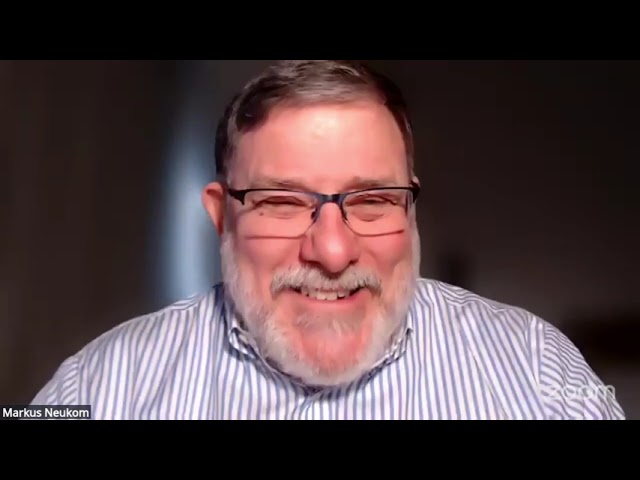
In this unscripted interview, host Markus Neukom talks with recently retired executive Ken Zawadzki about the inner life of a leader after decades of responsibility. They explore how early mentors—Ken’s grandmother ("Nanny"), a local butcher, and later managers—instilled a sense of stillness and coherence that guided his decisions. Ken recounts his winding educational path, multiple industry shifts, and the pivotal move from a large consumer‑goods firm to a mission‑driven powersports company, illustrating how stepping off a prescribed script can unlock purpose. The conversation delves into leadership practices such as creating organizational alignment, listening before speaking, and using personal accountability tools like a "Who Am I" presentation. Ken shares his personal development rituals—daily Transcendental Meditation, learning Tai Chi, and structured retirement‑planning experiments (the "mattress" metaphor)—and how these practices sustain clarity in later life. The dialogue culminates in advice for listeners: engage the senses, practice humility, and seek first to understand before being understood, echoing Covey’s habits. Throughout, the tone remains reflective, candid, and appreciative, highlighting the interplay between personal stillness and effective leadership.
Chapters
Welcome to Remembering the Forgotten, a space where leaders think out loud without polish or performance. No scripts, no personas, just the quiet clarity that emerges when the noise drops and the mind is free to speak for itself. Today I'm joined by Ken Zawadzki, and to my surprise, He just recently retired. If I look back, Ken has spent decades inside the machinery of leadership, not at the edges, but at the center. He has led complex organizations across multiple industries, carried full P&L responsibility, and guided companies through growth, transition, and cultural change. This conversation isn't about numbers, titles, or career highlights. It's about what happens inside a leader after years of responsibility, how clarity is formed, how decisions are carried, and what remains when noise is stripped away. Hen brings a rare combination of lived executive experience and reflective depth. He has seen how vision becomes execution, how culture either supports or fractures leadership, and how presence matters when outcomes are real. With that, Ken, welcome to the show.
Markus, thank you so much. I really am glad to be here, and I so appreciate the invitation in the first place. So thank you.
It's my pleasure. Thank you for taking the time. So before we begin, when I say coherence, I'm pointing to a state where nothing inside is at odds. Body, thoughts, emotions, and action move as one. There's no push, no urgency, no fear driving the moment. And when I say stillness, I don't mean silence. I mean the part of you untouched by expectation or performance, the place that already knows before the mind takes over. And that's where I'd like us to meet today.
Awesome. I'm ready.
Beautiful. So Ken, where in your life do you meet the you untouched by expectation?
Say that again, Markus. To meet the you and—
Where do you meet the you untouched by expectation?
Oh gosh, that was so early in my life. I mean, I, you know, those were lessons that I learned from my grandmother. I call her Nanny. You know, those were lessons I learned from my first boss, Mike the Butcher. I mean, it was about being yourself. It was about Not worrying about how you perform. It was about listening more than talking, observing more than talking. It was about, you know, treating customers like they were the ones that wrote the checks because they were the ones that wrote the checks. And so, you know, it— the kind of lessons I was getting early from life. kind of stripped away, you know, all of the let's only focus on performance. And that's coming from a person who— I played sports, I competed in sports, I played sports year-round. You know, I was a good student. I got really good grades, you know, made the honor roll all the time and all that stuff. So, you know, it was Those things were happening, but those things weren't necessarily who I was. And so, you know, I'm thankful that very early on I had people like that to give me those kind of thoughts and guide me.
That is such a beautiful thought. You know, we have a few parallels, but one parallel which I have never shared with you Is I had that nanny myself or granny myself.
Yes.
Like, I literally grew up with my grandmother who actually was mentally disabled. She was basically schizophrenic.
Okay.
Not many people in our family had access to her. And I just treated her as the most normal thing. Not even realizing that she had voices and whatever.
Sure.
But going to you, would it be possible to say that your early relationship with your grandmother actually prepared you to say in the lane who you really were? So she gave you a mirror of saying, you know, Ken, Without doing it, obviously, you were looking into that mirror and you were able to see yourself unobstructed. You were able to see yourself void of those expectations of society. And that early priming basically prepared you for the world when it started bombarding you with expectations.
I think that's true. I mean, I think that's true. And I think that it also, because of that, you still had choices and decisions and you still had changes in direction and things like that. I mean, heck, when I went to college, It took me 4 times to figure out what I want to get a degree in, but that wasn't disruptive. I mean, that wasn't— that was explorative. That was, you know, finding what felt right and fit. I mean, I'll— I don't share this with a lot of people, though most of my close friends know this. When I went to college, I was interviewed by our local newspaper because I was one of the top students in my class. What are you going to do when you go to college? And I very clearly said, I'm going to study religion and philosophy and become a Lutheran minister. My mother still has the article framed and on a wall in her house. I mean, I see it every time I go home. But I knew very shortly because I was surrounded by people who also had the same career aspiration, but they had something I didn't have. They had a calling to be that. They, they felt drawn to that. That was going to be a part of who they were. And what struck me is How in the heck do you minister to people if you don't feel that way? And so I, you know, very, very early in the second semester of my first year, I realized, no, that, that isn't who I am or what I want to do. And that could have been disruptive, but it wasn't. It was, it was just normal. It was like, okay, so what, what, let's figure it out. Let's, let's explore some things. Let's And, you know, 3 degree options later, I finally landed on where I thought was right. So, well, and what's funny— So— Where I landed is, as I mentioned, I had 2 mentors, Nanny and Mike the Butcher. I landed in economics with kind of a focus on marketing because when I started getting exposed to that, I realized that that was inherently what Mike was dealing with in running and building his business. And I felt a connection to that. I was like, okay, yeah, I understand that. I get that. I see him doing that at his level. And so I found that quote unquote calling, even though it's not like a ministerial calling, but I felt that was where I wanted to be. It's
beautiful, because especially how you call it, you know, probably it almost was a ministerial calling, but of another kind.
That's true.
You might not be surprised— That's what I use.
That's, that's what I use with my mother when she reminds me of the article that hangs on the walls. And no, Mom, I am a minister, just a different kind.
Absolutely. And you might not be surprised that sometimes I lead actually send people back into corporate jobs when they've become coaches, for example, because they want to help the world.
Yes.
They want to work with me. I want to— I should help them to become successful. And I said, to be honest, I think you misunderstood calling. Calling is not what you think it is. Calling is you going back into corporate job, do your job great and help those people Naturally, that is calling, that is ministry. And 2 people actually went back into corporate or stayed in corporate, which is beautiful. So this literally kind of cements my initial inclination I had that your granny literally set the ground for something that outside expectations was not able to destroy, not even to bother too much or to disturb, because you set your course. You had that sense of self, which if you think about, how old were you when you had those conversations with your brain?
Teens. I mean, it was junior high and high school kind of thing. Yeah, because—
So think about that.
Yeah.
How can one know themselves? So here's my question. It's interesting when you—
with what you just said, with what you— sorry for talking over your words. What— with what you just said, what struck me about this as it relates to my nanny is her lessons weren't about her giving lessons. Her lessons were about her sharing things she believed, you know, and how you should be as a person, how you should be as a man. I mean, it was not— it was sharing more than teaching.
I see that. I see that. I'm curious about something in regards to that, Ken. When you think back to before you went into those first mentoring relationships with your nanny, how was your life before in regards to expectations from other people in society?
I literally am the first one in my family to have gone on to college. Others have caught up now. And even in my extended family, there are only a handful of others that have gone on to college. And so the expectations that were set for me weren't necessarily to go be CEO of a company someday. I mean, I couldn't have told you what CEOs stood for back then. You know, but they, you know, my mom and dad echoed what Nanny was saying in the sense that, you know, what works for you, what find, you know, what it makes sense for what you want to be. Find what fits you. And it was that kind of encouragement as opposed to, I'm a doctor, you should go be a doctor. I'm a dentist, you should go be a dentist. I'm a lawyer, you should be a lawyer so you can join our law firm. And I went to school with a lot of people like that, both in undergraduate where— The school I went to had a lot of pre-med students, a lot of pre-dental students, pre-law students. I mean, and I swear to God that a good number of them— I won't come up with a percentage, but a good number of them were following in their parents' footsteps.
Yeah.
And my dad was an hourly laborer, you know, and my mom was like a bookkeeper. I mean, and she didn't even start working until she was in her 40s. I mean, and so, you know, their encouragement, much like Nanny's, was about who are you, what fits with you, what feels right, where do you feel purpose, that kind of thing.
And you know what I love? I'm curious if you actually confirmed that, Ken. What you just said, went so much deeper than vocational choice. Is that correct?
Yeah. Yeah. Now, was my mom thrilled that I said I'm going to study religion and philosophy and become a minister? Yes, she was. She was completely thrilled. Was she disappointed when I wasn't? No, she was not disappointed when I told her, no, I'm not going to do that. I'm going to look at this. I mean, she was like, okay, you'll figure it out. You'll know what's right for you.
You're so blessed, she's 93 now.
She's 93. I'm gonna see her later today. She still lives in her own home and she has lots of help. She doesn't drive but she's got children, grandchildren, great-grandchildren within 30, 45 minutes. You know, she's, she's got lots of help, and my, my sisters and sister-in-law are there for her, you know, each week. I mean, they— there's almost like a plan and a rotation for taking care of her. So yeah,
she's beautiful.
Yeah.
Wow. I can see actually where, where this is going and where it came from because One of your parents has been the child of nanny.
Yes, my mom.
Yeah, that makes sense.
Yeah.
So the nurture, that influence, I assume your dad was working quite a lot.
Yes. Yes, my dad was.
As he was just normal, right?
Yeah. And also had to go through transitions as we were growing up. His— he, you know, in the '60s, he worked for— the town we grew up in was known for its stockyards and meatpacking plants, and that's where he worked. And then those went away as, as an industry. Most of those things moved closer to where the cattle were. I mean, and so he had to find another job, another career. That took a couple of hits before he landed on the last one where he stayed in it until he was 65.
That's incredible. That means you had the blessing, I can't call it differently, Ken, to have had your nanny who had her daughter who was your mom, who basically raised you in the same sense that she's been raised by her mother.
I think so. Do you see
the
rarity of that? I think all of us, I mean, I have 5 brothers and sisters. I'm a twin and my twin sister and I are the oldest in the family, but we all had that kind of upbringing. In the same, I think my nanny was very much the matriarch Of the family. My mom was the matriarch of our family. She was, what do they say, large and in charge, kind of thing. But that's fine. She saw that in her mom and just modeled what she saw.
I was just curious, without going too much into details, your siblings, Have they taken what they basically have been given in their early childhood in a similar way like you?
I think in a similar way in that each followed and found what made sense for them. I mean, and so If you— and one could say that for them, they probably found it quicker and stuck to it longer than I did. I mean, if you look at my career, I mean, I've had— I've worked for multiple companies across multiple industries in multiple cities, right? I mean, which—
I mean that.
Well, somewhat normal in the world of a business person. Not normal otherwise, but you know. It's to your conversation and asking about my siblings.
It was beautiful that you're back because, you know, power outages can just happen. You were actually saying that Your siblings went there faster, more consistent. And then you shared about the parallel of you having gone through what is normal in business, many different companies, many different cities. And that's when you got cut off.
Got it.
Basically, my question was whether your siblings' upbringing and your upbringing brought you all to a kind of a similar path.
Yes, but with a difference. I mean, in— so each of my siblings were in their chosen profession for a very long period of time and were very settled And it was them. It made sense. It fit them.
Mm-hmm.
I mean, and even my twin sister who took what she was doing as part of a large insurance company and started doing it as a consultant for other organizations, she was doing the same thing. What she was doing made sense. And that became her vocation, her avocation for the last majority of her life kind of thing. And I could say the same. One of my younger brothers was in the Air Force and he was committed to that. His wife was in the Air Force. Okay. My other younger brother was, you know, committed to a trade and was in that his whole time. And it was a part of him and who he was. Both of my sisters, you know, had kind of administrative careers in education, but both were in their organizations, you know, one in a high school, in a school district, the other one in a university for a long time. So they found their way to what fit them and what they liked and were able to stay in them for a long time. So I think when you— if you think about the lesson being understand who you are, know who you are, and find what fits who you are, that all of us were able to do that. For me, That was running a company that was leading people. And in the environment I was in, it was normal to do that across multiple industries, multiple kinds of companies. I think that, you know, hindsight's 20/20 thing. I'm glad I spent the first 21 years of my career in large Fortune 500 consumer product food type companies, you know, the Krafts, the General Mills of the world kind of thing. I'm even more glad that I spent the rest of my career in smaller purpose-driven companies, mission-driven companies. And if anything, wish I would have made that move sooner. But I probably— Sometimes— My wishes are probably not correct because it probably took that 21 years of foundational learning and experience to prepare me for the last 25 years of the size and kind of companies that I've worked at. But I mean, if I had anything to— besides, I mean, besides, if you have the opportunity to have a mentor, get one. I mean, that would be my advice to somebody, to me, you know, 45 years ago. The other advice I'd have is, you know, have the opportunity to work in a mission-driven, purpose-driven company because that clarity of mission so successfully aligns the organization and makes you feel like You are part of something. And I think that increases the level of satisfaction that you have to the extent you can help your employees and your other leaders understand that. You can then have an incredibly engaged and high level of satisfaction throughout your workforce. And that's magic when you have it.
Because let's be honest, If you look at all those surveys, what it really shows is lack of engagement, lack of involvement is the number one reason why someone leaves a great company.
Yeah.
Which is crazy, really.
Yeah, it really is.
If you think about that. So the next question, Ken, is something which I'm not even sure if it applies to you. But I give it to you in the exact sentence as if it would apply. I'm curious. What, what was a moment in your life when you realized you were living from someone else's script? And what cracked it open?
Hmm. You know, there are— I mean, that's the way you learn. I mean, and so there's probably lots of them. But I think the one, when I reflect back around the 45 years since I I got my MBA, probably the one that was what had the most dramatic impact like that was when I left the food industry and went to Polaris, which is a manufacturer marketer of powersports equipment. Think motorcycles, ATVs, snowmobiles, et cetera. I had a lot of my friends and associates that I had grown up with over the 21 years in the food industry that thought I was crazy. I mean, it's like, what are you doing? And it's like, but it— the— what it did to understanding being part of a mission-driven company, what it did to my learning curve, having to think through what did I do, what did I learn from my first 21 years? How does that apply here in a totally different industry with totally different customers, with totally different drivers of success in the business? I mean, that was probably, you know, going off script in a very big way. But because I did that, it was nothing to go from powersports to online education to working in private equity to running a chain and growing a chain of thrift stores. I mean, 3 more very different jobs and businesses and careers, but because of that first one and how, how great it was to do it and how, how much I enjoyed the combination of mission and new learning, it— I That probably is the one I'd point to as one of the bigger ones.
And you know what's interesting? I'm not surprised about how you answered. Because what I was wondering was, considering how you grew up, considering the mentoring you were able to enjoy, basically what I was asking is, did you suddenly wake up realizing I am living not my own script in life. I am living other people's script. And I'm not surprised that you pick not up on that, but that it actually picks up on a whole different trajectory. Because I believe you literally have been one of the rare ones who did not pick up someone else's life script. but you were able to protect yours. You're nodding very much, confirms it. Yeah,
I think that's exactly right. But I'd also— Nanny and Mike the Butcher were not my only mentors.
You had many, you mentioned that.
If you take the foundation that they provided, Then there were other mentors that built upon that. There was a gentleman who has, you know, long ago passed now named Peter, who family and his role as a father was very important to him. And when he was my manager, so this was early on in my career, this is like in the first 5, 6 years of my career. He modeled, you know, what that looks like. He made it. And I had a young family. I mean, I had my first child at 19. I mean, and I had my second child, you know, the year— in the year after I graduated from business school. So by the time I was finishing my first year of work after business school, Wow. I had a family of 2. I mean, and my wife worked and I worked. And so there was a lot of juggling and stuff. Peter modeled what it was like to put family first and to be a good father. I mean, and so that was as important a lesson as came from Nanny or Mike the Butcher. I mean— Exactly. And then I subsequently have had other great bosses. that provided equally solid lessons. I mean, I had a boss at Kraft, a gentleman named Bob, who I remember I coached. I've always coached my kids in sports, and my son was playing football, and his football team was very good. So they were in the playoffs and they were continuing. And this was late fall, and so the days were getting shorter, and we couldn't always get access to lighted fields. So we were having to have some practices earlier and earlier and earlier in the day, which meant if I was going to coach, I'd have to leave work earlier and earlier. And I remember walking into Bob's office and saying, hey, I said, you know, Aaron's team is doing really well. And he said, yeah, I know, they look great. He'd come to watch and all that. And I said, well, what that means is there's going to be some days of the week where we have to be on the field practicing by 4 o'clock, which means I'm going to need to leave here by 3:30 to get there. And he's like, you know, he's doing something while we're talking because I'm like standing in the doorway. He looks up and he said, yeah, so? I was like, well, I want to make sure that's okay. He said, well, why wouldn't it be? He said, well, I don't know. He said, well, do you think I think that means you're not going to get your work done? Well, no. Right, right. I mean, I know you're going to get your work done. I know you're going to figure it out. I know that you know what your job is and what you're trying to accomplish. Yeah. If you want to, if you need to leave early to go coach your team, okay.
Amazing.
So, I mean, when you have people leaving those kind of lessons, And providing that kind of mentorship. And each— yeah, I can point to people at a lot of the various stages that— and some of the mentoring was about business and how to think about growth, how to think about success. Some of the mentoring was how to be a people leader and what that looked like. Some of the mentoring was about critical thinking and how to structure a problem and work your way through to a solution, etc., etc., etc. But I was lucky in that regard. And so, yeah, it— and some of the mentoring was, I'll call it retroactive. Mm-hmm. My boss at Capella, the chairman and CEO and founder, had suggested that I would get a lot of value out of, you know, having my own meditation practice. And he, you know, he gave me some books about meditation. He said, He said, you're just, you know, you're a high-strung individual, you're hard charging. And, you know, now that you're a leader that has an impact on the universe around you, that you'd be better off if you're calm. Well, I didn't pick up meditation then, but I remembered him when I did. I mean, it's like, oh shit, he was right. I should have done this sooner. I mean, kind of thing. Yeah.
Right. And remember, this was one of my remarks in the early conversation today, that compared to when we spoke last, it's literally a different Ken.
Yeah.
Well, you said, I took Contiam at that time, but now I'm doing it. Like, literally.
Well, and I've, I've had a Calm app on my phone for I don't know, since 2017, 2018. But meditation wasn't a practice. It was something I did randomly or as needed kind of thing. So it's like, okay, I've got a major board meeting or I've got a major meeting with a bank. Yeah. I'd meditate to make sure that I was calm and under control. Practicing TM has become a practice, has become something that I do twice a day, 20 minutes each time, and it's become a part of who I am. And I think it's critical to kind of my demeanor. And I'm still going to be— my hands are going to wave and my cadence of my speech is going to pick up and in some cases the volume. I mean, I'm actually— I've taken a step further. One of the things I'm trying to learn— trying to learn, so that'd be clear, I'm not yet learning, I'm trying to learn— is to practice tai chi. I mean, and I don't know, I was— there was a movie, Robert De Niro, Anne Hathaway, called The Intern, where the final scene— is De Niro practicing tai chi in a park. I mean, and, you know, and Anne Hathaway comes up and he gets her to— and it's like, it's always looked to me like something that I'd want to do. And so I, every Thursday night for 90 minutes, I am learning tai chi. I mean, and I practice— I mean, I practice the moves and stuff between. That's amazing. You know, and I have a video that I follow and all that, but it's like, I like it because it's like movement and meditation and discipline all combined into one. I mean, and I, and I think that, you know, if I— as soon as— I won't say master it, but as soon as I learn the 48 unique moves that end up in 65 or 67 specific patterns of movement kind of thing, I mean, I will enjoy it. I'm still working my way up, getting all the moves right and understanding the discipline of it. I mean, because that's exactly how I'd describe it.
Wow, that is amazing.
That was on the retirement plan list.
That's beautiful. Yeah, you shared you planned for 9 months.
Yeah. Yeah, started in December a year ago. And I'd say I finally had a— my plan was in a decent shape a month or so before I actually retired in September. But what's important, and you and I talked about this, is the plan isn't intended to fill in all the blanks because One of the mistakes that people make heading into retirement is having blinders on and thinking, this is what I'm going to do without having tried it. And I'll make an exaggerated example. We're going to move to Taos and live there and retire there. And so, We sell our home and buy a home in Taos and realize, you know, we really don't like Taos. We— and we don't know anybody here. And it's like, well, you know, you could have just gotten an Airbnb for a month and figured out whether or not it would be the kind of place. So it's that kind of thing. So I'm— my retirement plan has a whole bunch of experiments that are still a part of it to figure those things out.
You see, there is one parallel which I see through our entire conversation. It is almost like you're going back to that teenager
who knew
everything is possible. Let's try it. Let's find out what I know.
That is, that is, that is really a good, you know, because think about it. I mean, I told you that economics and business was my 4th degree choice. Yes.
Yes.
That's why I'm saying
it. Yeah, no, that, no, that's a
But I—
Because, you know,
the coach I've had to help me with my retirement plan, he really emphasizes that. I mean, the visual kind of metaphor he uses is like, think of it as there's like, you're on one side and there's a hole between you and retirement. What the experiments are doing are laying down mattresses or foundations so that they get up to the top so you can just walk across to your retirement, you know, kind of thing.
Yeah.
I mean, and he likes to call them mattresses because that way when you work on them, they could be soft landings. You're not going to hurt yourself, you know, if it's something that isn't right for you.
Because, you know, the only thing that can actually hurt is your ego. And the ego is based on misappropriated intentions or expectations. That's all. Nothing can hurt you. Goodness me.
Yeah.
Like when you find out Tai Chi is not mine, then it's not mine. Then it's maybe something else. But it's literally, I felt that from the beginning.
That's not going to happen, Markus, because—
Oh, I'm sure with you not.
I have to say that I so enjoy that 90 minutes. I mean, and it's having started meditation first and the idea of doing something that's meditative but with movement And is silent. I mean, and I'm hooked. I mean, it is—
Beautiful.
So this is the— while I'm still learning, I mean, how to practice Tai Chi, the experiments over this one, like, I actually have a plan. I mean, there is— I could physically show you my retirement plan. And there are things that are color-coded. And so there are things that are green, which means I've either completed the experiment and know I want to do it, or they're yellow because I need to create an experiment or do an experiment to figure it out. Tai Chi is green. I mean, Tai Chi has already moved beyond the experiment stage.
That's beautiful. That's beautiful. Yeah, because I can, I can tell, you know, like when I had this flash now several times over this conversation, and I always saw like 13, 14-year-old Ken, still in the stillness. And as you know me, stillness is not absence of action. Stillness is coherence. And what you described with your mentors, they have managed to distill and instill that coherence in you, and it stayed. And then you might have got some bumps over your career, you know, you know, did your boss call you, like, strong-willed and Hothead or whatever, right?
Yeah.
But now what you're doing now is at the point where you're landing now, go back to your whole career, back to 13 or 14, combine it with what you had back then is literally the key to a fulfilled life. Like if somebody only goes back and says, okay, now I want to become that 13-year or the 8-year or 5-year-old when I was happy. That is shortcut. That doesn't work. We have to combine our life's experience, going back to the point where we were in that stillness, where, where we literally felt connected to an inner core. Because that's what stillness is. Coherence comes from that. To understand there is more than just my mind, there's more than just my thinking. There's even more than my heart because, you know, even the heart is very often influenced. As we say, the feelings are in your mind and not so much in your heart as people believe. So there must be a core which is untouched. And it's beautiful to see that even if you're a headstrong manager, you know, I kind of met you when I met you then, more in that hyper Energized. But now to realize, gosh, you literally went through the arc from that teen, went through his career, and now you're landing at the other side where you can say, now it's literally stillness embodied. And you're not still, you're not quiet, you're not silent. Goodness me. You are vibrant, you're active, grounded active. I think that's the biggest difference.
Part of the reason that stillness matters is if you can't find that place, you're going to miss things, you're going to miss out on things, you're not going to see things, you're not going to hear things. My nanny, used to say, you know, you got 2 eyes, 2 ears, 2 nostrils, 1 mouth, use them proportionately. You know, I know she didn't make that up, somebody else came up with it, but it— if you have a stillness to you, then all those senses can work. I mean, if you don't, things will just go by you and you'll not see them. I mean, and I think that's important.
Oh, true. I never really combined these 2, but you're absolutely right. If there is congruence and coherence, basically the entire system works.
That's exactly it. Well, you know what I thought about when you first said coherence and you just even now by adding congruence to that, I think that one of the most important things a leader has to do is create alignment. I mean, and to get an organization aligned around, you know, A, your mission and purpose, but also get it aligned around what are your simple focus strategies so that the whole organization from top to bottom follows them. I think That a leader of a business, of an organization's job is to create alignment up and down the organization and create buy-in to that alignment.
It leads me to a quite critical question I've been pondering for a while, Ken. What about a leader who focuses on theoretically what you just said and is not aligned or coherent, is not in stillness versus someone who has decided to go to that core again, become aligned, become coherent. Would you say that makes a difference in terms of how someone leads a company?
Yeah, I think so. I think that I think that you can align an organization even if you haven't found your place of stillness and coherence for yourself. But I think that you'll bump up against that and you can't create the level of alignment that you can when you're selfless. I mean, and I think that, I think there's like a magic and a power that comes from a leader jettisoning their ego, their title, their position as they create alignment. Because the more the organization is aligned to the deepest depths and breadths of the organization, the more better they're able to perform, the more better they're able to execute, the less turnover you have. I could go on and on and on and on. And I think that— I think while you can make that happen without a stillness of your own, a stillness of your own makes it easier to make it happen and more likely that it gets to the far reaches of the organization.
Because I remember when we talked last, we spoke about how much damage is being done by ego in leadership.
Oh, yeah. Yeah, right. I mean,
I
mean, think
of the number
of
crazy—
yeah, I mean, in all of my jobs, and again, this actually is something that somebody Taught me. Every time I've taken a new job, I take the time to do two things. I don't have to do it anymore now, so I'm retired. But I I've done this, and so I've literally done this. Gosh, the first time I did it would have been 1987. I want to say '89, somewhere in that realm. And I was coming in at a vice president level. I was an officer of the company. I reported to the CEO. Of that top leadership and even the next level down, I was the first person coming in from the outside. Right. And I had a friend who was a consultant that, you know, worked with a lot of large companies, large organizations. And he said to me, You're going to have lots of people talking about you. I mean, you know, in the break room, at the water fountain, you know, while two guys are standing next to each other in the urinal, they're going to say, "Well, what do you think about that new guy?" Blah blah blah blah blah. He said, "That's generally not going to be helpful or productive for you." I mean, and so my suggestion to you would be you nip that in the bud. By just telling them. And so I created what I call this Who Am I presentation that, you know, literally talks about my personal background, my career background. Why am I here? What do I believe in? What do I look for in people? Blah, blah, blah. And present that and presented that every time I had a new job, whether it was a new company or just a new role in the company. And I remember what he said to me when he told me about doing that. He said, the issue you have with doing this, and so you need to be ready for this when you do it, is when you say this is who you are, this is what you believe in, this is why you're here, this is what you're trying to get done, then you actually have to do all that. Because if you don't, you just made it worse. And so that was one thing.
It's accountability. It's how you
create your own accountability. Yeah. And so I've done that presentation over and over and over and over again, and I've done it broadly. So like, it's not just, not just with your direct reports, but with
the
top 100 leaders and things like that. The, the other thing he said is you want to very quickly establish yourself as someone who listens and observes so that you practice what Nanny said about 2 eyes, 2 ears, 2 nostrils, 1 mouth.
Yeah.
And so, you know, I got into the practice of getting out into the reaches of the organization and having small groups with people and asking them a few basic questions. You know, what do we do well? What can we do better? You know, where would you start? If you had one thing that I could do, what would you have me do? And I'd have index cards and I'd be taking notes. And, you know, after I'd done 8, 10 of those sessions, you'd look for the common themes. And I'd find 1 or 2 things and immediately put them into action and communicate to the organization, I heard this from you, that's why we're doing this kind of thing. And so, it establishes that you just don't talk, but that you also listen and observe. And so, Is it contrived? Sure, is it contrived? But I'm also— I have the luxury of a good memory, and I can tell you, when you've sat in a break room or sat in a conference room with 10, 12 individuals and listened to them for an hour and a half, and they've told you their names and told you something about it, actually remember those people. So when I run into them and say, hey, Joe, Good to see you. How's your son's baseball team doing? I mean, and so I've had the luxury of remembering that stuff. And you put those 2 things together and you get seen as a leader that listens and pays attention and wants to know the rank and file of the company kind of thing. So that's been a part of who I am.
You know what's really beautiful what you just said? This is a message for everyone who listens or watches the show now. What you just said is the order is you became interested in other people first, which led to your amazing memory for other people, not vice versa. Yeah. Because people who are absolutely full of self have literally no capacity for a part of their memory to be focused on anyone else than themselves. That is deep if you think about it.
Yeah, I think that's true.
It literally takes the practice. You call it selflessness.
Yeah, you have to want to connect deep and wide in the organization, you know, for it to happen. I mean, and so—
I've never seen it until now when I listened to you. I literally got that now. That's the reason why some people have a terrific memory, especially for people can pay attention and somebody can't. It's literally, sorry, you do not have capacity for anyone else than yourself. You're so full of yourself.
I like that connection. I never thought about it that way in terms of, you know, capacity in your brain almost kind of thing.
And you see, that's why I love these conversations because they're literally like unearthing. Like if I could tell you from every episode I had so far, How many ahas and how many unearthings, like literally went down into the middle of the earth, your mind will be blown.
Yeah, no, that's exactly—
That's exactly one of the reasons why I'm doing it. So to bring our conversation slowly to a close, I have one question for you, which is deep. If someone listening feels lost in the noise, which is the absence of stillness, What is one thing you'd want them to remember is still true?
Your senses work, but not if all you do is tell and talk. So bite your tongue, close your mouth, listen, watch, smell, and see what you can observe. And then be willing to be humble and transparent about trying to know more about that, so that when you do talk, your first comment isn't what you think, but trying to better understand what you heard or saw. so that you can take that observation to a higher level of understanding. You know, it's like Covey said, seek first to be— seek first to understand, then to be understood. And I think if there's one of his 7 habits that I think a lot of people could practice I think it's that one. I mean, I do think that, you know, we don't try hard enough to understand first before we immediately, oh yeah, yeah, that was like this, we should go do that. And so that would be my advice.
That's beautiful. By the way, Ken, are you familiar with this 8th habit?
I'm not sure I am.
He wrote the book, an entire book about the 8th habit because he realized, gosh, those first 7, they cut it short. And he wrote the entire book of the same thickness for one habit. I highly recommend you read it.
All right, I'll find it. I'll find it. I am, I am, I, now that I'm retired, I am, I always read A lot, but I'm reading more and listening more because one of the things that's on my retirement plan is road trips. I mean, and so I'll give you a simple example. The drive from where I live to home here in Minnesota is a 13, 14-hour drive if you take the shortest routes, the interstates, you know, that kind of thing. And now that I'm retired and, and, you know, going through a divorce, I like to bring my dog with me everywhere. And so he's 85 pounds. That's cute. There's no way in hell I'm gonna put him in a crate and stick him underneath an airplane. So I drive, I drive there. And I decided in my last trip up here to Minnesota, which literally occurred days after my, my retirement date, I took something called the Great River Road, which is a series of roads that follow the Mississippi from New Orleans up to its point of origin in northern Minnesota. And, you know, instead of doing it in 13 hours, I did it in 4 days and 3 nights and stopped all sorts of places along the way. Wow. You know, visited things, went on hikes with Brutus, you know, went into, you know, just it was it was just and it was so it was so relaxing. It was so I felt like I was learning about things because a lot of the stops were historical where you could read about the place. And my point for bringing it up is I've now become. You know, a real proponent of using Audible and audiobooks. I used to always poo-poo my wife because she was always listening to books. I mean, I was like, well, that's not reading, because I was always reading books and she was listening to books.
Paperbacks.
And now when you're taking a long leisurely road trip drive with your dog, you know, you can listen to a lot of books. So one of the One of the other things that's on my retirement plan is I want to learn more about world history. Okay. And I had originally thought that that meant auditing some history classes at a couple of my local colleges. So
I
investigated that option. And one of the gentlemen that I know at my church said, why are you doing that? I said, well, what do you mean? He said, Well, there's this thing called Great Courses that you can access via Audible that, you know, is a college professor giving you their lecture on that subject. That's exciting.
And so
as I'm doing these drives, I'm listening to Audible books on different world history. So I've, I've done, you know, history of medieval Europe. I'm in the midst of a history of Mesopotamia. I mean, I did a history of Indigenous Native Americans, blah, blah, blah. So I've got like 8 books that I'll work my way through. And so it's driving leisurely, not being in a hurry. You can also listen and learn at the same time.
Wow. So now you add the 8th habit of Covey. I'm curious, what do you think about it?
Because when I read the 7, I always said, Well, I have to, I have to finish a book I'm in the middle of right now, but I'm almost done. Awesome. A good friend of mine, when he heard what I do with these road trips with Brutus, recommended I read a book by John Steinbeck called Travels with Charley, which is a book he wrote about him and his dog traveling from Long Island to Maine, over to Washington, down to the bottom of California. I'm nearly done with it. I'm probably within an hour and a half of being done with that. I know Steinbeck but I didn't know he'd ever written a book like that. This guy had said, you're Steinbeck. Instead of Travels with Charley, it's Travels with Brutus.
Wow. Amazing. With that, Ken, thank you so much for having been my guest. It's been a great pleasure and honor.
I've enjoyed it, Markus. Be well, have a happy holiday season, and if you're traveling, travel safe.
So this was Remembering the Forgotten, a conversation held in clarity, not performance. If something in this exchange helped you see differently, let it stay with you. You'll find a few quiet pointers in the description below.
More from Markus







Ep 66 Breath, Trauma, and the Fear of Being Fully Seen A Conversation with Matt Ritchey

Ep 65 Truth, Trust, and the Courage to Be Seen A Conversation with Troy Gregory

