Ep 31 Discernment Without Shame A Conversation with Maura Shaftoe
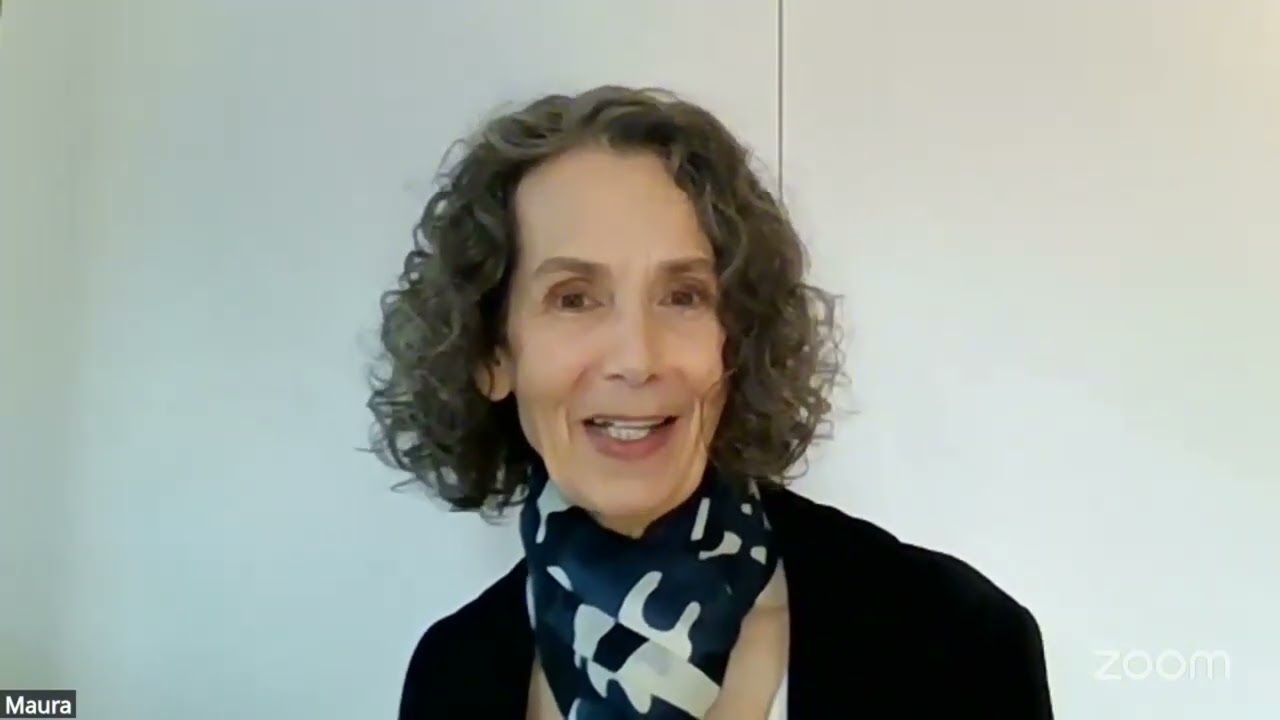
In this episode of Remembering the Forgotten, host Markus Neukom interviews Maura Shaftoe, a coach and former executive consultant who is re‑branding her work around the concepts of stillness, coherence and the "Waymarker" approach. The dialogue moves from abstract definitions of stillness and internal coherence to personal stories, especially Maura’s recent Camino pilgrimage, which forced her to slow down, confront physical injury, and reflect on resilience. Maura explains how the Camino’s “trail markers” inspired her Waymarker framework: instead of finding a path for clients, she walks beside them as they mark their own way. The conversation then explores the tension between authenticity and external expectations, the difficulty of staying true to oneself in professional settings, and the role of boundaries and accountability. Money is discussed as a tool rather than a motivator, with Maura describing how pricing, shame around money, and offering pro‑bono work fit into her new brand. Throughout, both speakers emphasize the importance of quiet presence, listening beyond performance, and helping clients move from symptom‑based fixes to addressing root causes. The episode closes with a call for listeners to pause, notice the noise, and remember that asking deeper questions signals the possibility of a richer, more coherent life.
Chapters
Welcome to Remembering the Forgotten, a space where leaders think out loud without polish or performance. No scripts, no personas, just the quiet clarity that emerges when the noise drops and the mind is free to speak for itself. Today I'm joined by Maura. Maura works in spaces where emotion, responsibility and human complexity intersect. Where conversations are rarely simple, where stakes are real, and where clarity cannot be outsourced to process or protocol. But this conversation isn't about roles, methods, or professional frameworks. It's about what becomes possible when presence replaces management. When listening deepens beyond response, when steadiness allows what is true to surface without pressure. Maura brings a grounded attentiveness that comes from being with people in moments that ask for more than answers. She knows when to speak, when to stay quiet, and how stillness creates safety for insight to emerge on its own terms. This is a conversation about trust, not as reassurance, but as a lift orientation in moments that matter. With that, Maura, thank you so much for accepting my invitation and welcome to the show.
Hello, thank you for having me. It was really interesting listening to your introduction because I am doing some rebranding work on my work, and steadiness is one of— steadiness and clarity are 2 of the core pieces of that work. So it was interesting that it came up in your introduction. So thank you very much.
That's fascinating. Yeah, you're absolutely welcome. So before we begin, when I say coherence, I'm pointing to a state where nothing inside is at odds. Body, thoughts, emotions, and action move as one. There is no push, no urgency, no fear driving the moment. And when I say stillness, I don't mean silence. I mean the part of you untouched by expectation or performance, the place that already knows before the mind takes over. That's where I'd like us to meet today, Maura.
I will do my best.
So with that, Maura, where can you be yourself?
Wow, that's a good question. I try to be myself almost all the time, and I've learned over the years that if I'm in a situation where I'm not able to be myself or not allowed to be myself, that's not a place that I can stay very long.
It's so interesting, and I assume even in your life as well, and as well as I know you, there are probably more places where you cannot just be yourself. Even if you wished, it would be different. So can you say there is a place where you can just be yourself, like safe? And I know you're blessed to have probably quite a few more places like that than most people.
Mm-hmm. I think that, well, number one, I'd like to clarify what being myself could look like and maybe what expectations of that could look like. Being myself in a business environment doesn't mean that I'm, you know, being my total creative self because—
Uh-huh.
It wouldn't translate into the environment. So it's a case of sort of knowing, okay, where am I allowed to be in alignment with my values? And that's where I would say, if I can be in alignment with my values—
Mm-hmm.
And I don't feel any threat or around me, right? Then I can be myself or a version of myself which is suitable for, you know, the environment that I'm in. I don't know if that makes sense.
I love that. Absolutely. When we recall the intro, it was about absence of expectations. And most people feel that they cannot be themselves because of the expectations toward them from their environments. So most people have difficulties finding a place where they literally can be just themselves, which speaks for our society.
Yes, but I think many of us If we were to look at ourselves, if I'm to look at myself, how much time have I actually spent thinking, well, who am I? What do I— who am I?
This is such a beautiful take, and I see where we're going. I see where we're going. So how can you wish to be just yourself if you actually don't even know what this means?
Yeah.
Is that what you're alluding to?
Yes. And I think that's a moment—
I love it. I love it. So it is no miracle that people who are very introspective, people who have spent countless hours of pondering, observing, quizzing other people for mirrors, That those are the ones who say, you know what, Markus, I actually can be just myself almost everywhere if I decide to. And he said something beautiful. It's naive to believe unless I can show up all my facets and all my nuances, this means I am just myself. Yeah. I believe it has to do with a core, which is just yourself.
Yes.
And the rest, you know, like, remember the book I read many, many, many years ago? It's called the Bible. Talks about be a Jew for the Jew, be a Roman to the Roman. And I think that's what it comes down to, right? It's not that I have to show my sleeves openly. and say, look, Maura, either you take everything I am or you leave it. I think that's naivety. So I love what you said. People who feel that they cannot just be themselves quite often have not done the homework of actually identifying what this means, yourself.
Yeah.
I remember you just returned a while ago from your Camino. Tell me a little bit about that and how has that added to that understanding you just mentioned?
Well, you know, when I was deciding to go on the Camino, I'm a fit person, I'm a healthy person, I'm flexible, you know, So when I was looking at the risks or some of the challenges I might face on the Camino, I wasn't prepared for any— I didn't think a physical challenge would be one of them. And it certainly— Yes, so shortly into my Camino, I had an ankle issue, which then I was compensating for with my other ankle. So then I was, you know, I saw a couple of professionals and determined, okay, how am I going to— every day it was a challenge— how am I going How am I going to walk today? How can I finish this Camino with what I'm dealing with?
Mm-hmm.
And the advice I got from a very lovely naturopath was, you can go and you need to walk slowly. And that is not my nature. I move my chi through my body by walking fast. And so to have to, you know, spend extra time And walk slowly and warm up. And, and I don't mean a 15-minute warm-up, I mean 45 minutes. I think it was good for me because I had to pace myself. And so that physical— there is a saying on the Camino, and it can be overused: the Camino doesn't give you what you want, it gives you what you need.
Mm-hmm. That is fascinating.
Yeah. And so, you know, I did my walk and I managed the situation and it taught me some things about myself. It reminded me that I'm a resilient person. It reminded me that I can stick to things. It reminded me of many things. You know, the Camino is its own little bubble. You know, you get up, you make your plans for the day. What am I eating? How am I looking after myself? How am I looking after the other people on the Camino that I'm interacting with? How far am I getting? And so that in itself is, is one little thing.
Mm-hmm.
For me, it was like, how do I integrate the, the things that I learned on the Camino And bring them back into my life.
Did you do that on the Camino already, or was that like aftermath?
I would say I'm still integrating it.
Interesting.
You know, one of the things that I did say, there is a common thing like you're going to just change on the Camino. And I actually felt that the Camino will show you who you are because you're going to be tired. You're going to be grumpy. You're going to be hungry. You're going to have not had any sleep. So I think it reveals you.
That's such a unique viewpoint. I love it.
And then Then I can say to myself, okay, what is it about myself that that I I can say these are good things that I've got going on? And what is it about myself that I need to or want to have another reframe on? Look at it differently. deal with myself differently, deal with other people differently. And then bringing that forward into life, what we call normal life, right? Then that for me is like a daily— it's like a daily conversation.
That's so fascinating. I remember we had our last conversation Pretty much before you went on the Camino. So here's an interesting question for me. You having to slow down on the Camino itself, has that changed your approach toward walking the Camino compared to before you went onto the Camino?
Could you ask me that question again?
I rephrased it, and I think it's, it's important. As I understood, the Camino was for you by walking it. And then your ankle came and demanded something different from you. So it suddenly took you 5 weeks. How long would it have taken you otherwise? Because you planned, I know.
I don't know. I'm a very, very fast walker.
Right.
So I was trying to, uh, at one, I, as at one point in my life, I was a personal trainer. So I know I've got a good sense of what the body needs and the body can do a lot of things. Often though, what we're bad at is giving the body enough rest. So I was trying to be, I was trying to be, you know, make a plan that was workable. And I wasn't quite as realistic as I should have been, I think. Or I didn't give myself permission, enough permission, because I had set expectations for myself, right?
Yeah.
I was looking for a way to reframe my life. And I thought that would give me the time To do it. And in the end, I let, you know, I just let some things go. It's like, I'm not going to berate myself for not— like, you'd run into people who'd say, oh, I walked 35 kilometers today. Well, good for you. Yeah, yeah, yeah, yeah. Good for you. Everybody's walking their own Camino.
Yeah. Because, you know, what I'm actually alluding to is you mentioned there's this saying on the Camino You go there for what you believe you need, and I paraphrase it, and the Camino gives you what you really need. Would you say that your uncle basically was a messenger, was an ambassador for the Camino?
Yeah.
So how has that changed in regards to— that's when Maura started, like she flew wherever she flew and started the Camino towards, you know, Santiago. And then the ambassador met her, the Anglo, and said, it's nice that you believe you came here for that, but here is actually what it's all about. Can you say a little bit to that? It was absolutely fascinating.
Yeah, so I am a spiritual person, and so I I knew that creating the space, the walking, it's like walking meditation, right? It's that kind of stuff. I was expecting some of that. The slowing down though, I think, was— it was a blessing. Okay. You know, even my family and friends wanted me to have a WhatsApp group to make sure that Because I walked the Camino alone. Now, you're never alone on the Camino, but I walked it alone.
Mm-hmm.
And so every day I sent them a picture so that they knew that everything was fine, you know. And so even to have to do that for other people
and
to walk slowly, I just got to absorb so many more things that I might have missed or probably would have missed. Mm-hmm. And coming back from that trip, it's sort of like, you know, sometimes I'll just stop. I'll just stop what I'm doing. I'll just stop. I was walking the other day and I was walking a pretty good clip and I just took a look at the vista and I just stopped dead and just stood there. And I might not have done that kind of thing before, right? It's, it's— we only have so many moments, and we don't know how many moments we have.
Let me take a detour with you, and I welcome you on that little journey. You know, I talk a lot about stillness and about coherence, and people often ask, what is that stillness thing you're referring to? If you think back to when little Mora was 3, 4, 5 years old, would that have been something very natural little Mora would have done? Looked out of the window and suddenly her gaze was just stuck. Grown-ups looked at her thinking, what is little Mora doing? What is she seeing? Does that resonate somehow?
Uh, yeah, yeah, for sure. Uh, although to be fair, you know, sometimes it's hard to look back at those ages and actually, oh, okay, what was I like? I mean, as a As the person that I am now, I would say sometimes as girls, when we get to about 12 or 13, and, you know, we were scrappy, climbing trees, all that kind of stuff, and then it becomes a societal push to be something different.
Mm-hmm.
Mm-hmm. Right? You know, I think that's probably where I would say I'm more attuned to that person now. I'm
more,
yeah, you know what, I'm okay to go climb down that hill or climb up that tree or make the stop or, you know, that's what I would say. I'm less likely to Just plow through.
So basically, this would say that you are much more at that stage where you were conscious already in terms of what was going on and what you've done, than back to the little girl that did everything unconsciously.
Yeah, I would say.
That resonates more. Yeah, because you know what's interesting? Some people call stillness soul. Some people call it intuition. Some people call it creator, source, whatever you want to call it. In the end, what it comes down to, it is our core executive function, which means, you know, some people say we are born and we forget everything about who we are. I believe it's not the case. I believe we're actually born and know precisely what's in us when we're born. Quite quickly, it's being beaten out of us, let's be honest. However,
Yeah.
I see it almost as seeds waiting to be nurtured. So if you look back at, you know, even your own children, creativity, Curiosity, courage. These things are not something that have to be taught. They have to be nurtured.
They have to be nurtured.
Right?
And they can be, as I think you used the word, they can be beaten out of you.
Oh yeah. Oh yeah. I can tell you most guests on my show very much can attest to that. Beaten physically, beaten verbally.
One of the biggest compliments my son ever gave me, um, was that he said— he wrote it, actually— he said, um, my mom taught me that you can do things even if you're afraid.
Oh, beautiful. That's touching.
Yeah, and that's an example that I am so glad I set for him because—
Yeah, yeah.
There are plenty of things in the world that can make you afraid.
Yeah.
And, you know, fear, we have our own fear. I mean, I look at fear as when I feel fear inside me, it's like you're just trying to protect me. Thanks very much. I appreciate it. And I'm going to do this anyway.
I'd love to add something to that, especially for people who are watching this episode or listening to this episode here. And I think it's pretty much scientifically proven, by the way, and psychologically That 95% of our fears are false evidence appearing real. And if you look at it, in addition to what you just said, these 2 actually build a beautiful combination because you're not doing it blindly.
That's right. That's right.
I think you and I are rather similar. Exactly. We compute so fast that we take facts presented as facts and look at, is it false evidence appearing real? And while we compute, we say, yeah, and I'm actually doing it anyway. It's not because I'm reckless, because the possibility is so small. And if worst case happens, yeah, I can deal with it. Getting this response from your son and then in writing, it's remarkable. Yeah, I can tell it still makes you smile.
Yeah, it does. And he's a wonderful man.
Yeah, I remember you told me about him. So definitely job well done on that level.
Well, you know, some of it is nature, some of it's nurture. I think he came to the planet as a good soul so I already had a leg up I think.
It's so interesting. When was the time in your life, Maura, when you realized that you're living after someone else's script? What changed after that realization?
I don't know if I've actually left that completely behind. Uh, you know, so many times. Like, so many times. And I've done so many things in my life. Um, yeah, so many times.
But what would you say was the trigger for your branding change right now? Because there must have been something for you to realize. I lived after a script that wasn't mine. Was there a trigger moment?
Yeah, yeah. Well, definitely when I came back from the work I do with people, um, is around money, which carries its own shame. And I wanted to give people a different access point. So when I came off the Camino, I was like, How can I bring that work and put it into my work so that people can see a pathway? They can see that they have choice. They can see that they have sovereignty because that's the way that I'm choosing to live. So how do I gift that to someone else?
Mm-hmm. It's fascinating. I'm not sure that I shared that with you. If someone had asked me, let's say 2 or 3 years ago, what do you do? I would have explained myself or introduced myself as an executive coach and a business consultant. Since we spoke last, something got added in front of that— former. Former. Right. And you know why? Because pretty close to what you have experienced, that you are basically helping with a symptom which will never change because the cause had not been addressed. And what you're doing now is you're actually going to the cause. I put it this way. I said, a client presented to me a bucket full of holes. I wasn't naive. I knew I cannot patch all the holes. So I knew as a great consultant and executive coach, I need to patch 3 to 5 holes, knowing very clearly this will not change the outcome at all, long-lasting. Because all the other holes would let all the whatever content put in seep out into the soil. And when I came to the US a year ago, I asked 2 questions more. Why am I here? And why am I here? You know, we quite a bit— the second one, why am I alive, wasn't that hard to answer. But the second one, why the freaking hell am I in the US now? Because people told me, are you crazy? Who the heck would you leave Switzerland at this time in life, in history? And I suddenly understood why. Because here are people who say, you know what, Markus, I have reached a point where either materialistic doesn't really fulfill me anymore, or all the goals I have fulfilled. still leave me empty. And the question is, is this as good as it gets or is there more to my life? That's when I understood I first have to work on stillness and coherence, and then I can help them build their companies and become even filthier rich than they already are. And I believe with you, it's very similar. You realize it's not about making them more money. It's about building the foundation so the money can actually grow upon healthy soil.
Yes.
Isn't that beautiful if you think about it?
Yeah. And money is just an instrument. Mm-hmm. And it's the way that we interact with money. We could be interacting with our bodies the same way. We could be interacting with other people the same way. You know, money is just one of the things that shows up and we need it in this plane of existence that we're
on.
Mm-hmm. I just say there's money as math, money as meaning, and money as movement. Money doesn't define us, can reveal us. So if we build that base, then we're looking after ourselves, right? We're looking after ourselves. And then—
And I think that makes you quite unique in your industry.
Yeah, possibly.
I would say so. I know a few, but actually I know a lot of people, as you know, but I don't even know a handful of people like you. And I'll make one or two introductions because you guys really have to get to know each other. I, I love that. Um, you mentioned in, in the prequel, you mentioned the Wayfarer. Would you want to eat the way marker? Would you wait and talk a little bit more on that?
Yeah, so, you know, on the Camino there are trail markers, and you're looking out for the trail markers ahead. You're looking for this— there, it's a little shell, blue and yellow shell design. And so when I was, I was like, how do I get this framework back into my life and into what I do. And so, I— people were asking me, why didn't you call it the Wayfinder? I said, because I'm not finding people's way for them.
Mm-hmm.
I'm walking beside them as they're marking their own way.
Mm-hmm.
And that's why, that's why I'm calling it the Waymarker Approach. Yeah. So it's because—
He likes that.
Yeah. I mean, we're not lost. You know what I mean? We just haven't—
Absolutely.
We haven't maybe slowed down enough. I really think that we're all struggling with giving ourselves the time to make decisions with discernment.
And quite a few people say, sorry, I literally do not have the time, 10 minutes in the beginning of the day, which is another testament to our society, to be honest, which is absolutely crazy. Yeah. So I love your honesty in regards to You know, you basically find on a daily basis levels and layers you live, um, after someone else's script. So here's another question which goes into that direction. As I understand, it is quite easy for you to be in stillness, like wherever you are with whomever you are, because it's based on you. And not based on someone else's, um, response. What pulls you out of yourself and how do you come back?
I would say a lifelong pattern would be being something that someone else wants me to be, for sure. Um, and so If I see myself supporting someone else, which I'm always happy to do, but I'm doing it at my own expense, then I've got to reassess.
That's so interesting. How does that show up? Because I'm sure many people very much relate to what you just said, and it's probably the hardest thing to actually spot. Maybe the way, Markus, before it's too late.
Yeah, exactly. So, you know, I'm flexible and, you know, I have a lot of skill sets. So, you know, I get called to slot in to help somebody else, and I will put some of the things that I'm doing on the back burner to do that.
That's so interesting.
Yeah. So I'm trying to be more aware of when I'm saying yes to something, what am I saying yes to? Because here's the thing, if somebody wants me, wants you, however we want to say it, that can make us feel good, right? I feel needed. Right? Well, yes, they may need you, and they could fill the role with somebody else. Right? So that's something to be for me to be aware of, for sure. And keeping one of my core values, which is I really, if somebody needs me, Really needs me, I'm going to step in for sure. If they ask for the help, I will either.
So it's so interesting.
Yeah.
It's basically a knife's edge what we're discussing right now. Because you know, I have this one friend, very intelligent, is much more on the I want to be needed side. So he does a lot. on a voluntary basis, unpaid. And now he's learning the time comes where I have to pull the plug and gently say, now it's time to be paid. And if not, if you don't see the value to be paid, then I pull myself back. And I believe that is so important, especially for entrepreneurs.
Yeah.
Right?
Yes.
But they literally have the courage and to introduce and say, look, we actually never spoke about that before, but now I feel my threshold has been reached where I feel one or two more hours and I feel taken advantage of. And I know you have the money, Now you can put your name where your word is and basically, you know, show flag.
Yeah, and then we're stepping into another thing where it's hard for us to put value on our own work, right?
It helps to have done that work before. Yes, absolutely
right. It's hard for us to put value on our own work. Absolutely. I run up against it myself. My clients run up against it. You know, I'm also a singer-songwriter, and I try to pay the people who work with me well. And sometimes I have to say, no, that's not enough money. I'm going to pay you more.
Mm-hmm.
And if I have the capacity capacity to do that, then I do it. But it turns up everywhere, right? And when we don't have clear— I hesitate to use the word boundaries, but I'll use it in this case. When we don't have clear boundaries as to what we're willing to give Or what we think is reasonable, that can set us up for some issues— disappointment, feeling taken advantage of, all of those things— even though we put ourselves in that position.
So you see how important the conversation and the discussion about boundaries is. Because boundaries is what accountability accompanies. And if we are not accountable to ourselves, not setting boundaries, we're literally setting ourselves up for failure. And if we blame other people for taking advantage of us, that's when I show up and show you the mirror.
Yeah.
And say, here is the one who takes advantage of you. By the way, it's not the other person.
Yeah.
You know, I remember when, and I think I shared that with you a while ago, Maura, when one person said to me, Markus, if you look at your client base, your client base is a reflection of you. That was a hard pill to swallow. That was a hard pill to swallow. You could say, for example, you know what, Markus? You do not understand my industry. I am dealing with people who have no money, who I'm going to help not to go down so they understand what money is all about. And I could say, fair enough. Or I could say more. I got to know you quite a bit. There are more than enough people to help those people who are absolutely struggling Have no sense of responsibility or willingness to take responsibility. But there are people who need you and your tough love, and they are actually more than able and willing to pay you. And that's when quite often people become very quiet because they know I hit the nail on its head. I'm on that path myself.
Yeah.
I'm not accepting people anymore who do not fit that thing I have created.
Yeah, that was another reason why I went through that. I'm going through that process of what's it— what are my philosophies around this work.
Not surprised. Yeah.
And You know, is there a willingness on behalf of the client?
Mm-hmm.
Because
you see, what's so interesting is, let's say someone charges $75 per hour, right? It's very, very low. You need a lot of clients. Somebody charges $150. It takes half the number. Somebody charges $300. Now you do the math. Now you charge $500, or you charge $750, or you charge $1,000. Now it becomes interesting. A handful of clients pay you the same. As you needed before 30 or 50 clients. And that's the math which fascinates me.
Yes. And some of that is a decision, right? Some
of that— Oh,
yes. Because money isn't— money is not the only motivator. It's not a good motivator for me, right?
Let me challenge that for a moment. Quite often the people who pay more bring more to the table in terms of readiness and willingness than the lower paying ones. And that's where I allude to.
But I will say, you know, one of the things that I— yes, so, uh, the people who work with me have to be able to afford me. So right now, exactly, I've already eliminated a number of people. And there are ways that I do give back for some of the people who wouldn't be able to have access to me.
It's beautiful.
Right. So I may be doing free talks or I may be presenting or I may be doing those kind of things. Money for the sake of money, maybe that's what I should say. Money for the sake of money is not the motivator. Money is really—
I agree.
representative of the work that I'm doing and the work that I'm— that I've done.
Yeah.
And money is one, not all, but it's one of the ways that we can assess some of our impact.
Yeah, I absolutely agree. Yeah. But isn't it crazy? Someone who works on money, Has an issue with putting your own worth to what you're actually bringing to the table.
I think that makes me better at it, actually.
Absolutely right. And now imagine, once you have figured out those answers, it makes you unfreaking beatable. Unbeatable. Literally unbeatable.
I remember meeting a coach and she said, I've never had any money problems. And I was like, okay, well, I don't, I don't, I don't believe you.
Either she grew up with a golden spoon, which you never know, right?
Yeah, yeah, yeah. So yeah, I think that actually makes me more relatable when I say to someone, when I'm coaching somebody and, you know, it's like, you know, I'm struggling with what, how much. I totally understand.
Yeah.
I can relate.
That makes you so approachable, you know? And this is exactly what has to go into your material. People have to sense that on your website already. They have to sense it in your LinkedIn posts so people can say, you know what, this woman is so relatable. And that literally sets you apart from the entire industry, to be honest. So easy. And you know what I
do is It's just not what a lot of financial people do, right? Right. And in the regular capacity and in the regular way that people are paid in the industry, they wouldn't have the time to do what I do.
Yeah.
Because—
But you're taking that time.
Yeah. So that's why I've moved more into a coaching role than— A product rule.
Fascinating.
Yeah.
So this brings you and us already to the last question, Laura. It's a deep one. If someone would feel lost in the noise we mentioned now, what would you want them to remember?
Could you reframe that question for me, please?
So if someone is in the opposite of stillness, in the noise of daily business, and in the storm, no quiet, no calm, and basically says, is this as good as it gets? Or is there more? What would you want that person to remember?
Well, number one, if the client is— if the person is asking that question, they know there's more. Mm-hmm. They're on the edge, right? They're on the cusp of saying, okay, I'm not enjoying where I am. This is not fulfilling for me. Is this all there is? Is there something more? They're starting to ask the questions. So that's the first thing. Are you— are we asking the questions of ourselves? I think the challenge now is there's so much available to fill up every single moment of every day.
Mm-hmm.
So when we're feeling we're in the storm, it's just as easy to go onto social media It's just as easy to binge-watch something. It's just as easy that you can just shut your mind off, not solve any problems, but shut your mind off.
Mm-hmm.
So allowing yourself to stop, to stop. And keeping the space there. And it could feel uncomfortable.
Beautiful. Thank you so much for being on my show today, Laura. It's been a great pleasure.
Thank you. Thanks for having me.
You're welcome. This was Remembering the Forgotten, a conversation held in clarity, not performance. If something in this exchange shifted how you see, let it stay with you. A few quiet pointers are waiting below.
More from Markus







Ep 66 Breath, Trauma, and the Fear of Being Fully Seen A Conversation with Matt Ritchey

Ep 65 Truth, Trust, and the Courage to Be Seen A Conversation with Troy Gregory

