Ep 32 Agree to Understand A Conversation with John Corcoran
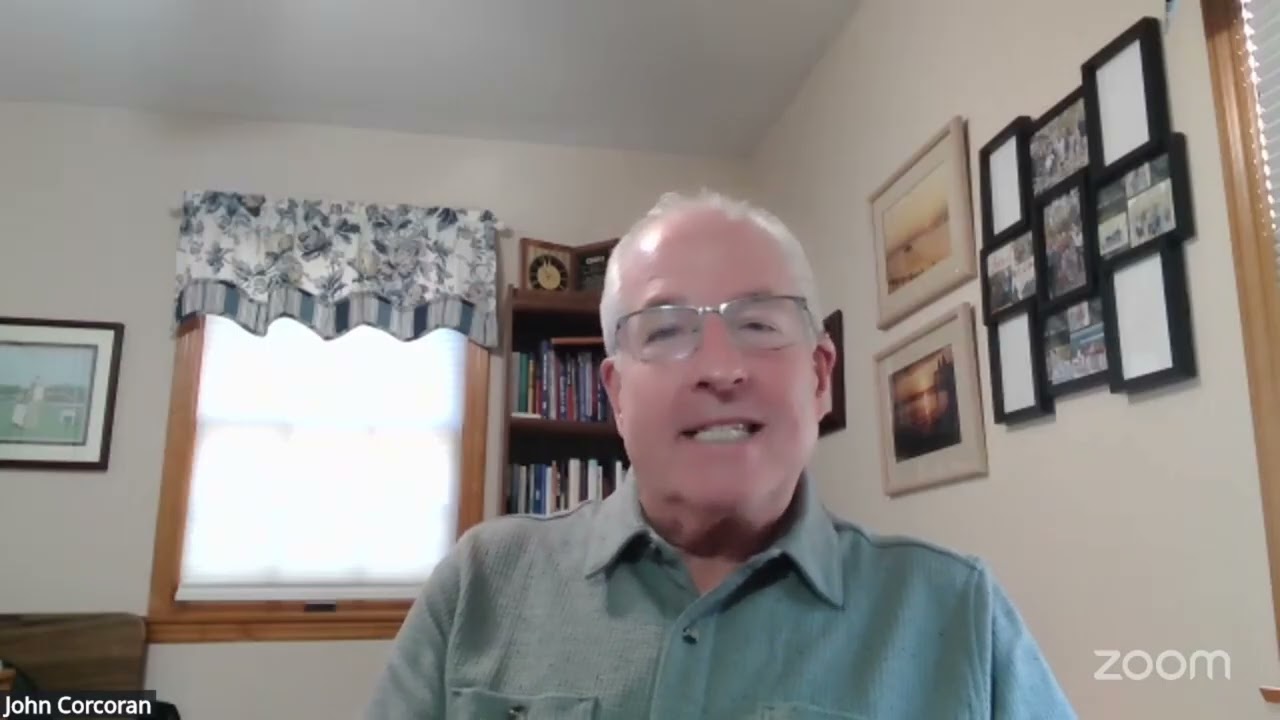
In this unscripted episode of "Remembering the Forgotten," host Markus Neukom engages with veteran leader John Corcoran in a reflective dialogue about authenticity, trust, and the evolving nature of leadership. The conversation begins with definitions of coherence and stillness, framing a space where inner alignment replaces performance. John shares personal stories about when he can be his true self—on vacations and in informal settings—contrasting that with the constraints of corporate roles and compliance. They explore generational shifts: older CEOs versus newer, employee‑centered managers, and the loss of serendipitous mentorship caused by remote work and the disappearance of “coffee‑machine” moments. The pair discuss how trust is built in the absence of physical proximity, emphasizing the concept of "agree to understand" rather than "agree to disagree," and how curiosity and genuine listening foster deeper connections. John offers practical advice for people feeling lost, urging them to inventory small, meaningful actions and to re‑frame their self‑worth beyond immediate failures. Throughout, the tone remains conversational, intimate, and exploratory, aiming to model a space where listeners feel permission to think honestly and engage with their own leadership journeys.
Chapters
Welcome to Remembering the Forgotten, a space where leaders think out loud without polish or performance. No scripts, no personas, just what becomes audible when the noise drops and the mind is free to speak for itself. These conversations are not about delivering insight. They are about thinking together in real time, Testing ideas against stillness, letting 2 open minds stretch each other. The intention is simple: to create a space where clarity can emerge and where listeners don't just consume perspectives but feel permission to engage their own thinking more honestly. And today I'm joined by John Corcoran. John has spent decades close to decisions that carry real consequence, often inside complex healthcare and advisory environments where parity cannot be postponed and outcomes matter. But this conversation isn't about roles, methods, or professional frameworks. It's about what remains when those fall It's about what becomes possible when presence replaces management, when listening deepens beyond response, when steadiness gives truth room to surface on its own. Kian brings a calm attentiveness shaped by years of being close to consequence. He knows when to engage, when to pause, and how stillness allows insight to emerge without force. This is a conversation about trust, not as reassurance, but as orientation, the kind that holds when moments matter. And with that, Jon, welcome to the show.
Happy to be here. Thank you so much, Markus. Looking forward to our little chat.
It's my pleasure, Charlie. So before we begin, when I speak of coherence, I'm pointing to a state where nothing inside is in conflict. Body, thoughts, emotions, and action aligned. Moving as one. No push, no urgency, no fear driving the moment. And when I speak of stillness, I do not mean silence. I mean the part of you untouched by expectation or performance, the place that knows before the mind tries to manage it. That's the ground I'd like us to meet on today.
Sounds good. I'm ready.
Wonderful. So with that, John, where can you just be yourself?
I would have to say, having just come off a nice vacation with some extended family, that vacation for me has always been a place where I can just be myself because I'm spending time with people I care about. So whether I'm on a golf trip with buddies, or I'm with my wife and it's just the two of us, or immediate family or extended family, I feel like I've chosen to be with these people in this situation. So therefore, I know I can be myself with them. And since we like to travel and I don't have one type thing that I do for all my vacations, like people that have a beach house or a lake house, that's their happy place. They always go there. So they may answer the question differently. But here's the nuance to that. Because we like to travel and go different places. Those people don't know me, so I interact with them. After I leave from vacation and go back home, I may never— most likely will never see them again. So I feel like I can truly be myself. I can dress how I want to dress. I can be who I want to be. I can truly be myself. If someone engages me in a conversation on a tour of a museum in France, I don't have to mince words and I could just be who I am, and maybe it enlightens them, maybe it aggravates them, but I'm me. And I try not to be insulting because that's not me. And so it— that's a place that I truly don't have to watch what I do, what I say, what I look like.
I love your answer, and it provokes a reaction for me. So I know you. You are not insulting. you are not provoking to the level that it would make someone extremely uncomfortable. So this begs the question, why wouldn't you do it wherever you are? What holds you back?
I think maybe my upbringing and wanting to kind of do the right thing. You know, my parents taught us about like doing the right thing, whatever that is, because that's up for for grabs. I mean, we could, we could put a group of 10 people together, throw a situation out, we might come up with 5 different solutions, people would go in different directions, and we'd have 5 different things, right? So I think that part of it, and then being in working in the corporate world where there's like a corporate culture. So it's not that I'm being a phony, or trying to wear a mask, but I will play a role. And if my role as a manager is to live up to the expectations of Markus, my CEO, or Mary, my CEO. I might have to do things that are moral and legal and ethical. Let's put that way. But that John on vacation might not do. I might let somebody slide if it were my business. I might let them slide if it was vacation. I might let them slide if it was personal time. But because the company culture says this is the rules, this is how we have to play, I can't really be myself in that situation. I have to I have to err on the side of the CEO, in my opinion. And that's maybe the compliance person in me. I agreed to take the job, I agreed to be compliant. And so therefore, I've got to fulfill that. And yeah, sometimes it's frustrating.
I like your answer. And this makes me actually dive into a detour. You network a lot, but you get to know a lot of people. You get to know a lot of your generation, and you get to know a lot of the younger generation. I am born in '72, so I'm probably just in between of, of these 2. And what my work shows, John, is that the new generation of managers tend to call themselves leaders and are very much human and employee-centered. Where do you see the challenge between— probably most CEOs are more or less around my age, old school. I am absolutely aware that if someone is being paid half a million, It's not because they are damn good. It's because they forfeit certain privileges that lower-level employees still have. You mentioned them. You are centered toward CEO, you're centered toward culture, you're centered toward policy, which probably normal-level employees do not really understand. And they even wonder why the heck would you do that? But I see a new generation of leaders coming on the scene now who are not used to that. How do you personally experience that in your day-to-day life? Because I know you're still very much in business.
Right. Well, I think the struggle is that without certain, you know, rules and policies and and ethics that we live by, then I think rank-and-file employees are, like you say, the lower-level employees don't really have anything to at least agree to or disagree to because it's a little bit, you know, squishy, so to speak. It's not as hard-fest. And so without that, I think there's a lot of misunderstandings. And the younger generation doesn't like as many meetings because They came up, many of them, early on in COVID. And once managers realized that you don't have to meet every week in person and we can still get work done, that's true. But then you lose that closeness of the, I guess, the body language, the ability to be in the same room with someone, being able to almost finish their sentence or know where they're going before they go there. And there's that culture that good, bad, or indifferent, someone set that culture and usually it's the supervisor. But I think right now the biggest challenge is that the younger workers who probably are more talented than you and me put together, they are not going to reach as much of a potential as you and I did because they're not going to have the day-to-day serendipitous exposure to a mentor. And I say serendipitous because we still have mentors and the mentors will have training sessions or they'll call you in on it. You can do it on a Zoom call. Or you could do it on a phone call. Hey, Markus, you didn't do this when we were in the meeting the other day. I just want to bring it to your attention. No big deal. But going forward, you might want to do this. Gee, thanks, boss. I'm going to do it better. Those things, those are pivotal situations. The serendipitous one is we just happen to be there. Something serendipitously comes up. I share something and the worker says, wow, that's something I've got to remember. I would never have known that. I like the way you did that. I think I could use that in my life. That happens when you're working with someone 9 to 5 in an office together. It just happens. And we give that up. We forfeit that when we are working remotely and we're on Zoom calls and phone calls and texting.
It's exactly the coffee machine or the water cooler moment which the new generation totally misses out, right?
Yes, they do. Yeah,
because I remember when COVID hit, I was back in Switzerland still, and I had a conversation with a client of mine, and he was someone who was literally longing to go back to the office as soon as it was just halfway allowed. And he did. And, you know, we discussed about careers, we discussed about trajectory of careers. And a younger person said, but Markus, not much changes. I said, yeah, actually the most pivotal thing changes. It's exactly the water cooler and the coffee machine moments. Because let's be honest, that's where most of the careers actually are being built. The informal conversation one overhears, gives it some thought, speaks to his peers. And suddenly John Corcoran gets called into the office and say, look, we have this position open. We actually would love to consider you. And you wonder, where the heck do they even know me? It's a coffee machine moment.
Yeah.
So there's this one element which you know very well from, from online marketing to know, like, and trust. And I believe this water cooler and this coffee machine, as, you know, as metaphoric as they are, they kind of build the foundation for the trust. And I know that so many people are so frustrated that the so-called trust factor can almost not be built online. Because the know and the like doesn't really fly well. So trust has a different foundation, John, than know and like. What would you say personally it is for you?
I mean, for me, I don't know what it— I did work through COVID, but I had many, many years of working prior to COVID, and I got out very quickly once the Quarantine was was down, and we could we could meet. I also had some clients that were in education and healthcare, and so we were very cautious with masks and and you know and gloves. One one place they one hospital they made me put on the surgical gloves to go in because they said a lot of most germs are are from the hands, not from the mouth. We worry about spitting, but most of the germs are on hands. So they were ahead of the thing. So I was back in the game. Quickly, like within weeks. And but the people who went a year of and then they got sucked into it, I think that's where we're going to see problems down the road. My son is 30, is 31, and he has a really nice job as an analyst, senior analyst with a real estate company that does impact investing. So the billionaire that left the hedge fund and started this company wanted to do low and medium income housing. He did not want to do the the Taj Mahals and the Plaza Hotels. Okay. And so they're doing, you know, billion-dollar projects in cities around the country, putting in, you know, housing because we have a housing shortage and how can we do this right? And they do it as an investment. So everybody's making money. It's a for-profit company, but there's a culture within the company. My son is working 4 days in the office, 1 day out. And he said to me, Dad, it is perfect. He said, I get 4 days of mentorship. If I need an answer, I knock on the door, I stick my head in. Markus, blah, blah, blah. Thank you, Tim. Goodbye. Okay, I'm gone. He said, you know how long I would need to get a quick answer in person if I wanted to have a quick conversation? It would be, let's do 2 o'clock. Oh, I'm stuck. Can we do 2:15? No, I have a 2:15. All right, let's do 4. He said, Dad, I would have had that done in 5 minutes by 10 o'clock in the morning. And now I'm into the next day. When they were in the COVID you know, working from home every day, he hated it.
And then he's young. He's the 31-year-
world, right? But he said that one day when I can just shut everybody down, the analysis that I get, my spreadsheets, he said, I get 3 days' worth of work in one by having the one. And my boss knows it. And he never bothers me on that day unless it's an emergency. And he said, and I know what I need to do. And I can just get so much work done in that day because no one's sticking their head in saying, hey, Tim, do you have a minute? But those other 4 days, I'm happy to have a minute for them. So he sees the balance of that. And he said he would never want to go to more than 3 and 2. If somebody's doing 3 and 2, it's okay. But he said, you know, he has cousins that are working 100% from home. To your trust, they've never met some people that have been working there 5 years, and they never have met in person, shook their hand, had a lunch with them, broke bread with them. Never. Where's the trust going to come from when you're on Zoom? I could be talking to you. I could have a knife in my back. I could be sitting with no clothes on below the camera. Where's the trust? I'm trusting that you have clothes on, but you don't. But who cares? Because we're on Zoom. We're not in a relationship. So I'm a relationship guy, good, bad, or indifferent. So I would hope that the young people would come around and realize that they're really no different than my grandfather. We all want to be connected to people. We all want relationships. I don't care how old you are, whatever. And we can't do it when we're working from our apartments. And I feel bad for the kids that are living alone. You know, they want to live in the city. They want to get their apartment. They got it. And now they have no place to turn. They eat, they sleep, and they work in the same studio apartment. And I don't know what that— what effect that's going to have on them long term.
An interesting answer. And I believe this pretty much builds an issue for the future. Because if trust building has never been learned, Or taught. That's what mentors are here for, right? I believe the foundation of business and relationships pretty much lays there. I remember when you and I first went on a call, which is more than a year ago now. Do you remember we had instantaneous trust? Why would you say that was? Why is it possible that people who never met Yes, we did have something in common, the connective, but I don't think that was more like a shared interest. So what is it that 2 people can meet? Whereas if we met in person, we had the 5 senses, right?
Mm-hmm.
And as you know, I've been teaching for 20 years and 2 senses literally go away as soon as you go on Zoom. So how is it possible, John, that 2 people can meet, 2 senses are gone, vital senses, and it's still possible that trust is being built almost instantaneously?
You know, I wonder if it goes back to my first answer when you asked me about where can I be, you know, my true self. The fact that you and I met through someone we both trusted, Therefore, I knew that he wouldn't associate with bad people. So I already had a confirmation bias that I liked you before I got there. And you would have to prove to me that you're not as nice as you should be because of the person who introduced us. But then, but then in our conversation, we were able to get into things that I might not have talked about with people I know for 20 years, because in the work situation, I might be afraid to bring that subject matter up. I might, I might, even if I'm non-threatening and I'm respectful, they might now label me and that could hurt my career unintentionally. I didn't intend it to do that, and I certainly wasn't trying to insult anybody, but they may not like me because we don't share the same political view. I have people that I love dearly, friends of mine that I love dearly, that have absolute opposing political views, and we can talk about it. Because we agree to understand, not agree to disagree. We agree to understand. I know we disagree, but when I understand why he or she feels that way, I can love them and accept them. I'm not changing my values, nor do they expect me to. But in a friendship situation, whether it's on Zoom or in person, I can be myself. And I think me being myself, I noticed immediately you were going to be yourself. And so I think that's where our trust came in, in the fact that we were able to talk about anything and everything and we didn't have to worry about You're my boss. I'm your boss. You're my customer. You're my client. You pay the bills. You keep the lights on. I don't. I work for you. You know, there's a lot of extra good, bad, or indifferent. There's a lot of extra chatter and noise that gets into relationships when there's, you know, something on the line, when it's a business situation. Either you work for me, I work for you, or you're my supplier, or I'm your vendor, or you're my customer, I'm your client. And there's a certain— you can't really let your hair down, so to speak, in that situation where you and I could. I could say whatever to you and take my chances because if it didn't work, we never talk again. My life still is fine and your life still is fine.
Exactly. I love that. You said something extremely pivotal, which I've never heard this way, by the way. So thank you. An American thing is to agree to disagree. And I believe it sets yourself up for almost failure because you almost expect to either agree or to disagree. But you said agree to understand. And I believe that brings one of the most important characteristics into play, and that's curiosity. Because this is something I basically, I saw from the first second with you that you're extremely curious. You ask questions, but not questions to fill the time. You ask questions to understand. Hmm. So now I've been just wondering, and I fully agree with you, John, it is, especially in today's climate, it's highly risky To lower your head, your hair, let down your hair, and just be yourself. However, isn't it even more important today that there are peer-to-peer conversations taking place without any intent, without any underlying motive? And this is honestly something which I am personally looking for, having conversations with people just like us where people meet. And I'm honestly, I'm beyond that point where I say I'm going to pay for a membership anymore because to be honest, and you probably realize that as well, when someone pays, It basically almost like forfeits certain criteria because that guy paid. And I believe if more managers, more leaders would have these kind of conversations we have where they actually can lower their hair, it would be so much easier in their day-to-day managerial work and jobs to actually function. Because it's almost like it builds kind of an equilibrium and it builds a kind of a warmth that you have that moment. And, you know, I say to my clients, for example, it is so different if you have a good relationship with your wife and you can speak about anything, or if you have someone outside who you can just be yourself. So I love the agree to understand. When did you come up with that?
I, you know, I wish I could find out where it was, but it was a couple of years ago. Not, not my whole life. I didn't have that in my backpack. I lived it, but I didn't necessarily have it. But agree to understand instead of agree to disagree, because I think agree to disagree is almost a contemptuous comment. It's like, All right, all right, enough, Markus. We'll just— let's just agree to disagree. I'm dismissing it. I'm saying I don't want to hear anything more that you said. And when I heard that, and I've said it to people, I've gotten plenty of comments back where people have said, wow, I used that with my brother and now we're talking again. Thank you so much. Well, I'm happy to share it. It's like, that's what— to me, that's what the world— I want to leave the world a little bit better today, so in case I die tomorrow, I did something good today. That's all, you know. I don't want to leave it worse today than I did tomorrow. So, but, you know, I think if we knew a person's background. So if someone had a different background than me, we look alike, we look the same, we wear the same clothes, we're about the same age, and now we live in the same town, we live almost in the same house, we drive the same car. When I say to that person, well, how could you— and I'm just assuming, you know, vote for that candidate? And then they say, well, let me tell you about how I was brought up. And then their father worked 6 jobs and was never home, and his mom worked 2 jobs, and they would never— couldn't get the bills together and whatever. And they had no family and this and that. And then they had to go out, and then they did this and they did that. Well, you see, you know, that— Wow, that's different than the way I grew up. I grew up in a family where I— we didn't have excess, but we had enough. And you never had enough. He said, we never had enough. We were always scrounging to try to get up to something. And then, you know, so therefore I can't vote for a capitalistic person at all. Someone that's going to promote big business as the answer to everything and all the jobs will go up because of that. We didn't even have jobs that could have gotten up because we couldn't. My father didn't have any education because his father didn't have any education. Right. So now I understand, understand where that person's coming from. Then I explain why I am. And then all of a sudden they listen. And I've had people say to me, wow, you know, I never realized that. Yeah, if the business does well and they hire more people, that's more jobs. And I was just focusing on, you know, greedy corporate America, and I never wanted to be in that or whatever. That person is not voting Republican anytime soon, and I'm not going to vote for a socialist. anytime soon. But we can now have a good relationship together because I listened and I understand where that person's coming from. I had a guy talk about, you know, white privilege, and he— it's hogwash. And even some of the people in there were like, wait a minute, you know, if you don't look like us, I agree that people could be, you know, definitely the color of your skin. People just make a decision. You could be a billionaire, but if they don't like the color of your skin— so let's just— whites have white privilege. He told the story of his father and grandfather and where they worked and how they were treated as immigrants. And when you look at that, I'm like, wow, I understand why he could be a little bit feeling like, don't give me this white privilege. I didn't have any privilege growing up. And he didn't. I had a Black man living next to him. He lived a life of luxury compared to what my friend Brian told me. So after I talked to him about that, he and I could agree to understand each other. And Hopefully after I described some things to him, he would understand the other side of my story, which I was trying to say that in this world, I have Black friends that no matter how they're dressed, if they walk into a CVS, somebody's following them around the store. But you get the worst dressed person that's white and they walk around the store and it's like, oh, the security cameras are worried about it. I'm not worried. And why is that? And we've proven that. That's not my opinion. Okay, that's not my opinion at all. And so, but, but he couldn't understand that. And he just was going back at it, back at it, back at it. So we had that conversation, but agreeing to understand, he got it. And then he said, well, no one's ever really listened to my side of the story. I said, now that I've listened to it, I understand how you are, who you are. And I still love you.
You see, that is the view that you just mentioned. Like when, let's say his name is Brian, when Brian says never really listened to, so what does that actually mean? No one ever asked him.
Right. And also maybe he never allowed himself to say, you know, do you want to hear why I think the way I think? I think he got so defensive, the other person got defensive, and it was one of these.
But isn't that exactly what's taking place in today's political climate?
Yeah, it's two sides. I think I have a— I should ask people about themselves and try to so that I can understand them and give them a chance to be heard. Okay. But I also have an obligation to ask people if they want to hear why I say— I shouldn't just say, well, no one asked me today, so I'm— no, no, that's not the way you should be. And I shouldn't say, well, you know, I just open up my feelings. And so everybody should do that. I'm not gonna ask anybody their opinion. It doesn't work either way. We have to be both ways. We have to be open when people don't ask us and we have to ask when people don't, you know, don't freely share.
Remember when I came to the US, you were one of those 5, John. I went on 5 calls and those resulted in 100+ introductions.
I remember you saying that.
And 8 weeks later, after these 8 weeks, I have a Rolodex of somewhere between 350 and 500 high-caliber people. And I believe it comes down to what you just said. If we actually reach out to the other person and want to understand, ask the question that really opens the other person's trust factor, It is almost a given, John, that you can easily slide in your opinion after the other person has shared theirs. Because you see, you and I, we are not just privileged in terms of what we talked about, but we are privileged in terms of we are used to communicate. We are used to asking the questions. We are used to receive trust almost immediately from other people. And that always invited us to share about us almost to the point where people said, and John, enough about me. What about you? How do you see the world? How do you see and experience life? Right?
Yes.
And I believe for everyone who listens now, This agree to understand really is based on curiosity and respect. And this will always, I literally say always open the doors that otherwise actually stay closed. So this leads me to another question, John. Do you remember a time where you realized I'm living someone else's script. What changed after you had that realization?
Usually I have an answer for everything, good, bad, or indifferent. I think early on my parents you know, told me to be my, my own person. And they equipped me with some nice transferable skills that I was able to take out in the world. And, you know, I had a lot of— I don't really believe that I ever lived someone else's script or someone else's life. I feel blessed that I, that I was able to, to do that. I can't say that, that I ever worked in a job that, that I didn't like, because as soon as I didn't like it, I set out for another job. So I didn't really have to live— in someone else's, you know, world. And, you know, there were times where I saw things starting to move down, getting into potential illegal down the road. We weren't there yet. I wanted to get out before it got there. I didn't like the way we treated people. And all of a sudden, a new manager came in and treated people poorly. And if I had to be part of that culture, I couldn't do it. I just looked for another job. I was responsible enough never to quit. Without getting another job. But that's why I had so much experience in getting another job because I started networking and asking around. And then once people found out that I wasn't happy where I was, but at least I had a job, they were like, oh, would you want to come work for us? But a lot of times, if I had lived to your point, if I had lived what you just said in someone else's value or whatever, I might have stayed in that job, been miserable. And then when people saw me, it would be like, Well, his credentials are good, but I'd never want him working here. He's— what a downer he is, you know, or he's always, you know, he seems miserable all the time. I don't need somebody that working for me. So I did the opposite. I promoted myself as, hey, you know, I'm thinking about making a move, looking to advance. And, you know, if you know anybody, let me know. I'd love to talk to them about the industry, see if I'm on the right track. Maybe I'm not. And then all of a sudden I've got, well, listen, if you're looking, would you want to come work for me? It becomes their idea, you know. So, so yeah, I would have to say that that's not something that, you know, I wish I had a good story for that, but I never really lived somebody else's life.
I love that. So, John, and this is the last question. If someone feels lost in the noise, you know, the opposite of stillness and coherence right now, They're struggling, if they are drowning, what would you want them to remember?
I would want them to maybe take an inventory of the little things in life, how they touch people's lives, and get them talking about that. Because to get them to talk about, well, look at how great you are, they don't feel very great right then, so they're going to just turn me right off. But if I said to them, let's just look at some small things, you know, tell me about your family, tell me about, you know, and I don't want to be the therapist. There's a place for therapists and they do a great job. And maybe in a different world with different education and a different, you know, start to my career, maybe I would have done that because I like helping people. I like to— I'm not always looking for what's in it for me. I find that if you help enough people get what they want out of life, I get what I want out of life. Out of life in the end anyway. But what I would say to them is if they looked at the small things, you know, you know, especially if they think that their life isn't worth anything, you know, I would say, well, if you know, if if if I gave you you know a million dollars, you could do whatever you want with it. You know, what would you you know do? Would you accept the deal? And they kind of look at you like, of course. I said, well, there is one caveat. The caveat is that you die tomorrow. You can spend it all day today, but you die tomorrow. And almost everyone— I have never seen anybody that ever says the other. They're like, oh no, I can't take that. So I said, so if your life is worth $1 million for one day, you want to live more than one day. So your life is worth more than $1 million. Let's go back and take a reset. It gets people thinking differently. And then they start to think about the small things, how they touched their aunt when their aunt was sick, or they drove their sister's child to school for the week when she had the flu. And it's like, wow, you know, look at that. And I think we look at our problems like in a microcosm, like my business failed, I'm a failure. No, my business failed. I'm not a failure. But we start to think that I'm a failure and we focus on the moment and then we forget about the good we did for the past 6 months in people's lives and the good we could do for the next 16 years of their lives. And we, you know, and that's where I think people go down, you know, kind of the rabbit hole, as they say. But I think we need to look at the small things, the little things we do in life that makes a difference in people's lives. And then I think we would re— we would be able to attack the issue and get ourselves out of that spiral, as opposed to just continuing the spiral.
I love that, John. In one sentence to what you said before, I am so grateful you have not become a therapist. You know why? Because people get to talk to you who would never even set foot into a therapist's office.
True. I didn't think about it like that. Yes. Thank you. Good. I'm not going back. I'm not going back for my master's in psychology anytime. So I'm gonna stay where I am, Markus. Thank you for that. Yeah, good. See, there's perspective. You know, I, at one point, I'm almost lamenting, well, gee, what good could I have done? Maybe I could do more good on the outside than on the inside, you know. Good. Thank you.
I'm not sure that you know that. You're welcome. There are quite a few people who say to me, Markus, I have become a coach because I wanted to help people. And they ask me to help them. You know what I say to them? If you cannot make it financially, this is a sign. Go back to what you've been doing before, because that's where you're of real help, in day-to-day mundane conversations. And that's where you can help people in the trenches. Yep. So what you're doing is fantastic. Keep doing what you're doing, John.
Well, thank you very much. Thanks for this opportunity. It's great to have this chat with you, Markus.
Thank you so much for this conversation, John. It's been a great pleasure. So this was Remembering the Forgotten, a conversation held in clarity, not performance. If something in this exchange shifted in how you see, let it stay with you. A few quiet pointers are waiting below.
More from Markus







Ep 66 Breath, Trauma, and the Fear of Being Fully Seen A Conversation with Matt Ritchey

Ep 65 Truth, Trust, and the Courage to Be Seen A Conversation with Troy Gregory

