Ep 33 Signal Over Noise A Conversation with Jonah Burlingame
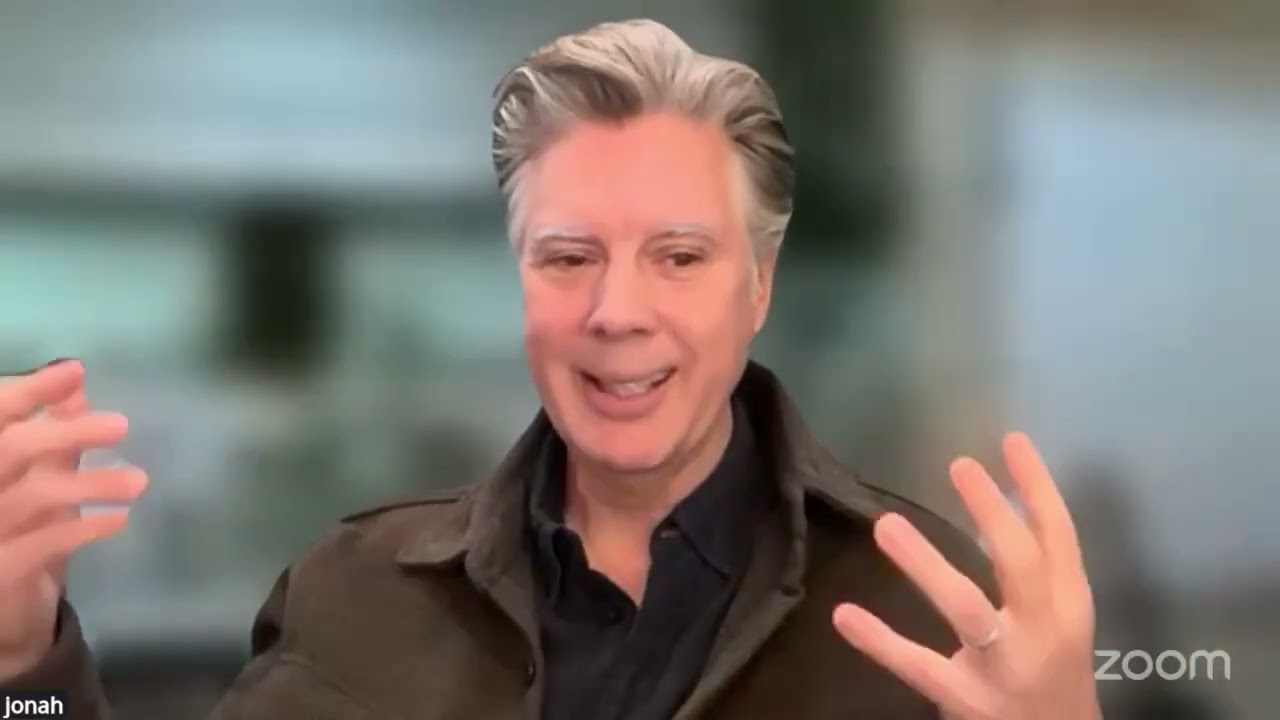
In this episode of Remembering the Forgotten, host Markus Neukom interviews designer, technologist, and artist Jonah Burlingame. The dialogue explores how stillness and coherence enable creative flow, contrasting Jonah’s experiences of "being in the zone" while cooking versus painting. They discuss the role of self‑criticism, the impact of early expectations, and how generational shifts affect attitudes toward authority, responsibility, and the practice of asking "why" in organizations. Jonah shares insights on leadership – distinguishing authority (empowering teams) from responsibility (burdening them) – and the importance of mentorship for newer generations. The conversation moves to practical methods for filtering signal from noise: preparing and structuring workshops, synthesizing information, and using AI‑assisted summarisation. They also touch on hiring based on skills rather than degrees, and the need for leaders to foster environments where questioning is safe. The episode concludes with a call to cultivate stillness, focus on signals, and develop the ability to synthesize complexity into actionable insight.
Chapters
Welcome to Remembering the Forgotten, a space where leaders think out loud without polish or performance. No scripts, no personas, just what becomes audible when the noise drops and the mind is free to speak for itself. These conversations are not about delivering insight, They are about thinking together in real time, testing ideas against stillness, letting 2 open minds stretch each other. The intention is simple: to create a space where clarity can emerge and where listeners don't just consume perspectives but feel permission to engage their own thinking. more honestly. Today I'm joined by Jonah Burlingame. Jonah has spent decades designing systems that hold real complexity in digital, physical, and creative environments where structure directly shapes how life is lived. But this conversation isn't about system or design. It's about discernment. Knowing when to engage and when to step back, and how clarity emerges when structure stops trying to manage life. Jonah brings a quiet precision shaped by years of building invisible architecture. He understands how stillness allows insight to surface without force. This is a conversation about stewardship, rather than control, and the relief that comes when nothing more is being asked. With that, welcome to the show, Jonah.
Thank you, Markus.
It is my pleasure. So before we begin, when I speak of coherence, I'm pointing to a state where nothing inside is in conflict. Body, thoughts, emotions, and action aligned, moving as one. No push, no urgency, no fear driving the moment. And when I speak of stillness, I don't mean silence. I mean the part of you untouched by expectation or performance. The place that knows before the mind tries to manage it. That's the ground I'd like us to meet on today. So with that, Jonah, a very simple question: where can you just be yourself?
I think that if I really had to pinpoint where I— and if I understand the question precisely here— is When I'm in the zone, when there's a flow, and it's— you kind of just forget about those expectations, as you mentioned, and the things that are around you and what you know and what you don't know. If I had to boil it down, it would be probably cooking, which might be a surprise. Right? When I'm— I love to cook. I'm creative by nature. I'm a painter. I play music, I cook, um, I, I'm a designer, uh, and many things. So, uh, where I really find that peace or that, that flow is a lot of times when I'm cooking. And probably that stands out more than painting, if, if, if you will. And I'll get to that in a minute and why there's a distinction between those, even though they are both, um, creative pursuits. But When I'm cooking, it's kind of my love language. It's how I show people that I care and I love them. So I love cooking for people. And I'm also very curious about foods and I cook a wide range of things. And, you know, I come from a long line of family members who cook— my father, my grandfather, grandmother, mother, everyone. So to me, it brings—
It's a great thought.
It was just something that I grew up with. And that curiosity has carried from, you know, my youth all the way through today. And I'm always looking to understand certain cultural techniques in some of the cultural recipes and so forth, and just exploring those. And when I'm in the kitchen, and it could be just by myself, Mm-hmm. cooking for my wife and, or my family and friends, but also with other people. I have a lot of other friends that I love to cook with as well. And it's, it just flows. I don't really think about expectations. I don't think about what I can and cannot do. To me, it is, here are the things we have, and here's what I'm seeking to do. And it's not even following a recipe per se. It's really understanding What is this recipe trying to do? And, you know, it could be Burmese food, it could be Italian, it could be French, it could be any of these things. But once you grasp what it's trying to do, then taking it and making it your own, there's a creativity there. There's also then at the end of it, there's a presentation, both, well, visually, you can smell it, and then ultimately you taste it. Mm-hmm. And it is just such a fantastic process that rewards me. And then I spoke that there's a slight difference—
Painting, huh?
In painting, right? Where you would think I would get the same thing from painting because it's a pursuit and I've had a long career as a professional artist. I have found that there's always something in my head that asks myself, Um, is this, uh, you know, how does this fit into my overall body of work, right? And that may or may not be—
That's an interesting one.
Good, right? But there's always some sort of outside looking in at the work, and it doesn't mean that I always obey that sometimes, but I can choose to ignore it. But I'm always there thinking about, here's my work, is it a continuation of what I've done?
Yeah.
Um, is this something that, um, uh, or, or will it be something brand new? And what am I chasing? Uh, what is it? Uh, you know, does it look too similar to something else I've already seen? Because I want to be original. But ultimately, my artwork has to appeal to me first. I'm not doing artwork to— I paint, but in hopes of selling, but I don't paint to sell. I, I paint to reward me and say, I want to explore this. And, uh, if I don't like it, I'm not going to put it out there regardless if somebody does like it. You know, I've had people come through the studio and say, oh, it's great, don't touch it. I'm like, that's just the underpainting. I've got a long way to go. And they're like, no, no, no, no, don't stop us, or don't, don't, don't do anymore. I was like, uh, you know, I need to, I need to keep going on this. And it may be, you know, beyond what they like at that point, but doesn't matter, it's, it's for me. But during that process, I still have, uh, uh, an awareness in my head. Uh, there are flow states within my painting, but it's different than cooking.
So that's a fascinating aspect. So let me take it into a direction which I'm curious to see what your reaction is. You are not so much— and this is an assumption— you are not so much dependent on anyone else's judgment feedback, you are actually your own worst critic.
Yes.
Does that fit?
Yes, I think there's nuance.
It might be surprising as the, you know, as a result of my process. But my question is really, does it fit? You're basically your own worst critic. Which, let's be honest, that's what we artists are. We don't need much outside feedback for that.
Yeah, I think both things can be true. I am my own worst critic in, in a lot of ways because I do have a standard that I want to hold myself to.
Yeah.
Um, but I will also say that I have long struggled to, um, not care about what other people think, and that's— it's unfortunate. And, you know, In my youth, of course, I didn't really care that much. But then as you get into, you know, middle school and others, there are expectations and you have an awareness of what people will— might think about you. And, you know, children are cruel. And so, you know how you react to those middle school moments and high school moments. Sure. And I didn't fit in in high school either. I mean, I was different than a lot of what was going on in my high school. I wasn't an athlete. You know, I wasn't what we called burnouts back then. I wasn't— I just didn't fit into the normal groups. And so,
you know, that's what my wife told me, that too many people in the US, especially of your generation, did not have the best high school experience because of that.
Right, right.
Expectations, perceptions, having to pay up to a certain expectation must have been quite challenging and formative, I assume.
Yeah. And part of it is that I grew up in a very small community, a very small rural town.
That makes sense.
And my, my, my, my parents, my father in particular, is very worldly. He always knew what was going on in the world. And I was born in San Francisco. But as an infant, they went back to Ohio to, you know, raise a, raise a child. And, uh, I ended up in a very small rural community, and there weren't a lot of things going on at that time in terms of groups. It was pretty divided. You were either a jock or you were a burnout, um, or you were in theater, uh, which was a small theater department. Mm-hmm. And so there, there really wasn't much else going on. Now, computers did kind of enter the scene, uh, during my late, uh, middle school years. And so I was one of the first to start programming on, uh, the old Radio Shack TRS-80, uh, and showed some, some aptitude for that, um, early on. So then I was a little bit of a geek, but I didn't really fit in with the geek group either. So, uh, I didn't really have a home. I kind of floated amongst amongst them a little bit, but never really felt, um, truly like I had a tribe. And, uh, in college then, I did kind of, uh, start to find my tribe. Ironically, I did pursue computer, uh, engineering, uh, when I first entered college, and that was not my tribe. Okay. There were a lot of, uh— this sounds harsh, but there were a lot of a sea of like maybe 100 people in the class, all men, and some of them with, uh, the, the, uh, tape on their glasses, you know, right in the middle of the glasses. It was nerdy and classic. I was like, no, this is— there was nobody that I felt like I wanted to have a beer with, you know. Uh, and that sounds harsh, but, you know, you, you do kind of want to hang out with, with people that kind of share your, um, you know, your affinity for various things. And so I just, I left that as well. I said, well, that's not for me, and pursued design and went into graphic design and also took some classes in fine arts. And that's where I started to really find myself and my tribe.
That's fascinating. So what would you say is the differentiation between you painting and you cooking, because both is a very artistic process. Um, it's probably quite similar, I assume.
Yeah.
I love cooking. I don't do so much painting, but I assume it's pretty similar. So is it because one of them is more on the commercial side and the other one is more on the fun side?
I, I think that's largely it. And, and you, you said something there that, uh, is, is quite interesting. Um, I feel that they satisf— they both satisfy kind of a similar, um, desire to be creative, because when I'm painting a lot, I have less of a desire to cook, and when I'm cooking a lot, I have less of a desire to paint. So, uh, you know, makes sense. One takes care of the, uh, the desire for creative output. Um, but yes, I think if I were just painting solely for myself, I would probably have more freedom. And, you know, that contradicts what I said earlier because I am painting for myself, but I'm painting for myself with a professional lens of here is the larger story and the larger output for me. Uh, and, you know, that is, um, unfortunately, that is limiting. And, uh, I do have some ideas of things that I want to go and like break that and start something completely new. And I have something in, in my mind that I want to do, but it's going to require a lot of somewhat retooling and rethinking. And that's amazing. Done. Cooking, you can pick up a different type of cuisine relatively easy. You buy a few ingredients and you kind of understand what it's doing, and you can explore that. With art, uh, you know, if, if I want to go from painting in acrylics to suddenly doing things that have sound manipulation and, uh, microphones and, and speakers in them and all that, but still wall art, that requires, you know, a new level of understanding of new materials, an investment in those things, and so forth. So the barrier is a little bit higher to make a significant change to that.
So that would almost go into installations then, not just like flat paintings, but literally like installations.
Yes, I'm, I'm still viewing them as like sound paintings, so they would still be a 2D— well, it's a 3D wall art, uh, I guess. 2D, 3D, I don't know how you look at that, but, uh, something that you could interact with versus just visually looking at, right? Mm-hmm. And, uh, so I've got some really high-level concepts that I've yet to materialize, and I, I I kind of need to kind of spend some time and just dive in somewhere. But it's, it's going to definitely take me down a rabbit hole that I have to be prepared to, to go into.
There will be a lot of cooking involved to counterpart that. That's fascinating. So when you think back, interesting enough, you said when you were a child, Child was much more carefree than I assume today is. Was there a moment in time in your life where you suddenly realized something is different? It's almost like when everything went quiet and you suddenly knew That's my truth.
I, I don't, I don't think so. I think that it— I think it really— I think I struggled for a long time. I think it almost got worse over time. Um, and if I looked at it, I'm a very visual thinker, uh, communicator. But, you know, if I look at it, it's really, uh, I— and where I am now and looking forward and seeing kind of a trajectory, uh, you know, youth, it kind of starts off very, um, tranquil and free. And then as you get older and the expectations are there, you become— you feel less free and more expectations and more— Mm-hmm. And you're in that productivity and, you know, earning and cycle and all of that. And then as I'm getting older, I'm finding that that chatter and that noise and those expectations are starting to— I'm willing to let go of them now. So, and I've been doing some reading. It's beautiful. And that is something that is common as you get into your 50s and beyond. You start to care less about those things and start to just be yourself, and it becomes more of a calming, uh, Way of being, and that's that's kind of where I'm seeing it heading, and I'm starting to feel much better about that peace, that peace of mind, rather than having to just.
I love that. Yeah. This actually just raised the question in me, especially people who have been in careers, let's say high level, high stress, high demand careers. careers. And a lot is associated with these expectations from others. Would you say that— and this is a little bit of a leading guiding question— would you say that if one would realize that less adhering to expectations and actually more following your inner voice might make us even more successful than we actually are. That there is almost a paradigm out there which is faulty. Like the more you adhere to expectations, the better you are, the better you are accepted. But that it's exactly that acceptance and that fear of not being accepted and respected actually stifles the number one quality, which could be creativity and curiosity.
Yeah, I think there's nuance to that. I think that, you know, unbridled, you know, or lack of care at all, I think is dangerous. And
it's either or, right?
Right. I don't think that the truth lives on the spectrums there. I think that the sweet— there's a sweet spot in there that you're aware of the expectations, but you also have an inner confidence of things that you know how to deliver on either better than the expectations or actually shifting the expectations too. And I think that's where I've seen a lot of leaders, really good leaders, really excel. And what really is interesting to me is rather than accepting, here are the expectations as given to you and actually maybe challenging those expectations to make sure they're the right ones. And if you can say, why is this the expectation? And they give you an answer, you say, well, if we look at the business or the need or whatever it may be at a more macro level, it's actually this over here, right? And so let's shift that. And now I feel more aligned with that. And that's something that I can deliver on that doesn't require me to be constantly aware of the expectation. It's more in line with what I think should be done anyway because I want to solve the problem. I don't know if that makes sense, but I think that there is nuance. Do you
know what I mean? It does. You mentioned the key, and that's the question, why? I believe today a lot of people do not dare to question something. And I believe that could be a key.
Yeah,
especially in business, just to ask why. And, you know, remember when we were kids?
Yeah.
One thing that annoyed my parents the most was my wife.
Yeah.
Yeah. They were nonstop. But I believe today, if we actually started asking why more often, it would actually ease everything. Because I still believe that most expectations I was having in life came from my own rule sets and not so much from other people. And asking why would actually have opened a dialogue between people.
Yes, and you bring up a good point about children asking why all the time, and that becomes both annoying and it also sounds a bit disrespectful. And I think that can continue on even in a professional setting, that if you challenge by asking why, and then that may be counterproductive. There's a grace, an elegance to how you ask why.
Absolutely.
Right. And it can be a dialogue. And that is more productive when you're actually working in concert with somebody rather than saying, why do you want to do that? And challenging them. It is like, oh, that's interesting. I'd love to understand a little bit more about, you know, why you're trying to do XYZ. and start to peel it apart a little bit and then getting maybe over here or somewhere new together, right? And then you both have buy-in because you've actually taken it to a new level. So, that's where I really think that you see when somebody has been in a career for— and there's a maturity and a wisdom in there and they know what to do with not only how to ask the why but what to do with the why and shape Together. Anytime you're trying to do it in business or life or whatever, if you can generate that advocacy or that shared sense of being or need with somebody else, you're stronger together, right? Rather than going in as a bull in a china shop and saying, I know how to do this, you know, step out of my way, or I'm going to challenge you to do, you know, and try and get there. If you can do it together and get other people on board and have the deeper conversations and, and generate that advocacy, you're going to be stronger and you're going to, uh, you know, go further and far— uh, farther, uh, together.
So imagine if leadership would actually encourage their employees to ask why. How the environment and the culture would change immediately.
Yeah, I'll— that one could be— I could see that one backfiring a little bit if you—
How would that happen? Because let me add something to that. I have people who say to me, what if everyone does it? And I said, honestly, do you really believe everyone does it? I believe the right-wise would be asked, which might be 5 or 10% out of the 100. But those could be game-changing because I'll share with you something. Had I not asked why, guess what happened? No buy-in from Markus.
Right.
Because unless I understood, no buy-in. I was that generation. And if someone just told me because, guess what my next question was? Why?
Yeah.
Why? And it actually helped my superiors when I was really young to think about their game. So it's almost like testing a paradigm again for everyone who listens or watches the show to actually think, what if I would actually encourage my employees to ask more why? Maybe the buy-in would be greater.
I absolutely agree. I think that— no, I've been on both sides of that. I've been one of the people as a consultant asking why a particular leader is trying to achieve certain objectives and how they're going to measure that. I mean, that's a very standard thing. And so you do that with, with, you know, elegance and professionalism. I've also you know, led teams to where, you know, younger, younger people on the team would ask why. And it's not that I didn't— it's not that I didn't want to be challenged, but it was also how it was being asked. It felt like, I don't trust you as a leader. I want to ask you why. Or— And sometimes it is a matter of, well, All right, let's walk through this together. And I'm happy to do that. And that does create that buy-in from the team. So, I also think that there is a good leader will anticipate that why and who's on the team and actually kind of build that into the overall initial conversation, right? So, you can somewhat— you shouldn't be afraid of the why, but I think you can also anticipate the why strategically. to be able to say, all right, let's navigate this and give them kind of what they need for the buy-in so that they'll actually really understand what they do. It's when people understand the objective really well and you are allowing their expertise and their talents to show up to achieve that objective, that gives them the autonomy to figure it out in their own special way. Exactly. But then achieve the goals and many times surprise you. I led a team, this is several years ago now, but led a team that consistently surprised me when I gave them the autonomy to use their expertise, but then gave them the context and the framework by which to say, here's what we're trying to achieve. Here's how we'll measure success. Here is a potential framework for how to, you know, how to approach it. Go, and I'm here if you need me, right? So supportive, but also not micromanaging and so forth.
So this absolutely showcases how challenging it is to be a manager or a leader. It's an art form. Let's be honest, it is an art form.
Yeah.
And what is so fascinating is you just mentioned something, Jonah, that responsibility is a word that is dreaded, feared, and not so much liked because it's usually something you need to shoulder. And I gave it some thought recently about the word responsibility. And I realized what you just shared before is you give them authority. Authority, I believe, is the word to really think, to involve themselves into the solution-finding process or into the finding of the way in that process. Whereas so many leaders and managers do not give their employees authority. They give them the responsibility to shoulder, but they don't welcome the input which actually makes it possible to give the buy-in. Does that make sense?
Yeah, absolutely.
And I believe this is something, you know, leaders today really have to give it some thought because the new generation is not called for naught the Generation Y. And it doesn't have to do anything with the alphabet, by the way. It's literally the word why. So the new generation will question a lot. Maybe 75% is something they should be quiet. But the 25% are the questions that probably will further a company exponentially if done well. So we are in interesting times. Which leads me to—
I couldn't
agree
more. I couldn't agree more. And it's, you know, when I was growing up, I tended to do what was asked of me and do more than was expected so that I could not only— I had to trust what they were asking me to do, even if it was a menial job like you know, getting dry cleaning or pouring coffee or whatever it may be. I knew that that wasn't where I was always going to be because I would prove myself up there. But I didn't ask why, and I didn't think it was beneath me. I knew that I had to go in and do these things. And that is not— that's not what I've seen in the subsequent generations. We're like, what? That's not my title. Get coffee?
Right.
And, you know, it's fair. And, you know, that is a menial task. And I think that's shifted a lot. And I'm not arguing that it shouldn't have shifted. But there's also something about trusting in your— in the hierarchy a little bit to say, I trust that you are going— you've got me on an experience for a reason. Now, we've seen plenty of people have abused that. So why would they trust in that? So, I completely understand how we got here and all that. But there's this pendulum that has swung a little bit from not asking why to maybe asking why for every single thing. And it becomes very challenging to manage. And I've spoken with a lot of other leaders that say, you know, these last 2 generations entering the workforce have been very challenging to manage.
Mm-hmm.
Yeah, my— I haven't managed a lot of teams. I really only went in-house to manage teams for, you know, a handful of years, and I had fortunately exceptional people that I was working with. But I certainly understand the context that I've heard other leaders talk about.
Yeah, because it's literally their daily bread now. Yeah. Yeah. I'm not sure whether you, you might have heard that on, on another episode where I said that I had a client which was one of the biggest police corps in Switzerland, and I stood in front of them lecturing about feedback. And I started my workshop by saying, the question is not if, the question is when you guys have to change. Like, imagine that police corps known to command, to control, to correct, right? And I stand there and I say, it's not your employees who will change because they can't. It's you who will have to change your approach.
Yeah.
And he came to me in break time and he said, sir, I was shocked when I realized how you disregarded the actual objective. But I was so grateful, I shut up and I listened because something caught my interest. And then he became almost melancholic, Girona, and he said, you know what, sir? Many years ago, I've been pondering exactly this question. Is it actually us as leaders Who have to rethink our game. And now you came and gave me the confirmation. So for everyone who listens, literally think about whether it's time to actually rethink the leadership game we've been living for 20, 30 years, because I do think it's not working much longer. We can fire people, we can hire people. That's usually when I say to my clients, this won't change your results because the problem is not so much the workforce. Here's the mirror. And that's usually when they say, oops.
Yeah, yeah.
I think it's a conversation worth having because I literally believe this new generation cannot adapt anymore. to the level we could. Just think about the generation of our parents, Jonah. They had absolutely not even in their minds to ask why, or to even ask anything back, or to say anything back. Our generation had it already in our heads, but we were so much taught not to speak back, not to question stuff. But the more and more the generations get younger, I believe there is something changing in their DNA which makes them so freedom-loving, which is way too much. But now something surprisingly, they have found out, Jonah, that the Generation Y is one of the most insecure generations ever in existence. And those are the ones who do not dare to ask if they don't know. So it is the leader who has to step into a mentoring function if they really want to succeed. And the mentoring function is actually not here for a lifetime. The mentoring function is here to build the confidence and build the courage and build trust.
Yes.
So these are things I absolutely love. So which brings me to another question in regards to trust. When was the moment when you realized, I am living someone else's life or someone else's script? And what changed after that realization?
I don't know that I have ever felt like I was living somebody else's life.
I'm not surprised, by the way.
I have found myself perhaps in roles— I don't even know if that's necessarily true, but finding that, all right, well, here is the well- trodden path. Here is the next step that you will take. But I've never really been good at climbing the ladder in the traditional way. And I'll be vulnerable here. I— so, I did go to college, but I was— I paid my own way through college and I actually never completed it. So, I never got my degree. As I was working in college, I was bartending by day, going to school at night. And at some point I was bartending and I met some people that owned a small business and it was in— needed graphic design and they were going to bring computers into the mix. Actually, that wasn't their goal. They were doing some graphic design business and that's what I was going to school for. And so I said, let me work for you, found my way working for them. And then that's when I saw the opportunity to bring computers into their business and change it and essentially digital transformation for that small business. And so I led that charge. And at that point I was like, well, this is what I wanted to do. It's the intersection of design and technology. This is perfect for me. And I stopped going to college. Interesting. And at some point I just never went back. And the other, the other aspect of it is that I switched colleges going from Akron University to Kent State because Kent State had a better design program, and I lost a fair number of credits whenever I did that transfer. They just didn't transfer over. So I lost time. And so it became, why am I doing this? It's a lot of money, it's a lot of effort, and I'm working in what I'm doing. Well, things kept parlaying into better and better opportunities, uh, and I'm always curious and more interested being on the frontier of things than actually being the cog in the machine. And so, once I get to the point where everything's running great, you should put somebody else in that role. That is not for me. Makes sense. I want to be on what is the next to either optimize the system, digital transformation, understanding what can be next and fixing problems or innovating. To me, that was always the more interesting thing. So, there was never a ladder for me to climb in that regard. I had to move from one place to another. But I'm always very comfortable being low man on the totem pole, um, to, to kind of say, I'm the new person in the room, but let's fix this. And then I get the accolades, and then I'm, I'm on to the next thing, right?
So, yeah. Makes sense.
So I've never really been in a place where I felt I was living somebody else's life. Um, I will say though that it took me a long time to realize that's the person I was or am, and I had to, I had to do that for many years to look back and say, oh, this is why I don't look good on paper. This is why I can't use a resume to open doors. Yeah, for me, it's about a network of people that have worked with me and understand what I can do and where, and then moving into consulting made sense because then I can be that outside-in resources where I can come in and say— No,
it totally makes sense.
And then move on. Yeah.
Totally makes sense what you're saying. So thank you for your vulnerability about that.
Yeah.
Have you seen the ads where they actually tackle exactly this subject where the, the HR person says, sir, I haven't really found your degree? And that person said, yeah, it's because I don't have one. And then the person goes into their skills. And it actually comes down to an initiative that companies should hire based on skills and not on degrees. And they say that they are 60% more successful in finding the right person for the position if they hire for skills and not for degrees.
Wow.
That's incredible. Because, you know, I have hired a lot of people and I can tell you degrees, especially the higher up they went, that was definitely no guarantee for quality.
Right.
Definitely not. So that is an interesting thing. Yeah, but I'm not surprised really about your answer in terms of not having lived somebody else's life because You were fortunate enough moving to, um, Ohio, you said, right?
Yeah, I was born in San Francisco, raised in Ohio, and then moved back to San Francisco in 2000. So yeah.
And probably the Ohio experience helped you to, to build that foundation which you're building everything on in terms of your personality now, which is interesting. So if you never really lift somebody else's script, and, you know, from our previous conversation, I remember that you are someone who is in stillness almost on demand. I don't think it's just cooking. I don't think it's just painting. You have that somehow in you that you can go into that stillness. What is it that can pull you out of yourself? And how do you come back?
How do I pull myself out of myself? You mean in terms of getting into that stillness? And then—
No, it's basically what can happen that you lose that sense of stillness. Oh, so literally you being Pulled out of it, what would that be?
I think it's, it's, it's when I don't have direct control of my outcome. And I'll— yeah, I think this is a good example. One of the other places that I have found stillness at times, and I just absolutely love, and I think you'll enjoy this too, because you mentioned it, was When I have facilitated a lot of workshops for corporations and such, and it can be, you know, as small as, you know, 10 people all the way up through about 50 people in a multi-day workshop. Wow. Takes a lot of upfront planning and understanding who is in the room. So, I'll do all the homework of who are the people, not only looking at their skills and their titles, but also understanding what are their characteristics and asking other people who they are. They might be naysayers. They might be advocates for a particular aspect of something or whatever. They're new to the company or they're old to the company. Whatever it may be, I do a lot of homework of who is in the room and understanding what those dynamics are or could be. I look at all of the agenda and all the activities that ladder up to each other so that we can achieve a certain outcome. All of these things that I can do pre-planning to to then essentially get on stage. I always call it getting on stage because you become— you're the center of the room and you are orchestrating the entire thing. And there's a flow whenever you have done all of that work and you go into it, and then it is— They don't make sense to people, so you have to figure out— Sure. And when, when those go really well, it's because I'm in a zone and I've controlled all of those aspects and anticipated all of the, the details. But I have had 2 large, uh, workshops that did not go well, and it was because I didn't control All of them, and I had to facilitate it. And so, there were some things that were missed. There were some things that I couldn't have anticipated because I didn't have the opportunity or the people changed at the last minute or whatever it was. And those took me out of that moment because then you get shaken. And so, you're on day—
So fascinating.
Day 2 of a 5-day workshop and suddenly you're like, oh, this is not going well. How am I going to get to there? Right? And you have to, you stay up all night trying to figure it out. And And then, then you start thinking about the expectations and what does this mean? Blah blah blah blah blah blah. And so yeah, that can really—
that's incredible. Yeah. So basically control, control gives you the foundation for stillness, and when you lose control, that's when stillness goes away quite a bit, huh?
Yeah. And maybe control isn't quite the word because I'm very I love serendipity. I love— It
actually surprises me, to be honest.
Right. So it's not—
I don't think it is controlled.
It's preparation, maybe.
Interesting.
And, you know, I have my own frameworks for how to approach things. And I've developed these things knowing that if I take care of these things, I can allow for fluidity amongst all of us or chance or any of that. But I know how to bring it back to The pillars of the framework or whatever it may be.
Yeah.
But if you take that away from me and I don't have that structure, or one of those pillars is compromised, then suddenly it gets— it can be shaky. And it's my name on it, right? And I didn't build the foundation. So, it's perhaps you're right. It's less about control and more about the preparation and making sure that everything is there for success. And I'm not relying on somebody else's foundation or lack of.
You and I would be an amazing co-teaching team, by the way, because I'm the absolute opposite. Absolute opposite. I have minimum input, and then I literally do and take almost everything out of the moment. So that's why that control thing You know, kind of didn't make sense. But I think it's preparation.
Yeah,
that's literally what it comes down to. Which brings me to already my last question, Tona. If someone feels lost in the noise right now, what would you want them to remember?
They feel lost in the noise of the, of the moment. What would they remember?
Um, pretty much the opposite of stillness. They're drowning.
Yeah, you know, this is a life skill that I think, um, you, you can acquire. I mean, you don't automatically acquire it with age, but, uh, It's something that is important to be aware of and try to develop, and that is that signal-to-noise ratio and really understanding what is important versus what is not. And, you know, it can be everything. It is very practical as looking at the daily headlines and just seeing, okay, what is important here that I need to understand? And it could just be directionally. I don't need all the details. of whatever it may be under those headlines. I need to understand what is it that this is signaling, and then just kind of keep this over here. And then at some point, synthesizing those signals to say, oh, okay, well, there are a couple of these that are stacking up that are creating this direction, right? And so I think that that's part of it is just understanding how to filter through the noise to find the signals. And that is something that, you know, I've had to learn to do for businesses. I've developed it in my consulting practice. I'd say this is interesting. I don't know if I've developed it or I have it, and that's why I do what I do. But in essence, I've mostly worked on the agency side or the consultancy side, which allows me to go into any business and become a quick study of their business to understand what they do, why they do it, and their problems and objectives and all of these things. And, you know, that it's— there's a benefit to being able to look at what's important, and the details are also important, but not to perhaps what I'm trying to achieve. And so how do you quickly do that to say, ah, here's really the opportunity or the challenge or whatever that may be, Even though there's a ton of other data and things like this that the hiring manager will say, oh, you should speak to all of these people.
And I say,
yeah, but I don't need all this level of detail here. And I can easily just compartmentalize it, either push it off or say, I don't really need that at that time. And I think we can do that in life too. And I think it's a skill that is increasingly necessary for humanity. Yeah. Largely because everything can be known at all times, right? We have information at our fingertips that is, you know, with the internet, it used to be you could pull that information at any time and you had access to it. So it required you to pull that information to you. Now it's being thrust upon us in all directions. And you can't help but feel like Inundated with news and information, good or bad, and I'd love to see more good. I will say that I think there's a possibility, there's a potential. I don't know that it's necessarily going to be true, but when you, when you work with the, you know, the AI systems that are essentially synthesizing information. It's taking information from across a broader network or whatever it was trained on, and then synthesizing that to you and say, well, generally most people believe this, but there are a few that believe this, right?
Mm-hmm.
That synthesizes the information into a way that humans at a capacity, yeah, capacity at which humans can start to work with rather than being overwhelmed with. I've gone to Google and I have looked at 100 articles here and 100 articles here and trying to synthesize that myself, which can be overwhelming, especially when you get into the details. Now, there's a lot of nuance to that in terms of AI. Is it trained properly? Is it giving— is it biased? All these things. But I do think as a model, I think there is hope in that AI is going to create a lot more content and information, but it also can be I think a remedy to itself in being able to help synthesize those things. So I don't know. I don't know if it's necessarily better than the way things were, but I think that's just kind of how it's going. So that's where I find a lot of relief is being able to trying to synthesize a lot of things. very quickly into what it really means. And so I can make better decisions without being overwhelmed.
It makes sense. If I summarize what you just said, basically, when we start focusing on— there is a signal which is now overthrown or overshadowed by noise. And if we actually focus on listening and hearing the signal again, that's when we have the right focus. Does that somehow summarize it? Remember, it's just not the noise. There is a signal which is not heard right now.
Right.
And focusing on the signal brings us into the right direction.
Right. The noise is vast and you have to find the signals within that. Repeating noise patterns within the noise create the signals, right? You hear something several times, that becomes a signal to something. It doesn't necessarily mean you need to act on it or it's, it's correct. Um, largely it's sometimes just people feel a certain way. Well, that's not necessarily truth. That's not a fact. It is just, this is what, uh, the reporting has found. And It's a signal. Okay, well, if a large group of people are feeling a certain way, what implications are there with that signal and starting to play that out? And a lot, much of the work that I was doing, that I do for companies is, you know, futures innovation. So really looking at and building that muscle for strategic agility, thinking about what is possible and what is plausible in terms of the future. Mm-hmm. And in doing that, you have to look across the spectrum of political, cultural, technological, economic forces, and look and say, okay, what is happening right now in each one of those areas? And what are the signals that I can start to extract implications to the future? And so it's something that you can build that ability to do, that you can not only do it professionally, but you do it personally as well. So a lot of how I try to take in information throughout my day is really through that lens. Now, I'm not always successful. There are times I'm practically in the fetal position with, you know, any of the news or whatever you might hear, you know, on a given day. But, you know, you have to step back from it and say, all right, what's the big picture? Yes, that was horrible. But, you know, what is the signal to all of this? What are the implications?
And that's what it comes down to. You use 2 words quite repeatedly: synthesize And signal. And I believe if we take noise, sit down and synthesize that, we are actually landing at the signal. Yes. So with that, Shona, thank you so much for having been my guest. Been a huge pleasure.
Thank you. Thank you. Always a pleasure to speak with you, Markus. And thank you for—
Likewise.
Inviting me to speak with you in your, in your living room.
And to be continued.
I'd love that.
This was Remembering the Forgotten, a conversation held in clarity, not performance. If something in this exchange shifted how you see, let it stay with you. A few quiet pointers are waiting below.
More from Markus







Ep 66 Breath, Trauma, and the Fear of Being Fully Seen A Conversation with Matt Ritchey

Ep 65 Truth, Trust, and the Courage to Be Seen A Conversation with Troy Gregory

