Ep 35 The Mirror Doesn’t Argue A Conversation with Erin Patten
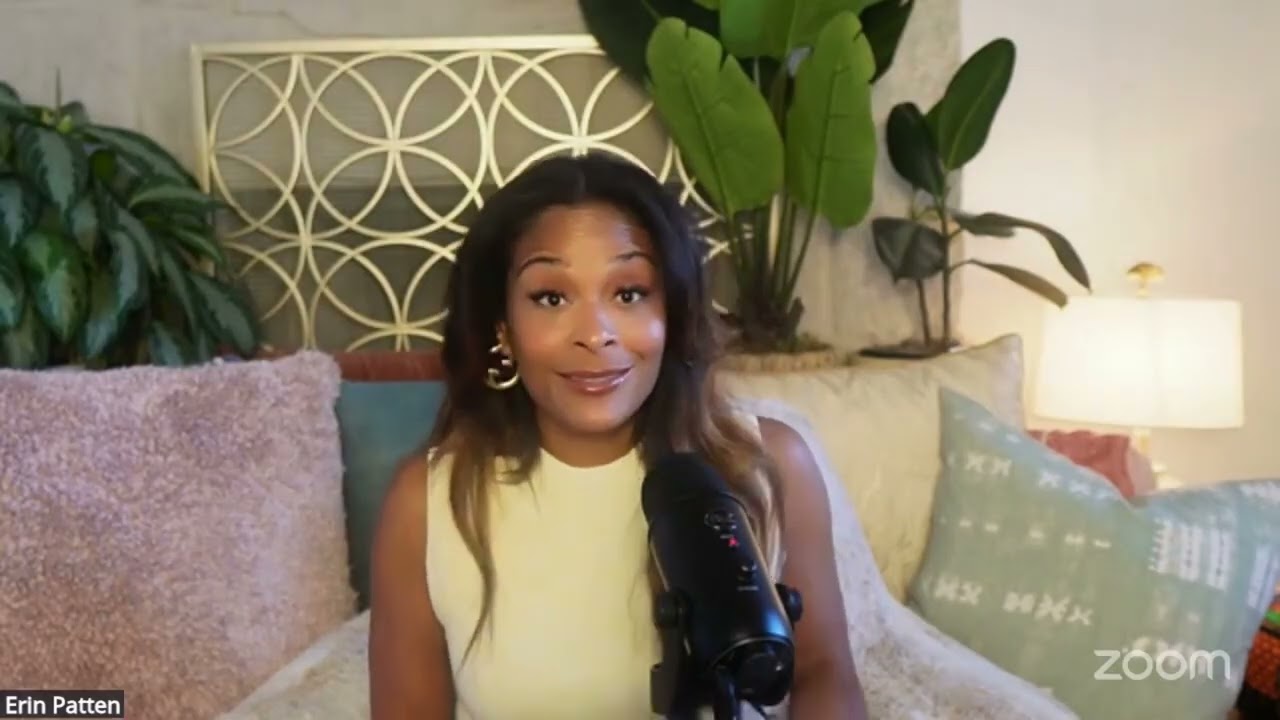
In this unscripted episode of Remembering the Forgotten, host Markus Neukom interviews Erin Patten, a strategist who blends business, feminine leadership, and metaphysical practice. The dialogue explores the concepts of coherence and stillness as a foundation for authentic leadership, using the "mirror" metaphor to illustrate how people react when confronted with their unfiltered truth. Patten shares personal stories of trauma—including the loss of her father, the death of close friends, and a painful divorce—that propelled her into a spiritual path involving Tai Chi, transmutation of pain, and a commitment to systemic change. She discusses how feminine leadership is not exclusive to women, emphasizing flow over hustle, accountability over blame, and the importance of aligning ambition with wholeness. The conversation also touches on practical advice: recognizing growth signals, using nature as a grounding practice, and cultivating radical honesty as a mirror for others. Throughout, both speakers maintain a reflective, conversational tone, aiming to model a space where listeners can engage their own thinking honestly.
Chapters
Welcome to Remembering the Forgotten, a space where leaders think out loud without polish or performance. No scripts, no personas, just what becomes audible when the noise drops and the mind is free to speak for itself. These conversations are not about delivering insight. They are about thinking together in real time, testing ideas against stillness, letting 2 open minds stretch each other. The intention is simple: to create a space where clarity can emerge and where listeners don't just consume perspectives but feel permission to engage their own thinking more honestly. Today I'm joined by Erin Patton. Erin works at the intersection of business strategy, feminine leadership, and metaphysical practice. She understands the pressures of achievement from the inside and the cost of sustaining it through force. But this conversation isn't about scaling for the sake of, or spirituality as a brand. It's about alignment as a lived discipline, about what happens when ambition no longer requires self-abandonment, and how power reorganizes when flow replaces hustle. Aaron brings a grounded clarity shaped by personal loss, rigorous training, and deep metaphysical study. She serves as a bridge between ancient wisdom and modern execution, helping accomplished women build businesses that honor their feminine essence rather than override it. This is a conversation about grace over grind, presence over performance, and leadership that emerges from wholeness, not And with that, Erin, I welcome you to the show.
Well, thank you so much, Markus, for having me on the show. It is such an honor to talk with you yet again. Um, and I'm just really looking forward to, um, talking more about feminine leadership, talking more about why it's important in today's time, and also sharing why it's not just about women. Feminine leadership is not just about women, it's for everyone. So yes, happy to jump into the conversation.
Just so you know, if you want to join the conversation by camera again, your camera is off.
Oh.
Welcome back.
Okay, one second.
Sure. So before we begin, when I speak of coherence, I'm pointing to a state where nothing inside is in conflict. Body, thoughts, emotions, and action align, moving as one. No push, no urgency, no fear driving the moment. And when I speak of stillness, I don't mean silence. I mean the part of you Untouched by expectation or performance. The place that knows before the mind tries to manage it. And that's the ground I'd like us to meet on today.
I love that. Can you hear me okay and see me okay?
Yes, absolutely.
Great. Well, thank you again so much for having me on the show. Um, I love that idea of stillness, and of course happy to talk more about how it relates to feminine leadership and why feminine leadership is not just about women. Yeah.
That is a— that's definitely a deep one. So let me start with the following question, Erin. Where can you just be yourself, untouched by expectation or performance?
That's a beautiful question because people ask me oftentimes, what does it mean to be a metaphysical master? What does it mean to be spiritual in business? And I have evolved my answer over the years to represent Just what you're asking me. Spirituality for me is being myself, being fully in my body, being fullest in my expression, and loving myself through the process. And when you're asking me, where can I do that? I do that everywhere I go. Mm-hmm. And if I'm not doing that, if I don't feel like I'm able to do that, Anywhere in this world, I likely won't be back there again because it is not aligned with me and it's not made for me. And that's totally okay. Not every space and not every individual is meant to align with me. Yet for where I am in my walk and where I am in my journey, it's deeply important to me to always be able to be in my fullest expression, even if it's painful. And I recently had this experience last week. Like, I'm dating and I'm meeting men, and a lot of times, you know, either I feel like boundaries have been crossed or expectations haven't been met. And in the past, I think sometimes I suppress it, especially to please, especially if I like the person or find them attractive or for their sexual chemistry. Sometimes you gloss over those things, but it's like, for me, it was really painful, but I had to communicate to this man that he had crossed a certain boundary with me, or I had felt a certain way about what he did or didn't do. And it was really painful. But, um, and I also risked, you know, him calling me a brat or calling me crazy and all those things. Mm-hmm. And I was just like, well, I just had to tell you how I feel. And just when you fall short, I'm gonna communicate it. Or if you do something that's not necessarily aligned with me, I'm gonna communicate it. And a lot of times, um, women do get called those things. Like, I did get called a brat and crazy and intense and hot and cold.
And—
Mm-hmm. And we risk getting name-called. And I did call him out on that. And of course he apologized because I think it's also Uh, easy too for men or people in general to, to name-call or diminish you for—
Why do you think that is?
Why?
I think it's despicable, but I'm really curious to hear from you. Why do you think that is?
Um, but I don't think people are used to the truth. And, um, and it's—
Truth. That's an interesting one.
Yeah, it makes them feel uncomfortable. So people's reaction to discomfort generally is to diminish it using disparaging words.
Can I rephrase that? People are not used to seeing the mirror. People are not used to seeing the mirror.
Yeah,
because that's what you're doing. Because, you know, I just realized when, when people use the word truth, You know where I'm coming from. You have your truth, I have my truth.
Yeah.
But if you show me the mirror, there is no discussion whether this is your truth or it's my truth. All you need to do is you just hold up that mirror long enough and I can't ignore it anymore. I can either crush it, destroy it, or I can walk away. Or I can say, hmm, what do you see? Because you know what's interesting? You see more than just what's being mirrored. So I could suddenly feel as a man emasculated and say, you know, and find the result, gosh, am I a jerk? That was never your intention. That was never a female's intention. It was literally showing the mirror. And I think this is a very interesting concept. So when you meet a man— but why do you think it is, especially in today's time, that people are not used— I call them people, not just men and females, just people. Why is it that people have difficulties being mirrored? Yeah.
Mm-hmm. Um, because people have, I think, like I was saying, the uncomfortability with themselves and the unknowing of— I shouldn't say unknowing, the not knowing of self. And so when you see yourself and you don't recognize this person because you don't know this person, it's like stranger danger. So you instantly, instantaneously jump into fear mode and fight or flight mode. And so I believe that the mirror is an opportunity. For me, I look at it as an opportunity for growth. And if you're afraid of growth, well, growth often comes with what? Pain. What do we call them? Growing pains. Even little kids. Yeah. My son, he's 6. And he's like, oh, Mommy, my knee hurts and my leg hurts. And I remember, and I was wanting to be like, oh, let me see, did he hurt himself? But I remember as a kid, like, having those pains too and being taken to the doctor and stuff. But literally, like, your body is stretching, your bones are stretching and growing.
Your parents didn't even care about those pains, right?
Yeah,
they just knew that belongs to growing up.
Yeah. And so I, I forgot that that happened until he was telling me that. And I was like, oh, honey, you're just growing. You know, and, and so when people look in the mirror and they, they are not happy with what they see and they realize, oh wow, this is an— I see some people see it as an opportunity for growth and other people see it as something that they, they essentially run from and reject.
Right.
And so that rejection then looks so many different ways. You know, it looks like self-sabotage. It looks like lashing out. It looks like violence. destruction. And that's often what the mirror does. And as I've evolved along this journey, I realized there's no right or wrong response to what you see in the mirror. I've done all those things to what I've seen in the mirror. Mm-hmm. I say now very beautifully and ethically and morally and spiritually that I grow, but that wasn't always the case. And so that's why, as aware beings, as aware men and women, woman and man, we have to recognize where people are on their journey. So I have to admit, when I was having this conversation with the guy last week, I was so upset. It made me cry. And then now that I'm seeing his reaction mirrored, I have a different response because I am able to just recognize where he is. And instead of taking it personally or making it seem like he doesn't like me or care about me, just realizing like, this is what this man is capable of in this point in time. And if it doesn't align with what I desire, then I have to be okay with it. Either I am okay with it or I choose someone else. They're two things. That's the kind of conscious approach. And that takes a lot of energy and courage and awareness to get to that point. Because we oftentimes, through programming, through love songs, through watching our parents and grandparents, we think that we have to fight for love. We think that we have to fight for what we want in this life. We have to Fight for things to work out, and that's the wrong energy. Period. If I'm fighting for anything, I gotta stop, right? Like I have to drop everything in that moment and take a step all the way the fuck back. There is no fighting that's going to accomplish anything in this day and time. What moves the needle. And this is what I teach, is flow, attraction, magnetism, alignment. When you're fighting—
You know, it's interesting. That's what many people do not get.
Yeah.
And, you know, I am anything else than a rah-rah voo-woo person. So everyone who knows me knows that. Because for me, it is the flow you're saying. I totally agree with that. What is interesting is why do people fight? Because they have difficulties with accepting the reality. And the reality, Erin, in the end, in my opinion, is counter their desire.
Mm-hmm. That's so true.
So if we face it, it's not the other person.
Yeah.
It is my desire. So, you know, I work with a lot of women clients and coworkers, and quite often the statement came, but Markus, this guy has so much potential. He could be— I said, yeah, that's exactly it. He could. But Markus, I have to give him a chance. Chance for what? To disappoint you? To really get you to the point that you understand, yeah, he might have the potential, but he might not be there yet, might never be in this lifetime.
Right.
Because, you know, and this is something people totally not understand, I would say almost, and forget. When we're born, we are all born with our executive functions fully functioning. So there's a seed which basically waits for nurturing, but that seed is in everybody's personality. So if not getting nurtured, you as a very sensitive woman, you feel that seed in that guy, but it's not being nurtured. So the question is, do you want to become a nurturer? Or do you want to meet the man who has been nurtured already? So you can spend time with that person already being nurtured.
That part.
And so many people do not get that. You know, for example, they see physical attractiveness, or they see humor. But then there are the things, Taryn, which you pointed out without pointing them out, which are a no-go for you. Maybe saying, you know what, I used to have a little filter for myself. So whenever I met a woman, I closed my eyes and then the thing was absolutely clear because I have a foundation and relationship with my wife, which has been built for now almost 2 decades. No beautiful woman as ever she will be when I close my eyes comes ever close to what we have. Now, this is something for me, which I really would like to gift every woman, every man who listens. Like, when you're blinded by looks, close your eyes for a moment. Listen to that person's voice, feel what you feel, and then see whether the attractiveness is still here. Because, you know, we're all getting older. Sooner or later, our looks go away, and then it really turns into real beauty. So it's very interesting, and I'm sure there are many women and men who listen who are in a similar situation like you are in a dating phase, where they almost try to convince themselves, no, this guy actually has what he— what I need, or he has what I require. But then to admit, no, he might not have it. It's interesting. So if you think back to a moment, what was a moment when your thinking quieted and clarity arrived on its own? Because I assume you were not always this stillness, in this groundedness.
Yeah, I would have to say that It's been certainly like an evolution, like I mentioned before. And for me, it got to the point where the pain in my life was so overwhelming that if I did not find a way to reverse the pain, then I could no longer move forward in this life, in this body. And so, you know, that point happened for me, um, I would say about— 2018? 8 years ago, um, 8 or 9 years ago. And, you know, it's, it's why I call it like my Harvard to healing journey. Like, I was freshly graduated from Harvard Business School, Harvard Kennedy School of Government. I was launching my first company. I was doing it with a toxic, uh, romantic partner who was also my business partner, and all on my own with my own funding and my own my own story. And I had just completely given all of myself away. And I did not— talk about looking in the mirror, looking in the mirror and see what? It wasn't me. It wasn't who I wanted to be for sure. Got it. And then compounding that with my father, who I felt like was one of the most influential people in my life. up until that point, I called him like my best friend, or he was at least the person who could— I felt understood me most and loved and adored me the most.
Uh-huh.
And, um, he unexpectedly passed away, and that created a lot of grief for me, a lot of anger, particularly towards him. And then one of my best friends was murdered a month after he'd passed away. And then I'm still moving forward and pushing this business forward with this toxic partner. And the moment that I'm launching my products in a major department store, Macy's department store in Detroit where I was living, I got a phone call from my mom's sister that, you need to come home because your mom attempted suicide. So there were these kind of series of very traumatic, very painful events in my life where I'm literally losing the 2 people, like 3 people that I felt like understood me the most. Literally. Literally.
That makes sense.
I never named it that way. They were gone. My mom has not been the same since that weekend.
Yeah, I sense that.
And so, um, then I had to question, who am I? The people who I love the most, who knew me the most, who I enjoyed the most in my life are gone from my life. What is this life? And it was that moment in 2018 Where my whole life shifted, and I dedicated my life to this spiritual path because it was what kept me alive every day. If I did not connect back to myself, if I did not connect back to God, if I did not find answers for all of this intense pain that I was feeling through my body, in my being, the anger of all the people around me who just treated me like shit. Like, I was surrounded by people, like, particularly my son's father, who I immediately coupled with in a— I feel like in a trauma bond. My family members who were incredibly jealous, to your point, and vindictive and vampiric, trying to take whatever they could from me. And I just found myself in a hell-on-earth state that I had created. I take all accountability for my life and my life choices and the state of my life. I don't blame a white man. I don't blame a man. I don't blame a group of people. I don't blame Jews. I don't blame nobody but myself. I don't blame government. And so I had to take accountability. For my choices, for my actions, for my thoughts, for my words, for my behaviors. And that's something interesting you just said.
Something interesting you just said. Um, you stopped blaming other people, right?
Yeah.
But the blame came back to you.
Well, the accountability came back to me rather.
Because this is very crucial, because you know as much as I do that most people actually go exactly to blaming themselves, pretty much as if we have been a very young child. May I ask how old you were when you lost your
dad? I was 33.
Okay. So you see, it's pretty much a similar reaction to a child losing the parent and basically trying to find fault in themselves.
Yeah.
For losing the parent, which is so interesting, right?
As a child, because when I was 6 years old, I lost my dad for the first time to his— he had a present federal prison indictment. where he, um, had to go to prison for 7 years. And so that— That's deep. That is actually where that, um, behavior was seeded as a 6-year-old, um, where I was responsible for what— I blamed myself for what happened to my dad and my family, um, at that time. Also, my sister was murdered like a few months before, um, my dad went away and my mom went into mental institution for suicide watch. So it was literally like a replay.
That was you.
What happened in my childhood in my 30s. And actually, my sister and my best friend Desi, who passed away, were born literally— she was actually— Desi was actually born the same year my sister died, days apart. But— and they were— and their birthdays were days apart. So my sister's like I think Desi's like August 7th or something. I'm gonna probably get this wrong. My sister's August 11th, but my sister died in 1991. Desi was born in 1991.
Incredible.
Literally around my sister's birthday, which is just insane.
Incredible.
Mm-hmm. And she was Black sister.
Thank you for sharing.
For real. I still dream about her.
Yeah, I'm not surprised. Because, you know, one of the reasons, Erin, why I have this show is so people have a place where they can be real. And as I said in the intro, I really want viewers and listeners to be able to, to take what we're talking about and making it their own. We're not going into conclusions. We're just talking about— Yeah. Right? Which is talking life. I think it's very important to say that when people leave us, that it's not our fault.
Oh my God, so important.
Because, you know, I can only imagine how much you have experienced that. And sadly, I have experienced my own share in terms of suicide. people. And I believe it's important for everyone else to understand that everyone has response ability. And I call it response ability and not ability because quite a few people have difficulties with the word responsibility because it's shouldering something. And in the end, everyone has the choice. So what I personally learned when a person very close to me said that she's been thinking about taking her life, the first thing I realized is it's not in my hands.
Right.
I would never be able to hold her back. So I actually let her go. And by letting her go, Erin, I found myself. Because you know what's interesting is somebody listens to what we're just talking about now, they would say, gosh, Erin had such a brutal and such a terrible life.
I know.
But I believe you look at it differently. I had a conversation with someone recently and that guy went homeless. And he said he had everything before and then he lost it all. So I just listened. Then I suddenly said to him, what if you actually had lost it all before and when you went homeless, you actually found everything? Wow. So if you think about through loss and through trauma, life actually brings us back to the original design. And it didn't bring you back to 6 years old when you lost your dad to the, you know, prison system. But it brought you back to the point where your executive functions were still intact. Because this is so interesting when people say to me, I'm not sure what you personally believe. People say to me, Markus, when you're born, You forget everything, who you are, what you came here for. And honestly, if that'd be the case, it'd be sad.
Yeah.
I believe we know exactly who we are when we're born. And then society teaches us to adapt to the BS that society teaches us about us. But that seed we spoke about in the very beginning, never leaves us. So you can tell throughout your life, from 6 till 33, there was nurturing of those seeds. And those seeds basically use the trauma, use the pain to really come out.
Because sometimes, yes, awakening. Exactly. It's almost like when you need someone to wake up, you shake them like, hey, wake up. It's the pain that actually— I mean, and it's so interesting because pain, I wish there was a different word for it sometimes because it's so associated with something that's negative. And particularly in the medical community, it's been really demonized. It's There are a whole—
let's use growth because that's what it's all about—
Around pain mitigation.
Of
course, it's, um, it's the pain that, that triggers—
It's a signal. It's a signal in the end. Yes, it is a signal. Yes.
Not necessarily that, particularly in my Tai Chi journey, this is where I really learned how to listen to pain and, um, Because actually when you tap into the pain, it speaks to you. Exactly. Which sounds crazy to some people, I'm sure, but it's just an experience that I've had and other people have had, many other people have had. And so for me, it was the pain speaking to me that I need to be more me, back to your original question about... Being myself, the authentic authenticity of showing up. And I was so far gone from Aaron that if you don't, if you don't hear me, I can no longer exist in this body. That's what my soul was pretty much telling me. Mm-hmm. Because this body is not Aaron. This body is not me. I mean, it's a beautiful manifestation and expression of me, But it is not me. And that's also something I learned in Tai Chi too. Like, this— the pain is not me but mine, you know? This body is not me but mine, you know? Right. This anger, these feelings that I have, they're not me but mine. And I had to learn that distinction in order to be able to work with what I was experiencing in life. Because when we talk about pain, The pain in my life has, uh, it's just, uh, upgraded. Let's just put it that way. It never goes away, you know. Right. Just a few months ago, um, I lost custody of my son, where it wasn't just like, oh, custody flips and son gets to spend a little bit more time with dad. No, dad is like calling me a witch in, in court and, and insane and Incapable of caring for my child. So it's literally like the language is so absurd that it's comical at this stage to me. At the time, it was incredibly painful. It was like stabbing me in the heart pain. Violent.
Yeah, absolutely violent. Yeah.
Rip my heart out my chest while it's beating pain. However, this is the level of discomfort that I need to be at In order to create systemic change in court systems across the fucking planet. Like, this is, this, this is the kind of situation you need to inspire that level of action and inspiration and motivation. And this is actually what's happening for me.
It is interesting enough. I believe it's pretty much our political climate that goes into a very similar direction, right? No one would have believed that this fucking mess would ever be possible, but it needed it for people to wake up.
Yes.
And to say, you know what, this can never happen again.
And what do I need to do? Talking about my responsibility, what is my ability to respond to this type of signal?
Exactly.
Yeah.
And I believe really signal is the right word because signal is neutral. You know, like if you receive a signal, it can hurt in the beginning. But then you actually start to interpret it. And it suddenly turns into something beautiful.
And in other— in spiritual terminology, we say transmute it. And that's what's utilized in Tai Chi is that all is energy. So if you're having negative energy thrown at you, like in The yin and the yang. We talked about it. You take that energy, you transmute it, and then now you have double the force. Let
me ask you something about that.
And now you've had more energy thrown at you that you're able to convert and then turn into an even more formidable force.
So this triggers a question in me.
Yeah.
And I'm pretty sure what you're going to answer, but I want to hear it from you. This transmutation, I sometimes feel spiritual people are taking it a little bit too easy with this transmutation stuff. You see where I'm going, right?
I'm completely—
So you have experienced so much pain. You didn't just, as Tai Chi speaks, take it and transmutate it in 5 minutes and you smiled, right? So transmutation is a freaking process.
Yeah, it's alchemical.
Exactly. And we need to go through that pain. Because in that pain, in that signal is a message. And this is what I literally say, goodness me, if I look at people today, if they're female or male, if they are social butterflies, It's because they prevented themselves from going through that signal. You know, I can say to myself, gosh, I need to turn it into something positive right away. No, why? Why? It is here for a reason.
Especially if you don't even understand it. Like, how can you speak if you don't even understand it? And so—
And that's why people walk like zombies today, Erin.
I still don't understand why what happened to me happened and why what happened to my son happened. So I'm still in that alchemical process. Like, I'm literally going into courts, doing strategy, talking to massive amounts of people, working with people who are law experts. And this is part of that new transmutation process that you're speaking to. It first happens, uh, sort of in the, in the kind of in the mind. Like, certainly, like, I've had to first start to process and integrate, okay, this is my new reality. Like, first of all, you kind of have to accept. Like, that's the first step, acceptance.
Mm-hmm.
Like, accepting, because a lot of times people spend years in the resisting phase, like resisting what happened. Well, luckily I'm not— I can— I was able to, to move through that quickly where I'm able to just accept it. And now I'm taking ballet classes and singing lessons and enjoying my life. Like, one thing I wasn't gonna do is punish myself for things that I could not control. So I was not going to stay in that resentful state because what that— all that is is just self-punishment.
And again, it's the anonymous alcoholic, right? It's a Serenity Prayer.
That's
what it comes down to. It's a Serenity Prayer.
Where I would go and get a drink. I would drink all my problems away. Like, I was the number one happy hour queen. Like, we had a problem today, let's go get a drink. That I really— I tried to do that though, you know. You try it all again because we've been programmed. I, I tried the partying, I tried to go out, I did all those things with my friends. I kid you not, my birthday weekend I did this in November.
I'm not surprised.
It was such a disaster. I said, I'd much rather feel my pain than exist in this dysfunction.
Yes.
It was so dysfunctional. It was, it was explosively dysfunctional. But I was like, I would much rather feel my pain than operate in dysfunction.
I hope many, many people hear that. Because it was interesting, if we actually were to teach the Serenity Prayer to people in kindergarten, Believe me, Anonymous Alcoholics would not even be necessary anymore.
Mm-hmm.
Because what's being taught after becoming an alcoholic should be taught before even thinking about alcohol. Because if you understand that there are things you can simply not change and then be taught how to accept these things, So you can develop the courage to change the things you can change. Guess what? Psychiatrists, psychologists, psychotherapists, they can close their practice. Because, you know, I learned this as a little child, and sometimes people think I'm crazy. But I said to myself, whatever created life, could not have had this freaking complexity of what society has made it in mind. I believe a little child understands life, and it takes a grown-up person to make it complex and misunderstandable.
Yeah. Or, you know, or someone who has, you know, A different agenda. Like, certainly, like, the world we exist in is just based off different principles. Absolutely. You know, and certainly they're not those, those of God. And this is what this law, legal courtroom journey has taught me, is how the, the world that we live in has been completely constructed in opposition to God's law. And and that's been the interesting one. Awakening that's come out of this experience is then learning God's love, what it means to actually be sovereign. The word that so many people throughout the court system fear and demean.
Oh, absolutely.
For instance, is like being called the N word.
Oh yeah.
Courtroom.
I understand that.
I experienced this personally. Yeah, that makes absolute sense. They call me a sovereign citizen.
Yeah, you know, you actually have—
yeah,
you have one disadvantage. So this is not a trick question when I ask that. We talked about being a mirror to those men, right? What do you think is the mirror?
What do you mean?
When, when men meet you, it is as if they're being mirrored, right? What is the mirror?
About me, you think? Um, I'm gonna do my best to answer this. I hope I'm answering it correctly. Um, but, and this happens not just with men too, it happens with women. Of course, but it happens with society and important everything. Uh, my radical honesty.
You know what it is?
It is you. That my radical honesty is the mirror. Um, and I may not even be talking about them or engaging in conversation with them, but me being in my truth expression becomes the mirror, and they can see how not living in their truth they are, or how much living in their truth that they are. And I'm almost kind of like a barometer, like a truth meter in a way, where you can sense like, wow, I'm rejecting her because I can't be that real with myself, or I'm drawn to her because I want more of this realness in my life. So I think To me, that's kind of like the mirror.
Share something with you, with you, which might surprise you. The reason why I love to have conversations with you is because not of the expression of the mirror, which you just mentioned now, because you are a mirror. So simply take that in for a moment. You show up in a restaurant, that guy meets you, And he already gets mirrored just by your appearance. When you start talking, that's when you start feeling the mirror. When you start expressing what you believe in and your courage and everything comes, that's an expression of what the other guy already saw a long time ago. Mm-hmm. You know, and that's why people either can stand you, literally stand you in front of them, Or why they need to run.
Yeah.
And some of them fight you.
Yeah.
But I think it's very important for you to really see it. And I say it once again, that when someone meets you, be it a system or a person, they get confronted with you just by you being you.
I agree.
And that is extremely powerful. So I want to be absolutely mindful of your time. So I have just one question before we part. If you think back to before 9 years, if someone feels overwhelmed right now, what would you want them to remember or return to?
Hmm. This is the first thing that popped in my mind, and it's probably gonna sound so trite, but it's just so true. I would just say return to nature. Me too. If there was one thing that I still did when I was in many ways still asleep, is I found a way to go outside. And whether it was for a run or for a walk, I lived oftentimes in places and cities where I was— I didn't have a car, so I was forced to walk.
Mm-hmm.
I know that's what saved my life and— or just kept me or sustained me was being outside. And it's so interesting because I remember when I was really beginning my spiritual journey, and I really knew little, I would just sit under a tree. And I remember having my tree friend. And I remember being okay with being called a tree hugger, like, because I always was very free-spirited by nature. And so I felt like, if there is nothing else that people can do, sit under a tree, go outside, go for a walk, breathe fresh air, and— I did. And look at the stars, look at the sun, look at the sky. This is something too that I think when you get back to being a kid, where kids really double down on— like, they— I remember as kids, we just loved to play outside. It was all about playing outside and being outside. Just, we never wanted to be in the house. I mean, it's just so strange in today's society.
Yeah, most people do too.
And it was like, oh man, I gotta go home. You know, like, we just want to be outside. Yeah. And I remember recently doing this and forgetting that I used to do this as a kid. I would remember seeing shapes in the clouds. You look at the clouds so much that you saw— I would see whole civilizations. You know what I'm saying? And so it's just like hearkening back to how we started the podcast, that stillness in nature or that movement in nature. It is what kept me alive.
Beautiful. Thank you so much for having been my guest, Erin. It's been a huge pleasure.
Yes, thank you.
This was Remembering the Forgotten, a conversation held in clarity, not performance. If something in this exchange shifted how you see, let it stay with you. A few quiet pointers are waiting below.
More from Markus







Ep 66 Breath, Trauma, and the Fear of Being Fully Seen A Conversation with Matt Ritchey

Ep 65 Truth, Trust, and the Courage to Be Seen A Conversation with Troy Gregory

