Ep 37 Presence is a Decision A Conversation with Roy Coughlan
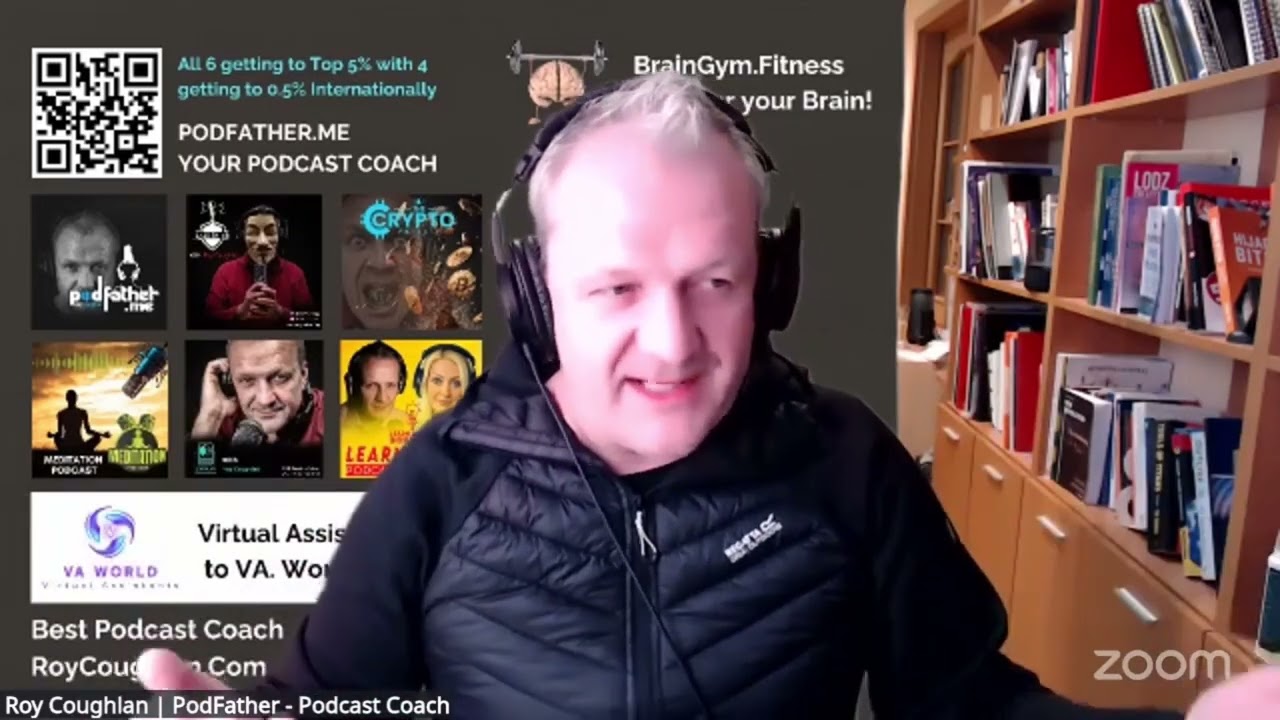
In this episode of Remembering the Forgotten, host Markus Neukom sits down with Roy Coughlan, a veteran podcaster and public‑speaking coach, to explore what it means to be truly present. The dialogue moves from concrete grounding practices—walking mindfully, barefoot contact with earth, touching trees, breathwork—to deeper reflections on how fear of judgment, career‑driven identity, and societal programming keep people stuck in a "victim" mindset. Roy recounts his early childhood shyness, the pivotal moment when a corruption‑exposing event in Poland forced him to confront his fear of speaking, and the subsequent immersion in Toastmasters that transformed his relationship with his voice. Together they discuss the concept of "presence as a decision" – a conscious choice to drop performance, align body‑mind‑emotion, and let inner coherence surface. The conversation also touches on personal sovereignty, forgiveness (re‑framing past hurts by seeing people as children), and the importance of gratitude, play, and creative expression in sustaining that state. Throughout, both hosts emphasize that the shift does not require trauma; it can be sparked by purpose, curiosity, or a simple walk. The episode ends with practical take‑aways: walk outside, notice the natural world, practice gratitude, and remember that what you focus on expands.
Chapters
Welcome to Remembering the Forgotten, a space where leaders think out loud without polish or performance. No scripts, no personas, just what becomes audible when the noise drops and the mind is free to speak for itself. These conversations are not about delivering insight. They are about thinking together in real time. Testing ideas against stillness, letting 2 open minds stretch each other. The intention is simple: to create a space where clarity can emerge and where listeners don't just consume perspectives but feel permission to engage their own thinking more honestly. Today I'm joined by Roy Coughlin, Roy has spent years at the intersection of voice, courage, and clarity, not as theory, but as practice. From overcoming a deep fear of speaking to hosting and growing 6 globally ranked podcasts, he understands what it means to find your voice from the inside out. This conversation, however, isn't about podcasting tactics or growth hacks. Or visibility as performance. It's about what happens when a person stops hiding behind systems and lets truth speak plainly. Roy has interviewed thousands of guests, helped countless creators step into public expression, and build platforms that consistently reach the top tier worldwide. But what matters here isn't scale, It's coherence. The moment where effort drops and presence carries the signal. This is a conversation about voice as embodiment, clarity over noise, and what becomes possible when speaking is no longer something you do, but something you allow. And with that, welcome to the show.
Thank you very much, Markus. Looking forward to speaking with you.
Wonderful. So before we begin, when I speak of coherence, I'm pointing to a state where nothing inside is in conflict. Body, thoughts, emotions, and action aligned, moving as one. No push, no urgency, no fear driving the moment. And when I speak of stillness, I don't mean silence. I mean the part of you untouched by expectation or performance, the place that knows before the mind tries to manage it. That's the ground I'd like us to meet on today.
Excellent. I mean, I, I feel When you talk about that, it's— for me, it's when I'm walking. I'm present. I'm totally present. If I'm out of alignment, I can feel it in my walk. If there's something— if something's health-wise, like if you feel like a cold is coming or something, or something in your life, I know it just by walking and being present. And I don't mean walking with a phone in front of you, because unfortunately society does that. Just been walking, paying attention to the birds, paying attention to the bees, everything, watching the sun, watching the clouds. And when I do that, there's no other conversation going on in my head. I'm just in pure enjoyment of the universe that we've been presented with.
What changes for you when you start walking like that?
It's like, when did it start happening as such, or what changes within me?
Yeah, within you, because I assume there is a before, a during, and an after. So there is noise, stillness, noise. How do you switch from noise, which probably most of our viewers and listeners know really well, into that stillness? Or how did it come to happen that you realized Huh, that's a different state when I walk.
I think maybe it's through a journey of kind of breathwork and stuff like that that I just came across. I don't know exactly. I always knew that when I was out of whack. So it's not a case of I'm walking and I go, all right, no, I need to go into it. It just happens. It's like sometimes you might be in your thoughts or sometimes you might go, I'd like to do this later on. This is what my plan. And then you just go into the present and just watching life, watching what's going on around you. And so it's never planned, or I need to do this. Like, for example, I drop my child off at school, and then I, I can take a walk around the park a few times. And I'm just looking at the water and just watching. There could be a fisherman. I just, just looking at everything. And then I'm just— I know the same, I look at the trees and I just go up and touch trees as well, because I heard like that's for grounding. And I know I've read the book The Hidden Life of Trees. So it's like the World Wide Web of trees. And when you know that, It's like we're connecting. So I try to do as much as I can connecting with earth. Like when I'm outside in the garden, I love reading, I do it barefoot as often as I can to ground myself. And I think as well as with say shoes, I try to wear leather shoes because a lot of the time people wear trainers, which is plastic.
Mm-hmm.
Are you really grounding? So I try to wear shoes or barefoot as often as I can. And I think the kind of combination of these things kind of put me in the zone. And also like I'm able to sleep very well A lot of people can't, they're just thinking of everything. I'm able to do that. It's just something that— it's not that that was always the case. It's kind of, if there's something on your mind, question, what, why is something on my mind? What can I do about it? Is worrying about it going to change it? Usually not. Can I have solutions to my worry? Sometimes it's worrying about what can happen in the future, which usually doesn't happen. So you're kind of ruining your sleep because of your thought process. Yeah. And I kind of realized that as well years back, that's not serving me. So it's kind of like being able to sleep and so always being present, you know, when you're eating, you know, don't be glued to the phone. Just kind of, if you're with loved ones, engage in conversation, be present. And I think combined, all these different things help you be in flow.
Is this the part I pick up on, the present? I think it's about being present, but it's about being presence. Because quite a few people, they can be present, but there's basically nothing that is present. And presence means— and this is what I realized when I met you for the first time, Roy— if someone meets you, a calm takes over. It's what I call stillness. It's kind of a coherence in regards to so within, so without. Because I believe most people very rarely experience that state we're talking about right now. And I can imagine that is one of the areas where you feel really untouched by expectation or performance. Is that correct? Yes. Do you have other ways to get into that state where you say, you know what, I simply don't care?
I think it's—
or is this almost common for you?
I think it's life, life's journeys. And we kind of look at things because, you know, when you're younger, you kind of, you're thinking about what people will think about you, you know, and you mentioned at the start of the intro about the speaking. And that's kind of the same kind of thing. You're worried about what people will think instead of just being there and giving value. And so, like, even with people, say, working, they're in work and they're thinking of their kids or their loved ones, and, and then they go home and they're with their loved ones and they're trying to work, or they're thinking at their work. You have to be where you are and just be regimental. If you find yourself slipping away, You need to come back and go, I get paid when I'm in work. I'll think about work when I'm in work. When I'm at home, it's family time. I spend time with either my kids or loved ones, whatever you're doing. And by being present, they appreciate it. Because sometimes people think, ah, if I work very hard, and then they buy all the gadgets, they think that's success.
Mm-hmm.
And a child doesn't want that. A child wants your time. and to be present with them. So by doing that, you build the bond, whereas a lot of people go, I did everything for my family, I worked very hard, I bought them everything, and the kids just move on and they can't understand it. They didn't give them their time.
Right. I had an interesting conversation with, um, with a very successful person yesterday, and I basically raised the theory, which is Arose while we spoke. Career is mostly something that men take on. So my question was, is it possible that men actually created that container called career so they will never have to take care of themselves, never have to work on themselves because they spend so little time in the battlefield, which can be family, as you know really well? Partnership, marriage. So if somebody really has an issue with career, quite often families crumble. Or if families crumble, career crumbles. So probably it's one of the reasons why most people never really get into that stillness. Because they're doing anything to prevent that that's possible. Because there's this theory that most people, when they go to bed, they realize, huh, I've been up 15 hours. 7 of them I lived in the past, and the rest I tried to worry about the future. And then you go to bed and you haven't lived. Here's a question for you. You mentioned the fear of speaking and your fear of being judged. When did that begin?
At a very young age. When?
What is very young for you?
Maybe 6, 7, because even going to the shop, I would My friend would go in and buy the sweets. I didn't like going and buying the sweets. And it kind of developed. And I was even asking my mum, what else did I do? She said, you used to always have your bicycle. You wouldn't just walk. Or I had my dog. I was walking with the dog or the bicycle.
Interesting.
It was like— and even at 18, like, we're able to drink at 18. I know, I know in the States it's 21, but I wouldn't go up to the bar when it was my round. I'd just give my friend the money. So there was usually 3 of us, or 4 of us going out. I didn't like that kind of thing, and I was late when I realized I needed to change this. So I was even running big jobs in Ireland.
Yeah.
I was very good at it, very good at negotiation, making massive profits. The one part I hated— we were, like to say, doing jobs for Johnson& Johnson. There could be 20 people there, the client, architect, builder, everything. And it was like my voice would just go, and I used I wouldn't sleep the night before thinking about meetings.
That's interesting. Amazing. So try to go further back than 6 years old. How were you before?
My dad, like, always a very nice environment, you know, always playing with my mother. My mother was at home looking after me and my brother. There's just the two of us, you know, playing games and things like that. My dad was doing, you know, Barking. So like, that's, that's what I remember. My, like, my mom was protective of us and, you know, making sure that, uh, you know, that we weren't just running out on the street, that we were allowed in the garden but not outside. And even with the school, there's— there was 3 schools nearby, but she made us go to, uh, a way better school. And she was taking us— it was a 45-minute walk. She took us to a really good school. And yeah, so we went there.
Of course.
Not just for primary but secondary as well, up to, you know, when I was 17.
Yeah, that's amazing. So when you grew up, and it's, I feel like for our viewers or listeners, it's quite hard to imagine them before 6. It's usually based on stories we hear. But when you think back to, let's say, 3, 4, 5 years old, do you remember a time where you were different than after 6?
Not really. I always had, like, we were always very close with, you know, my grandmother. My great-grandmother was alive till I was 11 or 12, so we had a very close bond. So no, and things like that, you know, just talking to friends and stuff. I had a load of friends, so that wasn't a problem. Yeah. It was more kind of, I suppose, talking in groups. Like, for example, I think, and this is just from my experience on interviewing people as well, I think what happened to me is when you're in school, they make you stand up. You're learning the language, and we had to do Irish as well, and they make you read. And just, you're standing, and then you start stuttering, you start shaking, everyone is laughing. So your first experience of public speaking is being ridiculed. And talking to a lot of people, that was the situation. And then you kind of go, I don't like this. And you just carry that forward to think, that's who I am. And then we have a crutch saying, I'm not good at public speaking, or I'm afraid of it, it's not for me. And you just lean on that crutch as if that's who I am, and you identify as that till you make a change.
What was that change in your life? How did that come to happen?
I was at an event. So when I moved to Poland, I was doing a lot of real estate. I put a lot of syndicates together, and When the crash happened, I was doing okay. Everything was grand. But eventually, the whole lot came tumbling down, and I was the president of all these companies, and usually with a limited liability. It's kind of like, all right, lessons learned. Let's move on. I was personally liable, so I was personally liable for five million. Yeah. So then I went through a whole yeah just fighting that, and you know seeing corruption. So I, I went, I got through it, I cleared the decks, and I went to an event. And the event was, what's your quest? And I said at that, I want to expose this corruption, because I saw corruption with bailiffs, with banks, with courts. I was like, this is bad. And I knew I didn't like speaking, but it was, um, Mindvalley. Are you familiar with?
Yeah.
So it was Vishen Lakhiani and Eric Edmeades. Were speakers. And I was like, these guys are brilliant. I need to be like that because nobody's going to listen to my message. And when I came back, I said, I'll join Toastmasters. Of course, I had to get my friends to hold my hands to go there. I went there and I said, this is brilliant. And they said, it's great, but we don't have time. And I was too shy to go back. And the only reason that I joined Toastmasters was a couple of months later, a new club opened And I said, okay, this is new, there's going to be new people. I went in there, you're signing up? Yeah. Will you do a speech next week? Yeah. And I just said yes for everything after that. And I entered all competitions, got into the final of 5 countries, did open TEDx, did an open comedy, and just went from kind of fearing it to enjoying it. And
that's amazing.
I actually start— spoke at Mindvalley talking about podcasting. And I wasn't nervous. And I remember thinking, this is great, because the guy said to me, he said, they might ask questions at the end, because— and I said, yeah, no problem. But as it turned out, people just started throwing questions straight away. And because I had just so much experience with the Toastmasters, I'd done over 100 speeches as well as doing the podcasting, it was so natural to me. People loved it. Mm-hmm. And it was just like, okay, I thoroughly enjoyed this. And if you kind of look back at who I was, You know, it's like, like, I'll give you an example of something. I, I got into, um, a multi-level marketing. There was a guy from Canada who was actually Polish but had moved when he was young. He came back and it was ACN was the, the company. And so I said, okay, this sounds interesting. They were supposed to have credit cards and electricity, so I could see an opportunity. So he was— and I got about 20 people under me in different countries. So when he went away, I said, okay, I need to start organizing meetings. So I had a place booked, and with my then wife— ex-wife now— but so she had a school, and that's where we were doing it, and nobody turned up. So she said, just practice it anyway. And my face contorted. So this was before I'd done this, you know, overcome the fear. So it was like I realized at that stage, this is weird. Why would I get nervous when there's not one person in the room? My brain was visualizing people there looking at me. And also, it's, it's like, it's— we're telling ourselves something, we're putting the fear in it. And it's like, if you can overcome that, how many things in life do we tell ourselves and cling to and believe when the reality is you just have to decide, okay, something different. I'm no longer on this road, I'm taking a different track.
And I'm absolutely sure that Many people who listen and watch this episode, Roy, will totally recognize themselves. And here is a very important aspect. When we are born, we are coming to this world with a whole set of seeds. There is courage. There is literally everything you can wish for as seeds. And when those seeds get watered, nurtured, they begin to grow. Interestingly enough, many people have to get to almost midlife. That's where the midlife crisis sets in, where you suddenly say, sorry, this can't be it. There must be more. And as you know, I work with those people. And what's interesting is there was one determining factor which I heard from you. Yeah. It was purpose. It was injustice where you said something has to be done. If it's not me, who? So you almost overcame and basically made the walls tumble down, which held you away from— From public speaking, for example, or from interacting with people you didn't know. And I believe this is so telling in today's time. Unless something really shakes the foundation, people don't get to change. Because you didn't just get up and said, you know what? Yesterday, I felt absolutely fearful. Today I'm going to Toastmasters. I want to change. You saw the injustice in Poland and you said, goodness me, if I want to make a difference, I need to learn the craft and the art of public speaking. If you think about that, it would have been possible without that cause, without that purpose you followed. And this is what I want the viewers and the listeners to hear. We don't need trauma first. We don't need illness first. We don't need burnout first before we actually get to understand, gosh, I have all of this in me waiting. This is why I love to go back to, let's say, 1 year, 2 years, 3 years old, 4 years old, 5 years old. Because there was a time when you did exactly what you now do intentionally, going for those walks. You did that as a child, right?
Yeah.
And then I picture you as someone as a child who maybe even hugged a tree very naturally or touched a tree or walked barefoot. Not because you knew this is grounding or this is earthing, but it was just natural. So you see, this is what I sometimes say is if we would go back to where we were still knowing, not knowing who we were, but knowing, just knowing, and take that state. Yeah. Combine it with our life's journey. I believe that's what life and living is all about. Because for me, it's about remembering who I was before the world taught me who I had to become. If you think about that, at a certain age, the world tells us who we have to become. And in the beginning, it happens by programming, by mindset, everything. So we start adapting sooner or later. And I'm curious how it was in your life. In my life, the voices literally were able to cease. The people's voices were able to leave. Yeah. Because I started doing the entire programming on my own. Because some people say, look, when the person walks away, that voice is gone. But in most cases, no, it's not gone. We hear our mom's voice, we hear our teacher's voice, we hear our boss's voice, we hear our neighbor's voice that was critical. And this becomes our own programming. But you know what the great thing is? As well as it came into us, it can leave at any single moment.
Absolutely.
And that's, that's the beauty. So what do you notice when you stop managing how you are perceived?
I think a lot of it was sometimes even if there's somebody that we don't like to be around, we kind of, we tend to try to, uh, don't rock the boat. That'll be— and I've learned that why should I have certain people in my circle?
Mm-hmm.
And I've never regretted cutting them out of it. I was like, this doesn't serve me. Yeah, I need to move on from this. And sometimes, you know, you might get into business with someone and then they don't do what they're gonna say, or they become a different person. And just to walk away and free yourself from that. And there's kind of a bit here that I think should help everyone. Like when I went through everything, and it's like this as well, because sometimes people, whether it's business relationship, even, you know, a partner, Whatever they're doing, or they have some trauma in their life, most of the time they're clinging to it, they're thinking about it, and it creates anger. Are they going to a therapist for 20 years and the therapist is going, oh, poor you, and they come back next week? What I learned through when I went through kind of the losses of, you know, the financial loss, I said I have to forgive these people. So I started thinking easy ones. Some were easy, others were hard. And I kept trying it and I was like, I can't do this. And how I managed it is I brought them back to the child. I said, we have unconditional love for a baby. Baby grabs your finger, it's just beautiful. Our baby just looks at you, just the smell is, it's just incredible. I said, they were once like that and it was external circumstances created who they were, whether it was abusive parents, you know, alcoholic, or they were, you know, the parents were working 3 jobs just to keep a roof over their head, but they started hanging around with the wrong people. And by just by doing that, bringing them back, I was able to forgive them. But what it did is it freed it for me, and it was no longer— so for example, sometimes you hear someone and they're telling about a story, and it's like they're back in the moment. You see the tears, you see the trembling, you hear—
and
it's like, that doesn't happen. And I think it's— we should all learn how to forgive. And I know it's hard sometimes. People, they've went through terrible things, but just forgive and try to take it back. So for example, if, if there's abuse cases, usually it's because the father was, the grandfather, it's a chain reaction.
It's the same with bullies.
Exactly, exactly. The bully. Yeah, yeah. You know, so by doing that, you kind of break the chain and you set a new trajectory so your generations don't have the same thing as well.
I believe this is one of the sad truths today, that most people are living in a victim mindset, and it's nurtured. It's absolutely nurtured. So I always wonder when I speak with people like you, Roy, what was it that actually triggered that Thought of, you know what, I am done being a victim. I want a different life. Can you recall what that was?
Like, there was always a kind of not tolerating, um, someone being aggressive towards me, or like a boss. I like, even though there was the shyness in me, There was times like, say, I could be on a construction site and like the builders usually, the foreman, they just abuse people. I don't know how it's allowed, but I would never tolerate it. And I would scream at somebody that tried to belittle me. And they, they were shocked because they'd see me in a meeting shy and think—
That is interesting.
And think that I'm a little mouse. And then they see a lion and they would never do it again. It happened to me a lot of times in construction because I was running big jobs. They'd try it. And once they've done it, they never— but yet I'm looking at them and they're doing it to someone else. And I just, I think it's pathetic, somebody that does that to somebody else. Yeah. But so, like, there was always the kind of do what's right inside me and understand it. So there was kind of, I suppose, phases of my journey to— and even like, say, the court case, like, I, I was representing myself in Ireland, so I had properties in Ireland, and they thought everything they did was like just fraudulent. And I was fighting a barrister, which is like the top end, and they were trying slimy things. Like, what your man told me, oh, it's not here, it's in another room. And I was like, that doesn't sound right. And I checked and he was lying. If I didn't turn up, I'd have lost. But I was talking to the judges and everything, and it was like I could see the lies they were saying. I wasn't shaking and quivering then. It was like I was standing in power. Mm-hmm. as a person that realized, hey, there's injustice done to me.
Mhm.
And I've kind of realized that as well through all the different things that I got big into— sovereignty, common law. Because when you are born, you're born free. Yet some people think, hey, we— the city, the government, whatever— oh, we control you. You're— and if you look at the the system we're living in. We're all slaves the way that it's done. Like, you don't realize it till something goes wrong. You think that they've got your back. They're not doing anything for us. But when you understand that— so I started reading maybe 20 books, started getting guests on, on this, understanding it, taking courses. And then I realized the power of the signature. The— it's like, because say in America, jaywalking, everything is like, sign that there.
Mm-hmm.
That's basically you saying, I agree to what you've just said. Every single thing that they do when they write you, like the name they write you, is the all capitals. And all of this understanding came from the journey that I've been through. So a lot of times we kind of go, oh, I wish. But if you look back, the person that you were prior to the person you are now, is 100 times better because of what you went through. And I'm saying everybody should do that. They're better off listening to your show, understanding it, and realizing, oh, I can do this without having to go through this. But I think you realize your freedom, your sovereignty, that, hey, they can't do it. And I've put that to pot. Like, there's times now I did write to me, like, for example, I had a tenement building. And when we sold it, they came after us for, it was about 8 grand of refuse. And I said, hey, we didn't use the refuse. We had our own. We had an alcohol shop that was renting it. They were using that. And I just used my power and they're like, they just kept, eventually they said, oh, 1,000. And they ruled on it. I didn't even accept that. But like, that's the thing you can do. And same with a pension. Like when you're 50 in Ireland, you can get your pension. and it's 25% tax-free, but then they tax me at 50%. So I had a bond and a pension, and I just used my knowledge and my power. And I said— and I knew straight away when they were writing back, like, because you can't ring Revenue anymore, the, you know, you have to— it's like ring on Monday from 9 to 11 and Wednesday. And when you ring, oh, you're the 50th call, you never get through. So you have to do everything online. And I knew they were being sarcastic writing to me, and I knew I got every penny, zero tax, every single penny that they gave me. And that was just by understanding knowledge, understanding how fraud is done at high levels. And I think everybody should start looking at that instead of trusting the judge, trusting, say, the doctor. Trust— you have to look after your own health. Every single thing you do in life You have to listen.
You know, I hear something else which we have not spoken about yet. If we look at the world, every single person is tangled with each other. Like our nervous systems are absolutely tangled with every single person around us. And that actually makes us Manipulatable. It makes us movable. And what I can tell is you have somehow found a way to detach yourself from that nervous system and basically almost like created your own ecosystem, which is a grit. Because otherwise you could not do what you're doing. Because otherwise you would get to a point where you say, you know what, a barrister? No, that's the limit where I do not go against. A judge? No, I'm not suicidal, right? So you have developed kind of your own grid system. Because, you know, this is something you and I have in common. There comes a point where I say, you know what, I have nothing to lose. I play along and I play nice for quite some time, but that threshold comes lower and lower every single moment, not just day, moment where I say, you know what, why the heck would I waste time with you? Why would I let you believe what you're believing? I actually tell you what it is and I show you what it is. But it is because we are so tangled or entangled with the entire nervous system of the world. And unless we become sovereign, as you said it, and you know what's interesting? You mentioned that lion in you. That lion was what you were born. Yeah. So that seed was there all the time. Guess what? You and I grew up quite similar. That backbone of a lion was never really developed in me. So we took pressure from outside until I said, no, no. And that no was almost like a mini roar. And it became louder and louder and louder in me until I realized, I'm no sheep. No, I'm no chicken. I'm a lion and I'm an eagle. So what I used to do, I basically started soaring higher than all the crows or whatever wanted to follow me. They had no oxygen anymore. And then I realized, gosh, why would I even take that energy and go high if I can be an eagle on the ground? And that's when it started to become interesting. So anyone who listens to this episode will absolutely understand what it means to reclaim sovereignty, which, you know, I used to live in Dublin for a year. So I got to know the Irish mentality. And if you actually sense that pure sovereignty, you have to go to Ireland, or you have to go to anything in this area, because you can just still tell, even if they don't appear like it, but there is this sovereignty still instilled somehow in the culture. You agree? Yeah.
Yes. Yeah, definitely.
Because, you know, I had you on many, many calls now in your company as well. And I was always wondering, goodness me, what is behind that almost demeanor appearance? And I'm so grateful that we have this conversation today because now I understand this is just something that's Almost dormant. And as long as you don't need it, you don't show it. It's fascinating. Or like an 86-year-old guy said to me a couple of days ago, he said, Markus, you are soft and hard at the same time. And I said, look, I am soft-spoken. And what you experience as hard Is edge. And edge comes out when the other side doesn't understand. Right. So if someone feels overwhelmed right now, literally where you were before, what would you want them to return to?
Say, Just trying to step away and try to find somewhere different, even if it's just go to the park, you know, because sometimes people try to get into their head, try to fix things in an environment that has kind of maybe created that. So just, just learn to maybe go for a walk in the park, even if you sit on a bench. And the other thing is like gratefulness, you know, start thinking of what you love in life, what you're grateful for, you know, a child giving you a hug, maybe you've a loved one, somebody that loves you, you know, you could have supportive parents. There's a lot different things. You might have a job that you're grateful for, you know, a nice house. And by thinking of what you appreciate and love, you start attracting that. Whereas unfortunately, people start thinking of what they don't like and the negativity, which in turn they start attracting that. So like, I mean, we all kind of know people, everything bad seems to keep happening to them. And it's like, and even, even on that, like, say Sometimes people are watching horror movies and stuff like that. I think the brain doesn't know. So I stopped watching horror movies because I think we don't know what's real and what's not. Because even if you see people on virtual reality, you see people walking into the television screen because they just are— they start screaming because the brain starts believing it. Yeah. So we have to start realizing how powerful our brain is and what we start telling it. I mean, we've all seen the plants, you know, when people start saying positive words to a plant, and negative words to a plant, the negative words, you know, destroys its state. The other one flourishes. And most people unfortunately start taking negative words to themselves. The one thing, like, based on what you've asked me, start loving yourself. Most people don't love themselves. Appreciate yourself. Love what you're good at. If you've got a flaw, we all have flaws, start looking into it. What can I do to stop whatever it is? You know, maybe you get angry easy or something like that. Start Okay, what triggers me? What can I do about that? But start looking at the things you love and who you are and love yourself. Because I think most people, if you listen to them, they're— it's all negative talk. A lot of them are talking out loudly to other people, putting themselves down. And it's like, don't tolerate that. Like, you would never— just if you were the child, if you heard that child saying that to themselves, you'd stop them immediately. But most people do it to themselves. You have to stop that and just, you know, just think of positive things. Do things you love. Like, if you like music, listen to the music you love, because most people, they know what they like. Then wear— even, you know, whether it's wearing bright colors or dancing, there's so many things. Painting. If you do it, start doing it. Don't be thinking, I'll do that when I retire. Do it now. do the things you love. And then you start enjoying life. You start becoming a better person. You start becoming better for yourself because you're in the right zone. And sometimes people think, oh, I'm in a bad mood today. And they tend to stick to that bad mood today instead of going—
It's a whole day.
Yeah. Instead of going, all right, I'll just step away from my kind of normal routine. I pump, pump, pump the music on. I'd go outside, take an hour walk, just go to the gym, whatever, you know, makes your mind change and just do it instead of sticking in the moment of going, oh, this is just one of them days. Because then you keep telling yourself that and you're kind of feeling sorry for yourself. Who are you serving? Nobody. You're just— your day isn't getting better. And just realize that everything is like someone deciding to stop smoking or drinking, whatever, you know, that sometimes, oh, I must do this. It's just everything is just, just that. It's just a decision. And just
beautiful. So literally, where you focus on growth,
huh?
Yes. A dear friend of mine, he wrote to me, look, I have found a key how to deal with the entire political mayhem that we're going through in the US right now. And I got on a call with him and his answer was surprising. I know him for quite some time. So he said, I took Benjo, who is my dog, and I went on a walk. And I suddenly put my gaze up into the sky and everything was gone. All the worries, all the fear, all the hatred, anger, disappointment, despair. And he said, suddenly I realized I don't focus on it anymore. So he lowered his gaze. So he was in reality, in reality again, right? But guess what? His gaze went up again. It came down again. It went up again until he said, this is how I want to feel. It takes so little, but literally for people to hear Roy's message so clearly. What you focus on grows. It's just what it is. What we focus on grows. So with that, Roy, thank you so much for having been my guest. It's been a great pleasure.
I really enjoyed it, Markus. Thank you very much for having me.
You're welcome. This was Remembering the Forgotten. A conversation held in clarity, not performance. If something in this exchange shifted how you see, let it stay with you. A few quiet pointers are waiting below.
More from Markus







Ep 66 Breath, Trauma, and the Fear of Being Fully Seen A Conversation with Matt Ritchey

Ep 65 Truth, Trust, and the Courage to Be Seen A Conversation with Troy Gregory

