Ep 38 Identity Without Armor A Conversation with Lesley
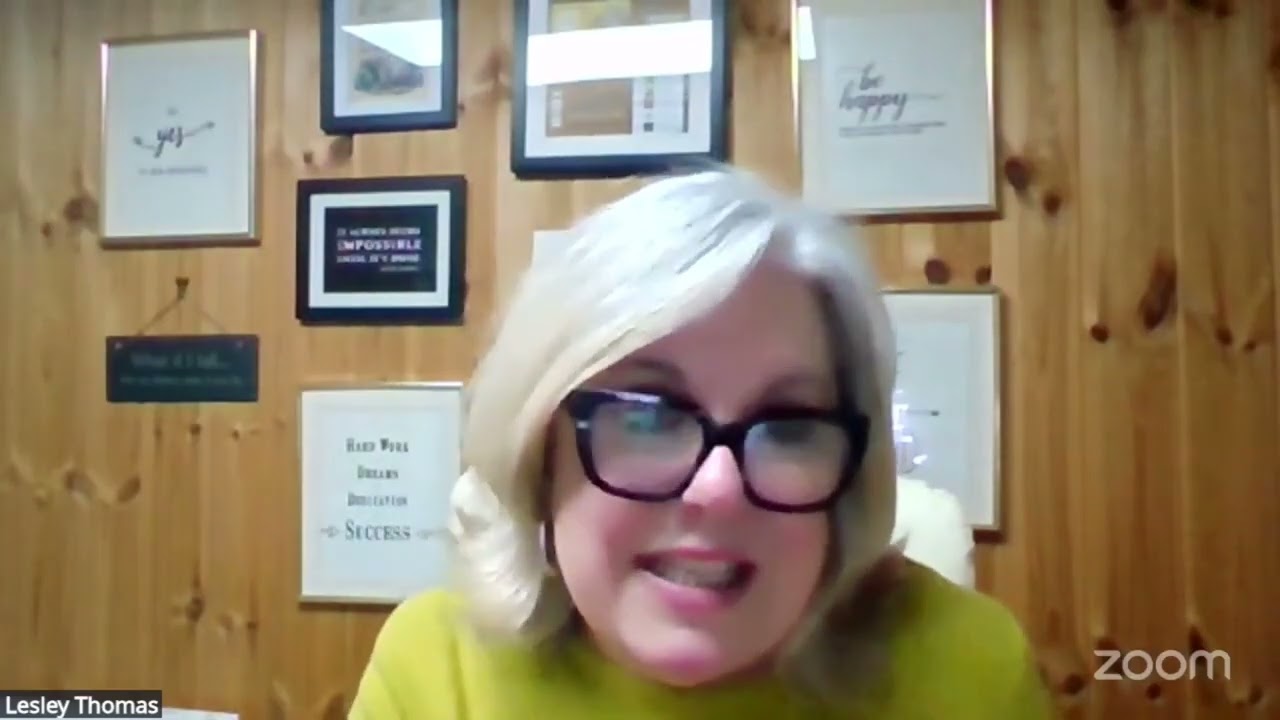
In this episode of Remembering the Forgotten, host Markus Neukom interviews Leslie Thomas, founder of the Money Confidence Academy and creator of the Financial Self‑Trust Framework. The dialogue explores how money, pressure, and societal expectations shape identity and judgment, especially for high‑performing women and entrepreneurs. Leslie shares her personal journey from a “matriarch” who always provided support to a point of near‑burnout, describing how the belief that asking for help signaled weakness kept her in a self‑protective bubble. A pivotal moment of silent crying at home revealed the cost of this façade and prompted her to embrace vulnerability, trust, and the role of her family as a source of authentic self. The conversation delves into the concept of stillness as active coherence, the gendered pressures that push women to emulate masculine leadership styles, and the importance of reclaiming one’s original self beyond professional roles. Leslie offers practical advice for anyone feeling overwhelmed: ask deep self‑inquiry questions about identity, values, and limiting beliefs, and step out of echo‑chambers to reconnect with one’s true self. The episode concludes with a proposal to create a panel of “Power Women” to further discuss these themes.
Chapters
Welcome to Remembering the Forgotten, a space where leaders think out loud without polish or performance. No scripts, no personas, just what becomes audible when the noise drops and the mind is free to speak for itself. These conversations are not about delivering insight. They are about thinking together in real time, testing ideas against stillness, letting 2 open minds stretch each other. The intention is simple: to create a space where clarity can emerge and where listeners don't just consume perspectives, but feel permission to engage their own thinking more honestly. Today, I'm joined by Leslie Thomas. Leslie works at the intersection of money, judgment, and responsibility, not as a theory, but at the precise moment decisions are made under pressure. This conversation, however, isn't about money management or financial literacy or optimization frameworks. It's about what money does to people, how pressure alters judgment, and how identity quietly enters the room when risk feels real. Leslie is the founder of the Money Confidence Academy and the creator of the Financial Self-Trust Framework. She works with leaders and teams to surface the invisible forces behind hesitation, Overcaution, fractured communication, and the loss of confidence that often appears exactly when responsibility increases. But what matters here isn't credentials or methodology. It's trust. The kind that holds steady when numbers tighten. The moment where second-guessing dissolves and judgment begins clean again. With that, Leslie, welcome to the show.
Hi there, Markus. Thank you very, very much for having me onto the show. I'm really looking forward to our conversation.
Likewise, thank you for taking the time. So before we begin, when I speak of coherence, I'm pointing to a state where nothing inside is in conflict. Body, thoughts, emotions, and action aligned, moving as one. No push, no urgency, no fear driving the moment. And when I speak of stillness, I don't mean silence. I mean the part of you untouched by expectation or performance. The place that knows before the mind tries to manage it. That's the ground I'd like us to meet on today.
Okay, I'm here side by side with you.
I can tell. So let's kick it off, Leslie. Where can you just be yourself, untouched by expectations or performance?
I think for me that has to be at home with my family. So my husband and my children. I'm very fortunate I have a garden office, so I tend to leave my, my business, my, my work self up in the office or on the train when I come home from meetings, etc. And I think once I'm in that house, I become a wife and a mum, and I remain that way as, as, as much as I possibly can. Running my own business, unfortunately, it does mean that technology gets in the way of that sometimes. But I definitely see myself in a very different way when I'm at home and I'm with my family. You know, I become the Mum, what's for tea? Or, Mum, where's my sports kit? You know, I very much become mum and, and a wife, and I think that is when I feel at my truest self, definitely.
Well, it's really beautiful, Lesley. It doesn't seem like there is much pressure to go into that state, being a mum and, and a wife, right?
No, there's absolutely no pressure. No.
I can tell. And that was one of the reasons why I was so much looking forward to having you on the show. So why do you think that most people I speak with, they need to go into solitude to actually be themselves? Why do you think that is?
That's a really interesting question. And I think probably years ago, I, I might have given a very similar answer. But actually, I know my whole self is definitely made up of my husband and my 2 teenage boys. That's when I feel whole. It doesn't mean I don't enjoy solitude. I do enjoy thinking time. But actually, I don't need to be on my own to enjoy solitude. So, for example, my, my husband enjoys television far more than I do. He enjoys sport far more than I do. But I would never be the kind of person that says, I don't want the television on because I want to read a book, or I want to do something else. Because I want— I never want my children or my husband to feel they have to go into another room to watch the Grand Prix or to watch football or anything like that. And I don't want to necessarily leave them so they can do that. So I tend to very comfortably coexist with them whilst I'm doing something else. That might be reading a book. It might be planning a meal. It might be having a conversation with ChatGPT about something. It might be planning out, you know, a piece of work. But for me, I am very comfortable with my family. I— whilst I am a very sociable person, I am very careful about how I spend my time with other people. And I think that is because I am very aware that my 2 children— they probably wouldn't want to be referred to necessarily as children because one is 19, the other is 17— but I'm very aware that they get to choose much more now, you know, how and who they spend time with. And therefore I want to make the most of I'm still living at home, still wanting to share time with me and my husband, their dad. Um, so therefore, for me, solitude is largely something I do when I'm asleep, as opposed to having a need to have space or solitude that literally means it's just me, myself, and I.
Makes sense. So you said, Leslie, that a couple of years ago you probably would have answered in a similar manner, like probably most of my guests actually have so far, that is solitude. What would you say changed from back then to January 23rd, 2026?
It probably goes back possibly a little bit further than that, than that, probably about 3 years ago. I can think of a particular event. So I am, I am very, I'm very confident in myself. I am what you would probably call a matriarch, that I like to be in charge, that I like to be the one that provides solutions, that I like to be the one that people come to for support. when they need support. What I am not very good at, or I was not, I was not very good at, was asking for support if I ever needed it.
Interesting.
I had a belief that I had to deal and cope with everything myself, and to show that I needed support I had a belief that I was showing weakness, and I didn't want to show that weakness. And then about 3 years ago, I became very close to burnout in my business. Mm-hmm. I was working too hard. I wasn't giving myself a break. I was saying yes to everything. not putting very effective boundaries in place. And I found myself feeling very, very low. And that's very low by my standards because I am a very, very kind of upbeat, positive person. Mm-hmm. And I got to the point one evening where I was sitting, and I don't even know what triggered it. I was sitting crying. Silently crying. My husband was sitting next to me, and he had no idea I was crying. No idea at all.
Mm-hmm.
And the crying got louder and louder and louder. And he said, oh my goodness, you know, what's wrong with you? What's wrong with you? And I couldn't stop crying. Mm-hmm. And eventually I explained to him that I felt under a huge amount of self-instigated pressure. That I had not been talking to anybody about it. And a point had come where the, the pressure had released, basically. Mhmm. And I recognized that that was not a good position to get myself into, that being so private with regards to what was going on for me was unhealthy. And that for me, Being with my family, being mum, wife, as opposed to always-on business owner, removing that identity of simply being the one in control, the one with all the answers, the one with all the solutions, and actually leaning much more into my vulnerability. And leaning more into, I didn't have to have it all together all the time, that I didn't have to have all the answers. I could look to other people for those answers, and to admit that sometimes I needed support rather than, rather than being the one that always gave the support. So I think over the last 3 or so years, I have brought down barriers that I didn't realize was there. I'd put myself in some kind of self-protective bubble, and that bubble had been burst. And I'm glad that bubble was burst because I feel I'm a much better person for it.
Mm-hmm. That's beautiful. Let me translate it a little bit into my language to see whether I get it. When you follow what I'm doing is I'm always talking about returning to the original design, and I'd love to share an image I saw Basically a picture series almost. There was a part of you that was silenced, and that part knew this isn't it. There must be more. And I believe many, many women and men will recognize themselves in what you just shared. Because I believe this is very common for somebody who's either entrepreneurial or in a high-level, high-pressure, high-demand executive job.
Yeah.
Because that role becomes your identity.
Yeah.
And the actual identity, which is your original self, gets silenced. So I'm not surprised. So if I understand correctly, you didn't fall ill. You had not an illness. No. So your inner self took another route.
Yeah.
When you sat down, she suddenly started crying.
Yeah.
Would you say that as a precursor to that incidence on that sofa or chair, did you have an internal conversation prior to that where you started wondering, is this really it, or isn't there more to my life? I
don't know. I don't think I was ever questioning, is there any more to my life? I think more I was questioning, why am I always the one providing support to everybody else? Who's providing support to me?
That's exactly it.
Yeah. You, as you know, as a, as a human being, you can't expect support when you are not giving off the signals that you need that support. And, you know, my husband said to me at the time, well, why didn't you tell me? Why didn't you let me know? you needed more support. And I think I expected him to intuitively realize that. Mind read. Exactly. And I do think it, it is a woman's trait, unfortunately, because I think women do tend to be more intuitive, and therefore we can read signals, and we expect our menfolk to be exactly the same. But why would they be? Exactly the same. So I think I, I got to a point where I needed to have support. I needed to be honest about how I was feeling. But because I wasn't used to being in that situation, I didn't have the, the language. Mm-hmm. I didn't have the ability to kind of tap on the shoulder and go, Could we have a conversation, please? This is how I'm feeling. So I almost had to find another mechanism where I didn't have to say anything. And this was subconsciously, by the way. Oh yeah. But I didn't have to say anything. It came out in its own way as emotion that would be recognized that, oh, Lesley's upset, she's crying, what's going on? And it was at that point when my husband then invited me almost, you know, what's wrong? Tell me what's wrong. You know, he really thought something seriously was wrong with me. Mm-hmm. And it was just a case of I'd had too broad a shoulder for so long That actually I'd forgotten that there are going to be times, you know, in my life where I'm going to need somebody else to have the broad shoulders, but I can't expect them to know that when that was not their experience of me. So I think it's that that was going on for me, is that, that need for somebody to recognize When I was not giving the signals that there was anything wrong up until that point.
You know what's interesting? This is actually a very common issue with what I call power women. Because what's so interesting, if, if somebody met you 3 or 4 or 5 years ago, right?
Yeah.
They would have thought And, you know, if you did ask me, I probably would have said to you the same. This is a woman who on the forefront has it all together.
Yeah.
And unless someone is intuitive, especially as a man, the rest just gets overlooked. Yeah. Because the thing is not that Leslie said, you know, Markus, this is actually a sign of strength. that I keep it all together, you've been actually hiding the worst, saying, Markus, if I were to show my weakness, this would show me as inadequate. I was working once with a client who was able to literally provide connections to the entire world, would never ask for nor accept help from anyone. from outside. And when I asked her why, that's exactly what she said. She said, Markus, that's a sign of weakness, and weakness would make me inadequate. And to everyone who listens or watches this episode, it is so important to get to that point where you understand it's not weakness.
Absolutely. Yeah. Absolutely.
It is society that tries to tell us that.
Yeah.
Because you see, what's beautiful is we are all born with executive functions, which is creativity, courage, you know, whatever, all these beautiful C's. And in the end, we are all born with little seeds. And if they are nurtured at a young age, they start blooming into beautiful qualities. So if they are not nurtured, if the natural growth doesn't take place, a midlife crisis kicks in, a burnout says hello and knocks at the door, because that's the system. You know, some people call it like a little girl or a little boy that had enough, because goodness me, Leslie, this is not why we are here.
Exactly. Absolutely.
There is more than just business, Leslie Thomas.
Yeah, absolutely.
You know, and I can tell you this, and this is the most beautiful compliment I can give you. When I look back to when we met for the first time and now I meet Leslie Thomas again, it's night and day. Literally night and day. Because, you know, I, I liked you back then because I could relate to that driven, to that controlled almost person who had to have it all together and was extremely successful.
Yeah.
But now what you said is so beautiful to experience because when I heard you say the word mom, I don't think in all the conversations we had, you probably never even used that word if you had to describe yourself.
Yeah, possibly not. And what's really interesting now is if I ever do, you know, any group training or, you know, any leadership training with a group and I have to, you know, present, I start off obviously explaining, you know, who I am. And my very first line now is wife and mum to 2 boys. And I will say, because that is my identity first and foremost, and I'm very aware that that identity has to shift slightly over the next few years because, you know, my children are seeking, you know, independence and moving away, etc. I do find that really emotive, you know, to think about. But equally, I celebrate the fact that they are becoming independent and want to have independence. But you are right, I think it took me a while. You know, I started off being— I was in 20— for 20 years I was in corporate. Then 16 years ago I left and I joined my husband in his business. Then 5 years ago I set up my own business. And I think actually all of that took over. You know, you are, you know, a corporate— you're a corporate girl.
Identity.
You're a business owner, you're an Entrepreneur.
Identity.
Mum. Exactly. And then my— the mum bit, actually, it shook. I thought, no, I'm a mum first, and the other things just facilitate that fact that I am a mum.
Yeah.
And
yeah,
I probably had to let that through. I don't know whether, you know, whether it was conscious, subconscious, I don't know, but it's that part of me Which is the best part of me. It is by far the best part of me because I am at my most comical. I am not worried about, you know, looking silly, or I don't overly— you know, I would do karaoke, you know, with a, you know, in work, you know, in a work environment, etc. I don't worry about those things, but I probably always have A little bit of a mask on, whereas, you know, at home with the family, no mask whatsoever, no concerns. And I think I've allowed that softness to be a real part of me in and out of work. But especially, you know, as I mentioned, I'm in my garden office, so I can close up the door. Work's done for the day. And then I go down into the house and I, you know, I, I become— my first focus is what am I cooking for tea? And, you know, when do I need to do a shopping order? And where's the boys' sports kit, etc., etc.? And I think then that is when I am at my, my, my best, my highest self, the most real me I can possibly be.
What you beautifully confirmed, Leslie, is stillness is not silence.
Absolutely.
Stillness is extremely active.
Yeah.
But it's coherent. It's when the thought and the heart goes into coherence, that's when the channel opens for your original self.
Yeah.
You spoke about vulnerability, and I think for vulnerability it needs trust. And it shows that with your family in your house, you have that trust.
Yeah.
And you know what's really interesting? Um, most people believe it's a man thing that they go into corporate, then they might go into partnerships, and they might go Solo as an entrepreneur, and they never really experience what this means to just be. So existence is something that kind of almost gets voided. But now you show me that probably more women than we think are actually walking into the exact same corporate trap. Or entrepreneurial path trap, where they believe what I'm actually doing is something good. But what they don't understand is that society tells them, do not concern yourself with anything else. This is a special club you're a member of now. You do not have to be concerned about who you really are.
Yeah.
And let's be honest, Leslie, the system does not want too many self-aware women and men.
No, far from it.
Because when you start thinking,
yeah,
and you suddenly say, oh, thank you for the invitation, but no thanks.
Yeah,
one of my boys has an event. I'll take place.
Yeah,
I'll be a guest. And the system says, what's that, Leslie?
Yeah. You haven't got many days holiday left, or you've gotta be at a meeting, or exactly.
Absolutely. Yes.
Yeah.
Yes.
Yeah.
But then really got to the point where, and, and then I heard that out of yourself, that you suddenly realized, I am actually almost living someone else's life. It's not my script.
And that's why I left corporate life was for that very reason. Makes sense. You know, when I, I can remember Um, 17 years ago, you know, my husband had already set up his own business. I, I live in Salisbury, um, in England, which is about an hour and a half away from London on the train. And I would be rushing off first thing in the morning to catch the train while my husband was giving the 2 boys— they were probably about 3 and 18 months at that point in time— he'd be giving them breakfast before getting them ready for nursery.
Christ, yeah.
And I was thinking, Hang on, what kind of wife, mum, and employee am I being when I'm always rushing, I'm always clock watching, I'm always working out how many days holiday have I got, and when is the school nativity, and when is sports day, to make sure I could cover all of that? And I absolutely agree with you, Markus, that the system is set up that we all Conform. And whilst I understand the need for certain roles to be performed, absolutely, I also believe it is our right to decide the structure in which we want to live.
Mm-hmm.
And for me, the structure in which I have lived for the last 16 years has been totally designed around Being there for my children and my husband the same. And in fact, our 17-year-old about 2 years ago, and this is the best compliment I could ever have been given, he said, Mum, when I'm older, I want to have a business like you and Dad so that I can always be there for my children like you have always been there for me and Adam. And that was like, because you're not aware, are you, that they're aware of what you have attempted to create, the lifestyle, the structure, that you will be there. They don't have to let themselves in because, you know, you're both at work, or they are not going to go on stage and see you in the audience or at the end of the lane on sports day, etc. And I know Everybody, you know, is not fortunate enough to have those choices. I created those choices, and in creating those choices, I absolutely believed I had to behave in a certain way. Now, when I was in corporate, I was in the power suits with the padded shoulders, thinking, you know, I had to behave like a man. And in fact, I got told off by one of my bosses in the early days of my corporate job. She said to me, Leslie, you've got to be careful because you are alienating some people. And they would never say this to a man, by the way, that you're alienating some people because you behave too much like a man. Which, you know, now would be a really, a really interesting comment to receive back then, you just accepted it. Whoa. Oh, okay. I'll tone things down a little bit. But that's because I believed that I had to be like a man in order to be successful. Whereas in running my own businesses, I have certainly stepped into my— when I say my feminine self, I don't mean pink is my favorite color, but I'm not a kind of a fluffy person. I kind of, I kind of oscillate between liking wearing trousers and liking wearing a dress and being in charge and then being looked after. So I do oscillate, you know, around those identities. But I think for me, it is now— and as you get older, I think you get more confident anyway— but it is, it is now about recognizing I'm not gonna be liked by everybody, and that's absolutely fine, because I don't like everybody. That I'm not going to fit into all circles, and that's fine, because I don't want to be in all circles. Some people will actively dislike me because I'm very clear on my boundaries and very clear about what I will and won't do. And that's obviously developed over time. And I'm now very, very happy where I am, but I will never go back to that person who feels she has to be in charge, be in control, be the one that is there for everybody, because I came very close to burnout. Mm-hmm. I didn't, fortunately. You know, my body decided I was going to break down and have a sob instead, and that, that released everything. Because my husband and I then, you know, he, he regularly checks in with me now. Now he knows he needs to check in with me. Mm-hmm. I had created a version of me that he didn't think he needed to check in with me because I never gave that impression, basically. So it was on me. And for those People listening, if you know you have built up a persona that is not serving you, that is not giving you what you need, be honest and go and talk to your person, whoever your person is. And that might not be a romantic partner. It might be a friend. It might be your own parents. It might be a sibling. If whoever it might be. Give yourself that safety net to know that you can go and say to that person, you know, I said I needed to have come to you and have a conversation. Could we have that conversation now? Because you feel far better for it, because you are supported both directly and indirectly, and knowing you have that support. You're less likely to need it than not taking the mask off and nobody knowing that you do actually need support yourself.
Beautiful. This brings me to an idea, Lesley, and we have not spoken about that. I want to organize a panel. of Power Women Like You, where we talk especially about this subject.
Mm-hmm.
Because there are countless women listening and watching this episode who see themselves exactly at that point where you were back in career.
Yeah.
Believing they need to be like men even more than 17 years ago you did. Yeah. And I'm just so fortunate to be surrounded by powerful women who understand if I am myself and dare to be myself, even if it's Barbie, I am way more successful than when I start to emulate my male colleagues.
Yeah.
Because we are different. So if you accept my invitation, I'll take this as a kickoff to, to organize that panel.
Absolutely.
And it becomes a separate show.
Yeah, absolutely. More, more than happy to, because I think once you get to a point where you feel, you know, you have something to, to offer other people, then that naturally draws other people out of whatever situation that they're in and realize that they have something Equally beneficial to share as well. So thank you for the invitation. I gladly accept.
You're welcome. Wonderful. So as a final question, and you actually answered the final question already,
okay,
but I have one more.
Okay.
If someone is overwhelmed right now, what would you want them to return to? Especially if you think about that Leslie Thomas 17 years ago?
Oh, it's a good question. What would I want them to return to? I think, I think probably to ask themselves, who are you? Who are you? And how do you want to be seen and heard? And if that is far removed from where you are right now, to ask yourself, why is it far removed? What, what has led you to be less than the person you wanted to be? Is it down to, you know, limiting beliefs? Is it down to not feeling enough? Is it down to fear or scarcity or a mindset of lack? And I think when we give ourselves that ability to ask the questions, why have I behaved in that particular way? That gives you the ability to come back to yourself. And what I mean by that is I have operated, you know, for a long period of time, you know, in the online world. And the online world is a very big space, but also you can be in a very small bubble to a certain extent within that very big space. Mm-hmm. And you can start to believe that life only operates in that bubble. And if you start comparing yourself to other people, in that bubble, or trying to be liked by everybody in that bubble, you start to lose your sense of self. You start to lose your opinion. You start to lose who you really are. You start, start to soften your values. You start to question, am I enough? Do I know enough? Have I done enough? Am I successful enough? But when you remove yourself from that That bubble, and you start actually coming back out into the real world, and you start to realize your values and your value, and actually how much you do know, and the success— you think about the success you have actually had. You actually come back to yourself again, and you start viewing yourself Through your own eyes, through your own lens, rather than through the lens of that echo chamber that you have been operating in. And I think that's probably what happened to me 3 or so years ago, probably a bit longer, because obviously I had to have that kind of, that burnout situation. So probably 4 or so years ago, we were— Probably still in lockdown, or coming in and out of lockdown at that point in time. And I think I forgot myself. And I think for somebody else right now, to come back to yourself is to actually remember who you are. And I think when— once you remember who you are, you can largely realize you can be And do anything you want to. You have that choice. And when you have that choice, your conscious self, your subconscious self come together and almost have a party and say, yes, she remembers who she is.
Welcome.
And I think that's— and I think that is what that happened to me. I remember—
Oh yeah.
Who I was. And I came home.
I see that.
Yeah,
yeah, I see that. So with that, Leslie, thank you so much for having been my guest. It's been such a pleasure.
Thank you very much, Markus, for having me. I've really enjoyed the conversation.
This was Remembering the Forgotten, a conversation held in clarity, not performance. If something in this exchange shifted how you see, let it stay with you. A few quiet pointers are waiting below.
More from Markus







Ep 66 Breath, Trauma, and the Fear of Being Fully Seen A Conversation with Matt Ritchey

Ep 65 Truth, Trust, and the Courage to Be Seen A Conversation with Troy Gregory

