Ep 39 Home Without Myth A Conversation with Scott Mason
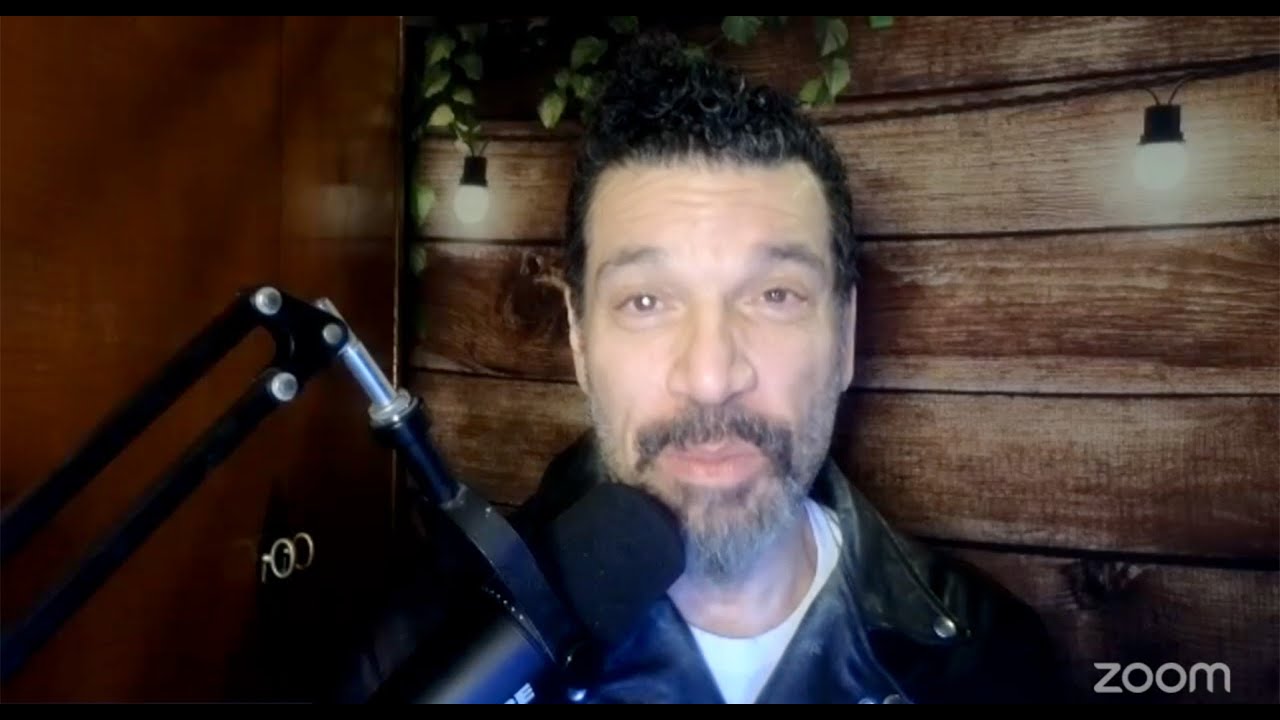
In this episode of "Remembering the Forgotten," host Markus Neukom engages former attorney and "Myth Slayer" Scott Mason in a deep, unscripted dialogue about the invisible narratives—"myths"—that shape identity and leadership. The conversation opens with a guided imagination exercise that leads into reflections on memory, childhood "seeds" of creativity, courage, and curiosity, and how they are nurtured or wither over time. Markus shares his own story of early trauma, parental relinquishment of agency to a church, and a subsequent journey through loss, surrender, and self‑realization that culminated in a sense of "home" as an inner, permanent state of stillness. Scott expands on the idea that reconnecting with a fractal of the divine can restore these executive functions. They discuss how high‑achieving clients, even those with vast external success, often feel empty and seek this inner home. The episode weaves philosophical musings on memory as sensory translation, the role of humility in power, and the process of enlightenment as shedding illusion to remember one's original design. Throughout, the tone remains conversational, poetic, and reflective, with both participants expressing curiosity, humility, and a measured optimism about personal transformation.
Chapters
Welcome to Remembering the Forgotten, a space where leaders think out loud without polish or performance. No scripts, no personas, just what becomes audible when the noise drops and the mind is free to speak for itself. These conversations are not about delivering an insight, They are about thinking together in real time, testing ideas against stillness, letting 2 open minds stretch each other. The intention is simple: to create a space where clarity can emerge and where listeners don't just consume perspectives but feel permission to engage their own thinking more honestly. Today I'm joined by Scott Mason. Scott works at the intersection of identity, leadership, and pressure, not as theory, but as the precise moment when high-performing attorneys realize that the story carrying them is also the thing constraining them. This conversation, however, isn't about career coaching or productivity or professional reinvention as a checklist exercise. It's about the myth people live inside, how invisible narratives harden into identity, and what happens when those myths are finally seen clearly enough. to lose their authority. Scott is a former attorney, a Columbia Law graduate, a 2-time TEDx speaker known as the Myth Slayer. He works with lawyers and leaders who feel the pull towards something truer but can't yet name what's in the way. But what matters here isn't credentials or frameworks. It's liberation. The moment when self-doubt stops masquerading as realism and leadership returns to its natural state— clear, grounded, and unburdened by inherited stories that no longer fit. With that, Scott, thank you so much for being my guest today, and welcome to you. Thank you, Markus.
Wow, that may be the most poetic and in the best possible way theatrical introduction I have ever heard, Markus. I feel like I have walked through the mist into some sort of mystical space, uh, that is beyond time simply by hearing it. It is good to be here. Wow.
You're welcome. It's you.
Right?
It is you.
Yes, it is, but presented in a way that is totally unique. I cannot wait for this conversation.
Likewise. So before we begin, when I speak of coherence, I'm pointing to a state where nothing inside is in conflict. Body, thoughts, emotions, and action aligned, moving as one. No push, no urgency, no fear driving the moment. And when I speak of stillness, I don't mean silence. I mean the part of you untouched by expectation, or performance. The place that knows before the mind tries to manage it. That's the ground I'd like us to meet on today.
I'm walking it.
Beautiful. Scott, my friend, where can you just be yourself, untouched by expectation or
2 spaces. First, when I am in some sort of place that has a mysterious, timeless, ancient vibe, yet is still part of our modern world. I recall one time riding my bicycle through the backwoods of Cork and Kerry in Ireland, and there was a pathway, uh, that I discovered because of a sign that pointed to some ancient stones. But to get to those ancient stones, which were in a field a fair walk away. I had to walk through what felt like a primeval forest. As I was stepping one foot after the next through this forest, away from the sunlight, crossing a babbling stream, looking at the mushrooms and the leaves— Ah. And the bushes on the ground, not knowing where I was going, I was in that space. The other space, which I'm sure you hear a lot, but it is as true for me as it is for anyone, is in the mind. I spend a significant amount of time every day doing some sort of cross between prayer and meditation, and there is an internal ritual that I engage with to get in again the exact same space that you described. And when I'm there, that internal world, everything opens up. And yet that stillness is at the center, almost like a little dark place of beauty surrounded by a ring of fire.
I'm not surprised about this answer from you.
I am a little bit interested to know about what brought that question to the fore, Markus. It's an interesting way to start our conversation.
It is literally the question that brings my guest exactly to the place they're supposed to go for the entire conversation to flow. So I can share a secret with you. Go. Quite often, this one question is needed to fill an entire 45 minutes of show because you go so deep, so fast. You go to your safe space.
One of the things I like about that question is that it forces thought in a way that many conversation starters don't. And so it makes sense that you would get this sort of result. Right. One thing that I get very bored with, even though I understand its purpose, Yeah. Is small talk. On the one hand, small talk has to happen because when people don't know each other, it's important to sort of warm up and to get that initial sense of vibe. Where it can run off the rails, at least from my perspective, and end up disappointing is if the person isn't able to move beyond that space. Now, one of the things that you did is that you forced, at least in me, Brief journey into the imagination and then through language into the creation in the outside world of people who might be watching or listening to this show of some sort of liminal space. I obviously can't recreate what I am seeing in my mind, or in the case of that forest, what I experienced as I was walking through it, but I can— paint a picture that the person who is listening to or watching this experiences, and that they create then in their own mind as an allegory for the conversation to go back and forth. And so what I sort of have to ask myself when I respond to that question and think about What it can possibly bring is, oh, how did it trigger thought and what did it create inside of you?
Are you open for a little experiment?
Yeah, of course.
Close your eyes for a moment, please.
I'm doing it right now.
Picture yourself, you on that walk through that forest. What did you feel?
I feel incredible peace and at one with the most ancient part of the earth. I feel a slight chill in the air, but it's a good sort of chill, maybe because of the mist. And I feel a little bit of positive internal tension. Because I don't know exactly where that walk is going to take me.
Welcome back. You see how amazing it is? One would say he's been making it up, he's been imagining it in this moment. I don't believe that. I believe when you accepted the invitation to close your eyes and to trust for a moment, that it actually did move you back. that moment when you walked through that forest.
What is memory truly expressed but a transmission back in time? There are those, Markus, who would say that that is impossible because literally we don't have the ability to move our bodies back into some other random era of Earth's history that has passed. I mean, literally, if we tried to do that, we don't even know that the Earth would be in the same place. And we certainly don't have the technology from a scientific perspective to do that.
Mm-hmm.
However, what you just said has me thinking about something even more elemental, which is the reality that the world, the universe itself, and certainly the Earth, actually, we don't have direct experience with. Mm-hmm. We only have experience with as translated through our senses. So the eyes take in light, they translate those rays into some sort of image that our brains interpret. Similarly, the feeling of that chill that I described, that was the sense of touch in one way or another being translated into Mm-hmm. My brain, as well as the other senses— smell, taste, stuff like that. And with that in mind, if we understand our experience of the world purely as brain interpretation of what our senses are bringing to us through interaction that includes certain things, but also excludes certain things that are in the actual quote-unquote real world outside of us, literally Closing one's eyes and reimagining an experience is taking us back in time. Because even then, that internal interpretation of what our senses were bringing us was all that we really had.
Let's dive into that for a moment. You mentioned memory. What is memory? Memory is stored experience. Think about back when little Scott, the myth slayer in the making, was 4 or 5, 6 years old. If I had done the exact same experiment with little Scott, would he have had such a complex explanation that makes something so mundane of recalling a memory such a complex thing. He would not.
Yeah.
He would've had closed his eyes and he would bravely and courageously and enthusiastically shared how he felt because he felt himself where he was.
Yeah.
So there's a reason why I do what I'm doing right now. Because you see, there are these 2 different thought schools or school of thoughts. It's so funny coming from German, how I switch sometimes. The one school of thought believes once we're born, we forget everything. I personally believe that would be sad. I personally believe every person is born with executive functions in the form of little seeds. I give you 2 executive functions, creativity and courage. And I can add a different third one, curiosity. Quite often these 3 go bye-bye at a certain age. They're not to be found until one day in life. Do you agree?
Tentatively. Yeah, I suspect my— initially, I don't disagree with what you said. I have to suspect that maybe both are true. Maybe we forget things, but also come in with those 3 qualities.
Way, way more. They have— I tell you, if the executive functions is literally everything that's required to live a fulfilled life, is existence in little seats. But you know where the thing is? If nurtured, they grow. If not nurtured, what happens with plants that are not nurtured?
Yeah.
They wither.
Yeah.
They wither away. So what I'm basically saying is, if you think about that for a moment, if you follow me for a moment, going back to that time, where you were still in the purest form, combined with the entire life's journey you had until today. In my case, it's 53 years. Innocence plus the 53 years combined equals the key to a fulfilled life. Think about that for a moment.
Do you feel in your case that the seeds were fully Watered? And if so, who would or should have been responsible for watering them?
You see what's interesting? Um, I was fortunate enough to protect my seeds and to have them watered until the age of 9
and a half.
As you know, in terms of child development, usually this happens between 5 and 7, and they lose access to themselves. Because either society takes over or somebody starts to adapt, right? I was fortunate to receive and to protect until 9 and a half. So, it was already at a certain level of nurtured that it was never been able to take away from me.
Mm-hmm.
I actually even meet people, Scott, on my show who I really believe they have never lost it. They were just fortunate enough. Remember Arnold Schwarzenegger?
Yeah.
He said, I had a mother who believed in me that I was able to do and achieve whatever I dreamed. That was his nurturing. I basically grew up in an almost unrestricted family, not nurturing. but not constricting the natural nurturing process. Does that make sense?
I believe so, but I would love to hear maybe a little bit more about how that looked.
Okay, so I can put it very straightforward. Um, when I did biography work, I think it was about 30 years old, so it would be like 20-something years ago. My mom said something really interesting. She said, when you were born, your dad and I decided that we were not equipped to give that little baby what it really needed.
Hmm.
So they've done something that is pretty similar to your own belief. They basically dedicated myself to a higher power.
Mm-hmm.
And said, we do not have the wisdom nor the understanding to raise this child. So we dedicate it to you, to the universe, to God, whatever you want to call it, right? Can be to Isis and Osiris, doesn't matter. And that basically gave them the freedom to be their best as my parents. What that meant, Scott, is they actually got out of my way by believing that this little child needs a little bit of guidance, needs nurturing as a human being, right? As a baby, you better get nurtured. But they never dared to put their thoughts, their beliefs, or anything else. Into me. So when I was 9 and a half and that accident happened, until then, you could literally say I was almost like a self-actualized being.
Mm-hmm.
And it was needed to not die after that traumatic accident. So it was basically the seed was laid. just nurturing enough. And you think about that, like, I did quite some psychological stuff about that. And one of my advisors said, look, they basically said that they had dedicated you to God, but in the end, they backed out of their responsibility of being your parents. Literally copped out.
But
today, Scott, I really can say, and I must say, I couldn't be more grateful for them, that they did not screw me up like my friends' parents did them.
Does
that make
sense? It makes total sense. And when it comes to thinking about how we express these 3 functions that you mentioned a little bit earlier. What I like about it is that it is showing the power that can come with an unconventional approach to parenting, as well as following one's own inner wisdom and knowing one's limits and knowing one's— knowing that there is a place for humility in actions that a lot of times society has some pretty intense judgments around if they're not performed in a certain way.
Uh-huh.
And I can't help but think about what you described with your parents' trajectory in your development and how it ultimately ended up being to your benefit And then how that plays out in a whole host of other situations in life in which people have power over others and can either say, I'm going to do the very best I can and attempt to muddle through and learn as I go along, which is one approach, to double down, insist that they have to be the authority and they're going to raise or exercise that power in whatever way is right for them, and then just do that. Or to have the humility to say, I'm not up to this, or my limitations are XYZ. I turn it over to something greater than me, knowing that and trusting in the overall divine intellect represented by that power to guide whatever becomes of the situation or the individuals that they have power over.
I love what you said. You know what's really interesting? When that accident happened, I literally handed over agency to church. I did. And it's not that they took agency from me, which happens quite often in many cases, right? No, no, no. I handed it over because I realized, goodness me, If I have now just risked 4 fellow children's lives, church might be up to something when they say I'm not just a danger for myself because I was a little menace, but that I'm a danger for other people. So I decided at the tender age of 9 and a half to hand over agency. Wow. over myself to church. So if that had not happened in my childhood before 9 and a half, I would have died. Hmm. But I did not abdicate myself. I just handed over agency, which I can tell you, I spoke with psychologists and one of my psychotherapists, the first one actually said to me after 2 and a half years, he said, sir, I need to say something to you. The story you shared with me about your childhood after 9 and a half, many others would either have landed in a psychiatry clinic or they would have at least tried to take their lives several times or actually managed.
Hmm.
So I thought, okay, that's quite bleak. But he wasn't done. He said, now I'm looking into your eyes every single week, at least once for a whole hour, and I have rarely seen more healthier eyes than you. How were you able to protect your soul? That was the beginning of my quest.
Before you go any further, I have to ask, was your turnover of your agency to the church something that just happened, or was it something that you consciously at that age made a decision to do?
It's the latter. And if you're interested, I'll share with you why.
I don't see how I couldn't be interested. You opened the door, I want to walk through it.
Because I knew if I do not protect what I have built within 9 and a half years, they will destroy it. Because after the accident, I was literally emotionally and mentally paralyzed. I lost all cognitive thinking and logical thinking. And as you can imagine, it's not the best way for a 9.5 to guard its inner being in that state. So I made a little pact with my inner being that I will bury it in protecting it. And one day, I will go back and free it. What I did not know is that that little part in me didn't stay buried, but it came with me all the time. So I needed to do it consciously.
Was there a moment when you realized that it had been there all along, Markus?
Yeah.
How did that feel?
It was in phases, Scott. At first— and this will be so fascinating when I come on as a guest for you on your show, you'll see why now— because at first I believed it was the universe protecting me, right? Then I thought it was God protecting me. And in the end, I came to the understanding it was all me all along. And that was powerful, humbling, and home at the same time. Wow. And I realized, gosh, I was always connected to myself. I was the one who guided me. Protected me, consoled me, nurtured me.
What do you see as the relationship between you, as you've just described it, and the divine?
I'm translating it into your language. Until not so long ago, I would have said that it was the divine that protected my soul and that the soul basically is a part outside of me. However, then I had an experience, Scott, when I realized the soul is my original design, who I was born with. And when that unison came into fruition, where my so-called soul basically became my original programming, and my original programming started taking over almost as its self-contained system.
Yes.
That's when my life became worth living again, like in the truest sense. Like if somebody hears me, like, worth living again, they say, oh, but Markus, you poor soul. No, no, no, no, no. I was at quantum level. But when I understood that this was all me all the time, that's when a sense of trueness started taking place in me. Where I say, and I told you a little bit in the pre-call, I literally went through 12 months of a journey where I lost everything, shed everything, every illusion, every belief, every whatever I ever had. And I got to the point where I said, you know what? This is my original design. There's only stillness and nothing else.
When you reached that point, how did you know it?
I just knew it. There was literally nothing anymore. You know, when people say enlightenment, I would say enlightenment is almost Someone deciding to stop on that journey too soon and call it as the goal.
Mm-hmm.
But I believe enlightenment is a threshold. And when you go through that, that's when you literally get to who you were, because that's when you let everything go. I can tell you, I was on a journey and I said to my inner self, I give up. I give up. I just sobbed for hours and I said, I give up. And that's when my inner voice said, congratulations, Markus. Now we can go on the journey home.
When you go on that journey home, to what extent do you know A, what you will do with the lessons that you've learned along the way? B, what will mark your arrival there at home?
You know what's interesting? Home for me is a permanent state. It's not a journey towards something. It was the journey to shedding everything that wasn't me. And you know, I have this saying where I say that it is about remembering who you were, Before the world taught you who you had to become.
Mm-hmm.
So it's the remembering process. So when I got to that point where I realized, okay, at first I thought stillness is a gift I inherently had. You know, people described it as universal library. I just knew stuff I should not know. Then spiritual people came and said, Markus, this is the Akashic chronic. I said, you know, whatever you wanna call it, I don't care. I just have access to knowledge I should not have. And then it was body stillness, right? When I met with a client, suddenly this stillness came and it was almost like a little sphere where we entered, but very spotty, just time to time, right? And it became more and more, and then became almost like patches. And then I suddenly realized— and I believe that was the day, Scott, you're referring to— when I realized I don't bring stillness into a conversation. I bring myself, thus. I bring stillness. And that's when I realized wherever I am, people enter into that sphere or that bubble comes over us. Whereas 5 minutes before the conversation, there was huge noise, stress, tremor, anything. And when we start talking, there is suddenly that sacred space where nothing else counts than just presence. And I believe that's the best way to explain when I say home.
Is home something that all of your clients seek?
You see what's interesting? Let me clarify something. There are 2 kinds of clients. And one of them says, I have the glass ceiling here and I can't break through it, so I can remove that. So potential is accessible. And then you have the one client who literally says, Scott, I have everything. a human being could wish for. Give an example. One guy sold his company, his shares, half a billion with a D and with a B. Wow. Billion dollars in his bank account cash. He has everything for generations to come. So he calls my friend who is his advisor and he's sobbing. And I can't tell this story enough in these shows because people have to understand What this means, a half a billion with a B dollars on his bank account. He can buy whatever he wants and he's empty. Empty. So what I am really doing, Scott, is I'm taking those people who come to the point where they say, is this it? Or is there more to my life? That's when I take them and accompany them on the journey, what we call now home. And the home is here inside. So I'm basically a guide on a journey to somebody's own home. And home is that original design.
Mm-hmm. So when, when they find home, how do they react to discovering it? Especially someone like you've just described, who externally and to most people's outside perception, as you hinted at, has it all.
Mm-hmm.
How do they react? Do they think, for instance, I actually had nothing? Are they joyful? What changes in their lives?
I would say what happens in the very beginning, it is almost an overwhelm. Because imagine you have been, in my case, on a 53-year-old journey and you arrive. What happens? The entire load you've been carrying just gets lifted off you. And you must have experienced that when you went through a very strenuous time in your life.
Yeah.
And I believe you know what I'm hinting to.
Yeah, very much.
When that time was over, how did you feel? Did you feel elated? You probably slept for quite some time first, right? Because that load, that heaviness was lifted off.
And yet I can't help but wonder, and this was in my case certainly, but I'm curious as to other people's cases. I had left something old and burdensome and no longer connected to my home behind. But I was also intensely ready with a high degree of certainty as to what my life's true journey looking forward needed to be. And so I stepped forward with profound determination and with A drive unlike anything I'd ever experienced before. Do people like the gentleman that you— the $500 million, half a billion dollar man—
$500 million.
Yeah, $500 million, half a billion, all the same, right? Did he feel that sort of thing or what?
You know what's interesting? This guy is still on his journey outside. Because his advisor does not dare to make an introduction to
me.
Imagine that. And this is where I needed to learn, either someone is ready and they will meet me at the right time.
Yeah.
Or even if I know that this guy might be so tormented right now. And I do not know how he would feel if he knew that his advisor is blocking that door by not making the intro. Then I said, no, it's not the advisor blocking that door. It's that person not being ready yet.
Yeah.
For that final step.
Yeah.
But I can tell you the best Representative of what I'm talking about is myself. When that happened, I can tell you it felt like it's freedom.
Hmm.
But now I tell you something which might surprise you. I call your language for a moment. The universe told me, Markus, you are now like a freshly brewed tea. High quality as well. Now the steeping process sets
in,
right? And guess what? Oh, Marcus, now we need to do a new brew with the old one that steeped. Now we have another steeping process, right? So it's either you are ready when you land, or that landing is actually only the beginning.
Right. Right.
And only by this week, basically, I received the go from inside that I am at that point where the steeping process is over, where I can really start serving the world after 12 months, Scott, 12 months.
Let's be honest, the journeys to ourselves, whatever your process is to get there, is never at the snap of a finger. It's called a journey.
Yes.
Because it takes time. I didn't go from the road through that forest To find those ancient stones without wandering, without getting my feet wet, without having to clear aside a lot of bramble, and as I mentioned, without some uncertainty. I didn't even know when the forest would end. I enjoyed it, and it was at my center, but— Yeah. It was rewarding seeing the stone, Because of the beauty and what I learned, as well as the mystery of not knowing when the process to get to that stone would be over. That made it all part of a package of experiences that, thanks to that introductory question that you had, I got to travel through time and re-experience today.
That was so beautiful.
And maybe even take some other people there too.
You will definitely have to watch this episode. You should see your face now when you started telling me. I saw this young Scott, the future Mythslayer, speaking through
the
one today. So beautiful.
Thank you.
Scott, I have one more question for you.
Speak.
This is a— it's a deep one. Yes. If someone feels overwhelmed right now, what would you want them to return to?
It's my belief that we have within us a connection to the fractal of the divine, or God, if you will, that we have lost. And as you talked about with the executive functions, have not had the chance to be nurtured or have not had the opportunity due to circumstance to have had their development turned over to the divine. If they feel that reconnection, if they understand and have clarity, if the metaphorical light of the sun that was on the other side of that forest shines on their face so they can see their own new path going forward, they will have achieved what you just asked about.
Beautiful. Scott, thank you so much for having been my guest. It's been a great pleasure.
Thank you for having me, Markus.
This was Remembering the Forgotten, a conversation held in clarity, not performance. If something in this exchange shifted how you see, let it stay with you. A few quiet pointers are waiting below.
More from Markus







Ep 66 Breath, Trauma, and the Fear of Being Fully Seen A Conversation with Matt Ritchey

Ep 65 Truth, Trust, and the Courage to Be Seen A Conversation with Troy Gregory

