Ep 41 The Yellow Card A Conversation with Payman S
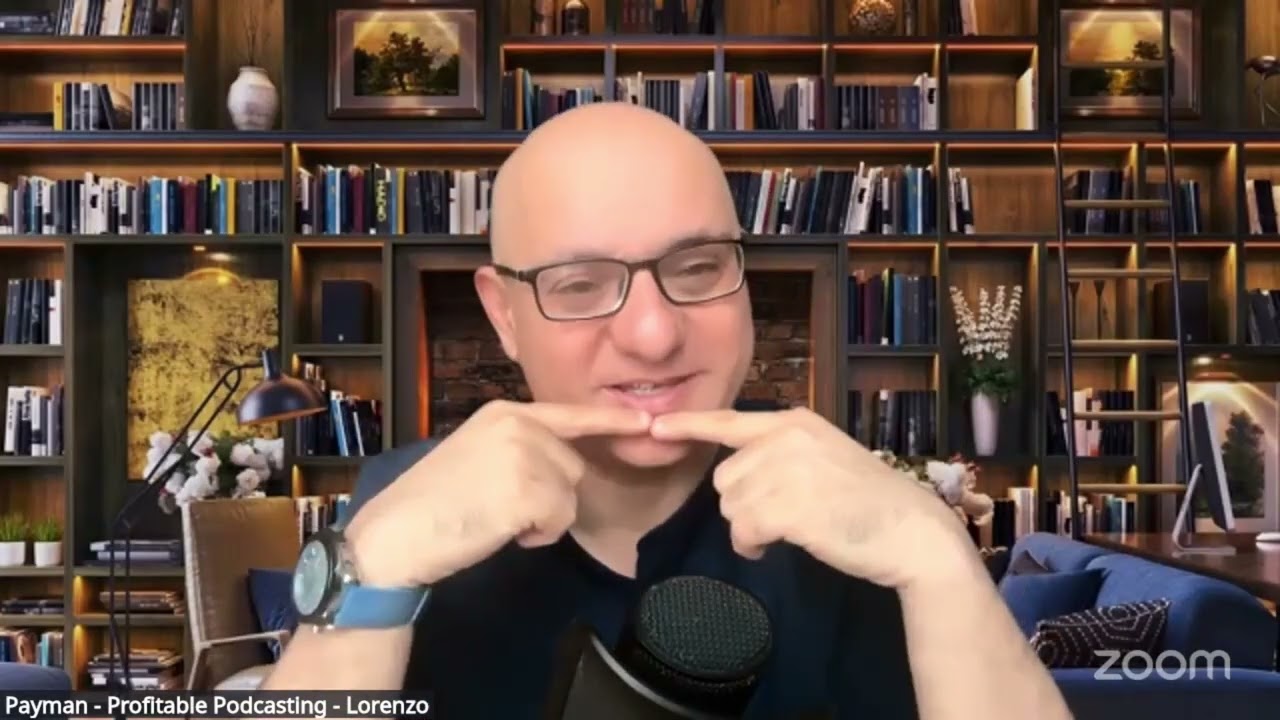
In this episode of "Remembering the Forgotten," host Markus Neukom interviews Payman S, a podcast creator and voice‑coach who explores authenticity, intuition, and living without external expectations. The dialogue opens with a definition of "coherence" (inner alignment of body, mind, emotion, and action) and "stillness" (a state beyond performance). Payman shares how he relies on gut intuition to make life‑changing decisions, from career pivots to personal safety. He describes his podcasting style as a vessel that lets guests shine, recounting powerful guest stories—such as a grieving basketball coach who turned tragedy into a gift and a terminal‑illness survivor who reframed suffering as a lesson. The conversation then shifts to Payman's own cultural background (Afghan roots, French‑Canadian upbringing) and the pressure of family expectations to become a lawyer, which he rejected in favor of an online business inspired by Tim Ferriss. He recounts financial instability, a "yellow‑card" health warning (dangerously high blood pressure) that prompted a drastic lifestyle overhaul—diet, herbal remedies, massage therapy, and a commitment to water‑based meditation. Throughout, both hosts discuss the broader societal problem of adults behaving like children, the scarcity of stillness in a hyper‑stimulated world, and the necessity of saying "no" to others to say "yes" to oneself. The episode concludes with practical advice: ask reflective questions ("What is this trying to teach me?"), reconnect with personal outlets (water, art, movement), and invoke a personal mantra ("universe, inspire me") to regain alignment.
Chapters
Welcome to Remembering the Forgotten, a space where leaders think out loud without polish or performance. No scripts, no personas, just what becomes audible when the noise drops and the mind is free to speak for itself. These conversations are not about delivering insight, They are about thinking together in real time, testing ideas against stillness, letting 2 open minds stretch each other. The intention is simple: to create a space where clarity can emerge and where listeners don't just consume perspectives but feel permission to engage their own thinking more honestly. Today I'm joined by Peyman. Peyman works at the intersection of voice, connection, and Lyft conviction, not as branding, but as Lyft path. From building global podcast platforms to mentoring leaders who speak from purpose rather than performance, his work consistently returns to one question. What happens when expression becomes honest? However, this conversation isn't about podcast funnels or monetization tricks or visibility as a number scheme. It's about alignment. It's about voice as alignment, about removing the need to impress so something real and be heard. What matters here isn't output, it's resonance. The moment where speaking stops being strategic and starts being truthful. This is a conversation about expression without strain, connection without agenda, and what becomes possible when your voice no longer needs protection to exist. With that, welcome Peyman to the show.
Hey, Markus, thank you for the beautiful introduction. Pleasure of mine. Good morning, good evening, everyone listening, watching this later on. I'm excited.
I know it's early for you. Yes, it is late for me, right?
7:38 Friday morning. Yes,
exactly. 7:38 at night Thursday. That's the beauty of Being international, right? 12 hours time difference. So before we begin, when I speak of coherence, I'm pointing to a state where nothing inside is in conflict. Body, thoughts, emotions, and action aligned, moving as one. No push, no urgency, no fear driving the moment. And when I speak of stillness, I don't mean silence. I mean the part of you untouched by expectation or performance, the place that knows before the mind tries to manage it. That's the ground I'd like us to meet on today.
I love that.
So, Peyman, let's dive in. Where can you just be yourself, untouched by expectation or performance?
Great question. Love that. My goal, my aim is to be as much as possible in that state of mind, as much as I can, not just with business, but even personal life, to be in alignment. My driving compass has always— suspiciousness, my awakening has been listening to my gut feeling, my intuition, speaking from the heart. I've walked out of business meetings, dates, if I felt something off in my gut feeling.
Mm-hmm.
Because that is literally my— our gut, our intuition has 2 main purposes. One, to protect you, keep you safe and alive, and to guide you to the next phase of your journey. The three to four decisions that completely changed, transformed, and saved my life have all come as a result of me listening to that voice. I'm not, I'm not talking about life-changing things like starting my podcast, starting my academy, saying, sharing my story, my books, saying yes to, to my first public speaking, saying yes to my first TED Talk. Even something as simple as walking at night after dinner on a sidewalk, and out of the blue you have an urge. Just to take one step to your left, and the moment you do, you see a motorcycle coming straight towards you. That happened to me countless times. So always, always, always— now I religiously listen to that voice, that intuition, that gut feeling, whatever you want to call it, because that's our soul talking to us. And our soul, as I mentioned, is literally here to save us and to guide us and to protect us. So So that's my driving force, my compass. I always listen to it no matter what, whether it's business, relationships, friendships, anything. I listen to that. That's my ultimate deciding factor, so to speak, to make a decision.
Where can you just be yourself, untouched by expectation or performance?
When I'm on On a call with a, with, when I do my podcast. Mhmm. When I, I want to, sorry, when I interview my guests, because just like you said, I start my, my podcast with just one question. So tell us, we're gonna talk about your business later on, Markus, but tell us, who's Markus first and foremost as a man, as a human being? So we can really get to, oh, I, I, I start with another question. So tell us, Markus, what's your story? And I just stay quiet and listen. And because I love listening to people's story, I'm a collector of stories. I love listening, learning about people. That's why I love interviewing people, because I, I love learning. I love getting to know people. And that's where I'm at my most creative with myself, because I really am— this is what I am. I love inspiring, empowering. And for me to do that, that's why God gave us 2 ears and one mouth, to listen twice as much and to speak.
So why would you say— and I'm absolutely sure many people who listen or watch this episode will, you know, kindly disagree— that when they are hosting a podcast show, that they are not untouched by expectation or performance, that they are actually heavily under expectation So why do you think it's different with you?
Because for me, I, I tell my, my, my guests straight from the, from the, from the start, hey, listen, I'm the host, you're the star. Tell me, share whatever you can, you want, that's gonna make you shine brighter than you can shine. Share whatever is gonna make you, that's gonna make you win. My platform is to make them shine, not me. I'm just the host. That's why I say, so tell us, what's your story? And I just shut up and listen and I let them shine. Literally. That's why I have no expectations. I just let— I'm just, I'm the host. They are the show.
You're basically a vessel that makes it possible for the other person to shine.
I make them get as comfortable as possible so they can feel open up, not just open up, But literally open up the heart. I've had countless times over the last 5 years and over 420 episodes, people telling me, this is the first time I'm sharing this to anyone outside of my spouse, my immediate family. And that's one of the greatest rewards that you can get.
I agree.
As a person, someone that feels so open that they will share with you things that they have not shared with anyone else. I had a friend, became a friend of mine, was a very successful basketball coach, NCAA coach. Quite a few of his, of his players becoming NBA players, NBA champions, some of them even household names.
Mm-hmm.
Something happened, tragedy hit him. He lost not one but, but his 2 daughters at the age of 7 in a span of 4 years. To the same disease. Losing one daughter, that is enough to destroy any man or woman, but losing two can be beyond destroying. He did something he wasn't supposed to do. He ended up in jail for seven years, and in jail they had to make him completely re completely forget about his past, reinvent himself, and him he always felt ashamed of that. He didn't share that with. just his immediate family. And when he shared that on a podcast publicly, it was almost on the verge of tears. And wow, I felt so— it's almost like therapy. And this is what one of the greatest rewards of me— for me, when I see people like this, not just open up, but open up their heart, and then they embrace the gifts. And then loud and proud and to share their gifts even louder and prouder, not with the world, but to their world. And that to me is one of the greatest rewards and things I love when I, when I interview people on my podcast. Mm-hmm. Making people comfortable to really identify the— look at their gift, look at their life, what happened to them. And realize that that was not didn't happen to them, but for them. And even in the most tragic, like losing two daughters to to to to sickness in a span of four years, and then ended up spending seven years in jail. Doesn't get any worse than that. Tragic than that. And then this man looking at this as a beautiful gift, he told me on my podcast, and I had the pleasure and honor of meeting in person in Malaysia last year. He told me him going to jail was the greatest thing that happened to his life. I have other people telling me getting cancer, stage 4 cancer, which is terminal, them getting diagnosed with that was the greatest gift of their life. Or so people becoming a paraplegic, glued to a wheelchair for the rest of their life, telling me this was the greatest gift of their life. How can an unawakened mind— someone can ask What are they talking about? What are they smoking? But then these people, they were able to see beyond just the physical. They were able to see what was that shrine. As I shared to you last time when we spoke, the 2 things that completely saved my life— one was understanding to listen to my voice, to my gut feeling, intuition. And second was to understand the tremendous power of question, asking the right question. And in this case, no matter what happened to us, Markus, even in the most painful, tragic heartbreaking situation. What I learned is to ask, to look at them and ask these 2 questions. Number one, what is that trying to teach me? Number 2, what is that trying to, to, uh, what is the lesson for me to learn that? And the 3rd one I would add, what is that trying to tell me? So when these amazing men and women looked at going to jail, uh, surviving terminal, uh, terminal diseases, becoming paraplegic for the rest of their lives, looking at that and say, wow, what are they trying to teach me?
So it's deep.
These are the things that really, when you really allow people to really feel very comfortable with you, when they really open up their heart, not just open up, open up their heart, share the deepest worries, or even in a way, so to speak, what they feel ashamed of, afraid of sharing, then they realize, wow, this is not to be ashamed of and kept inside. This is my goal. And as I like one of my favorite quotes, and that is, your crap is your gold, or in a more PC way, your mess is your message. If all of us were to look at the most painful, tragic, heartbreaking chapter of our life, And look at it from a perspective of not what did I do to deserve this? Why? Why? Why? Why? But what was that trying to teach me? What is the lesson for me to learn to that? And what was that trying to tell me? Then you will see for the glorious gift that it was. What is this? What is the description of opportunity? Is is is is an obstacle. How do you overcome an obstacle? You look look at this as as as an opportunity, not as a setback. Same thing in here. That was one of the greatest, deepest breakthroughs for myself to learn, to understand and realize. And now sharing that with my guests on my podcast and my, my students, my clients, my academy.
Why would you say that we need places like you mentioned when you're on your podcast to Be yourself, untouched by expectation or performance. And as I got to know you, Peyman, you are probably way more yourself, untouched by expectation or performance than most people I know. Well, why do you think we can't be more ourselves?
Just like you said, perfectly said in the question, because of expectation, because we have a role to play. Coming from the background I come, Being born in Afghanistan, growing up in France, I had to juggle not one but two cultures, the Persian.
You came around.
And the Western. So, and the time came that I was sick and tired of playing this game. I said, you know what, screw that. And after having gone through so much crap in my life that now I don't give a damn about anything else. I just follow my instinct. I don't even live nowadays to— for other people. I used to always put others' needs, other priorities before mine. That's why I was so freaking miserable. That's why I became lost, depressed, broke, even suicidal. That was— I had to get to that low level to understand enough of that. I don't need to live with expectation of others. The only expectation is that myself, what do I want to just let myself be guided by my soul, my intuition, my gut feeling, of course, within reason to do good, not to go in and do havoc and do bad. Absolutely not. You know what I mean? We can control that. Some people use that for destruction, for evil. But my focus is toward inspiring, empowering, doing good, uplifting. See? So everything—
That's interesting.
Yeah.
So you basically say you suddenly realized, I am living someone else's life, someone else's script.
Yeah.
Can you recall a pivotal moment, Paimon, where that hit you and what changed after you had that realization in you?
Well, as I said, growing up in a family, uh, very high achiever family. My father was very established, successful. I was expected to walk in his shoes. I was expected to become a doctor or lawyer or something like that.
That was Afghanistan, right?
Yes, but I left Afghanistan when I was 4 years old, but I grew up in France and Canada. So again, my father was extremely successful. Uh, he was one of the first people back in Afghanistan in the '60s to get a full scholarship for both his undergrad and postgraduate in France in the '60s.
Wow.
Geologist, engineer. So he has multiple degrees. Was always telling me, by the time I was 24, your age, I had all the 2 masters. Look at you, you have nothing. You know, always being— I know he said that with love, but you know, when you're 24, you don't realize it. You say, why does he hate me like this? You know?
Right, right.
The time came, I was literally about to go to law school, even went to the school, talked to the dean. They said, yeah, send your application, you're in. And then I talked to lawyers. A friend of mine was a lawyer, and I said, do I really want to be in an office 80 hours a day? Sorry, 80 hours a week. Yeah, the money is good. It's going to be great. The prestige and all that. But is this really how you want to live? And me, I'm an extremely fiercely independent person. Traveling is my drug. I need that. I'm an air sign, Libra. So by air, you know, we are air sign. We love traveling. Always go. I said, I don't see myself in a cubicle in an office for 80 hours a week. That's why, to the horror of my parents, I didn't end up sending my application to law school back in 2008. Instead, I started my first online business as a result of reading Tim Ferriss's The 4-Hour Workweek. I'm sure you've heard of that book. And that's
classic.
Yeah, I started out building an online business. Living the laptop lifestyle, staying home. At the time, I was young, playing video games most of the day, but still, I was running my business, making money. My parents were worried. Hey, are you selling drugs? What are you doing? Don't get in trouble. Don't get in trouble. You know, but I was, hey, no, I'm— but back in 2008, especially for parents who are coming from a different world, different mindset, it wasn't easy to make them understand you can make money online. And I'm talking 2008. Nowadays, it's more common. But back then, it was completely new. So when I— that was one of the moments for me when I looked at the path of a lawyer. My path was very already pre-established. I was supposed to become a successful, prestigious international lawyer. I speak 6 languages, love traveling, business. So that was match made in heaven. It
would have made sense.
At least in theory, on paper.
But
deep down, it was completely incongruent with who I was. I wanted to go places, to do things, meet people. And that's something you can't do while you're juggling cases and going to the courtroom, whatever, you know. So that's what one of the first things for me that allowed me to really stand up for myself. And also, I And my background and my culture, it's very common to get married quite early.
That's exactly my next question. The job was predetermined. What about your wife?
I was supposed to get married. I could have gotten married at least 5 times.
Because at age of 34, right, usually in Afghanistan, you'll be married like—
At 34, I would have been a grandpa if I was still—
Right, 50 times already, right?
Yeah. But, but Sorry,
take your time.
But because of my fears and dependence, I didn't want to get— I, one of the terminologies I can't stand is settling down. Because settling down for me means being in a prison almost, you know, basically
dying, preparing for death, right?
That's why I used to be, and to this day I still am. I am a commitment phobic. Even for my cell phone, I don't. I don't do contracts. I do month to month. For my place, I pay month to month because hey, the world is beautiful. I'm here in Vietnam. Maybe next week I'm flying to Malaysia, and if I have a 12-month lease, I'm stuck.
Right.
It's a simple question, but this is what I mean. I I was supposed to get married. First, when I was 21, 22, 23, 24, 25, and then my parents, they gave up on me.
Where would you say this independence comes from?
It's within me. It's a fire inside of me.
And it never left you, right?
Sorry?
It never left you.
And I hope it never will. Because that fire inside of you That fire coupled with that inner child in you is literally the essence of your living. The moment you lose either of those, you might as well dig a hole and just lay down. Because that's what makes you—
That's why so many zombies are walking around today, right?
Yeah. I mean, if you have nothing, if you suppress that inner child, if you suppress your dreams, if you suppress that independence, What are you living for? Paycheck to paycheck, getting a bigger car, bigger house, and whatnot? No, I lived that lifestyle. I had the nice condo in downtown, suit and tie and all that, but I was miserable. And after each paycheck, I was getting paid a lot of money, I was left literally after paying all the, all the things I had to pay, $50 a week. I said, that's not what I want to live for.
It's the interesting thing, right? It's not the big paycheck. No, it's the small expenses that make the difference. So tell me, tell me one thing.
Smartest one. Sorry. Speaking of expectation, once you get to a certain level, you're supposed to have the nice car, the nice—
Exactly.
Right. Then you have to live up with, keep up with the Joneses. And when you do that, the big paycheck becomes tiny. I'm getting goosebumps right now. I don't know if you can see it.
Yeah, yeah, yeah. I'm
sure you can relate to that.
And that is the craziness because you see, when I work with my clients, I often experience the following thing. It is kind of a hamster wheel.
Oh, yes.
And it's not humans on that hamster wheel, it's actually hamsters on that hamster wheel. So people need that. To be able to have a job where they get paid a lot of money so they can spend a lot of money, because spending a lot of money means I am important. But then they need to be almost broke at the end of the month because that solidifies and proves their worth and value.
That's like the wheel.
Exactly.
To keep paying for it.
So did you experience that in a similar way, that it was almost like a self-fulfilling prophecy?
Yes, yes, all the time.
Which is crazy if you think about that.
Listen, I was making good money, and then after paying the mortgage, the taxes, the fees, the food, and all that, I was literally left with $50. I was depressed. That's not what I want to live for. Screw that. You know?
So that's when the question, is this it or is there more, kicked in, I assume, right?
But I still had to keep doing it so that to keep paying for that. I was supporting all that, you know, as the eldest child, that's my responsibility. Make sure that my siblings can stand on their feet, they can go to university, all that. So I had to, I felt stuck. I felt stuck and I was too young to realize it. But I knew that this is not the way that I want to keep living. And I was always, my mind was, how can I escape this? And this is why when I had the opportunity, I was at a crossroad. This was law school and law career, prestigious, successful, wealthy, whatever. But stuck. And this was my own business freedom and of course instability. There was months I wouldn't make any money and then other months I would be making a lot of money. This is the reality of a business, your own business. So, uh, yeah, it's, it's a quite interesting thing to look at.
Mm-hmm.
And the thing is courage. When do you find the courage within you to say enough of that? I need to live for myself. I need to follow my heart because that's not the way. I did not see myself going until another 40 years doing the same thing. Sure, the money might have—
That is so interesting, Taiman, that too many people have to go into disaster or tragedy or illness or go broke to actually let their inner voice to be heard, which says, sorry, Markus, this is not sustainable. This can't be it. There must be more. So please tell me about that moment when you really realized, screw the expectations of my parents, screw the expectations of my, you know,
culture and all
that. Yeah, exactly. Culture and everything. And you said, look, I cannot continue like this. Was there a moment like that?
Oh, quite a few. The first one, the most obvious one was the one I just shared. The crossroads, law school or business.
Yeah.
For 6 months, I did not tell my parents that I had not sent my application. I told them, oh, there's a strike, the application was lost. And they say, listen, we're in Canada, we're not in Ethiopia, whatever, you know. Come on. Yeah. Into that thing. Can you track it? Can you resend it? Did you make a copy of it? You know, this, this one, you know. But I said, finally, when I started making money, that's why I said, oh, by the way, here's the money. Look at the bank. What did you do? Did you sell drugs or anything? Don't get us in trouble. No, I showed up my website. I was, I was, I was doing affiliate marketing promoting a high-end vacation membership for $3,000 or making $1,000 per sale. I was placing ads in magazines. People go on my, on my, on my website. They would, some of them buy direct, some of them book a call and the rest is history. That was one. Another one I had just another such moment. Last week.
Interesting.
Because that was an health wake-up call because especially the last 2 months, I moved to a, to a more trendy area in town, eating out all the time. I resumed the drinking and by drinking, I don't mean a lot, but at least 1 or 2 drinks a night. And then I said, that's okay, don't worry. And then since the start of the year, I, I, I've been, you know, coughing a lot, as you can imagine. As you can see. And also at night, I had a pain on my neck here that would really make it difficult for me to sleep. And finally, last Friday, a week ago, I went to the hospital here. As soon as I arrived, they took my blood pressure and they freaked out. They sent me straight to emergency because my, my blood pressure was through the roof, almost to the hypertension. So you're gonna have a stroke. I said, what? I don't have anything. They run checks on me and all that. So as soon as I came out of that hospital, I made a decision right there and then. I'm gonna stop eating out, start cooking. I went to the market, loaded up on fruits, veggies, chicken, steak, eggs. For the last week, I've eaten more raw garlic, more ginger than an entire year last year, even as as candies, and. Natural honey, and as a result of that, I see that honestly as a yellow card from life in the 45th minute just before halftime because I'm 45. You know, yeah, yellow card from life.
Yeah, yeah.
Pay attention; otherwise, I'm gonna send you a red card. You know, and I I saw it for what it was, not what have I done? Why? Why? Why? But What is this trying to teach me? What is the lesson for me to learn? What is that trying to tell me? So now I'm, I'm becoming a health freak. I tell my friends, I'm not going out with you anymore, I'm not drinking anymore, at least for a year until I can bring my pressure down and all that. And you see that all the time. But maybe I'm— because of what I went through, maybe it was fast for me to realize that That this is talking to me. Maybe if I hadn't gone through what all the crap I went already, maybe I would have taken drastic measures right away. I would say, "Oh, it's okay. Chill down. Take some medications." Yeah, and
it's pretty normal, right? So almost everyone has it. Everyone drinks. Everyone has greasy foods. Take in, take in, take in. Like here in the U.S., if I look at the normal culture, that's shocking. I don't think I could survive a month. Yeah. Literally no chance. No chance. So it's interesting. So you went to the hospital and they said, look, your blood pressure is through the roof. And you as an intelligent person probably did the math and you realized, yeah, life change could actually change my life.
You know, I live in a very trendy area with all the bars and all the restaurants. I swear to you, 10 o'clock in the morning, this bar open, there's guys drinking beers at 8, 9 AM.
I am not surprised.
What's going on? Of course, I'm not here to judge because we don't know what they're going through, you know?
Right. Right.
It can push someone to, to do that, to numb themselves. Yeah. But When I see this man, I say, wow, what's going on? I've— part of me is screaming to the 6, say, come on guys, don't drink at 8 o'clock in the morning.
Uh-huh.
But of course I can't do that.
Yeah. Right.
Uh, decide their lives the way they want.
Have you analyzed for yourself, you know, if it's not too personal, Pavan, what triggered you to have these 2 drinks every night? And basically fill you up with something you knew food-wise. It's not healthy.
You mentioned expectations, social pressure. You go out to the friends even if you don't intend to drink.
Interesting.
Having a beer, you don't want to leave, be left out. They want to go for pizza. I love pizza,
right?
But even if you don't drink a beer, a Coca. A Coca is like in one can of Coca. There's like what? This much sugar.
Yes, sugar like crazy. Yeah, exactly.
I'm even telling my friends, hey, go for, go for a water or go for a diet one. They say, no, just one.
Yeah.
Now I don't even tell them anymore because I don't wanna feel, see, I don't want them to feel, see me as rude. But hey,
yeah, has to find his own way.
But I nowadays, when I go out and I see people, even the sight of a glass of beer repulses me.
Yeah, yeah, it's interesting. It's your system literally speaking out loud after that wake-up shock at that hospital where they say, we're sorry, friend.
It's like in football, you get a yellow card, next time you're out.
Exactly. Yeah. And is it now reacting in your esophagus area when you have to cough or?
No. What do you mean?
Sorry. You know, like like when you have to cough and you can't cough. Like, are you kind of clearing your throat?
Sometimes, but not sometimes, but not always.
But this has nothing to do with what you just went through a couple of weeks ago.
No, I don't think so. No, I don't think so. It's just that interesting here here in Vietnam, there's been a virus called flu A flu and
A.
Pretty much everybody around me, even in Canada, pretty much everybody is, even in the US, they're coughing. Might be the time of the year.
That's interesting. Okay.
So, uh,
also for you, it's, you almost like suppress the cough. Like if you would cough out loud, I would hear it as a cough. So it's, it's basically once again expectation.
And also because I don't wanna—
I cannot cough openly, so let's suppress that somehow. No,
no,
I'm joking. No,
no, I don't suppress the cough because like it's not healthy, you know, you let it cough naturally, you know.
Yeah.
But, uh, yeah. And, and I've been, at first I was taking medicine, it was helping, but now I, I drink after this call, I'm gonna make it my, my power drink, which is hot water, uh, few pieces of ginger, um, cinnamon powder, pinch of pepper.
Yeah.
And, and honey. Mix it up and some—
I see that.
If you want.
Yeah.
It's not the best tasting, but yeah, it's magic.
It helps,
huh? And everything. Pain for the throat. This is one of those classic grandma's recipes, you know?
Uh-huh.
And it works. It's been passed down from generation, from millennials because it works. It's easy. It's natural. I went to a massage therapist yesterday. Amazing lady. You know, there's some massage therapists, as soon as they see you, they can see, oh, you have this, this, this wrong in your body. They have this, this gift. As soon as she saw me, she said, your muscles are so tense. And because your muscles are so tense, it affects the blood, blood circulation. And that's what's increasing your blood pressure. She told me, come see me once a week and you will not need any hospital or medicine. I said, I'm all in. Where do I sign?
Mm-hmm.
It makes sense. But I take that kind of pain a little, you know. Yeah,
yeah, yeah. It's the same with the Thai massage, right? In the first moment, it's just like almost kills you, but you know that pain actually frees you, which is amazing.
Yes. This is not Thai massage. It's more like a therapeutic Vietnamese style, natural. It's almost a mix between natural and acupuncture, but without the needles, just the pressure points. Finger.
Yeah, yeah.
She was pressing some part of my body, my calf, my neck. They're hurting like crazy. Wow! He said these are the the pressure points that are stuck. We need to release the muscle once you release.
That's why it hurts, right? Because it's stuck.
Once you yeah exactly. Once you release a muscle, guess what? It allows the blood to to flow freely. And guess what? When the blood flows freely. Your blood pressure goes down. Everything is tied to that.
Yeah, I see that. So definitely best of success for that journey because it's definitely better than going to doctors and eating pills, right?
Listen, I have no choice. It's do or die, literally.
Yeah.
Just like a yellow card. You cannot go do a reckless tackle on a guy because otherwise you'd be shown the red and red is out.
Yeah. No, that makes sense. And that comes faster than we think, right?
Especially after you've been given a warning.
2 yellows, the 3rd one, strike, 3rd strike and out, right? Absolutely.
Yeah.
So, so what I'm always interested in is if you are in coherence, if you are in stillness, and as we know, stillness is not silence. Stillness is when everything flows. What can pull you away from yourself?
It used to be—
what helps you to come back?
For me, it used to be distraction and shiny objects. Oh, try this. Let's do this. Let's do this. But now I want to— again, because I was living for others, because I always put other people's needs, attention, desires, goals before mine. I used to always say yes, yes, yes to everything. And you know what? When you say yes to other people, guess what you're saying no to?
Yeah. To yourself.
And vice versa. Now I'm getting approached, pitched, invited all the time. My default answer is, thank you very much. I'm honored, but this doesn't align with where I'm going. But when you say no to others, you're saying yes to what? To yourself. That doesn't mean you're being a selfish prick. It means you be— you're putting yourself first because you need to be— become the best version of yourself so you can be the most value for others. So this is not from a point of being a selfish prick. Let's stay
here. Let's stay here for a moment.
Yeah.
Let's stay here for a moment. This is highly, highly interesting where we're going next, because many people do accuse someone like you and me of being selfish because it does not fit into the societal norm and understanding. So let me, let me put out a thesis which just came to my Mind right now. Mm-hmm. Is it possible that stillness is such a scarce commodity today because people never get to that quiet place inside because they're always living for somebody else? And, you know, like, I have this, um, this image where it shows like a person in the middle of the world and all the different nervous systems fired with each other, against each other. And you're basically inputted by 8.5— how many? It's like billion now, right? 8.5 billion in the world citizens. You're basically fired constantly. through these 8.5 billion nervous systems, how could you get into stillness where your mind and your heart goes into coherence? And suddenly the original design, you know, you call it intuition, when this suddenly can actually start to speak and we hear it. So it's only possible, you know, if we use the societal norm again, to become a selfish prick for a while, that somebody says, but Peyman, that's not nice. You used to be somebody who helped me. Yeah. What did I help you? I helped you basically to manage your life so you did not have to. And of course, when I pull back and say, honestly, thank you, but no thank you. This is my favorite thing. Thanks, but no thanks. Right. I'm really honored. So as you say it, so it is natural that people feel pushed back, for example.
Yes.
But I believe it is the key to get there.
You know, I, that's a beautiful point. And what I notice in my experience is that it's too hard for people to get out of that rut because they're too invested. Too many people depend on them. They've built this persona.
Oh, you're a person.
And the only way, unfortunately, for someone to get out of that is to literally hit the bottom, lose it all. Just like what happened to me five, six years ago when I was in Hong Kong, completely broke, desperate. Credit got cancelled, credit destroyed. I literally had to start not from zero, but from minus five. And unfortunately, that's what it takes for someone that completely, you know. Ignores their health, they have to be in the hospital with a tube, something serious, life-threatening for them to say, holy smoke, I have to really do something. When they really get a yellow card, maybe like an orange card from life. Hey, you're just a little inches away from checking out. Unfortunately, that's what it takes for people to really, really understand the gravity of what they're going through because they're too invested, too deeply invested into. They cannot overnight go to the spouse or the boss, say, oh, sorry, I, I, um, I'm not doing this anymore. What do you mean? But when you're faced with that, when you literally lose it all, or you're literally in a hospital bed or something very serious, then you put everything into perspective. You say, well, who's, what's my purpose? And it's ironically in those moments of, of really low thing that you really realize what's really important. For example, COVID. Yes, it's been an absolute horrible thing for humanity, but as human species, we need it as a wake-up call to realize what really mattered. A lot of people since COVID they stopped chasing the corporate dream. Instead, more and more people are quitting their jobs and following, pursuing fulfillment, taking care of themselves, working from home. Doing things that really allow them to be happy, fulfilled, to find balance, not just go, go, go, accumulate things and climb the ladder, keeping up with the Joneses, buying the next watch or iPhone or whatever, or house, a bigger car. No, because just like the saying, you come in this world naked, alone, and you leave naked, alone. All the things stay behind. And the sooner we understand that, The sooner we're all gonna be in a much, much better position up here. I wish there was a way, a shortcut for people to reach to that level without having to go to the pain of losing it all, being in a hospital bed. But unfortunately, that's where we are. And it took me to go to my, to my low to go back.
Mm-hmm.
We all have to go through that. Unfortunately, there's no other, because we tend to be Stubborn as a human being. Even when you're a child, your parents tell you, don't put your hand on the, on the stove, or don't, don't, don't drive, ride your bike too, too, too fast. You're not gonna listen until you get that accident, until you burn yourself. That's how we learn.
Mm-hmm.
Same thing in life. We're adults until you really have a burnout breakdown, literally tied to a, to a tube in a, in a bed. That's when you really start to really smell the roses, so to speak.
You know what's interesting? Let me put out quite a provocative thesis, Mehmet. Are most of the people really adults?
What's that?
Or are they just— are they really adults? Or aren't they just grown children?
I love that.
This is provocative. And I can tell you, I ask this question at any hierarchy level in a company, at any hierarchy level, because it has nothing to do with being educated, has nothing to do with having money.
Or age. Yes.
Exactly. So if you think about that, doesn't it take a level of becoming a grown-up? Not someone who is grown from a child level, but becoming a grownup. And isn't that adulthood what you just said? Did you get to the point where you say, no, to be honest, my behavior was quite childlike? When I was young, it was about touching the stove, and now it's about touching anything else. Life tells me something. Let's be honest, life told us way before the warning came, way before the yellow light or the yellow card. So if we had listened, maybe we even heard it, because I could tell you, I do not know many times that I really touched the stove. I was somebody who listened when they said it hurts. Right.
You're an exception.
Because I did not like the pain.
Maybe you felt the pain once and that was enough for you, you know, just a little bit.
Yeah, I probably just touched slightly to see, is it really that hot? Is it really that hot? But, you know, at the same time, I missed out on many things. I probably grew up way too fast, way too fast. But I think really to see that, We are basically surrounded by children in grown-up clothes who have grown size-wise, stature-wise. And I believe that puts everything into perspective in regards to our expectation to society. And honestly, I don't care whether that person sits in Washington in the White House or whether that person sits on a mountain somewhere in a little village. That explains to me why and how is it possible that we are in a situation where we are.
Yeah,
simply because of that. We are not surrounded by adults, we are surrounded by children who have grown.
Absolutely, perfectly said. Yes, I see that.
How suddenly Coming like that.
You see some people who are just either too spoiled, never been told no. And then that applies from people around you to even people at the highest level, like say presidents. I'm not gonna name anyone, but you know who I'm talking about. Like a little prick. Right. Oh, just bullying all that. That's his way. And then my way or highway. Yeah.
It's literally a child in grown-up clothes.
Yes.
And the interesting thing is surrounded by children in grown-up clothes.
Surrounded by youngsters.
And I can tell you, it's not different when I look at the parliament in Switzerland than when I look at the Congress here in the US. It's not different.
No, no, same everywhere.
It's the same everywhere. So that is an interesting thing. So this lets me bring it to— bring me to my last question. So this is something that doesn't affect you too much. But if someone feels really overwhelmed right now, what would you want them to return to?
For me, what I do is to be able to reconnect with their life, ask themselves better questions. What is this trying to teach me? Whatever situation you may be going through, Number 2, reconnect with yourself, whether it's to listen to that voice, whether it's through meditation, prayer, incantation, writing, painting, whatever. Find your outlet. For me, I have a deep connection with water. Maybe I was an elf in a past life coming from a water world because I need to see the water, whether it's the sea or a swimming pool. I take long showers in the morning. Like 20, 30 minutes counting my blessings, literally praying under the water. And I say, universe, inspire me. Mind you, not every time. Let's say I have to make an important decision. I don't know what to do. I say, universe, inspire me. Close my eyes either under the shower or I just go sit on the beach, listen to the, to the waves. Or when I'm in Malaysia, go to the swimming pool before I dive. I hold my breath and I say, universe, inspire me. Again, not every time, but a lot of time I get inspiration. Communication is, oh, a flash in your mind and your mind's eye. Oh, that's what I need to do. So again, find a way to reconnect with yourself to whatever it is. Some people, you know, singing, writing music, painting, drawing. Dancing. Find your outlet. We all have a different outlet. That's what makes us so incredibly interesting, because if everybody was doing the same way, it would be one very boring world. So we're all unique. Find a way to reconnect with yourself. Meditation, prayer, arts, whatever, sports. And then before you start those activities, ask yourself, close your eyes, say, universe, inspire me, show me the way. universe, God, whatever you believe in. You know, this is my way. I'm not saying this is what's gonna work for everyone. That's what's— I, for me, for example, what a
beautiful way.
Meditation for me has been a challenge up to now because my mind is going at the speed of light. I cannot shut it down. Even my, my sister, your older sister, she took the Dolores Cannon's, training to become a hypnotherapist. She tried for 2 hours last time I was in Canada to do a past life reading on me. For the life of
me,
I could not, I could not shut my mind. And I felt bad. I felt so bad the first time I went home. Second time I felt so bad, I invented it. I created what I thought what she wanted. Of course, I hope she doesn't listen to this. But This is true. I recognize my shortcomings. I feel like, or rather, I haven't been able to do so far. But instead, what I can do is water connection with water, shower, sitting in front of the beach, just listening to the waves and just ask, or even going under the water, holding my breath, swimming on the water, say, universe, inspire me. Point is, find your way to connect with yourself and then go all in, go deep.
What a beautiful way to end our show, Peyman. Thank you so much for having been my guest.
Pleasure's all mine. You're an amazing guest. You ask amazing questions. Just like they say, it takes two to tango.
Indeed it does. Thank you. This was Remembering the Forgotten, a conversation held in clarity, not performance. If something in this exchange shifted how you see, let it stay with you. A few quiet pointers are waiting below.
More from Markus







Ep 66 Breath, Trauma, and the Fear of Being Fully Seen A Conversation with Matt Ritchey

Ep 65 Truth, Trust, and the Courage to Be Seen A Conversation with Troy Gregory

