Ep 43 The Pearl of Great Price A Conversation with Russell Johnson
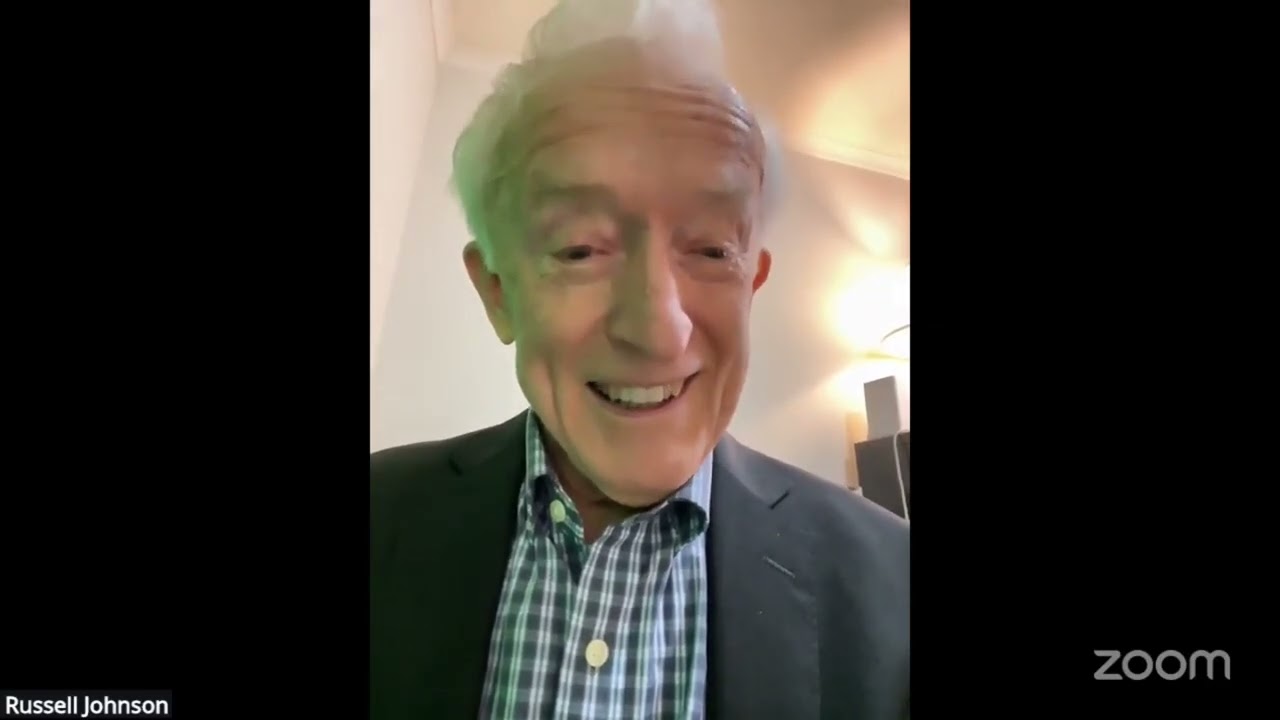
In this episode of Remembering the Forgotten, host Markus Neukom interviews Russell Johnson, an 84‑year‑old former minister, senior executive, and now career‑coach. The dialogue explores the concepts of stillness and coherence as internal states free from ego‑driven urgency, and how these states can guide life‑purpose decisions. Russell recounts his life story—from a sickly childhood and early entrepreneurship, through a forced ministry path, to a high‑earning corporate role that he eventually left despite a lucrative contract. He describes the painful process of resigning, a four‑year sabbatical, and the eventual discovery of his calling to help others navigate unfulfilling careers. The conversation also touches on the role of relationships, the societal ebb and flow of altruistic purpose, the metaphor of the “pearl of great price” for inner wisdom, and practical ways to return to stillness when stress arises. Throughout, both speakers emphasize humility, inner peace, and the importance of listening to the inner voice that seeks integration and contribution beyond material success.
Chapters
Welcome to Remembering the Forgotten, a space where leaders think out loud without polish or performance. No scripts, no personas, just what becomes audible when the noise drops and the mind is free to speak for itself. These conversations are not about delivering insight. They are about thinking together in real time testing ideas against stillness, letting two open minds stretch each other. The intention is simple: to create a space where clarity can emerge and where listeners don't just consume perspectives but feel permission to engage their own thinking more honestly. Today I'm joined joined by Russell Johnson. Russell has spent decades working with people whose careers look successful on the surface, yet quietly feel constraining from the inside. What stands out, it's only his experience at the highest executive levels. It's the way he understands what happens after achievement stops answering. the deeper questions. This isn't a conversation about job hopping, resumes, or chasing the next rung. It's about what happens when a career no longer reflects who you've become, when clarity replaces momentum, and when alignment matters more than status. What matters here isn't ambition. It's authorship, the kind that lets decisions emerge without pressure and direction take shape without forcing outcomes. And with that, welcome Russell to the show.
Thank you very much, Markus. Very good to be here. Thank you for the very kind introduction.
You're very welcome. So before we begin, when I speak of coherence, I'm pointing to a state where nothing inside is in conflict. Body, thoughts, emotions, and action aligned, moving as one. No push, no urgency, no fear driving the moment. And when I speak of stillness, I don't mean silence. I mean the part of you untouched by expectation or performance, the place that knows before the mind tries to manage. That's the ground I'd like us to meet on today.
That sounds great to me, Markus. That's, that's ground that I have been working on mastering myself for a very long time. And life gets richer as we do. That's my experience of it.
And I was so happy to hear that at the tender age of 84, right, you're still absolutely active. That's amazing. So, Russell, So let me ask you one question. Where can you just be yourself, untouched by expectation or performance?
Where can I do that personally, or—
Yeah, where can you be just yourself, untouched by expectation or performance?
Well, I aim to do that in everything, in everything that I do. I aim to be just present in the moment, open to whatever the moment holds, and to express, I guess, my conception of humanity at its highest is that we live here, we are here for each other. Yeah. If we're here for ourselves, we create a narrow little universe of possibilities and that just— the ego gets control and the ego leaves us unpleasant, feeling things that are unpleasant. That's the best way I can put it for the moment. If we think instead of, what have I got to give right now? What can I contribute? Yeah. If we can't contribute anything, that's absolutely okay. If we've got nothing to contribute, then we can just enjoy being. We can just enjoy being and doing whatever we have to do because we're physical creatures and we need to look after ourselves and so on. We can just go about it as best our situation allows. You know, you mentioned that I'm 84, and at 84, I mentioned I have some arthritis that's gonna require a hip replacement in the near future.
Right.
Well, I'm sort of indifferent to the whole thing in a way because I can say, well, it is what it is. I'd rather have the hip that Mother Nature gave me. I'd rather keep it for the rest of my life, but it ceased to serve me well. And so it doesn't matter. It just doesn't matter. I'm not here for physical things. I'm here for something more than that. And that's what I think we've— that to me is what enriches life. Once we recognize that we're here for something more than that and our work or our jobs, if we've got a job, then it's not just about how do I pay the bills, how do I meet expectations. If we can't meet expectations, we should be working somewhere else, for instance. That's just one simple little take on the whole thing. So for me, it really is just about being able to relax every day, every moment as far as possible, except when we slip, and then we realize that we slipped and we got ourselves into ego mode in some way or another.
Mm-hmm. This is an amazing aspect just to move into the ego aspect. As I recall from our conversation we had and from the people who I had conversations about who know you really well, you are a relationship guy.
Yep.
What would you say is one of the reasons why People are so much exposed to noise instead of stillness, why they are not coherent but chased by all the stuff that's going on out there. Do you think it has to do with ego? You said before that being interested in somebody else is almost like a medicine.
Yes,
because it takes you out of your, of your egotistic, whatever you want to call it.
Yep.
So tell me a little bit more about that, because, you know, you have been on this planet for quite some time, so
yes,
you must have experienced quite a bit.
And I've been on this journey for a very long time. I, um, I don't know where to start here, Markus, but, uh, I'll just comment here that, uh, that I I was a very sickly child and, and it was questionable whether I was going to grow up or whether anything like that. So, so there was always a, I suppose, in my mind, a bit of a sense of I better find out what I want to do here as, as much as I can, as soon as I can, because who knows how long I'll be here for. And, and so because I was so sickly, I spent an awful lot of time at home, spent an awful lot of time in bed. There was a There was a set of encyclopedias at the time, and this is a very long time ago, as you can understand. Most people won't have even heard of these encyclopedias, I would imagine, just called the Children's Encyclopedia. Say that again?
Quite thick books, right?
Yes, yeah, quite thick books. Yes, they were very, a very large set of them, and I devoured them over early years. Probably I'd pretty much read everything in them by the time I was about 10, I would imagine, because I spent so much time sick in bed and so on. And so I was always always sort of looking for, well, what's the real meaning of all of this? And then I was able to go to school for a few years. I actually loved what I was doing, going to school. And we lived in the country, we lived in the city, we did some different things. But for me, all of a sudden I was starting to feel like, oh, I'm part of society now. I'm really enjoying what I'm doing. And school was fun and I was making friends and all this sort of thing. And then because I'm the oldest son of a large family, and so it was a large family at the time with severe, very severe challenges, particularly around health, physical condition, and all that sort of thing. And my father was affected by it as well. I was taken out of school at the age of 14 and told to go, look, you have to go and get an income. I thought, oh, this is an interesting development, isn't it?
You need money, right?
Yeah, I don't know what I want to do. I've got no idea what I want to do, but, uh, but let's see what I can get. And I got myself a job, and, uh, and I did that for a few years. And then a little bit later on, it got to the point where my, my next oldest sibling, my, my brother, uh, and I decided that we would go into business together so that we could buy a home for our family. And we would find a way to do that. That's amazing. And we did that. We did it. My brother had a nervous breakdown in the process because the business was very demanding and so on. But anyway, we did that. And so from there, it was simply a matter of, okay, now I've done this, now what will I do with my life? And by then I was in my early mid-20s. I was basically at a point in life where I think I thought I've done a lot of different things. I'd had a number of different jobs by then. I'd owned my own business and so on, and I wanted to find out more. I was looking for meaning in my life, always, always looking for meaning. And then I was invited— well, I wasn't invited to— well, I was invited actually to apply for entry to a college in the UK run by a religious group, a Christian group that had a presence around the world and so on. And they were basically offering undergraduate arts degrees and so on. And I thought, well, this will be— this is an experience that I can get my teeth into. It was a bit of a— how can I call it— a far-right denomination. And it was not particularly mainstream. But I thought, I need to find out whether I'm interested in being a part of this. And in any event, I've got a lot of learning to do about what I want to do with life. I'm going to go and give this a try. If I don't like it, I can always leave it. Okay. ended up staying and graduating, and at the end of it, the senior people at the campus just outside London said, Russell, you're for the ministry. And I thought, no, no, no, no, no, I don't think so. I don't think this— this doesn't feel right at all. And I actually made that known, and I said, it doesn't feel right to me. I just don't feel— I don't think that's right. I just don't want to be a minister. And so the response to that, the response that came back was, son, God doesn't make mistakes. God, you know, through his ministers, God basically knows what ought to be done. I hear you. And look, I succumbed to that. It was a strange experience in a way because I thought it doesn't really feel right to me, but there's a part of it that does feel right too. And so, and in any event, I I met a lovely young lady whom I wanted to marry, and we've been together for the best part of 60 years now. And so it all worked out okay. We got shipped down to Africa, and I spent 4 years in various parts of Africa before I finally realized I don't want to do this. This is not right. This is not me. I am not going to be constrained by the beliefs of a religious denomination. I can't let my beliefs be set in that way, and I can't go forward in good conscience and continue to be a minister. So I have to find something else to do. Well, that created its own set of interesting circumstances in that I, you know, I realized, well, hang on, I'm a father here. By then we had one child, and another one on the way. And I had been promoted, I had been given lots of responsibility and all that sort of thing. And I thought, I have to leave it behind. I have no choice. I have no choice. This is the hardest— this was the hardest decision I ever made in my life up to that time, was to leave it behind. And I did.
Because your career path would have been given, right, if you had stayed?
Yes, yes, my career path would have been set for the rest of my life. But there's a part— there was a part of the experience that I can always look back on and I can say, That was wonderful in that it did help. There's a— I don't know if I can remember this, but there's a quote from Margaret Mead, the famous anthropologist, that comes to— it's sort of in the back of my mind at the moment, and it reminds me of something interesting that she once said, where one of the greatest things, one of the most valuable things that have— experiences that can happen to somebody is to have a religious conversion and then get over it. And this is what I did.
Fascinating one.
I had that conversion and then I got over it. And in getting over it, it actually repositioned me in a lot of ways, some of them to just position me to just go on learning more lessons, but also to begin chasing that dream again of what am I here for? What's my contribution? That was what I was looking for at that time. And so balancing, balancing those 2 things was not easy because with a wife and 2 young children— actually, when I left, when I left the ministry, one was still on the way, so not yet even arrived. So we arrived, and my wife is American, as you know. So, so we, we went to live in the US and living in a little apartment in Minneapolis, we— because that was where her family were living. We— I settled down and I got to work and I bounced around amongst various career options and possibilities and so on and stumbled more or less by accident after a couple of years into franchising. And then the career took off kind of like a rocket after a while. It didn't do it straight away, but it did after a while. And that gave me a sense of, okay, this is what success is held out as being. This is what success looks like. I was, you know, literally, I was in the top 1/10 of 1% of the US in income. And so I could afford— we could afford all the wonderful things that money can buy and all of the encumbrances and the entanglements that money can buy as well. We could afford all that sort of stuff.
Mm-hmm.
And I got— I accepted it for a while, but there was always again just as in the ministry, there was always this feeling of this is a stepping stone. This is not the— this is not what I want to do ultimately. And I finally walked away from it. And that was the— that was the probably the second hardest thing I've ever had to give up in my life. But giving up— so giving up the ministry was particularly hard. Giving up the executive role was also particularly hard because I knew it meant I was going to be spending my time from there on. I was going to be searching for what I wanted. And I told my vice presidents and my family and my friends and everybody that I thought might help hold me to it, I won't work for money again until I find what I want to do with my life. I thought it would take me a few months. It took me 4 and a half years.
And where were you back then?
Where were we? We were living in—
How old? How old?
Oh, how old? Let's see. I was— I tried to resign. I'll add a little more to the story here. I tried to resign at age 45. I realized at that stage, I don't want to be here any longer. But our organization had just been through a new takeover. I was reporting to a new CEO brought in from outside. I didn't think that was a good move for the organization. In fact, I thought the whole thing of the takeover was a very bad thing for the organization. But, you know, I wished them well. I wanted them to do well. But I also thought, I'm over this. It's not a part of who I am. It's not a part of my journey. I need to get on and find my, find my true path. But at 45, so at 45, I tried to resign when the new CEO had just come in. He said he couldn't afford to lose me. I was the person who'd made the company what it was. And what would I have to do? What would he have to do to keep me? And I could not think of anything sensible to say. So I blurted out a deal that would— well, it ended up roughly tripling my remuneration and put me in that top 1/10 of 1% of the US. And I stayed for 2 more years basically because I'd made the commitment and because they actually paid it without a murmur. There was not a whisper of resistance to it or anything like that. It was okay. That's what you want. That's what we'll pay you. And so I had to stay and I did. How
did you feel when, when you signed that contract and then throughout those 2 years?
Oh, uh, I, I didn't feel good about myself, I have to say. Uh,
did you sell yourself out?
I felt I was selling myself out. Yes, I really did. I thought, you know, I've got to do this. I've got to— now I've made a commitment, I've got to honor it. I've got to honor it. But, uh, but I know I'll revert to this whole thing of what's my real journey. And so when I did, when I finally, finally did that, I was determined to get out of the— oh, I wasn't 45 when I made that commitment. I would have been 43, I guess. I was determined to get out of the, out of the role before I turned 46. I wanted to, I wanted to do it as early as I could. But at the end of those 2 years, I was still 45. And I basically, I resigned again. And I said, look, this time it's for real. I, you know, there's no way. I just do not want to do this any longer. I have to find what I want to do with my life. And so I, I left anyway and, and spent— then I spent the next 4 and a half years looking for what I wanted to do. I took 4 and a half years off. Along the way, we traveled around the US. We did some wonderful things together as a family. And then we relocated to Australia. That was interesting. Now, that's another story and not one that probably is relevant to talk about now, but it was actually our children who made the choice to move to Australia instead of us.
Oh, really?
We basically said it was a family decision. And, and I think my wife might have been somewhat influential in that. But, but at the end of the day, it really doesn't matter. It was a family decision. I'd already said, I don't have to make the decision for the family. I want this to be what's right for the family. And so we moved to Australia and And then I spent the next couple of years here in Australia fumbling around, stumbling around, falling over, falling over things and not, not recognizing what I wanted to do until one day I became reacquainted with a chap who I'd known in the UK. We had studied together and he had since emigrated from the UK to Australia and he had started a business in the recruitment field. Now, he and I were very, very, very, very different. But he pointed out some things to me that I hadn't really considered about the number of people who were, like I had been in a way, sitting in executive jobs that didn't energize them, didn't motivate them or anything like that, and needed help and so on. And it was like I'd been hit by a blinding flash of the obvious. That I found my path. I finally found what I want to do. This is the work I want to do. I want to help people with their careers. It's what I'm here for. I've lived this journey. I have made just about every mistake in the book and maybe invented a few new ones. I've made countless mistakes along the way, but I realized that was the work I wanted to do. And so I started doing this work, and here we are now.
You know what's amazing about your story, Russell? If you think about, you could now say, goodness me, I could have saved like those 4 and a half years, then I could save probably 20 years in total of my career. No, you could not have. Because that was exactly the path that prepared you to become a recruiter. That prepared you to meet people who were unfulfilled in their careers.
And by the way, yes, let me just offer one small point of correction, though. I never did become a recruiter. That didn't interest me at all. I already knew I wouldn't want to do that. But my— But
my career coaching—
What he, what he basically said was, you know, look, recruitment's where the money is. But, but the real, real issue is most people don't know where they want to go. They don't know what they want to do. And all of a sudden, I realized, well, of course, I'm not alone in this. I'm not the only one who was struggling around trying to find what he wanted to do. So I never became a recruiter, I, we actually, we actually agreed to work together to help people, executives and professionals in their careers. And that's how it started out.
That's fascinating. So did you work with people who were in careers and unfulfilled and wanted to find a change? Or did you do outplacement as well, where people literally got fired or, you know, spit out by the system and had to reinvent themselves?
Initially, I only worked— we only worked with people who were funding the exercise themselves and who were, through their own dissatisfaction, doing something, uh, doing something about their career situation. I did, after probably, after maybe, I'm not too sure how many years, let's say maybe about 10 years of doing this work, I had a colleague who really was pushing hard for us to do outplacement because he thought it's, you know, it's crazy not to because Firstly, there's lots of money there, and it's much harder to make an income helping individuals. But also, organisations will happily pay for people to get the results that they want. And it was only— it was partly true, but it was becoming less and less true. The truth of the matter was outplacement always was a service that I've always seen it as being something that employers provide in order to avoid blowback. They don't want negative publicity. They don't want negative anything. They don't want people going in, you know, going postal. You might have heard of that story of somebody, they call it going postal when somebody goes back and shoots up their workplace because this person, the person who did so and who gave birth to the term, had formerly worked for the US Post Office, the Postal Service. And so he went back and shot up his workplace and killed a lot of people and so on. And, uh, and so, you know, that was, uh, well, at the end of the day, I realized, look, we did outplacement for a while, and then I finally said, no, we're not going to accept it any longer. It's not a fit for what we do. People need to be committing to themselves. That's, that's what this is about. And if it's just outplacement, then the problem is they're just looking for the next job.
Yeah.
And the next job is not what, not what I want it to be about.
You mentioned something really interesting. They have to be committed and to themselves. Yes. Would you say that throughout your entire career, this is something that has shifted in society? Either it has become more or it has become less. How do you see today's world?
It's a fascinating question. I can't say that I've really given it any deep thought, Markus. To me, it comes and goes to a certain extent. People will tend to think more altruistically if they don't feel under pressure. Mm-hmm. And so we've had periods where I think in the 33 years that I've been doing this work now, I think I've seen periods where it seemed to me that more people were interested in, were seeking altruistic pursuits and so on. But then at other times it's been very, very little of it. And so it's a bit of a— well, it's just one of those things. Society does advance, I believe. I think we are advancing, but we do it in fits and starts. There might be a period of time where we actually feel that humanity is really advancing and other times when we think it just seems like we're just as deep in the darkness as we ever were. But I do think now is such a time where we are seeing at least a larger subset of people, small still, but a larger subset of people who are being propelled by circumstances into thinking about the question, what am I really here for? What do I want my life to stand for? And some of them will just surface themselves. And basically, I had one chap just— I spoke with him just a couple of days ago. The man was a dean at one of the Australian universities and had been a client of ours several years ago, a few years ago. And his career went on and flourished after that. He worked with us after we helped him, but he realized at that time, this is not forever, this is not what I want to do. He's now got, he's now got a couple of pursuits where he's actually working to improve and advance society in one way or another. And he said he wanted to come in and he wanted to take on a role with us, doing some work with us if we have room for him. And so he contacted me out of the blue and he, he just said that he had, before ever working with us, he had talked with a lot of people working in this space, but we were the only ones that he got that really resonated with him in terms of what we do and so on. And so now he would like to work with us. And I think there's very good likelihood that he will be able to work with us and we will be able to expand and help more people and so on. And so I don't know whether I'm answering your question very well, and perhaps there isn't enough of a question to really matter anyway. But when we come down to it, I think society advances in, as I said, in fits and starts. We go forward a little bit and then we go backward a little bit, and some parts of society will be advancing while others are declining. But we've got the— with all that's happening with AI at the present time and all of the international tensions and challenges that the world is facing right now, it seems in some respects to me that this sort of thing does cause more people to think in terms of, I want to at least do something while I'm here to help leave the world a slightly better place than it was when I arrived here. I want to do something that's constructive.
It's interesting. You might be familiar with the actor Will Smith.
I have never watched one of his movies, but I know his name.
So he has now a show, I think it's a 7-part series about almost like the pursuit of purpose and happiness.
Oh, okay. Yep.
And on the last episode I watched, he said something really telling. He said, I am one of the, I would call, most successful actors with the biggest pursuit of happiness in regards to money, possession, thrill, you know, whatever you want.
Mm-hmm.
So he went on and on and on and on, and then he got very quiet and almost cried. And he said, and none of it brought me Right. None. None. And I believe this will be a new epidemic, Russell, which we're going to face, that people say, is this it? It can't be it. There must be more.
Yes.
And the more, as we both agree, is not in the outside, is not what we amass. The more is in here.
Yes.
And I believe, you know, why I ask you this question is, as you know, we're living now in the US. And what I just realized is there is quite a huge margin of people in management who kind of almost handed over their fate to their employer.
Yes, indeed.
Right? Yeah. And if these people actually start to think, is this it or is there more to my life? And then only say one thing, what if there is? Because there is something interesting to remember when you go back to that time when you ask yourself those questions. Did you realize that Something inside you was actually starting almost a conversation, a dialogue with you.
Oh yes, I think, I think that's fair to say. I did. Something inside me was starting a conversation with me. There's that sense of there's a part of me here that wants to be heard, so to speak. It wants to get me thinking. It wants to get me aligned. It wants to get me aligned with myself, within myself.
Let's talk about that a little bit. I would love to dive in for a few moments with that. So what do you think that thing is?
Well, I don't know that I can give it a name. It's interesting, Markus, I don't think I've ever tried to give it a name or anything like that. But There's a part of us that wants us to be integrated, whole, and complete. And we know it. We actually know it deep down anyway. I think most of us understand that in some way or another, if we're not being true to ourselves, if we're not really being absolutely true to ourselves, we'll suffer in countless ways, including health. Health and well-being and relationships and all the rest of it. We'll suffer in regard to all of those things. But when we find the part of it, part of us that's missing, or the part of it that's just part of us that's disconnected, when we find that, then things will just go as well as they should. And health problems will tend to take care of themselves, and energy and well-being will be just our natural support in the days and weeks and years ahead and so on, because we're doing what we want to do. I don't know that I've got a name for any of it or anything like that, but, uh, but there's a natural pull towards trying, right? Yes, yes indeed.
There is something, because you know, there is this theory which quite a few people believe in, that when we're born we forget who we are.
Yep.
I personally do not believe that. I believe when we're born there is an inner knowing There is a set of seeds. I call them executive functions like courage, you know, all this kind of stuff. And these seeds only need to be nurtured. And I have the feeling, Keith, Russell, that you actually have nurtured them yourself by having had to be so much by yourself.
Yep.
Studying all the encyclopedia and probably ask more questions about life and the universe than all your friends together, right?
Well, yeah, probably. I certainly have been— I've been that way and I've been okay with it and I am okay with it as well. To me, it's sort of, you know, we can take a biblical analogy here for a moment. The pearl of great price. The pearl of great price is something that it's so precious that it's worth whatever it takes. to acquire it. The pearl, of course, is— it's not a physical thing. It's— we can call it, we can name aspects of it like wisdom and so on. Wisdom, peace, joy, love. They're— I don't want to get religious about it because I'm not a religious man in any sense of a denomination or anything like that. But the idea that, you know, it's spoken of in the Bible as the fruits of the spirit. Love, joy, peace, thought, these sorts of things. When we find who we really are, when we engage with that, those things just come to the surface. They bubble up to the surface and they reflect themselves even in things like our health.
Because that's the beauty about when I talk about stillness. When we decide to really listen to the answer of what if there is more?
Yeah.
It actually starts talking with us.
Yep.
You know, some call it God, some call it universe, some call it soul, some call it intuition, whatever you want to call it. In the end, it is in you.
Yes.
And it's basically waiting a little bit for us now to finally shut up and to listen to it.
Yes.
Right?
Yeah, absolutely. Yeah. Just shut up and listen.
This is what I want to encourage everyone who listens to this show to really dare to ask this question. What if I'm in right now, just as Russell said, is not it? There is more. Ask yourself, what if there is more? Because that itself lowers the temperature and the noise radically.
Yeah.
And that thing, whatever you want to call it, suddenly starts going into communication with you, which is absolutely beautiful. So here's one more question before I come to the end, Russell. You said you intend to be in that stillness and coherence as much of the time possible, right?
Yes.
When you are being pulled out of it, what kind of things could that be? And more interestingly, what helps you to come back to stillness again?
Okay, so what could the things be that would pull me out of it, you mean, first of all?
Yes.
Okay, so stresses of the moment, stresses of the present time. If, for instance, and, you know, I make a small amount of income by comparison with what I used to in the past. If there's ever any sense of, oh, we've got to pay for something here, and is there, are there, do we have the funds to pay for it? Anything like that. That's a stress that can pull me out of it a little bit. It doesn't do it very successfully nowadays. It used to do it much more successfully before I realized that, no, I've just got to anticipate that that will happen from time to time and just stop being concerned about it. I think thinking abundance is one of the simple, simple keys to doing that. If we want— once we get in the habit of thinking abundantly, we recognize there's no limit, there's no predetermined scarcity of funds or anything for anyone. If we would all just recognize we're here for each other, there'd be abundance for everyone. There would be that. So there are things that can pull me out of it. I can't think of others at the moment that would do it, but I would imagine, you know, anything, anything particularly stressful, even a particularly stressful family event. Although I have a brother who just lost a home in— you know, Australia is famous for its bushfires, or infamous for its bushfires and so on. He just lost his home. He just lost his home in a bushfire. And also he had been looking after his, his best friend, a neighbor who had become unable to care for himself. And so Dennis, my brother, was looking after him, and, uh, and they escaped with their lives, just only with their lives, they escaped from the bushfire. Wow. Then his, his friend was taken to a hospital for an examination, and he had a fall at the hospital, and at that, and in having that fall, he suffered internal bleeding And although they gave him a transformation, he died. And all this happened within the space of a couple of days, several days, maybe 3 days. And so all of a sudden, my brother is starting over again. And he's a relatively young man. He's only 82. But, you know, I think he's got— there's an element there of abandon about the whole thing. It'll all be fine. There's no real reason to be concerned or anything like that. Life will throw all these things up. They're ways for us to be tested and to grow and to learn through them. And so, and that's what he's doing. And so I think we've all got the opportunity to do that. Some of us do it well. Others of us get stuck, caught up in our own stuff, as they say. If we're caught up in our own stuff, we miss the lessons, and life has to keep on giving us those lessons until we finally, finally do understand them and accept them for what they are. Mm-hmm. And relax and recognize I'm here to give what I can give.
Yeah, that's beautiful. So to get to the last question, Russell, this goes pretty much into what we just talked about. If someone feels overwhelmed, you know, in this noise right now, what would you want them to return to?
Well, peace is the word that comes to my mind. Inner peace, because inner peace is the ground on which all the rest can be built. If we've got that inner peace of knowing we're living in integrity, yes, we've made mistakes, we've done things that we might not be proud of in the past because we didn't know any better and so on, but so has everyone else, and that's just part of humanity's journey. If we can have that that willingness to forgive others, and we'll forgive ourselves to the extent that we can forgive others. If we, if we can allow ourselves that, that sort of space to be able to say, okay, I can, I can be at peace with, with the situation because I've needed to learn my lessons and I'm still learning them and I'll go on learning them and I'm here to learn them and to apply them. And in doing it, The natural result is that things begin to fall into place.
That's beautiful. Russell, thank you so much for having been my guest.
Well, thank you very much for hosting this podcast, Markus, and for having me on it. It's been a great pleasure.
Likewise. This was Remembering the Forgotten, a conversation held in clarity, not performance. If something in this exchange shifted how you see, let it stay with you. A few quiet pointers are waiting below.
More from Markus







Ep 66 Breath, Trauma, and the Fear of Being Fully Seen A Conversation with Matt Ritchey

Ep 65 Truth, Trust, and the Courage to Be Seen A Conversation with Troy Gregory

