Ep 46 Becoming the Butterfly Without Leaving the World A Conversation with Andrew Anderson
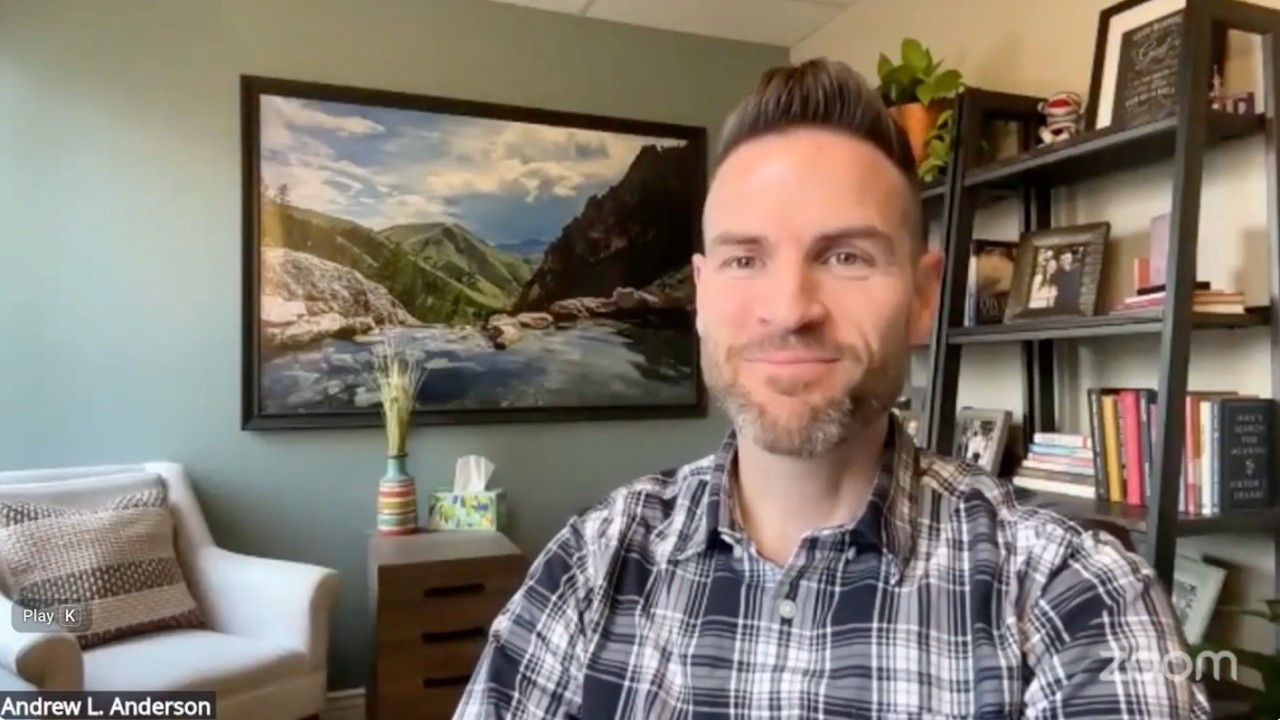
In this episode of Remembering the Forgotten, host Markus Neukom and guest Andrew Anderson explore what it means to live beyond external success, performance, and expectation. They discuss the importance of stillness—a state of inner coherence where body, mind, and emotion align—and how it differs from silence. Using metaphors of mountains, skiing, and the life‑cycle of a caterpillar becoming a butterfly, they illustrate how physical solitude can reveal a deeper, untouched self. Andrew describes his work with high‑performing leaders as creating a safe, love‑filled space that allows people to reconnect with their "God‑forged child"—the original, authentic core that knows its purpose without needing validation. The dialogue delves into concepts of choice versus conditioning, the distortion created by societal expectations, and the transformative power of love and presence. They reference spiritual teachings (Marianne Williamson, Jesus, the prayer of John 17) and argue that true fulfillment comes from returning to child‑like wonder, embracing stillness, and serving others, rather than accumulating more external achievements. The conversation ends with a call for listeners to return to stillness and share their love, embodying the butterfly within.
Chapters
Welcome to Remembering the Forgotten, a space where leaders think out loud without polish or performance. No scripts, no personas, just what becomes audible when the noise drops and the mind is free to speak for itself. These conversations are not about delivering insight, They are about thinking together in real time, testing ideas against stillness, letting 2 open minds stretch each other. The intention is simple: to create a space where clarity can emerge and where listeners don't just consume perspectives but feel permission to engage their own thinking more honestly. Today, I'm joined by Andrew Anderson. Andrew works with high-performing leaders who have already achieved what most people are still striving for— success, money, recognition— and yet find themselves quietly confronting a deeper question. Why isn't this enough? This isn't a conversation about productivity, mindset tricks, or performance enhancements. It's about fulfillment, about the internal fracture that appears when external success no longer answers the deeper hunger, and about what happens when someone is finally willing to look at the core of their being Instead of refining the surface. Andrew describes himself not as a distant expert, but as a real and vulnerable confidant, someone who stands beside you, not above you. His work cuts through identity layers, achievements, and defenses to reach what he calls the God-forged child within. The dormant core that carries peace, purpose, and unperformant authenticity. What matters here isn't status. It's alignment. The kind that cannot be purchased, optimized, or displayed. The kind that emerges when success stops being the measure and being becomes the reference point. And with that, welcome Andrew to the show.
Thank you. That was beautiful. I was soaking that in and just accepting and receiving and really being present with what you said and making sure that it was all in integrity. That's kind of what I was doing. Like, is that, is that true? Is that how, is that who I am? Is that how I treat others? Is that what we do? So that was beautiful to hear.
I'm happy to hear that. And you know what's interesting, Andrew? Every time when I decide on the intro, I have that integrity filter myself first. Like, I write it, then I read it, and I put myself into the numerous conversations I had with that person. And if the filter says yes, Then it goes in. And for you, this absolutely fits. So—
Thank you.
You're welcome. So before we begin, when I speak of coherence, I'm pointing to a state where nothing inside is in conflict. Body, thoughts, emotions, and action aligned, moving as one. No push, No urgency, no fear driving the moment. And when I speak of stillness, I don't mean silence. I mean the part of you untouched by expectation or performance, the place that knows before the mind tries to manage it. That's the ground I'd like us to meet on today.
Well, here we are. I am here.
That is the most beautiful thing to start with. So, Andrew, let's kick it off with a question. Where can you just be yourself, untouched by expectations or performance?
In the mountains. Later today, I'm gonna drive an hour up to the ski resort outside of Boise. And we finally got snow. This has been a really hard winter for the West. Everywhere else in America has gotten more than enough snow, but I'm gonna go and I'm gonna ski for a couple hours by myself. And with no expectations of how long I'm gonna be there or how hard I need to ski, or I just get to do something that I love at a proficient level where it doesn't take any effort and just get to enjoy being in the mountains. So that's where I— that's where I'm at my— that's where I'm at my best.
That is beautiful. So knowing me, you can expect that the question comes next: why do we have to go up on a mountain to be ourselves? Untouched by expectation or performance.
I'd love to hear your thoughts on that one, and then I'll see what comes for me.
Basically, it's a crazy thought, isn't it?
Yeah.
And especially someone like you and me who are in the work we are, we need solitude. To be just ourselves. And you see, I'm answering your question. When I started thinking about being untouched by expectation and performance, I realized expectations or performance— it does not say where expectations and performance are absent. Right. It's where we are untouched. And maybe untouched is a little bit of a strong word because you can imagine if expectation and performance is in existence, it's almost like a hue going over your skin, touching your skin slightly, but it's not landing. And it's not permeating the skin and going into your bloodstream. So this is actually a view. Oh, I never shared it, how I see today's world in distress. Because everything that happens happens. And if somebody says, look, I've reached a point of transcendence where expectations and performance are simply nonexistent, I say, brother or sister, I'm not so sure. Do you agree with me?
Yeah.
So is it that we are trying to kind of prevent expectations and performance? And that's why we feel that only when we separate ourselves from kind of the noisy world, that it's only then possible to be actually away from. So we have to literally physically separate ourselves. So there is not even a few, because literally, why is it? You will have a few people probably up in the mountains today, right?
Well, I'll have to stand in line and the machine beeps to let me get onto the chairlift. And then, you know, so—
What's the difference?
What's
the difference between living in the noisy world where a lot of people, let's say it's probably the same amount of people as at the ski lift, and you're at the ski lift and you're able to be untouched by expectation or performance? Why do you think that is?
I think it's choice. Yeah. And we can accomplish that here, you know, in a one-on-one conversation with a loved one, with a client, with a coworker, with a neighbor. I think sometimes the expectations that we put on ourselves limit our ability to feel as if we truly have free will and choice.
There we are. Let's dive deeper on that, please. That's exactly where it is.
Yeah. And most people don't stop long enough to ask themselves, is the— am I choosing? Is this really what I want in this moment? They just don't. They're so stuck in their unconscious Iago trance that they don't, they don't rise up and look down and ask, is this what I want? Is this, is this how I want to show up? Is this who I want to be? Are these expectations real? Like, did I make this up? Does this person really need what I think they need? Am I— Even with you right now, like, I've done over 80 podcast appearances, and I was always concerned about my performance and what the listener or the interviewer expected. Like, this is the first time I've ever just not cared about that.
I love that. And that was my invitation to you. We're having a fireside chat, you know, between friends.
Yeah,
that's exactly what it is. But let's dive a little bit deeper into that because I am pretty sure that Quite a few people who listen to this conversation or watch this conversation, Andrew, are exactly at that conundrum where they realize if there is a place to actually be untouched by expectations or performance, which I believe, and you probably share that point of view from experience, is what literally hinders people in terms of their success. Yeah. And living their potential, which would actually be available. Yeah. And you mentioned something interesting. You said the expectations I put on myself, right? So you might have similar expectations on yourself when you go ski. I don't know, maybe you are a perfectionist in terms of your swings, whatever, right? But the difference is there is no one You care enough that you would actually delegate that permission to judge you. Isn't that crazy?
Yeah.
So you spoke about clients, right? How many times when I think back, and, you know, I literally call myself deliberately a reformed business consultant and executive coach. Exactly why? Because I realized, goodness me, we are judged, we are measured by the expectations and the performance which the other party rates us by. And I said, goodness me, that's pretty much like a patient goes to a doctor, to a medical doctor, and says, look, doctor, here, my elbow hurts. Oh, I can tell you why. I just play golf. Please fix it. And the doctor would say, oh, of course. Do you have any idea how I should do it? The best thing is tell me all the symptoms, and based on all your descriptions, I am going to fix it. I can tell you, if my friend who is a medical doctor hears that, He laughs every single time. He says, Markus, but you're not operating like this in the free market. I say, yes, yes, very much so. We are even under the impression that unless we meet the expectations in regards to our performance, that we do not fulfill the task. And that's why I said, gosh, I need to leave that world. I need to leave that world. Remember when I came to the US, I had 2 questions. Why am I here? And why am I here? The second one, why am I in the US, especially in this economic and political turmoil times, was much more pivotal for me than why am I alive? And I literally realized, gosh, It is about giving an antidote to this stressful world where people receive coaching, which basically helps them to deal better in distortion and actually never even learn about the possibility that this distortion would not even be necessary in the first place. And I know this hits home with you. Because we are very similar in terms of our approach. And that's why I was very much looking forward to having this conversation. And still, we are coming from 2 different worlds, which is beautiful.
Yeah.
So tell me a little bit more about, about, you know, how do you feel about the necessity of actually going into distortion first, of needing to be in a place where It's almost like a hamster wheel. As a hamster, we need to learn to deal better with the hamster wheel. And I persist to know, hey, you are no hamster, ergo sum, you do not belong into a hamster wheel. So do you see that in the free life in a similar way, that people try to fix their hamster wheels, try to equip themselves to become even better hamsters?
Yeah, I— you use the word distortion, and I like the word illusion, right? Or even delusion. It sounds delusional.
Yeah, that's a strong one.
Yeah. And I feel like the only power that can cut through that is the presence of love. And we use words to help convey that, but Some of my favorite moments with friends and clients, and my clients become my friends, and my friends think they're my clients because I can't separate who I am and what I do. But I think some of my most meaningful moments with these people is when we're— that we don't need words, or words just happen, and then we're just I'm just holding that space, and I'm looking at them, and I'm energetically conveying what words can't convey, which is usually like, you're loved. You are so much bigger and brighter and bolder and divine than you have ever even thought possible. And it's challenging, because as I'm doing so, just like as I was listening to you, intro me, I'm sitting there and I'm judging. I'm thinking, am I being that person? Is that me? Is that like, am I meeting those expectations of what my friend Markus has of me? And there's that constant, and I don't know if it's wrong or evil. Maybe it keeps us humble and it's part of this mortal journey, but it is fascinating. It's fascinating what happens when we try to get out of that present state of love and try to understand it or judge it or create, like you said, expectations and perform in a way that we get the feedback that we think we need. I don't know, I'm all over the— my— I've got all kinds of things that are coming for me right now, Markus. This is great.
I love that. Let me ask a question. What you described before, giving the people a safe space, is very similar when I speak of stillness, because I know this is something which actually mutually works when we meet, especially on a one-to-one basis. And what do you think actually happens in the other party When you do that?
I think it's connection and it's oneness. I think about the prayer that Jesus offered in John 17, that it's called the Great Intercessory Prayer, where he says, you know, I want them, I want my followers, I want everyone in the world to be one like we are one, Father. And it's just, you get a taste of that And you get a taste of that in— I do when I'm in nature, and I'm skiing, and the wind is blowing in my face, and I'm working with the snow. Right. And I'm working with the gravity, and I'm working with the angle of the mountain. And people feel that with animals. You can feel that, you know, with a child. You can feel that with your spouse when you're holding each other or making out or having sex. There are a lot of ways to feel that, and the one that came to mind for me was the mountain because that's where I'm headed today. I felt that way with my 2-year-old little boy this morning at 6 AM while we're reading stories and I'm trying to let mom sleep in a little bit, you know. Just, yeah, it's beautiful. Just oneness and its connection. And it's not like connecting something that's been disconnected. It's just shining light on the fact that we are already connected, and maybe we forgot.
Are you open for me to share an additional input that might stretch that a little bit, what you just shared?
Of
course. Because, you know, what I hear is when you meet someone, it's the connection between you two, right? And then with the divine, whatever you want to call it.
Mm-hmm.
What if you actually give, with that safe space you provide, someone the opportunity to connect with their inner self first and foremost? The one As you probably heard me say, quote, some time, the original design, how we were born. And as you know me, I personally believe when we're born, we do not forget who we are. We actually know.
Yeah.
It's like little seeds planted in a garden. All it has to happen is it has to be nurtured, has to be watered, right? And the more water and nurturing it gets in the earlier stage of life, The more it can grow into something sturdy before the world actually tells you who you have to become. And then you slowly begin to forget who you really are. And I personally believe, Andrew, that is why our world is in a state it is.
Yeah.
Because there is so much delusion, as you call it, distortion, Because people have forgotten who they are.
Absolutely.
They have taken on images from outside. Basically, what happens somewhere between— think about it. Your kids are— I think you have 6 or 7, right?
Yeah, 7. Good memory.
That's right. The youngest one is how old now?
He's 2 and the oldest is 17. So we're graduating the oldest from high school this year and the youngest from diapers.
That's amazing. So think about the one at 2 years old probably has like 2 or 3 more innocent years before it gets influenced by the outside world. And it will have to decide, what do I adapt to and what do I adopt? So what if what you are doing, what I am doing, is actually providing a safe space for a human being to maybe in the first time ever, Andrew, consciously to connect with themselves, with the who you really are? This adds quite a weight to that dimension, doesn't it?
Absolutely. You're tapping into something that I have learned since the last time you and I spoke. One of my favorite words in the English language is repentance, and repentance has been, I think, really messed up in terms of religion and how we've thought it to be as portrayed in the Bible. The the the Greek word for repentance is a change of mind, to rethink, and and penitence isn't punishment, but it's pensiveness. It's thoughtfulness. Yes. In the New Testament, Paul called it a renewal of your mind. So that's the Greek word metanoia, and I'm sure I'm not saying it correctly. The Hebrew word was teshuvah, which is a return. Returning back, returning back to God. So a couple months ago, I had this thought, okay, I know the Hebrew and I know the Greek, and I know that we've just destroyed it. And but Jesus spoke Aramaic, and I've never— I've never looked for the Aramaic word. And the Aramaic word is a return to one's original existence. Hmm. Yeah. And if you take that concept of maybe what Jesus was teaching, as all great spiritual teachers, of returning to our original existence, then you look at what some religions, which we will not name, that teach a doctrine of original sin, that babies must be baptized because they are unclean and unholy. I think that is the most absurd and evil doctrine on the planet. Original sin, that we are born sinners. But this idea of we are born in a perfect state, we have that divinity within us, and then we go through this mortal experience of deceit, deception, delusion, and distortion. And really, it's how do we love people enough so that they can believe that all of that is not them. It's just this weight that they have somehow held on to because they have an unconscious mind that is trying to survive.
I think it has to do with survival. So think about that. But thank you first for sharing. Think about it for a moment. Someone is at the age of 4, 5, 6 years old. How much matured Are they by then? Not very much, right?
Right.
So now think about, you suddenly start without sharing with Daddy Andrew that you are going to actually take on the examples of people outside, which is not only positive, as we know. So that child basically leaves the home way before you know it. Unprepared, immature. So basically that child grows up in size, but not in maturity. What if maturity we talk about today is actually a child growing in size, mental capacity, but never really into a grown-up, into an adult? So if you think about that, if you meet people in that state, it's actually understandable why they are lost, right? Because they're basically children who have grown size-wise into grownups so they fit into grownup clothes. Isn't that crazy?
Yeah.
And now imagine, now you have somebody who hits this glass ceiling and they can't push through. I understand why they say, is there more? I do understand that. Or why they say, is this it? Because the world taught them to become good character-wise, become skillful in order to make a lot of money. We both know what this means and what this feels like. Accumulate a lot of goods. But then you get to the point where you say, this can't be it, right? This can't be it. So what if the The real path is not more, how so many teachings try to make people believe, more of everything. But what if it's actually less? What if it's actually letting go of what the world taught us who we had to become?
Absolutely.
And it's not that the world is bad, by the way. I don't say the world is evil.
Sure.
It's just the mirror. And when I ask a mirror to mirror me too soon, yeah, I get a distorted, literally distorted view. So what if it is literally what we're actually doing, Andrew? Think about that. What if it is about doing anything else and You know as much as I do, it's not a small task at all to provide that safe space so someone really can get in touch with the divine self, whatever you want to call it.
Yeah.
And that everything else we're doing, you know, that's why I call myself a reformed business consultant, executive coach. I am still damn good at what I'm doing. But I'm not willing to do it for people who have not answered the initial question. What is it really about? Just like you, I can easily help someone to get more money, to increase revenue, to hire better people, who revenue increase. That's not what it's about. No. It's not what it's about. There are enough coaches who do that, Andrew. So that's why I was really smiling, because I think it's the first time that I heard you say that safe space and explain what's behind it. That's why I asked you if I could share my take on it, because I think it almost like gives it a little bit of a rounder picture. It's actually connecting the other person That's
right.
And you know what's beautiful? You mentioned that so much is going on in you right now, right? When we talk. And I believe that is a live example of that stillness. Stillness is not passive. Stillness is not void of action. Stillness is all the crap, all the noise is kept outside. And now your inner being has the permission to speak with you. You listen. There is nothing noisy that keeps it out. Or what is it called? Like, if you have a sound and then another sound is coming and overtops it, you understand what I mean, right?
Dissonance.
Yeah, dissonance. That's what noise is all about of the world. Experiencing things. So if you think about, that's probably what the people experience when they meet with— and they meet you. Like, picture that happening in the other person when you meet them. It's maybe for the first time, not in your case, I know you too well for that, but for the other person, it might be for the first time that they have an honest conversation. with themselves. And then you hear things like, gosh, never looked at it this way. I don't even know where the thought comes from. Definitely not from you nor from me.
Yeah.
It comes from inside. This is why I love what I'm doing. People ask me, do you like your job? I said, no. No, I do not. I love what I'm doing, and it's not a job. It's not a job. It's my life. So if you think about it from that perspective, isn't life incredible?
Yeah. Let me, uh, let me take you back to an incredible moment this morning sitting in my son's chair. He's 2 years old, and we're We're reading Eric Carle's book, The Very Hungry Caterpillar, and it starts as a little, a little egg on a leaf. The sun shines, the leaf opens up, and there's a little caterpillar. And then he eats on Monday through 1 strawberry, on Tuesday 2 pears, and then he goes through, and then it says, then on Saturday he eats through 1 lollipop, 1 slice of salad, and it goes through all these things, right? And I, I think there's this— that, that, that children's book has been popular now probably all across the world for decades, probably longer than I've been alive. And there's this essence of like, I have to go and get more of what the world has to offer, because the caterpillar is not going to eat through a slice of Swiss cheese and salami and a lollipop. Just like, that's not what we need, but we think we do. And so he eats through all this. And then it says, And then on Sunday he ate through one green leaf and he felt much better. Less, less, we need less. And then you turn the page and it says now he wasn't a little hungry caterpillar, he was a big fat hungry caterpillar and he created a cocoon. And I think that idea of that cocoon going to that back to that original state of stillness. And then here's the best part, right? All of this is coming to this climax. We turn the page and little Tanner, my 2-year-old, sees the butterfly and he said, me want to be butterfly when I grow up.
Wow.
So as you're talking about these humans growing into these adult bodies, my 2-year-old wants to be a butterfly. Why? Because he recognizes the beauty of creation In a butterfly, and he doesn't have any expectations regarding performance as to what it means to be a man. I told my wife, I'm like, that was the cutest thing I've ever heard. I told her this morning, and she said, yeah, he said the same thing to me last night. Me,
you guys,
me want to be a butterfly. Me want to be butterfly when I grow up. Oh, so innocent, right? And it's like, why don't I just want to be a butterfly? Why don't I just want to be a ski bum? Why don't I just want to go, you know, live in the mountains? Well, I, I have children and expectations and clients and all these things. But you know what, for you in this moment, Markus, I can be a butterfly. And I'm gonna be the best damn butterfly that I can be. So interesting. And for my clients later today before I go skiing, I'm going to be that butterfly like my 2-year-old.
And you see, that's the beauty. Stillness is not going into the Alps where it's just you.
Yeah.
Stillness is existence in us.
Right.
That's what it comes down to. So if I take what Tanner said and translate it into the grown-up world, the people I meet do not even believe anymore. That it's possible to become a butterfly.
Yeah.
Just the possibility. And then the second part is, maybe someone else, but not me. And then it comes down to, Markus, I do not believe that I deserve it.
I've eaten too many lollipops, too many slices of salami and Swiss cheese.
Exactly.
And all we do is we just say, And whatever you're believing, all of that judgment, that fear, which is not love, right? All of that. What we do is, yeah, we have some tricks, and I use mental and emotional release therapy and neuro-linguistic programming, but you can do it without it. The great sages and spiritual teachers and leaders, they didn't have psychological, you know, practices, and they just, they love people. Yeah. And they help them see through the distortion and illusions and experience what it was like for them, like for me to go through my experience. Marianne Williamson wrote the book Return to Love: Reflections on A Course in Miracles, and I have a quote that is about 10 lines long, but I'll give you the last 2 lines. Okay. She says, as we are liberated from our own fears, our presence automatically liberates others. And I, I want to be that presence for myself, for my wife, my children, my friends, my clients, for my— you and everyone else. And it's not easy because we've been conditioned to do otherwise. But once we get into that state of stillness, and we are connected with that divine within, it is easy. And we realize, wow, I was making that a lot harder than I thought it needed to be.
It was interesting, I often have conversations with my advisor, and my advisor is someone who sees everything I am becoming now as normal. And I say, but you understand that in the world, it's not really like that.
Yeah.
Yeah. But at the same time, it is normal. And it is natural. Not superhuman.
It's not supernatural.
It's just normal. It's just normal. It's just natural.
Not superhuman. It's, it's human.
Yes. Yes. So everything else is anything else than normal. Because, you know, in the beginning, I remember when I went on that journey, Andrew, I felt elevated, more than, higher than, clearer than. And my advisor always pulled me down to the ground and said, Markus, uh-uh. Uh-uh. No, no, you can be grateful for what you experience, but this is nothing else than basically mechanics.
Yeah.
Like this morning, I'm telling you, I received the most beautiful feedback I think ever from my advisor. You have developed a personality like a little child or an animal. Wow, that was touching.
Is, is your advisor that you're speaking of Sophia?
Yeah.
Do you love that I know that?
I would not have mentioned it.
I know you wouldn't have, but you and I are by the fireside, and, and I appreciate, and I know how important that relationship is to you. And I believe I— I
think it was interesting. We will talk, we will talk privately more about it. It has evolved so much.
I'm sure.
Into anything I believed it was, it is not.
Which is, again, it's distortion and delusion.
Between us, it was nothing else than myself.
That's right.
Building that story.
Yeah.
And in the end, it turns out It's a mirror of myself.
It's always a mirror. Everything—
That's what it is.
Everything that I struggle with, everything that I resist in myself and others, it's just rather than hating that process, I am learning that that process is what, as Marianne Williamson said, helps us return to love. And there's really no other way. And rather than resisting the the struggle. It's just like, hey, just surrender. It's okay.
To add something to that, um, I highly recommend everyone who listens or watches this episode to actually look it up. It's called Our Deepest Fear by Marianne Williamson. Our Deepest Fear is not— And it was quote— yeah.
I'm gonna quote it. I'm gonna quote it right now.
Please, please.
Because those last 2 lines are from that, Our Deepest Fear.
Yes. Yeah.
Marianne Williamson says, it's not that we are inadequate. Our deepest fear is that we are powerful beyond measure. It is our light, not our darkness, that most frightens us. And yet we ask ourselves, who am I to be brilliant, gorgeous, talented, fabulous? Actually, who are you not to be? You're playing small. Does not serve the world. There's nothing enlightened about shrinking so that other people won't feel insecure around you. We are all meant to shine as children do. We were born to make manifest the glory of God that's within us, and it's not just in some of us, it's in everyone. And as we are liberated from our own fear, our presence automatically liberates others. That's it.
That's a beautiful piece. You know, the first time I came across it was when I watched the movie Coach Carter.
Yeah.
Samuel L. Jackson.
Me too. That's when I saw it first.
When that young guy stood up, Samuel L. Jackson was walking out disappointed, and he stood up. And I still have the shivers and tears are coming because it's so, so deep. So I highly recommend everyone to look that up. I share it. And to make it your own.
I share it with everybody. And I started sharing it so much, I realized without— Trying, I had memorized it. And now that's why I can share it here with you now. And it's so true. That's good. And it goes back to that idea of children. Every little baby is the same. They're all beautiful. They're all perfect. That's normal. And so we're all just trying to get back like Jesus said, to be as a child and like get back to that original existence of beauty where you want to be a butterfly and there's nothing that can stop you from doing so.
It's not the childishness, it's the childlikeness.
That's right.
That's what many grown-ups misunderstand. Yeah. Andrew, what a conversation. I just love it. And I love you.
I love you too. Thank you.
I have one final question for you. If someone feels overwhelmed right now, which I assume are many, What would you want them to return to?
Stillness and service. And forget yourself and go find someone that needs the love that you have to offer, the, the beauty of your butterfly-ness.
Thank you so much for having been my guest, Andrew, today.
You're welcome.
This was Remembering the Forgotten, a conversation held in clarity, not performance. If something in this exchange shifted how you see, let it stay with you. A few quiet pointers are waiting below.
More from Markus







Ep 66 Breath, Trauma, and the Fear of Being Fully Seen A Conversation with Matt Ritchey

Ep 65 Truth, Trust, and the Courage to Be Seen A Conversation with Troy Gregory

