Ep 47 Coherence Under Consequence A Conversation with Evan Marks
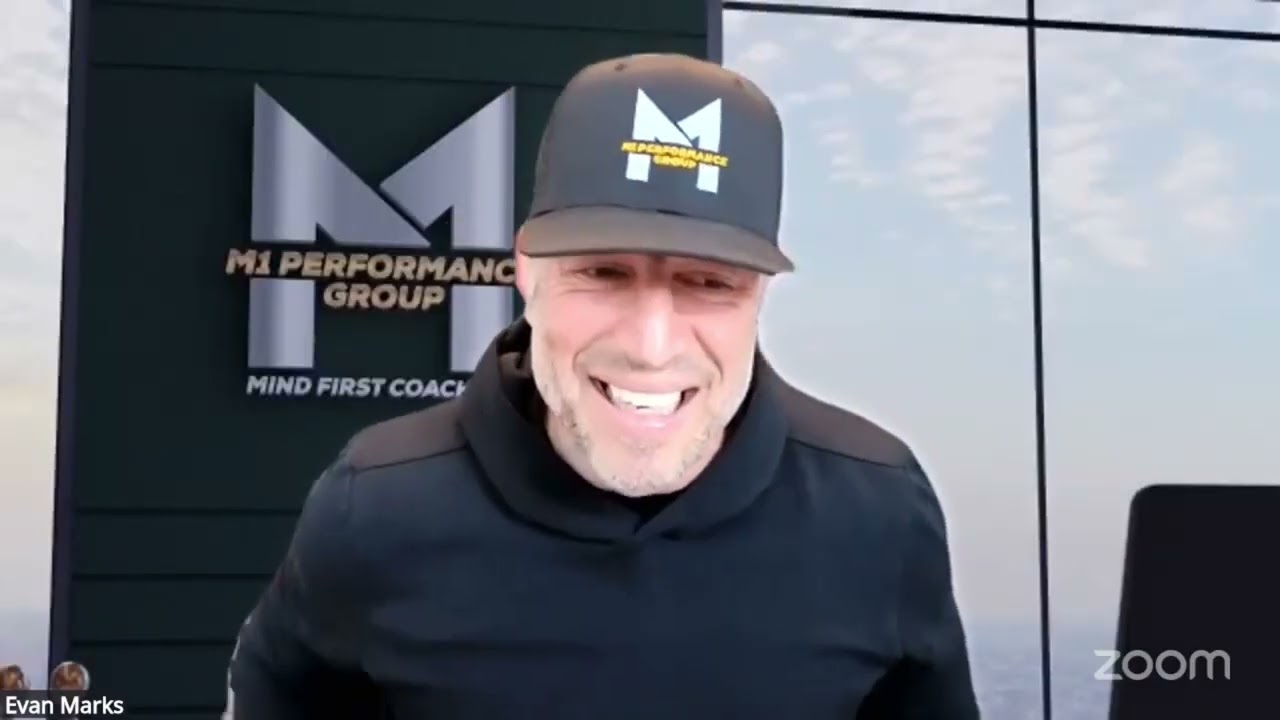
In this unscripted episode of "Remembering the Forgotten," host Markus Neukom interviews performance coach Evan Marks. The dialogue explores how high‑pressure environments—Wall Street trading floors, elite sports, executive leadership—reveal inner conflict and how to cultivate "coherence under consequence," a state where body, mind, emotions, and actions align without fear‑driven urgency. Evan shares his personal journey from a 25‑year Wall Street career, forced retirement after a panic attack, and a shift toward impact‑focused coaching. Together they discuss the role of stillness (as conscious choice rather than silence), treating emotions as data, the importance of curiosity, training for responsive rather than reactive behavior, the impact of early childhood programming, the pitfalls of over‑focused self‑improvement, and practical tools (breathing, questioning, curiosity) for leaders and athletes to navigate stress. The conversation emphasizes that clarity emerges when distortion drops, that time can be an ally when we choose small, consistent changes, and that remembering our innate executive functions—courage, curiosity, creativity—helps reclaim authenticity.
Chapters
Welcome to Remembering the Forgotten, a space where leaders think out loud without polish or performance. No scripts, no personas, just what becomes audible when the noise drops and the mind is free to speak for itself. These conversations are not about delivering insight. They are about thinking together in real time Testing ideas against stillness, letting two open minds stretch each other. The intention is simple: to create a space where clarity can emerge and where listeners don't just consume perspectives but feel permission to engage their own thinking more honestly. Today I'm joined by Evan Marks, Evan spent decades in environments where pressure is not theoretical. It is immediate, financial, reputational, consequential. Portfolio management, trading floors, split-second decisions with real cost. But this conversation isn't about markets. It's about what pressure reveals. Evan now works with athletes, executives, and decision makers who operate where the margin is thin, not to make them louder, not to make them more aggressive, but to make them clearer. We explore what happens internally when stakes rise. How identity fuses with outcome. How composure is not calmness, but orientation. This exchange is not about optimizing performance. It's about removing distortion. Because when distortion drops, precision appears. And when precision appears, performance is no longer forced. What matters here isn't dominance, it's coherence under consequence. And with that, welcome Evan to the show.
Markus, I have a book coming out soon, probably in the first quarter of, uh, '27. Can you do the narration, please? That was beautiful. That was— wow, I could have sat there for another 20 minutes. It was beautiful. My pleasure for having me.
It's such a pleasure having you. Thank you for being my guest today. So before we begin, when I speak of coherence, I'm pointing to a state where nothing inside is in conflict. Body, thoughts, emotions, and actions aligned, moving as one. No push, no urgency, no fear driving the moment. And when I speak of stillness, I don't mean silence. I mean the part of you untouched by expectation or performance, the place that knows before the mind tries to manage it. That's the ground I'd like us to meet on today.
You know, it's such an interesting topic because, you know, I always say, you know, I've been coaching now 8 and a half years and that we live in reality, right? Mm-hmm. So there is no life void of any of that, right? Life is not linear, right? We all have our ups and downs. But the real question is, how can you coexist with whatever all this data is? Right. Emotions and experiences and things like that. Because when we try to force ourselves into this quote-unquote stillness, what's wrong with when we feel conflict? I think the greatest thing is when you feel conflict, how do you get to a moment of the journey of clarity? So it's not wanting to have conflict. Unfortunately, exists all around us and internally. But how do you use it to your advantage? It's almost like I always tell people, just let go of the rope. You don't have to play tug-of-war with it. You know, for myself, when I spent so much time on Wall Street, I didn't want to feel nervous. But I realized, like, feeling nervous and having a little bit of that angst actually was a good thing. Absolutely. And people say, what do you mean it's a good thing? I said, well, if It was data points for me that it meant something. You know, I just did a TEDx in January last month, and I was feeling nervous.
Yes.
Anxiety, fear of judgment. What's wrong with that? Well, what's wrong with it is when it gets on the field and it starts to interrupt and cause unconscious behavior. These are all feelings. We all have them. We all have experiences. So to live without it You know, you can't make a decision without an emotion. And fortunately, all our emotions aren't positive. That is the Roy G. Biv of the human experience. So when we allow ourselves and give ourselves permission to feel, to live this existence— you can't feel joy and fulfillment if you don't know what the other side feels like. Because then you really can't call it joy and fulfillment. Fulfillment of what? Mm-hmm. So I've, you know, in my humble opinion, experience these things. You know, it's like any emotion, Markus, only lasts for a certain amount of time. It's the question of, do we attach ourselves to the emotion with a narrative, with a story, But when we're able to just acknowledge emotions as they are, that's all they are, they're data points. And then we have this wonderful ability through training and consciousness to choose how we want to behave with that feeling, because then we know the experience is different with different behaviors. And we know now neuroscience-wise, it changes the chemistry in the And the circuitry in our brain. How wonderful is this? So instead of fighting for stillness, we know we have the ability to just downregulate. We have that power in the face of anything. So when I see those sort of things in stillness, stillness has to come from somewhere.
Tell me about your understanding of stillness.
To me, stillness is conscious choice. Stillness to me is having the ability to respond and not react. Mm-hmm. So when I'm coming from a place of grounded and I feel very secure in my footing, I can make best decisions from a responsive nature.
Mm-hmm.
When we react, you know, when I think of water, right? And when I think of reaction, I think it's murky and just really choppy, choppy, choppy. To me, stillness is creating mental space. So when we have a stimuli come at us that's external, comes internal, we have a moment to create space. Now, is that perfect stillness? No. But through repetition, we now have the ability to respond and not react. And that's athletes, CEOs, Wall Street professionals, finance professionals. Imagine having that ability.
Mm-hmm.
So when I think of stillness, it's creating that mental spells— excuse me, creating that mental space to choose. Now, you don't have to be in a Tibetan— you don't have to be in an ashram in the Himalayas to do this.
I know.
Fortunately and unfortunately, in the world we have today, there's enough stimuli. But also, there's nature. You can take a walk. You can go for a workout. You could have a moment by yourself to create these moments. And as you get better and better at it, When you feel pressure, you feel chaos come in, you could take that breath. That's training.
Mm-hmm.
You know, when, when people— and I, and I was one of them, you know, I used to meditate every morning at 6 in the morning or 5 in the morning. But then I came to a point when I was working on trading desk, I'm like, I know it's 6 in the morning, I'm not feeling the heat. I'm not feeling the pressure. I know it's a great way to mentally prime myself. However, while I have the ability to be visible in the moment— Mm-hmm. And visibility to me is consciousness. So I really started to think, well, meditation's great at 6, but how about 11:30 when news is out and things are going haywire? Will I be able to be calm in, in the storm? And I really started, Markus, to think about that because to me, that's when I needed it the most, to be able to be responsive and not reactive. What do you think?
It's a very interesting aspect you just mentioned. And if you think about that, so many people meditate and I say this with a smirk. Nobody has been forged in summertime.
Right? True. Yeah.
So you're forged in the fire.
That's right.
So if you look at rowers, like the rowing on rivers, right? Or on the lake or on the sea. They are forged in the rain. So interesting enough, if somebody tells me about the meditation practice and about their lofty thoughts in terms of peacefulness and everything, I always wondered how many times has this person really been tested? In the fire and in the rain. Because then you suddenly realize your meditation routine actually doesn't help you so much. Because it's a routine.
The eye routine is wonderful, right? It creates, it creates routine, things like that.
Yes. Structure.
We may get shot down by multiple podcasts and people listening to this. You know when I need it? I need to win this chaos.
That's exactly it.
Not that I am producing my own chaos. We, you know, I'm not a massive positive psychology person. I am a positive attitude person. You know, I love to, I like to call myself an opportunist realist. But the people I coach are high achievers putting themselves in extremely challenging, pressure-filled situations. I have to know that they're able to find their footing when storms hit. Now, when storms don't hit, I'm not minimizing that. It's still a practice.
Mm-hmm.
But I need them to show up. When it counts is a very broad range. But when they feel the heat is when my people do the best.
And you know what's interesting? You mentioned something really fascinating, Evan. You said that it's okay to feel fear. And I believe that is almost the most important message of today's episode with you because we are working with very similar people and they're so used to have to be almost perfect. Yeah. have this stellar appearance to the outside. And I always say to my friends and to my clients, look, if you look at the— probably the greatest singer of all times, Luciano Pavarotti.
Oh.
Evan, he said multiple times that he is dying 1,000 deaths Every single time before he enters the stage. 1,000 deaths. Luciano Pavarotti, the maestro himself, right? I think we can combine our crafts and we don't get close to that guy because what he put in as exercise, that's just not normal. from a young little boy's age. Like, by the way, I just saw a recording of his when he was literally a boy, and you could see this guy has what it takes, and he had the grit to go where he went in the end. But I think it's the most important aspect to understand, gosh, we are humans first and foremost. And it is okay to feel because guess what? What happened? Think about back when you were in Wall Street. What happened when you pushed feelings away?
I used to call it Chernobyl, right? It's coming out somewhere. You just don't know where it's gonna come out. And what happens is you tell it and you push it down.
Yeah,
it's coming. And when it does come, Markus, Probably not the best time. And you know, one thing about fear is, and, and this is just a truism, there is no such thing as fearlessness.
None.
Zero. Everybody faces fear. However, the question is, how do you use it?
That's exactly it.
Right? So then why not have the ROYGBIV, the rainbow of emotions, as long as it's not Driving the ship.
Because you know what's interesting? So think about that for a moment. When people refuse emotions, when they refuse to face them, when they refuse to look at their emotional, you know, geography, for example, right? It will hit them sideways when the times get rough. Because I literally believe, and I'm curious to see what you think about that, that not most, but too many managers, too many leaders, even athletes, and I know you're very close to athletes, to all the high-performance ones, they are not the closest to how they feel. Would you second that?
I would. Oh, so if you said, right, so it's their feelings don't traditionally mirror their behavior that we would think fear of nervousness would look like, right? Or fear of judgment or fear of rejection, but they behave so differently. That is training, right? So why are— you know, when you think of Djokovic, the tennis player, the legend, when he talks about mental conditioning and he says, I probably have more emotions than most people, And everybody scratches their chins going, how is that possible? Mm-hmm. What a great invitation that is to allow yourself to do the same thing. But that doesn't give you permission to act out, right? So this is the whole thing, right? We can all have our moments of acting out. We kick a little dirt, right? Because you have to be able to get out and verbalize it.
Mm-hmm.
It's important, right? You could have a moment with yourself, an extremely healthy— then you have choice. And what happens is, and this is neuroplasticity, repetition is king. Proper repetition.
Mm-hmm.
And all of a sudden, and I always say this to clients, I used to never talk about time because I don't know what time means. But then through more research, I realized either time can be an ally or time could be a foe.
And
this goes into emotions. So what happens is if we consider emotions as data, right? A lot of it's from the past, from programming. Anxiety is when you future travel into the, you know, when you travel into the future, but the pool that you're traveling into are experiences from the past, which is ironic, right? Mm-hmm. 'Cause this is where we're programmed. But all of a sudden, if we start to become more conscious, allowing ourselves to feel and choose conscious behavior, which then starts to create new experiences for yourself in the brain, as days, weeks, and months stack, we look back and time has been a big ally. Because what happens is we always talk about money compounding, but so does behavior. In the face of any emotion. Now, the other side of the aisle is if we don't change, if we keep reacting, time becomes a foe. Because not only have we lost 6, 9, 12 months, whatever timeframe it is, our belief system has taken a massive hit. Because now we believe— because we don't have any evidence— that we're not able to change. And as we were saying earlier, Markus, you and I are both 53 years old.
Mm-hmm.
Right? And time moves. So is it on your side or not on your side? So when you're sitting in your home at 5:30 in the morning meditating, but you notice that nothing is changing in your life and behavior's the same, I think it's all right to call a timeout. And say, you know what, this is not working for me. What are better ways? I want to be more aware. I want to have the ability to change. Maybe my mindfulness track should be somewhere different. Maybe I'm not open to all my emotions. You know, the active reflection is so important. Not feedback, but feedforward. How do I need to get better?
Mm-hmm.
In the face of this Human existence, right? It's so interesting. And I think as you get older, you realize that perfection's— can I curse on this thing or no?
Oh yeah.
One, once, just once. It's bullshit. And in fact, I'll say this. If I said to you, Markus, you're perfect the way you are right now, you're never gonna get better 'cause you're perfect, I would think you'd be like, I don't want that. I am not perfect and I don't wanna be perfect. I wanna go experience more. I don't mind failures and I want to go see what this is all about.
What do you say to someone who literally has it all but gets to the point where he says or she says to you, Evan, is there
more? I have to be quite honest, somebody just asked me that question about 20 minutes ago. On a text. So the question was, I've had all the success, I've done all these great things, I've had status, I have money. What's the next thing? So if I can share a story with you.
Please.
So I retired from Wall Street when I was 46. And when I say retirement, it was a forced retirement, not because I lost money, because I thought I had a heart attack. And it was this massive panic attack. And they realized I played Division 1 sports. through concussions and crying, a lot of stress being on Wall Street, and some past trauma, that it significantly impaired the gray matter in my brain. Mm-hmm. And I remember sitting there, I have 2 young daughters and a wife, I'm like— and then this neurologist says, you don't— you have a choice. You could keep performing this life that's killing you or start over. And I'm 46 years old. And it was interesting because I spent 25 years on Wall Street. I hated every moment of it, but I was definitely motivated by money.
Mm-hmm.
And then what happened? Something interesting happened. I never wanted to be there, but I went to UPenn. It was an incubator. My brother was on Wall Street. He ended up, you know, leaving, going to open up restaurants. Then all of a sudden, my motivation started to shift to impact. Like the service of others. And all of a sudden, a whole other chapter opened in my life. And by the way, impact and service of others doesn't hurt the bottom line either. But my whole motivation shifted. Now, it is easy to say I'm more fulfilled than I ever have been in my entire life. That's easy to say. But maybe at that moment of success, there was a reason why I wasn't fulfilled. I wasn't being true to the nature that why I think I'm here is impact.
Let me ask you a question.
So I think it's that shift.
Yeah. What broke first?
Say again?
What broke first?
Well, you know, when we talk about emotions— great question— when we talk about emotions, we always fear rejection, fear of embarrassment, fear of judgment. But there is one emotion that reigns above all, and that emotion is called regret.
Mm-hmm.
I believe it was 25 years of regret of me living a life that wasn't mine, and I think it caught up to me. Now, Markus, I do not have science backed information on this, right? I wish, you know, and I'm sure there's going to be, you know, as, as the world of science keeps evolving, there'll be something out there and white papered. But for me, what broke first was, was the strongest feeling of regret I probably ever had, and that came out in a massive panic attack. So that was the first—
That's—
That was the data point that came in.
So was that the one when you assumed that you were walking toward a heart attack, when it was actually a full-blown panic attack, an anxiety attack?
And about 8 years before, I looked at my wife. I said, I just want to give you a heads up. I feel like this is spiritual suicide for me. She's like, what? And things were well. I'm like, I know it. And, and it's hard, right? Because you're having success. And listen, not every year was a Picasso for me, right? You know, I worked on Wall Street, so there were some ups and downs, obviously. You know, I got myself in a couple of pickles here and there, but I knew it's not what I wanted to do. Okay. But I like being around the desk. I like managing. I like talking about psychology and all these things. And so, you know, people always say, man, that takes a lot of courage to leave Wall Street and go start your own coaching practice. I said, I have to be honest with you, I wouldn't call it courage. It was indirect courage. But I think regret took me out of this game and put me into a new one.
Where do you think that that emotion came from?
Oh man, that's a great question. I— what do I think? I think it was living up to other people's perceptions and validation. So what happened was when I was at UPenn, I blew my knees out twice playing lacrosse, and I was a pretty decent lacrosse player, and I never was able to perform. I blew them out my freshman year, and I blew them out again. And my brother was captain 2 years in a row. My identical— I have an identical twin, went to the same school as me. And I always felt that I had to prove myself. And Wall Street was obviously very competitive.
Mm-hmm.
But the perception and the approval and the validation I never got. And then there was a deeper look, like, wait a second, after 25 years, still nothing. Because there's another part of validation. There's external and there's internal. And I never accepted myself. Maybe because I regretted I chose to do this and live this. And listen, it was a wonderful experience, so I really don't want to have viewers like, oh, don't feel bad for me. But at the same point, I had this incredible opportunity to do something else. So maybe the reflection, obviously in the moment— and it's interesting what we're talking about— in that moment of 25 years, which sounds like a hell of a moment, I couldn't get myself out. I couldn't help myself. Mm-hmm. Until something dramatic happened. And now when you talk about coaching and helping people, I truly believe you don't have to get into a so-called heart attack or a massive panic attack to have this reflection.
Mm-hmm.
So when you talk about stillness, We all have this incredible— we all have this incredible opportunity to ask ourselves a question. What am I trying to accomplish? Who do I want to be? And am I representing myself right now doing this? So we know self-exploratory questions, right? And that's what that is. Puts you in the seat of influence consciously. Now, the beauty about that is you don't have to answer it right away. But when you start to ask yourself questions, it starts to stimulate the unconscious. It comes out on a walk, in a dream, or whatever it may be. But that's when you start to get to the core of who you are.
This is what I love. If you had not mentioned unconsciousness, I would have challenged your perception quite, quite shortly. Because, you know, it's interesting. There is this, I don't remember who said it. Oh, Einstein. You cannot use the same tools that brought you into trouble to get you out of trouble, right? So quite often when people ask themselves, what is it I really want to do? What they're going to do is actually they're going into their minds, which is filled by data. And Basically take the same— I call it BS instead of bullshit for a moment— the same BS that brought them into the situation and use the same data to actually answer that question. Quite often I'm asked, is there one nugget you can leave the viewer or the listener with? And I say, look, it's very simple. When life knocks and asks the question, Evan, is this it? Is there more to life? All you need to do is to reply, what if there is?
Well, now you're in a different world, right?
Please show me.
Yeah. Well, now you're in the world of curiosity.
That's exactly what it is. You know, I had a conversation recently and the person said to me, Markus, you are all about the nervous system. I said, yeah, and actually didn't even think of it so much. But because what I'm doing is I am helping people to not even get to that deep level where they break. Because I honestly believe it is possible to prevent almost all disaster in a human life. We are not meant to be disastrous as we are today. We are not meant to live in a world that is so noisy and, and so full of distortion. That is a man-made, a human-made construct. And stillness. And you know, you might feel it yourself since you're in this call. Everything that's outside is outside. In this conversation, it's us, you and me. And remember when I told you the reason why I don't do lives is because I don't want the noise of the world in this living room. And that is stillness. Stillness basically is a safe space we can provide for others where they can be themselves, where they can allow to feel quite often for the first time in their entire life and existence. Because when I ask you, what was it that brought that voice of regret? That was your original design, the one you were born with, that observed you for 46 years and said, you know, Evan, no, this can't be it. If I let you continue this path, you're going to blow up. That's not what's in your cards. And this is what's so interesting. When I look at the people I work with, they have 2 questions, Evan. Is this it? And another one asks, or is there more? And that's life speaking to us. You know, if you think about that, it's a philosophical question, which I often discuss with my guests. When you're born, are you born and you have forgotten who you are, or are you born and you know exactly who you are and what's in your cards?
Wow, that's a very deep question. Um, there's obviously a lot of different trains of thought on that one. What I believe is that The mosaic of life is created through experiences. And there are moments in time where you have a moment to reflect and make a choice. And in the face of any emotion, it's a very hard choice. So when those times come, and we're talking about being visible, being conscious, right? Are you listening? And do you have the courage to make a decision that is responsive? You know, like, obviously as a child you're being programmed, so I don't think you have freedom of choice.
Let's stay here for a moment. As a child, you're being programmed.
Yeah.
At what age would you say—
Of your environment.
What age would you say that this programming actively kicks in?
Oh man, that's a, you know, I'm, I, I think, by the way, I think a lot of this stuff is pre-verbal. If you want to go Freudian psychoanalytical theory, we're going pre-verbal. So like out of the womb. Interestingly, it's probably around 25.
It's probably around 3 to 6 years old.
Say again?
It's around 3 to 6 years old, most likely in most people's lives. It's when society believes that you are becoming permeable, that you understand what's going on, and that's when you have to get primed. Because what we're going to do as young people, we are believing that now we have to start adapting. And adapting is what's dangerous.
Let's survive.
It's not that people— yes, but you see, and that's the point. Think about that. Come with me on a journey for a moment. I'll take you with me. A child is born with a garden, and that garden has many different seeds. And if you look at it from a grown-up perspective, those are the executive functions every person is born with. There is courage, there's curiosity, There's creativity. Have you ever met a child that doesn't have the 3 in spades? I haven't. Nope. Right? So something happens within that child's life. It's the child's life. It's not grown up. It's child's life where they're suddenly being told, don't be silly. In the beginning, it's like Joe Kingly. But fantasy and curiosity and courage and creativity suddenly becomes silly because it doesn't fit anymore with the grown-up world. And let's be honest, a child is literally groomed to become a good member of society and economy. That's what it's all about. So now think about that. If you're fortunate, and I actually have had one or two guests out of my 40-plus Who I was able to say, wow, and this goes deep. That person is blessed because that person had almost no outside distortion in the upbringing. They were literally able to nurture those seeds I just mentioned. And you can tell when you talk with them. I've never met them. It's too much hardship.
So yeah, so this is—
I'll introduce— I'll make some introductions to you. It will be interesting. Yeah, I don't even think that exists. But yeah, I mean, Yeah, it will be interesting.
Yeah.
It will be interesting. Really a nurturing environment, which I have never seen or rarely seen before. So think about that. That person who has been able to nurture those seeds is much less prone to have to experience what you and I experienced. For you, it was something you thought was a heart attack. And this is very evident. Anxiety and panic can pretty much mimic the symptoms of a heart attack. So that is very common. And there is a muscle on top of our heart which has nothing to do with the heart, but it can totally feel like a heart attack. So anxiety and panic attacks affect that muscle, and it's very close to the heart. So it makes sense. So if you think about that, what if it is actually a blessing that this happened? Because in the end, it's literally that being in us that senses warning signals over warning signals. Like 6 years prior, right, was when you said to your wife, I'm committing. Spiritual suicide, right? That's something like what it was. So if you look back, there probably was even more, but especially high performers who are used to not make their emotions their allies because emotions can quite often be disturbing, especially if you are high performance and you haven't got to the point where You work with them, I assume. That's when life literally needs such drastic measures to actually reach a person. Think about how much it took for you at the age of 46. So it literally had to break down your construct, which I assume was very solid. It was a scaffolding in the end. to keep that construct up? Because I assume 25 years of Wall Street was quite a challenge. So now if you think about that, stillness literally is a safe space where that voice that has been numbed, That has been silent, that has been pushed out, suddenly speaks.
Yeah. So let me ask you this question then. So it speaks, right? So when you say, you know, this panic attack, it wasn't hard, it was just a panic
attack,
right? I— but, and you know what? And the doctor said something to me, but it wasn't Herculean in the, in the, in the sense that I could have gone back. But when we say— we have to be very careful when we say Herculean. Because what happens is, is that the reason why people don't change and are afraid to change, they think the change is so grave. When in actuality, small change, even though it's cliché, builds. That's right. So when we talk about stillness, there's moments of stillness in the chaos. Right? We have to go outside eventually. It's nice to be in a room where it's quiet. But what happens is, is that our belief system starts to shift that I'm only good when things are quiet.
Mm-hmm.
Right? Where it's safe. Well, we live in reality. Unfortunately, not every place could be safe. So it's important to have that belief and confidence that Through training, through stunts, for whatever you're trying to accomplish. That not that you will survive on the outside, quote unquote, that you will actually thrive.
Right? And
I think that's extremely important. And to know that you have the ability. I'll give you some. I train with a trainer, right? And he's saying it's so it's fun working out with you because my whole body, I had new shoulders put in, new knees. I'm not connected. And I realized that when we're working, because I'm a mental performance coach, when the brain and the mind gets too busy, we get into the body quick. Because when we get into the body, the mind is a moment of stillness, right? Because now the focus is on the body. And for me, as I'm building M1 and doing TED Talks, writing books, doing more stage, trying to build, blah, blah, blah, blah, blah, blah, blah, a sense of being overwhelmed comes up. So now going to stillness and curiosity. Hmm. What would it be like if I found somebody to help me to get back into my body? Well, I'm talking, Markus, about connective tissue. I'm talking about— I know there's between my brain and my knee that's been damaged so many times, and the highway going there is massively damaged. I'm curious to see what that looks like. So somebody would say, so what does that mean? It means nothing. No. It's been 3 months now. Can I write a book about my experience? Not yet. But all of a sudden, there are changes happening.
Mm-hmm.
Right? Definitely in my connective tissue, definitely in my brain and stuff like that. So when we talk about stillness and we talk about 3 to 6, I think curiosity is one of the most amazing things because we're talking about emotions as data. Curiosity in its essence is just information seeking. So it's all right to reflect and say, where am I right now? You know, I don't know what happiness means. That's a wholly— that's a different podcast, right? Do I feel fulfilled? Is this what I want to be doing with my life? And if the answer is no, an obvious question is, why is that? And what are some small steps I can do right now to give me better clarity. That's it. Because we know, you and I know, it doesn't have to be Herculean. I know Tony Robbins says you need dramatic change. What I think is that you need to be curious enough to start somewhere and be consistent. Because it goes back to what we were saying earlier, that time becomes an ally. Because Herculean moments There aren't many, but there are beautiful experiences that develop. And I, in my humble opinion, this is my experience, they're much more gratifying and fulfilling.
It's an interesting—
We could talk about this stuff all day, Markus. It's so interesting. But I think the real test In my world is when we're in the— not when we're in the storm, but when we're in high-pressure situations.
The transitions, right?
We're not causing storms, right? But the reality— and I don't wish them on people— when they do happen, how are we showing up?
Mm-hmm.
And, you know, in order to show very focused in a storm, you have to train. So we always say, you know, like in this— and this is a very interesting topic— We all, we all set expectations for ourselves. I want stillness. I want peace. I want this. I want this in my life. Here's our expectation. Where's the training? Because if we train here and do nothing to help ourselves, that is just hope. We start to train properly, whether that's clarity, curiosity, all these great things. We start to trust ourselves. And I think trust, which we haven't mentioned since we've started, is big.
Yeah, I would say most, most today is a little bit like, um, pseudo-trust, huh?
Yeah.
Pretense.
That I'll be all right.
It's very— yeah, it's very much pretense. Yeah.
Like you and I, we're We're gonna make mistakes still. God bless us if we keep trying to push the absolutely
goodness. Right?
But I trust myself that I'll be all right. Am I gonna be upset? Am I gonna be frustrated? Am I gonna feel judged, embarrassed, blah blah blah? Of course. But if I'm not, then I'm not doing anything. I want to go see what this game's all about.
Do you know what the turnaround for me was in my life?
Tell me.
It was when I whispered exactly that question. What if there is more?
Tell me. So what was your moment, Markus?
Well, I had a few.
We're old wise men nowadays. Do tell.
So I had, I had 3 burnouts in my entire life. Heart was never the issue, fortunately. But I know what it means when your cognitive functions literally go bye-bye and you can't write anymore. Your thoughts are 1,000 times faster than you can speak. So for me, it was literally the point where I sat on the sofa and then I said, is this it? Because I'm at a point where I have no thoughts anymore, where I have no answers anymore, where I do not know what tomorrow brings. And that's when life said to me in a very quiet voice, Congratulations, because now you're exactly at that point where you need to be. And that's when I said— I remember the moment where I said, what if there is more? Show me. And you know the secret to that whole thing, Evan? No. There is not more, there is less. It's not the more, it's the less.
Simplicity.
Yeah. Yeah, it's the less. Because if you think about that, if you, if you look at yourself and you were like 3 or 4 years old, you maybe can remember, I can. And you take your entire journey that led you to 53 now, right? The who you are today combined with the journey plus who you were at that age, that is basically the ideal. But most people are so far away from who they once were when they were— some people call it perfect, some people call it innocent, whatever. And that is the part that high-performance people sooner or later meet again when life knocks at your door and says, is this it?
Well, you know, I was reading an article last week about this, and I got to be careful what I say because I'm not in that business of— I am in the business of self-improvement. But when people are so obsessed with self-improvement They get further away from who they actually are, which you're saying it right now.
Exactly.
And it's just like— and to be extremely frank about it, I never heard that before. And I remember I read it or heard it, I think I read it, and I'm taking a walk, I'm like, wow. Wow. You know, I'm still thinking about that line. The more obsessed you are with self-improvement, the further you get away from who you are.
Mm-hmm.
The other outquest, well, I don't want to be who I am. Well, that's— you don't know who you are, right? So it's— it is— I'm still— I'm still— I have to be quite honest, I'm still struggling with this one because I'm really thinking about it. What happens if that is true? Then what you're saying completely is the evidence behind that. Fascinating.
And I can tell you from my journey—
Self-development is when you get away from who you are.
Yeah, I can tell you from my journey and I can tell you from experience that it is absolutely true. The moment I capitulated and I said, I don't know anymore how to move forward, that's when a voice said in me, Congratulations, now you're at the point of return.
So what was your next step then, can I ask out of curiosity?
That was exactly the question. What if there is? Please show me. And you can tell not my mind gave me the answers, but that part that got forgotten at a very young age. Because you see what's interesting, Evan, I believe we are born remembering and knowing absolutely who we are with all the executive functions highly alert, but they have to be nurtured and grown. So then life happens, the world happens, and we begin to forget. So what I'm doing is with the Remembering the Forgotten, many people do not know what it really means, but everyone senses it when they just read it. That's the interesting thing. Because what it really comes down to is to remember what the world taught us we had to forget about ourselves in order to perform and to conform.
So what aspect of this is play?
I believe play comes when we realize we are free. We are free. Think about that. You know, we don't go too deep right now. But if we stick just for a sec with the nervous system, we could, we could, we could do a Joe Rogan. We could do a Joe Rogan.
Adolescence. We go back to play. That's another— that's a 5-hour conversation. And I was hesitant to bring the word up. I'm like, this could open up Pandora's box right now.
We don't. We don't. But that's exactly the point. Grown-ups try to move themselves and to almost force themselves to play. That doesn't work because playing is a human natural executive function. So once we understand that, we start removing— like, put it this way, we are basically a diamond that has been overshadowed with so much BS, right? It's so much, yeah, shit, right? And in the end, what it comes down to is to unearth who we really are. And that's why it is improvement, self-improvement will never lead us to who we really are. I really signed that quote you just came across. It moves us further away.
So how about this one then? You know, because I know we don't have that much time left. This is where emotions come in and fear. What happens is the 3 to 6-year-old you were, you don't want to be, right? So now the fear of— because you don't know, right? It takes reflection and all these things. So the fear of not knowing, right? This is a very deep conversation.
Mm-hmm.
Will hold you back from actually realizing. So that's why honoring emotions is so— and then We talk about play and curiosity. Those are the greatest places to be. And consistency and commitment. It's— you know what I always say? I always talk to leaders. I said, intensity with kindness. Now kindness is out and in, is a hell of a winning formula. It's a hell of a winning— kindness doesn't mean softness.
No, no, not at all. Not
at all. Right. So I think we, you know, and I agree with you, you're saying, Markus, because now over the layers and layers and layers and layers of life, we're further and further and further and further away of what— of the pure essence of who we are.
Wow.
I didn't see the conversation going this way. Well, actually, I probably did. Yeah,
that's why I told you it is unscripted.
Now I'm driving my daughter somewhere. She's like, God, we're not going to talk about this for 45 minutes, are we? I go, well, tell me why.
So let us wrap it up then. My last and final question, Evan, to you is, if someone feels overwhelmed right now, what would you want them to return to?
That's such a great question. You know, you know, for me, and I said it earlier, questions are extremely powerful, right? Because you don't have to answer them. The power of a question means you're very conscious of, you're very aware of what's going on. So I always tell people I work with when they're feeling overwhelmed, you take that breath, that proverbial step back. It's okay. Where do I need to be right now? And that's the question that we use often. It's more than that, though. It makes you aware of what's going on. So when we talked about earlier about stillness, it creates this little mental space for yourself. So we're not reacting. We're not doing all these things like a— like somebody lost at sea with hands blaring or whatever they call it. But it gives you a moment, that couple seconds. To slow down for a second. So it always goes to a question in my practice and for myself, actually. Where do I need to be right now? It's a very powerful question that I use. And you can use any, because that question means a lot of different things for me. But it gives me a sense to take a breath. And by the way, this is all free. Take a breath. Have a moment. I think— I believe questions are extremely powerful. And I know you do because we've been discussing this.
I agree. Yeah, I agree. So with that, Evan, thank you so much for this conversation.
Markus, thank you very much for having me. When I get to Boston sooner or later, we got to go out for a nice little dinner. Yeah,
I look forward to it.
Yeah.
So this was Remembering the Forgotten, a conversation held in clarity, not performance. If something in this exchange shifted how you see, let it stay with you. A few quiet pointers are waiting below.
More from Markus







Ep 66 Breath, Trauma, and the Fear of Being Fully Seen A Conversation with Matt Ritchey

Ep 65 Truth, Trust, and the Courage to Be Seen A Conversation with Troy Gregory

