Ep 49 Listening as Stewardship A Conversation with Terri Lonowski
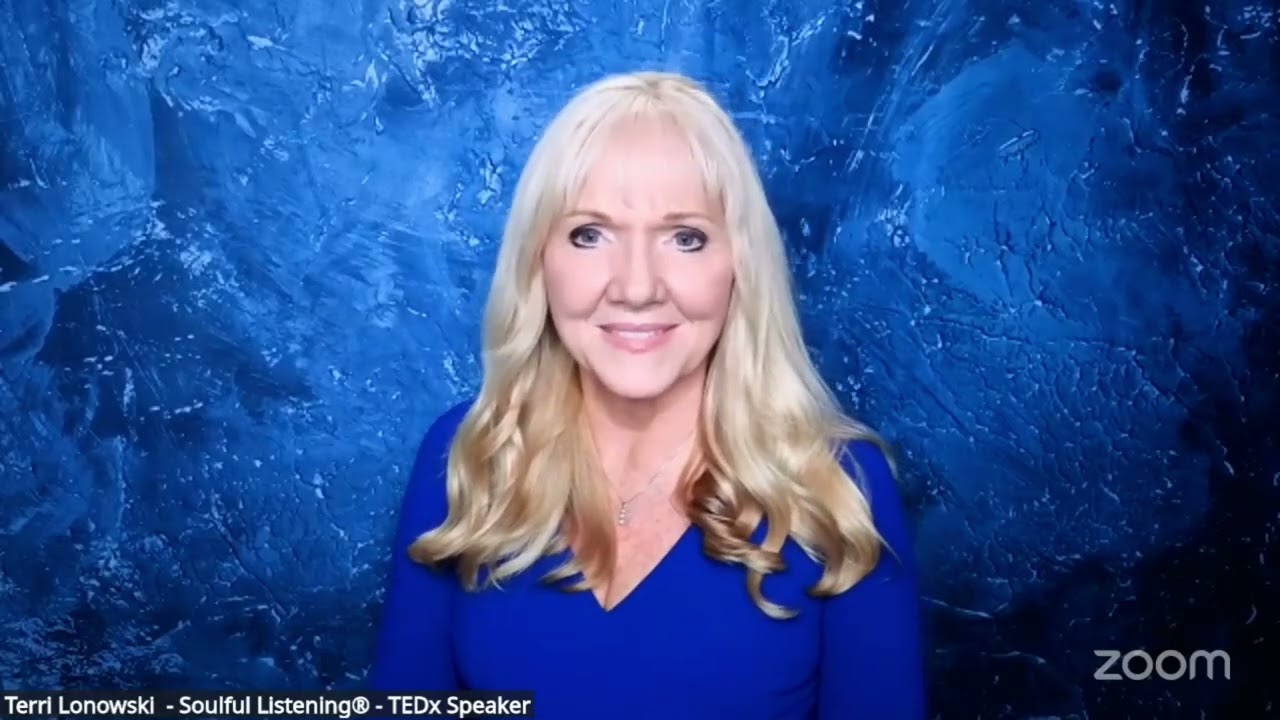
In this episode of Remembering the Forgotten, host Markus Neukom interviews Terri Lonowski, a veteran of federal grant oversight and leadership development, to explore the transformative power of deep listening and presence. The dialogue weaves personal stories—most notably Terri’s relationship with her grandmother Helga—with concepts such as coherence, entrainment, the “eye of the storm” metaphor, and the mechanics of fight‑flight‑freeze. Together they examine how disciplined attention can reshape governance, leadership, and personal growth. Topics include the role of trusted inner circles, the dynamics of imposter syndrome and self‑doubt, the practice of breath work for grounding, and the idea that executive functions are seeded at birth and nurtured through relational “gardening.” Throughout, the conversation maintains a conversational, reflective tone, emphasizing curiosity, empathy, and a gentle optimism about cultivating inner alignment and collective trust.
Chapters
Welcome to Remembering the Forgotten, a space where leaders think out loud without polish or performance. No scripts, no personas, just what becomes audible when the noise drops and the mind is free to speak for itself. These conversations are not about delivering insight, They are about thinking together in real time, testing ideas against stillness, letting 2 open minds stretch each other. The intention is simple: to create a space where clarity can emerge and where listeners don't just consume perspectives, but feel permission to engage their own thinking. more honestly. Today I'm joined by Terry Lunofsky. Terry has spent decades inside systems where communication is not optional, it is consequential. Federal oversight of hundreds of millions in grants, national workforce initiatives, leadership development across states and sectors, White House showcases, TEDx stages. But this conversation isn't about platforms. It's about listening. We explore what happens when authority pauses long enough to hear, how trust is not built through persuasion, but through presence. How governance, leadership, and even healing begin in the same place: disciplined attention. This exchange is not about communication tactics. It's about relational integrity. Because when listening deepens, performance softens. When attention becomes whole, People reorganize themselves. What matters here isn't volume, it's the quality of presence inside the exchange. And with that, welcome Terry to the show.
Thank you, Markus. I am so excited to be here, and I've been looking forward to our conversation and to listening.
So happy to hear that. So before we begin, when I speak of coherence, I'm pointing to a state where nothing inside is in conflict. Body, thoughts, emotions, and action aligned, moving as one. No push, no urgency, no fear driving the moment. And when I speak of stillness, I don't mean silence. I mean the part of you untouched by expectation or performance, the place that knows before the mind tries to manage it. That's the ground I'd like us to meet on today.
Beautiful. And I share your Valuing that alignment and the inner peace and quiet confidence that that brings.
That's beautiful. So let me start with the first question, Terry. Where can you just be yourself, untouched by expectation or performances?
You know, I find that that is a quality that I bring with me. And so it's not necessarily a place. It's more a state of being. And when we have that within our own body, within our own being, that goes with us no matter where we are. And what's interesting about that is sometimes that inspires others to kind of entrain to where we are. So it's a gift not only for yourself, but also for others.
Why do you think that is?
Why do I think that is?
Yeah, the whole entrainment story.
Yeah, I believe that we're all connected in one fashion or another. And so when we have intention to kind of operate on a higher frequency, if you call that— if that makes sense to you, or just with more integrity and alignment, There's a magnetic pull to that. I think we've all been in situations where maybe somebody has walked into a room and then automatically you are just drawn to them. And it may be an intangible, but when we experience that, we kind of know on some organic level that that person is, as you mentioned, not in conflict within their own thoughts and actions. Actions and way of being. Yeah.
It's interesting, you know, if somebody hears you talk about that entrainment, are you surprised that people are surprised that such a concept actually even exists?
Yeah, I believe that that might be so. But when you even look at, you know, like a tuning fork, you know, in the world of music, and you hit the tuning fork and everybody with all their instruments, You know, kind of matches that. It kind of makes sense when you look at it in that way. Yeah.
So let's bring some grounded reality into what we're talking about, and this might be a little bit of a damper for some people. What if I'm saying that what Terry and I are discussing right now is actually something every single person experiences at every single moment? But not from the beauty and the positive side. Why do you think there is so much negativity out there? Why do you think there is so much sadness out there? Why do you think our world is the world as it is right now, Terry?
That's a—
Because the entrainment works both sides. We can have entrainment how we are right now. You know, we sense that energy frequency exchange. And when somebody wonders, what is this woo-woo rah-rah stuff they're talking about? No, no, no, no, no, it's mechanics. And you literally experience it every single time you meet somebody else. It's not just that it works in the beauty, Like we walk into a room, as you said, right? And we just feel drawn to somebody. Sadly, we feel drawn to people as well who share our nervous system in the not positive way.
Mm-hmm.
And I think that is an important aspect because the entrainment, I believe, is a wonderful concept, but it should not be spiritualized too much. Because it is something that is literally at work every single moment. So here is a question for you, and then I know this was a little bit much for me. I assume you have not been born. Oh yeah, I must be careful about how I word it. You see where I'm going next. I assume it wasn't all your life that you were at that stage where you are right now. So here's my question: where did this begin for you?
Right. I evolved throughout my lifetime like all of us. You know, we, we develop skills along the way. And I had a way of presencing myself modeled for me very early on From a dear, dear soul. And it was my Grandma Helga. And she had a way of making it feel like it was just the two of us and the rest of the world had disappeared. And this was really important for me in particular. I grew up in a nuclear family that was dysfunctional. We lived above a restaurant. There was a lot of noise and clanging. Parents were really drawn to alcohol for their solace. And so to have the contrast of that, my Grandma Helga being able to hold the space for true connection and deep, deep understanding and being able to speak possibility into me when others were not there for that. Yeah. And so when you ask, did I always have this? I would say I had the contrast demonstrated for me early, early on, and I was drawn to the Grandma Helga way of really, you know, being well-read, being resilient, twice widowed, successful in business. And so her precious words carried weight when she would speak possibility into me. Yeah.
How did that turn out? If you look at, at what age would you say that the outer world started influencing you more Then, or Grandma Helga put into you beautifully?
Well, I think there were, you know, kind of like a roller coaster in life. There were ebbs and flows when the outer world would, you know, like be so noisy in ways that were not healthy. And then coming back to center again and taking action and taking steps forward, baby steps. And having that be reinforcing, and so you know there's there's both that are there. You know positive influences and and others that show you the contrast, and I think that's just life. And you know, and I learned through many you know challenging episodes in my life that what could be possible was peace within. Even when the storm was pretty fierce. Yeah.
Yeah, there's a beautiful metaphor of the eye of the storm, right? If you're in the middle of it, it's literally calm.
Right.
To be honest, I don't want to experience it in real life. This must be pretty scary to be in the eye of the storm. But I use it quite often as a metaphor that Even if we are in the biggest metaphorical storm, we can actually go into the eye and be calm as if there was no storm around us, which is incredible.
And the beauty of that is what you're describing, I would also describe as being able to move away from fight-flight. where we don't have access to our prefrontal cortex, our higher reasoning. And so if we can keep that calm, we really have access to more of our intellectual capabilities and are able to make decisions that are, you know, more productive and maybe more in alignment. But when we, when we get into fight-flight, we, we're just in survival mode, and We physiologically can't access that highest of reasoning. Yeah.
Did you think about, well, after fight and flight, if we look at a deer in the taillight, right? There's a third aspect which we humans are mastered, and we have mastered it. It's the freeze. Yeah, right. It's a deer in the, in the taillights. What's it called? No, no, it's not taillights.
Deer in the headlights.
I just thought, no, tail would be in the back. Okay, it's in the headlights. So if you think about that, quite often people cannot run and people cannot fight, but people freeze. Mm-hmm. But it is possible to go into a peaceful state where that unfreezes. And it's almost like put into cotton almost. You still hear the noise, you still hear the rumbling of the storm, but you're just safe. That is a beautiful state to be in.
Lovely. Lovely.
I remember that. I remember when we talked about your, um, your grandma Helga, and I was just wondering something. Do you know that I personally believe that we are all born with our executive functions intact, with little seeds? So there's courage, there's all these, all these beautiful qualities. Curiosity is one of them we're born with, right? And I feel that your grandma Helga— actually, I just made a connection right now— that actually both our grandmas were the gardeners of that little garden we were born with, while other people did not pay attention to that garden at all. But your grandma Helga did. So she nourished something in you probably right after birth, if you think about it. Isn't that incredible?
You know, it's just beautiful. I've never heard it described in that way, but I just have such a warmth in me as you are saying those words and sharing that with everybody. Yeah.
Because, you know, and that's why I I stopped when I said about you, I know that you had all of that which is now beautifully flowered. You had all of that when you were born. And it's a rare case that somebody has someone like you did with your Grandma Helga. Who not only was protective of you, but she was literally nurturing you. She made sure that you understood, you know what, little one, there is actually a place you can go. And you know, when people talk to me about this eye of the storm, where is it? I say, in here. In here. And that was something, by the way, which I realized immediately when you and I met, that you have that deep connection, not only after all the breaking you went through in your life, which was quite a bit, but you actually had it installed and nurtured at a very young age, and it was never broken. It was just put under a lot of, what is it called? Like if you have a big stone, you crush that stone, rubble.
Yeah.
You see, I find my words. So it was just buried under that rubble. But those seeds were already so much grown and so much nurtured that it didn't take you too much to return to who you really were. Does that somehow resonate with you?
You know, it does. And when we, you know, when we look at how a diamond is made, you know, it's a piece of coal, and then under the pressure it becomes multifaceted and shining beyond, beyond belief. You know, I feel that because of what you just described, having that inner resonance with peace, It allowed for the forming to occur under great pressure, and I see that as, you know, now being gifts along the way.
It's fascinating. So let's go back there. So you grew older. For how many years did you have the gift to have Grandma Helga?
Well, how many years did I have the gift?
Yes. Like, how many years was she alive?
Oh, right, right. Until I was almost 29. And so she was in my life in a very important way. And, you know, different periods along the way when I had a little bit of self-doubt and was wondering, should I go to this next level of whatever it was? And And she would say to me, like, Terry, all you have to do is decide what you want to do, take steps towards doing it, and imagine what it's going to feel like when you've done it.
And so it was, it was always possibilities. Yeah. Gosh, imagine I lost my grandmother when I was at a tender age. Of 12 years.
Oh.
Yeah. But she was as influential as probably any other person in my entire life. And I'm 54 years old now. So that is incredible. 29 years.
Yes. Yes.
Was she the person who Was kind of your North Star even when you were lost yourself?
Yes, I would say that. And it was her groundedness that made it feel safe to express my, you know, what's next for me, you know, kind of dream in her presence. And then because she was so trusted, again, well-read, a woman of substance, And she would take the time to really tune in. And I believe that when we listen to another person in this deeper way, they can access the greater part of themselves and really step into their potential. And that's whether it be in the workplace or within romantic relationships or with a parent-child. I feel that this That ability is shared across all platforms of relationships.
Yeah. Is that something you figure as well, or experience in your own work, Terry, that you are almost becoming a substitute for somebody else's disbelief, for somebody else's confidence?
Yeah, yeah. You know, and I would use the words again, hold the space.
Yeah.
You know, when you can hold the space and, you know, enter an interaction, a conversation without any preconceived script going on in your head, you know, when you've taken care of yourself and, you know, done the self-care, slept, ate well, on and on. And when you enter into a conversation like this, a connected one with an openness, It really, really inspires and really becomes a catalyst for innovation, for expanded views of another person, for them stepping into their greater potential.
And I dare to say it actually goes even a step further, and you'd be surprised because that's what your grandmother Helga did. She literally Took over part of your executive functions when you did not believe in yourself. And when you tried something, you didn't do it because you believed you could do it. You believed because you knew there is someone who believes I can do it.
Beautiful.
Is that too far-fetched?
No. And I think that, you know, we can all think of different situations along the way, maybe where we have a little bit of self-doubt. Maybe it, you know, in the workplace, maybe it was you were thrust into a new role and it's because somebody else believed in you and you were a little wobbly. But if there is a trusted person that expresses, you've got this, you know, you, you have what's needed here right now without anything else, it can kind of help us to step a little bit beyond our comfort zone. Yeah. And into an expanded role. Yeah.
And I can tell you that a little bit can be vast and huge. Because I just remember that when I started out, back then I still did like actual consulting and coaching, and now I'm a reformed one. Back then, I decided to create a concept with a client on site, on the spot.
Yeah.
Where I decided, you know what, this guy believes that I believe in him. What if I actually start taking over that person's missing confidence and missing beliefs? And some people might say this is manipulation, but it's not. It is not because, you know, I think another thing you and I have in common is we read people's potential.
Mm-hmm.
And that is no voodoo rah-rah either. Yeah. But we can talk about somebody's skills and gifts before that person even senses them. And if that person has someone like you, Knowing, gosh, Terry would say, go for it because you have what it takes. I think it goes way further than just that holding a space. However, I believe holding the space, Terry, is the prerequisite for someone to trust you at that deep level.
Oh, I really love the way that you describe that. And I want to add a little something to that. And, you know, it's easier for another person to believe in you as you are speaking possibility into them if you have developed yourself, you know, if you bring something to the table.
Mm-hmm.
You know, um, are you taking care of yourself? Are you reading new articles? Are you— do you have some experiences in your back pocket? Then there's a little bit of leaning into your credibility.
Mm-hmm.
So I think that holding the presence and maybe sharing the load for the confidence is a little bit easier. When you come to that interaction from a position of a filled cup, so to speak.
I see your point. So it will be, it will be the same if I had been working in mining and now I woke up this morning and now I'm suddenly enlightened. Probably my clients will not really put their trust in me, but because they know I have walked the talk and I've talked the walk, Yeah. Now they actually can relate. So that's an interesting thing. So I know you had a seriously successful life, and that's why the next question is very pivotal. When did success stop being enough for you?
I think it feels to me more like success has been a byproduct of being in alignment and taking steps that are congruent with, you know, my values and what I understand my gifts to be. And when there's a, you know, kind of a truth to that. And so that becomes, you You know, for me, the most important. And as a byproduct, you know, success seems to follow as well.
Yeah. That is so fascinating. So you don't have a career where you say, you know, Markus, I sat down with Grandma Helga and we basically sketched out the next 10 years. And then after 5 years, we had our next session and we sketched out the next 10 years, consecutive ones. So your career and your successes are literally an output of your intentions and basically the result of your path.
Yeah. Yeah.
That's so fascinating. I think this is quite scary for many people, by the way, if they are not in control of what's going to happen.
I mean, I can, I can understand that. I just am able to speak most clearly about what my path has been. And when I, you know, when we talk about deep listening, which is, you know, kind of what I'm all about, soulful listening, it's not just listening to others, it's listening to yourself. And there's an inner wisdom. Mm-hmm. that incorporates all that you understand about yourself as well as what you understand about the world. And when we, you know, take action upon those nudges that we get, that's when I feel at least in alignment, and the rest seems to just fall into place, not just, you know, by accident, so to speak. It's putting action and effort and intention. that is in alignment with what I know to be true for myself. And sometimes that can feel like, you know, the trapeze artists where they have the bar that they hang on to and they swing and they let go and they grab onto the next bar. Sometimes that point where you're in between bars can be a little nerve-wracking. But knowing that there's going to be another one to grab can kind of be helpful.
So how do you know? Because I believe, Terry, most people hold on to the same freaking bar all their lives because they simply don't trust there is another one. Or if there is another one, who says to me that I'll catch it? What do you say about that? Because I'm pretty crazy for most people who listen to us. Definitely.
Well, I'm gonna circle back to our earlier part of our conversation. When we have self-doubt, and that happens to all of us, sometimes surrounding yourself by trusted people that can give you that extra nudge. You know, sometimes we need a little support, and whether it be physical support, financial support, Or just an emotional nudge forward. Sometimes that can help let go of that one that you have blisters from holding onto and go for that next one. But—
Yeah, if you think about that, there is something to it. I'm translating it from German right now for a moment. Our environment determines who we become. So if I don't have this kind of nurturing, That's probably when it's time to think about to enlarge my inner circle a little bit, right?
Yeah.
Like, I had a beautiful conversation with my friend Ivan yesterday, and he talked about what kind of people he has in his inner circle. And one of them is an absolute, you know, what mean people call contrarian. But he calls them critical thinkers because that's what we are. We are not contrarians, we're critical thinkers. So if somebody listens to us and he hears you speak and he says, Derek, I don't have a single person in my environment who could take over that function you just mentioned, it's probably time to enrich yourself with some new people. Would you second that?
I would. I would. And, you know, the Dalai Lama, I love many of his quotes, but one of them is, our prime purpose in this life is to help others. And so if we step into that premise and we take action upon it, maybe it's time for us to help someone else. You know, if we're in need, Interesting. And there's
some
kind of a cycle that returns to you what you put out. And so that may be the case, or it may be time for a coach, a professional coach, to give you a nudge if you're not comfortable reaching out and expanding your own social and emotional circle. But one at a time, one baby step, going to one event, or maybe lending a helping hand to somebody else. When we give, give freely to someone else, it comes back to us in ways that are sometimes surprising.
I totally second that. So you spoke about self-doubt. How do you personally deal with self-doubt? Or let me ask you something else first. What is self-doubt for you?
So for me, it's when I feel wobbly, you know, kind of wobbly inside. And maybe it's doing something new. Maybe it is instead of being on a podcast, I'm on a TV show, or maybe I'm stepping onto a TEDx stage or something like that. And so it's, you know, stretching myself a little bit and You know, that little voice inside can kind of speak doubt. Oh, who are you to take on this big thing? And so just being able to recognize that is really helpful. And then—
So let's stay here for a moment. Let's stay here for a moment.
Okay, okay.
Is that because, you know, I just had a little flash, so I usually do not interrupt like that. But what you're talking about, Terry, I believe is something That especially many women, especially in higher positions, know way too well. And I believe that's what society calls imposter syndrome. Who am I to? What do I have to? Yeah. Right? And that's the proverbial glass ceiling. Mm-hmm. You are a fantastic experience in terms of, you know what, just because I feel how I feel, I'll do it anyway. That's how I got to know you.
Thank you.
So you're not the one who, who gets stopped by that. It's almost like extra fuel. But when I understand you right, you go deep inside yourself when these doubts come, which gives you almost like an additional push. Does that somehow resonate?
You know, it does. And it could be like going inside myself and, and, you know, getting that extra, extra oomph to at least break through that level of the of the ceiling. And sometimes it can be, you know, leaning into people that are in my inner circle, you know, and, and it can vary depending on the situation.
Mm-hmm.
But I do know that, you know, that we, we as humans thrive when we feel seen and heard and supported by others. And with that, we can go beyond what we believe is our limit until we go to that next level and then we have a new limit. Yeah.
It's funny, you know, when people talk about comfort zone, I usually say, look, when you believe you are at that limit, that's just simply your comfort zone. You are furthest away from your limit, furthest away from it. So what if we actually looked at imposter syndrome? And I haven't spoken about that for a very long time, I just realized, Terry. But what if we looked at imposter syndrome as life's way saying, Terry, you got what it takes, and now it takes courage and trust. Mm-hmm. So that imposter syndrome actually never shows up with people who do not dare new things. Did you realize that? Yes. Lazy people do not really have imposter syndrome. They do not. It actually, the higher up in the career echelon you go, the more prevalent imposter syndrome becomes.
It's interesting.
But you know what's interesting? The higher up you go, people don't talk about it. It's a flaw. It's a fault. You do not talk about it if you are the CEO. You do not talk about it if you are the president of a board. You do not. That doesn't exist. Do you know why I know? who's a dear friend of mine, he is very much involved with Harvard University and MIT. You know what this guy told me? He said to me, Markus, we just had a, what is it called? Like a reunion thing, alumni.
Yes.
Of Harvard. And he said one of the main topics was imposter syndrome. Think about that at that level.
Interesting.
At that level. Because that's when I said, look, imposter syndrome is not a problem. The concept of imposter syndrome is the problem. Because in the end, it is a consequence, it is a result of something. And you brought it actually up beautifully before. Because we do not know ourselves, the slightest hint as we believe we do, we do not trust ourselves.
Hmm.
Why would we? Why would we? We might be crazy, but we don't trust a drunken part in us who has no bloody clue what's going on with ourselves. And that's why it is so important to either have a coach or a trusted advisor or even a little internal board of 5, 6 people who you trust. Because we spoke about the diamond, we spoke about all the rubble that comes on top of the diamond, right? We do not have the capacity anymore after a certain time in life to actually see ourselves as who And how we really are. Isn't that crazy?
It is. And it really, really reminds me how important it is to have trusted people around you because we cannot see ourselves 360. We can't go all the way around. We have blind spots. All of us do, myself included. And so I really count on people that can point out those blind spots to me, and I look at that as a gift.
Yeah. So let me challenge that for a moment. You speak about the blind spots, and the blind spots are not really your highest executive functions, right? They are the ones who you probably rather would have on the side if it wouldn't impact so much. But what if And this is a daring proposition. What if people actually know their flaws way too well? And even if they had only 2 or 3 people who only point out their good qualities, don't you think it would almost counterbalance all the flaws? we do not know about yet.
Gosh, that's it. I love that. I love that. And it makes me kind of draw up something in science. What you focus upon expands. And so if we're focusing upon our positive attributes, those certainly would expand. It's the law. Yeah, I love that.
So think about that. If you have just like one or two And I believe if you have 3, you're extremely blessed. People who constantly mirror you from the most positive side, how a life would change. Yeah. Let me actually give you an example of that. I've been teaching for about 20 years, and I had one class that was very pivotal about that. When I understood that people do not know themselves the slightest bit in regards to they believe they do, I came up with the concept. And part was a little assignment. And the little assignment was choose one person, choose 3 questions, And they're open-ended questions. And one of them could be, what do you value the most about me? Wow. Another one could be, why do you love spending time with me? And another one could be, what makes me unique? So one student took it to the extreme. She did 3 plus 7, so she had 10. She went to a wedding. She was bridesmaid. She knew every single person at that wedding. Guess what she did?
Exactly. Ask the questions.
She handed out the questionnaires to those guests. Now imagine that woman, I think she was probably in her early 20s. She had a big board on one of her bedroom walls, started taking all the responses that came back and pinned them to the wall, reading every single response in the morning when she got up and at night when she went to bed.
Wow.
Can you imagine how that woman changed? Wow. After 10 days of working with each other, it was a month. I did not recognize her anymore. I did not recognize her anymore. And I said to her, look, when you receive a response, especially what do you value the most about me, you take it in. And it's, it's almost like a burst, like, wow, that's me. Yeah, don't be surprised, it won't take long until a voice comes. Are you sure? Why do you think this person said that? Oh, it's the one that rides with you to the soccer practice every Saturday. Of course she wanted to have a good standing with you. And she said, yeah, that's right. So I said, do something in addition. Go back to that person and ask only one question. Please, can you give me an example that I see where this was reality?
Hmm.
And you feel what happens. The inner censor Breathe this out. Because let's be honest, the censor is nothing else than protective material in us that says, no, no, no, no, no, inflation is dangerous. You have to stay grounded. And now imagine, what do you value the most about me? Grandiose, beautiful. And then it suddenly wakes up and says, Danger, danger, danger. And he comes with all the reasons. But then that person went to the other person and said, please give me an example. Give me proof that what you said is truth.
Lovely.
And I can literally sense that little censor in her. Now I can retire. Isn't that incredible if you think about that?
Incredible. Just incredible.
I just love talking with you. I think we could talk for
hours.
Literally for hours.
I agree. Yes.
But I don't want to take too much of your time, so that's why I'm going to my last question. If someone feels overwhelmed right now watching or listening to our conversation, What would you want them to return to?
Hmm. I'm feeling into that, and it feels like taking a couple of breaths is so helpful, you know, to just breathe in through your nose, hold, and exhale through your mouth. And doing that again, and out. And now feel the peace in your body, and realize that the overwhelm can fade away, and you will be revealed. The next best step forward. Yeah, that's what I would share.
Beautiful. And if people are not aware of it, what you just introduced is literally the breath of life, because the first thing that gets stuck is our breath. And when our breath gets stuck, Nothing goes anymore. So thank you so much for this conversation, Terry. It was a great pleasure.
My pleasure. Thank you so much.
This was Remembering the Forgotten, a conversation held in clarity, not performance. If something in this exchange shifted how you see, let it stay with you. A few quiet pointers are waiting below.
More from Markus







Ep 66 Breath, Trauma, and the Fear of Being Fully Seen A Conversation with Matt Ritchey

Ep 65 Truth, Trust, and the Courage to Be Seen A Conversation with Troy Gregory

