Ep 52 Peace Without Silence A Conversation with Mark McPherson
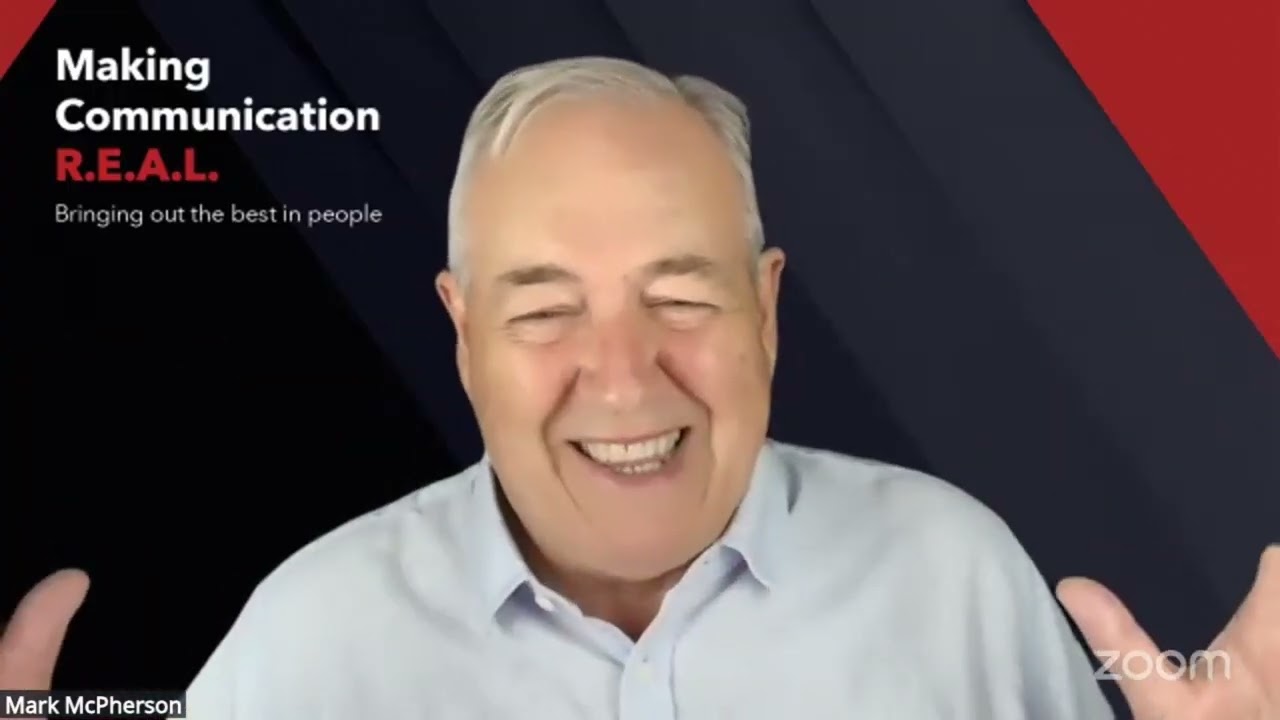
In this unscripted fireside chat, host Markus Neukom and leadership coach Mark McPherson explore the inner dynamics of leadership, especially around difficult, high‑risk conversations. The dialogue moves from abstract concepts—persona, authenticity, coherence, stillness, mindset—to concrete practices such as real‑life rehearsal of tough talks, active listening, and dealing with imposter syndrome. They critique the modern leadership buzz‑word culture, discuss the tension between managerial responsibility and genuine leadership, and examine how psychological safety, self‑knowledge, and personal values intersect with business decisions. Throughout, both speakers share personal anecdotes (e.g., a funeral, a park, a police corps training, a redundant‑making decision) that illustrate how internal alignment (body, thoughts, emotions, actions) creates the calm needed to handle conflict without losing authenticity. The conversation ends with practical advice for overwhelmed listeners: step back, examine one’s own mirror, and align actions with values.
Chapters
Welcome to Remembering the Forgotten, a space where leaders think out loud without polish or performance. No scripts, no personas, just what becomes audible when the noise drops and the mind is free to speak for itself. These conversations are not about delivering insight. They are about thinking together in real time. Exploring what emerges when 2 open minds stretch each other. The intention is simple: to create a space where clarity can emerge and where listeners don't just consume perspectives but feel permission to engage their own thinking more honestly. Today I'm joined by Mark McPherson, Mark works in the territory most leaders quietly avoid: tough conversations, the emotionally charged moments, the exchanges that linger long after the meeting ends. He developed a practical framework to help leaders handle those moments with clarity and respect. But this conversation isn't about technique. It's about what happens internally when tension rises. We explore why avoidance feels safer than honesty, why preparation creates calm, and how structure, when built well, allows you to remain steady while others react. This exchange is not about confrontation, not about clever wording, not about getting your way. It's about staying intact, about holding your ground without hardening, about lifting a conversation instead of escalating it. Because when pressure enters the room, Something deeper is revealed. And leadership at its quietest begins there. With that, Mark, welcome to the show.
Well, thank you very much for having me. I'm looking forward to it. You've covered a lot of territory in your introduction. I'm not sure where to start now. So I'm in your hands. You're the boss.
And as I said to you in our pre-conversation, there will be no shortage of topics. I can be sure of that.
Well, one of the things you said was about no personas and I'm not sure exactly what you might mean by that because I think I have a persona now. I'm going to avoid cussing, avoid all the swear words that I might drop in conversation around the house when I realize someone's left their shoes in the middle of the floor for me to trip on. So I think we do have persona. And I think that's appropriate to have it. I was recently at a funeral and maybe that's an extreme example, but I definitely had a persona there. I dressed a certain way, I spoke a certain way and we were talking about honesty. And that's a very interesting topic because we all want to be honest. But, you know, maybe sometimes we go to your funeral and you say, oh, Bob's no longer with us and you say, oh, Bob was one of the most difficult people I've ever met in my life. Can you not say that at a funeral, please? It's just, it's not the right place. So maybe we do what we have different personas and that's okay. I think as you've noticed, I have no trouble speaking at length. But I think when this persona thing becomes a problem is when it's just so fake and you're out to fool people. You're out to take advantage of people when you say one thing one day and then your actions the next day are quite different. But that's when we run into trouble with these personas. Over to you, Markus.
Thank you. So you see what's interesting, just that much to that. I was just wondering whether I should actually skip the persona. But I'll leave it in because I believe persona is one of the most misunderstood and misinterpreted words that exists. The other buzzword for you is authenticity. I'll get back to that after the next piece, Markus. Hold your horses for a moment. Okay. However, before we begin, when I speak of coherence, I'm pointing to a state where nothing inside is in conflict. Body, thoughts, emotions, and action aligned, moving as one. No push, no urgency, no fear driving the moment. And when I speak of stillness, I don't mean silence. I mean the part of you untouched by expectation or performance, the place that knows before the mind tries to manage it. And that's the ground I'd like us to meet on today.
Well, that sounds, that sounds good to me. I won't pretend that I know exactly what you're talking about because you're— it's you. I'm not inside your head. But this is when you're at peace is exactly what you're saying. It's not necessarily silent. I think I can be at peace in a movie theater when it's just me and what's happening on the screen with no, I don't know what wars are going on. I don't know if my house is being burgled. I don't know why I thought of that. But, and one thing that I enjoy doing in the morning is sometimes sitting in the park with my coffee. I'll just walk across the road to a park and I can listen to the radio. Because I like listening to world news. And I'm very peaceful. I know
my blood pressure is low. Isn't that crazy? You can listen. And you know, this is another thing which I didn't say to you. I know interrupting people is not the nicest. But having a fireside conversation allows it. So if you have a thought while I talk, please interrupt, because that makes it alive. And I'm trying not to be too rude, because you probably realized already in the pre-talk, I become very energized when I meet someone like you, because it's a, it's a gift. It's a privilege. So I'll try to hold myself back because the craziness is this is the antidote to silence. So you tell me, you walk into a park, quiet, right? Still. You have your earphones on, you listen to radio, and you're not listening to Mozart's Magic Flute or to Beethoven's 8th Symphony. You're listening to the equivalent of NPR, which talks about real-life stuff that's going on in the world. And you call that the place where you get into stillness. Honestly, for most people listening right now, especially those who are into yoga and meditation, which is fantastic, get me right, They will literally pull out their hair and say, what is this guy talking about?
Well,
how is that possible, Mark?
It's about, dare I look, here's another word which I don't use, but I'm going to use it with it. It's all about your mindset. So another term I have trouble with, but When I go to the park, if I want to get angry about something, I can. Don't worry, my blood pressure can go if I want to. But it's about me going to the park to say, I'm going to learn, I'm going to listen. No, I don't like that particular politician, but okay, I can listen. I get his or her point. I get it. And then, you know, well, that's interesting, I say to myself. It's whether you want to get angry. It's about whether you— yeah, that's about it. It's whether I want to get angry or not.
It's a choice, right?
I'm sitting in the park, I'm listening to this, world leaders, some of which I respect, some of which I don't, talking about things. There's a dog, a woman throwing a ball for a dog in the park and that's nice. So it is about how you set yourself up and you can set yourself up for peace or you can set yourself up for agitation. If I go to the local hotel, their local pub, whatever you might call it where you are, I'm not expecting it to be peaceful. There's silly— there's the football on the television, there's people talking, there's people yelling at each other, there's music. I'm not expecting it to be peaceful. I don't go there for peace. Now, having said that, there's plenty of times when I've sat out the front of a pub by myself listening to the radio in the afternoon, having a beer, and no, I don't want to be interrupted. So I've just realized I don't know what I'm talking about because I've given all these contradictory things now. But let's get back to the peace thing.
Actually, I don't even think you have contradicted yourself so much because it almost feels like you have given your description and understanding of mindset. Because let's be honest, that's what it is. You are setting your mind and this becomes almost a baseline. Hmm. So when people talk about their mindset, that's quite often spirituality-based. And I said, let's stop that rah-rah stuff. Become real. Understand how you set your mind and what you set your mind on becomes your mindset.
Well, actually, that's probably the best definition I've ever heard. It's what you set your mind to do or to think or to act or behave. That's probably the best, but it's too often just thrown around like, oh, to have a true entrepreneurial mindset. I'm not sure what you even mean by that or a leader's mindset. You mean to be a good leader? I'm not sure quite what you mean. So, A lot of these terms are used and they're not defined. That's my problem with them. You want to be authentic, you should be authentic. I'm happy with that. What do you mean by that? Oh, people should be, it's important for people to be vulnerable. Is it? What do you mean by that word? Because I don't want to go out on the street at 10 o'clock at night walking home from the pub and being vulnerable.
Right.
So
absolutely. Yeah.
What do you mean by these things? So yes, I like— because you know what's— sorry, go on.
You know what's interesting? I believe when we start to realize something, and I know you have listened to quite a few of my episodes, you realize there is a difference between guests. Some of them are very lofty. They see their fate in the universe, God, whatever you want to call it. Then there are some who say, you know what, actually I do have some responsibility, like I have some say to it. And then you have the people who I actually belong to in the meantime, where I say, you know what, it is basically all me.
Look,
and now if you think about that for a moment, I just want to finish that one sentence and it's all over you. Mindset. Now you look at words, a mindset. Mindset has it in its word itself. It's no miracle. The word itself says it. It's a mindset.
I'll go along with that. As I said before, that's probably the best little definition. It's how you set your mind. Okay, I'm going to achieve these 3 things by the end of the week. That's my mindset. I'm not gonna be interrupted and distracted by these other things, whatever it happens to be. Now, I've lost my train of thought because there were so many things going on there. But let's go back to that one issue talking about my responsibility, how much I'm in control. So I often see things on LinkedIn, for example, where one minute someone says something like, you're in total control, it's up to you, no one to blame but yourself. And everyone goes, yeah, yeah, yeah. Then the next day someone else says, you can't control the universe, it's in control, it's not you after all. Everyone goes, yeah, yeah, you can't both be right. So There are some things, as we know, we can control and we're responsible for. Yeah. And there are some things out of our control. I can't control the economy of this country. I can't control whether the tariffs are on or off or what they are. All I can do is run with what's there. However, I am responsible for what goes on in here, putting aside mental health issues, etc., and the fact that we are Neurodiverse. That's not a not an issue. But for me, generally, yes, I am responsible. I am responsible for how I treat my wife. I'm responsible for how I treat my fellow human beings. I'm responsible for the words that come out my mouth. And once again, I understand things like Tourette's, etc., exist. So let's be fair and reasonable to all of these people. But on the whole, I am responsible for it. I say these words. People will hold me to them. They will, they will, they will judge me by it. And there's another term, judging. So I—
So you actually, you actually see now how we literally corner ourselves with all these words. You know, when I met my wife, picture this, 18 years ago, I met my wife Holly. She's from Boston. I'm from Zurich. My English was absolutely broken. It was so elementary that I learned for the first time, it is much more dangerous, Mark, to meet someone who speaks your language because you anticipate you speak from the same basis. And that's the craziest thing. LinkedIn, Everyone comes on LinkedIn, believes they're the same. They read something, either they go against it or go for it. And I tell you, my wife did something such beautiful in the beginning. She said, Markus, and it might annoy you, and it did, believe me. Every single time when you ask something, I will ask you to explain what you mean. That's an interesting aspect after a couple of weeks. She's not telling me what she believes I said. She wants me to explain what I mean by what I said.
Well, as we know, most problems are about miscommunication. I thought you meant— I thought this. Look, my wife and I have this all the time because we're both quick talkers, although I'm trying to be slowly, speak a little bit slower for you. And we're often talking about things and, oh, I'll go to the shops. You're going now? We're all going to go to the shops sometime in our life. Do you mean
right
now?
Right.
Yeah. So the more familiar you get with people, you tend to talk in shorthand too, which has some benefits. but also has some dangers. And I wanted to say something about leadership before, about words and how we put things on people. So I'll throw something out there which we might discuss sometime in this conversation or another time. I feel sorry for leaders these days because they have all these labels on them. They've got to be everything. It's a catch-all term for everything.
A
leader used to be someone who who led, but now they're a good active listener and they create a succession plan and they help people with professional development and they do this and they're— and they probably said active listening already, but they do all this long. And I wrote down 50 things that I got off LinkedIn, which people just kept on adding to them. I thought, wow, someone who has self-esteem, has high self-esteem, but they're not arrogant. It just went on and on and on. And I wonder if we do that to each other, not just to leaders, but to whether the expectations of someone in the home, someone in the cafe, all I expect is someone to take my order and bring it to me. It's not hard, but we're expecting now to have excellent customer service. If the person doesn't do X, Y, and Z, then I'm not giving a tip, all this sort of stuff. Are we Are we expecting too much of people? Is that what's happening? I don't know how to get into the topic, but I'm onto it now.
I'm interested in the why behind it because my answer is absolutely you're correct. I believe so. But the real trigger for me is now, why is it?
Well, the temptation is to blame the modern world technology and the internet and AI. That's our temptation because we want to blame something else out there. We don't want to think it's us. So
let's stay here for a moment. I think you actually raised a very interesting point. Some people say, and that actually happened already, as you know, when social media started, that youngsters lose vocabulary, youngsters lose literally the ability to express themselves, to be able to read other people's emotions. And why is that so dangerous? It's not that they can't read other people's emotions anymore. It's that they have no bloody clue about their own.
Oh, wow.
So now I'm opening a door. So why do you expect people to react in certain ways when they have lost? And, you know, I'm a straight talker, as you know. I even said it when I was coaching a police commander's corps, and I said to them, look guys, what I'm going to say now is through the entire hierarchy to the top. The entire hierarchy. It's not just your underlings. It's you guys, 24 management sitting here, one of the biggest police corps in Switzerland. And I said to them, look, why do we expect other people to be different when we have lost the ability to actually read ourselves? Why do we expect to read other people if we have no bloody clue who we are? And this opens the Pandora's box. Because, you know, there's one thing which I say quite often, this imposter syndrome, which, you know, has become an epidemic worldwide. When I'm still guesting, sometimes it's on the topic of imposter syndrome. And I always introduce it in the same way. And I say, look guys, this is a pseudo imposter syndrome. We should not be concerned about what it stands for. We should be concerned about what's behind it. Because imposter syndrome is nothing else than a Consequence, a symptom of something which is so much more brutal. And sometimes I say it nicely, and sometimes I say it straightforward like now. It is a consequence of having no bloody clue who I am, how I became who I am, or where I'm going next and how I'm getting there. Wow. Think about that for a moment. Imposter syndrome means I do not trust this one here.
Well, wow, you've said, look, we've got, we've covered so much terminology, but what's great about this is 2 days ago, I write some material for businesses and I actually use the word imposter syndrome because people want to know my story. how did I get involved in helping people deal with difficult people, which is one of my topics? And then a part of that is having tough conversations, but tough conversations is much broader than difficult people. And I said, so I took over a team of 18 people and I was struggling with 2 of them. 16 just were brilliant, just got on, did their work, but 2, gave me trouble so much so that my wife actually said one night, you need to deal with this because you're not watching TV, you're off with the fairies. And I said, well, that's true. So I lost confidence. I lost respect for myself because I thought, come on, I'm good enough to be manager, but I can't handle 2 people who are obviously outrageous and say one thing and then do something else the next day and all that sort of stuff. And that's, I use the word imposter syndrome because I actually said, I remember writing, then the imposter syndrome raised its ugly head. Maybe I'm not cut out to be a manager.
Yeah.
Maybe I should not have taken this job on because I can't do this. Now, the other part of that is I was never trained do that. So I deal with a lot of people, a lot of people who come to me and they have risen like I did 30 years ago up through the ranks from the floor to here. They were good at their job. And there's a woman I'm working with at the moment, great at her job. That's why she got promoted. And now she has some staff who are her— They're her friends. There are mates whose performance is rather poor and she's dealing with this same thing. I shouldn't have taken on the job. I'm not good enough to do the job. I don't know how to speak to people after all. And it is, I think that label imposter syndrome is just a very convenient shorthand term for—
Exactly.
I'm stuffed.
And Mark, if you buy into it once, You are screwed because there's an entire industry who helps you to remain victim of imposter syndrome because they will tell you, Mark, this is normal. This is to be expected. I said, no, it's not. It's not.
It's normal to lose confidence sometimes. It's normal to doubt yourself. And my greatest, I'll tell you now about my business because I wasn't, it wasn't, we weren't gonna talk about that. We're talking about other things. But for me personally, one of the almost brings a tear to my eye now when I work with somebody who then walks away going, oh, I can do it. I have a right to do it. I can do it. Here's the words I need to use. And I practice with this person and I can give them a very hard time when I'm into, in the right role. They go away with the skills and go, it's not you. It's just that you didn't have the right training. It's not you. There's not something inherently wrong with your brain. You have taken on a job and no one gave you the proper skills, the tools. But when you don't have them, everything seems to go down.
Yeah. Because, you know, we are not prone to grow up with a solid self-concept about ourselves, right? With a concept about ourselves. Because when people sometimes tell me, but Markus, when you just tell someone all the things they're great at, don't you do them a disservice? No, I'm not. Because everyone is so cognizant of their weaknesses, of their shortcomings. I don't need to add to that. I need to speak on the stuff that is potential. Like, let's stay with your topic. There is this great business person suddenly being called into leadership. And that's the other thing, you know, leadership today has become such a buzzword. And then they have managers aside. I'm a little bit younger than you, but even at my time, there was no leader. There was a manager who led, right? There was no leader.
Yeah, no, they weren't called leader, although they did get— they started to be called team leader at one stage instead of manager. Which was—
it makes sense because we led a team.
And now look, this raises so many, so many— I used to say, look, the history of the world shows us that some of the most successful leaders, that is people who led, that is people who had followers, were not nice people. If you look through history, I used to say, I won't bring up historical names because that always starts people on another tangent. But you look through history, some people led people. Maybe after a while they led them into destruction, but they had followers. They led people. They were a leader whether we like it or not.
Yeah, there was Harry Smein involved.
But I always got— I always hated those memes that used to compare leader with manager. And if the way you need to build up the role of leader is to put down the role of manager, you know, I saw one, one time where the manager had a whip. I've had some wonderful
managers
in my time. You're speaking of LinkedIn, right?
LinkedIn is full of those comparisons.
You know, then they're unfair. But anyway, oh man.
But let's stay, let's stay here for a moment. You are, as I am, a leadership coach because we help people to lead while being a manager. So what is the main objective of a company?
Oh my goodness. Oh my goodness.
And that's a very, very vital question. And I hope many people listen to that because it's controversial.
I think it depends from what perspective you're looking at. If I was the manager of a business, I would want my business to be successful. That means I get an income. But if all I want is an income, I can just be an employee. So I want an income. There's a certain amount of kudos saying I created this cafe or this restaurant, it's mine. So even if I'm not earning enough money, there's another reason for doing it because I've got some sort of feeling of love or whatever it happens to be, then I'll go the extra step because someone's going to say it if I don't, which is to make a profit. And if it's a public company, then you have an obligation for your shareholders. But I'm gonna go back for me. I'm in business for myself. I'm what we call in Australia a sole trader. I don't know if that's a term you use. So That's it. I've not wanted staff. I've contracted plenty of people, but I can tell you why I'm in my business because I love it. I love creating material. I love working with people. I love seeing them go from here to up here and my job is done. Now,
let me dare to challenge that for a quick moment. What happens if Mark McPherson's company is not profitable anymore? You have no company.
Well, if it's not profitable, you run the risk of going into liquidation and not existing.
Exactly. So let's be honest, what is wrong with equaling a company With needing to be profitable?
Nothing.
Isn't it that our clients actually give their employees to us in order to fulfill their role, which in the end means to keep a company profitable or even more profitable?
Well, that happens with me a lot. I have 2 types of clients. individual who comes to me and says, Mark, I saw you present at whatever, can you help me? I have a teenage daughter who won't listen to me, or I've just taken on a new team and I'm having trouble. The other group that comes to me is the old human resources departments, which are now in Australia anyway called people and culture. I think that's the thing that's gone around the world. They're no longer Human Resources got a bad name, so they're called People and Culture. So there you go. Diversity and Inclusion Department or something. But they come to me because they want their staff, the HR department wants some staff somewhere to do a better job. Why do they want them to do a better job? Not because they care about all those individuals going home at the end of the day with higher self-esteem. It's because the company is suffering. Because they're not doing a better job. They're not getting their team working hard enough. They're not doing this. That's so one of the things I have to work out then is, is this a job I want? I'll rephrase that. Am I taking on this job to get this team to work harder? I didn't phrase that very well, but that's one of the things for me. I want to help these people do a better job. I'm not doing it just so you can make more money and they can work more efficiently.
Is that actually— you phrased it very well because you know what's interesting? If somebody tells me, I want my team to work harder, I translate that because if that team leader is more equipped, guess what? They actually exactly produce what the company wants from them without working harder.
Well, I'll go along with that. Fortunately, I don't take on jobs where people say I want my team to work harder, but I deal with a lot of those middle management people who really have risen up through the ranks and now they've got their This is so sad. People say to me things like, I've got to tell Bill that his work over the last few weeks is not good enough and he's really performing poorly. My problem is I'm also going to go to his daughter's wedding on Saturday night. That's why I call these tough conversations because they are high risk. That's what makes them tough.
Tell me a little bit more about these high-risk conversations. And I would especially love to hear some sentences about your system which you created where you literally rehearse these kinds of tough conversations, like where you go into a role and—
Look, this, wow, this goes back. I'm gonna go back to the 1980s. Were you born then, Markus? 1972, yes. Okay, well, you're a teenager. I was hit with these things called role plays, which I had really trouble with. They can be enjoyable, they can be fun. That's not okay. I don't think they really hit the mark. So I created something which I call real life rehearsals. So I, you don't get into groups and pairs and read out scripts. I will take on that difficult Customer, and your job, Marcus, is to practice. And believe me, if you've just told me yesterday the customer swore at you, you told me they picked up a stapler and threw at you, I won't be doing that because that's assault. So we won't be doing that today. And they whatever. So my job then is to to be as realistic as possible, as because you've got to go back to the real world. So my job—that's why I practice—is say. And I give people a hard time, but this is a safe environment. It's just you and me. So I give you a hard time by, you start saying something, I'd say, I'm not listening to you today, Markus. You're going on about stuff which is just ridiculous. That's just stupid.
And
your job is to cope with that. And the first time we do it, quite often the Markus of the world go, oh, I'm not sure what to say. Okay. I'm now going to give you some things just to say because the look on your face when I started to speak like that, you were shocked. The first job is I'm gonna teach you how not to be shocked because I want you to be shocked. As a difficult person, when you're shocked, I'm happy because then I can lean over and go, oh, Markus, have I upset you? It looks like you're upset now. Sorry, I won't do that.
You're off lighting.
But that's what I call real life rehearsals. They've got to be as realistic as possible for you to develop those skills. And there is no script because the world doesn't—
Why are you capable of doing these conversations? Why are you able to be the trainer where the other person doesn't remember that it's Mark McPherson, but it suddenly feels like, gosh, this is a client And I'm overwhelmed. Why do you think that is?
You've got to set the scene to start with. I use real-life scenarios. So I was working with a team a little while ago, a construction, the construction business, and they had to have some terrible conversations and sometimes they'd get angry. Funnily enough, they're all male and they'd get that angry and I won't give you the scenarios, but they get angry. So my job was to say, well, I am going to be that. And I do a little thing which is, well, I'm Mark McPherson, but I'm not anymore. I'm Peter, who's the quantity surveyor at that construction site. And I'll tell you what, you people— I'm going to swear now, just be warned. And you know what, you people shit me. You roll up here in your concrete trucks, you think you're the best people in the world, and quite frankly, you shit me. You can stay there and you can come in when I tell you to. You got that? And I will point, I will do whatever they like. And someone in the room said, when I did that, someone said, oh my God, you've been in my truck, you know. And I said, well, I've done my homework. I didn't come here. So you need to do your homework. You need to know what you're talking about. You need to get permission about language. Because not everyone, even if it's going to be real, not everyone wants some of that foul language because as you can imagine, some of it is foul. So, and you've got to play the game and you've got to debrief. You have to afterwards say, wow, you know, now let's, and I would physically move. That was me. Now let me move over here and I'll put my tie back on, on my jacket because that person you just saw over there, he was a ratbag, but I'm actually a nice person. So you've got to do a few little tricks like that. But you can tell, I can tell when someone, if someone out of a group of 30 people is faltering, leave them alone. It's not your job to upset people. And then you go on to someone you know is really good at it and you watch them and they are now They are now training others.
Let me put out a hypothesis. Would you think it would be enough to use your concept, call it leadership coaching, and people who are in leadership will actually get better and they will get exactly what they need for a day-to-day job?
It depends on those things. Sorry.
Because I tell you why, what's behind it. I believe there are so many people in so-called leadership, they should not be in leadership. That's the first aspect. The second one is if one is savvy in their job, It is quite easy to actually teach them in the way you do it to become a good manager and to become a good leader.
Wow. You have raised a lot of issues there. And the first one—
We'll meet again, my friend.
Leadership isn't for everyone. Leadership is about having a vision of the way things should be, could be, whatever. And ideally, you have a way of getting there. Some leaders don't. They become leaders and we should do this and we should be better. Yeah, but how are we going to do that? I'll work that out later. So you need to have some idea of how you're going to get there. And if people like it, we will follow you. Now, I won't get into the issue of whether you're a leader in our community, a religious leader, whatever we flock to, or whether you have become the new leader of department of where I'm an employee. That's a different, certainly it's different. But if you're gonna be a leader, then you've gotta have some sort of aspiration about, otherwise you are just a manager. And I don't mean just, that sounds horrible. So not everyone is cut out to be a leader, but like in all things, if you want to, I'll just go back to a 15-year-old kid who wants to play soccer or football. If they're keen on it, they will turn up to training, they will listen and they will do it. But I feel sorry for those young kids who are forced into these things and it's not for them. And I see that.
There we have it.
I'm going to go right back now because I've suddenly thought about when I was a teacher in the late '70s and early '80s, I used to do a thing with kids where I used to make a little shield printed off on paper and the old machine that used to run these things off. And there were some questions and one of the questions, 3 things you're good at. And I'm only thinking, I know this is a bit of a tangent, but we were talking before about what we're good at and imposter syndrome and kids struggled to give me something they were good at.
I'm not surprised.
I'll just throw that in there because I think that's another thing we could talk about sometime is, and I used to say, I'm good at, I used to, one of my things was I'm good at doing the washing up. The point being you don't have to be good at, you know, sending people to the moon. There are things you can be at peace within yourself by just doing something well. And I used to say, I used to make a joke about, I do the washing up and you know how people always leave bits of stuff on the forks? I don't do that. I'm really good at— and then kids start to feel competent, confident about what they were good at. I'm very good at looking after my younger brother. These are the sorts of things came up with, and that was a real revelation for me. Kids struggle. Now, if they're struggling at the age of 14, when most kids are quite brave out there, what happens when you become 19, 20 and you become older? What are you good at? Ah, I'm, you know, have you ever heard someone just say something like, oh, I'm just an accountant? Did you hear the word just in there? Are they at peace with themselves? Absolutely.
Yeah, constantly. And remember when I said in our pre-conversation, Mark, that most people, they grow up, become grown-ups. That's another word. If you think, just take it literally, it's children who have never been taught how to deal in a grown-up world and have become grown-ups. So there is suddenly little Susie or little Markus at the age of 6, 7 stops at that stage. That's where the society starts taking in, where you start adapting all that stuff, and you suddenly are 54 in my case. No, you have not learned how to deal with people simply because you now for 54 and in a leadership position. So I believe we have to somehow get to the point to say, you know what, if someone goes into management or into leadership, they should be savvy at their job, but it is too expected to have no clue what this means to lead other people and actually equip them with the basics.
Look, this is— I do call it a lot.
I think it takes more.
You mentioned something, you said the basics, and I often wonder what goes on in a leadership training course because there is no end to it. We can do a day on active listening, we can then do this, we can then do a day on the study. There's just no end to it.
At worst is a day of body language. I had to teach body language. My friends, they were watching 2.5-hour videos with Sami Molko, and I said, look, that's beautiful, you can do that in your private time, but in my class you have to understand only one thing: you cannot not communicate.
Yeah.
What's within, so without. And that's all you need to understand, I said to my students. And they got it. So they started working on the inside.
This is fascinating because I read Dale Carnegie's How to Win Friends and Influence People when I was 40-something and it blew my head off. I was sitting on a plane going to London and I started to read this book and I felt like turning around to people and go, have you, Have you, do you know this stuff? Did you know that this is amazing? What about this? I really, I thought I was 40 and I was only just realizing I'd been doing things poorly. Here's one basic example is I learned how to ask people, how are you? And learn how to listen to other people because that was important. Now I realize on this today is a little bit different. We're having a chat, but that book blew my mind. So one of the things that you haven't asked, thank goodness, is, oh, Mark, have you— what books had a big influence on your life? Because I didn't have that prepared, but that's it. And the reason why I'm bringing it up is because it was about How to make other people feel okay, good. And that's what that book taught me. I didn't realize, I didn't realize I had to say to my friends, I should say to my friend Scott, how is it going with your daughter? I thought he'd sort of understand that. And this is someone, for example, who's having a lot of trouble with their daughter who's gone down a bad path. And that's, you know, And I learned something from Dale Carnegie's book. And this is what happened. I, when he was talking to me, I said, Scott, I can see the pain on your face. I'm really sorry it happened. And that was probably the first time he and I had a true connection. And because I listened, And I reflected to him what I saw was happening. What I would have said in the past was, I'm really sorry that's happened. More coffee? There you go. So sorry, that's a bit of an emotional part of me because I can still remember the look on his face, which was, wow, Mark has actually listened. And I might have been the first person for a long time that actually said, I see the pain on your face. It sounds terrible.
And it touches me. I have, you know, my eyes are filling with tears. So we glance. Thank you for sharing.
Yeah.
And you mentioned something very important. If somebody listens to us, it might sound, oh, these guys are not actively listening because they're interrupting each other. They're so quickly jumping On what the other one just said, don't be fooled because you and I, we have been in what we're doing for, in your case, 50 years.
Yes.
And for me, it's probably 40. So this is our daily living, daily bread, more or less, to be in these conversations. And what I want to say with that is active listening doesn't mean we wait until the other one is done and then we reflect and then we respond. No, active listening takes place while we listen. And that's the beauty of it. Because, you know, you can be in a conversation and listen, right? You hear. A person, but you don't listen. And listening means, and you can probably tell mutually, when you speak, I am with you and vice versa. And that's why we're capable of having such a spitfire conversation. And most people can't do that. They have to train that. It's
natural. Well, some things come naturally and some things don't. But I learned the concept of active listening in 1980 and I'd been teaching for 4 years. And it was, that was an eye-opener for me as well. What? I'm supposed to encourage you to actually speak? But why should I do that when I've got all these important things to tell you?
Exactly. Exactly.
And it changed my relationship, especially with some rather naughty children, when I actually let them speak, whereas my temptation would have normally been as a teacher, and I can easily fall into teacher mode even in my other life about, you know, you be quiet, not interested in that, whatever. Letting people actually speak and say, you're kidding, that must have been absolutely terrible. That's all you need to say to someone to actually then let them speak. Now, you don't want to be too formulaic. Have you ever met people who then say, oh, what I'm hearing from you, Markus, is you are feeling like it's just too silly for words, but you develop skills where you can naturally say this stuff.
So it sounds more,
you know,
that is leadership training today. Sadly, sadly. You know, this is one of the reasons why I call myself a reformed leadership coach.
Oh, okay.
And a reformed business consultant. Because I realized, goodness me, it's like having a bucket with 10 holes. My job is to patch up 3 of them, knowing very well that 7 of those holes are still in existence. And I actually got bored of that. So now I'm saying, look, what it comes down to is you have to make sure that you work first on yourself. So think about if somebody becomes just a newly appointed manager or leader right now, if that person takes away, and I start with that, and I would love you to add to that. When a person honestly and openly starts asking questions instead of making assumptions and then listens to the answers, I believe half of leadership and management is already done.
How interesting. I look back at my leadership career and whether I was called the leader or whatever, that's what you are. Even if you're in charge, if you're in a team and you happen to be in charge of 3 other people working on a project, you are the leader.
You are.
Yeah, I've stuffed things up and I made some really big mistakes now, but I'm not gonna dwell on those. I'm gonna tell you about a positive. I had someone who was my executive assistant, whatever they were called, personal assistant, whatever. And when I gave her the ability and the trust to lead, it blew her head off. I knew she was going to be good at this. And I said, look, I said, Alex, I don't want to know about it. Whether I should have said those words or not, I don't want to know about it. I trust you to get this pamphlet written. I trust you to get the right printer. I trust you with the colors. Sure, come to a staff meeting and tell us where you're up to. You never know, we'll all have ideas, but I trust you to do it. And the look on her face was, you're kidding. But I— You've sometimes got to let people As a leader, you've got to let people do their own thing without directing them, without micromanaging them, without anything. And of course, sometimes things won't work out.
That's life. I believe we have become such a perfectionist society, Mark. I literally can't stand it anymore. But people tell me, but Markus, And people screw up. I say, yes, they have to. Goodness me, how did I become the leader and the manager I am today? By having people who entrusted me to screw up.
Yeah, that's right. And look, something's a big business. I mean, when Alex did this, she got the pamphlet written by, not by her, but with other people. I just knew she'd be good at it. Were the colors what I would have chosen? No, no big deal. Move on. It's not that, it's just not that important. All I said was I didn't want to do the work. Let's be honest, there's an ulterior motive. I didn't want to do it.
That's the part.
And I knew that she enjoyed it. So that's fair enough. But yes, now I'm gonna look, we've covered so many bits and pieces, but I'm going to just throw in one other term and that is psychological safety. There's another thing which came up. And I think psychological safety, that is people being able to speak up, question, make comments without fear of retribution, right? I think that's a good thing. However, the last thing you want, when I was a beginning teacher way back in 1977, I reckon I shot my mouth off with great psychological safety. And really, I was rude, upped myself, failed to take note that other teachers were more experienced and they knew stuff. My arrogance. Yeah. So once again, with all of these things, there's always some sort of balancing act. Yes, you want people to be able to speak up. But you only want them to be able to do it when it's appropriate and reasonable to do so. Otherwise, you just can't have people speaking up all the time. And if you're going to be a leader, sometimes you have to make decisions. No, this project has funding of $50,000, whatever it happens to be. That's the budget. I've made a decision. How much Now commentary is appropriate on that. So with all of these things, yes, you want to be a leader, but you don't want to be pushy at the same time. You want to be a leader and have an idea of the way things should be, but you're not the only person in the room with an idea. We want psychological safety, but at the same time, we don't want people dragging this staff meeting out for another hour because I don't have an answer to this.
I believe one thing that I really take out of our conversation, Mark, is how challenging being a manager and leadership is. And that absolutely, probably only a small quota is really made for it. And that many people would be better stepping out of leadership and doing something else and actually choosing the people who do not appear to be a natural-born leader, but equip them like Alex.
And I don't know how you differentiate these, these people. Until they've been given a go.
And have the courage to say it does not work.
This is not for me.
I can tell you, Marc, when I was in corporate last time, that was 20 years ago now. You know why I stopped in corporate? I hired 2 guys. One of them came from the top 2 universities in Switzerland, the most famous one. The other one had an executive MBA. I trusted their words. I ignored their personal situation, which was very challenging, and I did not listen to my inner voice. I was called to headquarters. At headquarters, we had a very serious conversation with my boss and myself. And he said to me, Markus, do you know what? After this conversation, you can literally fire the entire staff. We shut down the company. In Zurich, you rebuild it, hire the people you want. Can you imagine how temptation— how tempting that was? You know what I've done? I left the office, called my wife, and I said, honey, I believe I'm resigning. And that was my last day. Wow.
Wow.
Because I could not do it. It would have been so tempting. I don't know where I would be today, to be honest, if I had accepted that challenge. But I realized, no, I'm actually falling on my own sword right now because it was my decision to hire those people. I totally lost the eye of the bull. And I completely, and even those guys, by the way, they do not know what I prevented from happening when I resigned.
How interesting. Yeah. How interesting.
But this is what I realized, goodness me, that's what leadership is about. It is, and the buck stops with me. When I delegate, and please people listen, When you delegate, you even take on more responsibility and not less. It's not that person's responsibility to be successful. It is yours as the manager and as the leader who delegates.
You made the decision.
The buck stops with you. And I believe if people just implement these few nuggets we talked about, Their leadership journey will change for good.
Wow. It's such a— wow. It's a complicated business. I feel for you in that position making that decision. And who knows?
It was a tough one.
Who knows what would have happened afterwards? My claim to fame in that regard is that when I was in charge of a very large part of a very large government department and we made 35 people redundant and I made myself redundant as well. That was my last final act because I thought one in, all in. Seriously, I thought I can't do this. I can't do this. I understand that. So, but getting back to 2 things, peace, being at peace with yourself And then we went all the way onto leadership, which I feel sometimes there's no peace when you're a leader. How do you find that? But it is about making decisions. It's about not being scared to say I made the wrong decision if that's the case. It's about listening to people, sure, but it's also being the leader and remembering one thing. As a leader, you make decisions. Sometimes they're tough decisions. Sometimes they're unwelcome decisions. Not everyone will like it. As a parent, you make decisions. And while one of your 3 children might think it's terrific, the other 2 might say, I hate water skiing. I hate whatever. I hate going to Auntie Joan's place for dinner. it tough. You make decisions and you make them as palatable as possible with the least damage. I say do no harm. That's what I'll leave you with. Do no harm.
Let me add to that something because I hear a slight puzzlement in your words. How does inner peace And being a leader or manager correspond. I believe that one does not go without the other because we see it in a daily experience outside.
I've listened to you today, but I've also listened to you on your other videos. your other discussions. And yes, inner peace is not about being quiet. It's not about meditating. It's about knowing I finished the day feeling good that my values, my beliefs, my attitudes are aligned with what actually comes out with my mouth and the way people see me. That's when I, that's it. And I'm going to go back to some of those tough conversations that I've helped people with. You know that you've got to tell your friend that their work is not of a satisfactory quality. You believe that, you know that. What you don't have is the confidence. So you do have imposter syndrome. But to align what comes out of your mouth with what you truly believe, that's when you can go home at the end today saying I gave it my best shot. I feel comfortable. Go home, pat the dog, kiss your children, kiss your spouse, and then help prepare dinner. That's what I thought. And you sit down for the evening. At times when I haven't, this hasn't worked for me, but I'm at 10 o'clock at night still thinking about work and wondering if I can get to sleep is when what comes out my mouth, my actions, my behavior are not aligned with this. And I'll go back to me signing off 35 redundancies, right? If I went home at the end of the day doing that and inside feeling, wow, this is not good. I'd be in trouble. But to actually sign my own redundancy, said, okay, one in, all in. I don't want to overdramatize this.
Do not. I think you're spot on.
I went home at the end of the day saying I've done the right thing.
Yeah, you're spot on. And you know what's interesting? I had one thought when I listened to you. You are paid to perform that role in that moment. And that's what people do not understand. That itself does not override what's going inside, what's going on inside you. But that's what corporations actually are saying. So, Mark McPherson, you are paid to make those 35 redundant. And why we pay you so damn well It is because you have to put your own preferences into the bag. See, when I did management training, they said, do you really think you're worth half a million US dollars? You're not. It's the share of responsibility and the chance that you screw up. That's why you pay that much. Not because you're that good and you are paid to take very tough decisions, which somebody else would say, no, not with me. No, you are taking those decisions because that's why you're paid. That's what people forget today in the leadership conversation, you know.
Yeah, it's not about being terrible, but I often think we're being paid in these positions to do someone else's dirty work for
Absolutely. Absolutely. You are a henchman in the end on behalf of the organization that hires you. So let me just add one little thing, which I had in a while now. You mentioned the dirty word human resources. Goodness me, it is the most honest term there ever was in business. It's the management of human resources. You know, I was training human resources managers and I asked them, why did you become HR people? Oh, Markus, I love to help people blossom. I help to develop their potential. And I just listened for a while. I mean, not even, you know, it didn't turn my eyes, nothing. I just listened. And then I said, what do you think would happen if we'd ask your bosses? the same question. Silence. He said, I could tell you why you're silent, because that's a nice side effect of being an HR manager. But your job is to place the right people at the right time, at the right place, and equip them to do the best job possible. And now again, in order To make the company profitable.
I was just going to add, I'm so glad you said that, on behalf of the company. That's—
Yes. Goodness me, who pays you? It's the company. I believe when we— yeah, I believe when we come out a little bit of that cloud of leadership, you know, like I literally asked one person and that person said to me, look, Markus, A leader is a different personality than a manager. And that puzzled me. So I went to ChatGPT and I said, look, I'm at the age of 50 now, if that was 50. And I was a manager and I pride myself of being a manager. What changed? You know what the answer was? Markus, it is almost impossible to find a human being who has both qualities in them at the same time. So gosh, how far have we come that you now need to have a manager who is the hardcore guy, who is numbers, data, figures, and then you have the leader who helps people to feel good, to help them to be prosperous in their dreams? No, I think that's the reason why we are at that point where we are. I think we should go back to old school somehow and equip managers to become better people leaders.
Oh, look, you know what? I didn't know where this conversation was going, but I totally agree with you.
Neither did I, by the way.
I think someone said recently to me that a leader's job is to help people fulfill their potential. I don't even know what that means.
You can do that in a nonprofit organization, but not even in a nonprofit organization this works anymore because they have to fulfill goals. Literally, they have to fulfill goals.
I think we get confused between what a leader actually is And what we would like to see in our leader. I'd like my leader to be nice, generous, caring. When they go to get a cup of tea, I'd like them to say, Mark, do you want one as well? I'd like them to be an active listener. I'd like them to allow me just to say whatever I like. I'd like them to be easy on me. That's what I'd like, but that's not necessarily what I might respect.
So that's where we are today. LinkedIn teaches people to expect that from their leaders and literally expects it from leaders to become that. And it's impossible.
Well, as I said, it's become a catch-all term for almost everything. I wrote a post on it, must be at least 12 months ago now. I might find it somewhere, which was I wrote down all the things that people said and I got to 50 and I just—
Oh yeah, please share that one with me. I'm really curious.
Yeah. Okay. Oh, I'm done. You've exhausted my head, sort of blown off.
But I love that because, you know, I promised you to have a fireside chat and I believe the right people will take so many nuggets out of this honest, open conversation.
And just in case someone's watching us who didn't realize, I'm from Sydney, Australia. Yes, I do have an accent and it's probably noticeable.
It's beautiful. Which brings me to my final question, Mark. If someone feels overwhelmed right now, which is quite easy today, what would you want them to return to?
Wow, return to. Well, I want them to return to a place where they're not overwhelmed. It depends a little bit what they're overwhelmed about— work, finances, relationships, kids not behaving. So it depends. I'm a believer in— it's not easy to do, but I'm a believer in taking a big step back and as objectively as possible. It's hard looking at what's going on. what is actually going on? Because I think some people are overwhelmed by not knowing what's going on. So that metaphorical step back and saying, what is going on? And that's looking at yourself. This is hard work because I've had to look at myself sometimes when I've been overwhelmed. And I've looked at myself and said, what you said to your wife, was the most stupid, cruelest thing you could have said. Yeah. And that's the thing for me in overwhelm is a big step back, not why you are overwhelmed. The obvious things are why are you overwhelmed, this, that, go into a meditation course or something, but taking a step back And what's going on.
So does that basically mean a good look into your own mirror?
Oh yes, I was avoiding the mirror, but that's—
I think it's important because that's what it comes down to.
I've actually, I've actually, where I'm sitting now, I've actually stood somewhere else and looked at that chair and said, okay, okay, mate. You know, so you're having trouble with this, you're having trouble with that, and you're not sure how you're going to tell your wife's brother that he's not welcome in this house anymore because of his sexist behavior. And that's why you're stressed. Okay, more importantly, young man, what are you gonna do about it?
Thank you so much for this beautiful conversation.
A pleasure, my friend. It's lovely. It was lovely chatting with you. All the best, Markus.
Thank you. This was Remembering the Forgotten. As you move on from here, notice what may have been quietly remembered. Perhaps something set aside by trying to survive, perform, achieve, protect, or optimize. If something shifted for you, let it stay. A few quiet pointers are waiting below.
More from Markus







Ep 66 Breath, Trauma, and the Fear of Being Fully Seen A Conversation with Matt Ritchey

Ep 65 Truth, Trust, and the Courage to Be Seen A Conversation with Troy Gregory

