Ep 55 Trust Before Tactics A Conversation with Seth Greene
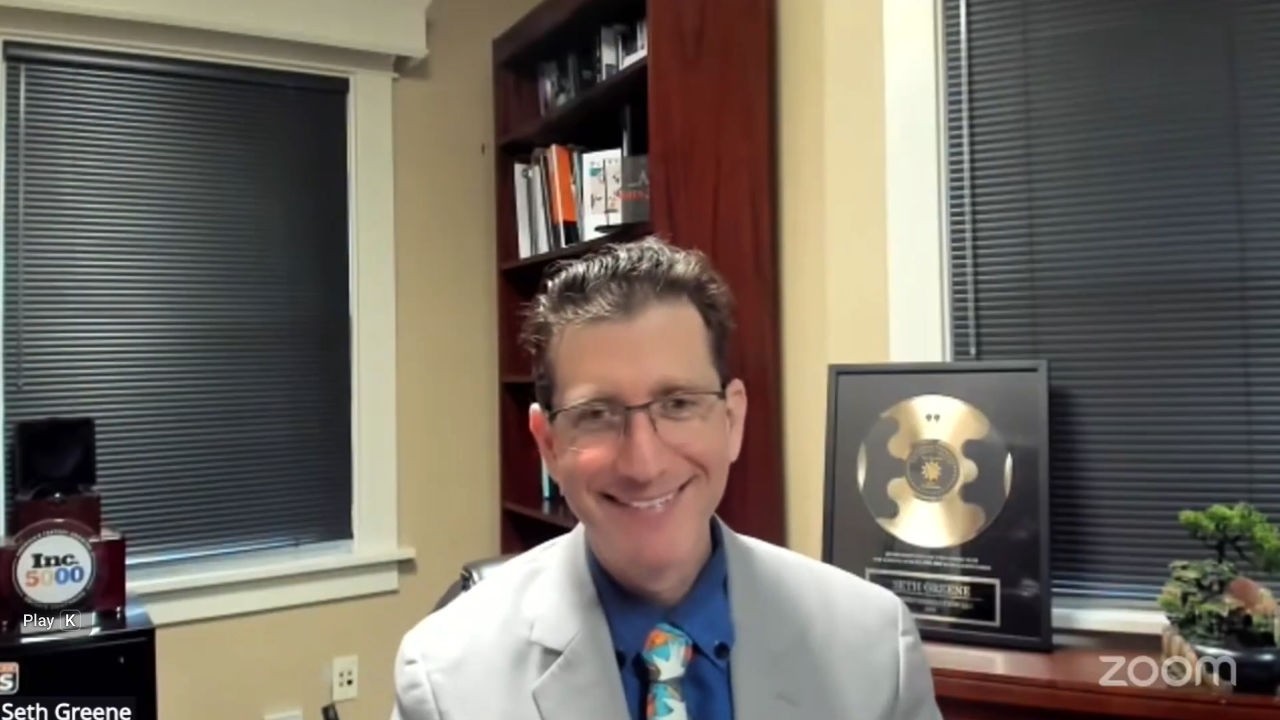
In this episode of Remembering the Forgotten, host Markus Neukom sits down with Seth Greene, a professional known for opening doors to high‑level decision‑makers. The dialogue moves away from quick outreach hacks and instead explores how genuine trust and long‑term relationship building function as the real leverage in high‑stakes environments. Greene likens business outreach to the nine phases of human intimacy, arguing that most marketers try to jump from the first phase straight to a transaction, which undermines trust. He describes a "trust recession" triggered by post‑COVID skepticism and explains how his team re‑engineered their door‑opening process to mirror offline, tactile rituals—hand‑written notes, surprise packages—while using AI as a research and production aid rather than a replacement for human connection. The conversation also delves into Greene’s personal definition of success, which he frames primarily in monetary terms but balances with a disciplined spiritual practice (daily meditation, journaling, prayer, exercise) cultivated over three decades of personal development. When asked about overwhelm, Greene advises a focus‑on‑one‑action approach and the Serenity principle, emphasizing agency over existential anxiety. Throughout, the hosts stress the shift from a hunter mindset to a host mindset, where the power dynamic flips and credibility becomes the magnetic force that draws opportunities rather than the other way around.
Chapters
Welcome to Remembering the Forgotten, a space where leaders think out loud without polish or performance. No scripts, no performance, just 2 people thinking out loud. These conversations are not about delivering insight. They are about thinking together in real time, exploring what emerges when 2 open minds stretch each other. The intention is simple, to create a space where clarity can emerge and where listeners don't just consume perspectives but feel permission to engage their own thinking more honestly. Today I'm joined by Seth Green. Seth operates in rooms most people struggle to enter— high-level associations, influential groups, decision-makers who are constantly pitched and rarely receptive. He's known as the ultimate door opener. But this conversation isn't about marketing tactics. It's about leverage. We explore what changes when you stop chasing attention and start creating gravity. Why people ignore pitches but accept invitations. Why credibility outperforms persuasion. And what happens internally when you shift from hunter to host. This exchange is not about outreach hacks, not about clever funnels, It's about positioning. Because when the power dynamic flips, something quiet happens. The one who once asked for access becomes the one extending it. And leadership, at its most strategic, begins there. With that, Seth, welcome to the show. Thank you, Markus.
Thank you so much. You made— no one's ever introduced me that thoughtfully before. They normally just read a prepared bio. You've obviously done a lot of research. I really appreciate that, and I'm gonna keep using that. I love it.
I can share it with you if you want it. You know, I was fortunate to be a guest on your show.
Yes, I appreciate you having me on the other side.
So I experienced you a little bit there, and, uh, yeah, so let's see where this goes. However, before we begin, when I speak of coherence, I'm pointing to a state where nothing inside is in conflict. Body, thoughts, emotions, and action aligned, moving as one. No push, urgency, no fear driving the moment. And when I speak of stillness, I don't mean silence. I mean the part of you untouched by expectation or performance, the place that knows before the mind tries to manage it. And that's the ground I'd like us to meet on today.
That sounds fascinating.
So with that said, where in your life did you get to just be yourself without performing, persuading, or producing?
It's a really good question. No one's ever asked me that before, and I've done 1,400 interviews. So I don't know. At work, I'm obviously on. You could say at home, but as a husband and a father, I am probably more free. However, there are still expectations from my wife and kids. I'll go with home, but because it's less than the office, But it's still not as free as you now have inspired me to want to be.
Isn't that crazy if you think about it?
Yes.
Because, you know, especially when I knew that I had you as a guest, I was curious what kind of an answer you will give. And I thought it would go a little bit into that direction. But I would never have bet everything on it. But I believe it is almost like zeitgeist that you have to play a role almost everywhere you are. And now even in marriages, in families, quite more people than not with friends. Why do you think that is, especially in, in an intimate setting like a family or a marriage? Why do you think we still have the feeling that we need to play a role?
I think you're— wow, that's really insightful. I think we are. I think we are. You're right. I think we are playing a role most of the time. Now, it doesn't mean it's bad. It could be a really good role. It could be something we enjoy doing. But as you pointed out, I think, I think we let our thoughts about our opinions of what we think others' expectations of us are and their expressed expectations put that box around us of this is the role you are being and how you're supposed to be acting right now.
Because you see, why I ask this question this way is because of what you're doing professionally. You're literally a gatekeeper and the ultimate door opener. And I assume with you as well as with me, it's about trust. So there must be a key for you, Seth, where you kind of go over this role play Because these power, power people, they don't play for roles. So there must be a key in you which can elicit that trust. Can you talk a little bit on that? Because it's not just tactics.
I think you're absolutely right. I think we have built the deliberate engineering of trust into our door opener process, and I think that's why it works. I think you're right, it's not just about a tactic, it's about the— the best analogy I can give you is the real phases of human intimacy, right? Forgive the analogy, but I— and I've been blissfully married for 21 years— but if I were single and I walked into a bar, um, and I see a girl, I'm not walking up to someone I've never met and proposing marriage. That's not how it works, right? There's like 9 phases of human intimacy from eye contact to something that might lead to an eventual proposal of marriage. And I think as marketers and business owners, a lot of times we're guilty of trying to get from phase 1 to the business. Phase 9 would be give me money, exchange of value. I think we go from, we try like opt into my web, my funnel, and now give me money, buy my thing, right? That's going from stage 1 to 9. in a heartbeat. And I think our process is a lot of offline things that happen that are— take— that take place as steps over months of time so that we're trying to duplicate what real human intimacy in a business relationship would look like. And I think that's why it works. I think you're right. It can't just be a tactic. It's— you gotta really think about how would I get to trust someone in real life? That can't just be click on a Facebook ad and, and give me a bunch of money.
I think it's very insightful because, you know, what I always wonder is if someone never learned how to build relationships and how to build trust in real life, how the heck do they expect it to work online?
Yeah, it wouldn't.
At least—
Absolutely right.
2 senses fall away. Out of 5, we have 3 max, and most people have 2 or 2.5. And then they expect to build trust. And I could tell you how they believe it works. It's by know and like.
Yeah.
No, know and like does not build trust. So what would you say if we stay with trust for a moment? What builds trust in your opinion, Sam?
I think there are a number of factors. I think there's doing what you said you were gonna do. I think there's showing up consistently. I think a big part of our process is delivering value to the other person in advance without any expectation of anything, um, to purposely build goodwill and reciprocity to the point where they ultimately trust you and want to have a business relationship with you.
That's interesting. I have followed you, as you know, since we have been on this interview before, and I remember when you initiated that new process. What made you guys actually decide, let's flip the whole thing on its head and basically revamp that whole introduction game?
Because it wasn't working. I think the world of business, the world especially of trust, has changed. I think we're in what I would call a trust recession. I think whether it's all the way up to government officials or just the company you're buying a product from, or the— we are as humans post-COVID less trusting than ever before. You know, if you look at the studies and the surveys, trust in— trust is at an all-time low. So I think we had to re-engineer our process because there were tactics, as you pointed out, that were stacked together that weren't working as well as they once did because of the change in the psychological makeup of, let's say, the world. And we had to re-engineer that to say, how is trusting human relationships built in this day and age? And then how do we do that from a distance for our clients at scale?
It was basically that one virus that woke the whole world up, huh?
Yes.
Which is incredible. Did I understand that right from your emails that you have implemented AI into that process?
Absolutely, yes. It does not replace humans. It just makes our humans better and more efficient.
So tell me a little bit about that marriage between old style, how we used to do it offline, and how you guys have done it now with AI in partnership?
Okay, so I want to be very clear. The offline steps that we do work better than ever now, um, because so few people do anything like them. And we get thank you notes and thank you emails every single week from people on the receiving end going, I can't believe you sent this, I can't believe you did this. So I would never get rid of that. Um, we've had people try it and fail miserably because there isn't any— as you alluded to in your, your 5 senses, comment. There's— I don't think there's anything that can replace that physical touch. There's no PDF download that's going to duplicate the same feeling you might get from getting a big brown box in the mail. Right. That's a pleasant surprise. So we have it. We will never replace that with AI because it won't do the same. It won't have the same results. Now, where we do use— we use AI a lot in the— we use it a lot to help us in our research. We have built custom programs to help us in our writing. We've built custom— we built programs to help us in our production aspects of, for example, the podcast that we produce. There's a lot of way things we have built entire shows based on AI where there's an AI persona. It's not a human anymore, um, to save our clients the time of having to record episodes. It works differently. An AI-powered show isn't going to build you relationships and open doors for you, but it can build you a following. So it serves a different— it can be a thought lead, get your content out there more without requiring your time. So there's a different purpose to it than our normal door opener. We're going to go build you a new human, real trusting business relationship every week process.
Which is incredible. So you're literally saying you guys went back to the roots Went to absolute basic offline connection mechanisms, which is human to human. Yes. So the next question might surprise you a little bit. When did success stop being enough for you?
Wow. Um, it depends. So it's a moving target. It depends on your definition of success. I've had that. I had that discussion with my wife earlier this, you know, maybe earlier this year or late last year, where she said, "Do you know how successful you are?" And I said, "I don't feel that way." So it's not that it's there was a day that it stopped being enough. I don't think I'm there yet, in all honesty. Now my wife, kids, clients, you know, a lot of people thankfully would have wouldn't have argued with me. But I— it's funny, I am right now juggling some family stuff with, with my— with an older family member, and I feel like a kid. So I'll let you know when the day arrives that I say, you know what, I have arrived. I'm hoping that's in, you know, in the next year or two.
That is interesting. So when you speak about success, how do you define success?
For myself, I'm— and maybe we do a separate coaching session where you help me with this one. I am defining it in monetary terms.
It's interesting. So I wasn't sure whether that would be the answer. But I kind of sensed it.
And it's crazy because if you look, if you listen to like Tony Robbins, who says people underestimate what they can do in a decade and overestimate what they can do in a year. And if I go look back and see where we were 10 years ago, I'm like, oh my God, I've come so far. But yet it still doesn't feel like enough.
And you see, and this is the aspect. So let's dive, with your permission, let's dive into something for a moment. I sense you're at that point Where something in you asks, is this it, or is there more to my life?
No, I'm gonna respectfully say no. Um, I know there's more. I do extensive personal development and spiritual work on a consistent and regular basis,
um,
which fuels everything else.
Would you mind sharing a little bit about that? Because I can tell you why I probe. Because the monetary function only goes that far. It doesn't lead you too far, as we know. Like, I can give you an example. I have— Right.
I know lots of rich, miserable people, but that doesn't mean—
Exactly.
So, and it's funny because I will be—
Tell me more about that, please.
I will be in a room, like an EO room of entrepreneurs who are— have run very, what I would say, hugely successful companies. And I'll listen to them, um, vent or emote or whatever, and I'll be like, are you crazy? Yeah, I was looking up to you going, oh my God, I can't wait to be at that level, and you're busy complaining. Yeah. I'm like, when I get there, I'm gonna be happy. And I'm like, well, you shouldn't wait till you're there to be happy. You should just be happy now so you can get there. And then, of course, do the work to feel good now so that all of the things you're trying to get to ultimately show up.
It's interesting. Tell me a little bit more about your spiritual practices because I'll show you why I ask. In many cases, people believe if they amass enough outside, let's say worldly goods, money, Cars, houses, boats, whatever, right? They believe the more I have, the sooner or later I will be happy. I believe no, it's not the case. Something is missing. So how did you link personally the outside with the inside?
So I am happy now. I'm not putting my happiness off until I get to a certain point. And I meditate for an hour every morning. I work out multiple times a week. Um, I will— I journal every day. Um, I pray a lot. Like, there's a whole lot of— I, I meditate at night. Um, so there's a lot of— as one of my coaches once said, you gotta do your personal development pushups every single day, right? You don't go to the gym once and you're fit for life. You work out all the time. You work out, work out on a consistent basis. Yeah. So I am doing those things, and I am sure the better I get at doing them, the better the rest of the external world gets.
It makes sense. Did you get to the point where you realized that you were living someone else's life or someone else's script?
No, I don't think that. I'm happy with my choices. I am very thrilled with my wife and kids. I am blessed with the business success that— successes that I've had. Um, no, I don't think this is— no, I'm— I own my script.
Which is beautiful and rare, by the way.
Thanks.
What do you attribute it to?
I don't know. Um, just probably 33 years of personal development work, um, and being a perpetual always wanted to improve every single day. Um, you know, my dad said once last year, um, he's like, don't you— why do you keep going to mastermind groups? Why do you keep going to conferences? Don't you know everything already? I said, no. And even if I did, something new would be invented tomorrow. And I said, I quoted Tony again, when you're green, you grow. When you're ripe, you rot. Like, you got to learn something new every single day. Now, he's 84. So, he's in the final chapter of his life and not trying to set the world on fire and has a different philosophy than I do. But I think you got to keep growing, going forward. You can't stand still. You're either going forward or going back. And I'm going to go forward.
Would you say that you were set on that path by your parents when you grew up?
Maybe. So both my parents had a very strong work ethic. I watched my dad work a full-time career and go to law school at the same time when I was in middle school because he decided he wanted a career change and he couldn't afford to, you know, just quit his job. He had 2 sons to put through college and kept working the full-time career and going to law school, then going working a full-time career and building a solo law practice on the side until my older brother and I graduated college, and then he could afford to just pursue his practice of law. So I saw him in essence work 80 hours a week growing up to go after what he thought he wanted. So I got the— I saw the work ethic, but in terms of what I've done with it, like he asked me the other day, he said, I don't know where you get it from. And I'm like, you're not giving yourself enough credit.
Isn't that interesting, huh? So what it really comes down to for me is we have this kind of almost like gardener who are our parents as a as a role model, but it can be on both sides, right? Both sides, bad and not so good and good. And you have your original executive functions, which apparently you really nurtured. And not everyone is blessed, as we know, in terms of that. So we're living in challenging times, and I'm actually coming to my last question now, Seth. If someone right now feels overwhelmed, which is quite easy, to be honest, what would you want them to return to?
I think the cure for overwhelm is, for me, in my experience, realizing it will all get done. You will get through it. Life isn't over yet. Um, and if it is, then you don't care anymore because now you're bliss, theoretically, depending on your belief system. So I would say pick one thing. Okay, I got this giant to-do list. I got 17 things to do today. I don't have enough hours in a day to get them all done. Pick one, the most important one. Make some progress on that, and the momentum will snowball. And then as soon as you're— I find that when I get overwhelmed, once I get into action and start doing something about something on that list, I feel better.
And what if the overwhelm is not so much task lists, but what the world turns into right now? It's more existential.
Okay, so what can you— I'm going to go back to action. What can you do to affect the world if you can go do something? And if you can't, what's the point of worrying about it, right? I could spend all my time watching, uh, Fox News getting driven crazy And you know, oh my God, the world's gonna end. Or watching CNN or CNBC and go, this is terrible. There's 75 crises in the world. I can't affect 99% of them, so I'm gonna work on my economy and my world.
Which comes down to the Serenity Prayer, right? From Ananias and Sapphira Collins.
Yes, love that one.
Right? Beautiful. With that said, thank you so much for having me be my guest. Great pleasure.
My pleasure. This is. God, it's probably the best interview I've had in years. So thank you for having me on.
It's a real pleasure. This was Remembering the Forgotten. As you move on from here, notice what may have been quietly remembered. Perhaps something set aside while trying to survive, perform, achieve, protect, or optimize. If something shifted for you, Let it stay. A few quiet pointers are waiting below.
More from Markus







Ep 66 Breath, Trauma, and the Fear of Being Fully Seen A Conversation with Matt Ritchey

Ep 65 Truth, Trust, and the Courage to Be Seen A Conversation with Troy Gregory

