Ep 56 Beauty as a Bridge A Conversation with Richard Haynes
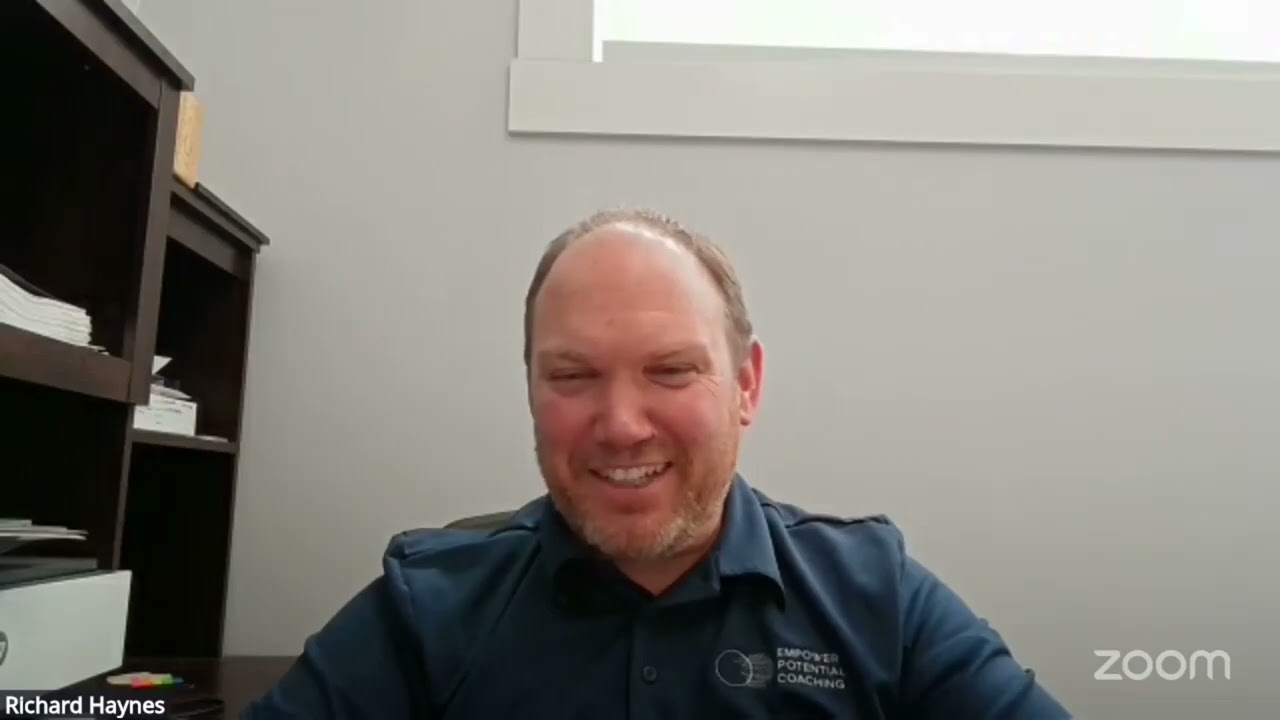
In this episode of Remembering the Forgotten, host Markus Neukom interviews Richard Haynes, founder of Empower Potential Coaching. The dialogue explores how daily meditation opened a space of ease and stillness for Richard, and how that practice reveals deeper patterns of childhood programming that shape our thoughts, emotions, and actions. They discuss the notion that from ages 3‑7 we are conditioned to become "good" members of society, creating a scaffolding that later feels like a limiting script. The conversation moves to the idea of a "core" self that remains hidden beneath these layers, and how remembering this core—through practices like meditation, curiosity, and noticing beauty—can dissolve fear of change and restore authenticity. They use metaphors such as a Martian observer, a hamster wheel, and the concept of “selling one’s soul” to illustrate the cost of staying in familiar patterns versus the price of true transformation. The episode concludes with a call to see beauty in everyday life as a bridge to love, curiosity, and a more authentic existence.
Chapters
Welcome to Remembering the Forgotten, a space where leaders think out loud without polish or performance. No scripts, no performance, just 2 people thinking out loud. These conversations are not about delivering insight. They are about thinking together in real time, exploring what emerges when 2 open minds stretch each other. The intention is simple: to create a space where clarity can emerge and where listeners don't just consume perspectives but feel permission to engage their own thinking more honestly. Today I'm joined by Richard Haynes. Richard works with people who sense that something in their life or leadership is asking to change, even if they can't yet name what that change is. As the founder of Empower Potential Coaching, he helps individuals recognize the patterns that quietly shape how they think, decide, and move through the world. But this conversation isn't about coaching methods. It's about recognition. We explore what becomes visible when someone begins to notice the beliefs and internal structures that have been running in the background for years, why pushing harder rarely creates the shift people are actually looking for, and how a single honest conversation can begin to loosen patterns that once felt permanent. This exchange is not about productivity, not about fixing people. It's about remembering. Because when the patterns become visible, something subtle happens. The struggle to become someone else softens, and what was already present begins to lead. With that, Richard, welcome to the show.
Thank you, Markus. It's wonderful to be here with you.
Thank you. So before we begin, when I speak of coherence, I'm pointing to a state where nothing inside is in conflict— body, thoughts, emotions, and action aligned. Moving as one. No push, no urgency, no fear driving the moment. And when I speak of stillness, I don't mean silence. I mean the part of you untouched by expectation or performance. The place that knows before the mind tries to manage it. That's the ground I'd like us to meet on today.
I love it. I love it. I think that's the place I try to get to whenever I meditate. And so being able to do that in this conversation will just be wonderful.
So tell me more about that place where you go and you can meditate.
Yeah. So about a year and a half ago, Not a year and a half. It was actually— I know the date. It was December 29th,
2024.
I made a decision that I was going to meditate every day, first thing in the morning for all of 2025.
Okay.
And, and I did for all of 2025. And, and I've kept it going because I loved it so much. So that place that I go when I meditate, is a place of ease. It's a place where, like, when I, when I meet with my clients and they ask me, how do you, like, how do you meditate? I can't get to that place of stillness that, you know, you did a nice job of framing stillness. I can't get there. How do I do it? My, my response is, it's, it's not about that. It's about just letting things happen. It's about just letting your mind flow, letting it— if it's got to think about all the 100 things you have to do that day, then let it think about the other things you have to do that day. And that's okay, because that's part of it. And so that, to me, that is where I get to. And I've found personally that when I do that consistently over and over, then that place where the mind's chatter or worrying about the 100 things I have to do It just dissipates. And, and then thoughts crystallize and come and inspiration. And I love how you set up the show with us just being in that space, having 2, 2 minds that are willing to be open. Does that, does that answer your question?
Absolutely. And there's never a right or wrong, you know. It's literally just how you personally see it and how I personally see it. So it actually triggers a curiosity. What was the trigger for you to make that decision?
Yeah, good question. I probably, for— I'm trying to think of how long— probably since I did coach training, which was 2014, '15, and everybody in the coaching school was talking about meditation. And I thought, well, I better try this. And then I listened to and read some of Joe Dispenza's books and, and, and I heard just how wonderful it was. I'd started meditating and I'd had some really cool experiences. And I, I heard how wonderful it was to do it first thing every day. Just sets your day up wonderfully well. And so I probably heard that for like 5 or 6 years. And I, and at first when I heard it, I thought, yeah, that's a great idea. I should try it. And I just didn't do it. And for whatever reason, like after those 5 years of thinking about it, hearing about it, it was just like, I'm doing this. It's different from— and this is what happens with me at times. Yeah. There will be kind of a percolation that happens in, in my heart and mind for a while. And, and then it just happens. And after that happens, it's, it's solid. The times when it doesn't happen is when somebody says, hey, Richard, you should, you know, there's the should word. You should do this with your business or you should do this. And so I go, yeah, that's a good idea. And I write it down. And man, it's just so much effort to get there. And guess how long it takes to fizzle? Not very long. Right. It fizzles away. And pretty soon I'm, I'm back to that old way of being. And I wonder, I wonder that if it's that it's because I'm not aligned with, with whatever it was, that was somebody else's thought or idea. Not that it was a bad thought or idea, but it was just somebody else's. And And I have such a focus and intentionality on being authentically me. Mm-hmm. Again, going back to what you said at the start, like letting, letting all those expectations— and these aren't your words, but the expectations of others that we take upon ourselves and of who we think we should be— letting those fall away. so that we can reveal who we are. Um, because the world needs more Markus. The world needs more authentic of us, right, Richard? And, and, uh, it's one thing I'll often tell my clients too, is, is the world needs more of you. And I'll call them by their first name and, and say it doesn't need— you don't need— we don't need little Richard protégés running around. That doesn't make the world any better. One of me is plenty, which is like one of you is—
That's what people tell me. One of you is enough. It's a handful.
That's right. Yeah, just ask my wife.
I have one as well. I don't think a second one would be really good. We will definitely talk more about authenticity, what you just mentioned. However, I'm taking your answer and I paraphrase it into a question of interest. Where can you just be yourself, untouched by expectation or performance?
The first place that comes to mind when you ask that is, is that meditation place. For me, it's a place of connection with, with my creator, whether, you know, we call it God or the universe or, or the world, whatever our belief system is. And for, for me, how I see it is it's a place where Every part of me is just accepted for, for how it is, who I am, where I am. And—
Beautiful.
And I think that, you know, this is just occurring to me right now, but I think I would probably say that that is the very definition of sacred. Who I am. where I am, how I am in the moment.
There's a very interesting connection to sacred and that safety.
Yeah. Yeah, there is. There is. I, in connection with that, I had a really interesting conversation with a gentleman. His name is Brian Morgan. I don't think he'd mind me sharing his name here. He's— he helps people write with clarity, and, and he absolutely loves what he does. And he helped me with some writing, and I kept coming back to that place like that. We just— we kind of want to be safe, and we're always looking for danger. And, and he called me on it, and he said, Richard, he's like, you keep coming back here. And he said, what if somebody, what if their main driver really wasn't about being safe? Like, what if they were there because they were doing what they absolutely loved? And if I were to redefine that, I'd say they're being authentic in every way. Like, they're just being themselves in every way. And, and, and then he went on to say, Ever since I started doing this, what I love, I don't worry about being safe anymore because it's just not even in, in my purview. And, and I found that super interesting. And so I think that's— there's, there's, there's a link with it all in our authenticity is like there is something about doing You know, the word— is the word supposed to be doing? It seems a little bit strong for what it is, but doing—
But it is. It is. Yeah.
Yeah. Doing what we're meant to do.
It's programming. It's an absolute programming. And it happens quite early in age, by the way.
Yeah. Tell me more.
Yeah. Yeah. So the programming in terms of you are not enough, you have to adapt. Probably starts somewhere between age 3 to 6, 7. And after that, you're cooked. Literally.
Because it's, yeah, that's in the formative years, right?
Exactly.
Where the world is like a dream to us and we're learning how to interact with it and primary caregivers are trying to—
Sometimes I literally think like, as soon as caregivers realize the child can think for itself, doesn't even have to be able to speak yet, but can think for itself. That's when it has to be guided into becoming a good member of society. Yeah. Basically, as soon as it becomes permeable, you have to be sure that this child becomes a good thing. And you see, the thing is, like, most parents or primary caregiver, I believe they actually mean quite well. Yeah, well— They are concerned that their child is not becoming a good member of society. Because let's be honest, what did you say they're supposed to, right? If you never learned the ground rules of society, you do have quite a hard life when you grow up. So they make sure that you are becoming a good member of society at quite a young age. But let me ask you something else in addition to what Brian said. Picture me a Martian. A Martian now sits in this chair and he listens to us. The first question is, Markus, why does this guy have to meditate to feel safe? Why does he have to meditate to be untouched by expectation or performance? Why can't he? And then he says, probably billions of other people not simply be themselves. Because, you know, that Martian goes a step further than Brian. He says even Brian uses a skeleton or a scaffolding. He uses something he does in order to become. That's totally backwards.
Yeah, it is. Well, I've never thought about it that way.
Just let's ponder upon that a little bit. Just give it some thought. Yeah, the machine is really curious.
Maybe a person listening to this is too. I'm curious as well. I wonder, like, I wonder if it gets back to what you said in that those formative years programming. Because that becomes the operating system of, of our thought processes. And, and so then you— we— I kind of joke like we, we spend the first 20 years of our lives, 20, 25, you know, learning to become and be successful. And then we spend the rest of our life learning to undo all those things that we learned to be ourselves in order to be ourselves. And I really, I think it is the programming that happens.
Do you believe what you just said about the 25 years and then 20 remaining years? You do believe that? Or is it more a joke?
Is it more which?
A joke.
So I believe it. I'm not sure I believe 25 years. I kind of picked that arbitrarily because I, I believe that most people are like me and that you go into your mid to late 20s thinking you know how to be successful. And when you don't, things aren't unfolding the way that you envisioned, you realize that, oh, maybe there's something more. And then, and that's when I started to really question a lot of my belief system. And,
and quite early with you, right?
What's that?
That started quite early with you.
Yeah, I'd say late 20s is probably when it really— Yeah, that started in earnest. Is it?
Yeah.
Yeah.
Oh yeah. Because most people are literally in that 25-year bracket. And let me say something to everyone. When people believe that this programming is all bad, it's not.
No.
Because I can tell you, every single high achiever, every single manager, senior manager, executive, whatever, would not be that if they had not adapted that kind of a thinking. Because it's literally the ticket to lose yourself, to start adapting to something else, which is the ticket to entry in terms of career. So there is a logic behind it. I don't think it's a clever logic or a helpful logic because as you know, I work with those people who say, just like you, this can't be it. There must be more. So they have to literally not really, I don't use the word unlearn because what they have been doing is they have forgotten who they are. before the world taught them who they had to become in order to do careers and make careers and all that kind of stuff, right?
Mm-hmm.
And so it's a remembering process. So you can literally put it this way, Richard. There is a part in us that has not gotten absolutely lost or forgotten. It's the core. And it's always like this little Martian friend next to me. At one point, that core comes and says, Markus, no, this cannot be it. Like, it got to the point where it said to me, you know what? And by the way, I'm not hallucinating when I say that, nor my little Martian friends here. It literally came down to that. It said, look, you have your core. And if I let you continue that path, you are going to destroy or at least harm your core. Hmm. By the way, that's where depression comes into play. I have never seen a healthy, happy person going into depression. It's usually when you go against your core and then it becomes more and more depressed. In the literal sense.
And I would say that the core too is where the, the place of spirituality actually exists for us. And I'm not talking about religious tenets or dogma or anything like that. But spirituality is our ability to be connected, right? Connected with ourselves and with our creator, whatever that looks like. And I think I agree with you on most of what you said. I can't think of what I don't agree with. But I also need to ponder it a little bit as well. I do think that for us to be authentic, we can go back there. Oh, here's what I wanted to say. All of those things, that scaffolding that we've kind of built, that, you know, the supposed to— like, I was supposed to be this, supposed to do this, supposed to get here. Looking back on my life, I can't believe I'm this age and I haven't done this yet. I'm not sure that any of it is bad. I think now with my perspective change on it, that all of it has— is this journey that's taking us back. And, and I actually think that the road to discovering self is one of the most beautiful journeys that we get to take. And if we hadn't forgotten ourselves, then we wouldn't have this beautiful journey in this, this struggle, and you and I would be out of work. So, and we wouldn't want that.
I can tell you, I actually have met, um, not even a handful of people in my entire life, of people who never had to forget who they are because they were nurtured at a very young age to grow into who they actually were supposed to become. And they had very minor glitches throughout the entire life. Like, I had one or two people.
So for you, you meeting them, what was that like to meet them? And how could you tell?
It was extremely interesting. As you can imagine, I go very deep probing when I realize that somebody believes that They actually never played by other people's scripts, for example. That's a very given. That's a giveaway. Right. And then, you know, being who I am, I drill very deep to the point where I realize, huh, actually makes sense. This person's script was so solidified in the formative years That later on, it could hurt, you know, could be a membrane that's being laid on that person's script. But when that person realizes there is a membrane on it, done.
Done.
But most people never get to that point. So I personally believe, Richard, that we are born with executive functions like courage, creativity, curiosity. All these C words, and they're like little seeds. If we're fortunate, we had probably even nurtured them ourselves, especially creativity. Think about that curiosity as a child, right? Yeah. You have children, you observe them, you witness that. And then suddenly the moment came where the curiosity came into You know, don't ask too much. Creativity had to be damped with realism. And if that happens at quite a young age, it's not developed.
Right.
But it's almost like when we start to forget, that core already begins to remind us, yes, you have forgotten now, you will forget more. But just so you know, the journey of forgetting is already the journey of remembering.
Love that. Yeah.
And that just came now because I just realized while I listened to you, so the input came from you, I realized the journey of forgetting is already the journey of remembering. And let's be honest, most people probably will rarely get to that point where they can say, you know what, is this really it?
Yeah.
Simply because they struggle with life.
Yeah.
Like some people, you know, when they meet me, they say, Markus, I would love to have that problem you have to be able to ask, is this it or is there more to life? I don't even know, you know, financially is one point, but how to manage my life. I don't even get to that point to ask if there is more. Makes sense, right?
Yeah. Yeah. And it also leads me to believe that a lot of even that is, is just kind of these shackles that we've put around our mind because, so we don't have our needs met while I'm alive, right? For one. And so it is, you're stuck in a paradigm, like I might be stuck in this paradigm of I can't do this until this happens for me, right? Or this happens to me. And so then you don't think about it. But really, what's stopping somebody from thinking about anything?
Nothing. This is one of the reasons why I started this show, because I wanted to create a library, a place where people can go for free. And literally watch or listen into these episodes and realize, gosh, there are actually people living this way.
Yeah. Yeah.
They're basically all little panel discussions which we have.
And then hopefully the question comes, why can't I do that too? I'm guessing in how I know you, the brief time we've spent together, that you're similar to me in that Um, whatever I've done or accomplished, I feel like anybody can do it because a lot— it's a lot of it is just the thinking part. It's— and, and as you preframe this, there's not a right or wrong way to think. It's, it's just to give yourself the space. Give yourself—
I had a conversation with my wife yesterday, and she told me about, you know, all these astrological changes that are taking place right now. And they are like breakups and people going to potential and everything. And I just stood there and I said, honey, it only works for people who work it.
Yeah.
It won't be just a solar lunar change and that person's life will change. No, it will not happen. So the question is literally, are you willing to pay the price? And I could tell you, I had a person who asked me, Markus, how much does it cost me? And I knew it wasn't money.
Yeah.
So, if that guy at his stage in life, as successful as he is, asks me that question and then decides— because, you know, I was honest, I was probably a bit tired, and I said, it will cost you everything. It will cost you all your illusions. It will have a lot of disappointment in play. And you realize, I have appointed stuff to things, meaning to things, which was nothing. However, that remembering process, as painful as it is, it leads you to yourself.
Yeah, yeah.
That's what it is. I think that you can Second, that a lot of our clients we work with who get to the point where they say, I basically have it all. I'll give you an example I always use, that guy who suddenly has half a billion US dollars on his bank account and now doesn't have purpose anymore because he sold his company.
Hmm.
Most people out there, they will probably say, yeah, I'd love to have that problem for 1 minute in life. $500 million. Do
you know what popped into my head when you said that? When you said he sold his company, is he sold his soul. And the reason why I can say that, and usually we have that, they just sold your soul to the devil or something like that. But, but his soul, he had poured into this company. And so that's why he had no purpose. And so I I think that's probably a lot more accurate of a use of that term. And so then, so now it's like, well—
Interesting what you say.
Yeah.
What if it started out as really pure, but then to get to a certain point, that person actually had to sell his soul or her soul?
And selling your soul, I think, is, is the, the investment, the emotional, the energetic, the time investment that you put into something. That's, that's it, right? And, and then in the end, it gets exchanged for money. And so, you know, it was something else you said about the gentleman who came to you and said, what's this going to cost me? You know, money's no object. And you said everything. I wonder what popped into my head is I wonder if money, this concept of money, has made us try to make everything easy. Like, I'll just throw money against it and the problem will take care of itself. Yeah,
yeah. I can give you an example. If I'd be a crook, I would offer a weekend on a beautiful island. It will cost $1 million, and I will promise them a ritual that will make them free from themselves forever. People would come and it costs $1 million per weekend. People would pay.
Really?
But if you say when they come there, by the way, you can have your money back because it's actually work what you have to do. It's about looking into the mirror.
Yeah.
Quite a few probably would take the money and leave.
Yeah.
Because I believe it is the problem that we are not willing to pay what it takes. But you know why? Because we are afraid of change.
I think there's that.
So we'd rather pay $1 million and walk away, not change. But we have paid $1 million for change.
Yeah. Yeah, I think there's the fear of change, and I think there's also an addiction to our way of seeing the world. And part of that comes back to the safety, right? We just, we don't want to challenge the structure of how the world exists to us in our minds. And, and that's, I can tell you from experience, that's a painful place to be, is, is to challenge that. And And it's— but I believe it's transformative. I've thought about that too, of why is it so painful? Like, what is it that makes it painful? And I think, and this is why I say about the addiction of our point of view, I think that that's what makes it painful is we— it's like we're getting ourselves off of a drug like that we've been— that we're just so used to being on. We need this drug to exist. Like, our—
Yeah.
This is how the world works. This is what's real? And, and so then you start asking the questions and facing reality, like facing things as they are. Because things as they are is, is, that's the only place we're gonna, in my, my mind, we're gonna get somewhere and start reconnecting with that, that inner light, we might call it, or the The authentic self.
And I can tell you, this guy literally said to me, I cannot do it one more day. But the price was too high. So he rather stayed on his 10 hamster wheels where he ran back and forth all the time as a little hamster. But he said, I cannot do it one more day. It is a very interesting aspect.
Yeah, very interesting. Oh, it is. It is. I love it.
Time flies, my friend. I want to be mindful of your time especially.
Oh, I feel like it's no time.
Which leads me to one more question. No, we could literally continue for hours. I know. Thinking that we basically met for the second time in life, right? It's crazy. So here's one, my final question. If someone feels overwhelmed right now by the world and everything that's going on, what would you want them to return to?
Yeah, I would want them to be able to start to see everything around them as beautiful. If, if we can see— and because I believe, I believe if we can do that, I believe that beauty is the bridge to love, to seeing. And when I say see things as beautiful, I'm not talking about going out and finding the most attractive person or whatever. Like, I mean, like, hey, this conversation was beautiful. Or, hey, look at that tree over there. And just— and if you want to see beauty, you got to get curious and, and just get curious about, wow, how does it work? Like, how did that tree grow to be 100 feet tall? Or how is that one so small, but yet it's growing so much faster? It could be— you pick anything and, and just learn to see the beauty that's around us because it's all there. And, and you yourself are amazing. You are an incredible, incredibly beautiful individual that, quite frankly, you deserve to feel better than you do. You deserve it.
It's beautiful. Thank you so much for this conversation, Richard.
Thank you.
This was Remembering the Forgotten. As you move on from here, notice what may have been quietly remembered. Perhaps something set aside while trying to survive, perform, achieve, protect, or optimize. If something shifted for you, let it stay. A few quiet pointers are waiting below.
More from Markus







Ep 66 Breath, Trauma, and the Fear of Being Fully Seen A Conversation with Matt Ritchey

Ep 65 Truth, Trust, and the Courage to Be Seen A Conversation with Troy Gregory

