Ep 59 The Wisdom Beneath Performance A Conversation with Gary Malkin
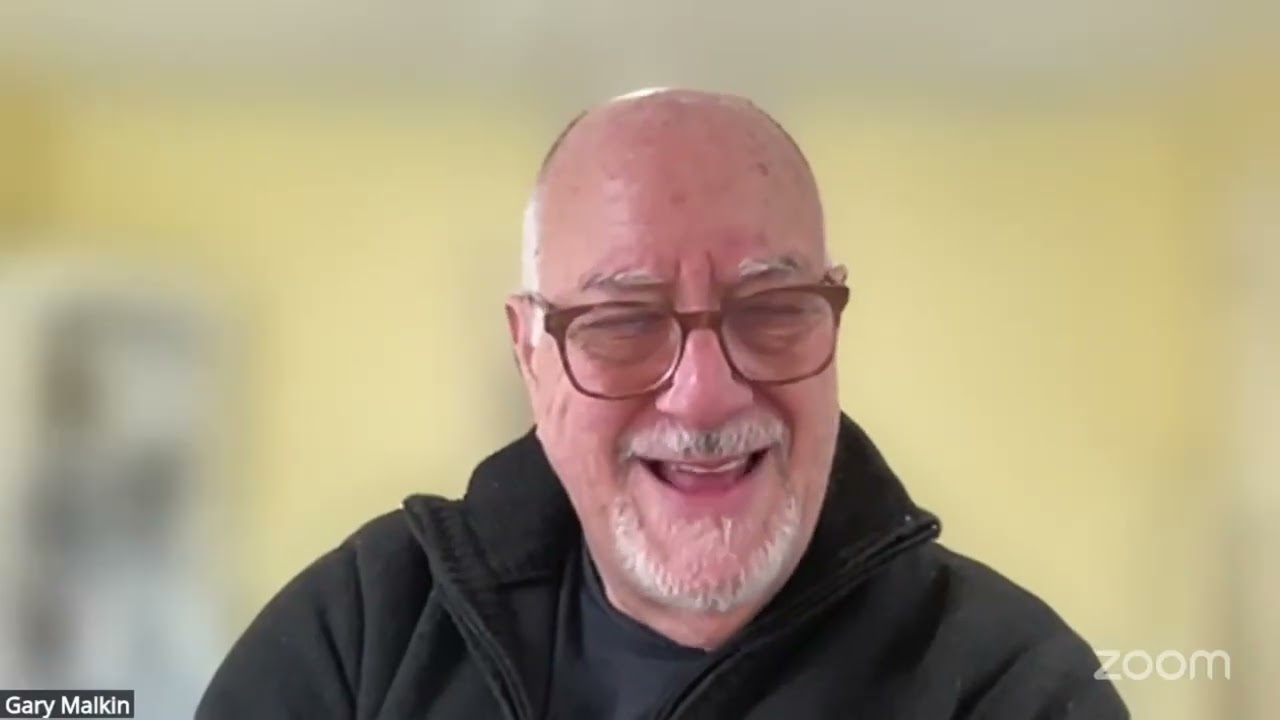
In this unscripted interview, host Markus Neukom and Emmy‑winning composer Gary Malkin explore how music can function as a form of medicine that bridges intellect and feeling. They define “coherence” as a state where body, mind, emotion and action move as one, and distinguish “stillness” from silence as the inner space untouched by performance. Gary shares personal stories—from a childhood of isolation in a basement piano to his TEDx talk where he abandoned a rehearsed script to sing spontaneously, illustrating the power of authentic musical expression. The conversation delves into his work creating the Graceful Passages end‑of‑life program, a grief‑literacy course, and the Haven Method, a titratable musical practice designed to re‑befriend silence and foster multidimensional resonance. They discuss the role of nature as a source of coherence, the scientific notion of quantum inter‑connectedness, and the need for collective compassion in the face of global crises. Throughout, they emphasize that music can bypass rational defenses, open a resonant field, and help individuals and communities heal, build resilience, and remember who they truly are.
Chapters
Welcome to Remembering the Forgotten, a space where leaders think out loud without polish or performance. No scripts, no performance, just 2 people thinking out loud. These conversations are not about delivering insight. They are about thinking together in real time, Exploring what emerges when 2 open minds stretch each other. The intention is simple: to create a space where clarity can emerge and where listeners don't just consume perspectives but feel permission to engage their own thinking more honestly. There's a moment in a human life when insight is no longer enough. Clarity without connection begins to feel incomplete. Today, I'm joined by Gary Malkin. Gary is a multiple Emmy Award-winning composer whose work has touched millions. Across film, television, and transformational media. For over 4 decades, he has been exploring something far less visible than success: the role of music, resonance, and emotion in restoring what we've quietly lost. From the outside, That looks like composition. But this conversation isn't about music as performance. It's about music as medicine. We explore what happens when sound becomes a bridge between intellect and feeling, between separation and connection, Between who we think we are and what we can actually sense. Because at some point the question changes. It's no longer, what do we know? But rather, what are we able to feel, hold, and integrate together? And with that, Gary, welcome to the show.
Oh my God, I have goosebumps all over my body right now. You know, I think essentially every human wants to feel seen from the moment we're born, probably even before that. So I feel so carefully welcomed with such depth. Thank you, Markus. That was a beautiful introduction. Thank you.
My pleasure, Gary. Thank you for being my guest. So before we begin, when I speak of coherence, I'm pointing to a state where nothing is inside in conflict— body, thoughts, emotions, and action aligned, moving as one. No push, no urgency, no fear driving the moment. And when I speak of stillness, I don't mean silence. I mean the part of you untouched by the expectation or performance, the place that knows before the mind tries to manage it. And that's the ground I'd like us to meet on.
Today. Out in the land beyond good and bad, I'll meet you there.
Appreciate that. So with that, Gary, this might be a question which you are not asked too often. Where can you just be yourself, untouched by expectation or performance?
Well, the first thought, of course, comes with the idea of doing what we can to let nature awaken our connection to the Mother. Because there's, you know, nothing, nothing can come close to the coherence that comes when we allow ourselves to be and feel at one with Mother Earth, with the natural universe. But what I recently experienced in the last year and a half was a weird separation from nature into forgetting it's necessary to see it as its source. So, uh, so for whatever reason, I've had to pull away to realize, oh my God, I've allowed myself to leave the, the knowing that there's no source like nature as a way to realign. So I've had to stray in order to understand what has happened to me, um, which I'm coming in the process of coming back. So the other— the thing that came to mind instantly was what happened to me on the night of the Grace Cathedral event that I co— that was really the zenith of my life's work last September 27th, which was— we can talk more about it in detail, but it was about the experience of embracing our differences in every conceivable way and using music, wisdom, and convening and ceremony as a way to create unity consciousness. For me, I'm a, I'm a just a passionate lover of opening hearts and bringing people together into the oneness that we are. It's just, it's who I am. It's what I love. It's my passion. So that's what comes to mind. The art of convening into disappearing into oneness together, into the oneness that we are. I love that. That's my heart's, heart's and soul's passion.
That's beautiful. And I had the privilege to watch your TEDx talk, which I highly recommend to everyone to watch because, you know, as we just discussed before, especially in the second part, which I don't want to spoil for anyone, but that's where the Gary Malkin really showed up.
Well, it's the last The last 3 minutes, really.
It's crazy, isn't
it? Or something. Yeah.
It's crazy. Like, if you'd ask me how much time was that, I would say probably at least a third of the whole talk. No, it wasn't. It was probably like 3 minutes.
Yeah, that's a third. Well, it's about a fourth of it. Yeah.
Yeah. So you know what I'm always curious about? Why is it That it is so hard for us human beings to be just ourselves, untouched by expectation or performance. Because I'm absolutely certain that 95% of the people who listen or watch this show have this yearning. Which yearning? To be seen, to be seen,
Right.
To be recognized? Just because you are you, shouldn't that be enough?
Markus, I am so touched by your— the things that you're moved to talk about and ask, because there's a prescience to what you're saying. The day before the talk, you know, I had reached out to the, you I have a lot of amazing people in my life and one particular person, Dr. Clint Rogers, who's the author of a book called The Ancient Secrets. Anyway, it's a beautiful book and I highly recommend it. He and his dear friend were— I finally had the opportunity to read my script and they said, you could just speak the script, it's tomorrow, you got to memorize it, right? Mm-hmm. I'll try, but I really want you to hear this script, right? And so I shared it and I read it with as much memory as I could because I really was down to the wire. And what Clint said to me was so intriguing. He said, Gary, it's fantastic, but I want to remind you something. If you decide to throw it all out and just stand there, And trust that whatever comes through will be what is the medicine of your gift to the world. That will be as powerful, if not more so. And I— and the fact that I listened to that and I was so intrigued, I went, I have worked so hard on this script and shared it with so many people and worked for endless hours with a friend to memorize it who'd helped drill me in I had a lot of, you know, some support, but I didn't— but now that I understand this, if I had the time, Markus, I would have started 8 months ago and I would have spent almost all the time with the question, with the prompt, now that I know what I wrote, what wants to come through in the moment with complete natural ease and grace and flow that I love to speak from when I just speak from my heart base into the field that wants to be said in that moment. The fact that I couldn't do that, which was fine, but that I was attached to what I wrote is the very fulcrum of the propensity for us to be all colluding, unwitting partners in the monopoly of the linear rational world And as long as we all, including my whole life's work is about letting go of the monopoly of the linear rational mind is the only thing. It's what the talk's about. How can we invite our heart's wisdom, which includes body, mind, soul, body, soul, and spirit, which is in the heart? How can we invite our heart's wisdom to harmonize with our linear rational mind, with our analytical mind, with our intellectual mind? And the teaching story for me was that what I went through was almost like on the cross of the very thing that I am bemoaning about, that I couldn't— I myself could not demonstrate until I sang the song, Do You Remember Who You Are? At least part of
it. Mm-hmm.
And so there's an— I'm so happy to have the opportunity to talk about this with you because In a way, it's like those Escher prints. So there's like multiple layers in this story of what I went through. And that's why when people say they love the talk, there's a part of me that goes, okay, really? Because I couldn't transmit the very thing I was trying to talk about. And they said, you did. At the end, you did. And I went, okay, you know, so it is a teaching story because I believe— and it's not— I please don't— I don't want to sound like a fundamentalist where I think that this is the only thing. I believe that this thing we're talking about is a spoke in the wheel of what is required for our survival and, and our thrive— and our thriving, which is a recognition that we are all infused with the propaganda that our minds are going to get us out of this mess.
I agree.
The surrender to the unseen, the surrender to our ability to know that our emotional range is directly related to our spiritual maturity, the surrender to the trust required even if we fall and it's messy, is the process by which we emulsify into the beings that can actually be worthy of the world that we're destroying for ourselves. And I believe that music has a destiny, again, when it's invited in the right way, music has a destiny to literally metabolize and emulsify this calcified addiction to believing that our rational minds will get us out of this mess. Mm-hmm. And I am the first person I know
Fascinating you say that. And something I did not share before when we talked, because it only came now, you basically sacrificed what you feared the most within, let's say, the first— what was it, 3 minutes, 17, 14 minutes, right?
Right.
So you basically sacrificed the sacredness on the altar of basically having to conform.
Right.
In order to bring your essence. And you know what the beauty is? I literally smirked and I had tears. I thought, how dared Gary to sing the song? How dare he? How dare he? On a stage like TEDx, because your music cannot be censored. Your words while you play the piano cannot be censored. Your singing cannot be censored. Everything before could have. YouTube says, oh no, sorry, this is not politically correct. But what is so beautiful about music, and you probably Second that, there are some amazing singers or pianists, even technically perfect, and then you have someone with a heart and just moves an entire crowd.
Hmm.
It's because the soul flows and the spirit flows. It's not what's going on here in the fingers. or in the vocal cords. It's what comes out from the heart. And I told you in the, in the preface of our call that I was living more than 20 years in a condition where society forbid me to speak my own truth, or at least I believed so. But whenever I sang, I was able to transport what I wanted to have said. I believe in order to reach those people you reached, and I don't know, it's probably not the biggest stage you sang in.
That was the other thing, by the way, that was really hysterical in terms of the grand puppeteer of the universe. set it up so that I would be not in a situation that was beating my pictures of the importance I wanted. It was one of those stages, the big, you know, instead it was very intimate and it was about 100 people in the room. And that I had to surrender my preferences and desires to my ego, had to let go of that. Right. So anyway, yes, go ahead.
That's the thing. That's the thing. When people say, look, it's about the TEDx stage, I said, no, that's shortsightedness. You could have spoken to 5 people on a TEDx stage because the distribution through TEDx platform, that's where you will meet millions. However many people you have, it doesn't care, doesn't matter.
That's right.
You will meet the millions of people. You speak to the millions of people. You will teach to millions of people because that's the platform. So, you know what's interesting? When I watched you, I could feel that you had literally verbatimly rehearsed the whole thing and you had the script word by word by word because you had to, you know, transmit it to them first. And this is the one reason, Gary, why I have not gone on a TEDx stage yet. I have friends who have a TEDx license. I could go there tomorrow, but I refused so far because I knew there must be something that I'm missing. And then I sit before my screen, watch Gary Milken. He suddenly starts playing the piano, he starts speaking, and he starts singing. And I realized, gosh, that song moved every single person in that room, including you. I could tell. And now imagine what you actually established going with the establishment, right? They had expectations and it was a performance. But then you use that little loophole. Being transparent, of being yourself. And it literally felt like it doesn't take much and Gary begins to cry and can't continue to sing anymore. I think it was so close that you were yourself. So that shows us it's not the environment that actually forbids us to be ourselves. It's ourselves giving the permission. Like one even said, Markus, why don't you actually hand in the script
and do something completely different?
Exactly. I'd probably be
disappointed. I want to say a few things because you've just brought up a lot. First of all, I just want to establish that since time immemorial it has been shown by all of the entheogenic plant medicine ceremonies that are, that are transforming the planet in every part of the globe, um, that sound is the carrier of intention in ways that go beyond any normal scientific explanation other than the new confirmation that the physicists have confirmed that I say in the talk, that the scientists have confirmed what David Bohm has said, which is we are interconnected in the most powerful scientific way of measuring that we are in fact interconnected at every level and every scale, that the universe shows up as interconnected. So when you know that, then you understand that what the indigenous people have known for all along is that we are interconnected, but that sound is the most efficient and effective carrier of intention and soul and heart, right? That's just— it's one of the great superpowers of sound when it's created for the purposes of that, right? There's a lot of other ways you can use it that are not that at all, right? So that's first of all, I just want to say that. Now you understand. But then I want to ask you, so I've always been carrying since the TEDx talk on January 15th, I've been wrestling with letting it— I call it my perfectly imperfect talk, right? I call it that because it's the way I can reconcile the fact that I was so uncomfortable trying to remember, right? But because I couldn't remember, I never before until this moment thought that maybe, like the way a plant cracks through concrete, in spite of my intention and desire to remember, I simply couldn't. So there were moments where I threw in stuff that wasn't in the script, like quite a lot actually. So what I want to ask you is, given that, yes, there was a lot of effort, there was struggle, there was a lack of— struggling with my mind versus what I'm remembering and all that. But my goal was to— what I chose, I could have chosen 10 different ways to demonstrate how music can transform us, right? The one I chose that was the most— that I thought was the most important was this technology that I can even demonstrate right now if you would let me share the screen, share my audio. Sure. If you let me, I don't know if I can. If I can, yeah, I don't know.
If it works, feel free.
Choose what to share. Open system. No, it's not going to work right now, so that's fine. Um, I'm just going to cancel. All right, so, um, I'm not going to do it now. So what I was trying to demonstrate was when we intentionally bring in music as, uh, that has certain characteristics that that I call music that is extremely spacious with the desire to convene, like often at the beginning, middle, or an end of a gathering or a talk or whatever, that all you do is bring the right music in with the intention to bring heart wisdom into partnership with our minds. And it transforms what we say, what we hear, how we listen, how we exchange, even transforms outcomes in the conversation.
Mm-hmm.
The wisdom of the heart and soul are then invited in to partner. Harmonize is the word that comes, right? So I demonstrated that, and the TEDx talk screwed up with some of the audio, and the audio just dropped out at one point. It was not done the way I wanted or the way it was in the room. Are you telling me that literally the only time you felt heart and soul come through was when I started singing? Because I was trying to demonstrate that modality, that technology, as a, as a, as a, as a technology for heart inclusion, for heart harmony. And I was trying to convey that. Are you telling me that that wasn't conveyed?
You'd be surprised what comes next. Had you asked me right after the talk, I could have almost verbatim told you what you shared with me in the first, let's say, 14 minutes.
Oh, okay, good. That's good.
Now, when we talked about especially the last 3 minutes and you started, you know, in the pre-talk, you started sharing some elements which you did in the first 14 minutes. I sat here thinking, I don't remember a bit. of those 14 minutes. But what I absolutely remember is how you made me feel.
Well, you know that famous quote that Maya Angelou says? It's at the bottom of my email. People do not remember what you say, they remember how you made them feel.
Yeah, that's exactly how I feel now because I can literally, I see you Going to the piano, behind the piano, sitting there, and I thought, oh, he's going to sing. Okay, no, he speaks. And then he started to sing. And then I realized, gosh, I am— it sounds corny, but I almost felt like I'm in the presence of something.
Wow, Markus, you're amazing. I'm so touched.
Which is different. You know, when I gave— thank you. So when I gave talks, I started with singing. People expected, you know, the music that comes in as an intro, blah, blah, blah. No, I actually sang myself.
Wow.
And at the end of the talk, I sang again without knowing what I was doing. I now know what I was doing.
You knew
it prepared. It prepared everything.
Well, it created the field of integrated coherence, of what I call the resonant field. That's what the talk was about. And yeah, your intuition, your soul, your inner knowing knew that there was no other way to create a unified field than to let music touch the room and fill it. Right. Then that speaks to your wisdom.
You know what's interesting? If I think back, I believe something changed in the meantime, and that was probably like 20 years ago, I would say. Um, what changed was I needed to sing in order to restore the coherence in me,
and
now I don't need— I don't need it anymore.
Right.
Now with the presence itself is enough.
Wow.
But at the same time, I still deeply believe that when I do actually step back on stage again, I will still sing because it's not about—
For the joy, for the joy, for the beauty, for the joy, for the connection.
And as well as, you know that better than me because you've been on stages for so much, music can transport a message which would not be permissible in words. People would not accept it. But when you transport that essence through music, be it in piano— amazing pianist, I know that— or when you speak, whatever words you speak, you transported the message. But I could tell it was almost— when you spoke and when you sang, it was almost a special permission that was given to you to transport way more than words. And that is a very rare gift. Not many people have that.
Markus, that's so beautiful, man. That's really just—
You know who had that gift? Elvis Presley.
Huh. Wow.
Elvis Presley. When he appeared on stage and when he smirked, It wasn't that the women, you know, started smoothing or whatever it's called, smoothing, whatever. No, they were touched by his essence and could not explain what happened to them.
Hmm.
Because I watched a lot of Elvis concerts in the previous weeks, and every single time, I realized, gosh, this guy had the essence. But you know what's so sad? He did not know how to handle it.
Right, right.
So he was looking for it in the outside.
Well, that's—
Instead of realizing it's inside.
No, and that's, you know, that's the everyman story of today. That's my story, is being deluded to think that the outside world will give me everything I need. Right. When I decided at 7 years old, when my dad left my family for another woman and came back, never because I thought for the right reasons, a year later, but it was a horrible time for me. I was reprimanded for being nice to my father whenever he came because my older brother felt betrayed by my dad seeing another woman. And he was 13, he understood. I was 7. So they put the piano in the basement so I wouldn't disturb my older brother and sister from watching TV and doing homework. And I felt exiled to the scary down basement near the big boiler and the washing machine. And from the living room to the— it felt like an exile. So I went a little bit cuckoo around displacing my need for love and, and being seen and gotten by my family, which nobody ever, ever could listen for more than 10 seconds to my music that came out of me spontaneously at 7, 6, 5, 8. You know, like I came playing the music without even learning. And it was that feeling of such isolation that no one in my family had cared enough or thought it was important enough to listen to music as a way to change your mood, or at the very least. And, um, during that time when I was in the basement, I, I've done a lot of therapy on this, and I realized that there was a part of me that went, the only way that I'm going to get the love I need is to become rich and famous in some way, to have to go outside of myself. And I've been unraveling that all my life. And now I'm sure there'll be always a part of me that it was just in my bones, but I needed to let go. And part of what has helped me is metabolizing this last 28 years in a TEDx talk has just helped me put a period at the end of the time when I was most addicted to this. And I now come to Asheville I'm trying to move to a new city and this community feels right for me now and I'll be moving in the summer. And I think it celebrates the moment when more than ever I know that I can no longer proceed down that path. It's done, it's used. But so, you know, here's the other thing I wanted to say, if I may, that there are many—
It's yours.
Over the last 25 years, since Graceful Passages was created, which was really— it happened because I was invited. The man that, that was inspired to create a resource for the end of life called Graceful Passages that we ended up creating, his name is Michael Stillwater, and he was joined by his wife Doris. And he heard about a George Soros grant for artists' response to the end of life. And when he thought, well, if I die, the person whose music I'd want to hear is Gary's, And so he said, can we explore this a little bit? And we came up with this modality of applying the art of film scoring to the delivery of coherent wisdom, soul-heart coherent wisdom, which is basically the interview process. Markus, this is so interesting because I'm just realizing right now, the interview process, it almost has the same intent and purpose to what you described to me about what this podcast is all about. Which is being real and coming from your essence and being unrehearsed and undeliberated, just direct download, right? So when we asked Thich Nhat Hanh and Ram Dass and Rabbi Zalman Schachter and all these amazing people that if you were going to talk to the person you love most in this world about dying and you were going to die tomorrow, what would you say? We elicit something akin to what you're trying to get in this podcast. Yeah. which is being real, right? And we'd capture this moment and we'd edit it and I'd scored it to a full orchestra. And I call that alchemical wisdom. And that turned me away from Hollywood into capturing the fireflies of real essence of people's life force, right?
Mm-hmm.
And so, so I've, since that time, the last 25 years, I've done all these explorations for the beginning pre- and perinatal bonding, for deeper embodied mindfulness rather than just tracking your thoughts, leadership, you know, so many things. And so one of the things that I've been working on is how to remind us of the nurturing garden of silence that I have been terrified of all my life. I made the misconception, the miscalculation that silence was the existential aloneness of unlimited emptiness. Which is because if someone was looking outside for nourishment, of course, would look at the silence as pure oblivion. Like, no!
It's not that far-fetched. That's how most people experience it. Yeah.
When I went to Massachusetts to get humbled and to remind myself that needing external love was killing me, not meaning exclusively, right? not because of course we need to be loved. I started to develop this technology that I call the Haven Method, which is— I wish to God I could play something for you because it'll show you what I mean. But it's the music that I've been playing lately as a piano improviser, that if most music that you hear, if it could speak, if you anthropomorphize music, if it could speak, it would have in it the composer who created it. His ego says, listen to me, listen to me, my music is an extension of me, listen to me, right? And I became intrigued with what happened when I improvised music to spoken word, which I've done a lot now with thought leaders and authors and special amazing people, and then I take the words away the spaciousness that's there becomes a kind of music that we never hear in this world, which is— if it could speak, it would say, listen to you. And that process of turning it on its head is a titration tool. I call it contemplative training wheels that I'm going to be offering as a titration method for, like, whether it's going to be, you know, 3 stages into eloquence of silence where you would— because everything— this came to me last night, so I'm going on it a little bit longer than maybe you might like, but I'm just going to finish this. Everything in nature, in medicine, when you're on cortisone and you get off cortisone, you have to titrate or else it damages you.
Uh-huh.
You know, when you get onto Ozempic, uh, you have to take it, titrate it into the full dose. Well, titration is what natural world does. It doesn't— nothing It happens with a storm, but generally the things for generative health, everything grows in intimations, in small stages. Mm-hmm. And so then I thought, we are all addicted to a toxic level of distraction, attention deficit, toxic divisiveness, and the frog is being boiled incrementally to death. who's— the realization that we need to titrate ourselves gently back to re-befriend silence as the mother of all beauty, as the mother of all consciousness, as the mother of everything. Silence is the, is the, is the, the nest of sound. It's out of which everything comes. And so I've been in this process of coming up with a musical modality That will— that has been helping me befriend silence as a generative catalyst for awakening. And I just— this is the first time I've ever articulated it like this, but I'm in the process of building that platform right now.
Let me ask you something out of interest.
So thank you for that. I've said that. It's amazing. I never articulated it.
No, it's beautiful. I feel privileged. Remember when I said, and when I speak of stillness, I don't mean silence. I mean the part of you untouched by expectation or performance.
Beautiful.
The place that knows before the mind tries to manage it. I wonder if we are actually speaking of stillness instead of silence.
I think so. Yeah,
because I believe silence can be a little bit misleading because people go to yoga retreats and meditation retreats and then they are silent. But honestly, I don't feel that's life.
No, I think that's a great distinction, Markus. I'm really glad you're bringing it out because silence is not an accurate or a suitable description. It's the way you're defining stillness, which is what I call, you know, resonance intelligence. It calls the field of resonance. It's multidimensional coherence, right? Yeah.
Because, you know, if we look at coherence, right, coherence in the end is when nothing interrupts. It was interesting. I had a conversation with a friend this morning, and I said to him, look, If somebody would open me up right now, you know what they would find? Emptiness, void. Because I realized in the last year, Gary, that there is a system in me that is coherently at work. And I, as the human, believe that I need to modify it, adjust it, tweaked it, right? Until I realized, gosh, I'm actually interrupting a beautiful natural organism that would lead me literally without distortion. Wow. And I believe that's what you're doing with your music, my friend. You bring the people to stillness. Because suddenly their minds and their hearts go into coherence, and that's opening the channel to the essence. So you see, I'm not saying the mind is from the devil. We made it very toxic by literally putting it on a pedestal. But when we realize our mind incoherence with our heart opens the channel to our real essence. That is coherence for me.
Right.
And that's when I think you said it, that music says, listen to yourself, not listen to Gary the composer.
Right, right.
Listen to yourself. And this is what happens when people meet me. They say, Markus, It feels like I hear myself. Or they say something like, never looked at it this way. And I knew I haven't said a word. And that's when I realized, no, it's their essence talking to them. And because of that stillness, they finally hear it.
Right. That's really big.
It's incredible.
That's so— Markus, you know, um, the work that I have been doing with Hope Fitzgerald, who's one of the most gifted spiritual intuitive teachers I've ever encountered, who I have the great honor and privilege of co-creating 2 courses, one on cultivating what we call grief literacy, and the other one is about resilience. Um, You Awake: Mastering the Art of Flow is the resilience course. And Graceful Passages from Grief to Gratitude is the other work. And we're currently pondering changing the title of the Grief Literacy course because so many people are knee-jerk afraid of grief and loss that they don't want to go towards it. So we're actually going to call it something else because it's much more about removing the obstructions that create the state that you just talked about.
And in that— Grief is a symptom. People say it's a problem. No, it's not the cause. It's a symptom.
Well, it's also the price we pay for love.
Yes.
Right? It's, it's, it's a result of how much we love when we lose. It's a natural human response. But to understand it as the gift of how much love we had, and to use it instead of a loop of trauma and loss going around and around in circles, where I teach people how to turn it into a cycle, a spiral that comes up and out as a medicine for awakening to the preciousness of life and the love we have for the people we care about. So I was going to say about hope that— I'm trying to remember why I brought it up, but you said something and interrupted me. But I'm glad you did because we want to interrupt each other. But there was some reason— oh, something about— Oh, in those workshops, we do a thing that I Pondering creating a course called The Power of Presence, right? And it's very much this, very much what you're talking about is we cultivate a way of becoming aware of that je ne sais quoi, that impossible to articulate quality that, that, oh, this is what I was going to say. I have experienced for now years, 2 decades, that certain types of musical-infused experiences have the power to awaken, to stimulate all of our innate wisdoms to come back into integration with the wholeness of who we are. And it's not that we have to teach a person how to get out of their head. We have to create— we are given the opportunity to create the spaciousness that allows our natural wholeness to come back home. And I've seen it over and over again that the less information we give, the more they find their wholeness by the natural need for It's an innate state of being that we come home to, which is why the song that is my song is Do You Remember Who You Are? It's because that's who we are. That's who we are.
Yeah.
Markus, I'm so excited. You know, Barbara Marx Hubbard calls this vocational arousal. I'm deeply aroused by our conversation.
Likewise. And, you know, that's what it should be, right?
Right.
That's what it should be. So I wanted to be mindful of, of your time, so I'm coming to my last question for today. Okay. If someone feels overwhelmed right now, which is quite easy to be, right? What would you want them to return to?
I've always said that the music that I'm focused on these days is this music around— it's what I talked about in the TEDx talk around what happens when we use music that awakens that integration that we just talked about, that wholeness, that sense of multidimensional resonance and coherence. Yeah. Yesterday I had a very powerful experience on this land, and I took a walk, this beautiful land which had these altars of remembering from different spiritual traditions. And it was a very— it was an opportunity to integrate my heart, my soul, my mind, and my sensory awareness in a natural environment. It was a phenomenal— experience. And then I lost— I was so moved, I laid down on the grass and I, I could feel myself recognizing how far away I'd allowed myself to go from Mother Nature in forgetting the resource and the nourishment she provides. And I had to be intensely self-loving, like a good unconditional parent, in saying, come back. Yeah. Come back. It's okay. Don't get down on yourself. This is what it's like to live in this world today. The pain and the sorrow that I'm feeling with what's happening in the Middle East right now, what Putin did to Ukraine, what Netanyahu's doing to them, the whole catastrophe, right? Was I don't want to close off my ability to empathically feel because I'm unified with them all. I'm interconnected to them all. Yeah. They are me. They are me. And so my way of trying to deal with the outrage and the overwhelm was to do the very thing that I didn't need, which was to separate from my connection to nature. Now, what is that? In a weird sort of way, it's sort of similar to what happens when you grow up with abuse in your family and then you replicate the abuse simply because it's familiar. In some ways, it was a way of colluding with the existing world as a perverse form of unifying with the current paradigm so it wouldn't hurt as much, right? It's a form of self— weird, perverse self-protection, right?
Mm-hmm.
But you can take a horse to water, but you can't make them drink. And I was that horse that finally drank after an incremental leaving of my forgetting of nature as the source. So I say what I'm about to say to you with such humility as being the one that needs to hear what I'm about to say more than anyone I know. I mean, it sounds corny, but the living embodiment of the God help grant me the serenity to accept the things I cannot change. and the courage to change the things I can, and the wisdom to know the difference. The grounding power of that transformational mantra and the tools that hospice teaches around how to presence yourself as a doula for that which is dying are the most important, in my view, the most important skill sets for our time, for all humans on this planet. When we can consciously recognize that there but for the grace of God go I, and I could disappear in a second. And this is what brings me back to why I created, with Michael Stillwater and Doris, the, the, the, you know, the, the ability to feel that we could disappear at any moment, but there is something that continues in spite of the 3D disappearance of our bodies. That when we can feel with more than our linear minds the visceral reality that we could disappear at any moment and that we have no control how or when or where. It's what Don Juan said about— Don Juan, Carlos Castaneda— that death is always on your left shoulder. These are what I— what comes to mind as modalities for what's necessary now to be an awakened being on this planet with this amount of destruction and barbarism and incoherence. That's my response. And that's why I want to be in Asheville. There's a beautiful center called Emberlight, the Center for Conscious Living and Dying, because this community, I'm sensing, has had to respond to the most— the level of devastation that happened in the storm a year and a half ago. has called forth a quality of crossing socioeconomic boundaries in order to create a healing around what needed to happen. That's not unlike what the Europeans have had to do with having 2 world wars in their epigenetic history of their DNA. Something in the Europeans matured them from adolescence into being more mature spiritually around the cost of violence. That America simply is still stuck in its adolescent view of might makes right, and et cetera, et cetera. And to me, the way to sidestep and accelerate this blindness is to study and make large the wisdom of the best hospice treatments there are, because that is— we're here to hospice the end of the way things have been that have gotten us here. And to awaken to what's truly possible for human beings.
With that, thank you so much for this conversation, Gary.
Thank you, Markus. I, I can't remember a time when I've enjoyed a conversation more.
This was Remembering the Forgotten. As you move on from here, notice what may have been quietly remembered. Perhaps something set aside while trying to survive, perform, achieve, protect, or optimize. If something shifted for you, let it stay. A few quiet pointers are waiting below.
More from Markus







Ep 66 Breath, Trauma, and the Fear of Being Fully Seen A Conversation with Matt Ritchey

Ep 65 Truth, Trust, and the Courage to Be Seen A Conversation with Troy Gregory

