In this tutorial, the presenter explains how paid‑advertising platforms like Facebook rely on "initial conditions"—the first few clicks and conversions—to train their algorithms and build look‑alike audiences. If those early leads are low‑quality, the system will keep targeting similar unsuitable users, leading to wasted spend. To avoid this, he recommends starting with a moderately sized, fairly broad audience (around 2‑3 million users) and testing three audience scales: very broad (3‑4 million+), mid‑range (1‑3 million), and narrow (~1 million). The core lever, however, is the ad’s first two lines—the headline and the image. By crafting a hook that speaks directly to the ideal persona (e.g., a shocking statistic for coaches) and simultaneously repels non‑fits, marketers can steer the algorithm toward high‑quality leads. He advises focusing on testing hook variations rather than obsessively refining niche audiences, as this yields better results and lower costs. The video ends with a call‑to‑action offering a free KPI cheat sheet and invites viewers to ask questions.
Chapters
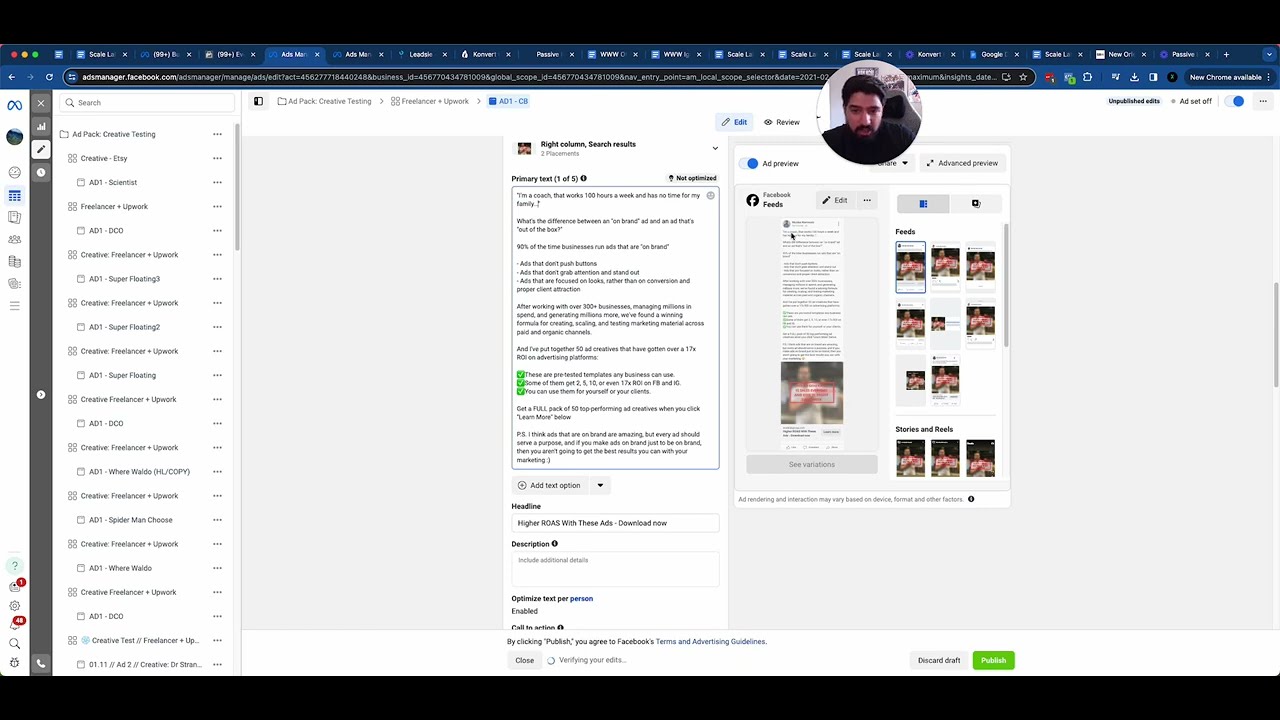
If you're dealing with bad leads, not the best quality leads, or not as many sales as you want from your paid advertising, I want to give you a really simple method to fix that problem and make sure it doesn't happen again. So overall, first things first, I want to explain really how Facebook's algorithm and most paid advertising platforms' algorithms work when it comes to finding you the right person. So whether you're looking for a buyer for an e-commerce product, or whether you're looking for a really high quality lead to invest in something, You gotta make sure you're feeding Facebook that data and presenting your offer in the right way. And Facebook doesn't really know what's what until you give it the data and start to train it just like you would with AI or anything else. And Facebook really functions— a lot of paid platforms, I'll mention Facebook cuz that's what I'm looking at, but this does apply to basically every single other social media platform. A lot of paid advertising runs off of something called initial conditions. So let's say that you're running an ad for either a purchase for an e-commerce product or some kind of coaching program or lead generation. The first person, the first few people that click on the ad and then actually buy it, become a lead, or even just click on it, Facebook is using that data to determine who it goes after next. Facebook almost makes a mini lookalike audience for the first few people that click on the ad. If you're telling Facebook, hey, I want to lead, it finds that first lead, or it finds that click, Facebook's like, boom, we got you that lead, we're gonna go find other people just like that first person that clicked to continue to become your leads, because it seems like we have something that works. Now, that's both a good thing and a really, really bad thing. In some cases, it's a double-edged sword. So what can happen is, let's say you post an ad, you get that lead, and the first lead isn't really good quality for you, they're just not the best fit. They either don't buy the product or they become a lead, but they're just not a good quality lead for your program. Well, Facebook doesn't know any better. And it's just going to go find more people like that first one, because it thinks, hey, I just found a lead. This is great. And that's where initial conditions can be really bad, because it's going to go and continue down that rabbit hole of finding the wrong people. Conversely, it could happen in a much better way, which how we would hope, is the first few people that click are perfect fits. They become a lead, they're great fits, and Facebook will keep finding the right kind of person for you. Now, once again, whether this is for— you're just selling like a t-shirt online, or if you're just doing lead generation or a coaching program, like booking calls or something like that, the same thing can happen. So what are the best ways to kind of mitigate this and control the algorithm to ensure that it's actually going after the right people? Well, what I wanna show you is a couple of different ways that you can actually do this. And it all really comes down to the first line of your copy. So your lead-in and your headline and your creative, more so than the audience that you're targeting, the actual ad content has a lot to do with how successful your ad is at the end of the day and the kind of people that it's actually gonna be attracting. So a lot of people will tend to go to the audience section, exclude a ton of different options and include a lot of different options as well. I see a lot of people doing things like including different income brackets, including different zip codes where high incomes are held. And what that really does is just, it really restricts Facebook's and all the paid advertising platforms' algorithms, and it doesn't really give them the legs to run so it can find the right people for your offer. Ideally, how you want to start is a great way to test it. Is keep the audience fairly broad. So like in this case, there's obviously a couple of interests in here, but I've got an audience size of 7 to 8 million. I'd say if anything, that could be a little bit too large. I'd say if when you're starting off, if you could get an audience size of around 2 to 3 million, that's a pretty good targeted and focused audience. But sometimes I'd even recommend more. When I launch my ads, I like to do a few different variations. I like to do a really, really broad one. So something of around like 3 million, 4 million plus. I'll do one that's a little bit more focused. So around 1 to 3 million, and then I'll do something that's a lot more targeted. So that's around like a million people. You want to have a decent amount of people and legs for Facebook to move, or else you're just gonna really rack it up, ratchet up your ad costs, and you're not gonna get the best results or the best optimization. So that's the first thing. Next thing is you really gotta focus on the first 2 lines that people can read in the ad. The headline and the image. The perfect kind of scenario here, and the goal of this first 2 lines of copy is to attract the right person in and push the wrong person away. That's exactly the kind of goal that you want to have with your copy. And this ad, although it did really, really well, it actually doesn't do a great job at doing that. And it could do a lot better. So let's say for example, I'm looking for coaches and consultants. I'd probably lead this off with some kind of shocking statistic or something that really only talks to coaches and consultants, right? So you could say something like, I'm a coach that works 100 hours a week and has no time for my family, right? So obviously this, this offer is, this copy is not relevant to the offer that is in this ad that was being ran. But you can kind of see how if someone is a coach and this is the first line that they see in your copy, they're gonna latch onto that, especially if they're having that kind of a problem. Now, if they're not a coach and they see this, most cases they're gonna keep scrolling or they're not gonna click. I'm like, this isn't for me. I'm not a coach. That's exactly the kind of effect that you want your advertising to have is to pull in the right people, push away the wrong people. And it should be very, very clear. The same thing can be done in both the creative. So you could have the same thing. As well as in the headline. Make sure you're talking to the right person and make sure you're pushing the wrong person away. I think a lot of people, like I said, focus on the audience. They focus on really trying to test super cool, unique audiences when in reality, if you focus on testing this hook, this lead-in more than anything else, not only are you gonna attract the right person, but you'll actually get better results from it as well. So try that out next time you do your ads. Let me know how it goes. If you want more free resources, there's a ton of resources including a KPI cheat sheet below. Get access to it. Let me know if you enjoy it. If you have any questions, let me know and I'll see you in the next video.