How I'm Setting Up Facebook Ad Campaigns In 2026 (New Meta Algorithm Update)
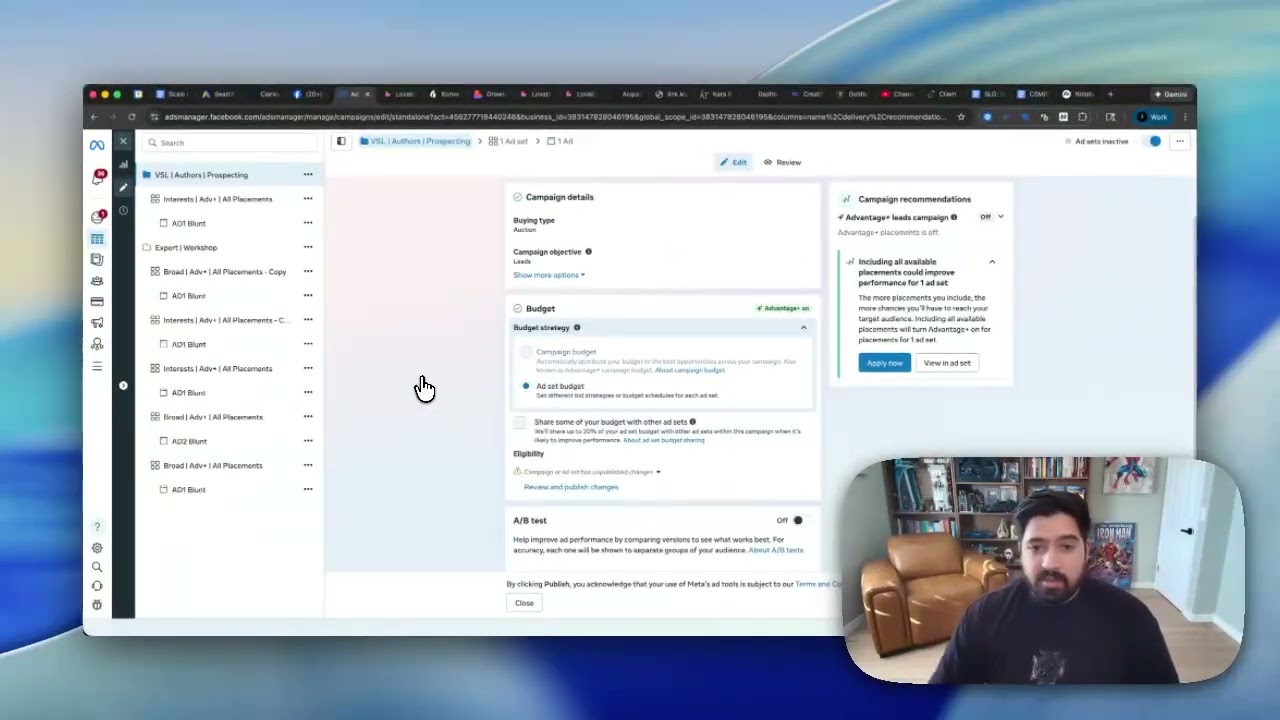
Nicolas Korvessis breaks down Meta's 2025 Andromeda algorithm update and how to structure Facebook ad campaigns for 2026. The shift moves away from interest stacking toward broad targeting and AI-driven delivery, with a focus on generating 50+ weekly creatives and letting Meta's algorithm find winners automatically. He walks through a Claude-based system that generates dozens of ad variations from a single prompt.
Chapters
Meta's Andromeda updates have changed a lot of things for a lot of advertisers, and I think there's a lot of misinformation out there and almost a lot of hype around what you should be doing, what you shouldn't be doing. And the truth becomes just focus on the fundamentals. If you focus on the basics and the fundamentals, you will see success from your advertising campaigns and from your marketing. And in this video, I want to try to simplify everything a little bit more into 4 key points. First, I want to go over the algorithm shift. Then I want to go over campaign structures. I want to go over testing methodologies, as well as content and implementation. So let's just get right into it. So first things first, Meta's Andromeda algorithm updates. This happened June, July, I believe, of 2025. But there's 3 really big important things to understand. And the industry was going this way anyway. And the Andromeda updates really just solidified it a little bit more. There's 3 big things. One, broad targeting. Targeting, and I've been saying this for a really long time now, but targeting comes from the messaging of your ad. It does not necessarily come from the targeting of your audiences. So even if you put in 20 to 40, Facebook's gonna go outside of that range if it thinks it can find someone that is better suited or a better fit for based on what you are saying in your ad. So broad targeting is really the big thing here. AI delivery optimization, meaning that the more inputs you give Facebook and the AI of Facebook, the better it's going to be able to take that content and deliver it and optimize it in a way that delivers better results. And we're getting towards the end of interest stacking. However, I will say that interest stacking and some audience targeting options are still very, very viable. They should not be the root of your strategy. However, I have seen really good results by still using interest stacking. If you have a stack of good creatives to go along with it. So you shouldn't throw it out of the window because a lot of people do. And even with some of those targeting things, it can give Facebook's algorithm new initial conditions. And I'll show you exactly what I mean by that. So let's say we were running an ad campaign and you had a ton of creative you were testing, and you've heard a lot of things like even what I'm just saying, where the targeting is more so to do with what you're saying in the ad. than what you're actually putting in the targeting. That's great. But let's say you find an ad that's winning and doing really well, and you want to find something quick and easy to test. One of the easiest things you really can do is just test a very simple interest stack. It doesn't need to be anything crazy, and it can actually be through what I like to call like a roundabout method of targeting. So say you're trying to target business owners or entrepreneurs. I think one of the easiest things you can do here is think about health and lifestyle things, because a lot of business owners, And entrepreneurs are kind of apt to want to have a healthier and better lifestyle on top of what they're doing. So you can look at different gyms like Lifetime Fitness, Equinox Fitness, Orange Theory, even like lots of different stuff like that is really easy to target. And Whole Foods, different shopping places, Trader Joe's, Fresh Market, all that kind of good stuff. These serve as really good, broad, wide open targeting that gives the Facebook algorithm a lot of free room and still allows your creatives to do a lot of the retargeting and and a lot of that targeting period. So that's the first thing I wanted to cover. Next thing is campaign structures. So there's 3 really important things here again that I wanna touch on. And first is new philosophy for campaigns. A lot of it is giving Facebook as many inputs as you can and letting it decide what to do with them. It's kind of the same where if you're chatting with ChatGPT or Claude or anything like that, the better the input you give, the better the output will be. If you give very simple one-line vague inputs, the output is not gonna be nearly as good versus if you gave it more to go off of. And so that leads right into these last 2 points, which is flexible creative toggling, and then single ad unit loading. So all this looks like in practice, and there's a few different ways you can do this. First, you can still continue to test things where you have one campaign, one ad set, and one ad per ad set. That can be interesting, but what I would recommend and what I would offer is when you're launching new campaigns, to actually have one campaign where its sole purpose is just finding winners. You should be making 50 or more ads per week inside of your business. If you're not, you're gonna be falling behind. With that, that's a lot of ads to test, and you don't wanna spend $10 per day on 50 creatives. It's gonna stack up pretty quickly. So instead, what you could do is you can have your main campaign, you can have your one, maybe 2 ad sets, maybe one's like a lookalike audience, one could be a very broad, wide open audience, And maybe one is a little bit more of a warm audience as well. And you could basically chunk out those 50 creatives into those 3 sections. So say you did about 15 creatives per ad set. And then what you could do is you could set a campaign budget optimization where you're spending even $50 to $100 a day. Sure, we're not going to get spend across every single creative, but those creatives that are winners are going to start to rise to the top and you're going to be able to optimize and tweak them from there. So So that's kind of what your campaign structures could look like at a higher level. I kind of touched on this a little bit, but with testing methodologies, you really want to focus on multiple creative assets and not doing as much manual A/B testing with like one ad per ad set here, and then one ad per ad set here. Let Facebook almost automate your ad testing where you just load it in the Ads Manager, broad, you have organized in a very specific testing campaign. And then from there, what you can do is you can actually peel off those winners And put them into more of like a winning CBO campaign. So that's something else there. Lastly, content and implementation. So I wanna show you really quick something that we've built inside of Claude that's really gonna help you achieve all these 3 points, and it's really easy to make. So pull this over here and open this up real quick. So what we've done inside of Claude is we've made a project, which is pretty much the same thing as making a custom GPT. In ChatGPT. We gave it some memory, we gave it some instructions, and we gave it a lot of winning ads and a process around actually making new ad creatives. Now what this actually looks like in process is we've gone in here and say, hey, I need some new ad creatives. It'll then ask you, okay, what's your avatar and awareness? What's the offer? Who's the target? What's the awareness level? You kind of give it some more information. Once again, the more info you give, the better. It'll go through what's the core mechanism, what's your big result, what are your pain points. I gave it a winning ad and then I gave it quite a lot of information around what the offer is for. And then it goes through and it mines winners and makes 50 hooks. And this is very, this is like right from Alex Hormozi's style of making ad creatives where we'll have 50 hooks. I think 5 bodies or 4 meats. No, 5 bodies, 5 meats, same difference. 5 bodies. And then from there it'll make, it'll remix those 15 hooks, the top 15 hooks in the 5 meats. And so we have 15 hooks, 3 ads per hook. We're left with about 45 creatives, right? So this is exactly how we've been able to automate this product, not fully automate it, but with some really good research and with us being the middleman in between AI and saying, hey, This is what's working. This is what's doing well. Here's some more research that I did. Can you please design this into a really strong creative process? It does this all for you. So super interesting, truly solid. And this is exactly how we've been looking at structuring our ad creatives and our ad processes in 2026 with Andromeda. Creative is the game. It's super important. It doesn't mean that you should forget about targeting. I think it's still a very viable option. You should let Facebook do a lot of the picking for you, and you should really start to almost automate your testing. And as long as you're pumping out new ad creatives and you're doing it in a consistent way that's hitting multiple points of the market, that's super important. You're going to win in 2026 with your paid ads. I hope you enjoyed this video. If you did, be sure to drop a like and subscribe for more. Click below for more free resources, and I'll see you in the next one.










