What Paid Ads Strategy Is Best?
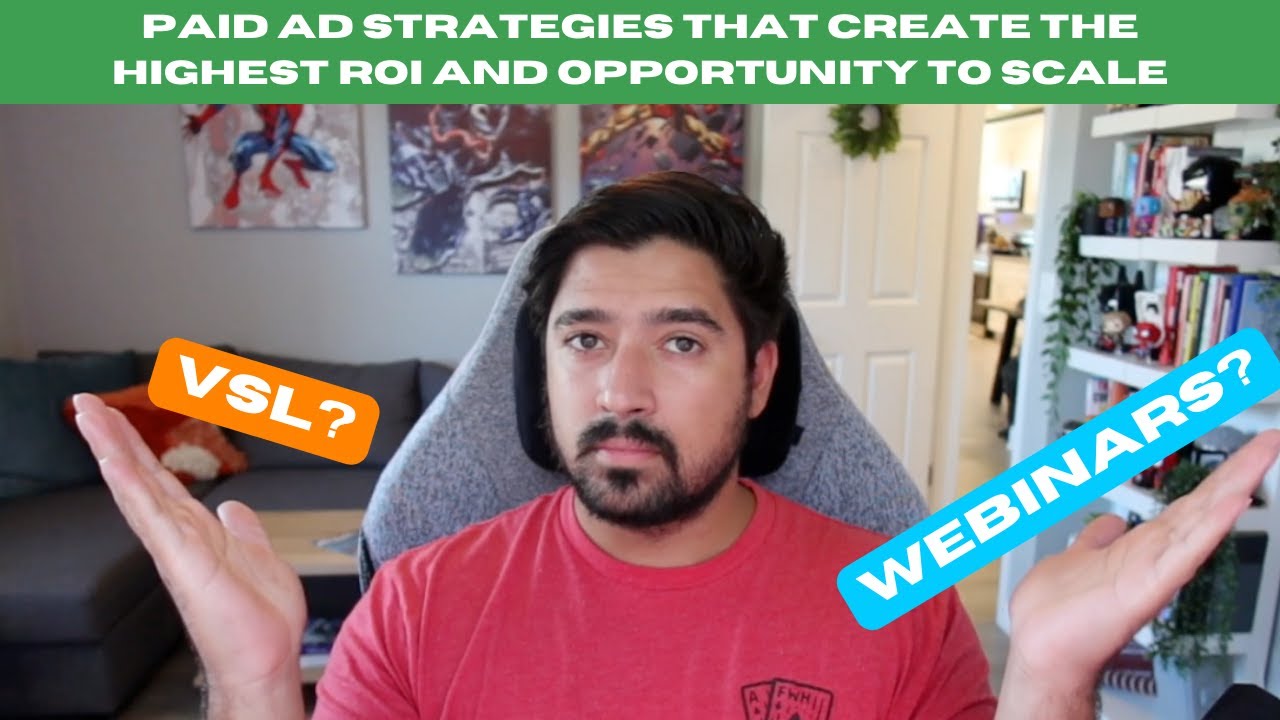
In this instructional video, Nicolas Korvessis walks viewers through three proven paid‑ad funnel strategies that can be applied across major ad platforms (Facebook, Instagram, YouTube, TikTok, Google). He first outlines a Video Sales Letter (VSL) funnel, detailing the ad‑to‑opt‑in page, the VSL page, calendar booking flow, and thank‑you page, emphasizing value, transparency, and a limited‑question calendar form. He then describes a workshop/webinar funnel, covering a simple signup page, optional VIP upgrade, thank‑you page, and the importance of outbound follow‑up on opt‑ins. Finally, he explains a low‑barrier (low‑ticket) offer funnel, focusing on a long‑form sales page, order form, product stack (main product, bump, multiple upsells), and pricing guidelines. Throughout, he provides concrete KPI targets (e.g., $20‑or‑less opt‑in cost, $150‑or‑less booked‑call cost, 2% conversion on the $37 core offer, 20% on the first upsell), recommended price points ($37‑$97 main product, $27 bump, $147‑$297 upsells), and scaling advice (master one ad platform then expand, test, iterate, and expect early losses for data). He encourages viewers to use the cheat‑sheet in the description, join his community, and reach out via Instagram or comments for deeper help.
Chapters
In this video, I want to give you an in-depth overview of the paid ad strategies that— this applies to a lot of different ad platforms, and this is a little bit of a different format video to what I usually do, but I want to kind of give you a behind-the-scenes look to some of the strategies that I've worked on with my own company and plenty of other companies that we've partnered with. To help scale these strategies from something that just generates leads and generates some profits to something that really becomes a 6 and 7-figure generating asset for their business. And I think the first thing I wanna touch on is what strategy do I do, right? And I'm gonna kind of give a high-level overview. I wanna talk about a VSL strategy.
I wanna talk about a workshop strategy. It's like a webinar funnel.
I want to talk about a low barrier offer, and then I also want to talk about something that is constantly kind of bringing people into your world. Now, people will basically ask the question for all of these, all right, well, which one am I supposed to go with? The truth is all of them are viable options and you should be doing all of them. This is the same kind of way that it goes when people are thinking, well, what ad platform do I advertise with? Should I do Facebook? Should I do Instagram? Should I do YouTube, TikTok, um, Google? And the truth is all of them are great options and you should work up to being able to do all of those platforms because one is none. And if you're just doing one of them, you're kind of setting yourself up to lose in the long term. So make sure you have multiple. Um, but the way I like to think about it is master one of them and get one of them to work really, really well for you and then expand to the other ones and get all those other ones to work well for you also. So let's break each one of these down one by one. I'll kind of talk about the structure, what they should look like, as well as the KPIs. If you want more detailed examples of these, just go below in the description, reach out to me in the ways that I tell you to reach out to me. You can also get the cheat sheet for the KPIs for this and how to influence and improve those KPIs and those key metrics below in the description as well. So check that out. Let's go ahead and start off with the VSL funnel. So let me get rid of all this stuff real quick. And let's get started.
So VSL funnel, video sales letter, the flow for this one is you're going to have your ad. And that ad is going to send them to a page like this, where you're going to get them to opt in.
Now ideally, there's going to be some kind of graphic or image to the thing that you're going to be giving them for opting in. And the key here is that you really do want to be giving value.
And on top of that, you really want to be transparent. That's super important.
Because of what's going to happen on the next page when you ask them to book a call with you. And that's really what this whole VSL funnel is about. It's all about getting a call to be booked, right? So opt in right here, you're gonna put a little bit of information, right? Right?
Then you're gonna have a button for them to be able to sign up and go with you. And then down below here, you probably want to put some testimonials or social proof. And it should kind of be laid out like that.
That's really what I've seen work best is this opt-in page where they can opt in. You want to make sure you are actually giving value, you want to make sure you're actually being transparent. What I mean by being transparent is you should have something on this page that literally says, hey, You're gonna be able to opt in, get this free thing, and then you'll have a chance to actually book a call with one of our team members where we can show you how you can implement this exact same thing for your business and your personal situation. Great way to structure that. Make sure you're being transparent from the ad to the funnel to the whole process. It's super important to make sure you get the best results you can. Next page, once they opt in, is they'll go to the actual VSL page. And how this one's gonna be structured is you'll have a main headline, you'll have a video. I'd make sure that this video is anywhere from 5 to 10 minutes long. You can have it longer if you'd like to. It's just completely up to you on how you'd like to structure this thing. But you're gonna have 5 to 10 minutes long. Once again, give value. And once again, be transparent. Tell them why you're getting on the call with them, why they should book a call, what's gonna be the outcome of that call, because they'll appreciate you so much more for doing that. Usually I like to have like a little bit of value bullets right below, and then you'll finally have your calendar where they can book a call with you. The other thing with the calendar is I'd make sure to limit this thing anywhere from 6 to 12 questions, and you want to start with the least invasive question first and the most invasive question last. So if you're doing something like you're trying to qualify people and you're asking how much money they make in their business, Ask that question last, and you want to end with name, email, phone number. So it should be easy question first, like what kind of business do you have? People will answer that question all day. Name, email, phone number— those should be the last 3 questions, and anything in between, least invasive to most invasive.
So just to kind of visually draw that out, at least you'll have an easy question, go down the line And then you'll have basically least invasive to most invasive. And then you'll end it with name, email, and phone number. And that's really the best way to kind of structure that via cell funnel.
And then after they book the call, you're going to send them to the thank you page. And you're good. Now some key KPIs for this very, very broad. Here, opt-ins.
I'd aim—
let's use a different color. I'd aim to get opt-ins at $20 or less. I'd aim to get booked calls at $150 or less. If you're doing that, you're in pretty good shape, give or take a little bit. If you're paying a little bit more for the opt-in or a little bit less for the call or vice versa, that is totally fine. You wanna make the math work for you. If you're doing a funnel like this, for the margins to make sense, I'd make sure that you're selling a product of at least around 3 grand. on the backend. Um, because that's really what's gonna make it work best for you. So that's the VSL funnel. That's the first thing that I've seen work really, really well. We've scaled companies with this to multi-seven figures just with a VSL funnel. I think it's something that everyone should have, but put your own spin on it. Be unique. I've done tons of these and a lot of people wanna do the same thing. I love to structure these as a quiz, as an outline, as a, um, game plan session, as a demo call. Be unique in how you're framing this whole thing. Because people really appreciate you for it. So that's that one, let's keep moving. Next one is a workshop funnel. So this is something really great to do once you've kind of dialed in that VSL funnel or you have something that's working. It's a great one-to-many structure, and let me show you how that works.
So you wanna have your ad, you send people to a really simple signup page, You'll have maybe a picture, maybe some details, maybe some value stack of what they're going to get. And then you'll have a button where they can sign up and go for this webinar.
Then from there, you're going to have a second page, which is actually going to be an upgrade page. And this is optional, but I've seen this work really well. They can basically— you're going to have a little video here, and they're going to be able to upgrade their ticket for $97. To have a VIP experience. And what that'll give them is it'll give them extra resources, extra time on the workshop to ask more questions, and that'll be good to go. After that point, you're then gonna send them to the thank you page, make sure that you've got emails set up and all that good stuff. Pretty simple. Now, the key here to making this work even better is at this signup stage, if you have a team, which I'd recommend doing it, Have your team outbound all opt-ins. So that means you should get on the phone, call every single person that's opting in, and try to book a call with them and try to get them to, you know, get on a call with you. Give them value once again, be transparent about everything, really try to get them a quick win before this webinar even happens or workshop. And same thing here, be unique, be transparent, and frame it in different ways, right? Instead of a webinar, call it a workshop. Call it a live event, something like that. I would aim to do this thing live, especially the first couple of times that you do it, because you need to dial in the process. You need to make sure it works. This is something where we've partnered up with people and we've helped them run ads and structure the whole thing for it in the backend and everything. They will spend $30,000 a month and 5 to 6 times their money. So they're 6x-ing $30,000, which is a lot of money. It works very, very well, and it is a great, great way to grow your business one-to-many, especially when you have something work— working like a VSL funnel like this. Now, KPIs for this one, you're going to be looking at around $20 or so again for someone to sign up and opt in. And I would expect this VIP one here to just be extra. Anything you get should be extra. I wouldn't even expect anything It's a— I wouldn't expect it to cover your costs. Even if no one takes it, it's not the end of the world. You just want to have it there as an option. If you're driving enough traffic to it, people will take it. And I would try to get at least 200 people on this webinar, right? So if you're going to want to get 200 people, I would try to get 600 or so signups. So, you know, it could be a lot of spending at around 12 grand if you're gonna be getting $20 opt-ins, um, to get 200 people to show up. That's definitely being a little bit conservative. And that's why I said this is a great strategy to have in place once you have something else like a VSL funnel working. Not as much cash is used here. You can test it, however, and start off with a smaller webinar of let's say 50 people to 100 people. And then you don't really need to spend nearly as much, right? If you're trying to get 100 people on here, give or take anywhere between there, you're only gonna need to spend $1,000, which isn't bad. And on top of that, you're building your email list, which is very, very important. Now, last but definitely not least, as far as for the primary strategies, that's gonna be a low barrier offer funnel. This is something that I love to build for a lot of people, but it takes time. Just like anything, it's gonna take a little bit of time for you to test, optimize, and figure out what product works. Let me give you the breakdown to kind of how to structure this. But just very broadly is the page itself. You're just gonna want a long-form sales page and a really simple order form.
So you're gonna have your sales page here. You're gonna have a big headline, a picture, and lots of copy, lots of storytelling, lots of pictures.
Tell a story here. You don't necessarily need to have a video, but this is your sales page. What you'll do from there is then you'll send people to an order form. Excuse my chicken scratch. Where you're going to value stack right here, and you're going to have the order form, the buy button, and you also should have testimonials, money-back guarantee, and any more information that you can provide. So this is really the best way to structure this page. Very simple. The most important part of this whole process is actually gonna be the pricing and how you structure it. Now, if your offer is really, really good, you can get away with different pricing structures. However, if you're not sure, it's gonna take testing, but make sure that you price your products in this way. And if it feels uncomfortable for you to do this, that's when you know it's something that's gonna work. If you're like, oh my gosh, I'm giving all this away for too little money, this just doesn't make sense. You know you got the right one, right? My last piece of advice before I go into pricing, because we've done at least 15 to 20 of these and we've scaled them 6 figures, 7 figures. I've even done one for myself where the first month you will lose money and then moving forward you start to make money from there. Expect that it is all part of the process. You're paying for data, you're paying to learn, and you're paying to figure out what offer do people really want. Because at the end of the day, when this is all said and done, you're literally gonna have something that's generating you sales on autopilot without ever talking to someone. You'll go to sleep, people will pay money for you to get access to your course. You wake up, people will be paying money. It's the best thing ever. It's super, super cool. And the scalability on this is awesome because no team is involved. So price points, here's kind of what you wanna lay everything out as.
So, you're gonna wanna have your main product. You're gonna wanna have a secondary product, which is going to be a bump product. Whoops. So, your bump product. You're gonna wanna have an upsell 1, one-time order, one-time offer 1. You're gonna wanna have upsell 2. And you're gonna wanna have an upsell 3.
So at the end of the day, you're gonna need 1, 2, 3, 4, 5 products, give or take. At a bare minimum, if you're gonna launch this funnel, you must have these 3 products. You have to make that happen. You gotta do that because where you make the money is on this first upsell. You have to have these 3 products up when you launch. Now let's talk about pricing real quick. So for the main product, I would price this anywhere from $37 to $97. I personally have seen the most success with $37 and $47 price points. So if you price it at $97 and you tell me, oh my gosh, it's not working, I'd probably tell you the first thing you should do is go put it to $37. That's where I would start it. Start it at $37. And once again, you don't want to give them a rinky-dink course. Give them something full-fledged. Make it a no-brainer for these people. You need to build the authority and you need to gain the trust. So if you can make The, the decision, a no-brainer as possible. That's what you have to do here. It should be uncomfortable. It's gotta be uncomfortable for this first product. This is the thing that gets them in the door right here. So you need to wow them. You need to blow their minds. You need to give them a good experience. You've gotta price it at $37. And once again, make it uncomfortable for yourself. If you're making this course, you're thinking about making one, it should be stupid the amount of value you're giving. And before I keep going, before you sell this thing, or sorry, before you build this product, if you don't have one yet, sell it first. Start running ads for it. You know, in your head, think of the product that you'd wanna sell. Start testing it with your email list. Start seeing if people are interested or they wanna join the waitlist, or even if they buy it. And if they do, you can refund it to them and say, hey, you know, this product's not ready, but I can put you on a waitlist, right? You can be transparent with them and tell them that. Just see See if people are interested or would buy it, because I've seen so many times where people are like building and blood, sweat, and tears over a product for months, and then they try to run ads to it and no one wants it. And then they put all this time and effort in and it was just not worth it. So make sure you sell it before you build it. Now anyway, um, so $37 to $97, I'd go to $37. For the bump product, I'd price that around $27. Upsell 1, I'd price it anywhere from $147 to $197. Upsell 2, I'd price it at $197. And upsell 3, I would price at $297. Those are kind of the main pricing structures. As far as some KPIs here, you'd ideally want your sales page all in all— so like this whole process right here—
I'd probably aim to get it at least to convert at a 2% conversion rate.
On cold traffic. You're gonna want about a 20% conversion rate minimum on this first upsell. Everything else is gravy. You know, if you're getting like 10% here and 5% here, that's not bad. But this is really the key right here: 2% conversion rate on this main $37 product, and then a 20% conversion rate on this $147 product. And that's basically everything here on the low-ticket offer. These are 3 strategies that I've seen work ridiculously well time and time again. And I just wanted to make this video to give an overview, to kind of draw the line and say, hey, these strategies I know work. This is the outline. If you want to start messing with them and creating them, I think it's a great place to start. And I shared some KPIs along with it so you can track your success and make sure you're doing well. We've worked with over 200 businesses. We know what KPIs work. We've managed tons of spend. So these KPIs have been proven to work time and time again. So if you have any questions, just go to the description, join the group, or ask questions through Instagram or comments on YouTube. I'll answer them when I get time. And if you need any other free resources, there's a ton in the description as well. So check those out. If you enjoyed this, if you want me to go deeper on any of these, let me know, because I know this was a high-level overview, but it's very helpful for a lot of people. I know it is. So, um, if you want me to go through more stuff, I'm glad to. Just let me know. Like and subscribe. I'll see you guys in the next video. And I'm filming this on 4th of July, so if you're watching this on 4th of July, happy 4th of July, and I'll see you guys in the next video.










