Fair Trade Event Blockchain and Machine Learning for Sustainability
Professor Nikhil Varma proposes using blockchain and machine learning to fix fair trade supply chains. The system would automate certification, forecast fair prices with ML, and cut costs through smart contracts on a decentralized network with an identity gateway.
Chapters
I know there's a lot of students from my class too. But this is an event open to public, the last event of Fair Trade Week. And we are lucky to have Professor Nikhil Varma of the professor of Management from the business school presenting about blockchain and machine learning for sustainable development, transforming fair trade. So this is about fair trade, but going beyond fair trade. So thank you very much for coming.
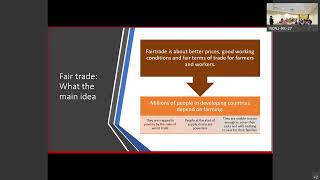
And we're looking forward to hearing you. Thank you so much. Thank you. So just before I get started, I just want to kind of give you some background about me. I'm a professor of management and I teach how to make companies profitable because the definition of company used to be profitable. And when I started doing my research, that's when I realized that, you know, besides being profitable, you want to stay profitable forever. And that's when I started looking at this new word, not new for me, sustainable. And I started looking at sustainability to an extent that now I'm fully committed to the sustainable program here. It has just happened that, you know, everything that I teach nowadays is not about only making money, but is about how we can make money but not harm others. How can we stay, how can we make sure that, you know, there are different implications of just focusing on making money? Yeah. So yes, I'm a business school professor, kind of an unusual setup. Generally we talk about only money, but you know, in business school also now we've started discussing things as how can we make sure that this company is sustainable. It's just not about making those companies look nice in front of their investors, that they care for you. Or it's just like more of a photo op kind of a thing, but a real initiative. Now my background is in computer science and I was in the industry for 15 years. I still amended with a lot of startups. And one thing that I always wanted to know with my training was how can I use technology for the good, for not just, you know, making an application which runs on top of your communication system and maybe takes your data and monetizes it and, you know, sells it to a marketing company. But how can I use technology to help people? And when I, you know, when I read about fair trade, I got very interested with the fair trade movement. You know, started looking at, specifically looking at stores and seeing things whether they bought fair trade or not. Believe it or not, there is, I live in Edison and there is a Indian grocery store, a pretty big one there. And now they have started marking fair trade, you know, sourced by fair trade on all their products. I don't know the history of whether that is actually fair trade or it is done as a giving. But it makes me feel good every time I buy fair trade as a consumer because I understand what fair trade is. Many people don't, I know, miss the meaning of fair trade. They just think of fair trade or something nice. Something nice or no, maybe we did something good here. Okay, so what I am going to quickly do today is I am going to. I'm sorry, I'm standing a little bit. You're able to see this, right? You can see there also. So what I'm going to do today is, of course, I'm pretty sure that you must have heard about fair trade. I'm going to show you a few things about, you know, the fair trade principles and how fair trade is practiced and so on and so forth. But I want to show you where fair trade fails and more importantly, why fair trade fails. And when I show you the where and why, that is where I bring in the opportunity of technology coming in to change things for us. We still want to stay human. I'm not saying technology will replace us. I'm just saying these are the areas where we can use technology building from systems that are around us to be able to make our lives better. And in this specific case, that's the key idea here. Okay, so just don't get too worried about the terms. But I'm pretty sure these are normal terms. You must be, Must have heard of the word supply chain. Yeah, we are now. We are hearing a lot of supply chain. We are having issues with supply chain. We don't have things in our shell. What's going on, all kinds of stuff. Right. So I'm just going to briefly define to you what a supply chain is and what is a sustainable supply chain. Then talk about a fair trade implementation models. How are fair trade. How is fair trade implemented? Because that is my area of expertise and interest. And what are the problems that we face in that area? Okay. And then we look at technology and how, you know, I have a. It's, it's a work in progress right now, I must admit it is not a finished product. Besides being a professor, I'm an entrepreneur also and I intend to commercialize this product to be able to help people get fair trade certified. So that is just the overarching thing. Just when we talk about supply chain, you know, it's, it's. Many people kind of misunderstand this. Just the name is. Can be sometimes confusing when somebody says supply chain. Oh, supply chain is everything that supplies Things to me. But supply chain, actually, the right word for supply chain should be of value chain. Okay, so what is the value chain? All the way from the raw materials, all the way from the farmers, raw material to the suppliers who get the raw materials to the importers and exporters, to the distributors, to. To the retailer and 10 to the end consumer. That whole path is your supply chain. Okay, so this is how, this is what we teach in business school. How can we make supply chain better? How can supply chain have some kind of competitive benefits? Okay, so what we usually look at is we have some kind of a process which is called extraction. Okay? You extract. Extract could be also growing a produce. Then you transform. You transform into something which can be consumed. Then you procure, you buy, you. You make it into some format and then you deliver. Okay, These are different steps. And the things that we do here, how do we get competitive advantage? Because at the end of the day, companies are there in a marketplace. There are many companies there, right? And if everybody is doing the same thing, how do we differentiate? How do we make sure that a company is going to be profitable? So to be able to get the competitive advantage, you have to have some innovative business models. Okay. Fair trade is one of the innovative business models, by the way. You could have some kind of value creation process. How can I create value? Now that value creation can be changing the lives of the people who are there. Okay. And how can I bring in efficiency? How can I grow? How can I do these things good so that it is not very expensive, it's not cost effective? Yeah. So these are the idea, this is the idea of the traditional supply chain. When we talk about sustainability in supply chain, of course we study supply chain. Okay? But then we bring in the sustainability criteria. We want to make sure that whatever we do in this supply chain is sustainable. Now, there are different dimensions of looking at this. People have looked at it in a multitude of ways. Okay, this is a research paper which was published which talked about different approaches to sustainability in supply chain. There are some people who follow the environmental aspect, the environmental performance perspective of the supply chains. There are some which look at the social performance. There are some which look at the economic performance. And then there are some papers which talk about a triple bottom line, which is essentially is following these three different parameters. But how do we. What are the different focus areas that people have looked at? Okay. By the way, the numbers that you see there is the papers, the article number that are cited by this paper. And if any one of you is interested, please email Me, I can send you this paper. Very, very interesting categorization of sustainable supply chain. Okay. How do we go about making a supply chain sustainable? What are the different things that we need to look at? Yeah, moving on. Okay. When we look at a fair trade. Yeah. As a matter of fact, try to use this works. When we look at fair trade. Okay. What? All things the World Fair Trade Organization prescribed. There are 10 principles that they talk about, okay. Opportunities for disadvantages, Disadvantaged producers, Transparency and accountability. Fair trade practices, Fair payment, no child labor, no forced labor, no discrimination. Gender equality. Seven Good working conditions, Capacity building. Promote fair trade and respect the environment. So these are some of the principles which are, which anybody who wants to practice fair trade kind of has to follow in some form or the other. Now this is a more generic, it's like, you know, like a, not exactly a rule book, but something like a prescription. You have to make sure that these things are taken care of. Whenever we talk fair trade. Yeah. Now moving on from here, when we look at fair trade and free trade, okay, most people talk about let's make trade free now what happens when we have free trade? How many of you know this company, Walmart? I'll be shocked if you say no. Everybody knows Walmart, right? One of the problems which Walmart has faced, of course Walmart is bringing in a lot of sustainable measures and nowhere we need to demean the company. But one of the problems which a company like Walmart has with their suppliers who are supplying goods to them is they are Walmart and you are a small supplier, right? So Walmart does not ask them for the price. Walmart tells them that if you want to sell with us, this is the price that we will pay you. End of story. Whether it is fair or not fair, we don't know. This is a free market, this is a free world. This is what we are going to charge you. Too bad. If you can't sell it for that price, they're not going to buy things from you. Now what happens in that kind of a scenario is the person who is most powerful controls the system. As a consumer, you go to Walmart, you read that message on a daily basis. Low price every day, Excellent. I'm going to get things for a low price, why not, right? I mean, it's my hard earned money, why not? But then if you get to know that, you know that whatever thing that you bought was actually they were able to get a low price because they sourced it from a country which had child labor and where people were paid 20 cents an hour. How would you feel about it? Now? It's not only about feeling at some point of time. This imbalance creates lot of animosity, lot of anger, lot of bad things in the world. Right now if we are fair to those people, there is some person in the middle who is taking the profit. There is Walmart, who is strong here, who's taking the profit. Right. That is the problem with free trade. I mean, free trade in many ways is a good thing. But the problem is when there is a strong player and there is a weak player in the system, the weak player is always going to be the leader. Now weak as in, I'm talking about the ability to kind of have any kind of a negotiation. Yeah, but when you have a fair trade system, you have a system where you pay the person who is doing work based on, based on the amount of work they're doing. Right. A farmer in a fair trade system is paid fairly for the things that they grow. Right. So the main idea of fair trade when we look at fair trade is for better price, good working conditions and fair drums of trade for farmers and workers. Very, very, very. Sounds like, you know, maybe this is a good aspiration, but this, there are action items that, that clearly defines that these things should be done. When we're talking about fair trade, we have to make sure we give them, at least try to give them a price better than what they are getting today. Now, that does not necessarily mean that we are going to sell this price product as a premium. Okay, I will give you a few scenarios where you can actually gain competitive advantage by fair trade. But, but let's kind of assume that you are in a market where you have two products. One product which is sourced by a free market where there is one person who has maximum cloud or maximum power, is able to make a lot of money while the weak layers are all losing out. And on the other hand, you have a place where you have fair trade kind of a system where people are paid fairly for the work. That. Yep. So over here what we also see is developing countries. Most of the developing countries are agrarian. Okay. They, they depend on farm. Most of the developed countries, although their farmland, they have farmlands, lots of farmlands, but they are not really in nature. They have moved to something which is called a service economy. Okay. So what is happening is that these countries will stay poor because they don't have the negotiating power. Their currencies would always be very weak. You say, ah, you can get a person to work in that country for 20 cents an hour and feel Very good about it is that you know the cost of living in that country. But when you look at the purchasing power parity, the amount of buying power that that person has, the quality of life that the person has, the person falls sick, will they be able to afford that? Here you will see they don't get the basic needs while they are working much harder than us. Why is that so? Right? And that is what fair trade aims to achieve. And there are several ways. Like this is a fair trade labeling organization. What they try to do is they do a trading partnership based on dialogue, transparency and respect, you know, which essentially tries to bring in more equity in international trade. Because international trade is where most of these problems happen. Okay? And if these things, those 10 principles that I showed you, these are operationalized by these companies to be able to, to be able to certify certain goods to be fair trade. Okay, just an example, a simple example. Okay, this is slightly old data from Canadian B Broadcasting Corporation. With the price, with the, with the share, okay? With the percentage distribution rather of conventional coffee and fed rate coffee. Now if you look at the blue bars, you see that the roaster, the person who roasts the coffee gets close to 58% of the price of water. And you see the farmer share is 11%. Yeah. By fair trade, we are almost able to get two and a half times more than that actually for the farmer. While everything, the distribution also has started getting slightly more. In this kind of a model, the exporters are also going to get slightly more, but the trade costs have reduced. So it's basically the roasters who are the ones who are hogging the maximum money in coffee. Now, every supply chain has a different feature. You know, there are different people in different supply chains who gain more profit. This is just an example of coffee. When we, when we kind of analyze as to how that price distribution was changed, essentially this was done using some kind of a fair trade implementation on the supply chain. And they do this by negotiating better rates for the farmers. Okay? Now these farmers are set up into consortiums. So they are no longer individuals, but they are set up as a consortium and they negotiate for that consortium and provide some more benefits back to the consortium. So suppose you buy coffee, okay? You go and tell them, this is the fair price of coffee today, okay? This would. That price usually would be more than the market price that they would get. Usually. Okay? Then what happens is then these people take the coffee, go and sell, you know, go through the whole supply chain and sell it to the final distributors. But if the Distributors are able to get a higher price. Yeah. If the distributors are able to get a higher price, there is some amount of profit which is sent back to the Consortium for the Welfare and Development Social development, like developing schools, getting them more trained, using more sustainable things, less fertilizers. You know, farming can be made better. All kinds of interesting things are implemented. Implemented in that kind of a setup. Okay. Just a small view of a fair trade certifying system. This company, Fair Trade International, nonprofit non profit institution, they, they have a few things in the field. They use audits and certification by, by something, it's called flow cert. So they make sure that all these bodies are adhering to what fair trade principles are. Okay. And then they also have fair trade advocacy and awareness created in the marketplace on the other side of the supply chain. Okay, so sorry, so what are the few things that they look at? They look at long term direct trading relationships. They want to make sure that money is not held up, money is paid promptly. They want to make sure that there is no child labor or forced labor or people are exploited. Okay? There is no discrimination. These are all the prescriptions that I just showed you. These are basically what they are implementing in their rules in their, in their, in their audits to be able to make sure that all these people are getting what they should rightfully get. Yeah. Now some different categories of people who certify or categories of getting fair trade certified. You can get a fair trade certification by third party inspection. Certification similar to the Fair Trade International that I just showed you. Okay. And there are more bodies like that one is fair for life and it's very regional. Okay. Every country has different kinds of certifying bodies. And these certifying bodies have the ability to go and analyze your whole supply chain and then certify that you are fair trade certified. Then in fair trade space you also have membership organizations. Okay? These membership organizations are places who kind of create awareness for freight. They talk about best practices of freight rate, but they don't necessarily verify or validate the fed rate. And the third one is the brand programs. This is very interesting. Brand programs are mostly. And you know, I don't want to go to fair trade organization to be able to get certified. But I, I will develop a fair trade practice of my own. Whole Foods is, you know, most of the sourcing of whole food follows the principle of fair trade. But those principles are kind of embedded in their business practice. Starbucks, right. Starbucks does not take certification for third party. Starbucks uses their own models to be able to go to the supply chain or the procurement process and they make sure those things are embedded there. So essentially self reporting that I embed, which is not a bad thing because their brand is at stake. If they, if they, if they mess it up, then they'll get into trouble. So this is all fine. Yeah. Now this is what I want to kind of, you know, all these things were mostly a background of air grade and I'm pretty sure you can read them up. But this is the research part that I want to kind of bring in front of you and tell you what all things, where all things are problems. Now, most of the naysayers of fair trade actually have credible basis of saying why fair trade is bad. Okay? One thing that they say, if fair trade is bad or not good, okay, this is. These are not naysayers, by the way. These are real researchers from University of California, San Diego. Okay? They looked at 13 years of data for cooperatives in Guatemala. And based on that 13 years of data, they saw that the design of fair trade actually is. It becomes a problem for fair trade. Now what it means is that suppose, see, market is a very fluctuating world place, right? Suppose the price of coffee, international coffee, goes down. Yeah. Like in the open market, the price of coffee goes down. These people will come and say, oh, you know what, you know, I should start selling or using the price from the farmers because over there it is much more better. And what is going to happen is the fair trade would have a shortfall in supply because they only have limited quantities, they don't have a lot of quality. And this results in a lot of imbalance in the process. And that imbalance in the process, essentially, economists have been able to prove that the long term benefit of fair trade because of the imbalances in the market is going to be zero. Now this is a serious problem with fair trade, which means I've been talking about sustainable all time. This means fair trade is not sustainable because in the long run, if the benefit is zero, why do I need to go fair trade, right? Or just to make sure everybody is good, Fine. But if I use the triple bottom line and look at the economic aspect of things, then it doesn't make any sense to me. Right? And also it creates imbalance in the system. So this is one problem. The other problem is something that's called adverse selection, okay? And adverse selection is a place where, you know, you have different grades of produce. Okay. Suppose I'm producing cotton. Yeah. Now when I'm producing cotton, there will be some cotton which would be Very high grade cotton. There will be some cotton which will be a low grade cotton. Yeah. Now if the market is able to differentiate between high grade cotton and low grade cotton and pays me a premium for the high grade cotton, why would I sell the high grade cotton in fair trade? I would rather sell the low grade cotton in fair trade and get a higher price and sell the high grade cotton in the open market. You get me? So this creates another problem which is adverse selection. Right. This is another problem which has been studied in the fair trade space, which makes people wary of buying things in fair trade as substandard. People say, oh, when are you buying fair trade? 9 out of 10 chances that it is a dumped item because a low quality item because the good quality item is already sold in the open market. This creates an issue. This is again based on studies, research papers. Yeah. Then the other problem of fair trade, which also is, you know, you just can't be fair trade or you just can't claim to be fair trade. You need to be certified. You need to have people coming up and looking at things, looking at your process. You need to change certain things in your process. Right. And it takes time for any farmer to start using, not using fertilizers and still being able to have the same kind of produce. I mean, just look at the Persona of a farmer who's trying to grow a produce. You tell them, a farmer, you will have half the produce, we will give you 20% more money, but you will get half the produce because you don't have to use fertilizer. And the farmer is like, does it make sense to me? I'm anyways poor, you want me to be poor? Doesn't make sense to me. So this is another problem that all these restrictions and the overhead cost of certification causes a cost factor. And most of the cost factor is borne by the producer, which is the farmer. So the poorest person in the group in the whole supply chain, because you can't pass on that cost to the customer, that okay, it cost $0.03 to get per pound to get fair trade certified. The consumer might not buy fair trade in that case and buy something else. And the other problems, if you remember I told you that when you have fair trade, what happens is if there is any kind of extra revenue that's generated, that money is sent back to the cooperative for the development of the community. That's the idea. Because if we are able to increase the social index of these people, give them training, give their kids training, have a better quality of life, more awareness, then Their living index would go up and you know, we will have a better world. That's the idea. What happens is what has been seen is this money that flows in because these countries have different kinds of demographics. There's a lot of corruption with that money that flows back. And most of that money is used in building the cooperative building. So people who are running the cooperative suddenly become the people who are going to hog that cash and take salaries and other things but not pass on the benefit to the people for whom it was actually esteemed. Okay. And because of all these reasons, of course there are many, there are many studies and you know, every study has found, but these are some main important things that I'm citing in my paper. Also what it turns out is that it is bad. You know, the only thing that we can do is make the farmer sell directly to the customer. So now we are saying these fair trade institutions have created an overhead and this doesn't make any sense. So let's make the farmers sell directly and that would be a sustainable strategy. Okay? Now that was my motivation to bring in technology for a better world. This is where I started looking at things in the technology that, how technology can be implemented here. So I just want to show you something which is off topic but still relevant. How many of you bought houses here or been a part of house buying process for your families? Anyone? Okay, yeah, I mean, so trust me on that. I'm not paying this up. I just, I was asking that so that you know those processes that you see here are actually real. Okay? So you have a buyer and a seller, okay? Bob is the seller and Alice is the buyer here. Okay. When they are selling their property, how this thing, whole thing works is you have a broker. Each one of them have their brokers, okay? They have a trading venue, they have a central counterparty, clearing. Each one of them have the custodian of records. You have a central security depository. And this is how they will be able to do some kind of a transaction. You see, just one person, I, I have a house and you want to sell. Buy my house. I'm selling my house and you want to buy my house. So many different overheads in that process. And if you have, if you ask somebody in your family who's gone through this process, you will be very, they will tell you it's very frustrating. It's your money that you're taking from the bank, you're going to pay the interest, it's your house. But then you have to prove this is your house. Then you have to prove that this is, there is nothing wrong with your house. Then you have to prove that you know every single structure in your house is fine. Even after like, you know, they have done million inspections, you still come back and do an inspection again. Then there will be somebody will come in and certify that everything is fine with your house. I'm staying in this house for five years, 10 years. What do you mean in my house? Everything is fine with my house. Okay, so all kinds of overheads added by the system. And you know what overheads mean. With these kind of overheads, we're talking about costs. Right. I'm just trying to give you an analogy. So just bear with me for a second while I try to kind of explain to you why this is relevant. So while kind of getting into this, of course, teaching blockchain takes me about 40 hours in a master's level course. I'll try to do that in like four minutes here. So what? Essentially blockchain is something which is decentralized. Okay. Usually we have, whenever we store information, we have information stored in a central server. Right. A company has a server. You write something that goes like, you know, if you have a Facebook account, anything that you're doing, it's stored in a, in a Facebook cloud server. Yeah. Over here we don't have anything which is centralized. We have everything decentralized. And I'll explain to you in a minute what we mean by that. And because of that, we don't have one party having too much power in the network. And that brings in the beauty of decentralization. That's what we will be able to leverage here. And I'll show you how that works. So just an example of a peer to peer. Have you ever sold anything on Craig List? Anyone? Anything you bought on Craigslist? You guys don't do anything like just study. Yeah. So at least you know the dynamics of buying and selling through Craigslist. Yeah. Would you buy something which is worth $50 on Craigslist? Noted. Question. What are the chances of you buying something? $50 on print list? Yeah, maybe. What are the chances of buying something for $5,000 on print list? No.
Right.
Not happening. Now that is the problem with a decentralized system. Bliss is a decentralized system. The data is stored in a server. But you are working on a peer to peer basis. Correct. So over here, what happens is when you have two people, suppose they are trying to sell coffee, you know, the, the farmer. I just told you a direct selling is a good process. Right. A Farmer wants to sell to a customer, okay. And they agree on terms. The customer says, yeah, if your coffee comes to me, and this is the quality of coffee as you had defined, and this is the weight of coffee and so on and so forth, I want to give you this much of money. Yeah. Now what happens is this is peer to peer on Craigslist. That thing is not clearly defined. There could be some errors in transaction, which means when A sends something to B, it can get lost. There could be something which is called a post transaction tampering. B could receive the product and say, you never gave it to me, I'm not giving you money. Right. Then you could also have the information getting lost. Right. Because A can delete or sorry, B can delete the reception of coffee and say, I'm not going to give you any money. What are you going to do? I don't have any record of receiving money. Right. That's the problem when we do direct selling. Right. So what we do is because of that, you know, how do we go about solving that problem? What is it that we need to do to be able to solve that problem? Well, it's not Enter the Dragon, but it's Enter the intermediaries. Right. That's what happens here. You have intermediaries who come into the system. Yeah. So you bring in a law firm. I need a law firm to write up the contract that you know, I am going to sell you coffee and once you receive it, you're going to give me money and you're going to hold the money in the law firm. Now if I'm going to save you a lot of coffee, okay. If I want to send you a lot of coffee, I'm bringing a bank. Also I need to make sure that you are able to pay me. Correct. So what happens over a period of time because of the law firm and the bank coming into play is your overheads increase. Right. Suppose you are a small time trader and you're selling something which is worth $100. You go to the bank and you go to a lawyer's office and say, you know what, I want to make sure that you know, when somebody pays un legally protected lawyer is like, are you kidding me? It's $100. I'm not doing anything with this bank. $100, that's doesn't even take care of our transactions. We are not working. So what happens with these kind of transaction is that you have to be a big time trader. Now that again creates a hole in the system because now you're talking about people who have the ability to afford a law firm and a bank to come as an intermediary. And these intermediaries eventually become more powerful than you, even if they have your money and control your destiny. They say, we will not give you credit. We don't know who you are. Right. So that is the main problem with these kind of intermediaries. Now imagine we had the same situation, okay? Because this A and B issue with transaction was the problem was that we can't trust one another. Human nature is that trusting takes a lot of time to happen. So now we are going to bring in technology, believe it or not, to build that trust. So this is called technology mediated trust. So over here, technology is going to take care. Even if you don't know me, we can do transaction and technology to take care that nothing bad will happen. Okay? What happens over here is this whole thing. This A and B are connected with multiple nodes. Nodes means the people, computer networks. Yeah. So suppose, you know, two of us are going to do transaction. The two of us are going to do transaction, but all of you are a part of that network. Yeah. Now I say that if, if I do this, she's going to give me something. Yeah. Now we broadcast that information to all of you over here. All right? We broadcast that information to all of you over. If I did that and she says, no, I'm not going to give you, I'm going to change my word. I can go to each one of you and say, she said that. Right. And that is how I will be able to build that trust. That is the idea of decentralization. That is the idea of blockchain. Okay? So this is the beauty of blockchain. This is what we will be able to achieve with so much of information being sent out to multiple people. So if I send out information to multiple people, I cannot tamper that information. If I cannot tamper that information, I'll have to stick to my words. And the moment I am a bad apple in the network, you all will kick me out, which means I have incented to perform better for a change. For the first time you will hear this word. You are getting a system as a model to incentivize good behavior. No, Big Brother model. Don't worry about that. Big Brother. If somebody is watching you kind of a thing. It's not that over here. This is a community driven thing where you have an incentive for good behavior and technology is going to take care of it. All right? So essentially we have lots of transactions. These transactions cannot be deleted. So this becomes a part of the whole blockchain network. So let's go back to that traditional contract that I just showed you. So many different parties. Yeah. You see how we'll implement that in blockchain we'll have a file which is called a cash ledger where the, where the buyer, Alice will send money to Bob. Okay. And we will have an asset ledger which is the house where the seller, Bob, will send the ownership of the house to Anis once. If the transaction happens, the only thing that will happen is these changes which will be broadcasted to everyone. And now everybody knows that Bob assigned the ownership of the house to Alice and Alice gave that money to Bob. So now we did not have any inconsistency in the system. Now this is done using a smart contract which is just, you know, if everything was fine with the house, then transfer the money. Otherwise don't transfer the money. And that information is put into a blockchain. And that information is put into a blockchain. And that's going to be there forever. Hence we don't need to worry about anybody trying to tamper it because they have to go to a million places to be able to tamper, which is impossible. So we don't know who has that information. Okay, now coming to the supply chain implementation of blockchain. There are some supply chain implementation of blockchain. This is a very interesting implementation which is diamond. How many of you watch the movie Blood Diamond? Yeah. So if you watch Blood diamond and you give gift, blood, sorry, diamond, to your loved ones, you will be very, very conscious about the origin of the diamond. Right. It makes you, I mean, after seeing that movie, you have a shaken for a bit. Right? So that is what this company is trying to solve. Okay. Which is a problem in blockchain. This company is called Everledger. They are doing some amazing stuff with blockchain to be able to provide transparency. Which means nobody can tamper that data. So over here you have information as to where this diamond was mined. Mine. Now again, this is not somebody entering the data and enter anything. This has to be validated by many people. Yeah. So this cannot be. Nobody can cheat here. So where this diamond was mined, how many carats? What was the rough image? Okay. What was the certificate? This is all in the blockchain. Okay. So it was mine and Botswana. How many carats? What is the certificate? After that you get to see who is this person who had, who chose this diamond. Because diamonds are, you know, raw diamonds are chosen and then they are architected. Who architected this diamond. So you have this video of choosing, you have the planning image, okay? Then you have who cut the laser diamond, who did the laser cut of the diamond and who crafted the diamond? Who. Then you have, who groomed the diamond. And then finally, this is the diamond that you have right in front of you. And all this information is in blockchain, which means this company cannot create a story for you. Okay? So I am, I'm actually trying to do something for artisans, artists in, from the place I come from in India because they do lovely painting which is called Madhubani painting. Okay. And when they bring that painting over to marketplace, it is sold 50 times hundred times the price that these artists get. If we are able to use a model like this, right, it will be a fair market for every person. The artist can directly sell it to the customers. Also, if you need to have a retail store, fine, there can be retail store. There has to be a reasonable profit margin for everybody. And, you know, there should be fair incentive for the artist in a. So how does fair trade work in this? This is my simple model. What I have is something which is called an identity gateway, which means every single person who is a farmer will be authenticated, verified and added to the network. Okay. Once they get into the network, what we, what I do is I'm defining machine learning, which is software based training systems which uses historical data and also market data to be able to train a system which would define the fair price or forecast the fair price to the farmers and make recommendations to the farmers and generate some kind of contracts, smart contracts. Now these smart contracts can then be embedded into blockchain so that now the farmers can engage with different parties to sell their produce. What I intend to do with this, this looks very simple. This is much more complicated. I'm just giving you a very 5,000 foot level picture of this. What I intend to do with this is I am claiming that this is going to be the first blockchain for fair trade, which means I am not trying to just add a software solution to the fair trade organizations. I am trying to build a new system altogether which follows the principle of fair trade and kind of builds that in a blockchain system which would be much more efficient, cost effective. It will be, it will have complete transparency because all information will be for everyone. There will be automatic fault dispersal, which is one of the ideas of fair trade. Okay? It will be more robust, much more scalable. It can be done for anything. Okay? These can be triggered by market events. So if there is a Change in market dynamics. This system will automatically make recommendations to the fair trade farmers as to what they need to do so that they don't get stuck with the low quality products. Right. So fair trade market should be dynamic in my opinion. It should not be a static market. If there is a change in market dynamics, the price should also fluctuate for the farmers. In a fair. If you say I'm going to give you $5 for this for the rest of your life, that doesn't want to work. But if it doesn't, I want to give you a fair price based on how the market is putting, how the market operates or is going to run. And that price is always going to be more than the free market. Then this person is going to be more engaged with me. The other problem is that fair trade certification, validation and all these things are very heavy processes. And if we are able to make it a very technology based light process, then the prices can be adding too much cost into the system. Yeah. And this is scalable to any product. As I mentioned, I claim that this blockchain based solution that I am designing is automatically going to certify you to be blockchain to be fair trade certified rather than you going to a fair trade organization getting a certification. This blockchain, when you are a part of the blockchain network and you're doing transactions in boost network, you're automatically certified. And that's my presentation for today. Thank you very much and any questions please.
I know there's several groups who is doing the fair trade as. This is a very good new system of incorporating idea of fair trade but doing it more efficiently.
So what I have seen in technology mostly is that technology people have used technology in fair trade. But once you start using technology on the existing processes, you are not able to innovate. I'm not saying those processes are not good, but those processes are good. They are working. The people are getting certified with everything you do. But there are some known problems with that process. Right. So we have to think outside the box and create a new system altogether which follows the principle but doesn't use that same philosophy of certification. Certification is now technology and it will be community. So one thing I missed is everything over here is community driven. So that initial, initial, the first part which is the people who are able to get into the system system are people from the community. And there are different kinds of protocols and other things that I'm defining in my research which is very computer oriented. So that's why I didn't want to bore people with that. But over there, there are different ways how a community gets into consensus and how that consensus evolves over the period. So there is no game, theoretical model or anything. It is mostly based on, you know, mutual trust. And then, you know, maybe there could be one person who has contributed a lot. Then everybody can delegate something to that person. But that delegation cannot be forever and so on and so forth so that we don't create centers of power. So all those things are going to be taken care of in the more that I'm.
It's kind of like the, the Yelp review kind of thing. Like a lot of people reviewing this product. So then you have to make sure you have to a good product.
In many ways it is the, it is giving back the power to the people rather than having even fair trade. Even if they are a non profit organization. I don't want to. I'm pretty sure they're all good people doing great stuff. But what I mean to say over here is why need that organization to explicitly do that at a cost? Why not have a system? It's where all these transactions happen and these people can decide how the system can run, so does the program. How would it make money? How does this. Yeah, that's a good question. So whenever, any community driven network that we have. Yeah. So if this is a blockchain, Right. So any community driven network that we have requires some kind of transaction. Yeah. Suppose I'm selling to you right now. If you pay by card, your credit card is charged, right. Similarly, there will be some kind of transaction. The idea is that I expect to have millions and millions of transactions. Hence by economies of scale, I would not be having a high transaction, high cost of operation. So the transaction, small transaction, he will be able to pay for this.
Somebody's controlling the system. Nobody is controlling the system.
That is the beauty of blockchain. The moment you launch a blockchain and you have people in the road, it is. You don't have any controller. You define a protocol and that is then people decide what needs to go and what it doesn't need to go. It's not like a company running it, okay. It's a decentralized platform, which means it's a pure decentralized platform. So people who are a part of the network are the people who will make governance principles within that block. So based on their contribution, based on their interactions with the system, they would be given, you know, over a period of time they will have more and more, more say or their, their, their vote would make more sense and they would be able to make decisions.
So for example, farmers in the area where like WI fi is very rare, they don't have a lot of access, your computer and things like that. They have to be educated to use this system as well.
Yeah, well, this is going to be a very light cell phone based application.
Oh, okay.
So it's a mobile app actually. You don't need computer, you don't need. I mean it's a very light system. You, you don't have to have like a streaming data coming. You just say yes, you get information I want to sell. There are 20 people who want to buy at this particular price. This is the fair price. In fact, there is much more to this. I'm using weather models and other things to be able to tell the farmers what the produce. Using three booking of models in this system to be able to give farmers and the international market as to what would be the amount of produce that is coming. So this is slightly more than fair trade. But the principle is all transactions will follow. Trust the fair trade.
Oh, okay. Some of these things like fair trade is happening in a lot of like social work and like anthropology and different areas. But they don't necessarily know the technology. So then we can collect these. Like we need different disciplines coming together and using technology.
So that is why I'm like, I don't claim myself to be a fair trade expert and you know, somebody who knows fair trade inside out would be a great person to come on board to be able to advise and say how this product, what are. I mean I, I'm just following the principles of fair trade. But you know what happens in the field? I don't know, I'm just building a technology to make their lives better. That's, that's how I'm seeing it. But yes, people who know the culture, the other things around that area to be able to make it better.
Yeah, and I guess the big, big hard, the plugin Fair trade is technology part. So that's great that the technology part is adding and working because right now the fair trade is developing without a lot of something.
See that is where I see a problem right now. Technology is, is not an extra layer on our. Technology is very much embedded in our lives right now.
Yeah, yeah.
Technology is a part of parcel of our lives. Right. So I mean your cell phone is the biggest example. Anything that you do in the current time is technology. Right. So if fair trade and technology is not properly married, then it definitely is going to have problem. Technology provides a lot of Benefits.
And so do you. So one of the things that we doing at Ramapo is for Ramapo College to be certified as college and stuff like that. So there's a kind of movement going on like that that's just based on the stuff of certification, let's get certified or some things like that. What would you say to that? This is a new way.
So that is what I believe. I mean, see fair trade certification bodies, even if they're non profit, they have made this their business to certify people. And what, what that has caused is an overhead on the main purpose of fair trade, which is mission of fair trade is to make lives of people better. Right. So if we are adding another layer of cost just in the name of trying to make somebody's life better, why not have a mechanism where that cost disappears? Then that particular cost also could be transferred in. Right. So I do have a lot of respect for Fed rate certification bodies and fair trade certificates because they are a good source of information for us to be able to validate that this is fair trade source. But being a blockchain, decentralized person, I don't believe in any decentralized body coming, a centralized body coming and telling me that, you know, from today you are a great citizen of this country. I don't need that. I need a decentralized system where the community itself is going to make a decision and is going to find out who's good, who's not good. That's, that's what decentralized is all about. So giving power to the people. Because if suppose there is any kind of corruption in a fair trade certifying body, you cannot rule that out. Right. They come and certify your fair trade. Does that mean that you're genuinely fair trade certified? I mean in many, 99% of the time, yes. But there could be one percentile where you're not right. That's, that's the problem which companies do, which is called greenwashing. Right. They're just trying to show that they have initiatives but actually are not committed to it. They just want to make their people look good about what they're doing. So especially coming from the business world, I can tell you that most of the initiatives are photo ops. They are not genuine initiatives over here. This is not a photo op. This is, and this is not like, you know, this is somewhere where anybody and everybody can be federated. You can make a local farmer into this network and automatically everything you buy from them would be federated. Okay? Right. So I don't I mean automatically fed certified. So you can buy chocolate, you can buy clothes, you can buy painting, you can buy anything and all those things can be fed certified because if you're in this network, you're following that protocol, otherwise you're not able to do transaction.
Okay, so, so I guess my question is what can Ramaphore students do if we follow this decentralized blockchain thing?
What can I think this is? Fair trade should be community driven, right? So every student should be an ambassador of fair trade. Should be a person who understands what fair trade is, should be able to commit to some kind of fair trade consumption in their, in their daily lives. Right? And, and I think that would be many steps ahead of where we are. In my opinion. If I commit that, you know, every 10% of things that I consume, I'll make sure it is fair trade. That's better than zero, right?
So, so buying a fair trade good is one way, but then being aware and conscious, mindful of when we look at things like is this fairly produced? How come this is so cheap? If something is super cheap, is there any problem who's not getting paid for this because it's so cheap?
No. And sometimes it's not only cheap, sometimes it is very expensive. But there is somebody, one person who makes the main check of the money for all of you who have Apple phones in front of you. I'm not a big fan of Apple, so maybe I'm biased here, but anybody who uses an Apple phone, do you know that the people who assemble Apple phones, the SMB plan, has the highest rate of suicides. They actually have a net in their office because people would just jump and kill themselves because it's very frustrating for them. Right? So now how do you feel using your Apple phone? I don't use an Apple phone because of that, but I'm just trying to tell you that you might feel it's a good American product. It's made in America, it's designed in America, chunk of the profit stays in America. That's true. But then the part which is done outside American US has issues, has problems. What are we going to do about it, right? I mean, Nike balls were sewn by child labor in Pakistan and people play soccer. They don't know where the soccer ball came from. And you will never know by that. You cannot know unless and until you have a mechanism to be able to independently validate because the company is not going to say so sold by 5 year old or 7 year olds in Pakistan, they're not going to say that they want to say the best soccer balls ever. But this system will be able to validate like I showed you for the diamonds, right? You will be able to validate where it came from. There is no scope of anybody doing any miss. And with our phones, I hope you don't use an Apple phone for that. But any other phone you scan that, you will be able to see the whole trajectory. And those that thing cannot be doctored.
Which is good enough of the mindset. Try to find a way to do it. Certified one is sulfide kind of accessible one. But then look for more blockchain different kinds of things that we trace.
I mean certified certification bodies. I still have not met them in person yet. I wanted to go, but then Covid happened. But you know, I want to understand what are their business systems now? And I can tell you 100% that 99 of the businesses are run in Excel. They are not technologically done. There is no way they would have. They will have a list of companies what they did, they have somebody in the field entry data. They will not be using smart technologies to be able to validate these things.
Okay. Connecting these could be another thing. Okay. Sorry, I'm asking a lot of questions. Do you have any other questions? It's a different model and that's. It's very good model. So I have a lot of questions. Learn more about it. Questions, comments. Okay, thank you very much.
Thank you. Thank you.
So he will be publishing the paper. I'll. Once it's out, I'll share with you too.
Ashwini, you want to stop recording? Yes, I'm talking now. Okay, thank you. Did you have any questions, Ashwini? No, I'm good, thank you.
More from Nikhil
The evolution of trust from calculators to smart contracts | Dr. Nikhil Varma | TEDxSVECW
What is AI? – Ep. 1 (Ft. Dr. Nikhil Varma, Associate Professor at Ramapo College)
Imagining A Blockchain World Keynote With Nikhil Varma | Algorand Impact Summit Day 1