Mission and Strategy 2
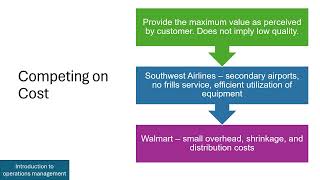
Nikhil Varma explains how mission statements set boundaries for a company, then map into functional missions across departments. Strategy flows from mission through SWOT analysis. Three paths to competitive advantage: differentiation (Disney's training, Hard Rock's experience), low cost (Southwest's airport strategy, Walmart's inventory), and speed (FedEx, Domino's 30-minute promise).
Chapters
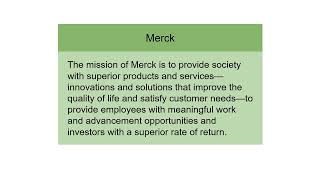
Would be looking at is the factors that affect mission. So to be able to analyze the factors that affect mission. Now this is how you would kind of, you know, organizations go about building a whole mission statement. So they kind of take into consideration the customers who, who are their customers. Remember mission is all about boundaries and limitations that the organization is going to have. So it kind of defines who are, what is your target market. The mission statement should somehow kind of address that, talks about the kind of business environment it looks at how the organization is going to get profitability and growth. What is the kind of image that the organization wants to put in front of the public. What are the philosophies and values of the organization. And this last box which is in blue color is essentially sometimes implicitly set up, sometimes explicitly set up which talks about what is the benefit that this organization seeks to provide to the society. Now just the basic setup as to how this whole mission statement is relayed over in the organization. You will be able to see that a mission statement, an organization mission statement is what is then helps us derive the functional mission areas. Remember there are three functional parts parts of an organization. Marketing, operations and finance. And each of these functional areas would kind of have a one to one mapping to the mission statement of the organization. This is how usually things are set up. Now focusing on operations, I want to show you a simple example of a company which does microwave communication. So this is microwave is just a frequency in which this communication is done. And over here this company's mission statement is to manufacture and service an innovative, growing and profitable worldwide microwave communication business that exceeds our customers expectations. Essentially that's how the mission statement is set up. So they want to do a company which does, you know, it's kind of a wireless but microwave frequency communication. Now how do we kind of map that into the operations process so that this would kind of fall in line. The operations would kind of define its mission statement is to produce products consistent with the company's mission as the worldwide low cost manufacturer. Now since we are talking about mission, I want to tell you a few things over here. Usually an organization does not change their mission statement very often. Just a few companies in the past have changed their mission statements. Like Microsoft had changed their mission statement when they kind of transformed into the web era. Tesla changed their mission statement from, you know, just they started out as a car company, but then they started talking about sustainable transportation. So Tesla changed their mission statement. So mission statement is usually something which changes only when the company is transforming its whole package to be able to send out that, you know, message that, hey, you know what, we started out with this, but it seems that our goals have changed a bit or transformed a bit, or we are a transformative organization which is changing with times. Now coming to strategy. Strategy is nothing but the action plan to achieve the mission. So how do we kind of, what are the different ways that we will be able to achieve our mission? And what are the different functional. So functional. Each of the functional areas in an organization, just like the mission statement for each of the functional areas, we would have a strategy for each of the functional areas. And what we essentially do over here is what is called a SWOT analysis. Based on the SWOT analysis, we come up with some kind of strategic model as to how we will be able to achieve our mission. Now, each organization has to have some kind of a strategy, a core strategy based on which they would seek and competitive advantage. So unless until they are playing in a monopolistic market, which is not something that we are discussing here, but if they're playing in a market which is often called as oligopolistic, which is where there are more than one players, each organization has to find its own place to be able to succeed, to be able to gain competitive advantage. And when we talk about competitive advantage, organizations gain competitive advantage by following a mixture of these three strategies that I want to show you next or, you know, with one of them kind of very well pronounced. So essentially an organization would gain competitive advantage by differentiation, cost or time or response. I'm going to be getting into each one of them in more detail. So let's kind of get into differentiation of variety. When we talk about differentiation and variety, the key idea over here is to be able to present your organization having something unique, something unique which your competitors don't have. So essentially, if you look at Disney, yeah, Disney is considered to be the happiest place on earth. So essentially it is the experience which they are kind of competing with. Now if you go to a Six Flags or a Disney, you know the difference. Six Flags is where you go and have fun. Of course you will be happy. But then Six Flags is not set up the same way as a Disney is set up. Disney is set up right from the time you check in to the time, you know, you go through this whole the tour process. There are so many different kinds of constructs set up to be able to give that experience to the people. Yeah, Six flag is you go there, you have a fast pass, you get in the line, take your ride, come back home, maybe eat food yeah, there are some shows once in a while, but you know, Disney is a different kind of an experience. So that is why when we say, you know, Disney, you don't go and say that, you know, I'm going for, to go have some kind of a ride in Disney. But you mostly say, I went to Disney. And then, you know, that's the experience. That kind of is what is the marketing, is what they are marketing on. And to be able to set that experience, they have to have their operational process very different. Now if you, if you actually start reading on the operations operational experience, the way Disney is set up, it is a university on its own. People who actually go and work in Disney are actually trained in Disney University to be able to provide that experience rather than just optimization of things. And hence the operational process would be different. Same thing with, you know, if you go to a regular cafe or you go to a Hard Rock cafe, that there is a big difference in your, in your experience. Now differentiation is created by multitude of things. You know, it needs a lot of operational excellence. Of course, differentiation would have certain degrees of optimization. But when you are a differentiated product, what's going to happen is the customers are going to be willing to pay you a higher price. Hence you don't have to optimize that much on cost. I mean, of course there is an optimization, but that is slightly lower in your list of priorities. You have to optimize on the experience. You have to make sure that every single person who walks in to Disney or a Hard Rock Cafe has to have an experience. And if they're not having that experience, then your, your competing factor goes away. So it's very important that the operational process is designed differently. We'll discuss this more in a bit. The next one where you can gain competitive advantage is by competing on cost. Now this is where a customer gets in and they know that for every dollar that they're spending, they are going to be able to get the maximum benefit. Now this is generally in the tangible world because intangibility, as I mentioned to you in the, in the last class, intangibility is very difficult to balance, which is when you talk about services, you know, service perception is very different. And a low cost service in that space is kind of becomes a bit tricky. And a low cost service is often perceived as a low quality service. So we would mostly talk about this in the world of goods or tangibles. So you know, you are going into, if you're taking, if you've ever flown Southwest, the idea of Southwest is very clearly Laid out. This is a no frills airlines don't expect us to kind of pamper you. Don't expect us to kind of get you seated next to any seat of your choice. The key idea over here is it'll get you from point A to point B at a low cost. In fact, to be able to do things like that. Southwest has kind of found out very interesting configurations in their operations to be able to achieve that. First, their plane utilization is very high. So essentially, if you ever take Southwest, observe that the time that they take to empty the plane and the time they take to board the plane is very, very fast. Second, Southwest usually does not operate from big airports. And this saves them a lot of money because the cost in an airport is a big airport to bring in a plane, the costs are very high. So secondary airports which are less utilized is Southwest is where Southwest mostly operates. And hence they are able to save money which is passed down as a benefit to the consumers. So hence Southwest is competing with on cost. Of course, there are many other airlines who have kind of got into this frame. You must have seen Frontier in many way cases, JetBlue, sometimes all these airlines are competing on cost. But Southwest was the ones one that started this in North America, in US as a matter of fact. And many airlines started following that. Okay. The other company which you might, I mean must have definitely visited is Walmart. Where the key idea is if you actually go to Walmart and if you not observe this, you will see a tagline low cost every day. Which means they are sending that message out right there. When you get there, hey, I want to give you something which is of the lowest possible price. This is, this requires a lot of operational excellence. And if any one of you has ever worked in Walmart, you will be. You would have seen how small their inventory is. A Walmart store, the front of the store is so huge, but the back of the store is not usually that big. But the way they manage, the way they churn their inventory, the way they track that inventory is all technology. In fact, they have some really amazing things like vendor manage inventory, wherein, you know, they have a partnership with Procter and Gamble. Every time you check out a product from made by Procter and Gamble from Walmart, it is automatically debited from that inventory list. And when it hits a particular threshold, Procter and Gamble is going to. And their replenishment services would come in and automatically replenish the inventory in Walmart. So Walmart does not need to order. It is done automatically and by Doing these kind of innovations they are able to bring the price of the goods substantially down the overheads or because the, the tangible price the goods stays the same. But sometimes they buy in bulk. They have some kind of a distribution center through which everything comes into them. They have more negotiating power because there is a Walmart every round the corner. So the kind of just the share volume that the, the manufacturers are able to get out of Walmart is huge. So they are willing to sell things through Walmart with a lower profit margin. Walmart has so much of innovation in their technology and this kind of makes them a leader in the low cost space. There are many other low cost companies which have come in. One being a grocery chain from Germany called Aldi. And if you've seen, if you've ever been to Aldi, you will be amazed with the kind of price difference that you would see with a shoprite or Shop and Stop or any other grocery store that you frequently go Traders Joe it's not that the quality of the goods are low, it's just that how they procure it, how they keep it, their stocks are always very, very much optimally set up so they don't have wastage as other grocery stores have. So this makes them a very low cost provider. They don't have a huge variety of things. Also if they sell something they'll have maybe two different brands. So that way, you know, it's much more easier for us to kind of for them to be able to set up a low price for the customers. The third one which is responsiveness has three different dimensions. Yeah, the three different dimensions of responsiveness in an organization is either it is very quick or it's flexible or it's reliable. These are three different dimensions of responsiveness or time or responsiveness as a competitive strategy. Now an organization could actually have take quickness or being able to deliver things really fast. Now if you go to, if you want to get your letters delivered over suppose tomorrow to California and you know you would either think of UPX or UPS or FedEx because they are usually associated with speed, right? Of course there is, there is the guarantee of delivery and if they don't deliver in time, they'll give you a refund. All these things require a lot of operational thinking. Now I can give you one simple example. A USPS would never ever move their trucks United States Postal Service which are not more than 80% full and more than half of FedEx planes fly with less than half capacity. The only reason is that they don't wait for Their, you know, for their whatever delivery boxes to be filled up. But they want to get there in time. And this would require a different kind of an operational view. So if you go to a FedEx and you say, hey, you know what, I can reduce your cost by making sure that your trucks travel full. And that way your carbon footprint will be less or whatever will be less. They will be like, hey, we are definitely interested in carbon footprint, but we are not going to wait for our trucks to be filled up because we are going to lose money. But that would work in an USPS setup. So now you see this would have a different kind of an operational requirement as compared to USPS Pizza Hut. Same thing. 30 minutes of, I mean Domino started that 30 minutes of free and Pizza Hut and all the other players started coming in with the same kind of an offer because they researched that when you order pizza and if you are, I mean most likely you're hungry, you can hold your hunger up to 30 minutes. It's just kind of a human thing, which they used psychologists to be able to study that 30 minutes is a time that if you're hungry, you will probably get cranky, but you will not lose your mind. So they use that number to be able to create a whole campaign that if we don't get you the pizza in 30 minutes, it's free. So this is again a very strategic advantage that they have over other players. Of course other players have started copying that and it's working out for them. But this is originally thought of by Domino's and Pizza Hut coming to flexibility. This is something with the growing demand of customers, organizations realized that if you keep selling meat and potatoes or anything that you have built. Remember if I, if you, if you remember when I talked about goods, I meant, did mention that it requires very less customer intervention. However, one of the things that we see in the current times is that customer still want things customized for them. Now if you are buying a computer, you might be a gamer, you might be a bitcoin miner, or you might be just a light user who uses to just, you know, for office products and maybe browsing the Internet. Now our needs might be different. They could prepackage certain computers for us, but then that prepackaged computer would be something like, you know, this is what I have for you, but then I might need something else which you don't have over there and hence I will have to lean. Suppose I'm using it. I'm a bitcoin miner, but a gamer also, then how can I kind of Reconcile the two. I'll have to buy something which is much more expensive, which takes care of both the two. So it's important that customization has to come in into that space. And if you try to customize, you ever tried trying to customize your computer, you will see the prices are very high. Back in those days I used to kind of have friends who gave up on this whole customization of computers and would just buy raw material, the basic processor, the motherboard, based on what they would need and assemble their own computers because they were so particular about their needs. And no computer in the market would provide this. Now HP came up with this whole model of customizing on the fly. Now despite seem to be like what is the big deal here? But just start thinking about every single piece that goes into the product has to be available on almost a real time basis because the customer is asking for those changes. And you have to have those talking those items in inventory. The shelf life of those items are limited. You can't have too many of those because then you have your money locked in. How do you build an optimal setup to be able to provide that kind of flexibility? Yeah, so this is another dimension which is very important. Last in this area is reliability. And reliability is something which many customers seek. All of us want products which are reliable, even if it's low cost. We want things to last, things to be working, things to be doing certain things. And one example is the, the whole German machinery industry. So if you go and buy a low cost product from which is made in some other country, you will be able to compare the quality of the machinery. If the quality you will be able to compare if you buy a German machine and you buy that machine and see what is the difference in the whole quality quality of the product. Most manufacturing companies back in those days would only buy German machinery because that would reduce their waste. However, you know this, I mean this is more for you to understand. But this gap is slowly kind of come getting less and less where you know, production has become more computer driven and technology has more or less been commoditized. So it's, it's no longer one machinery or one country which has this niche anymore. And many countries have started kind of building things which are reliable, but this still is a competitive strategy.
More from Nikhil
The evolution of trust from calculators to smart contracts | Dr. Nikhil Varma | TEDxSVECW
What is AI? – Ep. 1 (Ft. Dr. Nikhil Varma, Associate Professor at Ramapo College)

Imagining A Blockchain World Keynote With Nikhil Varma | Algorand Impact Summit Day 1