The evolution of trust from calculators to smart contracts | Dr. Nikhil Varma | TEDxSVECW
Dr. Nikhil Varma traces how trust in technology drives adoption, from landlines and early computers to AI and blockchain. Smart contracts and DAOs could create more equitable systems by protecting data and acting as social equalizers, he argues.
Chapters
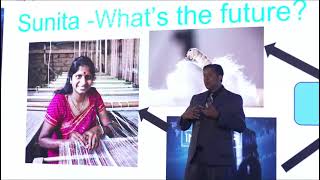
Good morning. You know, I come in here with this interesting construct that I've been exploring for a few years. It's been almost 10 years since I've been looking at this technology that is called blockchain. And when I started looking at this technology, the first thing that struck me was that this technology provides social justice. No, it's not about cryptos. It's about providing social justice. And how does it bring in this social justice? How does it bring in this equality? Is something that I have been studying, researching, talking about in several platforms. And today I come to you to present one construct which I am currently exploring. This construct is about trust. I want all of you in the audience to close your eyes and make a mental note of all the technologies that you trust on a daily basis. How many of you trust your phone to be able to take you from point A to point point B? Over the years, this trust has evolved. When this technology came in, I remember I live in the United States now, when this technology came in, we would put in the address, but we would get into some street which was a dead end. We would be directed towards traffic when we did not want to go through that road. But now, slowly, we have started trusting that technology. I drive 50 miles from my house to my college and knowing that road by heart. I have been doing this for good 9 years now. I still put the GPS in front of my car. Why do I do that? Because I trust that this technology is going to do something good for me. So today I just want to kind of start this talk. I just want to start this talk by showing you. So I just want to kind of start by talking about me growing. This is not exactly a picture of me, just a representation of me. In the late 80s, early 90s, as a teenager in a small town in India where, you know, the biggest thing that I remember, one of the biggest thing that I remember was getting a landline phone in my house. And when that phone came in, it was so amazing to talk to my neighbor with that landline phone. And even better was to make a trunk call to my grandparents and scream on the phone and say, hello, can you hear me? At that time, the only thing that I aspired for, the drivers were my best friends. The only thing that I aspired for, one day I will be driving this car, and I would sit right next to the driver and change the gear for starters, and then sometimes hold the steering wheel. And even before 16 disclaimer, I actually sat on the driver's seat and I started driving the car. And when I have to look up in the sky, sometimes you see a plane. Like, someday I'm going to fly as well. Next slide. Fast forward to 2024. You know, taking you so many years ahead in time. But what happened recently was that I was in Arizona for a conference and I saw this amazing thing going around in the airport. And that was a driverless car. And the first thing that occurred to me is, should I be taking that car or not? I did not take the car. On my way out from the airport to the hotel, I went to the hotel, I researched, you know, everything about this driverless car. And I was like, okay, fine, I have a good insurance. It's final. Take care of my family. I'm going to take this driverless car on my way back from the hotel to the airport. It was an amazing experience. It was an experience where a person who kind of lives and breathes technology on a daily basis was getting a kick. You know the word kick every moment in that drive. At some point, you know, it kind of started sinking in. And I was behaving as if I was in a normal Uber. I. When I posted this, okay, I had lots of people, this is so amazing. This is so cool. But there goes my dream. As a growing up, my dream was to be able to drive a car. And now I'm enjoying a. A driverless car. And I'm thinking, this is the coolest thing ever. See, what technology does to us is very interesting. Technology, right from mechanical machines to electronic machines, was essentially built to make us efficient. This efficiency creates a change in our behavior. It impacts our behavior. As I told you, when I go from one place to the other each, even if I know the road, if I enter the highway, I just put the GPS there to be able to guide me through this whole process. So it's impacting my behavior. So at a micro level, when it impacts the behavior of every individual, it is also going to impact or transform the whole society. This is what technology is doing to us. This is a simple framework that I've been building or looking at as to how this whole transformation is taking place. When we talk about transformation because of technology, the transformation is happening only by this whole factor of trust. This trust that we have on technology actually makes this technology more widespread. So trust is essentially a function of innovation at that point of time. There is also a factor of how much cost reduction is happening. I'll be talking about cost reduction in a minute. And then this is also a factor of the rate of change of innovation. If we see innovation happening too fast, suddenly we start seeing robots sitting here. We might all be very worried as to what is going to happen next, but maybe in five years time we will get used to robots. So the trust factor is a very crucial factor in making sure that we are able to adopt technology. We are able to make a technology mainstream now, to be able to just kind of look at the salient features of what technology does right. As humans, we all learn counting. I learned multiplication. Multiplication was one of the key things that we used to demonstrate. We used to have maths test, multiply these two big numbers, add these numbers. I don't see that happening in the current times. Why? Because that's redundant. Technology has taken over. When I teach a class and I do those computations on the board, half of my students think that I have memorized the answers, but I'm actually computing. But they are out with their phones or calculators calculating because their calculators are far more accurate than what I can do, far more faster, far more efficient. When calculators were initiated, when calculators were made, they were expensive, just like computers. When computers were first made, they were very expensive. I remember that I insisted that I would, I want a computer at home. And my father being the forward looking person always, and in the year 1991, he got me a BBC Micro which would kind of boot off a 514-inch- floppy disk. And I thought I had the whole world under control. This computer, if you do the, you know, the cost factor, if you bring in all the cost is five times the cost of any computer that you and I buy together today. So what has happened is that since computing became so prevalent, the trust in computing became so prevalent that now the cost of technology has gone down. Now just kind of moving further in this world of technology I told you about blockchain and so is artificial intelligence. It's not that artificial intelligence has taken over the world now. Artificial intelligence has been there for quite some time. It has come in the mainstream because of the likes of OpenAI with chat, GPT and so on and so forth, where you and I have the power to do amazing things with our small little query over there or small request over there. The key idea of this technology was to optimize us, to help us in the automation process and most importantly, help in decision making. Not make decisions for us, but help in decision making. Well, what we seeing currently, and you must be hearing all kinds of horror stories, in fact, when I looked at this driverless car, there were some things which was mentioned, like, take them, they break the speed limits, they've broken signals, don't take them. But I still took it because I am much closer to technology than many others. So this gap, this divide that we have from technology is still there. When you talk about artificial intelligence, artificial intelligence, there is still a divide in society, in the mainstream, from kind of deploying artificial intelligence. Their fears are that what happens to my data, what happens to my privacy? If I put in something in the OpenAI, it's going to diffuse to everyone. Some companies, some organizations have completely banned the use of artificial intelligence in their organizations. And now the next innovation that is happening in that area is where you would have personal AIs. AI is artificial intelligence, where data is locked, where it is protected, and that is facilitated by the likes of blockchain and smart contracts. So essentially, it is your AI engine. It is your AI engine which is trained with your data, which will only interact based on, you know, how you want it to interact, rather than sending out things. And when that happens, when we, when that day is reached, and that's going to happen very fast, mind you, when that happens, I will be able to create a replica of me and send it to my class and it will give a lecture the same way as I do. It might not be able to think like me. I might just do the thinking job and train it every now and then, but it will be able to do most of the things that I wanted to do. Now, what this is going to bring in is what is worrying. Some people have cited that the amount of work, the amount of human capital, human investment, human time that is required in building products, in doing all kinds of things, gets replaced by artificial intelligence and artificial intelligence becomes widespread, then the cost of things would go down considerably. In a pure capitalistic mindset, you know, in the invisible hand construct, this will go down considerably. And if this goes down considerably, you and I will be able to afford things for a very low cost. But then you and I will have to have a new job definition because the jobs that we do might just be not there. Some people told me, don't teach programming to your kids. It will be the AI engines which will start programming very soon. I tested that out and trust me, the performance is very close to a human. The only thing is it cannot have some creative things. It has a pretty good performance as compared to what any new programmer would do. So what is it that we are going to do? What is it that we as a society need to introspect and think? When these technologies come into mainstream when our trust in these technologies are so high that they are going to replace us. Actually, they will not replace us because we will also innovate as a society. We will also start putting new ideas into place. We will be able to create a new culture, new community, new society where we all will be able to contribute. And the word that encapsulates all of this is the dao, the decentralized autonomous organization. This construct is been there for quite some time, has failed in several occasions, just because we are not ready for it yet, just because we don't have the trust for a dao. But when the technologies become ripe, then DAO is going to be the next big thing. DAO is going to be the place where we all will be able to contribute as a society, where we will all be able to achieve new heights. Now, imagine a world where there are no borders. Imagine a world where technology becomes the equalizer. Growing up, access to information was a very hierarchical thing that we used to see. We spoke, we heard lots of people talk about libraries, the whole cult. The concept of library was to be able to make information accessible for everyone. But even then, to be able to go to a library, to be able to have a house close to a library, is not everyone's privilege. But with technology now, things have transformed. You can have a low cost Android phone, or the highest Apple phone, highest priced Apple phone, you still are able to access the same technology, maybe at different speeds, but the same technology. So technology will become the equalizer, irrespective of who we are, irrespective of how much money, how much, whatever credential we have in our wallet, we will have equal access. I want all of you to just close your eyes one more time and imagine a world where there are no barriers to health care, there is no barrier to access of information. Everybody has equal rights. We all work as a community and contribute in making sure everything around us is sustainable. And we are incentivized to be able to do that. And this incentivization is a fair incentivization. There are incentives for good behavior, of course, there's no punishment for bad behavior. It's just that you'll not be a part of that ecosystem. And this is the world that technology will bring to us. And. And this is the world that trust in technology will bring to us. With that, I would like to thank you for listening to me.
More from Nikhil
What is AI? – Ep. 1 (Ft. Dr. Nikhil Varma, Associate Professor at Ramapo College)
Imagining A Blockchain World Keynote With Nikhil Varma | Algorand Impact Summit Day 1