Indistractable for ADHD
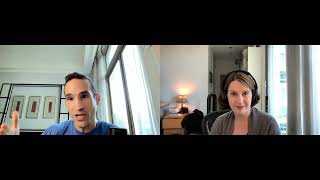
Nir Eyal and ADHD coach Caitlin Bauer discuss how to manage distraction when your brain is wired for it. They cover behavior strategies from Eyal's book Indistractable and how Bauer applies them with her clients.
Chapters
Hi, I'm Nir Eyal, and this is the near and Far Podcast. This podcast is about business behavior and the brain. On this show, I do a few things. I read quick articles. I've written about topics shaping your behavior. I interview authors of books I enjoy, and from time to time, I devote episodes to answering your questions. If you want to ask me a question, visit the podcast page on itunes, go to Ratings and reviews, and ask me a question by leaving a review. I promise to read it and possibly include your question in a future episode. So please ask me anything now. Enjoy the episode, and for more, you can always Visit me@nearandfar.com. Caitlin, so good to see you. Thank you so much for joining me.
Yeah, it's so good to see you. How have you been?
I've been great.
Yeah.
Things are good still in Singapore and. Yeah, I'm so glad we found the time to do this. And thanks for your enthusiasm for making this happen. This is so great.
Absolutely, Absolutely. I'm really excited about this. Long time coming.
Yeah, exactly. Exactly. But, yeah. Is it all right if we just jump right in? I'll just start recording. We can see where it takes us. Yeah.
Yeah. Let's see what we come up with.
Exactly. Yeah. So great. So why don't we start by maybe you could just kind of introduce yourself and what you do?
Absolutely. So my name is Caitlin Bauer, and I am an ADHD coach. I typically work with people who either are diagnosed with or might suspect that they have adhd, and I kind of help them figure out how their brains work and then figure out how to use that information to then kind of build the life that they want to live and go after the goals that they're wanting to go after.
Fantastic. And you're based in San Francisco? I am, and we met from a mutual friend who's a very close friend of yours and a very good friend of mine, Justin, who is your husband, my classmate. And we became good friends, and then maybe you can tell a little bit kind of about how. How you came across. We knew each other from our connection to Justin, but also how you kind of utilized indistractable in your practice and how you came across it.
Absolutely, absolutely. Yeah. So this is. I mean, it's very personal for me. I was familiar with your work before with Hooked, but with Indistractable. I think Justin had sent me a video or something like that a while back, and I remember just hearing a lot of things that you were saying at the time. It happened to be when I was going back to finding my own ADHD therapist and on my own journey. And just a lot of things that you were saying really resonated for me. And so I was very excited to kind of dig in. And I know that you were sort of in the early stages at that point, so I basically told Justin, I need to read this book, so figure out a way to get me an intro and get this in my hands. And you were gracious enough to offer me an early draft of the book for me to read. And I absolutely loved it. I completely devoured it. But classic adhd. You had asked me to send you some feedback. I really got into the action piece of using your book and applying a lot of the things that I was learning, but I, at the time, didn't understand my own brain wiring quite as well. And so I kind of froze. And when it got to that point of me going to sit down and write out my feedback, I got caught up in this kind of the perfectionism trap that I call it, where I had this idea in my head of something really comprehensive and really thorough that I was going to send you, and. And with my own ADHD lens on top of it, and it became this really big thing. And what I didn't understand at the time was that, you know, overwhelm can actually shut a person down with adhd. And so I froze and. And it became very emotional.
Right.
Because of our relationship and the fact that we were friends. I was dealing with a little bit of guilt and shame and embarrassment because I'm, you know, I'm sitting there wondering, like, why can't I, you know, I'm clearly very excited about the work, and it was very personal. And so I ended up kind of turning inwards and, you know, kind of ended up avoiding, which is something that I, you know, I see for a lot of years that they struggle with. Right. It becomes that shutdown.
Yeah. And I so appreciate it when you did reach out and kind of explain to me what you just explained here around, you know, how you had the best of intentions and you wanted to make it happen. And then it kind of became something that was painful that to reassess and come back to. And I feel like a lot of people experience this in one domain or another, whether it's getting back to a commitment you made, maybe getting back to a friend, you know, that weird feeling of we haven't talked for years, but if we haven't talked for years, maybe we're not that good of friends. And then it becomes more and more painful to reach out again. Then before you know it, you kind of lose touch with them altogether. And so, yeah, how did you break through to that? Like, what was the spark?
Yeah, I mean, it's such a great question, right? So, I mean, it was three years. I remember I had your email tagged. You know, I'd applied the principles around this week and today, but I added this month for myself, and I had it tagged, and it sat there and it was something that loomed. And every so often I'd look at it and I go, like, something wasn't sitting right for me. Like, I knew that something was out of alignment. And it was. It was a combination of things. One, I remember I had a conversation with my therapist where she had said, you know, typically when those feelings of guilt or shame show up, that can be a good indicator that something is out of alignment with your values. So that was like clue number one, where I was like, okay, this is. This doesn't feel right to me that this is still here. And it mattered, right? It mattered so deeply to me. And then it was actually just through my own journey and becoming an ADHD coach and starting to work with clients that I was having a eerily similar conversation with a client of mine. That it suddenly seeing that reflected in the client and some of the struggles they were having, even with reaching back out to me about something, I went, oh, my gosh. It was such a clear example of the way that our brain wiring, the fact that we aren't aware of the. The fact that this shuts us down. And I saw that and I was like, oh, my gosh. And it. And it became this. This, you know, journey for me around, oh, my gosh. You know, like, the reality is I was doing the best that I could. The reality was that I had the best of intentions. The reality was that I had actually even done a little notes doc with notes that I could have very well sent to you. But I got caught up in this vision of something so much bigger. And so I did it. And so once, like, once I understood that, and I went, oh, my gosh. This is the brain wiring. It freed me up in a way. And I went, this isn't alignment with who I am as a person. I think I said that to you in my email where I said, I'm the kind of person who I follow up, I get back to you. If I make a commitment to you, I do my best to follow through on that commitment. And as a result of this work, I developed a policy for myself. I've seen my clients do it where I actually will follow up and I'll reach out and I'll let the person know if something has changed on my end. Because what had happened back then was that I was running my business, I was thinking about getting pregnant. There's all these really big things going on that were huge and eating up a lot of my time and energy and brain space. And I just didn't realize that.
Yeah, so much gold there to unpack. And it's really because it's not just about this specific situation that you had in your life. It's an applicable lesson to anyone. We've all felt this, right? We've all had this, whatever the situation in our life that we're struggling with that maybe elicits these internal triggers, these uncomfortable emotional states. One of the best things we can do. I think what I learned from you is teaching others can really help dislodge yourself from where you might feel stuck. And I think even if you are not in a position where you're officially a counselor or a coach or a therapist, this principle of talking to yourself like a good friend, right, that's kind of what you were doing. You were talking to your client and in the meantime you were also talking to yourself because it was a very similar dilemma. And so that's a lesson I think everybody can use. I talk about this indistractable, of course, in terms of reimagining your temperament, seeing yourself as different and going from that self harming dialogue of I'm not good enough, I must be broken, there's something wrong with me. Why am I not doing what I say I'm going to do to saying, wait a minute, if I was, if I was not me, if I was counseling myself, if I was talking to a friend in this very same dilemma, what would I say? Your words would be completely different. I mean, it sure definitely was with me when I started talking to myself the way I would talk to a good friend and started thinking to myself, wait, how I used to talk to myself. I wouldn't talk to my worst enemy. We are so brutal to ourselves and it really shackles us. As opposed to asking ourselves, how would I talk to a good friend who is in the exact same situation?
Yes, and we absolutely are. It's funny I hadn't thought of it in relation to that, what you talked about with the self distancing before, but it's so true. It really makes such a difference. And for those of us who do have ADHD and that brain wiring, it's dialed up, it goes up to 11. It's so much. The intensity there makes it that much more challenging and that much more difficult to be able to self distance and step away from those. I call them the negative, shiny, interesting things. Big feelings.
Yeah. And then you also said about values, and I thought that was super interesting because that's, that's definitely something I prescribe in indistractable is turning your values into time. Right. Asking yourself. You said it beautifully. I am the kind of person who. Right. And you know, making a noun for yourself, making a moniker, I. This is who I am. It's not what I do, it's who I am. And, and, and that's so powerful that you had that, that realization.
Yes, yes. And I. And you know, it was interesting because your book was the first time I'd ever heard anybody put it that way. I remember reading that and my head exploded because I just went, oh, wow. Like, I just had never thought about it that way before. And like, that shift for me was so incredibly powerful because suddenly I, you know, instead of getting into the nitty gritty of this, you know, like the cat, I remember sitting at the calendar and feeling very shut down. Like, I was looking at it and I was going, I don't know where to start. And a lot of that, really. And this is a big thing for people with adhd, right? Like, these things tie back to the fact that we often don't know what it is that we value. Right? Because I remember sitting there and there was an exercise that you had done originally in the first draft with the values of important others and self and work, and you really firmed that up for the final copy of the book. But I just remember feeling like I don't even know where to start. And it was that similar kind of overwhelm where I went. It feels like this mountain, right? And so I was seeing the mountain and going, okay, how do I do this? Right? And. But you actually had some instructions in there that actually helped to kind of break that down a bit, right. So that I could say, okay, let me think about these different categories. Let me break this up and see, like, what are the things that I want to be doing? What's important to me, right? Like, I love that, that, you know, one of the things that really stuck out to me as being very friendly for the ADHD brain was that it wasn't too restrictive, right? You. You gave some freedom to play in there, which is really important for our brains. Like, we have to have that freedom to then be able to build and grow and play and experiment. Like, you. You said something about, like, the approaching it as a curious scientist. Right. As opposed to the drill sergeant. And. And that was key. So that, like, once I had that freedom to play, it took that pressure off, and I was no longer shut down. And I was like, all right, I see a clear first step here.
Yeah.
And then I can build and I can. I can go from there and really define what those. Those different things that I value are.
Awesome.
Figure out how that happen.
Well, I don't want to make it too much of a. Of a telemarketing commercial for the book, but I do appreciate all the kind words. But I'm curious, you know, sometimes what I hear from folks is that the method that I describe in terms of what's. I think then very helpful for me is, you know, turning your values into time and starting with just one day, like maybe just an afternoon. How would you want to turn your values into time? By planning your time ahead of time by using this technique called timeboxing and expressing your values by putting them on your calendar. Right. You value your health. Okay. Do you have time for exercise? You value your relationships? Do you have time to be with your kids or your spouse or your friends and putting in that time on your calendar? But then the pushback I get from folks is that. That does feel restrictive. What do you think and what do you experience with. With your clients?
Yes. So at first glance, right, Like, I mean, I think. I think you even said it yourself, like, we are naturally, like, a little resistant when we're given that kind of structure, so to speak. But at the same time, right. If we don't have that structure in place, we flail. Right. People can fill up your. Like, if you're not protecting your time, if you're not reserving your time for the things that you want to be doing, people can. People can come in and take that if you let them. Right? So I think there's a bit of a shift in the way that you look at that and really asking yourself, how is creating this structure serving me? And particularly for people with adhd, it's going, okay, what's the framework? What's the scaffolding I need in place? But then having some freedom to play within there. I know that when I approach my first time with the timeboxing, I started really simple. I was like, this is too much if I try to put all these pieces in. So I started with, you know, sleep, personal time, work. Let's just make it simple and get used to that. And Once I got used to that, then I was like, all right, now I'm going to actually test the waters here with, like, actually scheduling in my lunch and my workout. And so it was like just taking those baby steps to just experiment and play and see. And now I'm at, you know, like, three years later, I'm at a place where I literally don't have that blank space and everything is filled in. But it took time to experiment and play with that so that, you know, I could build that and create that. And now I feel freer than ever because it's. I'm a choice. Like, I go, I set my schedule, I choose right. And that's really, really important.
Absolutely. Yeah. It's funny, you're reminding me of a strategy that I forgot, but when I first started timeboxing, now that I. Now that you mentioned it, I did have huge swaths of time. Right. I remember I had like, Wednesday afternoon was whatever Wednesday, and I had three hours in my calendar for all the stupid life admin stuff that I needed to do that would take like 15 minutes. Well, I wasn't gonna schedule a 15 minute task, a two minute task, a phone call here, you know, I w. But I had three hours of whatever Wednesday. And that was so empowering because when something came across my desk that would just take a couple minutes instead of defaulting to let me just do that real quick for a sense of productivity, a sense that I'm getting ahead when really it was distracting me from what I really wanted to do, I said, nope, that goes into whatever Wednesday. Right. Like, I knew where that would go. And then my brain could be at peace knowing I will get to it. I didn't forget. It's in my whatever Wednesday bucket. And so it's not about, like plotting out every little minute, especially at first. It's about, you know, you can have big, big, you know, hours of time that are booked for certain things. And I think what that does, it also makes sure that you're not doing those things when you want to live out your values in other ways. So the fact that I have my whatever Wednesdays when I'll be doing admin means I won't be doing admin when I'm with my daughter. Right. Or when I'm writing or working.
Yes. And with your, you know, with email. Right. That was. It was a similar thing because suddenly I go, okay, I can file this away, and I know that I'm going to get to it on this date at this time. Right. It really, like, that's you know, it ties into something that is really crucial, which is criteria. Right. Because for, you know, for the ADHD brain, everything is important. We don't have that filter that neurotypical people do. So when we see all of the things, we look at it and again, overwhelm, shutdown, it's really, really important for us to be able to say, okay, what are these criteria? And then basically understanding what is my process, what do I do when that thing comes across my desk so that I can file that away and trust and know that it will be there for later, being able to really get clear on those things.
Yeah. It's really striking how much of what you advise for the ADHD brain is actually very applicable to everyone. Right. That's exactly having this process in place to know when a distraction rears their ugly head, what will I do about it? Am I going to give into it and let myself go off track, or do I know that there's a process in place?
Yes, absolutely. Absolutely. I mean, it's funny because you're absolutely right. Like, I look at these things and I go, it is very applicable across the board. Like, the, the tricky part really, I think, is being able to catch it yourself. I mean, I've been living this now for three or four years, like, having really studied this deeply. Right. I mean, I was diagnosed as a child, but it was really only in the last three or four years that I really started to build awareness around this. Right. And part of it was what I learned from your book. And then being able to take that to my therapist, to my coach, and say, okay, here's what I'm learning. How can I, like, how can I build this skill? How can I build this muscle, right. And make this become something that is second nature and automatic to me? Because at first it wasn't. Right. Would come in and I would still have that impulse to go, oh, let me respond to this real quick.
Right, yeah, absolutely. Yeah. This is. It's so interesting. What do you think are the additional challenges or maybe the. What's the additional steps that one would take if they are struggling with adhd? And just to be clear, this is, you know, a lot of people say, oh, I have adhd and they've never gotten a diagnosis. So I'm not talking about, you know, people who think they have some. A pathology that they don't, but people who have, you know, they have a diagnosis. How are their challenges different and what would they do differently?
Absolutely. It's important to draw that distinction because I think people have gotten Very flippant with their language these days. So it's really important to know that this is a neurological condition. It really is important to understand. This all starts with our brain wiring. People with ADHD have an interest based on brain wiring, nervous system, Right. And basically that means that it is geared towards interest. So yes, although all of us, right, like boredom is painful, right? That's discomfort. Like it is 10x for the person with ADHD and if they don't know that, it can be very confusing. Right. Like I was very confused. Why can't I take this step forward? What's wrong with me? I must be broken, right. And then all that negative self talk that gets caught up and because we have that brain wiring that is interest based, like it's also important to know that interest can be positive or negative. Right. So understanding things like rumination, negativity, bias, that is actually very interesting and shiny to our brain and we can get caught in those cycles and it's very hard to pull ourselves out. So kind of being aware, like that's why I think it was so useful looking at the work that you're doing here and saying, okay, like really those internal triggers are things that we often don't know. Like that's like that's the foundation right there. So we can understand those things and really start to say, okay, like how does this show up for me? And it's going to be different and it's going to be varying levels of intensity to the individual. So really understanding and getting that knowledge around that interest based brain wiring is crucial. And then also understanding it's not just about that brain wiring, but that I love it. Dr. Ned Hallowell, who's one of the leading researchers in the field of adhd calls it Ferrari Brain bicycle brakes. Right. So the other side of this, only in terms of understanding that wiring is knowing how hard it is for us to pause. Because so much of what you, what you talk about is noticing, right. Like especially like paying attention to those triggers and some of us don't even know how to do that. We just fly by it. Right. Trains left the station.
Yeah.
So it's like really holding that awareness of our brain wiring and how that shows up so that we can bring that to the table when we are learning these skills and say, okay, what might I need in place to support that? Like what are the things that are going to help me be able to anchor these learnings and remember them and follow through on them?
Yeah, yeah. I'm taking tons of notes here, but I'm super curious. Other than, of course, pharmaceuticals. Right. So somebody with a diagnosis may find that pharmaceuticals are helpful. The non pharmaceutical options or the solutions that they might implement, are they the same whether we have or don't have adhd? Like the training, the techniques, the tips that we might use on a daily basis to train ourselves to notice internal triggers, to know when to pump the brakes, to have a methodology, are they the same?
So that's actually a really good question. I mean, I would say that most likely they are similar, right. In terms of the tactics, it just may be the amount of practice, you know, that we have to do to reinforce something or, you know, like understanding how a person processes something.
Right.
Like, you know, in terms of learning to make these shifts, like I had to journal, I had to write things down. Like, I understand that my working memory is actually one of my, one of my weakest executive function skills. And so kind of understanding that, like I literally have to write things down to remember it. Like I have, I have notes over here, right. So that I can remember the things that I want to talk about. I had to learn individually what that meant for me. And it's much more extreme.
Right.
Than a neurotypical person. Right. Like I'm going to have to do. I guess it's like the intensity level and the amount of time and commitment because they are. Right. You know, like in terms of the different kind of therapies out there, right. Cbt, dbt. Like knowing that you might need to exercise a certain amount to activate the brain in a certain way. Like all of these things that apply to everyone are very much true. I think it's really just the intensity level and like the variability about how it shows up for the, for the individual.
I see. Are there techniques either from indistractable or from your general practice that you find with clients that there's like two or three that you. That tend to be more effective than others that you might want to share.
Absolutely. So I would say that the biggest one is, is pausing, right. Learning how to pause, how to hit the brakes. And that really does start with being able to recognize what is it that you're feeling in your body. Being able to go, okay, stop breathing, whatever you need to do to reset there and then get curious about what's going on and say, okay, all right. So I've noticed that something's up, something's occurring, maybe there's some frustration or anger or sadness. Getting curious about what that feeling is is so that you can really kind of dig in and be like what's underneath the surface here? Right. Do a little bit of processing around that. And then once you've kind of checked in with that information checking, you know, like, I find it very helpful to check the facts. Right. Like, is this a fact? Am I making an assumption? How is this serving me? There's all sorts of different questions I have for myself when a challenge comes up that I want to face and work through. So being able to kind of do that, I'd like to journal. So for me, I'll write it out or I'll verbally process it with somebody, and then from there, I can use that information to then make a decision about how I want to move forward. But at the heart of this, it really is about learning to pause. That is the key skill. I think that that is so crucial for becoming indistractable and learning to be indestructible. I feel like it's just they are so tied together because if you can't pause and you can't notice.
That's right.
Then you can't form that memory and make that decision to move forward.
Yeah, absolutely. I mean, and I think that that's the. It's a skill to learn to pause. I think what you said earlier in terms of checking the facts, that's it's. It's not easy because your brain tricks you into believing what you feel, not what you think. Right. That I hear this all the time with executives who say, I feel like I constantly need to check email because what if somebody's waiting for me? But then if you break down the logic around that. So wait a minute, you're doing something, you're spending your time and attention away that you feel is important. But when you check the facts, what's going to happen if they wait 20, 30 minutes for you to finish the focus work you're doing? Nothing's going to happen. It's purely a feeling. Right. You have to check the facts to see is it really that detrimental if they wait a little bit?
Absolutely. Absolutely. And it's not only it's those beliefs, those stories that we have, but it's also around us. It's environmental. And I think you talked about this a lot. I remember the. The chapter on, like, workplace that blew my mind because I was like, oh, my God. I had no idea how environment played into this and reinforced these. Because I was the person who would respond immediately to my clients. Like, I trained my clients originally to expect an immediate response from me. And of course, I was burning the candle at both ends, you know, and so it was like, really, this was so valuable to go, oh, my God, it doesn't have to be like that. It can wait. Well, this isn't an emergency, right? Like, it was so. I mean, that was freeing and it was big.
Yeah, yeah. When you realize that it's not facts, it is just a feeling, it's you. Right? Nothing catastrophic is going to happen if you give yourself time to finish the task or to work on the task as long as you said you would. But that's a really hard thing to believe, Right. To believe your brain as opposed to believing your feelings takes a lot of work.
Oh, my gosh. Well, and it's especially challenging for those of us with ADHD because we've gotten a lot of negative messaging growing up, right. Like, we didn't understand why we couldn't sit still or we couldn't turn the thing at on time or, you know, and so we start overcompensating. Like, I know for me, I was overcompensating. I was like, well, I know that this takes me longer. So to make up for it, I'm going to be really responsive and I'm going to be that person who, like, interesting. You know, I'm going to like, over deliver. Right? And then often it was just like over promising, under delivering and then beating myself up about it. Right. As opposed to, like, now, I, because of this book, because of the work I was doing at that time, I learned to set expectations right. Right out the gate. I say, you know, with my clients, I say, you can expect to hear back from me via email within three days. Right? Business days. And if you need feedback sooner, put urgent in the subject line and I'll do my best to get back to you within 24 hours. But you know, I'm like, if it is an absolute emergency, call 91 1, call your therapist. You know, like, let's set those expectations so that we're not feeling resentful, so that we're not feeling like we have to respond and, and follow that impulse. Right. To react.
That's such a great strategy to set expectations with clients. Right. It can be something at the bottom. I'm thinking like maybe an email footer or just something that you talk about in a conversation of like, hey, here's kind of my standard turnaround. And if it is urgent, like you said, if it is actually urgent, here's contact me on WhatsApp or text message or put urgent in the subject line. And it's incredible how few emails or notifications are actually urgent, right? People are fine with responding in three days. Right? Like, it's okay. They know you have a life too. But if it really is, oh, my gosh, you have to call me back right away. Okay, well, they're not gonna send you an email. They'll probably find another way to message you. But if they do wanna use email, you know, instructing them to put urgent in the subject line is genius.
Oh, yeah, it's. So, yeah, I learned it from my coach. She did it and I went, oh, this is great. And this is before I became a coach. I was still doing consulting at the time, so I was suddenly able to slow down. And again, looking at what I learned from you, slowing down, delaying the communication. And then as a coach, this is especially empowering because if I can slow down that communication with the client, that's giving them the opportunity to problem solve first before. Right. Like, before we actually have that conversation. Because I don't want to disempower them. I want to actually encourage them to take a shot at it first before enlisting my support. And then if they're still stuck, then I can get in there and help them kind of like. Like problem solve or ask them questions. But, like, I really do. I want to give them that space so they can see what it's like to take that, try and see what comes out of that, what they can learn.
Yeah, I love it. Well, I'm learning from you here. I'm going to add a footer to my emails to set expectations around how early I reply. I love that. That's a great idea. You know, one thing I wanted to come back to was around values and identity and specifically how it relates to adhd. Because. Because it's something I hear. I don't work with people like you do who have a diagnosis, but I hear from people who don't have a diagnosis that they think that they are a certain way. And I struggle in a way because in the book I talk about how important it is to reimagine your temperament, to go from someone who says to themselves, I'm bad at time management. Well, if you think you're bad at time management, you're going to be bad at time management because you don't try and change. You just accept the fact that that's who you are. So to be very careful about those type of limiting beliefs and to adopt new ones. Right. The whole purpose of calling the book indistractable is that I want people to call themselves indistractable. Now, of course, indistractable doesn't mean you never get distracted. I talk about that, that it means you are the kind of person who strives to do what they say they're going to do, that you get distracted from time to time, but you don't keep getting distracted by the same things again and again. But maybe you can talk a little bit about how we can see ourselves. Like, how would a person with ADHD acknowledge that they have adhd? But it's not limiting them, it doesn't cause them to give up and say, well, there's nothing I can do. How should we think about it?
Yes. And that's, and that's like, that is so core to this piece here, right? Is like, you know, knowing that, especially for newly diagnosed, that bit of history, that negative messaging, that I'm broken mentality that's there, that's very real. So being able to understand that that shows up, right? But then it's, it's about really, you know, instead of saying like, you know, you're the things that you do, right? Like, yes, sure, you may have done things, right, you may get gotten distracted or like, I may not have emailed you back, right? But that doesn't mean that I'm a bad person. It doesn't mean I'm broken. It means that things came up, things happened. But the thing was, I realized I could, I could do something about it, right? It mattered to me. So I could make the decision to say, you know what, I'm going to reach out, I'm going to take this action because this is the person who I am. I want to act like once I got clear on that, right, about the kind of person I wanted to be. And that's really, really, really tricky for the adder, right? Because often, you know, like, I mean, values work is especially tricky because, you know, like, it can be this, like, hotbed of shoulds, right? Should is one of those trigger words for me where I go, what's going on there? Right? Because like a value might be mask, like a should might be masquerading as a value, right? So you need to check in with yourself and say, like, is this something that I value or am I comparison? Am I comparing myself to someone? Am I like, am I chasing the good opinion of another person? Like, these are things that we really need to look out for because we've been trying to prove ourselves for the entirety of our lives, right?
So it sounds like you're saying it's identifying yourself, creating your identity based on your values. I'm the kind of person who XYZ and not by the diagnosis, by your values.
Yes, yes. Because the diet, you know, the diet, like, it's just brain wiring. It just is. And part. You know, some. Some of that is learning about what it means, right. Not only, like, just generally speaking, but for yourself, right? So, like, I had to learn, oh, I'm the kind of person who, if there's too many options, I shut down, and that's okay. I. But I learned to see the strength of that, right? And that's a lot of what I do in coaching is saying, okay, let's look at the strength. Let's see what, you know, what kind of value we can gain from that. Right? So flipping that, actually, I'm the kind of person who. I can see all the possibilities, but I know that I need criteria. I need a list of specific criteria to choose or a strategy or a tactic or something like that to figure out how to proceed so that I don't get stuck, right? Because I've decided that I am the kind of person who, like, I take action. I get things done, you know, so it's really. It's. It's holding that awareness of what that means, right? Like what brain wiring that you're working with, what the potential barriers or pitfalls are, but not internalizing that as I'm broken or I'm bad, right? Going like, that's just. That's just. It's just there. I accept that that's a part of me, and I got to work with that. But the thing that really I want to get clear on is what matters to me, right? What do I value? What's important to me? What am I passionate about? What is it that I want to give, you know, that I want to put out into the world?
Yeah. It reminds me a little bit about how I dealt with stage fright that I used to. You know, it's an. It's unfortunate to have stage fright when you're a professional public speaker, but I would. I would go on stage and, you know, right before I was about to go on, I would secretly pray that the AV system would shut down and I wouldn't have to go present because I would get so nervous, and I would. You know, I would. I would. My heart rate would increase. I would get sweaty armpits, and I would sometimes even start to shake before I'd have to go on stage. And I loved what I did, and it was super important to me, but I sometimes had this really crippling fear. And it wasn't until I read this research about doing Very much what you're describing around flipping the script and saying, wait a minute. What I used to say to myself was, oh, you see, the fact that I'm getting nervous, that must mean I'm not really cut out for this. That if I was a real public speaker, then I wouldn't feel nervous, I wouldn't have these sensations, I wouldn't have this fear, because that's not what real public speakers do it. Then I changed the script. I flipped the script kind of like you did with seeing it as an opportunity. I said, wait a minute. This is actually the fact my heartbeat is racing right now because my brain needs more oxygen so that I can deliver my best possible talk. So the reason I'm getting nervous is because I am rising to the challenge. And when I started flipping a script and saying, wow, this is because it's really important to me. I'm passionate about what I do. I really think I can help people with what I'm about to tell them. And so by flipping that script, it became empowering, as opposed to, you know, something that used to freeze me, it helped empower me to do my best work. And. Yeah, like, really flipping that script. Yeah. Based on what. What. What. What's most important to you? Back to your values.
Yeah, absolutely. I love that. I love that.
I'm curious, though. How do you. Is there language that we can use specifically in the ADHD community so that it doesn't become something that defines people or makes them feel like they are somehow trapped or less capable? Like, is there some kind of language in terms of how people should describe themselves or think of themselves? Like, I love how you were saying, you know, the fact that you're interested in so many things opens opportunities as opposed to disabling you. How should we talk about it to ourselves?
Yes. I mean, it really is about, you know, looking at the opportunities that are there, the strengths that come with this. Right. You know, like, I. It's a tricky line, right? Because I am sometimes sensitive to this whole idea of ADHD is a superpower. Right. Like, sometimes I go, but it's also a very real disorder. Right? But I don't want to get caught up in the challenges, right? Because the challenges often are the things that drag me down. Right. So I have learned how to validate and acknowledge this and go, I see you. I know you're there. But to really lean into the strengths, right? And to see, like, you know, the fact that, you know, I can run these crazy sprints, right? I can. I can work incredibly hard and take you know, like the fact that I launched my practice in May and it's full. I got it full by October and I was like, I didn't know I could do that. That's really cool.
Right.
Like, I just dove in headfirst and like that hyper focus and that passion and like, you know, like the hyperfocus in particular, being one of those things, like you can really use to your advantage as an ad learning, like, what are those things that I can harness, that I can tap into, that can really pull me forward? The kind of, I guess, pros and perks of being a person who has adhd brain wiring that I can use. And it's really, really trying to focus and honor those things about myself and lean into those strengths. Because when I do, it's like I feel like I'm unstoppable. Right. That I can really just fly.
Yeah. And how do you differentiate with your clients between something that you just don't want to do for any. You know, I see this with kids. I'm sure you do too. Right. Where part of, you know, when kids don't want to sit still, part of it is that it's really boring. Right. The way we institutionalize education and make 5 year olds sit and pay attention to some boring teacher, you know, every kid is going to want to squirm and worm and get out of, you know, paying attention. How do you differentiate between something that, hey, this just sucks, like, it's really not fun to do and maybe you shouldn't do that anymore. It's not that it's somehow you. It's that conditions you're under.
Yeah. I mean, that's really, really important distinction. Right. Because. And it's one that comes up a lot, right. Of can't versus won't. Right. And won't is one of those things that I look at as like, it's a choice, it's something I don't want to do, do. I don't enjoy doing it, like, blah, blah. Right. Whereas can't is a brain wiring type of thing. Right. So being able to understand what's happened, like at the time, right. That I wanted to send you that email with feedback, I couldn't. Right. And I didn't understand what was going in my. Going on in my brain. And that hit, like, because I didn't know what was going on in my brain. I didn't have the information to move forward and I got stuck. So it's, you know, and this is, you know, it's like excuse versus explanation. Right. Like being Able to. You know, a lot of people think, oh, you're making excuses for not. And it's like, no, no, let me explain to you what's going on with my brain. And like, because obviously, if I can learn how to manage that and how to work with that, then I can actually take some action and work. Work either through or around or decide, like, you know, is this something that I just don't want to do, or is it something that, like, just isn't going to work for me? Right.
So how do you know the difference? How do you know when it is a can't versus a won't? Because, I mean, to play devil's advocate here, you could say, look, if somebody, you know, says, I can't exercise, and then, you know, somebody put a gun to their head or not. So dramatic. Somebody says, hey, I'm going to pay you $100 to go exercise, guess what? They go exercise. Right? Or I mean, yeah, if you make the incentive.
Do they have a broken leg? Do they have a heart condition?
Exact.
Exactly.
Right. And some people with severe ocd, severe adhd, severe addictions, even if they had an incentive, a monetary incentive or whatever the case might be, they cannot. But, you know, it turns out. So I'm an investor in a company that just got FDA approval for a program that helps people stop their substance abuse disorder by paying them. And it's crazy. It's a variable reward mechanic where they give them a ticket to enter this lottery where they can win small prizes. It's incredibly effective. Incredibly effective. And so, you know, it makes you wonder how many, certainly some people do have addiction disorders where it doesn't, you know, especially when there's comorbidity with ocd, they can't, no matter how much they want to. But a lot of people, given the right incentive structure, can. They just didn't want to.
Yes, absolutely. And that's. It's important to check. So that's where it's like checking in and going, like, all right, let's actually dig into this and see what's underneath the surface. Because that is an important distinction to make. And that's where, like, actually knowing, like, what are the incentives that can get you into action? Right? Because again, we, like with ADHD brains, we're not actually. We don't have the same types of motivations. Right? So like, like, I found that there were times where it was like, oh, here's, you know, like, I will pay myself. And when it came to, like, I think you were talking about burning the $100, bill. Like, I remember I tried it with like a dollar bill or maybe like a $20 bill or something, and I burned it, right? I was just like, there's other things more interesting, right?
I won't tell the Federal Reserve that you're burning money.
But it was one of those things where it was like, I remember, like, I tried it out and then I was like, oh, interesting. I actually didn't care enough. It wasn't. It wasn't. Wasn't interesting or shiny enough. So it's like really checking, like, did I actually really care? Or like, what is going to motivate me to get into those things, right? And, you know, kind of like it's being able to look at the whole picture, right? Like, am I, you know, like, is there too much on my plate right now? Is the juice worth the squeeze? Like, you know, is. Is that reward motivating to me versus somebody else, right? And figuring out what those specifics are. Because. Because for my brain, like, I know that getting positive feedback, right? Getting. Getting to actually get that praise is very motivating. More so than money. Not joking, right?
Interesting.
Which, you know, it really activates my brain and motivates me to do more and do better, right? So, like, kind of understanding that. That, like, those specific things are activating for my brain because, like, we can, you know, we can all do hard things for the most part, right? So being able to understand, like, that difference of want versus, like, can't or won't, like, what are, you know, what's the choice, right? Versus, like, is there something up here getting in our way that we need to unlock and that we need to work around?
So when you work with your clients, how do you help them? You know, if they say, I'm, I'm struggling with staying focused on my work or whatever the case might be, how. How can you help them figure out. Out which it is, if it is the can versus won't?
Definitely. So, I mean, a lot of that is having the conversation and starting to unpack that a little bit and say, like, all right, like, let's actually look at your environment. You know, give, like, paint the picture for me of. Of what's going on, right? You know, because we want to get at this as like, is this an environmental thing, right? Is. Is. Is the job fit? You know, you know, how. How about your. Your body, right? Like, checking in, like, are you getting sleep? Are you. Are you eating? Are you exercising? Are you taking your medication? Like, looking at Maslow's hierarchy, right? Like, looking at these different pieces. Because if those things are out of alignment, it makes your symptoms more difficult to manage and control. Right? So, like, there's a difference in the way that we show up, right? So like, is it something that's going on with you or is it environmental? Right. Or is it that, you know, like checking for the passion and the purpose and going like, is this something that's interesting to you? And then figuring out, like, what kind of modifications that we can look for and make, be it at home, at the office. Right. So it's like, it's, you know, really getting that. That whole picture so that we can start to look under the hood to be like, is this really the issue of the environment versus your brain and your body?
Makes sense. I'm so curious to go back to you using the burner burn technique. Did you. What happened after you burned the $20 bill? Did you. Did you use it again or was that the end of it or.
No, I was like, no, this is.
A bad idea not working for you?
No, it just doesn't work for me.
Yeah, I mean, it's interesting that you found that rewards were more palpable, Right. It's back to this idea of being a scientist, not a drill sergeant. Right. The whole idea is to experiment. And not every technique out there is going to work for everyone. You have to figure out what works and what doesn't work. Did you find. So was this. Was this trying same as it was for me for exercise, or were you using it for some type of different.
I think. I think it might have been exercise at the time, actually. And so for me, I actually found it's more rewarding to work towards like a trip. I need a big reward. So I wanted to work towards like a trip that I was going to go on or, you know, even framing it or around just social time. Right. Like, so for me, I'm very social. So, like, I want to go to a class with someone, right? I want to, you know, and like, that actually got me to go take a dance class, which I hadn't done in years.
As your exercise component, that having. So it's interesting that that still is a pre. Commitment. It still is a pact, right? It's a social pact to say, if I don't show up, my friend's gonna be like, hey, we signed up for this class. You're not here. What's going on? That feels crummy. And knowing that that's. That to you is more painful when you don't feel like going to class than burning money is is a huge incentive Insight.
It was way more like. And knowing that I was like, people are powerful for me, knowing I'm gonna let another person die, I was like, I'm not doing that. Like, I will be there. Right. It's like, it's gotta be a huge thing for me not to go to that. Right?
Yeah.
I'm making that commitment to that other human being.
So a site that I recommend a lot and I invested in because I liked it so much is Focus Mate, which does something very similar where it's the same thing as if you don't show up for this exercise class, your friend's gonna say, where are you? You so showing up when you need to know you need to do focused work. Your, your Focus mate is going to say, hey, this person didn't show up. I'm curious, have you ever tried it or recommended it or.
I haven't, but I recommend it to clients all the time because I've heard from like, I think every 80, almost every other adhder that I know talks about Focus Mate.
Oh, really?
Oh, it is well known. Like people love it.
Oh, good.
It is so useful. Yeah. And it's honestly like, I think you even talked about it a little bit in the book. Right. But I hadn't realized it. I had actually of avoided it until I got into my coach training program and then I started to form these relationships with other coaches and it became a vital part of my process. Like once I finished up the basic part of the program, I remember there was another coach who I had become very close with. And so we actually started meeting for like our own like zoom standup every morning.
Beautiful.
We, you know, we set aside like two hours on Thursday. We're like, we're either going to coach each other or we're going to do pomodoro sprints with the cameras off, like Focus Mate style just to get the work done. So having, having each other to help, you know, help pull us along in our career has been just huge. I wish I'd known sooner.
That's awesome. Yeah, it's, it's, it's, it's incredibly effective. Sometimes I find that it's so effective that people don't want to sign up for it because they feel like, well, if I have some, then I know I'm going to do it. And I don't really feel like doing it. I think that's a really. But if you have that insight, it tells you something about the kind of work you're doing. Doing. Right. Like maybe it isn't a can't. Right? Because if someone says, hey, I don't want to sign up for focus made or I don't want to burn the hundred dollar bill because then I know I'll have to do it, tells you something about the kind of, you know, the task itself perhaps.
Exactly. Right. And that's where it's like really getting clear. Like, is this something that lights, is it doesn't light you up? Okay. It's a value, no spark. Okay. Maybe it's not a value, right? Or the work, like maybe it's not the fit, which is a very scary thing. I mean, I went through it myself, right, like where I realized that what I was doing before I wasn't loving it was very scary to have to consider that change. Right. Like I got the built in pause of this pandemic where like my basically most of my client base left and I went, okay, I guess I finally got that pause. Right. But it really, it really forced me to reconsider. And what's been amazing is seeing the difference in the way that I show up to work, work. And you know, yeah, it's tiring, it's exhausting, but it is so fun and fulfilling and just like the energy, I love it in a way that like I haven't felt since I was on stage, like since I was an actor. It's been a long time.
Amazing. So, so finding that you do have, you do have that inside you in the right circumstance, in the right environment. And sometimes I feel like it's not just the work you do. Right. Because a lot of people don't have the luxury that we do of saying, hey, if I don't like this, I'll do this, that. But what I find is that people who are able to overcome these distractions, they do find value somewhere, right? They say, hey, I don't love this job, but I'm doing it for my kids. Or I'm doing it because I, I need to, you know, I need to, I want to buy that house or whatever the case. I have this, this, this higher order value that I'm trying to get to. Yes, yes.
And like how it's like, and that's an, that's important criteria, right? How is this serving like the higher, like the higher good or the picture or the life that I want to build. Because, because in these instances where like you may not have the luxury of I'm going to choose to work for myself, it may be trying to find a way to make that job enjoyable or things outside of it Enjoyable so that you can balance that out for yourself and find a why to get you through it. Right?
That's right. And you may have to use the whole gamut of different techniques. Right. You may have to use a pre commitment, you may have to hack back your environment, you may have to make time for traction. You might have to use all these techniques in concert. So one question I'd love to ask you, because I get this question and I'm not always sure how to answer it, is, you know, I know you have a puppy back there. Maybe not a puppy, but a full grown dog. I couldn't really see, but I get this question. Yeah, what's. What's his name or her name?
Samwise.
What is it?
Sam Wise.
Oh, Sam Wise. Oh, oh, oh, oh. Very cool. Very cool. So I get this question a lot. I don't have a dog or any pets for that matter. But I get this question a lot from people say, look, I need to be focused, but my dog is whining. What do I do when I'm working from home? And of course, when we didn't work from home, this wasn't a problem. We had a dog walker come in and take care of our pets. But now that many people have to work from home, how do you deal with that?
Yes, we've actually always had a dog walker for that reason.
Okay, okay. So it's about building in.
He's very barky. Right. And it was one of those things that we had to delegate. We knew that in particular for our dog, he has a lot of energy. And again, I know I'm speaking from a place of privilege, but we knew that we had to get him some of that support because it was either that I take the time out of my day to do that or we delegate that out to somebody so that he can have that. Right. And there are times when like he will bark and I have a client, I'm like, I'm sorry, hold on one second. You know, but it's, you know, that's the reality. And I do, I've always chosen to work from home. So it has been a reality. And it's just, it's something that I, you know, I set with my clients. And you know, luckily during session I'm able to kind of, you know, get him calm. I might throw some treats or something to sort of just get him calmed back down, but it is a reality. So you got to kind of figure out for yourself, you know, is it something that I'm going to manage during the day myself? Can I delegate this? Like, kind of looking at your options, managing that distraction.
Yeah. I think the delegation piece, whether it's with our kids, whether it's with our pets, whether it's whatever obligations we might have have. I feel like trying to do everything all at once is kind of a recipe for disaster. Like, you can't be a good mom or dad while you're taking the call. At the same time, you can't focus your attention on your kids or your pet and, you know, read a book or do, you know, exercise or do whatever you want. We have to, at times in our day, delegate. There's just. There's just no other option.
Yeah, yeah. Or, you know, it's the decision of, like, cutting back. Like, can, you know, what can I cut out right now? What can wait? Like these. You know, I think that you're really onto something there. Right. Like, there's, I think, this expectation that we should be able to do it all. Like, that's been out there. But the truth is, we don't have unlimited capacity. Right. And only in unique circumstances can we multitask. Right. So you really do have to get clear on what that looks like for yourself.
And who made that promise? Like, who told us we could have it all?
Yeah, I know. Right?
I think you actually can have it all because it's all in our heads. Right? It's all. We make it up. Right. We did. People have been happy in much worse circumstances than most people find themselves in the modern world today. Right. Like, for 200,000 years of human history, people lived without plumbing and without penicillin and without all kinds of modern comforts that we have today. So people have figured out a way to get along. I guess for some reason today we feel like everything should be perfect all the time and that we should have it at the same. We can be happy fundamentally, but we can't be happy in all the different ways all the time at once. And so maybe it does require us to be okay with saying, look, you know what? Now's not the right time for me to have a pet in my life, because I really want to focus on my career and my kids. It happens. I know. It's. I'm going to get hate mail by telling people, sometimes you should not have a dog. But, you know, sometimes it's about prioritization or sometimes saying, look, I don't want to take on that new job because I love my dog so much. I want to be with them all the time. There may be a place to say, you know, you can't have it all all at once.
Yes, yes, definitely. And really, you know, but also, like looking at that mindset that you're bringing around, that too, right? Like how you're looking at it and getting comfortable. I think you talked about this in the book, right? Like that, that discomfort. Right. That, like, we're not going to be happy all the time. And that's okay, right? It's okay. But we can use that information to inform us about how we want to. How we want to, to live and what we want to do.
Well, this has been great. I learned a lot from speaking with you here, so thank you so much. Can you tell folks where to find more about you and the work you do?
Absolutely. I'm at www.sfadhdcoach.com sfadhdcoach.com fantastic.
Well, thank you so much, Caitlin. It's been great talking with you, and I'm sure everyone's going to really enjoy this interview. So thanks again.
Yeah, yeah. I'm so excited. It's been an honor. Thank you for today.
Thanks for listening to this episode of the near and Far Podcast. You can always find more at my blog, nearandfar.com and don't forget, if you have a question you'd like me to explore in a future episode, leave me your question. The form of review for the podcast on itunes.
More from Nir


Your Beliefs Are Sabotaging You (Here's Why) - Beyond Belief for Athletes with Nir Eyal







