Labeling Yourself is Keeping You Down, Do This Instead
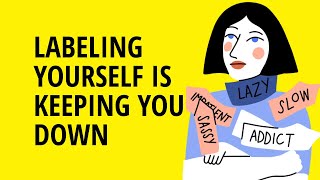
Nir Eyal argues that calling yourself "a procrastinator" or "an addict" locks you into that identity. Instead, describe what you do: "I sometimes procrastinate." Using verbs instead of nouns makes change feel possible.
Chapters
Is this. Is this our new intro? This is the new intro. Wearing the laser straight out of the future.
This is perfect. So we're just talking about hair loss and here's Nick wearing this amazing device because he's labeled with. The article we're going to read today is about labeling yourself. And so you've labeled yourself as someone who has hair loss. And so that's why you're wearing this ridiculous thing on your head. Amazing. I love it.
Yes, I'm wearing. If you're just listening to this podcast, I'm wearing a ridiculous hat that's filled with lasers. It's several thousand dollars and it is meant to encourage growth on the scalp. Men and women experience hair loss as we get older, and the reviews online are pretty good for it. Actually. It's supposed to encourage with red light therapy, scalp stuff. Who knows if it works?
Well, that might be the best way you've ever started the podcast, so congrats on that.
Well, thank you very much. All right, well, you so intro. I listened to a couple episodes recently and man, people really love hearing from you. So maybe you could do the intro, just announce yourself and then I'll get into it.
Absolutely. Hi, everyone, this is Nir Eyal, author of Hooked how to build habit forming products and Indistractable how to control your attention and choose your life. And today, as always, we're here with Nick Gray, who is the author of the two Hour Cocktail Party, which is an awesome book you should absolutely check out. And Nick is here to read through one of the articles I've written for the near and Far blog. And then we're going to do some commentary throughout and just kind of enjoy reading the article together, so hopefully you enjoy listening to it.
Great. I'll get started reading. The name of the article for today is Labeling yourself is keeping you down. Do this instead. Labeling yourself has risks. Give yourself space to change and grow. Recently, after I gave a virtual presentation of my book Indistractable, a listener wrote something in the Zoom chat that drove me bonkers. This is great, but wouldn't work for me. I'm a Gemini. Insert faceplant. You'd be surprised how often I hear this rationalization or something like it. Sure, only hardcore astrology followers would find any justification in that listener's statement. But the sad thing is, to some degree, I we all use a form of it. Most people hawk. This just wouldn't work for me as a valid explanation for not trying something new. Ironically, the Zoom listener is right. If she thinks she's incapable she'll prove it correct. Whether it has anything to do with the stars and moon or not. Her inflexible self identification denies her the chance to improve her life. Another rationalization I frequently hear from people is I'm so ocd. However, that's both grammatically and literally wrong and if they haven't been diagnosed by a medical professional, just plain wrong. Because a person can't be a disorder, it's incredibly self limiting. That's why we should stop defining ourselves as fixed identities nouns, and instead start describing ourselves using verbs. All right, I'm going to take a pause to check in with Nir. This is a pretty interesting topic and I wonder if just before we get into the next section about how language shapes our reality, any thoughts on what encouraged you to write this?
Yeah, it was very much a personal frustration in that I had spent five years writing Indistractable, mostly to solve my own problem. Right. I wrote the book for me more than anyone else. I was the most distractible person I knew and I had trouble focusing on the things that I knew were important for me. So that's why I decided to write Indistractable. And after five years of research and writing, after I have the answer here on a silver platter with over 30 pages of citations from peer reviewed studies, I constantly heard people say, yeah, that's real nice, but it wouldn't work for me because of this thing or that thing. And the most common excuse I heard is that I am a something and that something defines who I am and so that therefore it won't work for me. And it was stuff like I have undiagnosed OCD or I'm a Gemini or I'm not a morning person. All these labels that I really think hurt people. And we're going to see exactly why here. The research concludes that that's, that's the case.
That's one that we hear a lot. I'm not a morning person. I'm not organized. I'm not this, I'm not that. Language shapes our reality. Words are powerful. Linguistic research shows that language shapes people and culture. It can also give us insight into ourselves and our behavior. For example, research about children and the labels we ascribe to them shows just how influential words can be. Labeling not only affects how children see themselves and how they are treated, but also limits their potential. In a well known study, researchers Robert Rosenthal and Lenore Jacobsen focused on teacher expectations and students intellectual development. They had all students in the same elementary school take a standard IQ test. Then Rosenthal and Jacobsen randomly selected a group of students regardless of their test results and told teachers the group would show dramatic intellectual growth. Eight months later, those students scored significantly higher on an IQ test. The study concluded that teachers positive perception of students correlated to those students high performance on intellectual and academic tests. In contrast, teachers negative perceptions would lead to low performance from students. The labels the children received became a sort of self fulfilling prophecy. That's because language shapes expectations which shape our reality. If we have experiences that lead us to label ourselves in specific ways during our life, then we are likely to stick with those labels and the behaviors that go with them. I'll take a pause to check in with NIR on this section.
Yeah, not much to add there. I just think this study is super eye opening about how our expectations and labels around other people really does affect their performance, as was the case here with the children in this study.
Has any of this this might be a reach, and I hope it's not. But I have looked at the comments on the podcast and people love when you talk or when we add in our thoughts to these types of things. So I'm going to ask you, how do you do your research on these articles? Do these things come across your desk? Do you have a research aid or keywords that you're always looking for to find these studies?
So there's a few things. So I spent a lot of time on Sci Hub. So Sci Hub is where you see a lot of these studies that you would typically be behind paywalls. You can find many of them at Sci Hub. It's not exactly legal, but that's where I find many of these studies and that's a great resource. Sometimes I will engage with a research assistant that I've worked with for over a decade if there's something I'm really having trouble finding and she's trained in digging deeper, so I'll engage with her as well. And then a lot of it honestly is I see many, many articles and I will save them into Evernote and label them just as, you know, based on a topic that I think I might find interesting at some point. And so many times when I, you know, I know I will write an article about something or something that's fascinating or, you know, captures my attention and then I'll just put it away in Evernote. And so then when I am finally ready to up write an article, oh, I've got 20 things I've saved over the years that can help make the point.
I'm so glad that you mentioned Evernote I thought I was the last person still using Evernote with all these new tools, everybody using Notion and other stuff. I still use Evernote too.
Yeah, I mean, the more you use it, the more you kind of are bought into it because you're saving more.
And more into it to continue the article. Verbs allow you to evolve. Using verbs to identify ourselves is an effective method for releasing trapped priors, a term in psychology for a perception of reality that's tainted or trapped by past experiences. Verbs are action words well suited to portray transient behaviors that can and do change. They don't lay claim to our entire identity, but they acknowledge that we are people first and foremost, not whatever a singular noun may say we are. So instead of saying I am, insert overly simple noun here. We should say I am someone who verb. You are not a procrastinator. You are a person who often procrastinates, but can stop if you want. For years, experts in addiction research have known the detrimental consequences of identifying as nouns, and they are phasing out, calling people addicts. Instead, they call them people who are struggling with impulse control because it reduces stigma, separates people from their diagnosis, and reframes the addiction in their mind as something they can overcome rather than who they are. By focusing on our behaviors, not fixed characteristics, we can release harmful perceptions of ourselves that hold us back from trying methods that might improve our lives, like those that can help us achieve the critical skill of being indistractable. Hey, if you're not already subscribed to Near's newsletter, you have to check it out. You can Visit it at www.nearandfar.com. let's go back to Nir for some commentary on this article.
Yeah, there's a few studies that I think are worth mentioning with this simple principle, just to kind of drive home the point of why it's important to describe yourself as someone who verbs versus someone who is a noun. There's a beautiful study, I think it was done Knutson et al. And what they did, they they basically called voters, registered voters, and they asked them a very simple question. Are you a voter or are you going to vote? Right? So one is the noun form versus the verb form. And it turns out that people who identify them of themselves as a voter, right, were much more likely to actually go to the polls. And they actually checked on voter registration roles of who actually showed up to go vote. So they actually could verify this. And so when they. When people describe themselves as a noun, when they saw themselves as a thing, it actually changed their behavior in a Way that you could call a pro, social or positive behavior a beneficial behavior, like going to vote. Now, in this article we talk about the downside. In this article we talk about why labeling yourself as something that doesn't serve you can in fact hurt you. So you want to be very careful. If it's a positive attribute, then you want to label yourself as a noun. If it's a negative attribute, then labor. Think of it as a verb meaning don't call yourself addicted. Right. Or sorry, as an addict. Right. That's a term that we don't really use that much. We don't call people addicts anymore. Rather, we call people who are struggling with an impulse control issue. So again, so we don't want to label them as a noun, as a thing that they are when it's a. When it's a negative attribute, when it's something that doesn't serve them, versus calling yourself by that verb form of well, this is something that I do rather than this is who I am. And we see that in all kinds of ways. I mean, this is the main reason why I titled the book Indistractable is because I want people to have that label. Indistractable sounds like indestructible. So that becomes now our new label as the kind of person who does what they say they're going to do. It is who I am.
Wow, I love that. I've thought about that recently. I've noticed over the last five, 10 years we no longer call people homeless. I don't know if you've seen this. Instead you say someone who's experiencing homelessness. And I think that change. That's big for me to think that if it's a positive, then I can use it as a noun. But if it's a negative to say, oh, I'm someone who doesn't always blank. So I like that. That's a great reframe of it.
And it's not this. I don't want people to think like this is about political correctness or not offending folks. I mean, that's one aspect of it. But really what I want to focus on is how we label ourselves. I think that's the really important thing here because it really does affect our behavior when we think to ourselves, oh, I'm not a morning person. Well, we don't act in accordance with. We do act in accordance, I should say, with exactly what we think we are going to do. It's like what Henry Ford said, whether you think you can or you can't, you're right. And so we have to be very, very careful about how we label ourselves because in many ways they can become self limiting beliefs.
The name of this article is Labeling yourself as keeping you down. Do this instead. I'll read one last summary of the different sections, see if it inspires ne anything else he wants to add. But hey, while you have a minute, will you please leave a review for this podcast? Any review or feedback helps. It really is appreciated. You can check it out at near and Far anywhere you listen to podcasts, just click the little review button. It really means a lot and encourages us to keep recording these summary section section 1 was labeling yourself has risks. Give yourself space to change and grow. Section 2 Language shapes our reality and then we finished it up with Section three. Verbs allow you to evolve Nir, anything else you want to add for this great article?
That was perfect. Thank you so much. Appreciate you being with us, Nick.
All right, great. Hey, if you haven't already subscribe to nir's weekly newsletter, you can get a free weekly update on all of Nir's latest research, writing and his best articles that he finds every single week. You can unsubscribe anytime. Near won't even be notified if you unsubscribe, so we'll still be friends. Whether designing customer behaviors or your own habits, you'll benefit from understanding the research near shares from user experience, design, behavioral economics, and neuroscience. Sign up for it@nearandfar.com that's spelled n I r and far f a r dot com. Thank you for listening and we'll see you next week.
More from Nir


Your Beliefs Are Sabotaging You (Here's Why) - Beyond Belief for Athletes with Nir Eyal







