Marketing to the "Transformational Consumer"
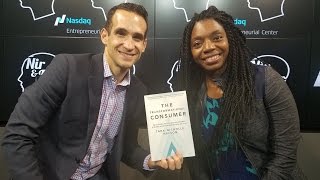
Tara Nicole Nelson explains how to market to transformational consumers: people who see life as projects to improve themselves. Companies should stop selling products and start selling the transformation, map where customers get stuck, and align everything from product to culture to remove those obstacles.
Chapters
Welcome to near and Far. My name is Nir Eyal and we are coming to you today from the NASDAQ Entrepreneurial center in San Francisco, California. And my guest today says that your consumer is transforming themselves and that makes for a multi trillion dollar opportunity to. Tara Nicole Nelson is the author of this book, the Transformational Fuel a lifelong love affair with your customers by helping them get healthier, wealthier, and wiser. Tara Nicole Nelson, welcome. Thanks for being here today.
Thanks for having me.
We're really pleased that you're here. We've actually worked together before in the past, which is great to have you back with us. And so I want to start with your background a little bit. You are most recently the vp, former VP of marketing for My Fitness Pal, which was acquired by Under Armour for just under half a billion dollars. Congratulations.
Thanks.
Awesome outcome.
Thanks. It was pretty great.
Yeah. And you've learned a lot about what you call the transformational consumer. Who is the transformational consumer?
You know, it's funny, as we were talking about before the podcast, like transformational consumers are probably the people who are watching us right now, transformational consumers. And this is a framework I developed. I sort of refined it at MyFitnessPal and Under Armour, but started it working way back at HGTV and then later at Trulia and with a whole bunch of other brands. But they are just people who see all of life as a series of projects to change their own behavior for the healthier, wealthier, and wiser. They tend to be very much early adopters because they know that behavior change is hard and they know that behavior change is kind of the linchpin in getting to the good life that they envision. So they're constantly out there looking for products and services and tools and content. Even that will help them make those really hard changes. So they're early adopters, they're experimenters. They're very influential on the buying behavior of the people around them. Their personal brands tend to be built around the fact that they're always changing, they're always on the move. I often joke that if people, if you've ever been both vegan and Paleo at different times in your life, you're probably a transformational consumer. Entrepreneurs are likely to be transformational consumers. And the sort of upshot is that if you are a brand that can remove a lot of the frictions along a transformational consumer sort of path from having problems to no longer having them, they just fall in love with you. They'll use your brand over and over again. They'll tell everyone about it. And that's why I talk about the idea of the framework being to help brands and companies and startups kickstart lifelong love affairs with customers.
So does this have to do with how we position to these people or how we build products for them? How can we cater? How do we cater to them?
Well, the first thing that we have to do is to actually understand them. We have to understand what their actual real world journey looks like as they're trying to solve the problems that, the high level, human scale problems that our companies exist to solve. And then you can spot all sorts of opportunities for serving them and removing frictions and also triggering their progress in the form of, as I talk about in the book, rethinking what you actually sell, rethinking your actual marketing and your content programming, understanding differently who your actual customers and target audiences are, and everything down to rethinking your competition and your culture, your internal corporate culture, to be much less focused on your product and much more focused on the problem that you exist to solve.
Why do you think there are so many more of these type of consumers? Is this a demographic thing? Is this something in the zeitgeist of how people think about their lives? Why do people want to transform themselves now more than before?
Well, I mean, I joke a lot about, I don't know what it might have been like to grow up before Oprah, before Oprah was a phenomenon. But I do think generally the era of the Internet and the era of the app allow people to access content, whether it's like success stories and inspirational personalities or actual tools to make these changes. I think people have wanted to make these changes since humans have existed. Right. You can actually see old, old texts, biblical texts, even Old Testament biblical texts around people looking to God to be healthier, to live longer, all of those things. But I think what's unique about this era is we can actually access that stuff. If my parents wanted to start a business and, and didn't know anything about business, they would have had to get the idea that they could do it, maybe know someone who had done it, go to the library, maybe check out a book. It's just harder to figure. It was harder to figure out how to do things. And now we get the steady cadence of content all the time that both stokes our belief that we can do it and the ability to actually do it.
Interesting. So we live in this age of empowerment that people kind of believe that they can do more. And so it's our job as marketers to help them achieve those goals as.
Marketers and as product designers. I mean, that's one thing I talk about a lot in the parts on culture and on rethinking what you sell is that it's really, it is not a great thing when you see just the marketing team in a company spearheading the idea of representing the voice of the customer. And when every other team in the company is not also working against that same understanding of the customer's journey. And you see this happen a lot, right, where the marketing team is just wanting to hit their reach and engagement metrics. So they may try to understand the real world, the natural language, the real life behaviors of the customer, but the rest of the company is perhaps working along a customer journey map that is really more like a customer life cycle map. Right. So where they're really only paying attention to what happens to the customer once they come into contact with the brand or with the product. It's really. I think one of the great wins that we had as a team at MyFitnessPal was that every team in the company was operating on the same understanding of customer journey. And we were all operating against the idea that our competition is not any other company, our competition is any obstacle along our customers journey. So once we started to really deeply understand that, which we did and can only do by talking to real people in the real world, then it was like the product team was developing features, the marketing team was developing communications program, the business development team was developing partnerships, all aligned around removing the same set of obstacles for customers.
Do you think that every company can do this? Should every company be thinking of their customer as transforming from one state to the next or is that just certain type of companies?
I actually think it is. So I like to say it's sort of ATF companies, so alcohol, tobacco and Firearms, those companies, it would be a stretch for them to be trying to market transformationally. What's interesting though, and there are other products like garbage bags, it would strain credibility to try to market them transformationally. But there are other products where people consistently do choose between two types of a product that's not necessarily a health or finance related product because one is the better healthier choice. So one example that I use in the book is Unilever. Unilever has marketed in the rest of the world for a very long time with actual like hand washing education campaigns. The message being that hand washing does save lives. So if you're a woman in one of these developing countries and you're choosing this soap because you believe it saves lives or could save your family's life. Or if you're a woman in San Francisco and you're choosing a soap that's non toxic or natural over one that's not because you believe it's just healthier for the planet, it's better for your family. I talk a lot about how transformational consumers are fixated on the things, the healthfulness of the things that they put in, on and around their bodies and their conception of their bodies extends to their children's bodies and their pets bodies. That's a huge set of products when you think about it. It goes from being just sort of health foods and produce to being consumer packaged goods and household cleaners and lots of other things. So where do you start?
Do you start with who the customer wants to transform into or do you do this journey map exercise, walk us through it? Yeah.
What you actually have to do is start with rethinking what you sell from being just the actual product that you currently sell to selling a form of transformation. You're selling the solution, the transformation of people, human beings. Not like customers or avatars or Personas.
Real people.
Real people at a human, human scale. Right. And so one example that I give is Trulia where I used to work. At Trulia, we were a real estate search engine if you really want to think about what the product was. But we pretty consistently internally talked about what we existed to do being actually helping people make wise decisions on their largest purchase they'll ever make. And so you can just see that lens shift changes a lot about the way you think about serving your customers.
Yeah, it's almost like you're shaping their idea or not shaping, you're helping them fulfill their identity.
That is the right, they want to.
Be a well informed consumer. If I'm going to buy a house, I don't want to be the sucker. I want to be someone who made a wise decision, that kind of person.
And so that sort of expands the ways in which we could fulfill our mission as a company. From just serving really good listing data to doing what we did, which was creating an original content program that had everything from rent versus buy indexes to help people in every city make, you know, wise decisions about that to you know, this blog we ran that was like the world's most read real estate blog for years where we constantly were just, it was problem solution. We weren't posting content about the brand, we were posting very solution oriented content that solved for our customers problems. It is that shift from posting a bunch of content about your brand, telling brand stories, which we hear a lot to, to posting content that is high value for your customer's journey, that is problem solution oriented. So yeah, you start with understanding the problem that you solve a little bit differently. Then you move to redefining your customer from the people who buy your thing to being any human being that's trying to solve the problem that you exist to solve this high scale human problem. And then you map their journey and you don't map their customer life cycle just within, I mean, so let me take that back. You do map your customer's life cycle. It's important to understand your customers experience within their brand and within your own channels and with your product. But that's not this exercise, the exercise of customer journey mapping the way I'm talking about it is really mapping the universal stages of your target audience's real world journey. From having the problem you exist to solve to no longer having that problem.
I see. So the first step is to actually map out that journey. And are we tracking how well we're doing? What's the metric of success?
Not yet. What you're doing is you're seeking to understand. You are seeking to deeply understand. You are seeking to understand the stages. You're seeking to understand where they get stuck between stages and where they get unstuck, what triggers their progress. You're seeking to understand research moments. Like where are the moments along this journey where they have questions and where do they go to get those questions answered? And then one thing that I'm a huge proponent on is you're seeking to understand their natural language patterns. What language do they use? What mental frames do they have built around the subject matter of what you do? And that is so revealing. So often it's very, very different than the way companies talk about their own business.
I find many times people can't articulate to you, particularly when it comes to identity issues. Even though they're buying products to become something else, to transform themselves. It's very hard for them to tell you, oh, you know, I'd like to become the kind of person who does this and that they can't articulate. But how do we dive deeper?
Sometimes they can, sometimes they can, and it's not true. Right. So there's a lot of like talking to people and asking questions and then there's like getting out into the world. So we started a, we did a multi city project at my Fitness pal. That's so sort of the archetype for what I think a best practice is in this Customer journey, mapping experience and sure. So we started with, first of all, we started with getting out of our office in San Francisco because while I love San Franciscans, they are not representative of any other people anywhere. So we went out to a bunch of cities around the country. We chose the people in the cities, sort of thinking about how we could create representation of the various types of, of people and approaches to health. We stopped talking to people about just weight loss and started talking to people about solving the problem of living a healthier life than you do right now. And we would go to their homes and meet with them. We would talk with them a little bit and then we would observe. We would go into their kitchens, into their pantries, into their fridges. We would drive through the, drive through with them and go to the gym with them and we would pick up that. It is actually very important to pick up the differences between what people tell you and what they actually do. As just one story that I use because it was such a vivid example of that. We talked with this one woman who was really struggling, she was struggling with weight and she kept saying she really enjoyed a Paleo diet and she was feeling like it really worked well. She had all these cookbooks she wanted to tell us about, but she had still had a hard time. So we went to her fridge and in the fridge there were maybe like a half dozen quart sized Mason Mason jars with colored liquid in them. And so I just asked her, like, what is that liquid? And she said, it's Jolly Rancher vodka. And okay. I was like, that is not a Paleo food item. And so when the photographer came over, because we document these things very, very, very closely, the photographer came over, I said, this is vodka that she's dropped a Jolly Rancher into. And she said, no, no, there's 12 Jolly Ranchers in each jar. Okay, sounds like I didn't even know.
That was a reconciliation.
Well, but that's the thing, right? So the difference, you do have to both talk to people and observe people in their natural environments.
So what do you do with that?
Some of the natural environments can be online. So when companies don't have. I run a consulting firm where we do this kind of research for people. But if you don't have that level of budget for it, it can be helpful to observe how people, how your consumer audiences talk to each other when they don't think they're being observed. So, like, bizarrely, I spend a lot of time on Reddit, right? And Reddit has a ton of, of transformational Forums from the frugality subreddit to the fitness subreddit. And there you just see people's natural questions, the things they're struggling with.
So how are you reconciling that? So here's this woman who wants to lose weight. She has this one part of her identity, one part of transformation, that she wants to become the kind of person who stays fit. And then she's got this contradictory part of her life where she wants to.
Have a good time, meaning she's a party, she's a human being.
So is the goal of your product to figure out what part of the user's identity you want to help them transform into?
It's more that we seek to understand their, what I call resistance points, the sticking points and pain points. And we also, as we begin to talk to a number of people, you spot patterns in the stages and you can see the things that someone that helped someone who used to be in her situation get out of that situation. So we started to see that people, like, as they began to cook more and seize a little more control over the content of their food, as they began to no longer stock what I call Kryptonite food items at home, as they got social, as people in their lives got really on board with it. And that was a big issue for her. She was cooking, she was essentially trying to prepare two different kinds of food for her husband and for herself. So we know that that was a very common issue, actually.
So who's doing this really well, when you look at what kind of companies really understand how to help customers transform, you know what?
I do a couple of case studies in the book on companies that I. At all sizes, there's credit karma, who does a really good job at helping people fulfill their financial goals. I think some of the collaborative consumption companies do this really well. I've talked with the people at Airbnb a lot about how they perceive both their hosts and their guests as transformational consumers. I also think some of the big brands that would surprise you. I think Target has done a good job of this. Target has made a series at cvs when they stopped, CVS stopped selling tobacco products in part because, I mean, or the talking point anyway, was because they didn't want people who were there to buy smoking cessation products to have to pass the cigarettes on the way to get the smoking cessation products. And so one thing that some of those initiatives, I'll say, for lack of a better word, sort of dovetail into is that the framework also is very useful at helping you understand consumer trends, what people will be wanting and demanding as you move forward. Which data doesn't as much. Right. Data is pretty retrospective. So one thing that we're seeing a lot is consumers sort of crying out for what I call manifesto marketing. In this era of sort of, I'm going to just say leadership crisis or leadership vacuum in our country, customers are more and more wanting to know how the companies that they patronize feel about issues that may or may not have much to do, subject matter wise with what they actually see. So it's a big challenge that I see. I talk to a lot of the heads of communications of the tech companies in particular, and everybody is sort of dealing with this both internally and externally. And I think you saw that in the first week of this administration with the Uber and Lyft issue. Right. Like when customers are organically coming up with hashtags like delete this and download that, that's a sign. And that's one way that they're trying to actually be transformational is healthier, wealthier and wiser. And wiser includes things like fulfillment, wanting to be a better citizen of the world. So I think you're going to see increasingly just as a transformational consumer trend that like demand almost like it's their way of practicing everyday activism.
Excellent. Well, the book again is the Transformational Fuel a lifelong love affair with your customers by helping them get healthier, wealthier and wiser by Tara Nicole Nelson.
Thank you so much for joining us. Great to have you. So fun.
Thanks.
More from Nir


Your Beliefs Are Sabotaging You (Here's Why) - Beyond Belief for Athletes with Nir Eyal







