Q&A with Nir Eyal at Startup Grind
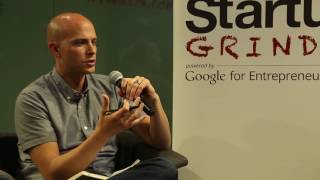
Nir Eyal talks about building habit-forming products and the Hook model. He distinguishes habits from addiction by asking if you're the user and if it materially improves lives, and warns against the Q-tip effect, where a solution worsens the original problem.
Chapters
Just going to not say anything and just look at you. I've thought about that before, actually. When I interview Vinod Khosla, he doesn't answer any of your questions, and then they want you to interview him. And now finally, the third time, it's like, why am I interviewing you? Just sit up there and talk. You don't care what anyone's saying. So I told myself I'm not gonna ask. The last time I did it, I'm sorry, this is your interview. And now I'm saying it doesn't even matter. The last time I decided I'm not gonna ask a question. I'm just gonna sit there as long as I can. And that lasted, like three seconds. So you are gonna answer my questions tonight?
Maybe a couple.
Yeah. Okay. First of all, why are you so dressed up? Did you get married today or what happened today?
I didn't get married today. Yeah. Although that might be the last time I used this suit.
Great suit.
Thank you. Thank you. Now, I had some clan meetings, and, you know, I study social psychology, so, you know, there are people make first impressions, and you can influence behavior by the way you dress.
Is that right?
What. What.
What am I saying right now?
I don't give a.
You know, rip me, rip my Nikes apart. Thank you so much for being here. This is like your third or fourth startup grind, and we really appreciate you doing it. And I've never really gotten a chance to. To speak peek with you at Star Grind, so I'm. I'm particularly excited about it. Just tell us a little bit just about yourself. Where did you grow up? How did you get to Silicon Valley? Tell us where you went to school. Just tell us a little bit about yourself.
Sure. So I got to Silicon Valley about 10 years ago. I came out here after starting a company in New York and then came out for business school at Stanford. And then at the end of business school, started another company with some of my classmates that was in the advertising and gaming space. And this was back in 2007, 2008, time frame when apps didn't mean phone apps, apps meant Facebook apps. That was the only kind of apps that anybody were talking about back then. And so at the intersection of these two industries of gaming and advertising, which is where my last company lived, I learned a lot about consumer psychology. I learned a lot about what makes people tick. Because, look, you know, these two industries of gaming and advertising are. Are all about mind control. Right? These two industries survive because they can influence human behavior. So did my last company for a few years. And then after that company was acquired, I had some time on my hands and I wanted to figure out what I would do next. And I started looking for some kind of filter that investors have an investment thesis about how they allocate their financial capital. But I felt like I wanted some kind of filter on how to allocate my human capital. And I didn't know what that would be. Right. A VC can put out a lot of bets and kind of have a portfolio of companies. But as an entrepreneur, you're only riding one horse at a time, and you got to ride that horse until the horse is sold or the horse dies. So I wanted to bet on the right horse. So I came up with this thesis that habits were really going to matter. That especially as the interface shrinks, as we move from desktop to laptops to mobile and now to wearable, every time the interface shrinks, every time the screens get smaller, habits matter more. And that's because there's just less real estate, right? There's less space on these increasingly small screens to trigger people, right, Using what's called an external trigger. And I can talk about the hook model a little later. These external triggers, notifications, messages, information that tells you what to do next just has less space on a small screen. Of course, it completely disappears after wearable or concurrently with wearable. What we're seeing now is voice interfaces, right? Like the Amazon Echo and Siri. Right now the disappear. The interface at least of a screen has disappeared completely. So if you don't remember what you're looking for, if you don't have a habit associated with your need, then that product that you've built that people can't remember doesn't exist, right? So that's why I think habits are so important when it comes to building new companies, new businesses that you know, if you're not on the first page of someone's screen, if you're not the top of mind solution, you're gonna lose. And so I have this very strong conviction that, you know, there's no rule that says the best product wins. I hate to break it to you, but there's no 11th Commandment that says the best product wins. Silicon Valley graveyards are full of companies that had the best product. But that doesn't matter. What matters is if you can form the habit, can you create a monopoly of the mind so that you're the first to mind solution? If you're not, you lose. So that's why I started studying habits and then I started blogging about them, researching a Professor from Stanford reached out. The professor I knew quite well and liked my articles and asked me to co teach a class with him, Baba Shiv at Stanford. And then I started teaching at the design school. And then the class sessions essentially became a condensed version of the book. Hooked.
How much of habits or this idea that, I mean you're exactly right that there's so many great products that just died and how much of it is the product? How much of it is the ui? How much of it is the brand? Is it the timing? Like, I mean aren't all of these things critical? Or is behavior or creating that habit? Is that really the thing that it needs to have?
So when I look at companies to invest in or companies I want to work with and consult with, I look for gems. I wrote it up there earlier. Gems G E M. So GEMS stands for growth, engagement and monetization. So these are the three pillars, these are the three things that every product needs. Now of course, products sit in the corner confine of a company. There's lots of things that a company has to have, right? The right team, the right financing, all that stuff. But we're just talking about the product. The product to survive within the company, needs growth, needs engagement and needs monetization. Each is necessary but not sufficient. So what I was seeing back in, after my company, last company was acquired, so this was around 2012, growth hacking was like all anybody was talking about. And to still some extent it takes up a lot of the oxygen in the room. The problem is I saw so many companies that nailed growth but didn't have engagement. And growth without engagement is meaningless, right? That's a leaky bucket. There's lots of companies that figured out some viral channel that opened up for a few weeks, got crazy numbers in terms of their growth, raised capital, and then of course, as soon as that money hits the bank, the users leave because they couldn't figure out how to keep people engaged. The best thing you can do to grow month over month is, is to keep your existing users engaged. But I didn't see a manual, I didn't see a how to guide for how do you keep people engaged? How do you build habits? So that's the book I wrote.
You have really good acronyms and just names in general. Is this like, do you spend a lot of time on that or do they just come to you? Like, I'm just curious.
Omfg. I don't know.
I'm serious. You are really good at names. Like some people, like I feel like in the history of Building products. I probably come up with like one good name, but I think you have like a Baker's Dozen acronyms that are just like, I can't get them out of my head now after you've said them. And that is it. Do you see that as a gift or is that. Do you have another. Do you have a consulting agency, marketing agency that you use to drive this from? Where does this come from?
Okay. It's. Thank you. I appreciate that. It's very kind of you. It's actually one of the best compliments I can get because. Yeah, because. Yeah. I'll tell you why. Because I like to read.
Yeah.
But as an entrepreneur, I realized that you don't have that much time. Right. Like when I was running my company, I never wrote anything. I didn't have time. I hardly read anything because I didn't have time. So what I wanted to do was to give entrepreneurs something practical that they could understand, but also share and communicate. And I think that's a really important lesson for the, the messages we're trying to get out into the world. You know, I work with a lot of academics and I see my job as not producing new research. I mean, everything in that book is 50 year old research. When it comes to the studies, my job is to take that research and make it digestible and make it shareable. And the way to do that, and this is another cognitive hack, is to make things that people can carry with them. And it has to be simple. It has to be something that is easily understood and easily conveyed.
In terms of the type of entrepreneur that you are. I wonder if you could just talk to us a little bit about this. You're really a unique entrepreneur. First of all, you have built products, you have built companies, and now you kind of have built this whole platform really around the things that you've written about and the ideas that you've put together. And also this kind of personal brand, which is just really, I'm not just saying these things. Like it really has amazed me what you've done in the last few years with your personal brand. And I start reading your stuff on TechCrunch and I remember it and there are posts that I remember and that we talked about in the office and you know, and these things just came and then the book came and then there's talks that I've seen and there's blog posts that I've seen since. Do you like, is it a different path, like this thought leadership path or kind of like putting ideas together and trying to spread Those ideas versus necessarily building a product. Or do you look at the book as a product? Like, how do you see the difference in that?
I really love this interview so far. I don't know how you feel, but it's great for my ego. I really appreciate it. Can you just come with me everywhere I go?
It's gonna change here in a minute, but yeah, okay.
I'll let you in a secret. I don't have a clue what I'm doing. I mean, I. No, I'm very serious. I think some authors write because they have the answers to something, like academics, right? They do a study, they work, work, work, have some knowledge and then write up that knowledge. And I don't really work that way. I start with a question. And everything I've written to date over the past, what, four years now has been trying to answer questions that bug me, like things that I want to figure out. And I think I have. I have the luxury of something that a lot of people don't have, which is time to think, right? That, like, I get a lot of questions. So I do office hours every week for whoever wants to call. They go to my website. They can book time with me every. Every single week. And so I make.
What's your website?
Near and far.com. i wrote it up there. Near far.com. so if you have a. If you have a question, maybe you read the book, maybe something didn't make sense, you can call me up and we'll chat for free for 15 minute increments. And it amazed me how many questions, if people just had the time to sit and think about, they could actually answer for themselves. But I think we've come to a time where I don't know if it's because so many answers are easily accessed and so we don't want to spend the time to do that. Or maybe we're just too frantic and, you know, as an entrepreneur, I didn't have much time to think either. But that's my secret sauce is I just sit in a cafe for hours and hours on end and I think about stuff and then I write about the stuff that's interesting. There's really no strategy other than that.
Well, I think too this idea of like building this brand, which as a founder you don't have time to do, right? You have to focus on the product, you have to build your team. All these things that everybody talks about. But as I have looked back on some of the most important, like most moments or things that have propelled me forward, it was honestly, it was Blogging, or it was doing a specific interview that people saw, or it was writing something thoughtful that was authentic and honest. And, you know, you have 36,000 followers on Twitter and, like, that's a powerful voice and that's something you've been building for a long time. I just like, if I'm an entrepreneur, listening to this or watching this or sitting here, I would just love to get your advice of if. If you're starting from today and you're trying to build a product and build a company, how would you go about building your brand? Would you waste your time on blogging? Would you be doing a podcast? Would you be like, what would you do to build your personal brand so that people start to know who you are?
Hmm. That's a great question.
Thank you.
Yeah, that's a really. I'm not sure, you know, I don't know if it's necessary. I don't. You know, entrepreneurs have so much to do and there's so much advice coming at them from every direction.
Yeah.
And frankly, I don't know if building your personal brand comes above your products brand. Right. I'm not sure I would make that trade off. I know I didn't.
But don't they ride together? I mean, like, you know, Arrington's brand was TechCrunch, and I mean, he was a blogger, so that's maybe not a good brand. Good example. But look at Bob Den's was Foursquare.
Right.
Or Daniel Ek is Spotify. And, you know, I mean, Brian Chesky was Airbnb. Those guys weren't blogging or building. They built huge companies. And that was way more beneficial than building a personal brand.
I think it has to be authentic. You know, like, the more I think about it, I think two things will happen. One, people will see that your motivation is to build your personal brand. I think people can smell authenticity or the lack thereof a mile away. Whereas if you write about authentic challenges, authentic struggles that you're going through, that's, I think, what people resonate with. Or honestly, questions that you don't know the answer to. And yet, here's what I figured out. Hey, everybody, look at, look at what I learned. That's, you know, to be honest, that ethos is why I love the Bay Area so much. And I speak all over the place, so it's not a ding on other locations. I just think we have something very special here in the Bay Area. I think it comes from our engineer culture that a lot of places have a zero sum culture. For example, I lived In New York, where the dominant industry in New York is finance. And finance has this mentality or tends to have a mentality. If I won on the deal, you lost. So it's zero sum. Whereas that's not our ethos in Silicon Valley. Silicon Valley is you gain currency in a way by showing people what you did. And I really love that about the Bay Area. So to me, like, if there's something authentic that you can share with other people and they benefit from, that's welcome, that's appreciated. The value will give you a big bear hug. If it's promotional to build a brand, I don't know, I wouldn't advise, I would focus on your product.
People can smell authenticity really quickly, right? I can read a post, I've read so many posts, I can read it and in five seconds know, is this, does this person get it or not? And, and this happened a lot with Startup Grind, where people who got it say, oh, Startup Grind, I love that name. Versus people who weren't entrepreneurs. They would say, do you know that name is really, it's very negative. And I'm like, I had a sponsor one time say, could you change the name? It's very, it's kind of has a sexual connotation. And I said, I said, you have no clue what you're talking about. First of all, you know, like, you don't get it. You're not entrepreneur, you're not authentic to what we're doing, you know, And I think, like, I think the community gets, gets the people that are doing it. Right and the people that are just pretending.
Right? Yeah, couldn't agree more.
Let's talk about addiction and some of your addiction. No, not your addictions. How this isn't intervention that hoarders or something. How's the Internet addicting? Like, tell us about the good and the bad about the addiction of this kind of technology and the Internet.
So this is an interesting question that I've been struggling a lot with and frankly, I don't have the answers to. So ever since I wrote the book, I don't know if I've gotten criticism, but I guess I get a question, question or skepticism around like, hey, aren't you teaching people how to make the bomb here? Aren't you teaching companies how to addict us all? And my response is that, well, first of all, there was a very conscious choice that I made not to call the book how to Build Addictive Products. The book is called how to Build Habit Forming Products. Because habits and addictions are not the same thing. A Habit. We can have good habits or bad habits. All habits are. Are an impulse to do a behavior with little or no conscious thought. It's about half of what you do every single day. It's purely done out of habit. And of course, habits serve us. We need habits because our brain can't, you know, consciously comprehend all the things we have to do every day. So about half of it is on autopilot. Habits are not the same as addiction. Even though we have bad habits, sometimes addictions are different. Addictions are persistent, compulsive dependencies on a behavior or substance that. That hurt the user. Okay? That's the definition of an addiction. And of course, we would never want to create an addiction. We would never want to create a product that knowingly addicts the user, because that would mean harming the user. But then, of course, the pushback is. Well, you know, the companies that I profile in my book, Facebook and Twitter and Instagram and WhatsApp and Slack and Snapchat, we all know people, maybe some of these people ourselves, that use this stuff too much. So what about that, right? And what about the ethics of building a product that frankly, a lot of people are angry at? I mean, I see probably every other day somebody will form me an article that. That says, how to cure your Facebook addiction and why Google is turning our brains into mush. And, you know, you name it, there are people who really object to it. And so I'm still sorting this out. Like, I'm still trying to figure out what's the ethical line. I don't know if I have all the answers, because I think the big question I'm struggling with now is when is a product addictive versus when does a person have a propensity towards addiction? So we know that a certain proportion of the population has a predilection for addiction. They meet the psychographic profile for someone who will get addicted. And people get addicted to all sorts of things, right? You've watched a show, intervention, so you know, people will get addicted to eating tape or huffing glue or I've watched.
Many seasons of Hoarders, right?
So, yeah, hoarding. So there's some products that clearly, okay, it's not the product's fault, right? If you sniff glue and you're addicted to it, that's not really the glue maker's fault, right? We all agree on that. But what about if you're addicted to Facebook? Is that Facebook's fault? I mean, I will tell you, the product is manufactured to be engaging fact, right? Instagram, Kevin Systrom, was a symbolic systems major, which is a major at Stanford. That's half computer science, half psychology. They know what they're doing people, right? They know what makes you tick and what makes you click better than you do. Fact. And they have whole teams that are there to keep you engaged using many of the techniques.
They are quoting those engagement metrics as, like, huge badges of honor, right?
Exactly.
They're raising money off of that. They're hiring team members off of that.
And to a lot of people, I think the gut reaction is like, well, that's really bad. On the other hand, is that a problem or is that progress? Right? Because would we want it any other way? Like, would we want products that don't engage us? Would we want shitty things that we don't want to use? So part of my quest, my mission, and, like, why I love talking about this subject is because I don't think the real problem is that some products are too engaging. I think the real problem is that far too much software is not engaging at all, right? So, like, my first goal in writing this book is that as someone who has built product, I know how hard it is to build something that people want to use. And so I see so many entrepreneurs that are building products that could genuinely help people, that could really improve people's lives, that can build healthy habits, but for lack of good design, people aren't using. And that's super frustrating, right? Many of us have felt that, right, that you've built something great, but damn it, people aren't using it. Why not? That's what I hope to help with. So the real problem is that not that a few products, the companies that make these products, suck us in. It's that far too many products suck, right? That's the real problem. Okay, so that's part of it. But then we still have this ethical overhang of, yeah, but my Cousin is on YouTube all day and won't stop Snapchatting. And I hear this a lot. So I'm still struggling with the ethical implications of that.
Tell me about, I mean, the science behind the behavior or how it's changed, do you think? Or from things that you have seen? Are we more addicted to things now than we were 100 years ago, 500 years ago? Do we just have more access to different tools and things? There's this classic picture, right, of everyone says, we're all looking at our phones, right? And then the media reply to that is always everyone on the bus looking at the newspapers, like. And not talking like, oh, we're not Talking anymore. Well, no one was talking in the 50s either.
Right, right.
And no one talks on the London tube. They're all reading whatever the tabloids or whatever. So like, like are we, have we changed or do we just have more access to stuff?
So we have absolutely changed. There's no doubt about that. There's a lot of research that shows that the brain changes with, with any kind of learning. The brain changes through this process of automaticity. I'm sorry, neuroplasticity. What we don't know is do we change for the worse? That's what we don't know. Not does the brain change? I mean the brain changes when you learn how to play the piano or play tennis or learn a new language. The brain is constantly changing. Anytime the brain is learning, the brain is changing. What we don't know is this good or bad? My answer to that is that, you know, the problem of that these problems are solving, that these products are solving are age old. So I talk a lot about internal triggers, that the first step that you have to take if you're building a habit forming product is to identify the customer's internal trigger to understand what's the itch, what's the pain point, what's the psychological need that occurs frequently enough in the user's life that you're going to attach your product to. So when we're bored, we check YouTube or Reddit. When we're uncertain, we hop onto Google before we even scan our brains to see if we know the answer. Or when we're lonely, we check Facebook or maybe Tinder. Right. So these products have formed associations in our brain that when we feel this, we do that. That's what creating a habit forming product is all about in a nutshell, creating an association with an internal trigger. Now I'm never going to advocate creating an internal trigger. Right? We don't want to form an internal trigger, we want to attach to an internal trigger the, these painful emotions, these negative valence states. These internal triggers have been around forever, right. As long as our species has been alive, we have been bored and lonely, indecisive, fatigued, uncertain. These are age old problems and being pulled into distraction is nothing new. Right. Socrates and Aristotle debated the nature of Akrasia, this tendency to do things against our better interest. So that's not new. I think what's new is the medium, obviously. Right. This medium wasn't available nor was it as accessible as it is today. So the fact that we have these devices with us all the time, this access to getting and receiving Data at such fast speeds is kind of this, this, this has created a more addictive product, potentially addictive.
Do I have an ethical obligation that when I sit down in the garage with my co founders, we say, we're going to build this product and we're going to change the world, do I also need to be saying, but how addictive are we going to make it? Like we can't make it, we got to make it good, but we can't make it that good, Right?
So I think there's a few lenses you can look at this question from. So the lens I put in the book, there's a chapter in the book called the Morality of Manipulation. And I give this very simple two part test that if you're, as a maker, okay, this isn't a way for you to judge other people or for other people to judge you, but if you as a maker are asking yourself that very question, not can I change people's behavior, but should I? You have two questions I'd like you to ask yourself if you even care about this. Two questions are, number one, does the thing that I'm working on materially improve people's lives? If you look in the mirror and ask yourself that question, can you answer in the affirmative? Is what I'm working on materially improving people's lives? But that's not good enough. There's one more question you need to ask. The second question is, am I the user? Am I the user? Why do I make people ask that question? I prompt that question because I want you to break the first rule of drug dealing. What's the first rule of drug dealing? Anybody know?
Don't hire your brother.
Close. Never get high on your own supply. Never get high on your own supply. So why did I do that rule? Because if there are any deleterious effects of using your product, you're going to be the first to know. So that's the safeguard. So if you are materially improving people's lives and you're the user, you're what I call a facilitator. Okay? Now it doesn't mean you can't make money not being a facilitator, right? You could answer no to those two questions and still make money. That's not the point. The point is, are you on good moral ground? And so if you're a facilitator, you have two big advantages. One is that you're in a good ethical place. And two, I think you have an amazing business advantage. Because if you think about all the companies I mentioned in the book. Google and Facebook and Twitter and WhatsApp and Slack and Snapchat. All of these companies were founded by facilitators, people who were building something for themselves, who materially improved, they were, who believed they were materially improving people's lives. And that's such a huge advantage because the hardest part about building a product is understanding the user. And it's such a leg up, it's such a huge competitive advantage to build for a user you deeply understand, namely you. So that's the two part test I give for makers.
I mean, the hardest part with that is you build it for yourself, but then you don't know how big the market is going to be. Right. You don't know how many people are like you, and I don't know about your experience. But more often than not, when I build things for myself, it turns out I'm one of the few people that actually wants it. And it does happen sometimes, right. And Facebook in that regard maybe gets lucky and Snapchat gets lucky that they build into a big market. Do you see that?
Absolutely. And so that's the M in gems. M stands for monetization and within that is size of market. Right. How much of the market can you monetize? However, I see a lot of what I'm worried about is not that you build a product that you love, but nobody else likes. What I see occurring much more frequently is that people delude themselves into thinking this thing I made that other person is going to love, even though I would never use this piece of crap. That's the problem. I see more frequently the market sizing, frankly. That's where the magic and the risk investing of being an entrepreneur occurs. Nobody knows. There's no way that Peter Thiel, even when he invested in Facebook way back in 2006, I guess he couldn't have known, right? He didn't know it would touch one in seven people on the face of the earth. He thought, there's potential. Right? We all have this need to connect with each other. Wow. This is a potential market. But anybody who tells you they saw how huge a market could be, that's really tough to do.
Yeah. It's interesting because you see as you go through this exercise with entrepreneurs, right? It's like, oh, well, why are you building this? Oh, I really needed this. It's like you needed the networking app to meet with strangers when you were traveling. And it's like, yeah, I would use this all the time.
I go, but do you?
Exactly. And you go through it and you Kind of. As a founder, you see this. Sometimes people are just delusional. I have been delusional in this. And I. And I've done exactly. Other people will love this. And like, I will use it once in a while, you know?
Right.
Like, people are gonna love this and I'll like, might use it.
Right.
And you just. You cannot put the blinders on.
Right. So the by the way. And a response I get to that answer is, well, that's not fair because we're gonna underserve markets. Right. Like, because the creating a new market.
You know, no one even understands this opportunity.
Well, that, like, hey, look, you know, tech is dominated by white males. Absolutely. That is the case. So we're building products for that demographic. But I don't think the solution is. Is to go build for people that you don't understand anything about. The solution is to make the tech industry more inclusive of different people so that they can build for their markets.
You have this story about when you started your company and you had a friend of yours also starting a company and you came to this arrangement. Could you tell this story? This is just like a random story in the middle of a talk, and we're gonna talk about something else. But I love this story. Could you tell this story?
I don't know if it's so much of a story about an Eventbrite.
Yes.
So Kevin Hartz and I and Julie Hartz, we became founders of Eventbrite. Founders of Eventbrite. And we exchanged equity. He invested in my company. I invested in Eventbrite. I did.
What year would this be?
This was 2008.
Okay, so you're friends and you want to invest in each other's companies, but you don't really have any money to do so, right?
Or. No, no, we exchanged cash a little bit. Yeah. I mean, our cash went from our bank accounts into the company.
Okay. Like, but was it a big amount or was it not a huge amount? Yeah, kind of like a token amount.
Yeah. Yeah.
Okay.
A lot less than a VC could put in.
Yeah. And did you exchange equal share?
I don't even remember.
Okay, but like, your. Your friends. No, no, you're the one answering the question. Your. Your friends and you just say, hey, we're friends. I believe what you're doing. You believe in what I'm doing. Like, let's trade equity.
Yeah, yeah, that's what we did. In fact, I heard Justin Kahn say recently something around how he has, like, you know Justin Khan is a partner at yc, right? Partner at yc.
Yep.
And he has all this list of investment criteria, you know, all the usual stuff we've heard about. Big market, great team, amazing technology, barriers to entry, network effect, blah, blah, blah. But one of those things is I always invest in a friend, right? Like because he, he's doing that risk minimization, right? The regret minimization of I don't want to have the opportunity to have invested in, in Uber and Airbnb and I missed it, so just default, I'll invest in a friend. And so I, if it's somebody super close. For example, our last company that I helped start, the co founders of that company went on and started a new company.
I just did it, didn't even think.
About it because I love, I mean if I didn't love them, I would have invested. But you know, they're great people. So I really didn't care what the business. Really cool. Same actually with the. If you see on the book here it says my name, then below it says with Ryan Hoover. Now had I known who Ryan Hoover would become, I would have made his name a lot bigger. I knew Ryan Hoover back before he was Ryan Hoover when he was working as a PM at some company. And somebody actually forwarded me a blog post that Ryan had written that said 13 people. Yeah, 13 people I want to meet in 2013. This was December or November of 2012, so 13 people I want to meet in2013. And it was like Kevin Rose and Steve Blank and Eric Ries. And I was on the list. So I actually just wrote him back. I was like, hey, you know, let's.
Have lunch if you're not going to hurt me.
Yeah, yeah, let's check you off the list. Check me off the list. I just said. And so we got together, we had a burger in Palo Alto. And he just said, look, I've been reading your stuff on TechCrunch. I really like it. How can I help? Like, what can I do to be involved? You know, I don't employ anyone, it's just me writing. But I said, look, a lot of my people, when they attend my classes and workshops, they want some kind of book. Maybe you can help me with that. Can you take my articles and help me kind of, you know, put them together into some kind of PDF? Well, that PDF became, you know, 250 page book once all my blog posts had been laid out and filled in. But then after we finished, right after I originally self published the book and after that was done, kind of didn't have anything else to do. And Ryan said, hey, Look, I looked at the Hook model and I had this idea for a business. It's called Product Hunt. What do you think? And immediately same story, invested right away. Especially because he used, you know, the Hook model. Nobody, nobody knows the hook.
Had to put a little fuel on that fire, right.
I had to have some, some good.
Case, get some case studies out.
Right, exactly. So you know, so I mean nobody knows the Hook model second to me better than Ryan.
Who knows Product Hunt, raise your hand.
Wow. Yes, good.
That's good. Market penetration, very habit forming product. I'm honestly, I've never seen Ryan's name on the book. I just have never even noticed it. But that's really cool. That's a cool story. So you own shares in Eventbrite?
Yep, I invested twice.
Okay. I love it. What, tell us, we're going to take questions from the audience here in just a second. But what is Great ux? Tell us what Great UX means.
So Great UX is all about facilitating what the user wants to do. Right. So I talk a lot about like the difference between persuasion and coercion, all right. That when it comes to persuasion, persuasion is all about helping people do things they want to do. So that's really great ux. Ux. Great UX facilitates is persuading because it helps you do the thing you want to do. As opposed to coercion is when a product, you know, gets, you do things you don't want to do. That's, that's to be avoided. Especially when it comes to these potentially addictive products.
Does, does the form factor of the technology, does it just completely change that experience? And how does it change? I mean, you know, talking about, you know, automobiles, talking about other, other form factors. Tell us a little bit about your thoughts on that.
Yeah, so of course, you know, the user never exists in, on your screen alone. The user exists in a world with other people and other distractions. And I see a lot of companies not taking that into account. Particularly what one, one industry that's particularly troublesome is education. Right. Online education has a terrible retention problem that people will sign up for a course with the best intentions of taking the course and they don't take the course. And part of it is I think that these products have taken the interface that existed before online education, namely a sage on a stage, somebody standing up and lecturing and just poured it over in the form of a video. But that lacks engagement, right? Because in the context of where the user is in their life, they've got their iPhone there, that has Twitter And Facebook and they're getting email and they're all. They're distracted at the same time. So without looking at the entire experience, a lot of times people will miss these things that are pulling people away from the experience they want them to be engaged with. So I think that's a big reason why people don't stay engaged.
Do you think that maybe part of the problem with online education stuff is actually that when they started building the products, they were just super ethical. They sat down and said, hey, we, we want to be very ethical about this, and we don't want to addict people to online education. And so they just built really crappy software.
You know, the irony is, could that.
Get in your book? The next book?
It was worse than that. It was worse than that because they. Most online education come and I don't mean to offend anybody, you to me.
Udacity, nobody in particular, nobody else is going to watch.
It's worse than that because they took something that should be engaging, right? When you think about the Hooke model, the third step of the Hook model is a variable reward is uncertainty, right? A bit of mystery. Learning something should be interesting, very sexy and mysterious. It should be, right? Nobody forced Albert Einstein to do what he was doing. Nobody asked Isaac Newton to go figure this out. They did it because they wanted to, because learning should be engaging. The mystery of, hey, what's the answer to this problem? Should keep us engaged. But they've made it so effing boring that nobody wants to stay engaged watching somebody blabble on for 20 minutes, as I'm doing right now. Sorry.
No, this is good. Tell me about the Q tip effect.
Okay, so the Q tip effect is brand new, actually. I've never written about it, never even talked about it. So this is the first time I've talked about this. The Q tip effect is. Let me tell you about the Q tip. So if you look at the back of a box of Q tips, you will see on the back of this box of Q tip a warning message. Does anybody know the warning message? What does it say? What does it say? What?
Do not put it in your ear.
Don't put it in your ear. Raise your hand for me if you knew. Raise your hand if you knew that you were not supposed to put Q tips in your ear. Who knew that? Okay, that's about, what, like 5, 6% of the room or so? Not many people knew. Most of you laughed when I told you that. That you're not actually supposed to put Q tips in your ear. Next time you're in the store if you have a box at home, look, there's a big warning message. Do not put this in your ear. Why do they do that? Turns out that the way Q tips are generally used by most people, they put in their ear, they create a bit of damage to their eardrum by shoving it in too deep. That creates a bit of an itch, right? A bit of a discomfort. And the way to get that discomfort away or to make that discomfort go away to most people is cleaning it more with a Q tip. So this is a very interesting metaphor for what I think a lot of people do with technology. And I think this is what we're struggling with with actually all addictive products. All addictive products have this Q tip effect where the solution becomes the problem. Where by using the product, you're making more of an itch that you seek to satiate by using more of the product. Right? So I watch so much tv. Well, I watch TV because I'm bored and lonely, but I watch so much because I watch so much tv. I'm bored and lonely, so I watch more tv. I eat because I feel miserable about the way I look. And the more I eat, the worse I look. So the more miserable I feel, to which I satisfy myself with eating more, I gamble to escape because I'm dealing with some pain in my life. But the more I gamble, the less money I have, the worse I feel about my life, the more I gamble. So at the core of these addictions, we find this interaction between the user who's always escaping some kind of deeper pain, and the product that doesn't make the pain ever go away. That's interesting. And I don't. I think that's the definition of a product that's potentially addictive, that can be abused, that can be overused, is that it has this Q tip effect. It makes the problem worse without actually solving it. But you don't realize you're making the product, the problem, worse. Now, that being said, here's the good news that's really, really depressing. But here's the good news. The good news is that for the first time, online products, interactive products, the makers of these products know who you are. So as much as we kind of bristle at all the data that's being collected on us, the upside is that if these companies wanted to do something, if they wanted to help us, they could. Right? If you're an alcohol manufacturer. Right. Alcohol has. People have been addicted to alcohol for thousands of years. But if you're an alcohol Distiller. You can throw up your hands and say, well, I don't know who the alcoholics are. How do I know who's abusing my product? But Facebook and Instagram and Zynga and Angry Birds and all these companies have personally identifiable information. They know who you are. So if they wanted to, for the small percentage of users who go way too far, they could do something, right? And so that's what I'd like to explore. Like, is there a more responsibility? Remember the, we talked about addiction before that. I think companies who know have a moral responsibility. So if these companies know, what are they going to do about it?
It's so interesting because when you think about it, that when you, when you hear it talked about that way, when you start thinking about it that way and just start listening to startups talk about their users and it's like, as you say that, as you say Angry Birds, like, I think of like mafia wars and I think of Angry Birds, I think of like how they used to talk about, oh, 99% of our users, they don't pay us anything. We serve up ads and don't make any money. But that 1%, they're crazy. And they'll pay like, they'll pay up $500 for a pirate hat. And it's like. And they're like, yeah. And then everybody cheers, you know, and it's like, what are you doing, man? Like, you just ruined that dude's life in Vietnam. And, and so I, I just. A $500 pirate hat in Vietnam, it's, Let me just tell you, it's expensive. So I don't know. As a responsible entrepreneur, I mean, we kind of just went in this circle and you kind of just voluming up this, this idea for people to think about it. And, and it is making me think, but I don't know, what if I.
Would not do it on the front end? I would not taper what you're going to do.
You don't put the cigarette label on the, on the products, on the technology.
I wouldn't hold yourself back as an entrepreneur. Like, sure, sure. The vast majority, let's put this in perspective, right? The vast majority of entrepreneur, entrepreneurs are not awake at night worrying, are people gonna use my product too much? Right? The vast majority of entrepreneurs out there are hoping somebody, anybody will give a shit about their product. So this is not right, like, to put this in perspective, this is not a problem that a lot of entrepreneurs face. And that's a good thing, right? I want companies to build engaging products and Services. The thing is, I think any product that is sufficiently large, that is used by enough people and is sufficiently good will have addicts. Right. If it has this Q tip effect, the good news is that we can do something about it if we want to. So what I want companies to do, and I've written about in this in TechCrunch, I want companies to have what I call a use and abuse policy. I want companies that have this Q Tip effect to just tell me some number, right? 30 hours a week, 40 hours a week, how many hours a week of playing a game, of being on Facebook. Too much.
It's too much. I would tip the scales.
And then we're gonna do something for people who use too much. We're gonna help them moderate. We're gonna, you know, Q Tip doesn't want you to abuse their product. Right. They don't want you to shove it in their ear. Your ear. Even though financially it's good for them. Right. That you're buying more Q Tips. But that's clearly not what they want. And I hope, I don't think that most companies out there want to truly addict people. Yeah.
Well, the downside is not worth the upside, right? I mean, they're not. I want to end on this. And that is. Mike Maples from Floodgate always says that great entrepreneurs start movements. And I feel like this book Hooked and the thinkings and the thoughts and the models that have come out of it, it's that it really has had this organic movement kind of feeling to it. And I wonder how, if I am an entrepreneur, is that something I can engineer? Is that something that just. I have to hit the right thing at the right time for that sort of thing, that ball to start rolling or how do I create a movement with what I'm doing, create that kind of energy?
I think you're probably better at answering that than I am. I mean, I. I'm just a guy who wrote a blog and a book. I don't think, like, when I compare people who have.
You say it like that. Yeah, no, I really.
I mean, I think. I think what you've done with Startup Grind, and I think what Eric Reese done has done with the lean startup movement. Those are. Those are movements, right. People come to these events, right? Like. Yeah, exactly. Give them a round of applause.
That's my mom. That's my. That's my stepmom clapping, trying to win points. Okay. No, but, like, I, like hundreds of thousands of people write books every year. I like, they don't break through it doesn't happen. Like, most people that write books you never heard of, they just, then they feel better about it and they write it and it's done or whatever. They can sleep better at night. Like this actually, like, it broke through it. It, like people are talking about it. Like people, people are talking about these principles and, and so you're being humble about it. But like I.
Does it.
Do those things just. Do they. Does it just. Does it just happen? Is it just like you can't, you can't force it? Like it happens or doesn't happen? Or like, are there things you can do to at least, like, get more inertia and roll the ball, get a little bit behind it?
I think 90% of it, I think is probably out of your hands, right? I don't think if you try to engineer a movement, it could. I mean, how did it happen for you? I mean, how did, how did this thing become bigger?
You never asked? No. The book is hooked. No, no, no.
Really, really. He's not getting out of it. I wanted to turn the tables. I mean, I will answer you very quickly and tell you that if it happened, I don't see it, frankly, but thank you very much. I didn't engineer the only thing I did that I think, actually I don't understand why every author doesn't do. I asked people who were blog subscribers if they wanted to they could volunteer to be a contributor to my book, which meant I would give them an advanced copy on Google Docs of the text in my book. Now, the idea was, if you help me edit my book, if you read it and tell me where I screwed up and what wasn't clear and you know, help me edit it, I will put your name in the very back. So there's about four pages of people's names who are contributors in the book. This was one of the smartest things I did because number one, and it was just a risk, right? And the only reason I could do this was because I self published at first. So my publisher, if I had tried this after I had signed a contract with the publisher, would never let you do this. But I was self publishing, so I didn't care. It helped me in two things. One, the book got way better, right? Like people telling me, nah, that doesn't make sense. This sucks. You know, you have to change this. The book got way, way better. I filled in examples that weren't clear, et cetera. The other thing was that I had a ready list of people who were invested, right? That last step of the hook is the investment fade. They had put effort into the book and they wanted to see it succeed. And so when I asked, hey, my book just came out. Would you mind leaving a review on Amazon? Could you put a review on Goodreads? You know, it's in stores. If you get a copy, you know, that'd be great. I think that helped me quite a bit because of that investment phase. Now your turn. How did you do what you did?
Well, what I would say too, about what you did is like, it felt like. Entrepreneurs, great entrepreneurs do create movements, but they don't sit at home. And it doesn't just happen. I don't think it just happens. I think there is some organic things that just. That I've worked as hard on Star Grind as I have the things, and you've never heard of any of them, you know, so. So yes, there is. There is an organic nature to ideas that people resonate with and the people that solve real problems. But like, all the little things you did, the blogger thing, the. I mean, the first time I ever emailed with you, you reached out to me to speak, which almost no one had. Had ever done at that point. And I thought was like this really. I was like, wait, what is wrong with this guy that he wants to speak at our. He's asking us to speak. Like, I gotta, like, we gotta look into this guy. But you. We've now had hundreds of people do it, thousands of people. You were like one of the first. But like, all of these little things that they all added up, and you were a great. You were a great marketer. You were your own best cheerleader. And then the ideas started to resonate. So you couldn't force that. You couldn't force people liking it, but you could force getting it in front of their face, hustling like crazy, like, saying thank you to a lot of people, asking for a lot of favors, getting Ryan Hoover to do whatever he did to get his name on the front of the book. Like, you could do all of these things and it all adds up to something. And then you say, okay, let's see. And then some other power takes over. And it just. And I think that has happened.
I think when you build for yourself, back to that matrix, those two rules, when you build for yourself, you really can't lose, right? Like, let's make this clear. Building a company, starting a startup because you want to get rich is dumb. Like, you just can't do math if you think that's going to work out, because the odds are horrible to get Rich off of a startup. That should not be the primary motivation. The primary motivation for building a movement, a startup, whatever, is because you have to do it. Because there's something inside you that won't let you go to sleep at night unless you do this thing. So if you built it for yourself, as I did with my writing, I didn't. I mean, frankly, I don't. I don't know how many people visit my blog. I have no clue. I don't go to Google Analytics, I don't track these metrics. I don't care. I'm writing for me. And if other people benefit from this, that's terrific. And I'm guessing, I mean, you tell me, when you started Startup Grind, were you scratching your own itch?
Yeah, absolutely. It was nothing. Like, it was just us trying to help each other and learn from each other, and it turned out that other people needed the same thing. And you all are here tonight for that same reason. And I'm still here for the same reason because I want to learn from near. And it's a. I'm here for a selfish reason. No, it's true. I don't. Like, I want to help all of you too, and I hope you gain some. But honestly, like, I'm trying to help myself and it all works together, right? And you get to. And you get to talk about your book, and that's helpful. And we'll put it on the blog and 10,000 people will watch the video and listen to podcasts. Like, we all benefit from it in the ways that are good for us. And so it just so happened. Like, I was never more shocked than when someone in the audience came up to me and said, there's this surfer guy from la. And he's like, dude, this is awesome. We gotta do this in la, bro. We gotta do this in la. And I'm like, you are the most. You were like, I would never let you touch my brand, first of all. Like, this is a. I'm gonna get sued. That's how I knew that I'm getting sued for the first time in my life. And then I thought, well, I have nothing to lose, so if I get sued, like, they can take what I have, which is nothing. So we did it, and it worked. And then we did it again, and it shockingly worked again. And then it didn't work the third time. And then we tweaked some things, and then it worked the fourth time, and then it didn't work the fifth time. And then, yeah, the ball started to roll.
Should we serve ourselves. Should we maybe answer some of your questions? Out.
Let's give it up for Nir for being here. Thank you very much.
It.
More from Nir


Your Beliefs Are Sabotaging You (Here's Why) - Beyond Belief for Athletes with Nir Eyal







