Robbie Kellman Baxter, author of "The Membership Economy" talks with Nir Eyal
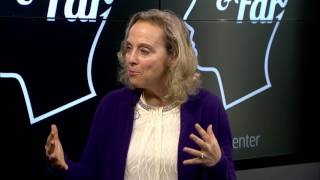
This is a recorded interview (Nir Eyal hosting Robbie Kellman Baxter) that explains the concept of the "membership economy": shifting businesses from anonymous one-time transactions to known, recurring relationships emphasizing access, recurring small payments, community, and habit formation. Baxter gives examples (Netflix, subscription boxes, car washes, hair/beauty products, libraries, wedding/coffin services reconceptualized), describes steps to transition (start from customer mission, smooth revenue, change culture, focus on retention and habit formation), and identifies industries ripe for membership models (consumer packaged goods, retailers, loyalty programs). The interview concludes by referencing Baxter's book, The Membership Economy.
Chapters
Welcome to near and Far. I am Nir Eyal. Today's guest says that we are transitioning to a membership economy. And if you're not on board, your business may miss out. The guest today is Robbie Kelman Baxter, author of this book, the Membership Economy. Welcome, Robbie.
Yeah, thanks for having me, Nir.
My pleasure. So tell us, what is the membership economy?
So the membership economy is a massive transformation that I've been seeing over the last several years where organizations are moving from transactions that are anonymous to a focus on a known relationship. It's about access over ownership. It's about many small payments that are recurring as opposed to one single payment. And it's about building in the community as part of the offering itself.
Okay, and you first saw this trend. You talk about Netflix as kind of the pinnacle?
Yeah, yeah. I was working with Netflix as a consultant, and I had already fallen in love with the business model as a consumer. And when I saw what it looked like as a business person and how they were focusing on what I call a forever transaction with their customers and evolving the way they delivered that service with a focus on that forever promise, I said, this is. This is what I want to work on, and this is probably the way of the future.
Now, what's interesting about your book that some people are thinking, okay, I get it from Netflix, I get it for products that have very low marginal cost, but you actually are saying that lots of businesses that you wouldn't think of as being able to have a membership type model can actually use this type of idea. How is that?
Yeah, so I actually grew up in Silicon Valley, and so most of my clients have been software companies, technology companies. And so that's really where I was thinking about the membership economy when I started. But as I did more and more research, I started to see evidence of these same behaviors in professional societies, in retail, in hospitality, with their loyalty programs. And now what I'm seeing emerging are like what I call the physical membership economy, which is product memberships, things like subscription boxes, Amazon subscribe and save, all kinds of replenishment programs. So really, the way I see it, anything that relies on sales and marketing to differentiate itself probably could benefit from considering elements of the membership economy.
Give us some examples of companies or products that you wouldn't expect to be able to move from what you call this transactional economy to a membership economy. What are your favorite examples?
Well, so one example that you might not think of on the physical side is hair care products, beauty products. So there's both subscription boxes where you subscribe and you get a box of stuff every month or every week or every two months, however you set it. And that's about discovery. That's about oh, what's this new lip gloss or what's this new hair product. But there's also. So for example, Guthy Rinker has Wen hair care products. They have Proactive, which is the acne medication. And they've really been pioneers at creating memberships around physical products where you get the right quantity at the right time without having to worry about it. The promise is we'll continue to evolve what we put in your box to serve your need and you don't have to worry about it anymore. And we'll also give you access to other people that have the same challenges and same objectives and allow you to communicate under the umbrella of the organization.
Interesting. You talk about car washes as well, about how companies went from one at a time car washes to very transactional to these membership.
Yeah, absolutely. Because we don't go to a car wash to clean our car. We go to car washes because we want to always have clean cars, which is a slightly different objective. Right. I don't want to go have the minute I leave the car wash, my car starts to get dirty again. So if a car wash owner understands that they can create a model that says what would it look like if we made it easy for Robbie to keep her car clean in instead of for her to come once a week or once a month to clean it? And so what they might do is have a fixed price for you to come back as often as you want, have touch ups which might be cheaper, offer these special benefits at times when the car wash isn't otherwise busy and really solve the problem fully for their customers.
So I'm obviously I particularly like your book because I focus so much on habits and the importance of repeat consumer behavior and frequency in those customer transactions. If I have the kind of business that I I think of right now as being very transactional, very one time, how do I think of how to transform it into more of a membership model? What are the steps?
Yeah, so the first is a great question and I'd love to discuss it with you because I am sure you have good insights as well. I always start with what's the customer's need? What's their mission? So if you take Netflix as an example, the mission is not to have a dvd. The mission is I want great professionally created video content available in the most efficient way and I want cost certainty. So if you go back to that mission, you go back to the customer and say, what would that mean if it weren't transactional anymore? What do they really want? You start to be able to brainstorm all kinds of other ways of delivering the product. And what I see as a problem for kind of old economy companies is that their whole infrastructure and organization is built around a transaction. So the other really important step, especially for larger companies, such as, let's say, transactional media companies, companies that make a piece of content that you buy and then you buy another piece of content when you want the next one, like movies or games or things like that, newspapers, is to try to think about how do we smooth things out and how do we create a culture in our organization that supports that new way of doing business. A lot of times the employees really are resistant to changing models. That's almost the hardest part.
So a big part of it is figuring out if you're going to disrupt yourself. I'm guessing a lot of entrepreneurs out there are thinking, what kind of industries are right now transactional that could be reborn as these more membership economies. So if you don't do it, somebody else, it sounds like, could figure out how to do it right.
And they're going to come from left field. So here's a fun example. So libraries. Libraries, their mission is to make the world's information available at low or no cost. Right. Somebody else has that same mission. Google, coming from a totally different angle, libraries were so attached to books and buildings that they didn't really engage. I'm sure they saw this new technology being developed. And at a much earlier point in Google's history, when lots of different kinds of search algorithms were being created, they could have jumped on that bandwagon. But they had so much invested already, so much baggage, so much baggage that number one, I don't even know if they saw that they were both solving the same problem. And number two, even if they had seen it, it would have been really hard, I imagine, to convince their leadership to move away from the books and buildings and to really invest heavily in new technology.
Right. So we've seen a lot of companies in the subscription space, startups specifically, here around Silicon Valley. Many have come and many have gone. What kind of differentiates the winners and losers? Have you learned anything over the years looking at these companies?
Yeah, well, so one big thing is habits. A lot of organizations invest a lot in acquisition and don't invest in retention. So in the membership economy, the transaction, the moment of transaction, is the starting line, not the finish line. In traditional Businesses, it's the finish line. So I've seen a lot of companies, so, for example, SaaS businesses, and a lot of subscription businesses, consumer subscriptions too, where they're so focused on acquisition that they don't think about what are we going to do after they sign up? And. And they sort of forget that it's easy come, easy go in the subscription world because I sign up. And frankly, the minute I sign up, I'm thinking, well, it's okay because I can cancel in a month and then I can be out of it. And what you want to do is in those first few days, those first few minutes, you want to create a habit and make it part of their business as usual, because if you don't do that, they're going to cancel. And I think a lot of organizations mistake inertia for loyalty. So they say, well, they haven't canceled, so they love us. And often we don't cancel, whether this is as a consumer or as a business, because we have other things that we're focused on. And in the back of our mind we're thinking, I've got to cancel that thing that I'm not to do the.
Rest of life that we're living.
Yeah, that rest.
One thing that I struggle with sometimes when I work with companies is that, particularly those in the subscription space is that the interaction is something that it doesn't occur that frequently. Right. You get that box once a month, as opposed to what I tell companies is, look, it's got to be. You have to have that interaction at least once a week, if not every day. So how can you kind of increase that interaction if the product you're selling, so to speak, is not something that's consumed frequently?
Yeah. So you really have to think about what's the habit that you can help with. And I always come at it from. I try to come at it from a very ethical point of view and say, what's the problem we're trying to solve and how can we solve that problem every day? So that's one piece. A second piece is to look at whether there's an element of community that would be useful. So maybe I only use the product occasionally, but I think about it, or I use analogous products and services every day. So how can we create a community that provides value, thought, leadership, ideas, tips, Content. Content, right. Content is great. And then also partnering to fill in the gaps so that you're offering a complete solution. So, you know, if I'm taking in a. If I need a hotel, there's probably A good chance that I need things to do when I get there, that I need a car service, that I need transportation to get to that new city. So figuring out how do we put it all together.
Yeah. So it really sounds like you see this macro trend of this sharing economy, but you're actually saying that it's something that all sorts of businesses can move to. It's not just tech companies, it's not just the Ubers or Netflix of the world. We're really reimagining the idea of these fixed cost, one time transaction businesses. It sounds like.
Yeah, yeah, absolutely. So here's an example. You might say, well, so when I started writing the book, I thought, well, what would not be a membership economy business? And I thought, okay, how about wedding dresses and coffins? Right. Because those are two things. Those are like the ultimate one time transaction. Right. But then you think about it and you say, but if you look at what the bigger issue is, that would require somebody to buy those things. There's a lot of other services and products that could completely solve the problem for the person. So for a wedding there's a, let's say a year of planning and then after that there's all kinds of decisions that have to be made once you're making decisions with another person and probably you're more likely to make major investments immediately after your wedding. Buying a home, thinking about schools and so on. So putting that together and saying that's really our offering is we're helping people get through that marriage phase or on the sort of more solemn side, helping people deal with the loss of a loved one. It's a lot more than just buying a coffin. It's, you know, it's thinking through all these different steps about, you know, your estate planning and grieving, you know, bereavement support.
And because you don't want the wedding dress, you don't want the coffin. You want a successful wedding, you want a happy wedding, you want a friction free.
Yeah. You want that transitional moment to be handled with thoughtfulness, expertise, ease, because it's something that you've maybe never done before.
So do you sell that as then a monthly membership fee or how would that type of business transition into. To a membership business?
Yeah. So I would think that there's probably some finite period of time that you're looking for the membership to last. So it's a lot more like a dating service. I think about the founders of LinkedIn. One thing that they told me was before they started LinkedIn, they had a dating site, SocialNet, and they said, what we realized is we were so focused on solving an ongoing problem and building a trusted relationship with our members. But what we forgot was that if we're really good at it, our relationship lasts six months.
Right?
They said, so the next time they started a business, they said, we're going to do something where if we're really good at solving the problem, we have a really.
You don't work yourself out of a job, right?
You don't work, you have a really long. I mean, at some point maybe we retire, but that's a much longer run.
Which is interesting because even LinkedIn used to was started around this resume job searching type social network, but now it's really a content business. I mean, what you go to check into LinkedIn for is not worried my next job. It's what interesting content. What's happening in my industry that I need to stay on top of because.
They'Re about having a successful career. That's really what they're about, is how do I have a successful career leveraging my relationships. Right. And at the beginning, I mean, I've thought about this quite a bit. It's something that I find really interesting. They started, I think with the resume posting service because they didn't have critical mass to have a real network effect. And so they said, okay, that's something that even if I don't have a single link on my network at LinkedIn, if I can post my resume, that's valuable for me. And then over time, there were enough people that linking to others made sense and now they've continued to evolve and say, what else does Robbie need to be successful in her career? Interesting. And they keep adding things. You know, they just acquired, they acquired Lynda.com and now they're acquired by Microsoft. I mean, you see that the opportunity is becoming bigger and bigger to solve problems for the professional.
Right. So they kind of solved that chicken of the egg problem with making it useful on your own by posting your resume. And then it became more and more and more useful. They built these habits around it with.
These other ancillary services because it's hard to launch a community when you have.
One person when there's nobody at the party. Excellent. Any other tips that you would recommend for folks who are saying, yeah, you know what, I see this business model, but what do I do next? Or what are some pitfalls to watch out for around building a membership model?
Yeah. So for people that are getting started, whether that's entrepreneurs who are saying, I have a new idea and I Want to develop my business model or people who are saying, wow, I have an established transactional business and I want to move towards membership. I would say that you should move your focus from the product to the customer. And this sounds so obvious, but to really think about that as you structure the business, as you set metrics for the company to aim for, to really focus on what is the problem you're solving, because it opens up so many more possibilities for products and services to create, which creates that forever transaction, that relationship that goes on forever. And what you really want to strive for is that moment when the consumer takes off their consumer hat and puts on their member hat. Which basically means I'm no longer going to focus on what my other options are. I'm going to trust that you and I can have a long term relationship and you will continue to solve my needs even if the products change over time.
Very nice, very nice. Are there any industries that you look at after having written this book that you look at and you say, oh, that is just ripe for the picking. Somebody really needs to make a membership model out of that business or trends on the horizon that you see?
Yeah. So as I mentioned, I think that the whole consumer packaged goods industry is really ripe for transformation. I know that's next. It's happening already. What Amazon is doing. The acquisition of Dollar Shave Club by Unilever for a billion dollars. Gillette's inability to compete with Little Dollar Shave Club before they were acquired. The writing is on the wall there. If I were a big consumer packaged goods company, I would be very nervous. And the corollary is the retailers. And then the other big area is loyalty programs. Loyalty programs really haven't advanced very much in the last 20 years and they still feel kind of cheesy to me. At least you look at, I don't know if you saw, I travel a lot. United Airlines just introduced a new level of service where you can't bring a bag on the plane. It's crazy. It's so inconsistent with a loyalty program. You know, the whole idea that they're number one, that they're changing what they're offering you and expecting you to just accept it. It's going to create a lot of chaos when people are boarding. And the other thing is it doesn't really create trust because there's so many different flavors with the airlines and there's so many rules that you actually have to subscribe, you know, to the points guy or one of the other services to fully understand what's fair.
Right. And there's so much information out there that they seem to not use. I think the part of the amazing opportunity that we have in business today is to tailor the product to the customer's needs. And it seems like a lot of companies are just now becoming aware that, wait a minute, we can use this data. We can tailor products based on some kind of membership or subscription model that if we really identified. What I love about what you said was the real problem, not just I need a product, but the actual problem I'm looking to solve. Terrific. Well, thank you so much for your insights. And the book, again, is the Membership Economy. Find your super Users, Master the Forever Transaction and Build Reoccurring Revenue by Ravi Kelman Baxter. Thank you so much for being here today with us.
Yeah, thank you, Nir. It's been a lot of fun.
Thank you.
More from Nir


Your Beliefs Are Sabotaging You (Here's Why) - Beyond Belief for Athletes with Nir Eyal







