You Don’t Have to Follow the Same Routines Forever
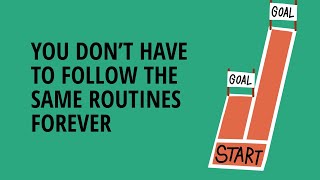
Nir Eyal argues that routines work better as short experiments than lifelong commitments. A 30-day gym challenge or week-long coworking sprint lets you test what sticks without guilt. A quarantine survey found 92% of people picked up a new skill when they had time, suggesting temporary routines can seed lasting habits.
Chapters
If you have a big goal that you've always aspired to. Maybe you want to write a book, maybe you want to start a social media following, maybe you want to start a business. Maybe you want to clean out your garage. By thinking of these goals as something that you do within the seasons of life versus something that has to be, you know, an indefinite task forever and ever can make them something easier to digest by taking one bite at a time. Did you know that you do not have to follow the same routines forever? Hey everyone, this is Nir Eyal from the near and Far Podcast and with me, as always, is Nick. Nick, how you doing?
I am doing great. I'm excited to record this new episode. I think we're just going to get into it and we'll do we'll do some chit chat after, but let's just start now. You don't have to follow the same routines forever. For those that are just joining, I'm going to read it. Nir's going to jump in in between the sections Embrace doing something for just a Little while Numerous articles detail the routines of the most successful people in the world. Apple CEO Tim Cook wakes up at 3:45am and exercises. Actor and producer Reese Witherspoon eats the same healthy breakfast every day. Oprah meditates early Author Tim Ferriss journals Daily Society has become so focused on productivity hacks and packing the most into every day that we think of long term, consistent routines as the gold standard for spending our time. And yes, long term routines are helpful for increasing efficiency, decreasing stress and decision fatigue, freeing up cognitive resources and helping us stay healthy. But short term routines come with their own set of benefits. A routine doesn't have to last forever to serve you well. Here's a case for embracing short term routines. After four years of research for my book Indistractable, I struggled to sit down and write the thing. Working from home, I found it all too easy to get off track when I should have been writing. So I asked my friend Taylor, a fellow author, to cowork with me. Most mornings. We sat at adjacent desks in my home office and worked in timed sprints of 45 minutes. It was just the accountability I needed to focus. But after several months, Taylor and I ended our routine because I had completed a first draft and was ready to turn my time and attention to something else. A routine can be short term and still serve a purpose. Near thoughts on this article or what brooded about as we break before the next section?
Yeah, I think it was just a response to this idea that what we do, we have to do forever and ever. And I think that there's these seasons of life where having a routine and being focused around a routine for a specific unit of time. By the way, I use the term routine rather than a habit because we know that a habit is a behavior done with little or no conscious thought. Whereas what I'm talking about here are more the routines, which is simply a series of behaviors frequently repeated. So these are more for those. Those seasons of life where we need to focus intensely on something and then we're done with that project. But I think thinking about it as, okay, here's a temporary routine can yield some benefits. And I think what's the reason I wanted to call this out is because the techniques that we use are completely different. So building a habit has a specific set of steps we need to take, but building a routine, especially a temporary routine, has a completely different set of procedures.
Great. I'm going to continue on on the article. They help us determine our values if you ask me, success is about more than just personal growth and optimized productivity. It's about living by our values or attributes of the person we want to be. Which means making time for the activities that match our values. And as there are often not enough hours in the day, we must prioritize our list of values. Experimenting with short term routines helps us determine which values are most important to us and whether an activity reflects them. We can drop misaligned short term routines and hang on to relevant ones. That also helps our routines to evolve along with us as our lives change. A routine that worked for you 10 years ago May not apply to your environment and values now. Studies show that our personality changes as we age, evolving with our experiences. We can use short term routines to explore what's most important to us at various life stages. Temporary routines satisfy temporary needs. We don't need to do something ad infinitum for it to be beneficial. A short term routine can be just what you need at the time. If you're going through a rough time, for example, you might find implementing a morning brain dump into a journal a comforting routine. Maybe you'll stop the routine when you are feeling better. Many people pick up expressive writing during high stress and set it aside once the practice has improved their mental health. One freelancer wrote that she goes to bed at 8:30pm and wakes up at 5am because she can finish loads of work by 8am It's a routine she implements only when she's overwhelmed with deadlines. As it also means she sacrifices social events in the, the evenings. Ooh, I really like that idea of writing down and doing the brain dump in the morning. And I think what you're saying in this article is that this can be a temporary thing. It's not like you just started and you have to do it forever. You do it during intense sprints or work times of stress. Is that right?
Absolutely. And so I want to give people permission to do that, that sometimes if we have that, that part of our day. You know, I'm a big advocate, as we've talked about many times in the past, for time boxing. But I think part of the stressors of time boxing is put on their calendar and they have this repeating appointment. They think, oh my God, I'm gonna have to do this for the rest of my life. Whereas if you tell yourself, look, this is a season of life, here's something that I want to explore and I'm gonna do it for 30 days or 60 days or 90 days or a week, it doesn't really matter. But I'm just gonna try and experiment with this type of routine for a fixed period of time to see whether it serves me or not. And I wanna give permission for people to do that as opposed to thinking, well, I don't wanna even try because now I'm committing myself for a lifetime. No, no, try committing yourself to a week. Perhaps.
I like that. And we'll see why that's a recipe for success. They help us build long term routines and goals. When people set long term goals, they often fail. But you can achieve significant goals by starting with a short term routine. My friend who wanted to build a fitness routine signed up for a 30 day challenge at a gym and pushed herself to take as many classes as possible. The challenge proved to her that even when she was busy and she could make time for exercise if she prioritized the value of being fit. By consistently working out for a month, she became stronger and learned to enjoy her workouts. After the challenge, she decreased the number of her workouts slightly and turned the short term routine into a sustainable fitness practice. They satisfy our thirst for novelty. Short term routines fulfill our penchant for perpetually seeking novelty. A 2016 study suggests that novelty is a fourth psychological nutrient of self determination theory which says that to be intrinsically motivated, people must meet their basic psychological needs of autonomy, competence and relatedness. Another study found that seeking novelty helps people gather information about, interact with and interpret the world. By experimenting with short term routines, people we step outside the box and become More expansive, they foster creativity and new skills. During the COVID 19 pandemic, many of us found new routines to replace old ones that didn't fit into our new reality. In a 2020 survey of more than 1,000 people, 92% reported picking up a new skill while quarantined and 57% did it just for personal fulfillment. The time trapped indoors was a boon for creativity and online learning. The top three skills that people developed were cooking and baking, arts and crafts, and personal fitness. Even if indulging our creativity was just a short term routine, it enabled us to cope with an unprecedented global event and we picked up new skills in the process. That's interesting. It's neat to think about that. I'm going to pass it to you for feedback now.
Did you start any new routines during during the quarantine?
You know what? I never cooked. I was a New Yorker through and through and I never would cook my dinners and I did. I picked up the cooking just like everybody else did. I think I started a little bit more of a home fitness practice, but the cooking was really the big one for me and I still carry that through. I cook some mean chicken thighs in the air fryer these days.
Excellent. Excellent. Yeah, let's. Why don't we keep going. We'll just finish this last little bit here. About the tool that helps you build these short term and long term routines.
The indistractible tool that helps you adopt short term routines. Long term routines, like exercising at the same time every morning, may become so foundational to your day that they become habits. You might turn off your alarm, get out of bed and pull on workout clothes without thinking about it. Short term routines must be more intentionally adopted and may never become habits. Implement and manage a short term routine using timeboxing, a fantastic time management technique designed to help you live out your values by scheduling them in a calendar. Just as short term routines are not about productivity alone, timeboxing is not focused on measuring outcomes or maximizing productivity by squeezing as many tasks into a day as possible. It's about doing values based tasks. When you say you would no matter how much progress you make, create and iterate a timeboxed calendar to reflect your values and shifting routines before the week begins. Set aside 15 minutes to review your schedule for the upcoming week and decide to continue a short term routine or phase it out if it's no longer satisfying of value. Experimenting with short term routines has myriad benefits including satisfying our need for novelty, boosting our skills and creativity, and helping us grow and Learn more about ourselves. Use my free schedule maker and habit tracker to give timeboxing and short term routines a try.
Yeah, absolutely. So this is, I think the real takeaway from this article is that to experiment with these short term routines, the lowest friction way to do that is to simply time box. So if you have a big goal that you've always aspired to, maybe you want to write a book, maybe you want to start a social media following, maybe you want to start a business, maybe you want to clean out your garage. The best thing you can do here is not to say, okay, here's, here's how I'm going to finish this all in one day. It's about using this timeboxing technique to start putting these short term routines into your calendar. And then by not only timeboxing the daily time you're going to do it, but perhaps over the week or monthly goal as well, you're almost guaranteed to accomplish that task, right? So if it's hey, I want to clean out the garage, you know, people have incredibly cluttered spaces in the, in in their garage or where they live. So instead of saying I'm going to do it all in one day, if you can simply say I'm going to work on it for 30 minutes and then as soon as the alarm buzzes, I'm not doing anymore, I'm just going to work on it for 30 minutes. But if you do that 30 minutes every day for a few weeks, guess what? You're going to clean up that garage pretty quickly. This is how these short term routines can start to break down. These tasks that can be overwhelming for a lot of people by making them something that you've time boxed for a fixed period of time. And so that can help you explore what's important to you. It can help you get things done. It's just a practice that I think by thinking of these goals as something that you do within the seasons of life versus something that has to be, you know, an indefinite task forever and ever can make them something that are easier to digest by taking one bite at a time.
Could a short term routine be as short as one week? Or does it have. Are you really thinking it's a longer thing?
No, I think a week long is great. I think one of the dangers, I would say I should have put more about this in the article is that sometimes I think people confuse these challenges as an end destination. I don't know if you remember when we were younger, there was this program, P90X. Do you remember P90X yeah, of course. Work your body out like crazy for 90 days. And it really did work. If you worked out for 90 days, you were going to see results. The problem was that I think maybe for a lot of folks, it emphasized the wrong thing. It emphasized the ends rather than the means. So when you set a short term goal like this, sometimes it is an ends, right? Sometimes it is something like, ugh, I really need to clean out the garage. But if it's something that you are considering adopting for the rest of your life, don't make it just about the ends, right? So for example, I don't want to get in shape once and then gain it all back, right? I want to get in shape so that I'm healthy for the rest of my life. So the goal of a 90 day fitness challenge or a week long fitness challenge would be I want to find a form of fitness that I actually enjoy. So for me, I never. So I used to be clinically obese and I always hated exercise. Like people talk about the runner's high or how great they felt after exercise. I have never experienced anything like that. It always is hard work. I never feel amazing after a workout. Maybe some people do, I don't. But what I challenged myself to do when I started getting into fitness was to challenge this notion that exercise always sucks. Like, is that always true? Is that always really, really true? Could I flip it around and ask myself, wait, are there situations where exercise doesn't suck? What might that look like? Maybe I'm exercising with a friend. Maybe I'm trying a different type of exercise. Maybe I was doing the wrong exercise. So something that I actually could enjoy. And so by setting that temporary challenge, it's not about, oh, did I lose 20 pounds? It's about, did I explore an exercise that I could actually enjoy. So maybe the challenge for myself is for an hour a day, I'm gonna try different exercise every single day until I find something I'd wanna do more than once.
It's making me think that my current morning routine has gotten a little whack. It's gotten out of sync. And now I'm inspired to try a temporary routine to think about just something new. Because what the article said was there's this fourth need, which is the need for novelty. And I think I am. Oh my gosh, I love novelty. I love novelty. Sometimes, you know, we're more productive when we travel and when we, when we get into a new physical environment. Similar to as you said in this story, you writing and using that focus time and sort of an accountability buddy.
Yeah. What would be the routine you'd want to try or what would you want to integrate? How did it get out of whack?
I think that I will be honest. I get a dopamine rush from checking my notifications in the morning and I wake up in the morning and I've got a lot of new notifications and I get sort of sidetracked. And what I would like to try potentially could be going for a swim. I live near a lake pool and what that would be and I've really never tried that before and it sounds so novel and interesting and I make up all these excuses, oh, then I have to shower and then I have to do all this stuff and these reasons why. But ooh, what if I thought about it like a little two day challenge? I have to leave for a trip on Wednesday so I can't do it too long. But wow, what if it was just two days? What if I just did a two day challenge? To me, that would be a big, a big challenge. It would be interesting and it could shake up for something larger.
Yeah, absolutely. I mean, and you can actually use the indistractible model to figure out how to get this done right. So you've time boxed the task. So let's say you say, okay, I know 8:30am that's when I'm going to hit the door and go for my swimming. Uh, have you hacked backed all the external triggers that might pull you away from it? So if, you know, if like, oh, I really, really want to check my phone either you can accommodate that and say, look, I only get to check my phone in the morning if I'm on the way to my swim. Right. That's one thing you could do, right? Just say, I can check my notifications but I choose to check them only on my way to my swim. That's, that's the deal I make to myself. Or you say, look, I'm, I'm not going to touch my phone until after my swim, for example. So you've hacked back those external triggers. And then I think something that's really going to benefit you, or at least I should say really benefited me, is whenever I make a pact. So, you know, there's these, these three type of pacts that you can make. If you can make a social pact with someone else of like, hey, can, you know, will you meet me at 8:30 at the pool or at the lake, wherever you're swimming, that could be incredibly powerful as well. And maybe it is just a temporary thing of like, hey, we're going to do it every day for two days, three days, whatever amount of time to see. Does that really serve you?
Oh, I like that idea of only maybe checking my phone or my notifications once I get to the pool or once I get out and doing something so simple and not trying to say, oh, I'm going to swim for an hour, but just say I'm just going to get in the water. And whatever happens, once I get in the water, I'll count that a success.
Yeah, yeah. Or maybe even just I will. Walk to the water is also fine, right? Even that would be beneficial, right? Get some sunshine, go for a little walk, Check your notifications outside while you're moving as opposed to checking them in bed before you started your day, right?
Oh, this is good. I'm inspired. I'm going to give this a try. Hey, if you're listening to our podcast, Nir and I sometimes chat about these things. At the end of the episode, will you tell us? Is that interesting? Is it unique? Would you prefer just a straight reading of the article? Let us know. Reply back to one of Nir's emails. By the way, whether designing consumer behaviors or your own habits, you'll benefit from understanding the research that near shares from User Experience, Design, Behavioral Economics and neuroscience. On his free newsletter that you can get@www.nearandfar.com that's spelled near N I R and a N D far f a r.com Nir Eyal is the best selling author of Hooked, how to Build Habit, Filming Products and also how to control your attention and choose your life. Thank you for listening. We will see y' all next week. Sam.
More from Nir


Your Beliefs Are Sabotaging You (Here's Why) - Beyond Belief for Athletes with Nir Eyal







