Episode 1 Premsai Samantaroy #womenempowerment #womensday #positivevibes #lifecoach
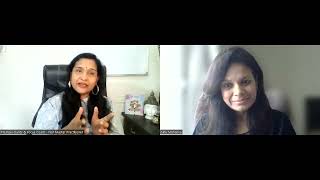
In the inaugural episode of the "We Rise" podcast, host Neetu interviews life‑coach and NLP practitioner Premsai Samantaroy. Premsai recounts her journey from early trauma—losing her brother shortly after his marriage—to severe physical illness, postpartum depression, and chronic anemia. She describes how yoga, Ayurveda (including Panchakarma), and a 10‑day Vipassana retreat helped her restore physical health and mental clarity. Premsai explains her holistic "four‑home" model (body, mind, emotions, energy) and advocates a work‑life integration mindset rather than balance. Drawing on 15‑plus years of corporate leadership training, she outlines her coaching approach centered on clarity, focus, and self‑mentorship, using NLP techniques and belief‑system work. The conversation also covers women empowerment, the role of mothers as societal change agents, practical self‑reflection tools (future‑self letters, gratitude letters), and a critique of over‑reliance on medication, urging lifestyle‑driven health and greater nutrition education for doctors. The episode ends with actionable advice for listeners seeking transformation without pharmaceuticals.
Chapters
Hello and welcome to the first podcast of We Rise. Our motto is we rise by lifting others, and what better way to start this podcast, uh, other than, uh, with none other than Premsai Samanta Rai. She is a life coach, a focus and clarity master coach. She is an NLP practitioner and she is also the director of Enhanced Life Skills. Welcome, Premzai. I'm so thrilled to have you today on our podcast, and I would also like to open the floor for you, you know, to share your experiences as a coach, as, you know, a person. And I know that you have moved from, you know, extreme illness to extreme wellness, and we would really like to hear your story. How did you make that happen for yourself?
Firstly, thank you so much, um, Neetu, for having me here. Um, and whoever, whenever invites me to share the story, I'm the most, uh, curious person to go there and share my story, um, so that I can really connect with the people around who thinks that it is not possible. So with the help of sharing my story, I think people would understand that It is— there is always a possibility when you are willing to. So, um, being a coach, so I have 15 years of experience, 16 I would say, years of experience in this industry working with corporate, conducting a lot of workshops on leadership and on belief system, on transformational workshops, on, um, you know, communication workshops, and all life skills that we call about, you know, under that. So the journey was not that easy because I call it as a journey from pain to possibility. That's what I call my journey.
Yeah, please share your story, Premsa. I would really love to hear, you know, what was it that you were experiencing and what actually made you to, you know, take those right actions to transform your life and become a life coach yourself.
Yeah, so this all started in, uh, when I was in my college days. So there were two setbacks I actually— life put me through to teach me a lesson which I was not learning otherwise. So the first setback was when I entered my college, I lost my brother, elder brother, after just 17 days of his marriage. Now, after his marriage So in a month he got married, and within 17 days he also met with an— like, he met with an accident, and he— we lost him. And so that was my first setback. I was very close to him, and I went into a depression. I was not able to— I didn't— I couldn't cry, and for which I, uh, was not able to process the emotion. How do I need to really respond or react? I was not understanding that. And it took me around a couple of months to come out of that. I would not say, but somehow, you know, manage it. So by then, the pulse rate was around 140, and even a ring of a phone would also trigger me. That was trauma.
You went through a big trauma, and what they call it is post-traumatic stress disorder. That is what you must have been experiencing.
Yes. And then that happened and it continued for a couple of months. And somebody said that, why don't you go and join yoga? Because by then doctor also said that you need to take care of yourself, otherwise you will get a dil ki bhi marhi ho jaayi, you know, that kind of stuff. So doctor used to say like, now you may end up with messing up with your heart functions. So I started yoga. Somehow when you, you use the body. Now I'm understanding after, you know, becoming an NLP Master Practitioner, how your body influences your mind. But then, back then, you know, I was not able to understand. So when I started using my body in yoga, somehow I was able to start processing the emotion, I would say. But then it was not completely gone. So that way I functioned. I got married and I was working in company, Even then, even then, the death of my brother was still there in some part of, you know, the way I have stored it in my body, mind was in a different way. Whenever I used to recall this incident, I was not feeling very comfortable talking about it. Like now, I'm disassociated with that and I'm talking about it.
You're at peace with it now.
Yeah. So yeah, and I got married and then went to Delhi. And when you do not sort out your bank account, it keeps bothering you, it keeps coming to you. Those are the monsters. It keeps bothering you, it keeps coming to you. So similarly, when I was in a new relationship, um, this part was not sorted, so it kept coming and it was bothering, um, once in a while. And, uh, then I started working in Delhi. We used to travel for around 75 to 80 kilometers in a day because we were staying in Delhi, and our company was in Noida. So it was around 35, 35, so it is around 70, 75 kilometers every single day we used to travel. And now here I want to bring awareness of the people who are listening is when we are in that edge of making our careers, the irony is we only look at career. There are other things we do not take care of. The thing is, when you become somebody, you also have to be able to function well in all your 4 homes. I used to say that, you know, body, mind, emotions, and energy, so that you consume and you enjoy that happiness that you have created for yourself.
Yeah, a well-balanced life, actually.
Well-balanced life.
Yeah, I was that age. I know why, just that age, even 2 years back, I was only thinking about my career, my career, my my career, and my health completely went for a toss. My relationships with my children, my husband, you know, my finances also, you know, everything went out of balance. And finally, I, you know, realized that no, we need to find a balance. So I think that is where you are coming from.
Yeah. So here, if you just take a metaphorical example of a car or a gadi or a two-wheeler, whatever it is, so those are machines, two wheels are important. The engine oil is important. What would the engine that is really making that body function? So I, what I messed up with, I always tell my, like, when I share my story in my workshops, I always share this, that out of that mess, I got my message. So this is what I always share to my participants. So, so I, you know, when I was into that junoon of making the career and becoming somebody, I messed up with my food, I messed up with my timetable, I messed up with kuch bhi kalya. You will not believe, Neetu, we use— we were not like me and my husband, we were not buying green vegetables. You know, you have to suppose it is palak or methi or anything, you know how good those nutritious green vegetables, leafy vegetables are. We used to not buy because it will take time. To prepare. You're understanding? Such fundamental things we are missing. So what I'm saying is, it's not about that you make it or you may— you can, uh, keep a cook and she makes it for you. What I'm trying to say is, these are important for our health, you know, all the right nutritious food and also a good lifestyle, a timetable, and also exercise. So these all were missing those years. And every day, 75 kilometers in a bike, you know, going from Delhi to Noida, then again coming back. Eventually I messed up with my spine. Yeah, because spine is like— again, a metaphorical example. I'm so, you know, very into this metaphorical example.
Yes, please go ahead.
So Netflix, uh, if that channel says like, for example, it is 4.5 MHz or something, so So if you make it 4.4, you will not get Netflix in your channel, right? In your TV, right? It's similar to that. So I messed up with everything where I was not able to function well, and the frequency of a right lifestyle I messed up. And eventually what happened?
The spine, which is the real, um, communication, you know, the entire system, you know, relies on the spine. Yeah, yeah, it's everything.
As simple as that. Spine is everything. So I, with this kind of lifestyle which I was thinking I was doing great, I messed up the frequency of the spine. And then it started speaking to me. And then one fine day after that— this doesn't happen in a day. It's every single day you're doing something wrong for which you get messed up. So after 4-5 years of messing up the whole stuff which I create a khichdi out of nothing. And, uh, so those days I also delivered my son, and things became more worse after that. Hemoglobin went to around 6.4 or so. Uh, you name it.
Postpartum depression is also a thing, right, for new mothers.
And the first trauma of my brother still was continuing with me. And, um, you name it. My body was swollen because of anemic condition. My muscles were not that great. I was not even able to walk properly. And then when this condition happened, I went to an orthopedic doctor here in Hyderabad, and they said that, you know, Prem Sai, you need to really think twice for your career because you are into a profession where you need standing for long hours and all those stuff. So usually doctor knows everything, and when I came back, I thought of, oh my God, what do I do? I cannot carry him also, no, in my lap and all those stuff. Um, very bad emotional state, I would say. So, um, so what happens, like, after you felt that you have tried everything and then you would like to give that one last shot, a call, And I thought of sharing this story or my— whatever I was going through, I started sharing it with everybody. Sharing in the sense, seeking answers. Is there any other way? Is there any other way? Is there any other way? And then someday somebody, you know, from my neighbor, he comes and says that in a paper, can you see this? And it was Ayurvedic panchakarma, the whole thing.
My God, our journeys are so similar. I went to an Ayurvedic doctor myself for, you know, similar kind of treatment that I was going through a lot of stress, and somebody suggested, you know, a neighbor, that, you know, you go and meet my chacha. He's an Ayurvedic practitioner. So I went to him. He's a proper qualified doctor. So he gave me medicines, and then he told me few mindfulness practices that I need to do, and, you know, why it is important for me to fix my gut, because, you know, how the mind and the gut is interconnected. He explained these things to me and told me about yoga, and I started doing these things. Slowly and gradually. And then, you know, I'm loving to, you know, understand that you have been through the similar journey that I have been through. I've been so lucky to find an Ayurvedic doctor. Honestly, he kept telling me that if you take antidepressant, I'll never be able to bring back to you, beta. Please, you know, listen to me. I'm just looking for the right medicine for you. I'm trying several things. I'm sure I can get you back. And he actually got me back within 6 months. So I completely relate to, you know, um, whatever you're saying.
Yeah, so, uh, so that was like, that's how I met, uh, the doctor in Hyderabad. I went there and till that time I used to also, because my father was a homeopath, and when I used to, uh, he would be watching some TV and then I would be going and asking when I was in school days, you know, college days, he, Papa, uh, that, you know, there's a, there's a headache, um, or there's a leg pain or muscle pain in the calf muscles, then he would give some medicines like, you know, which is related to stomach. I would say like, when there is a pain in the leg, why are you talking about the gut? So there I understood from that Ayurvedic doctor how the back issues, the spine and everything that is related to your back muscles, you know, the core muscles, that is so much related to— it is a reflection or a manifestation of your gut health, I would say. And when your gut health is good, then it really impacts you. How do you feel as a existential, uh, you know, being on this Earth. Because your feeling is your life experiences. And that's where I come from, you know, becoming a focus coach. Because when you ask anybody, Anitu, that what is your life experiences, I'm sure everybody would be giving different, different answers, right? Indirectly, what they are talking about is whatever they are focused on, that is the experience they're sharing.
Absolutely bang on. I think you nailed it. I think, yes. Yes, you nailed it. And also, you know, I think it's all about the mindset, you know. If you have the right mindset on focusing on the right thing and you create your entire belief system around that mindset, I think that is the beginning of a transformation. So yeah, I would really like to hear your views on, you know, how one can build a mindset and, you know, use that to transform their life.
Excellent. So yeah, so the answer lies in the story itself. So from there, the doctor explained me that, uh, Princely, your body is a whole system. It's everything is connected. So yeah, the reflection will be somewhere else, you know, the result will be seen. So there I understood. So changing the mindset is first thing. You— we need to be very fluid that we do not know it all.
Yeah, I know everything is the killer of growth. This is something that I, you know, absolutely stick to. One of my mentors told me about this, that anybody with the mindset of I know everything, that person has stopped his or her growth forever. I mean, you have to have a mindset of, you know, I need to learn, I need to know. Once you have that, I think that that automatically makes you, you know, uh a productive person.
Yeah, it's like that. The God, or whoever you are praying to, whatever the name that your higher self, or that Oneness, or the Universe, whatever the name that you are giving to your higher self, is waiting outside to give you some magic, some ashirva, some blessing, tathasthu, whatever it is. But you are sitting inside the room and closing the door. The opportunity is right there outside, but you are not opening your door. So that's where the mindset comes into picture. So being open to and listen to people and keep questioning. I think asking question is one of the important thing that I would say which opens up doors of possibilities. And that's what I did actually. How did I land up to that, that Ayurvedic doctor? Because I started asking questions to self, to others, sharing things. Because at times what happens, like these days, I think, Neetu, you would be absolutely resonating with— there are people who do not feel comfortable talking about their mental health. Who do not feel comfortable, it's like they have, uh, they have created an escape mechanism. Uh, mana chani lag rahi hai, then let's go for a movie and have some popcorn and come back. So once in a while is okay, okay. But when you start observing yourself, are you doing it very often? Mana chani, has it become a daily thing for you? Then there, those are the signs where you need You need help, and it's okay to seek help. Time ne hai and all those stuff, because that's what I'm hearing from my client as well. Time ne hai. My question is like, kis ke liye time ne hai, aapne liye? So life is bigger than anything that you are doing in life.
I think, you know, I'll add to that, Premzai. I think number one, people don't understand what is stress. And even if they do, you know, they are very, very scared of accepting it because there is a lot of stigma attached to, you know, being mentally ill or having mental health conditions. People think that they would be judged, you know, made fun of. I have been made fun of by my own friends when I was going through that, you know, time.
Yeah, I can do it.
Yeah, so, but you have to, you know, bring it outside from yourself only and believe in yourself. I think again, coming back to the belief system, so people don't talk about it because they don't want to acknowledge And, you know, this gave them the validation that, you know, okay, I am still a part of the society, you know, uh, you know, in the way that they want me to be, rather than you accepting yourself the way you want to be.
Absolutely. So shifting from the mindset of lok kya kahenge to shifting to the mindset of aap kya kaboo ge apne bare mein. Exactly, because that's more important. So when I went there, I went through this Panchakarma process, that was also like I was not having that kind of mindset. I was kind I was not surrendering the whole self towards the process. So I did that, and after that, what happened when I did my first NLP basic practitioner course in the same year, and that day I did it, I completed that, I think something happened, something shifted, that shyed kahina kahin kuch toh ho peh. And this mindset itself started attracting those people who were actually ready to help me, and I met my myofascial expert, Dr. Madhu, and he helped me. He came to my place for a year, you know, weekly once or twice, and then he started giving me, prescribing me all the exercises and all those stuff, and that's how I recovered. And I still, still remember, me too, that in the notepad, I was not very fond of eating ghee, so he had written the first statement that he wrote is eating fat is not becoming fat. So there I understood that fat actually means what? We have good fat and we need lubrications and we need, you know, those again to the ancient knowledge that we always— our mothers and our grandmothers, they always had, uh, you know, had that culture. But somehow when we started so-called educating ourselves, somewhere we get disconnected with those Basics things. See, whoever you are, being a CEO of a company or become a prime minister of a country, right?
And you need fat, but again, you need to burn it, right?
Absolutely.
Body is asking for lubrication. So, you know, did that to me as well. I had to basically go through an entire, you know, 15 days panchakarma because my knees were giving up. So doctor told me that you do not have oil. That Ayurvedic doctor, you do not have proper lubrication in your body and it needs to be lubricated. So I went for complete 15 days of, you know, oil therapy under Panchakarma. Yeah, and that completely changed my, you know, system.
Yeah, and adding to that is then I understood that how the A2, you know, the desi ghee can really do miracles. So when I started having that Then I, I came to know that even the celebrities also, the first thing they take in the morning is a cup of hot water with ghee in it. Because then I understood how it lubricates and all those stuff. So that's how my whole journey. And within a year, I think I was able to walk. I was not having that much of strength. Then I started doing yoga. It's been almost 10 years now I'm doing yoga. And in the meantime, there was certain things here and there which was still bothering at a mental level. I went for a Vipassana. So I went for a Vipassana for 10 days course, and then I came back, and then there I understood, oh my God, the monkey mind, what all the characteristics of monkey mind. I at times give an example of metaphorical example. Again, coming back to my metaphorical example, the monkey keeps, you know, hopping from one leaf to another leaf. That's how our mind does it. You know, the mind plays a different role. So from patte se patte monkey jump karta hai, not branch to branch. Crazy.
The very good book on this, The Chimp Paradox, it completely about, you know, this, this monkey mind and how you can manage it.
Yeah, yeah, right. So there I understood, okay, this is how— so when you watch yourself, when you observe yourself objectively, then you don't need any, any mentor. Uh, you, you become your own mentor. Definitely when you do not understand, you need a mentor who would help you, enable you to become a mentor for yourself. That's always there. But then, so when you start watching yourself, you would know that, okay, these are the, um, patterns. You start understanding your own patterns because we all have a syntax, right? a b whole square is equal to a² 2ab b². You need to break the pattern. So when you break the pattern, now see, it's a pattern. So when you break the pattern, if you do this pattern, you get a result. When you break the pattern and do something else, you will get a different result. It is as simple as that. But the thing is, you need to believe in yourself that I can do it. And it is very simple. It is very simple.
Oftentimes I think a mentor is the one who can give you the right guidance and the right path because they have themselves been through that journey. And also, you know, the right mentor will always try to empower you so that you become your own mentor. I think that is the kind of person you need in your life who wouldn't want you to be dependent on that person forever.
Absolutely.
That is the right mentor who would just teach you, guide you, and let you to be your own, you know, mentor and be in your own journey rather than, you know, being attached to you and trying to make you dependent on him Absolutely.
So my one thing that I would like to share is when you plan for a Goa trip or that destination trip, whatever that you're planning for 3 days or 4 days, so when you, when you are done with that and sitting at the airport waiting for your flight, do you have a satisfaction and fulfillment that— enjoy? That's the kind of question we need to ask ourselves when we are leaving this Earth.
Yes, yes, totally, totally. So great. So, uh, how are you now helping others, Prem Sai, to, you know, bring in their transformation? I mean, tell me a lot more about your work, that what kind of work you are doing and what kind of help you can provide someone who's looking for a mentor like you.
Yeah, so I, in this whole journey, what I have understood about myself, uh, got me a calling from within. So when you know how to do it, when you know the magic, and when you are creating it again and again, you don't feel like keeping to yourself. You feel like, you know, that kind of— so there I understood about myself that I'm so good in giving clarity and helping people to pay attention to those things that matters to them the most. And that, that's where even I also connect with, connected with all my participants, and they also, they also have given me recommendations on, you know, a testimonial that, that's how you have helped me, Brain Psych. So I got that this is how I am actually helping people, giving them clarity and giving them that, you know, awareness and mindfulness about that where they should be focusing on and how do they integrate. I do not actually, like, you know, I do not have that favor of using that word work-life balance. What I use it is life, uh, work integration, because work is a part of life. That's what, uh, we experience, right? So I help people to create that work-life integration, helping them, giving clarity if they are confused, they are— they do not know how to do it, whatever it is, whatever the situation they're stuck into. And I help them getting, you know, gain that focus back so that they create a massive, robust plan for themselves, so that they, they become whatever they want to become in the future. Because I always give an example of a seed, again a metaphorical example. So, so seed, if you look at it, it's just a seed. But if you are a vision, if you have the vision, that seed contains a whole forest as well. The only thing between a seed and a forest is Things has to be done right. So I help people to really tap that dormant energy that is stored and, uh, you know, help them grow in their journey and get the desired outcome, whatever they want to. And being in my— because I've lost my parents also in this journey and I went to Vipassana, I understand how the monkey mind behaves and how your habits consumes you at point of time. You started consuming the habit and eventually ulta ho jaata hai. So I have understood that because I was there in the journey physically, mentally, whatever you, you know, in these aspects. I help my clients and I do one-on-one coaching. I do conduct a lot of workshops in the leadership domain, as I said, you know, during the start of this particular podcast. And at the same time, I conduct women empowerment workshops as well because I feel woman is the thing in the, in the, you know, in our home setup. Because if, if they can create some change, it is going to reflect it in the society as well, right?
Absolutely, absolutely.
Yeah, because being a mother, we are just not playing the role of a mother. We are raising our children who are going to create a society. So whatever the kind of thought process, the kind of understanding they have, they will carry to tomorrow to the society, and that would And children learn the most from their mother.
So if they can see, you know, their mother as an inspiration, be it a girl, be it a boy, when they grow up, they will know who to look back to, you know. When they are in distress, when they are looking for answers, they know that there is someone back home that they can, you know, look up to. And I think that is why it is very important, you know, for the woman of the house to be self-empowered and understand these concepts herself.
Absolutely, and also able to understand the self and also understand those belief systems which is not serving any good for them. So breaking those belief systems, creating new ones. To dress kharap ho jaati hai, kya karta ho? You go to a shop and buy something, right? So get a new belief system for yourself which works for you. Right.
So I mean, to sum up, what is your suggestion for someone who's looking a similar kind of transformation like you and I have been through? And, you know, to become again, you know, physically and mentally fit. I mean, the easiest way now is to go to a doctor who would prescribe an antidepressant, right? But if somebody who does not want that, you know, to pop that pill and actually want to come out of their zone, their problems, and transform their life, what would be your final suggestion to them?
Okay, so in that case, first you need to gauge yourself and see the pattern how you are actually functioning on a daily basis. So for example, if you're from— if your daily routine is really disturbed because of certain issue. So it might be because of trauma. I think a therapist can help you. However, if you want to grow in life and there are certain things which you are not able to really figure it out, you know, which is not a very deep clinical condition trauma, then in that case coaches are going to really help you, like anything, growing in your, you know, maintaining that balance in your life. So you can start seeking help from others, or if possible, you can watch few videos and see how it helps, because there is no fixed formula As you know, Neetu, being an NLP practitioner, there's no fixed formula. We are so unique and different. So I think you can connect to a mentor or a coach who is going to help you to nurture your uniqueness and become more of what you are today. So that's one thing. And apart from that, start— I would like to give an exercise to the audience who are listening this. Think of an age, a future age that you would like to think. If you are at 30, then think of 35 or 32, it's up to you. And imagine that you are in that age and you are calling yourself, or you are writing a letter to yourself. This is a very funny one, you know, a very interesting one.
Visualize it.
No, write a letter to yourself, a gratitude letter to yourself, and thank your younger self that thank you for stopping because of that I am who I am today. Thank you for starting because of that I am who I am today. Thank you for continuing, because of that practice which you are still doing, I could really sustain my success or whatever. So write a gratitude letter. Those 3 months, maybe 2024, um, Prem Sai is writing a letter to 2024, 2023 Prem Sai. So write a letter. Now this is not easy. You do not have any script for that. You will sit and think through. And when you do this exercise, in the process you will get your answers, I'm telling you. And you get your answers that, you know, this HR ask you a question. Now this is actually a self-exercise. Don't do it for 10 years or so because we do not know anything. Make a small chunk of, you know, maybe a quarter, maybe a 6-month, and see what comes up. I'm sure you are going to get a lot of insight about yourself, and that would be the first step. And then from there, you start your journey. Up kaise kaun bhi so. Okay, I got a clarity, I want to become so and so, now what do I do? And I think your unconscious is going to guide you from there. Whether you need help or you do not need help, absolutely it's up to you.
I'll add to that, you know, when I was suffering, you know, from that PTSD, whatever it is called, uh, I was consuming a lot of medicines. So I, you know, promised myself that I have to live a medicine-free life. I was so fed up of medicines that I promised it to myself. And, you know, I visualized myself having a day where, you know, I have to not consume a single of it. And that is this day. And, you know, I, I am absolutely medicine-free. I used to have a lot of problems, you know, when I was going through my monthly cycle, and, uh, it's all gone. It's absolutely all gone. I think mindfulness practices have actually transformed my life. And if somebody wants to depend on medicine, I would like them to again rethink and think that how can you use your own mind to, you know, absolutely come back to your life and, you know, resolve your issues and become medically, physically, mentally fit without being dependent on a pill.
And here I would like to add is, couple of years back, you know what happened? There were— if you could just go to a doctor and say that, you know, diabetic, uh, diabetes, there is a way to reversal for the diabetes, then the doctor would start questioning you. Because it has happened with me also 10 years back when I was in a borderline. Doctor said that Abhishek should do karu, otherwise it's going to be a problem, this and that. I didn't do that at all because I started really working on my diet and nutrition and mindset and everything. But then you see, these days there are doctors who are absolutely working on diabetic reversal program. Now they don't have any objections regarding that. So what I'm trying to say is there are always ways. You just have to Start trying. First, first think that, okay, let me see. Instead of saying that— because I, I met one of my friend, I think last two, last week, and he was, he was diabetic and he was taking, he is taking BP medicines and diabetic medicines, and his belief system was like, yeah, I mean, Dr. Nebulizer.
I went to a psychiatrist also, by the way, you know. So how he told me was that, okay, you have a mental health you have to take antidepressant, otherwise you will never, you know, be able to function properly. And you have to take it for lifetime. The side effects of antidepressants would be that you will gain a lot of weight, you will lose your libido, and general, you know, there would be a low energy. But it is okay because, you know, if there is a condition and you need to cure it, then you have to live with it. This is what I was told, and I absolutely told myself that day that no, this guy is wrong. I will prove him wrong. I know that I can get back on my feet, and I don't need that medicine to be dependent for a lifetime. So I think that, that, you know, determination, that conviction that I had in myself, that belief in myself that, you know, I can reach where I want to reach, I think that transformed And one more thing, Neetu, I don't know the exact fact, but, uh, listeners can find out.
Find out the number of population, find out the number of doctors. Doctors do not have time unless it is a very urgent situation or a very, you know, it needs surgery or immediate, uh, attention is required. So if you rely absolutely on doctors, you need to think twice because lifestyle is all about your business, our business. Yeah, it's not of the doctors. And there are around, if you see, 100 as the entire condition, uh, suffering condition, then 85, uh, situations are from the lifestyle. The diseases are from the lifestyle. 15% is from the external viral attack or an accident or a surgery is required. That is okay, we need doctors for that. But this 85% is all about put ka kiya dhara, you know.
Be responsible for your own self, for your own status, and for your own conditions.
Yes. And I have a wish actually that at least, you know, the medical syllabus that they have, they should include nutrition as the subject. They have it, but they have it in a very limited— and I think couple of hours or so, I don't know. But they learn a lot about drugs, I would say that if they can also learn a lot about food as well and mindfulness practice, and mindfulness, this integration is really going to manifest in our society if the doctors can really have this kind of curriculum in their, you know, in the course. So I would say that it's the doctors and it's the, you know, population. You cannot surrender yourself totally for lifestyle diseases to the doctor. Doctor medicine.
You need to take out time for yourself, for your own therapy, right?
And find out that in a day, how many— see, I was in US and I saw that around 10, 12, right? But if I see India, in a day you just see for 5 to 7 or 10 minutes or so for the doctor. I think there are doctor who choose they chose to, they choose to see a patient in a, you know, with a lot of time and all that effort. That's a different— there are doctors like that also. But otherwise, if you see in a day, they see 50 patients or maybe 30 to 35, and pata pad, they just do it. So do you think that you, you, you should hand over yourself totally to the process? You should also be educated about this, you know, what suits you. So try finding out that answer. And there are people around, you know, there are a lot of mentors around. Seek help. Nutritionist, um, yoga practitioners, and gym instructors are there. See, whatever your intuition is going to guide you, what is going to work for you and what is not.
Great, great. Such, such lovely insights from you, Premz. I really love talking to you, and I think we'll have more of these discussions in further episodes also. But this one is something that needs to go on the Women's Day, of course, because it's all about You know, we women getting empowered ourselves and empowering others around us so that we can create that beautiful life that we have created for ourselves and help others also to become a part of it, right?
Amazing, amazing. Thank you so much, Neetu.
Thank you, thank you so much, Premzai, and, uh, thank you for— from the entire team of Veerise, uh, to, you know, grace this, uh, episode with your presence. Thank you.
Absolutely. Let me know how I can help you also so that I can also contribute to We Rise, because the name itself is like, you know, it's touching my heart, I would say. So We Rise, and let's rise, all of us together.
Of course.
Of course. Thank you.
Thank you. Bye-bye.
More from Nitu


Eliminate Decision Making Fatigue. #growthmindset #hacks #positivevibes #life #motivation


I left my 3-year-old son in a store and I don't regret it...#corporate #parenting

The Box technique to control anger. #hacks #growthmindset #angermanagement #techniques #life

Plan your Sleep Cycle. #hacks #growthmindset #planning #shorts #sleep #lifecoach #positivevibes


How to get rid of Negative Thoughts. #growthmindset #negative #thoughts #positivevibes #hacks

Easy hack to track water intake. #hacks #growthmindset #positivevibes #techniques #lifeisbutadream

I earned 30 LPA at Deloitte, PwC, and Accenture but I still never got promoted. #growthmindset