Episode 12 of wellness podcast with Rachana Patel. #podcast #lifecoach #growthmindset #lifejourney
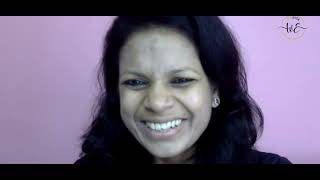
In this episode of Veerai's Wellness Podcast, host Veerai interviews Rachna Patel, an MBA‑qualified finance professional, Six Sigma Black Belt, corporate wellness coach, and co‑founder of a mental‑health startup. Rachna recounts her transition from a 16‑year corporate career in BFSI to becoming a pranic‑healing practitioner and wellness trainer, describing how a personal quest for purpose and a financial safety net enabled her entrepreneurial leap. She explains the accidental discovery of pranic healing while helping a friend with back pain, and how its systematic, data‑driven approach resonated with her corporate mindset. Rachna discusses the massive economic burden of untreated mental health issues—citing Deloitte’s estimate of $1.03 trillion in global productivity loss and $14 billion in COVID‑related losses—and argues that mental health is the next frontier of corporate health investment. She outlines her corporate wellness sessions, which blend energy‑hygiene concepts, breathing techniques, and guided meditation to help employees sense and recharge their “energy body.” The conversation moves to the challenge of sustaining these practices beyond a single workshop; Rachna’s startup aims to provide continuous support through online self‑healing classes, dashboards tracking performance impact, and technology‑driven nudges (WhatsApp, apps) to foster habit formation. Throughout, she emphasizes personal responsibility for health, the need for organizations to view mental fitness as an ROI‑driven priority, and the importance of normalizing discussions around stress and anxiety. The episode closes with a call to empower individuals to write their own health narrative and to integrate holistic wellness into corporate culture.
Chapters
Hello everyone and welcome to a yet new episode of Veerai's Wellness Podcast. Today we have Rachna Patel with us. She is an MBA in finance. She has a Six Sigma black belt in improvement. She is a corporate wellness coach. She has 16+ years of corporate experience, and she is also a co-founder of a startup which is into mental health. Welcome, Rachna. Thank you so much for coming here today. We are so delighted.
Thank you so much for having me on the podcast. It's, it's really a privilege and a pleasure to be here.
So Rachna, I mean, such varied experience you have. You have an MBA, you have Six Sigma, you have had 16 years of corporate experience in BFSI. And then suddenly you are into, you know, pranic healing and wellness coaching. So please tell us a little about your journey, you know, how this whole thing happened and, you know, how you transitioned from being a professional to being a coach.
So I think, you know, my corporate life was going on pretty well. I was very well established and I'd grown from, you know, grassroots level climbed up the corporate ladder and had a very successful corporate career. But there comes a stage when you say that phrase, "Ye dil manghe more." So that always stuck on with me, and I thought there's more to me that I need to explore. And I was also mentally very prepared and ready for any kind of consequences, because that's the most important thing. That you need to have in mind before you take the leap of faith. And I wanted to do that, and I wanted to explore the entrepreneurship side of mine, uh, not just because it looked very, uh, so to say, sexy, but more so because I thought I had it in me then when I took the plunge. Um, and that was the mindset that I had. And obviously it was a very practical decision in that sense that I had You know, I had kept 6 months to 1 year of savings with me, you know, so that I have the financial cushion and I just can focus on work. And actually, things took off pretty well until COVID hit. And, you know, it kind of changed the world for a lot of people all around, whether be it, you know, in their personal lives through personal loss, or be it in their career or their profession. You know, everybody's kind of taken a hit. uh, due to COVID. So, um, just before COVID you know, when I had— in 2018, I also learned pranic healing, and it was very accidental. It was more to help a friend of mine who was suffering from, you know, back pain. And frankly, you're aware that back pain does not have too much of a cure, at least back then it did not have too much of a cure, uh, you know, as per allopathy. So I decided to explore, you know, alternate healing therapy. And from the first time I experienced it, I totally loved it. And it was probably the experience was it's not something new for me kind of a thing, you know. So I took to it like a fish takes to water, frankly. And then I just went with the flow. I started learning and I just kept on learning and exploring because pranic healing is a science. Okay, it's a very methodical approach that we apply. There are tools and techniques that we apply. There are books that we refer to while doing our healings. So it resonated so well with me, especially somebody coming from a corporate background where logic is everything, data is everything.
For me, it is everything.
Yeah, absolutely. I mean, you'll agree to that. So it was not something which was very individualistic in nature. you know, pranic healing. It was something which was very, like I said, process-oriented, and it went really well with my background as well because I'm a process person. And slowly and steadily, I mean, I did not really know that I would really take up, you know, this part as a full-time career and look at, you know, spreading wellness using various alternate therapies in corporates. But yeah, I, I kind of, uh, took this decision that I want to do something for corporates because I have been there, done that. So I really know that it takes a lot of toll, you know, on people, and it affects not just their mental well-being but, you know, their physical well-being as well, right? Because we know We all know and are aware that a lot of ailments are psychosomatic in nature.
Yes.
And it will just compound as time goes if we do not really take care of ourselves. Fortunately for me, I have had a very good physical structure, and I've also been exercising all along my— so I'm a fitness enthusiast as well. So I have—
You lift that in length.
Yeah. So my body actually held fort when it came to coping with stress and all of that. See, because at senior levels it's much more stressful, right? Because you're fighting different battles every day practically.
Yeah.
Some of them are— most of them are rather unrequired, I would say now.
Yes.
But yeah, you need to be a bit— sorry, you need to have a very, very strong mental framework, you know, and apart from physical framework to kind of handle that kind of pressure. So, uh, when I looked at pranic healing, I thought that, you know, it has a lot to offer to the corporate world, uh, not just to individual people. And slowly and steadily, uh, you know, I started collaborating with corporates, uh, you know, to conduct wellness sessions, uh, with them. And, uh, of course, it was done in association with the, uh, Yoga Vidya Pranic Healing Foundation of South Mumbai. And I have been in this field now for about 1 year, and I've had a rollicking good time. I enjoy doing my sessions.
I'm sure you have.
And my participants love learning something new because these are all experiential sessions that we have. And it's something very different because we feel energy, we make participants feel energy. You know, it is an abstract concept because we cannot see energy, but we make them feel energy, you know, and how it impacts is what we— and what are the tools and techniques to kind of recharge or re-energize themselves at a regular period and how to keep their energy body and etheric body clean and healthy is what we talk about. And we ended up with a meditation. Okay, and so that's what we do. And then one year down the line, I realized that look, um, you know, this seems to be pretty good. I mean, I'm liking what I'm doing, and I thought that let me pivot, uh, and let me have my own, uh, startup related to mental health, especially focusing on workplaces, uh, because when I was looking at some of the data, you know, uh, who had said— who has said that, uh, but up till 2023 there will be a loss of man-hours and productivity to the tune of USD 1.03 trillion. Okay, so I was amazed at that kind of data. Of course, you—
because of mental health.
Yes, yes, this is, this is mental health related only that I'm talking about. And Deloitte came out with a report last year in 2022. Of course, some of it was out of COVID fresh out of COVID so we cannot take that figure, you know, at, uh, as a, as the correct base. But as an approximate, even if we're discounting, let's say, um, you know, maybe 20-30% of it, they have estimated the loss during COVID as about $14 billion USD, okay, due to mental health issues, okay. And this seems to be a growing concern because, you know, we already have a lot of things in place as far as physical health is concerned. So we have now a lot of tests which are getting conducted, a lot of vaccinations, medicine, etc., etc. But we, we're probably now going to move from that phase and going up the curve where mental health is going to be the next thing. And we sort of unprepared over there, looking at the num— the support system that we have.
Yeah, you know, very, very less support. The most very, very minimal is to take medicines, which is just a suppressant for a while, but it does not resolve the problem.
Absolutely.
And I think alternate medicine and, you know, naturopathy, these are the things that really, really needs to be, you know, more in, you know, our view so that we learn to manage our lifestyle and we learn to make it a permanent part of our life, not just do it for a day or two and leave it at that.
And given, of course, the fact that, you know, we spend about one-third of our time, as you know, whoever is working with, you know, at companies or organizations, they spend about one-third of their time you know, in these organizations. And, uh, the, the organizations are a good touch point to, you know, kind of reach out and provide these kind of facilities where we now getting into the phase of mental fitness, you know, not just physical fitness but also mental fitness. I think I kind of see that revolution coming up next in the next few years.
People have started realizing the value of mental health more because companies are losing a lot of money because of mental health. Because every disease in the body of a human being is a manifestation of the, you know, mental health issues that they are going through, and it's all called psychosomatic diseases.
Absolutely.
So that is why if the employee is not coming to office, they are not keeping well, who will work? And obviously, the business will suffer. So I mean, founders and leaders, they have to wake up to this call of addressing the mental health issues of their employees.
Yeah, so I'm hoping that we also will do our bit, you know, you and me, through our own channels and in our own ways to bring about this realization. And also, we're trying to correlate the impact of, you know, mental health of employees and that of productivity or performance. So hopefully, we'll have something which tracks both of them, and which will help employers also realize, the leaders also realize, uh, that this, um, so-called data that we are talking about is not just fictional, but it is actual, you know, actual loss or actual, uh, gains that they're going to have with improving mental health. So let's just, you know, end it on a very positive connotation that because it's at the end of the day, for the CEO also, it's going to be, you know, what is the ROI, right? If I'm going to invest so much in mental health of people, you know, and eventually if my employees are going to leave, what's in it for me, you know, what's in it for the company, okay? So hopefully we'll try and address that part as well so that, you know, this is looked at more seriously and not just as something that happens on a Friday evening. As one of the sessions, with no— not trying to demean any of the efforts taken by anybody or any service providers or any companies who are actually engaging employees. But I think this has to be mainstream. That is the whole thought process behind it.
And I think people have started having this conversation now, and the stigma that was there with mental health earlier has become a little bit of you know, go, no-go, because people have realized that this is something that really needs to be addressed because it manifests in your body. And when you're not feeling well, you're not wanting to do anything, you would want to know the reason behind it.
Absolutely, absolutely. I think, you know, yes, I think you're absolutely right, uh, when you're saying that a lot of people are now realizing that they need to speak up. It's okay to, you know, to say that I'm stressed. You know, it's okay to say that, um, you know, you're anxious. Just like before the podcast, probably I just mentioned to you as well, you know, um, it's okay to, to come out in the open and talk about your issues, not just for yourself but also for the sake of your counterparts, to encourage them and to build a community and say that we're all in it together. You know, you're not alone, you know, and it's okay. It's a very normal thing, just like any other disease. So hopefully in the next few years, you know, we'll all get there together and we'll help each other in the journey and we'll make this a very collective effort to take it to the next stage. That's going to be my intention.
My experience with having, you know, mental health issues, and that was for a very brief time, I realized that I was so incapacitated that, you know, I was not able to do much. I was bedridden and you know, health-wise, family-wise, everything was going down the drain. And I was like, okay, so this is something that really, really needs to get addressed. And that's when I became really serious. So I would urge people to not go that far and, you know, realize the first symptoms of stress and start working on it. Make lifestyle adjustments and try to be patient and consistent with those lifestyle adjustments. And absolutely, you will get back on track. But realize those first symptoms and get serious about it.
Yes, so we're looking at holistic success. We'll probably redefine what success means to every individual and to corporates as well, okay? So that there is, uh, long-term sustenance of everything, not just profitability, but also of well-being of the organization through the well-being of their employees, you know. So that's the whole idea.
So important. And I think today the most stressed people are the ones who are working in corporates because of the environment. It's not that there are toxic people always there, but you know, there are things that come up every single day. But if you don't know how to, you know, process it mentally and how to manage it, you know, properly, then you end up getting stressed. So it's a normal process in a corporate world. If you're just aware and conscious of how to process it, I think, you know, it's okay. To move ahead without any diseases and being healthy and vibrant. Absolutely.
And making yourself better, just tuning into your inner self and trying to get everything in place so that you are much better placed in the years to come.
Right. So typically when you are doing a corporate training session, how does it look like? How is it formed? And what do people walk away with after the end of the session?
So like I said, people are very excited, you know, about the session because first of all, it shows that the organization cares for them, okay? Because this is— they're talking— we're talking about mental well-being, right? Mental health. So I think the first message that goes out from the corporates is that to the employees is that we care about you. Okay, and second is, of course, they come in, you know, with certain anticipation of certain kind of things. But like I said, since we talk about energy and we also correlate how their energetic or their emotional and mental well-being impacts their physical well-being and vice versa, so we kind of take them on a different experience. We make them feel energy, we make them sense energy. And we also kind of help them to improve their energy levels. If we feel that, like just how our mobile battery, when it goes down, we charge, we recharge it, right? So we're talking about our own recharging. Okay. Recharging.
And it is science. People don't get it. It's something—
Absolutely.
Energy is science because it's everywhere. It's physics.
Yeah, correct. Absolutely. So we talk about certain breathing techniques which will help a person recharge and de-stress at the same time instantly. Instantly, and it just takes about 5 minutes of time. Okay, then we also talk about a couple of other techniques which kind of help them keep their energy body cleaner, you know, just by doing very, very simple things. And also the energy of the workplace also matters a lot. You know, we talk about that, we harp about that in the sessions because you know how it feels when you go to a hospital you know, versus when you go to a place of worship, right? There's a stark difference in the energy at these places. So we use these kind of examples just to drive home a point that just imagine if, you know, if there's a lot of stress or if there is a lot of unwanted energies which are generated, you know, by people in an organization, what are the kind of energies that are going to be there present, you know, at our workplaces? So we also talk about, you know, etheric hygiene or energy hygiene of workplaces. Yeah. Okay, again, simple things, very, very simple tools and techniques that we share with them, you know, in this session. And then we end it with, you know, our meditation session, which is a pre-guided meditation. So important. And we take a pre and post feedback as well, just to again make them realize you know, how things have been before and what is the impact of, you know, whatever practices that we've done, you know, post the session. And of course, post that, you know, we kind of, we send them out, you know, whatever notes, short notes about whatever they have learned in terms of tools and techniques. And if they want to join the meditation practices, you know, there is, like I said, it's a pre-guided meditation, so they can buy the CD, or they can do it online for free, and we share the details with them based on that.
Yes, Rachna, this one-time activity is more like an anchoring of mind to understand what this healing is and what energies are. But how do you ensure that these people stay consistent with the new learnings and they do it every day as part of their lifestyle? I mean, Is there something which is after support where, you know, people can come back to you and look for support? Because to be consistent, it's not easy. It's not.
Absolutely.
And our job is not done unless we help them be consistent and get used to the idea and create habits around things that they have learned and need to do. So how do you provide support after this first session?
So obviously what we send out information to them is they can learn further. Okay, there are, uh, self-healing classes which they can take. You know, these are online self-healing classes which, you know, which they can learn in couple of days, um, and, uh, they can continue, they can learn more about the practices, um, and can know how to continue these practices on their own. Um, also, uh, now what we're doing is we realize that there's also a gap, like you said, because consistency is where you will see results. You know, and we realize that that's a gap, uh, that needs to be filled. And hence, you know, that's what my startup also is aiming at doing.
You are addressing that problem?
Yes, yes, absolutely. It's a very big problem and very rightly pointed out by you, uh, because, uh, you know, if you learn it and just, you know, learn it and do it for a day, it does not work.
It works just for that one day.
Forget it. It's like exercising for a day and, you know, what's the use? You know, you're not going to see any changes, right? So like I said, we want to make it a, you know, as a part of culture. So we're coming out with these, uh, you know, these, uh, offerings or services where we, uh, like I said, show the impact on their performance, uh, you know, through a dashboard or something like that. And we also tie up with corporates, you know, for an ongoing, uh, very pertinent and very, very important and required. It's like throughout the year you know, even if it means just 5 minutes doing it at the end of the day, you know, 5-5 minutes, things like that. Or even, you know, now there's a lot of technology available. So, you know, a lot of push notifications can happen through WhatsApp messages, you know, through nudges, you know, on a mobile app. So all these things are there. So we are looking at using technology and leveraging all these these tools and techniques so that it is helpful and useful to everybody at the time of need. Because see, if I'm stressed out, I may not remember and recall at that time that I have this tool available with me. It's only when I do it for, you know, 5-6 times, you know, in a month, or let's say 5-6 times over a couple of weeks, is when I'm going to realize that, oh, this is making a difference to me. Okay, and this is what I need to incorporate in my day-to-day life. So yeah, habit changing is a big need and an opportunity which we are looking at addressing through all these things. So we're looking at like, say, tying up on an annual basis with corporates, all of that.
Very important. Just one-day training is not going to solve the problem if you really want to create that impact. Anybody for that matter, it needs to be consistently done. You know, you need to have accountability, uh, to get that change in your life. And that is why I hire a lot of coaches for myself, you know, for my different aspects in life. So I understand the importance of having the right person around me and creating that kind of circle of influence. And if with your startup you can do it for corporates and, you know, employees, uh, their employees, that would be really, really helpful.
Yeah, so I'm looking forward to it.
Great. So tell me one thing, Rachna, what is that one big lesson that you would want us to take away today and for the audience of this podcast to learn and imbibe in their life?
Uh, one most important lesson is, um, according to me, is your health, whether it is physical health mental health, or any kind of fitness that we're talking about in any area is your prerogative. It is your responsibility. And, you know, we're always there. You know, there'll always be tools, techniques, people, resources, in short, available to you. But it's your journey. You need to write your own story. You need to change the story.
It's not a skill that you can pop.
It's a journey, uh, and it's your story. Uh, write your story well. You can change your story at any point in time. It's not predetermined. It's your— you are the hero of your own film.
Yes, absolutely right.
So, uh, you know, you can have a very happy ending. Uh, you know, you can, you can change your script whenever you want, and we're always all there for you, but the responsibility lies, uh, you know with you.
Yeah, okay.
And that's what I tell even all my patients, uh, you know, they though they kind of, uh, look at, you know, like outsourcing their health-related issues to somebody, but I always go back and tell them that, look, I'm here to help you, you know, I can recommend certain things to you, I will also help you how to push through these things, but you need to make lifestyle changes and I am also urging everybody through this podcast that yes, there are a lot of technologies available in terms of, you know, smart wearable technology, etc., etc., but there's nothing smarter than your own body.
Yes.
You know, there's nothing more intelligent than your own body. Learn to listen to it. You know, go inwards, then outwards. Okay. To fine-tune, you know, everything that is inside and out, and be beautiful not just on the outside but on the inside as well. And let the fragrance spread, okay? And ask for help if you don't know how to get it for yourself. And it's asking for help.
Shame in asking for help.
Absolutely. There's absolutely no shame in asking for help. I have sought help. I'm sure you have sought help, and you asked in seeking help I'm also learning. It's, it's, it's a journey, right? Like I said, but ask for help. As it is said in the Bible, ask and you shall receive. Okay, but you need to ask. You need to do that part, right? So take responsibility, live responsible, and live healthy mentally and physically.
Yes, thank you. Thank you so much, Rashna. That is so important for us to learn and, uh, actually inculcate it in our life that We are responsible for ourselves. We can keep holding others responsible, but empowerment is within. The moment we start becoming responsible for ourselves, life changes and we are in the driving seat, not someone else for us. Thank you, Rachna, once again. So happy to have you today and thank you so much from your, uh, you know, experiences and learn your views. I'm sure the audience will take away a lot from this podcast, and we would love to have you sometime again in another podcast.
Thank you so much. It was really a pleasure and a privilege to be on your podcast. Thank you so much.
Thank you, Rachna.
More from Nitu


Eliminate Decision Making Fatigue. #growthmindset #hacks #positivevibes #life #motivation


I left my 3-year-old son in a store and I don't regret it...#corporate #parenting

The Box technique to control anger. #hacks #growthmindset #angermanagement #techniques #life

Plan your Sleep Cycle. #hacks #growthmindset #planning #shorts #sleep #lifecoach #positivevibes


How to get rid of Negative Thoughts. #growthmindset #negative #thoughts #positivevibes #hacks

Easy hack to track water intake. #hacks #growthmindset #positivevibes #techniques #lifeisbutadream

I earned 30 LPA at Deloitte, PwC, and Accenture but I still never got promoted. #growthmindset