Episode 29 - Amit Gupta
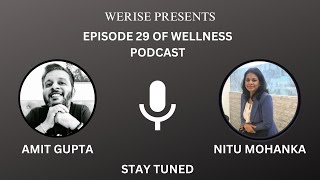
Serial entrepreneur Amit Gupta argues that founders need wellness as alignment of mind, body, and spirit, not just medical check-ups. He shares how investors now require psychometric assessments before large fundraises, and describes practical habits like daily mindfulness and acceptance that directly impact business performance.
Chapters
Hello everyone and welcome to a new episode of Veerai's Wellness Podcast. Today we have Amit Gupta with us. He is a serial entrepreneur, the founder of Factorial. He is an angel investor and a mentor with several startups across India. He works with several organizations including IIT Ropar and is also into leadership training. And Amit has very specific interest in holistic wellness for founders. Welcome, Amit. Thank you so much for coming to our program today.
Thank you, Neetu. Thank you. I mean, it's an honor to be speaking with you, and of course, I know your deeper involvement with the ecosystem and wellness. I'm happy to learn is an interest area for both of us, actually. So more than happy to share my insights and thoughts. I mean, Thank you again.
So, uh, Amit, since this is a wellness podcast, let us start with this question: what does wellness mean to you?
So wellness for me personally, I mean, uh, I prefer the term holistic wellness because if you look at it, uh, in the modern medicine context, then wellness means just taking care of your health, having your medication on time, doing your regular health checkups and all. But for me, I think wellness means an alignment of mind, body, and spirit. Spirit is something that I believe in, which is our internal self, right? So body can be taken care of by nutrition, modern medicine, or different branches of medicine, including Ayurveda, Chinese, and so on and so forth. Mind is something that I think, which some people categorize as mental wellness also. Right, is the most essential part. I believe everything is in the mind. If your mind is stable enough and healthy enough, right, uh, the body can take care of itself, right? That's what I believe in. Of course, uh, you have to lay emphasis on good nutrition and all. And the last part I mentioned is the spirit, which is— when you can give different terminologies as per people's understanding and ideology. Spirit or soul, which is our inner self, which is much beyond the mind and the body. So that's why we say the mind, body, and spirit have to be in sync. So me, if they are in sync, that means holistic wellness, right? And also, I mean, it's not a one-day or a one-time or a periodic job. One has to invest in it consciously, right? And very regularly. So yeah, I mean, for me, wellness if everything is in alignment, our mind, body, and spirit, I would constitute that as wellness. Of course, people could have different terminologies and definitions of what wellness means to them, right? And on what stage of life they are in. You speak to a 20-year-old, of course, they are fitness freaks, and for them, wellness is spending hours in the gym. Now you speak to a 45-year-old or a middle-aged person, for them, they start entering this phase of life where they start understanding wellness. And again, now if you speak to elderly people, for them to be in the right health, the bodily health, means wellness. So everybody has a different definition, but essentially it's the same, right? I mean, everything has to be in alignment and sync.
Absolutely. Very, very well said, Amit. But how did this awareness come to you? I mean, why this specific interest in wellness for you? What was that awakening?
So, so yeah, I mean, I belong to a multi-generational business family, always been in business from a very young age. Even before I finished my university education and all, business was a part. So I've seen my parents also go through very stressful times. And I'm talking like, let's say, 30, 40 years ago, where all these things were never given precedence in people's lives, especially in our country, even though I belong to a multicultural family, grown up in different continents and all. But still, I mean, typically in Indian families, you know, it is that when people get sick, they will take medicine, they'll go to a doctor, they'll go to a hospital. But nobody thinks of wellness as a holistic principle. So always saw, you know, my parents being stressed. And then later on, I joined the family business, which I ran for 15 years. And there were many phases in the journey, which were quite I would say stressful, or there were cycles, right? But there was no mechanism to solve it, to address it. There was no awareness. Yes, you have, you know, psychology is a different branch of medicine, or, you know, psychiatry and all. And in India, there is a stigma attached to holistic wellness. I mean, that has been the case for decades together. So growing up, of course, then I did exit my family business, became an entrepreneur myself in the startup sector. And that's when I started meeting a lot of fellow founders and entrepreneurs, and saw that everybody is leading so stressful lives, they seem to be outwardly happy, or content, or workaholics like I was, and I still am, right. And there aren't very many platforms that, or people that they can reach out to, of course, they have all come up in the last, I would say, 3 to 5 years. Especially during the pandemic and COVID and post-COVID. Now, also at some point, you know, in my journey for about 5-6 years, I was living in the US, 2009 to 2014. It was a permanent move. But of course, I was staying there just like any ordinary American citizen. And I saw that accessibility plus awareness is very mainstream there. Yeah. Compared to India, there is very less stigma attached to it. I mean, there are both sides to it. I mean, they also overdo it. Everybody has depression, anxiety, and they keep popping pills all the time. You know, many people that I know personally or professionally also, everybody was in the habit of popping pills. But at least there was a general awareness where they don't say that the person is crazy, or the person needs psychiatric care. If we talk about wellness, again, different from modern medicine. So that's where I started exploring, you know, various things, and consciously started taking care of my health. Of course, I did come back to India 2014, got involved in the whole entrepreneurship, founder, VC ecosystem, which is again, a very stressful phase. And many founders across their journeys that I advise and help out, you know, we form personal bonds, also personal relationships. And during many conversations, it would emerge that people were really struggling, right? I mean, and they were not forthcoming, they couldn't tell their professional circle or their professional network, even within their families, because the families depended on them, right? If there's an entrepreneur working, they couldn't disclose it. So that's when I mean, I developed a more serious interest to it. Of course, what I've done or not done is very personal to me in terms of taking care of my health. And I believe now is the right time, right stage, where possibly, you know, as a company or me individually with like-minded people like yourself, you know, we could open up a platform or create more awareness. How and when, I don't know, I have to give it a thought. One initiative that, Neetu, you were also a part of, I think about 2 weeks ago, we did an open mic LinkedIn audio. And I'm so happy we did it on a weekday. And there was great attendance, great participation. The 1-hour session almost lasted for 90-odd minutes. And still people were not ready to leave. And so many people opened up, including myself, opened up about instances of stress and anxiety, And how do we deal with? So I mean, I know I gave a very long answer. But I mean, wellness to me, I think, is at the forefront of a lot of things today, right? Because if somebody is not generally well, you know, there was a quote I remember, everybody knows the famous Ambani family, the younger brother, Mr. Anil Ambani, at one point in time, I think in the late '90s, early 2000s, was a very heavy body, very plump. He never took care of his health. And once at a board meeting, some of his shareholders asked him that if you yourself are not healthy, how will you take care of the company and the shareholders of the company? And that's the time, and there are reports in the media, and he became a very active wellness person himself. He was running 30-40 kilometers every day. And I know he did that for almost 5 years, lost a lot of weight. And, you know, he continued his journey. Of course, I don't know what happened later with him. But that was quite an inspiring story where such a senior industrialist took the time to invest. So similarly, I take the analogy on what is happening in entrepreneurship today, right? A lot of founders, firstly, they have this inherent need. And externally also, there is a need for them to invest in their wellness, right?
Very rightly said that, you know, I'm like you mentioned Anil Ambani, uh, if somebody who's not healthy, they cannot deliver, you know, from the bed. You cannot be on the bed and then work and, you know, contribute to the progress of your company. So as a founder, it is a moral responsibility to keep yourself healthy mentally and physically both.
Exactly. And see, people talk about this, this myth called work-life balance. Everybody wants to achieve this work-life balance. But theoretically, yes, it's possible. You can read so much about switching off at certain points of your day, not attending to work, but our mind doesn't switch off, right? If you had— I'll give you an example. If you had an exceedingly good day, there is simply no switch in your body or your mind that After 7 PM, 6 PM, you will not think about work because you had such a good day. You want that euphoria to continue, right? So work-life balance. On the other side, maybe you've had a very bad day, you will keep thinking about it, or you're going through a bad phase in life. How do you achieve work-life balance, right? Ultimately, it is the same individual who goes to work or is working from home or wherever, uh, and the same individual who is at home also, right? You cannot have a split personality individual where he says half of my body is for work, half of my body is for my personal life. No, it doesn't happen like that. That is why holistically, unless you have a good personal life that we term work-life, the life, right? You cannot do work and vice versa. It starts affecting your work, so it will affect your personal life. So they're so interdependent, the work-life balance, right? And consciously, you have to work. I mean, maybe young people in their 20s, 30s who are doing these 9-to-5 corporate jobs, they can switch off at 6 PM that, okay, now I'm not going to answer mails, now I'm not going to answer my phone, work phone calls. But practically, it doesn't happen like that, right? At some point, the lives intermingle. In COVID, it happened. Nobody had boundaries about what is personal, what is work, right? And I think that's the time where all these issues came to the fore also. People had a lot of time to think about work-life. So yeah, excellent topic that you've taken up, Neetu, and I appreciate your endeavor towards wellness, right?
Yes, I mean, I think this has become a reality, and people post-COVID have started to realize that it does not work, you know, I mean, if you're not taking care of yourself holistically, one or the other thing would suffer. So if you're only focusing on the business and not focusing on your health, or your relationship with your spouse, your children, your parents, even the employees, so it has to be holistic that people around you need to be happy for you to deliver your best. Right, so it's not just about business, it's about being healthy, it's about maintaining relationships, it's about personal development also. Like, you know, as a founder, it is your responsibility to grow yourself every day because that contributes to the business. If you are not developing yourself personally, you will not be able to have much inputs in the business. So everything needs to have a balance and you need to have that awareness that I need this also, I need this also, I need this also. So how do I plan myself so that I can spend time on everything. And business and, you know, other areas of your life will always coincide. Opportunity is to manage everything holistically. So that is what I think we are both trying to reach.
Yeah, I mean, in our respective areas of work. And of course, as I told you, I try to help out a lot of founders in various things, both professionally and personally. I, you know, I believe in in this mantra called pay it forward, right? Which means that I'm just paying it forward. A lot of people helped me in my career, my journey, and I pay it forward by helping people. Over the last 3-4 days, I've had at least 4 calls with the first time calls with founders, some career professionals also, 2 of them without any set agenda. They just wanted to speak to me and just discuss some normal life issues, which is very surprising for me. That it happened. Normally, everybody has an ask or a request or some help that they need. And last 4 days, I've had 4 calls, including one this afternoon itself, where they just wanted to talk. Also happens because I'm super active on this professional platform called LinkedIn, a bit too active for many people's liking. And again, I mean, I'm quite unconventional in terms of it being a professional network. And I do share my life philosophy and thoughts, especially early morning, 1-2 hours I spend in, you know, putting out some content, which resonates with a lot of people. And I was surprised, I mean, every week, again, 10-12 people keep writing to me that they love the— or the content resonates, you know, love is not the appropriate word. And they find it surprising that being a professional platform, I still write about— of course, I do write about very serious issues in business. I am a very critic of the startup ecosystem. Despite being a part of it. But I feel wellness again, and life are interconnected, right? I mean, you can't separate an individual and say, please focus only on work during work times, or in social media. So the problem I think happens is externally, at some points, we all start wearing these masks to seek validation from society. To get approval from society, right? I mean, we are social animals by nature, by biological upbringing, right? And to fit into society, we start wearing these masks, there's peer pressure, and all these societal, you know, it starts with our parents. They have good intentions, but everybody has their own viewpoint. A person grows up, has peer pressure from their you know, alumni, student friends and all, and then professional peer pressure. By the time an individual reaches a certain age, let's say 35, 40, you know, he starts figuring out who am I, right? I've been living under so much of whatever you call it, herd mentality or societal acceptance. And for people, I think some people realize it early, some people realize it late. That had they focused on their own wellness, which includes self-love also, right? People think self-love is selfish. I don't think so.
Absolutely not, right?
I mean, you can't take care of the world if you, you know, are not clothed yourself, or, you know, you're not self-sufficient to take care of yourself. How will you be able to take care? In our culture especially, you know, We've been taught to be selfless, take care of others, right? But people have mixed up that meaning. That doesn't mean you don't take care of yourself. Yes, you have to take care of others. But you can only do that if you yourself— now in the context of business, the point you made, a founder has a lot of responsibilities towards his employees and stakeholders, which includes investors these days, right? Every new, new-age startup business has investors, whether they're angels, or if the company matures, you would have very serious institutional venture capitalists involved, right. And I deal with a lot of these growth stage companies where, in a recent instance, we are doing a fundraise for a company out of India in the sustainable space. And a European fund is coming in with a very large check size, which I'm not allowed to disclose currently. But of course, it's a large check size, their first investment. Surprisingly or not, before they actually concluded the round and signed on the dotted line, they wanted the founder to undergo a psychometric analysis and a test by a Zurich-based Swiss firm, right? The founder was very amused. Now, because of my interest in the area, you know, I explained to him that, you see, somebody is putting a huge amount of money in you. And your co-founder. They are the only two people that they know. They don't know your employees, they don't know your next level of leadership. You are the captain of the ship and your co-founder. So they want to be absolutely sure that you are in the right frame of mind in dealing with future challenges, opportunities. You don't get— it works both ways. It's not only when you have problems. Problems can occur when everything is going absolutely fine. Right? You might get $10 million tomorrow, and then you're on the top of the world, right? In 6 months, times change, and then you figure out, who am I? What happened to me? Right? So all this constitutes wellness. Again, I come back to my point of all 3 have to be taken holistically— mind, body, and the spirit, right? I mean, I call it spirit, but it's basically our inner self, right? I mean, you and me, you know, know about this inner self, you can call it our inner consciousness, or, you know, our subconscious, maybe. People have different terminologies, but ultimately, it's the same thing. So I think, I think to conclude, Neetu, and of course, I'm happy to answer any more questions you may have. It is the need of the hour. It's not just a fashion statement. That, you know, some people actually are also taking it as they will attend these yoga workshops and things like that every weekend or two weeks, go for these expensive retreats. Okay, I mean, if they can afford it, it works for them, it's okay. But unless they work consciously on themselves, and all that they learn from these workshops, nobody is actually going to help them on a day-to-day basis, right? People have to do it. And, you know, a good coach is also essential. People like you propagating this message across, you know, leaving apart, you know, very structured religious kind of practices, which I have nothing against, you know, if it works for people, yes, it does. But in the day and age that we are, I also did a session, I think, 2 months ago on emotional wellness, which is also a part of wellness, right? Ultimately, everything is in the mind, I feel, right? So there are— there can be many angles. Emotional wellness, that's how you get leadership qualities also, if you are of a sound, stable— where, you know, balance, the word you used, I love the word balance— where you are not overexcited, overrelated, and then you don't even get into those depths or that rut when things go wrong. So that finding that balance, I think it's a— it takes conscious effort.
Yes, yes. And this is basically what we are trying to address in the We Rise Accelerator program also, that don't just focus on business. If you really want to grow, you have to make sure that you are taking care of all the areas of your life, not just the business. So working 18 hours a day or 20 hours a day is not sustainable. I mean, if you think you can do this forever, it's not gonna happen that you will not catch up with it, not affect you mentally and physically, it will. So the best way to do it is create a balanced life and be consistent daily with maintaining that lifestyle.
Right. No, I wholeheartedly agree to it. And in fact, I've been one of those people, workaholic by choice, Nobody ever forced me. I've had days, 18-20 hour days also, for many, many years, almost like 15-20 years. But at this stage of my life, of course, I do take conscious effort in shutting down, you know, certain things in life which I constitute as work. It takes effort, it takes— because the mind is, you see, as humans, I mean, we are also animals, by the way, apart from being social animals, it's a biological trait or a God gift that we've been given a very super active brain, a mind. And it's very difficult to avoid our own thoughts, right? Even while we are sleeping, there is a theory everybody needs 7 to 8 hours sleep. But science says we don't actually sleep for those 7, 8 hours, we only have deep sleep for 3 to 4 hours. Rest of the time we are just lost in our thoughts, something or the other is happening and all. I am not advocating people sleep only 3-4 hours, but imagine if somebody could convert those 3-4 hours of these deep sleep into 8 hours, right? It takes effort again, right, to reach that stage of thoughtlessness, right? Thoughtlessness is a very difficult stage which very mystics and yogis or gurus they attempt to achieve, some do achieve, where essentially, consciously, you have to shut down your thoughts, right? Negative, positive, everything. And that's when you gear up for the next morning, right? I try to do it. I haven't achieved that state as yet. Some days I do, some days I don't. I also struggle with very often in terms of collating my thoughts and all. And then there are— everybody has their self-devised mechanisms, right, to deal with things, right. But of course, you know, I believe a structured, guided approach when you know nothing about it does help greatly. Otherwise, then again, you'll be lost, you know, doing this, doing that.
So Google University, right?
Yeah, the Google, Google School, Google and WhatsApp University also we have. Right? I mean, every morning people send, I don't know, millions of messages and gyan and things like that. So good luck to all of them. I have nothing against them. But you see, you cannot have a one-size-fits-all approach, right? I mean, this is not a shoe size that 10 different shoe sizes, everybody should wear one shoe. No, you know, once you understand the basic concepts of wellness, everybody has to adapt it according to their own circumstances, the fundamentals might remain the same. In every branch of, you know, I don't want to use the word therapy, but holistically, whatever one can practice. And I think vRise, since we are talking about entrepreneurship, founders, business, vRise, I believe, whatever I know of it, and I know a lot from you, I think is an excellent program where somehow you've intermingled the business side of things, along with mindfulness and wellness, right? This is greatly missing because people are either doing coaching on the business side or they concentrate only on the wellness part, right? But again, I come back to my work-life theory and balance that an individual is the same individual, right? Unless, you know, you take it in a holistic 360-degree kind of approach, optimal results will not Right now, you can't expect somebody not to work for 3 days a week, let's say Friday, Saturday, Sunday. Oh, please go and do yoga, sit down for 6 hours in a vipassana class or something. Now on Monday morning, the guy will be confused. I still have so many things to do, right? How does he deal with that? And there goes all his meditation, vipassana, yoga, or whatever he did. Out of the door, right? 5 days again, he's in the thing. He might continue for 3 weeks, 4 weeks. And then he will think, yeah, why can't somebody tell me how do I deal with my daily life? Right? So I think that's where vRise is extremely—
Yeah, we're working on that. And I mean, we are trying to create as much awareness we can through this program that we do. And, you know, creating a lot of content on focusing on not just business, also your mind. I give up a lot of techniques on how to manage the mind. And I'm absolutely fascinated with what outcomes one can get if they know how to manage their mind. Yeah, absolutely. And I want everybody in this world to know that we are not using this correctly. If we know how to use this correctly, absolutely anything is possible. Absolutely anything is possible.
Many years ago, I mean, in my teens, actually in my 20s, 25 years ago, I used to be a gymmer, go to these fancy gyms and all. And once there was a board I read, I used to be on the treadmill and have a very hard time on the treadmill doing just 5-6 kilometers also. And then they put up a board specifically for me, the extra mile is between your ears. Now what is between our ears? Our mind, right? And it took me a while to— I said, what is between my ears? There's my nose, there's my eyes. They said no, between your ears is your mind. So, and we hear these inspirational motivational stories of so many people accomplishing so many things, right? In— I, I don't compare. Every achievement is an achievement in itself, whoever does it. So it's all the mind game. If we can somehow master— a master is again a very superlative word, but at least have some balance of our mind and know the techniques of how we can, you know, function. Everything again is in the mind. And see, we all live with aged parents. Incidentally, I can share an incident where I live with an aged mother of mine who is now degenerating. It's age-related diseases. And everything is in the brain, right? I mean, because of her brain function, because of old age, she's in her late 70s now. We see a lot of cognitive functions declining. Now, there's no particular reason, there's nobody to blame. But that's how it is. It's old age. Of course, she's undergoing treatment and recovering very well. Now, go back 20 years, 30 years, she was the most active lady that I've known in my life, a businesswoman all her life and all. And possibly now that I've lived with her for almost— I mean, not almost, all my life I've lived with her, I'm her son. So I've seen, had she taken some proactive steps, and if there was awareness at that point, maybe we could have delayed her degeneration, the progressive, you know, mental, whatever we call it, degeneration by a couple of more years. But I feel there was not much awareness at that point, right? This is a very personal story because I face it every day. And out there in the West, we know of these huge personalities. We had Muhammad Ali, the boxer, who in his late years went through this whole phase, you know. So I think ultimately, the sooner everybody realizes about wellness as a holistic concept, mental wellness, and how to integrate it in their day-to-day lives, the better they will be when they reach middle age and, and forward, right? You'll be better equipped to deal with your life. Even 20-year-olds, you know, at their early stages, and there is an awareness luckily amongst them. So I think, I mean, age should not be a factor, and you should not wait. See, the difference is being reactive and being proactive, right? Most of us are trained to be reactive, uh, hospital, but nobody goes into preventive or proactively taking care. I think so.
Excellent.
Again, me too, speaking to you. Thank you.
Thank you so much. So much insights. Amit, one last insight that you want to share on how to start the wellness journey of this holistic living journey?
So I think the number one point would be acceptance, right? Acceptance that this needs to be part of my lifestyle very actively. Acceptance that yes, I am— I cannot function, I or whoever that person is, as a robot, right? Where you negate all your negative feelings, and you cannot be in a positive state of euphoria all the time. So acceptance, then willingness to learn and unlearn, or the first comes unlearn part, right? We all have so much of baggage built across the years, across decades with us. So you have to be willing to let go and unlearn, right? Different practices, techniques, I can't recommend any one of them. You know, of course, you are better equipped to do that. But acceptance is the first part, willingness to learn, unlearn, and then living very consciously, right? I mean, again, techniques can differ from different schools of thought. Different schools of practice. But whatever suits you, you know, take it as— tech people know this thing called A/B testing. A/B testing means if A doesn't work, you go to B, then you come back to A. So do that, you know. I would recommend people to do that also. See if it's making a difference in your daily lives. And when I say life, it includes everything— your personal life, your own self, uh, your relationships, both professional and personal. So everything. And that is when you would feel, and you would know the results yourself, right? Everybody has that inner gut feeling, inner way, right? And our bodies are very self-healing, right? I mean, you have a wound, if you don't do anything to the wound for 5-7 days, just wash it nicely, the body heals itself, right? I mean, Nobody can make a skin patch and attach it, right? Everything regenerates, right? So similarly, our mind, I think there are billions and trillions of cells in our mind which are constantly regenerating, right? And of course, you know, this whole positive-negative thinking, again, very consciously, you have to let the negativity out. And that's when you will make space for you know, positive vibes coming in. And positivity is not something that, again, it's not a switch, right? It's not like a hard drive. In the old days, we have to have these Windows system where you had to defragment the hard drive, right? So similarly, you need to defragment your brain. I mean, that's what I call it. I mean, before it becomes too late and you just need a new hard drive, which is your brain, which is not possible, right? So yeah. Again, no one-size-fits-all, whatever suits people. But at least do something, carve out that 1 hour, half an hour daily if you can. And you must, right? You, as in anybody else listening to this, and for the general audience. And once you get that, you start enjoying, you're feeling good about yourself. Once you're feeling good about yourself, you can impart the same vibes to everybody around you in your professional life, personal life. And I think, and it's very important to know that it's not like a 3-month course that you do somewhere and then you forget about it, right?
It has to be practiced daily, you know. Mindfulness has to be practiced daily. Daily awareness, being conscious, make conscious choices, you know, be positive. These are things one needs to do consciously. Every single day, it's not like, ya, aaj kya khalnein, and I'm done with it.
One thing which I probably have at that phase of life, I think one thing which works for me is limiting our choices. Right? I mean, there's so much of choice available in anything and everything. You open an Amazon, you want one thing, you'll see 500. You open your own cupboard to, you know, take out your clothes in the morning, you'll see 100 clothes which you haven't even worn. So limiting your choices, and I can give you examples of Steve Jobs, usually wore one black turtleneck. There's Mark Zuckerberg, who wears the same t-shirt and jeans every day. Of course, he has many pairs of that. But why does he do that? And why do these people do that? Because they don't want to waste their time in these things, 20 minutes deciding what to wear, what to eat, and so on and so forth, right? They would rather do it on more productive things. And focus elsewhere, which includes their own wellness. I know many of these Silicon Valley founders. I don't know them personally, except one or two. But I've read so much about them, right? Everybody practices wellness, mindfulness. And that's how they're able to become these huge, big billionaires, right? And managing God knows how many millions of dollars and thousands of employees and all. So there is a method to all the madness. What we see, what we see is the external face of people. In India, we have new age entrepreneurs like Zomato's Deepinder Goyal, Vijay Shekhar Sharma, and all. Ultimately, they're all humans, right? I mean, and they do take active, you know, actively they're focused on their wellness, because they realize how important it is for them to work. So I mean, that's why little advice that, you know, please be willing to make a conscious effort, right, towards your wellness journey. Yeah, towards the wellness too.
Yes, thank you so much, Amit, for your insights. This has been really helpful. I hope people watching this, uh, will have a lot of takeaways and they will start thinking about their holistic living. You know, career and business definitely comes first, but with that, everything else which supports your career and business and finances, it has to be also taken care of every single day.
Thank you. Me too. Excellent.
Thank you so much, Amit. Thanks. And with that, we'll bring this to a close. I had a great conversation. Thank you.
Thank you.
More from Nitu


Eliminate Decision Making Fatigue. #growthmindset #hacks #positivevibes #life #motivation


I left my 3-year-old son in a store and I don't regret it...#corporate #parenting

The Box technique to control anger. #hacks #growthmindset #angermanagement #techniques #life

Plan your Sleep Cycle. #hacks #growthmindset #planning #shorts #sleep #lifecoach #positivevibes


How to get rid of Negative Thoughts. #growthmindset #negative #thoughts #positivevibes #hacks

Easy hack to track water intake. #hacks #growthmindset #positivevibes #techniques #lifeisbutadream

I earned 30 LPA at Deloitte, PwC, and Accenture but I still never got promoted. #growthmindset