Episode 36 - Fayaz Ahmad Dar
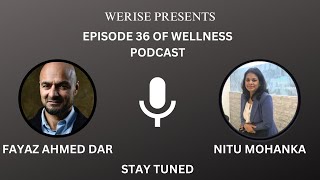
In this episode of Veerai's Wellness Podcast, host Veerai interviews Fayaz Ahmad Dar, a Kashmiri ecological entrepreneur, author, mentor, and high‑performance mindset coach. Fayaz recounts his upbringing in a peasant family, the tension between traditional farming and formal schooling, and how early educational experiences both equipped and alienated him from his culture. After moving to Delhi at 15, he completed a commerce degree, an MBA, and worked for multiple organizations, eventually joining a US‑India educational foundation. Extensive travel broadened his perspective on systemic inequality and the limitations of conventional education. Returning to Kashmir in 2009, he founded the Mool Sustainability Research & Training Center (Mool, meaning “roots”) to mentor youth, but realized that nonprofit models could not sustain livelihoods. This insight led to the creation of the SAGG Eco Village (SAG meaning “nurture”), a two‑acre ecological enterprise offering natural farming, cultural immersion, and experiential learning. Building on this, Fayaz launched the Village Academy, which delivers two signature coaching programs: (1) “Envision Your Life,” a six‑step blueprint covering self‑understanding, goal setting across seven life domains, limiting‑belief work, self‑image, and daily routines; and (2) “3BM Ecological Entrepreneurship,” which translates personal mission into a business model and management framework. He explains the tiered membership (Silver for coaching implementation, Gold for a year‑long incubation of an ecological venture). Throughout, Fayaz emphasizes that a limiting mindset—rooted in fear, societal conditioning, and survival focus—blocks potential, and that reframing problems as opportunities is essential for personal and societal transformation. The conversation ends with mutual enthusiasm for collaboration and scaling impact in Kashmir.
Chapters
Hello everyone and welcome to a new episode of Veerai's Wellness Podcast, where we discuss about wellness, conscious living, and entrepreneurs and coaches who are working for making a social impact. And today we have one such entrepreneur with us, Fayaz Ahmad. He is from the beautiful land of Kashmir. He is an entrepreneur, author, mentor and coach. He is an ecological entrepreneur and high-performance mindset coach— mind it, high-performance mindset coach— dedicated to empowering youth with success-oriented mindsets. Fayaz's adventurous journey spans across 3 decades in 20 countries. Can you believe it? 20 countries, that, that's quite a number. And in 2010, Fayaz founded the Moon Sustainability Research and training center focusing on sustainable transformation. In 2012, he founded SAGG Eco Village. We will talk more about that, Faiyaz, today. And it is an emblem of sustainable living, offering recreational, educational, and lifestyle services. I'm so rooting for this. In 2018, once more, he founded the Village Academy, a transformative hub blending cultural and scientific wisdom focused on personal success and collective progress through experiential coaching programs. Great, superb. Welcome, Fayaz. Thank you so much for coming to our program today.
Thank you so much. It's a great pleasure to be here.
Yes, and quite an extensive journey you have had, like, you know, over 3 decades, 20 countries. Give us a little input on, you know, what you have been through. What you have been doing and what has been your journey like. And you are now an author and a coach. Where did the transition happen? How you are able to create this life for yourself?
Well, yeah, I'll try to sort of give you a brief of how it all came about. As far back as I remember, I'm I come from a peasantry background. I grew up in a rural, small village in Kashmir. And I remember when I was around 5 or 6, you know, we were planting rice with the family, and I had an inkling that I might be sent to school. So I didn't want to go to school. I was trying to be very efficient at planting rice and being very helpful for the family. But my father sort of, you know, as soon as it was 9:30, called me out and said, change and go to school. So, so I was sort of pulled out of a farm and forced into a school. But then, you know, that journey sort of, one thing led to another. But that journey was very interesting for me, the schooling, the educational journey, you know, there were some parts I was learning new things, I was becoming literate, I was learning languages, I was learning all these new things. But I was also feeling like, you know, that I have to give some things up, for example, you know, culturally, for example, farming. I love to do farming, but I was sort of discouraged from doing farming, and I was encouraged to read only books and read it, learn a new language, because I was, you know, sort of discouraged to use Kashmiri, and I was encouraged to learn Urdu and English. And so it had sort of an— what it sort of had a complex impact on me. I sort of— there were parts of me that were enjoying the experience, there were parts of me that were struggling and not really comfortable with what was happening.
Yes, that is the problem with the education system here, Fayaz, that, you know, the individuality of each child, that is overlooked. I think that's what happened with you as well. Please continue.
Yeah, exactly. And it sort of, you know, as now that I reflect on that journey, you know, and I've been reflecting for a long time now, you know, although it gave me certain skills and it sort of helped me learn some things, but it also, in some deeper way, sort of alienated me from my own self and from my own culture. So for a while, I started sort of disliking my culture and my surroundings, and I was not comfortable introducing myself as a farm boy or, you know, I was trying to hide my background from the world. But anyway, so my journey then, this educational journey took me outside of Kashmir when I was around 15 years old, and I experienced different cultures. I went to Chandigarh, and from Chandigarh, I went to Delhi, and basically to study further. But then I realized I had to support myself. I started working when I was 17 years old. So I spent some 15 years in Delhi working for what, some 8, 9 different organizations. And I was But the advantage of living in Delhi was that I was able to do multiple things. So I continued to study and I continued to work and support myself. So I did my commerce from Delhi University, I did an MBA. And then by the time it was 2009, I was working at a bilateral organization, this US India Educational Foundation, and I had also explored I had gotten opportunities to travel to almost every corner of India and see how, you know, things are. And I would travel for work, but I would often take a few extra days to experience the life there. And that sort of gave me insights into things, how things are working in all other places.
Yeah, travel opens you up.
Exactly. I think travel is the biggest university that there is. I think the best university that there is. So, my growing up in Kashmir and the context of Kashmir has been a very difficult— we have had a very difficult recent past, at least, you know, where we saw a lot of fear and violence. And so given that background, and then when I saw people outside, And there were, again, I saw, I felt like there's a global template that there's a few, there's a majority of people who are unable to, who are suffering and who are being exploited. And there is a minority that is enjoying, that is doing well. And, you know, so, and To cut that long story short, I sort of started understanding, one, my own journey, my own upbringing, and how, you know, the way we are educated, the way we are brought up, the way the social context is set up, how it— the impact it has on our mindset, you know, how people develop this limiting mindset and then are trapped in these cycles of— and generational cycles of suffering and limitation and exploitation and poverty. And thankfully for me, because I was able to experience all these different cultures and travel here and there and then meet a lot of different kinds of people, witness a lot of different kinds of careers that I had never imagined growing up. And so I think it opened me up and my sort of perspective broadened, that probably, you know, our educational and socialization as we grow up has— does not sort of prepare us for life the way it should.
I think the same. Yes, I can understand where you are coming from. Totally.
Yes.
So you started in 2020— I think 2010 you started the MOOL Sustainability Training and Research Center. What is that? Tell us about that, because you said that 2009, I think, you came back to Kashmir, and then 2010 you started that.
Yeah, I think 2009, I quit my life in Delhi because I had spent, by then, by that time I was there for 15 years, I had worked for 9 different organizations. And I had also sort of studied. And I'd also sort of bought a flat in Delhi, I was on the verge of sort of settling down that way. But then something in me was also restless. And I was exploring things, you know, what to do, how to do, is this all there is, or is there more to life? And then I realized, you know, I was supposed to turn back and return to Kashmir Kashmir. So in 2009, I quit Delhi, and I— because I had never been a full-time university student, although I had done an MBA and all of that, but so I went to the US to do this program in sustainable development and conflict transformation. So before I returned to Kashmir in 2010, so I came to Kashmir, back to Kashmir in 2010 to work with younger people here to share basically my understanding, my realizations about how the— our experience of upbringing in Kashmir conditions us and why, despite, you know, all our— all young people have all these great dreams about transforming the world, but then most of us unfortunately end up sacrificing our dreams for security, you know. So, so I sort of felt like, you know, I had learned things and realized things about my own self and how the world works. Maybe I was 10 years or 15 years behind the schedule, you know, the things that I should have learned in school, I had to learn on my own, you know, exploring things on my own. And so I wanted to help the younger people with my realizations to see if they could make a better choice if I shared the lessons with them. So that's how Mule Sustainability Research and Training Center came into being, and I started working. I saw myself as a social worker. I had studied business, never done any business. So, and I come, as I said, from a peasantry background, so I saw myself as a social worker. That's how I started an NGO and started collaborating with other people to work with young people.
You are giving so much back to the society. They are so proud of you that you did not take your experiences negatively, but you transformed them into something positive and trying to help others with I'm so proud of you. And I'm so glad I listened to this. Then tell us more about the eco village that you have created. Sounds like a fun idea. And maybe, you know, you can invite us sometime to Kashmir, to your eco village.
Definitely, always welcome, always welcome. I'm in fact looking forward to the day that you will be here. And I would love to show you around. And, you know, Mool, I started Mool Sustainability Research and Training Center because I saw myself as a social worker and Mool is a Kashmiri word for roots. And, but, you know, after 3, 4 years of working, you know, talking to a lot of young people and working in this nonprofit paradigm, I realized two critical things. One was that, you know, you can inspire young people, you can teach them things, but the primary question, unfortunately, on their minds is the question of livelihood. You know, because that is livelihood is cured, nothing else matters because then, you know, your survival is at stake. So that is one. Number two was about the nonprofit paradigm. The nonprofit paradigm, although, you know, I was interested in sustainability and I started Mool Sustainability, but I realized that a nonprofit model, unfortunately, the way it is set up right now, it cannot become sustainable. And you are dependent on donations and you are not able to do, you know, generate your own resources. And so those two realizations, you know, because, you know, one of the ideas that I came back with from this program, Master's program in sustainable development, was this participatory action research framework where you do, if you want to fix a problem, number one, the person who's in the problem has the solution. That is the basic premise. And then you research and then you practice and then you research, then you practice, they go hand in hand. So that was the kind of frame I was using. So when I realized these two things, one, that question of livelihood is the primary question for young people, and number two, that nonprofit paradigm has those limitations, I realized that perhaps entrepreneurship is a better way if you want to inspire younger people, if you want to give a solution to their, to the social or environmental or economic problems. Because if you become an entrepreneur, you can create a business. And ecological entrepreneurship is the design where you integrate ecological needs and resources, cultural needs and resources, human needs and resources with the available technology to create a business that improves quality of life and quality of ecology by design, right?
And then you are also not dependent on someone else to run your own thing, you know. You can create an impact by making—
exactly, exactly. That's what you know, that I tried to integrate my social, my economic, my sort of environmental concerns and goals and my personal aspirations and financial goals as well. And so that's how SAG Eco Village was born. SAG is a Kashmiri word for nurturing, for watering, literally. So Mool was the nonprofit, but then I realized I had to probably take a step back and start an entrepreneurial venture. So that's what SAG Eco Village is. It's an ecological entrepreneurial enterprise that is a the physical space is about 2 acres. So it's— we have created a sort of a mini version of a traditional Kashmiri village where we do natural farming, where we have built some traditional sort of dwellings and created experiences for people of, for example, pottery, natural farming, engaging themselves with nature and with culture.
Wow. I think you have also started coaching and, you know, basically weaved together ecological entrepreneurship, I mean the travel with coaching as well, something you are creating that side, if I'm not wrong, right?
Exactly. So the experience sort of is de-stressing for people. And then if people want to go deeper, they can also engage in this conversation about how to do what we are trying to do, how to build an ecological enterprise. So ecological entrepreneurship. So the coaching program, the Village Academy that you were mentioning earlier, is sort of the organized way of teaching and coaching people, training people in building ecological entrepreneurial ventures, but more importantly, developing an entrepreneurial mindset and where they are able to integrate their social and their financial goals.
Wow, wow, this sounds— I mean, this sounds so surreal. I think, uh, Faiyaz, we should do something together because I am also working for entrepreneurs, and maybe through this podcast, you know, we can come out with something more beautiful where we can join hands and create a program for people, uh, watching this show where they can come to Kashmir, you know, for an ecological experience and also you know, get entrepreneurship mindset through this program. I think this looks like a very good idea. What do you think?
Oh, definitely. And I'm all open for collaborations. And thank you for sort of mentioning that. You know, I have been at it for 10 years. And for about, you know, 6 to 8 years of that 10 years, we were sort of under the radar, because it took a lot of work and a lot of experimentation. And I have I'm thankful for the journey because it has transformed me profoundly. And it has— I have learned so much, I can't sort of even be thankful enough. And so we have experimented a lot and failed a lot and learned a lot. And now we have these sort of tested services, products, and these programs that are experiential, that we are bringing to people and We are also seeking collaborations and, you know, resources to scale things up. And the opportunity is huge. And I know a lot of people struggle with this question of, you know, they have to sacrifice their social goals or their personal dreams for financial stability, unfortunately. So if this— the formula that we share, that the blueprint that we have been able to develop and practice based on our practice, can help people integrate their social and financial goals seamlessly. And I mean, not only— it will not only be beneficial for the person, but also by design for the society, for ecology.
I know, and I totally resonate with you. But then also, Fayaz, there is a challenge, right? So reflecting on your own journey, what do you think holds people back? And keeps them stuck in those undesirable situations. Why do you think is this happening? I mean, let's address the root cause.
Yeah, unfortunately, I think the root cause, in my understanding, is the mindset we take on as we grow up, you know, because we are born as the best creation of the universe. You know, in our culture, we say ashraf al-makhlukat, there's no comparison. I mean, we are at the cutting edge of the evolution in terms of, you know, the intelligence and the capacity human beings have. So every human being is coming into the world with a mission, with unlimited potential, and with unlimited, you know, capacity to build and do good and with a purpose. But unfortunately, the way we are brought up, the way, you know, things happen, we take on a mindset that is not naturally our own. I mean, you know, we take on the limiting mindset from our parents or from our teachers or from the society, from, you know, the media and how, you know, we understand, you know, for example, fear is the biggest thing that is present in our environment. And unfortunately, fear has a good use, but we overuse fear. And that is why people end up, you know, growing up to be insecure and limiting. And despite having these aspirations and this capacity that they can do anything, they can fulfill their purpose, they can realize their potential, we unfortunately sort of end up sacrificing all of that for mere survival. So I think this shift needs to be there. We are, you know, human beings are supposed to take on challenges, we are supposed to solve problems, we are equipped to take forward the evolution. So we should naturally thrive on problems. So I look at problems as opportunities. All problems that we see are opportunities.
That is the growth mindset, right? That is—
Exactly. I think that shift needs to happen. I mean, wherever I am, whatever I am dealing with has something for me. It has some lesson for me. It is an opportunity for me to demonstrate something, to build something, to grow in some way. So if that shift happens in the mindset, I think the reality will also change for a lot of people for the good.
So tell me, Fiaz, if somebody has to, you know, come to your training and research center and the, you know, the entire program that you have created, what is the step-by-step formula that you will, you know, do with them to make and transform their life for better? Because that's what you are aiming for in life, right? So if somebody comes to you, what is that? What are those core things that you would be doing and helping them with, uh, to transform their life? I think that is one big takeaway, uh, we should have from this podcast.
Definitely, and thank you for asking that. So we have two signature programs. One is called Envision Your Life. So Envision Your Life gives you a blueprint to take charge of your life and transform your mindset. So it starts with the first step is to understand yourself, who you are, where you are coming from, what your experience of this life is supposed to be, and where you are headed. So having a spiritual understanding of, you know, yourself. And then the second step helps you understand and figure out what your goals are, what you want, what your purpose is, figure out your values, your beliefs, you know. So trying to understand who you are and what you want. And then step 3 is to integrate all areas of your life. So think about, for example, you are a spiritual being, so you need to have that under control. And then you have a mental, you know, capacity, you have to be able to engage your creative capacity. So have some goals for that. And then from that comes your career, your work, You have to be able to contribute to other people's lives. You have to be able to create value, exchange value with other people. So that is the third career or work. And then that gives you the ability to get a return against the value you create. So you get your financial stability and financial goals. And then comes from, you have to have your physical health under control. You have to have your relationships, you know, optimized. And then all of us have a need to be, you know, to realize our potential, to be seen, to contribute to society. So social goals. So there are these 7 areas will help you understand and figure out your goals. So first is understanding who you are, then what you want in terms of goals and integrating all areas of your life, and then creating focus, decluttering your mind, trying to understand what are the limiting beliefs or limiting habits that you have acquired over a period of time that might not be helpful to you and how to replace them. So that is step 4. Then step 5 is about you try using your imagination, building a self-image, you know, seeing yourself as a new person that has, you know, that is in alignment with the goals you have for yourself. So creating and understanding your own self-image and how to develop that personality that is that person that you want to become. And the last one, step 6 of the blueprint, is to create a routine. Hmm. It is— at the end of the day, it comes back to your daily routine, your daily habits. What are the critical elements that you should have in a daily routine? So that's the 6-step blueprint for your Envision Your Life program. And then the second Program we, signature program we have is called 3BM Ecological Entrepreneurship. So 3BM Ecological Entrepreneurship is the first BM is the basic mission. Basic mission is basically the envision your life blueprint. So you know who you are, what you want. So you have all that clarity. And then second BM is business model, turning that your personal basic mission into a business model. I mean, how do you connect it with today's world? How do you connect it with other people? How do you interact with other people? You know, how do you exchange value with other people? And the third BM is the business management. So it's a mini course in business management. So these are the two structured signature programs. One is the Envision Your Life, and the second is 3BM Ecological Entrepreneurship.
Superb. And what is the typical time period for each of these programs if somebody has to sign up for this?
Well, there are 3, 4 steps in this journey. One, the first step is an introduction that, you know, to both the programs, for example, a 90-minute introduction to the Envision Your Life Blueprint. So that's sort of basically, it could be a webinar or it could be a small session that we can organize to introduce people to the idea to help them understand what this is and how it is going to unfold. And then the second step is course, which is a 4-day course in shape of a workshop, which is delivered and where you understand the detailed blueprint and you understand how to implement it to your life. But then the third step is if— so you can take the workshop and implement the thing on your own and, you know, get going. But if you want to, if you want help, our help in implementing it to your life, Then there's this Silver membership of the Village Academy that we deliver coaching programs, weekly sessions with you. One, we deliver the course and then we handhold you through the implementation sessions to create a blueprint for your own life and implement that blueprint. And the third, fourth step, which is sort of the Gold membership of the Village Academy, is where you not only implement the blueprint and we help you through coaching sessions, but we then also work with you to implement the 3BM framework to develop an ecological entrepreneurial venture, uh, with us that we, we help you incubate and develop over a period of 1 year.
Wow, well, that's superb, Faiyaz, and that's so, so inspiring. I mean, that kind of work that you are doing, uh, staying at a place like Kashmir where people are like literally, uh, you know, still apprehensive of venturing, uh, you know, and going to— but I think you are bringing that change on ground. And I know for sure that Kashmir is coming up and it's coming up big time. The entrepreneurship in Kashmir is like a, like a force that nobody can stop anymore, and your venture is definitely adding to that force. And I'm so, so proud of being able to, you know, interview you. You're such a great entrepreneur, and what you are doing is, uh, really, really inspiring. Thank you so much, Fayaz, for sharing your experiences and your knowledge with us today. Um, thank you very much.
Such a great pleasure to speak to you.
Yes, I wish you the best and the, you know, in the impact that you are trying to create in this world. And, um, we'll figure out a way of how we can do this together.
Thank you so much. Looking forward to that. Thank you.
Thank you.
More from Nitu


Eliminate Decision Making Fatigue. #growthmindset #hacks #positivevibes #life #motivation


I left my 3-year-old son in a store and I don't regret it...#corporate #parenting

The Box technique to control anger. #hacks #growthmindset #angermanagement #techniques #life

Plan your Sleep Cycle. #hacks #growthmindset #planning #shorts #sleep #lifecoach #positivevibes


How to get rid of Negative Thoughts. #growthmindset #negative #thoughts #positivevibes #hacks

Easy hack to track water intake. #hacks #growthmindset #positivevibes #techniques #lifeisbutadream

I earned 30 LPA at Deloitte, PwC, and Accenture but I still never got promoted. #growthmindset