Episode 37 - Dr Preeyaa Arora
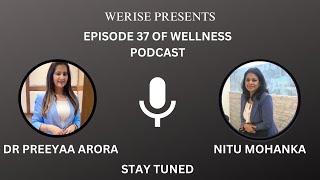
Dr. Priya Arora, founder of the Speaking and Grooming Academy, teaches communication and confidence through NLP techniques and structured interview prep. Schools don't teach soft skills that matter in college and careers, so her 3-month programs focus on body language, eye contact, and authentic self-presentation.
Chapters
Hello everyone and welcome to a new episode of Veerai's Wellness Podcast. Today we have one more dynamic personality with us, Dr. Priya Arora. She's based out of— Dr. Priya Arora is a pioneer in education, language training, and soft skill development for over 18 years. She started as a primary teacher and then became director in the prestigious G.D. Goenka Public School while also earning her PhD in English language. Wow, Priya, this is, this is so good, but I'm not yet finished. She is also the founder of SAGA, which is Speaking and Grooming Academy, and also she is a high performance communication and life coach. For the past 2 years, I believe, or maybe more. She'll tell us.
I've always been like that. Very good evening, everyone. Hello, Neetu, how are you?
I'm not done, Dr. Priya. There's still something else that I want to talk about. You please let me finish. So, Dr. Arora, definitely, I mean, you have like, uh, so much experience, but we would like to know more about the training programs that you create for leadership, on global communication styles, time management, and personal branding. And also, you will tell us today about what work you have done with administrators, beauty pageant winners— wow, that, that seems interesting— entrepreneurs also are someone that you have worked with, students, and working professionals too. So tell us all about the journey from starting till how you have reached here, Priya. Yes, welcome once again. Sorry for cutting you off.
No, no, please continue.
Yes, warm welcome. And we would love to start with understanding where you started and how you reached here, and definitely the kind of experience you have. You don't look your age, and that's a compliment.
Thank you so much. Thank you so much. Though I would like people to know my age because then that's the way people believe you're experienced. Enough, right? I have experienced that in my life being an image management coach as well. So we know your image, how you look, does impact, right? So we are all prejudiced. The moment we see someone and we have an opinion about that person. So yes, it does matter. And just a little correction there, yes, I have full-time become a coach from last 2 years, but I've always wanted and I've always put an effort that my students— while I was working as a principal and director— that the students are trained. And I used to host a lot of workshops and seminars for students where they could learn more about communication skills. Now when I start with my journey as a teacher, then that was the moment when I realized that the school information, the school knowledge is not enough.
Yeah.
What the schools give you is just basic arts, right? They train you with subjects without teaching you how to use them in your lives.
True. I think the same.
Yeah, and there's this huge gap in the school education and the college, and then what the corporates and the work environment need. So there's a lot of disparity, there's a lot of difference, and the difference is very huge.
Yeah, there's a gap. There is a huge gap.
Definitely there's a huge gap. So this soft skills helps you, you know, fill up that gap.
Hmm.
So that's my job, that's my task, and that's what my vision is, to help people overcome that gap and be career ready, right?
So say for example, a working professional, if he walks into your institute, uh, how does he walk out? What is the difference that happens to that person from walking into walking out?
Okay, my courses are generally 3-month courses, and the changes which they have noticed are huge. But what I have noticed in them is they're more confident, you know, confident speakers. They are more confident individuals. See, now confidence is a huge term. Most of these students that come to me are like, I miss on confidence. I'm confident. You need that aspect in almost everything you want to aspire for in life.
Right.
And that is one thing that comes from inside. Medicine nahi hai, you cannot give somebody a pill. So from how you sit to how you talk, all that brings up a vibe and an aura of confidence around you. So I guess what SAGA does more to people is making them confident speakers and career ready in terms of believing in their own abilities.
Yeah, I'm sure it helps a lot in cracking interviews also.
Yeah, there's this exclusive batch which I run for interviews, which train you from interviews. And, uh, to your surprise, my interview session starts with goal setting. Wow.
Yes, right.
Because I cannot tell you to just learn some lines. Everything in your resume, I'm sure you must be aware, because you're a business coach yourself, and when you have a resume, every word in your resume Your resume must resonate you, right? Every word you write there must be a mirror of your personality, your nature, and you, from your strengths, weaknesses. Copying those same lines, I am a team player, bhai team mein khele kitna ho? This is your first job and you don't even know what teams mean. So the words— we do SWOT analysis, we do value elicitation, we let them know themselves first and then frame the resume.
Wow, so this is very intrusive and integrated. I think it's not just about giving them gyaan upar upar, but it's also going deep into what they're presenting themselves, uh, you know, to the outer world. That's, that's brilliant. Uh, Dr. Priya, tell us more about these soft skills that you are, you know, training people on. We would love to know more about this.
Soft skills are non-technical personality attributes. Right, that includes time management, confidence building, non-verbal communication, communication, and you name it, and all the things you need, interpersonal skills to communicate, build relationships, and perform better. Right, technical skills are like if you have done medical, you've been an MBA student, you need to have that technical knowledge to cure patients. But with that, you also need communication skills to communicate right information to the patients. So I guess Everybody needs it. Everybody needs soft skills. And that's the way everybody is different in terms of skills, right?
And I think, I mean, if we are not a better communicator, as much information we can, you know, hog inside ourselves, but if you are not able to communicate it properly, then it, uh, I think does not make sense to have that kind of knowledge also.
Actually, when we use good words in English or Hindi, we are effectively communicating. No, that's not the case. Effective communication is the response we get. What you want to convey, if that is conveyed right, that is what communication is.
Wow. I think you also integrate communication with neuro-linguistic programming. So I also have done neuro-linguistic programming like several times, and I'm a big fan of NLP, and I use a lot of NLP techniques myself and my business coaching as But how does you— how do you integrate NLP with communication? I mean, what is the secret behind there?
See, what you want to communicate depends on how clearly you frame thoughts in your minds, and thoughts are a major part of subconscious mind, and NLP reprograms your subconscious. It's all related. Can you see that, right? If you cannot communicate right to yourself, you might not be able to communicate right to the world as well.
Right.
So I integrate them in a manner where we help them communicate right inside, frame right sentences in the mind, and then word that out.
Right, makes sense. Can you give us some examples? I mean, something that have, uh, you know, some kind of stories that would have happened at your institute that people walked out with, uh, transformations from the academy?
See, When we build up— you've seen that identity shift exercise for NLP, I'm sure you're aware of that. You have an identity of yourself, and when you want to have another identity, you switch that identity. So when we do that exercise with these students, the way they hold their bodies, that's a non-verbal communication, right? How you sit, how you hold yourself, the back straight, spine straight. So we do that in almost all the NLP practices. And that's a very, I would say, loud signal that you're a confident individual, right?
Non-verbal.
Yeah, it's a non-verbal cue. So there was one of the administrator who was a trainee with me, who was a mentee, and she one day came to me and she told me, ma'am, I am like surprised because in my personality development classes I always tell them to First, I shift their identities and I tell them that you are one person who always sits straight. So I trigger that in them. So they always hold themselves straight no matter which situation they are. Now, this is just a habit. So she told me, 'Ki ma'am, I missed the picture I just happened to see of an event. I saw only I look confident because the way I'm sitting. Everybody else was looking like they are not even there and they're not administrators. And all credit to you because I could— I've learned this.' non-verbal body language cue through your classes.
Wow, that does so much for her confidence, right? I mean, and obviously people are watching.
Yeah, people are watching and we ignore that. We believe the way we are holding our bodies is a comfort zone. No, when people are looking at you, they are looking at you as a whole person.
Yeah, and even if you are not talking, but if somebody is watching us, that is also communication because they are communicating with our physiology.
Yeah, so another thing, NLP, uh, you cannot, uh, the eye contact in communication is considered a very important aspect, non-verbal communication, right? People don't know where to look. They either gaze or they look here and there because they are not sure, right? So if they have their self, if they lack confidence, which is reflecting through their not maintaining the eye contact, so once the identity is changed They are confident individuals. We put up as if on them, they believe they are confident, and the way they look at you becomes different.
Hmm, true, true. So basically, without even doing much, without saying anything, you make people do things according to how you want them to do, how they want themselves to do. Yeah, yeah, so same thing, I mean, different, uh, yeah, because it has to be individual who wants to become better.
You can only work on people who want to become better.
True, true. So yeah, that is— I think, I'm not sure if you have seen one of my posts on social media. Once I wrote that 95% of people in this world would never be my clients, and I don't want them to be my clients because these are the people who are not focused on their growth. So I only work with people who are focused on growth. So it's, it's you know, very, very concentrated effort to working with only growth-oriented people who want to change.
Yeah, I have not only read that post, I have heard it from you live.
Okay, yes, of course, we were discussing it when we met last time. I remember it. Yes, and it works for me every single time. So, you know, like I said, my mind completely shuts down when I see that the person is not growth-oriented. I'm like, okay, 'So maybe the mission that I am on, this person is not a part of that mission, maybe right now. That person might change later, but right now I need to move on, you know, and do better things.' I know it's a very selfish way of doing things, but that helps me conserve a lot of my energy, which I spend on growth-oriented mindsets.
See, you can only bring change in people who want to change.
Absolutely. Absolutely.
If you don't see a problem in yourself, nobody can solve it.
Yes, yes. So that awareness is very important. Time and again, I have done so many podcasts, most of the guests who comes, they start with this, that awareness is important, that there is something that needs to change, and then only that shift happens, and then only transformation happens. But the starting point is awareness that I need to change something.
Not just to change. To know yourself is the first step towards doing anything in your life.
True.
That's the reason I said even the interview skills with me start with self-awareness.
So tell me, Dr. Priya, why this topic of communication? Why are you so passionate about this, you know, topic of communication? Why, why so much dedication into it? And what is the vision?
The idea is, see, we have so many things going inside, right? A lot of thoughts. And there are people I've come across, they want to communicate to the world, which is people are waiting to listen, but they are not able to phrase it right. Students, in every sphere of life, you need to talk it right. So communication mujhe lagta hai is the core around which everything else falls because we are social being. We cannot live in isolation. I need to talk to you to survive further. You need to talk to others to survive further. So I believe life starts from here, relationship starts from here, the bridging starts from here.
Wow, such passion! I mean, uh, Definitely, Anna, you all have convinced me that how important is communication. So the people who are coming to you, I'm sure they are going out with such huge transformations. And really, kudos to you for that.
Thank you so much. And I absolutely love what I do. I love transforming their life. I love making them confident speakers.
Hmm. Tell us more about your bestseller book, Talk Your Way Up. It is a bestseller now. Congratulations for that.
And this was my debut book, and this was on Talk Your Way Up. Again, it's talk, right? And it's about professional communication, how you can have professional communication which will help you rise in your career path. So it's about having a narrative for yourself. It orients around, I would say, difficult conversations at the workplace. About non-verbal cues you should be knowing and the basics of communication. Integrated is I have also incorporated a lot of activities and exercises in it, not just giving you the superficial gyan on it, added exercises which are— some of them are also NLP exercises that will help you attain those skills.
Wow.
You must have heard of elevator pitch, I guess, which is a 30-second intro of yourself, why somebody must hire you or look up to you. So professional narrative is a bigger form of it, and it's a jaaki. You make up yourself before you go.
Hmm, wow. So I recommend— I mean, I definitely have to get my hands on that book now. Last time I tried to order, it was unavailable because it went out of stock. Being a bestseller. So I definitely have to get my hands on that book. And everybody, the readers who are here, please understand why a book went out of stock. Just go and buy it before it goes out of stock again. And I'm also going to do that. Thank you, Dr. Priya, for that. Uh, and also, Dr. Priya, one last thing, you know, because this is a wellness podcast, I would also like to know that how communication contributes to the overall well-being of a person.
See, even if you want it or you don't want it, you're all the time communicating either to yourself or to the world. There's no moment when you're not in a self-talk or in talk with others. So talking right is imperative to have a balanced life— talking right to your own self and talking right to the people around. It's just a matter of words and how you place them, where you take the right pauses, where you, you know, rise your pitch. More than what the words say, it's how you say.
And I think it impacts, you know, all the areas of our life, not just communication within, uh, you know, inner self, uh, impacts our health, but also uh, impacts our relationships, our social circle, 100%, our careers. Yeah, yeah. So I think communication is that important for well-being, and thank you for clarifying that. The moment you said that, these things clicked in my mind that, you know, it impacts not just my career, it impacts every area of my life.
See, there's this Wheel of Life where we say the balance is important. All aspects of your life must have a balance around If you miss on the balance, you're not going to be contented and happy.
Hmm, right, right. Thank you so much for such profound intelligence, Dr. Priya. I'm, I'm really enlightened, and I'm sure the people who would be watching this podcast also got enlightened, and they have a lot to take away from today's podcast. Thank you once again for coming and sharing all your experience with us.
Thank you so much. I'm more than happy to be a part of it. Thank you.
Thank you.
More from Nitu


Eliminate Decision Making Fatigue. #growthmindset #hacks #positivevibes #life #motivation


I left my 3-year-old son in a store and I don't regret it...#corporate #parenting

The Box technique to control anger. #hacks #growthmindset #angermanagement #techniques #life

Plan your Sleep Cycle. #hacks #growthmindset #planning #shorts #sleep #lifecoach #positivevibes


How to get rid of Negative Thoughts. #growthmindset #negative #thoughts #positivevibes #hacks

Easy hack to track water intake. #hacks #growthmindset #positivevibes #techniques #lifeisbutadream

I earned 30 LPA at Deloitte, PwC, and Accenture but I still never got promoted. #growthmindset
Try Worry Scheduling Technique #growthmindset #positive #techniques #success #mindset